Results for “Maracyn-2”
Type a name: scientific, common, or one a species used to go by. Or narrow the catalogue with the filters.
Filters
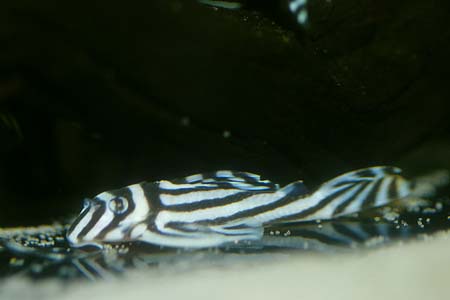
Hypancistrus zebraZebra Plec
Isbrücker and Nijssen, 1991
Max length80mm SL3.1in SLTank60 × 30cm24 × 12inTemp26–30°C79–86°FpH6.0–7.5One of the most enigmatic species in the hobby, this incredible little catfish must rank amongst the most stunning freshwater species known. In the late 1990s and the early part of this century you could buy one of these for as little as twenty pounds. However in 2004, the Brazilian government banned the exportation of the species amid apparent concerns over the exploitation of wild stocks. As yet, the conservation status of the fish has not been confirmed by any scientific proof with the only e...
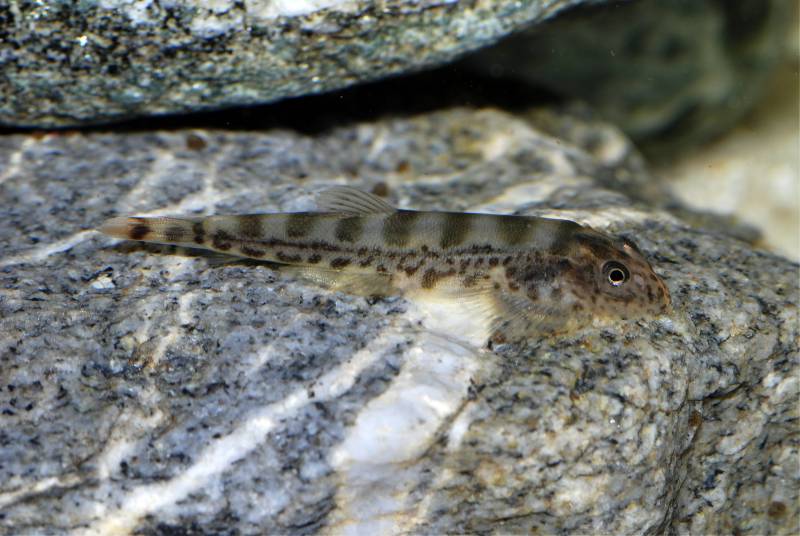
Hypergastromyzon humilis
Roberts, 1989
Max length35mm SL1.4in SLTank45 × 30cm18 × 12inTemp20–24°C68–75°FpH6.0–7.5The differences in pelvic-fin structure and gill openings led Roberts to redefine the genus when describing H. eubranchus, whereas Tan (2006) expressed doubts that the two are even congeneric but was unable to reach a definitive conclusion in the absence of fresh material. At any rate both species can be easily differentiated from Gastromyzon and Neogastromyzon spp. by observing the mo...
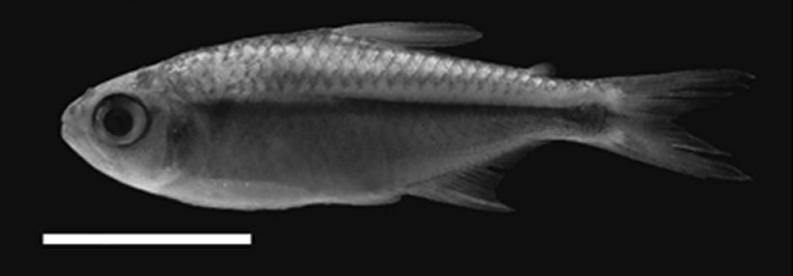
Hyphessobrycon acaciae
García-Alzate, Román-Valencia & Prada-Pedreros, 2010
Max length30mm SL1.2in SLTanknot recordedTempnot recordedpHnot recordedIt differs from H. paucilepis by possessing 30-31 scales in the lateral row (vs. 28-29), 3 scales between the lateral line and anal-fin (vs. 4), 10 predorsal scales (vs. 9), ii, 9 dorsal-fin rays (vs. iii, 8), 4 maxillary teeth (vs. 1), and the distance between the dorsal-fi...
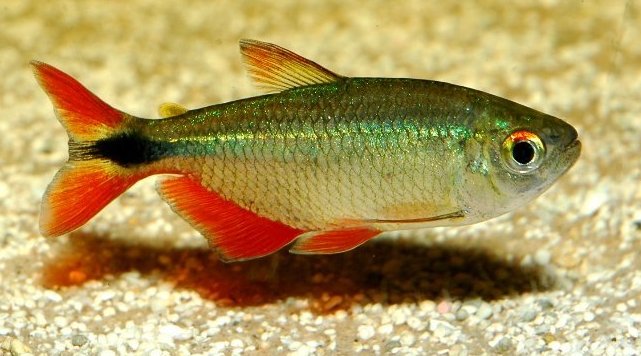
Hyphessobrycon anisitsiBuenos Aires Tetra
Eigenmann, 1907
Max length60mm SL2.4in SLTank90 × 30cm36 × 12inTemp16–28°C61–82°FpH5.5–8.5Widely-distributed throughout much of the Paraná and Uruguay river systems in Brazil, Paraguay, Argentina and Uruguay. Some records from Buenos Aires province, Argentina are now considered to refer to the congener H. togoi (Miquelarena and López, 2006) so the common vernacular name 'Buenos Aires tetra' may not...
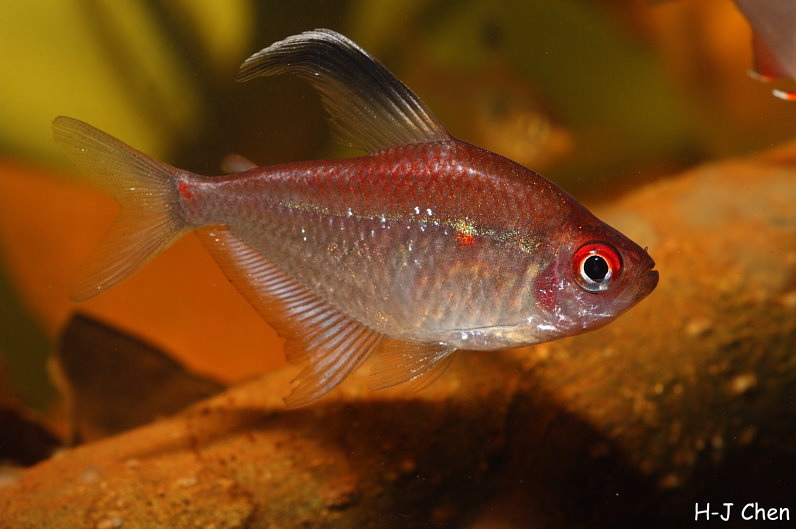
Hyphessobrycon pyrrhonotusFlame-back Bleeding Heart Tetra
Burgess, 1993
Max length45mm SL1.8in SLTank75 × 30cm30 × 12inTemp20–28°C68–82°FpH4.0–7.0This is the smallest of three similar-looking species most commonly-referred to as the 'bleeding heart' subgroup, the other two being H. erythrostigma and H. socolofi. All possess a reddish humeral spot which is not present in any other characid with other shared characters including possession of 6 -14 maxillary teeth, 7-9 scales above the lateral line, 5-7 scales below the lateral line and 26-33 anal fin rays.
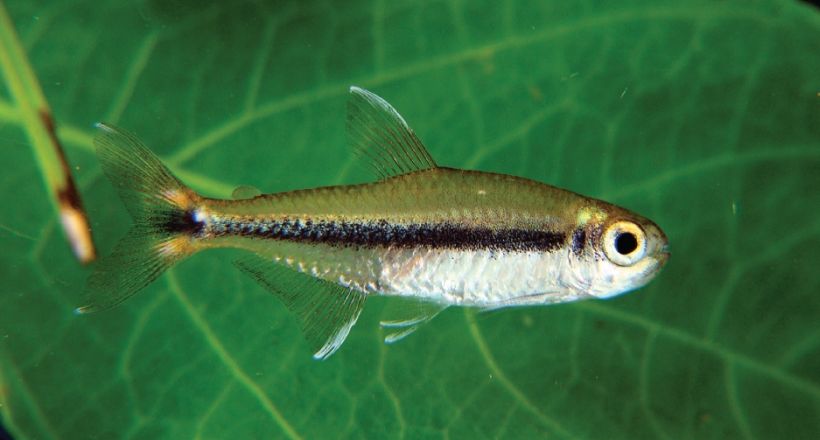
Hyphessobrycon stegemanniSavanna Tetra
Géry, 1961
Max length35mm SL1.4in SLTank60 × 30cm24 × 12inTemp20–25°C68–77°FpH5.5–7.5In the aquarium hobby the name Hyphessobrycon stegemanni has frequently been misapplied to a species that has been described as Hemigrammus ataktos Marinho, Dagosta, & Birindelli 2014. The reasons for this confusion are presumably that the two occur sympatrically in the rio Tocantins system and both possess a dark lateral stripe on the body.
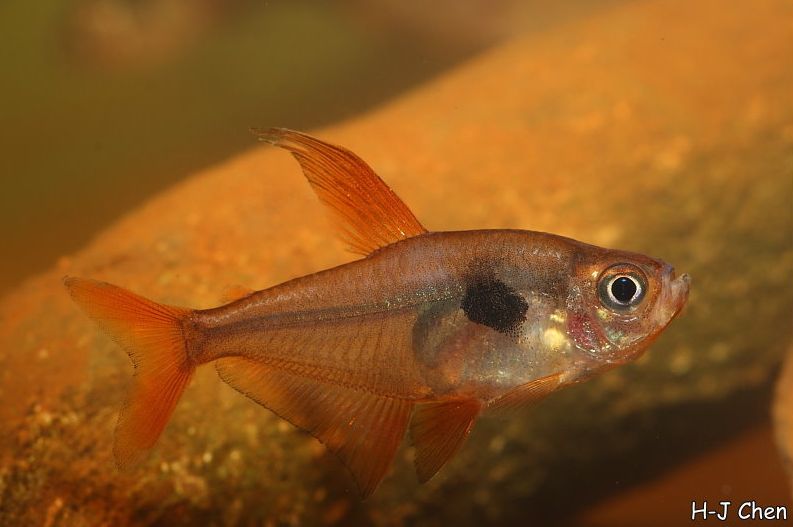
Hyphessobrycon sweglesiRed Phantom Tetra
Géry, 1961
Max length35mm SL1.4in SLTank80 × 30cm31 × 12inTemp20–28°C68–82°FpH4.5–7.5At least two colour forms have been traded, one of which is more intensely-coloured and has been referred to as H. sweglesi 'red' or 'rubra'. The bright red pigmentation is retained in long-term captive specimens, suggesting that it is not considered to be an artefact of diet, but we suspect it might reflect conditions at the collection locality with the reddest fish putatively inhabiting blackwater and plainer forms clearwater environments. Zarske (2014) found the two forms to be identical in terms of morphology an...
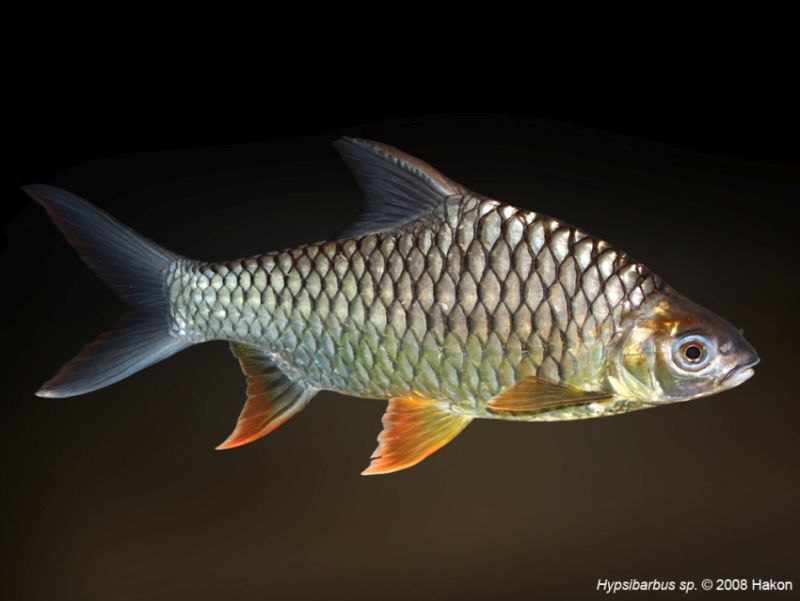
Hypsibarbus wetmorei
Smith, 1931
Max length250mm SL10in SLTank240 × 60cm96 × 24inTemp20–26°C68–79°FpH6.0–8.0H. wetmorei is distinguished from congeners by the following combination of characters: upper body reddish brown; robust body, not compressed; usually 4½ scale rows between lateral line and dorsal-fin origin; 8-12 rakers on first gill arch; 7-9 predorsal scales; 14 circumpeduncular scale rows; usually two scale rows separating vent and anal-fin; <29 lateral line scales; 9-14 serrations on the spinous dorsal-fin ray; distance between distal serrae on posterior margin of last unbranched dorsal-fin ray much greater than the width of their bases.
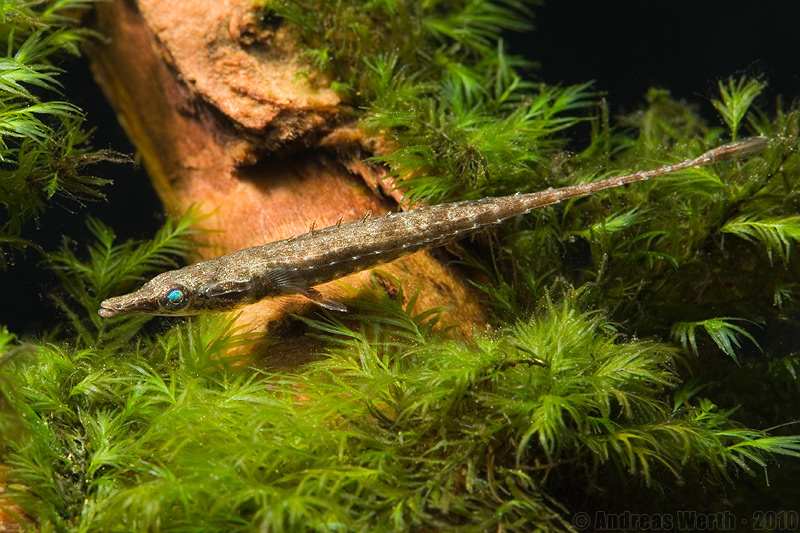
Indostomus crocodilus
Britz & Kottelat, 1999
Max length30mm SL1.2in SLTank40 × 20cm16 × 8inTemp22–27°C72–81°FpH5.0–7.0The type series was collected from a blackwater stream in Toh Daeng Peat swamp forest with the fish found in slow-moving or standing habitats among submerged shoreline roots and leaf litter. In the Tapi River floodplain it was collected from stagnant waters, one of which was an oxbow lake approximately 200 m long and 30 m across at its widest point, surrounded by 'freshwater scrub and swamp trees'. The substrate was composed of mud, woody structures including fallen twigs and branches, and decomposing plant material.
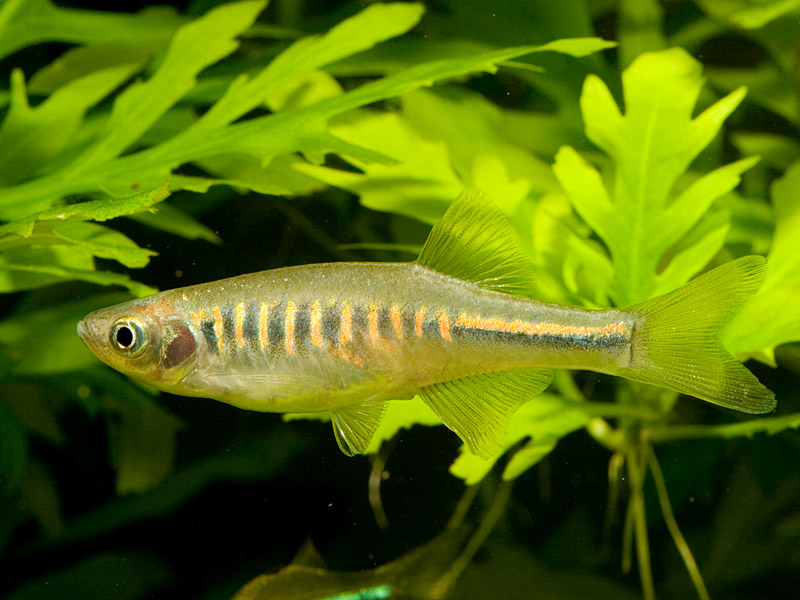
'Inlecypris' shanensis
Hora, 1928
Max length60mm SL2.4in SLTank80 × 30cm31 × 12inTemp18–26°C64–79°FpH6.0–8.0This species is sometimes referred to as 'Hora danio' or Salween danio'. It is distinguished from similar-looking species by a combination of characters as follows: lateral line complete or incomplete with 22-33 pored scales; absence of infraorbital process; 7 branched dorsal-fin rays; usually 10 or 11 branched anal-fin rays; barbels absent or rudimentary; flank markings comprising a series of narrow vertical bars on the anterior portion of each flank, fol...
Ivanacara adoketaZebra Acara
authority not recorded
Max length130mm SL5in SLTanknot recordedTemp22.2–28.9°C72–84°FpHnot recordedThis species was previously included in the genus Nannacara before being moved to the newly-erected taxon Ivanacara by Römer and Hahn (2006)....
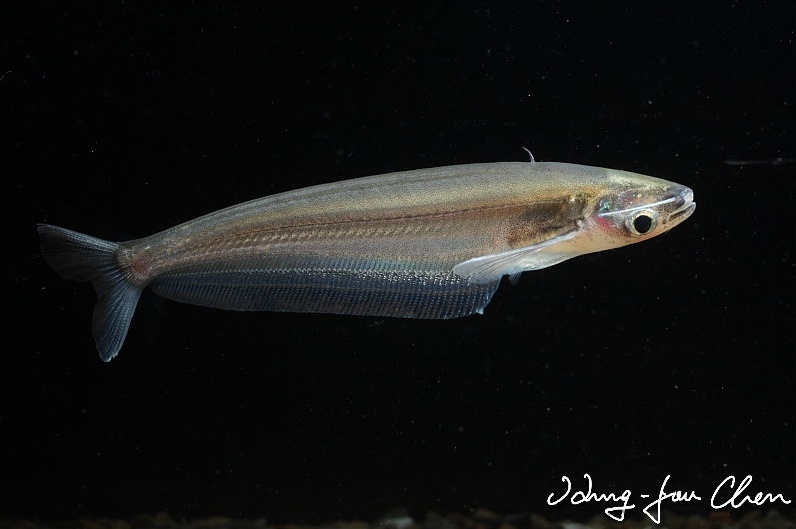
Kryptopterus cryptopterusBlue Sheatfish
Bleeker, 1851
Max length147mm SL6in SLTank120 × 45cm48 × 18inTemp20–27°C68–81°FpH6.0–7.5Known from the Malay Peninsula and Singapore plus Greater Sunda Islands of Sumatra, Borneo and Java in Indonesia with populati0ns from Thailand, Cambodia, Laos and Vietnam formerly considered as conspecific now referred to K. geminus (Ng, 2003). Type locality is given as 'Bandjarmassing' which corresponds to a town now more commonly referred to as 'Banjarmasin' in South Kalimantan (Kalimantan Selatan) province, Indonesia (Borneo).
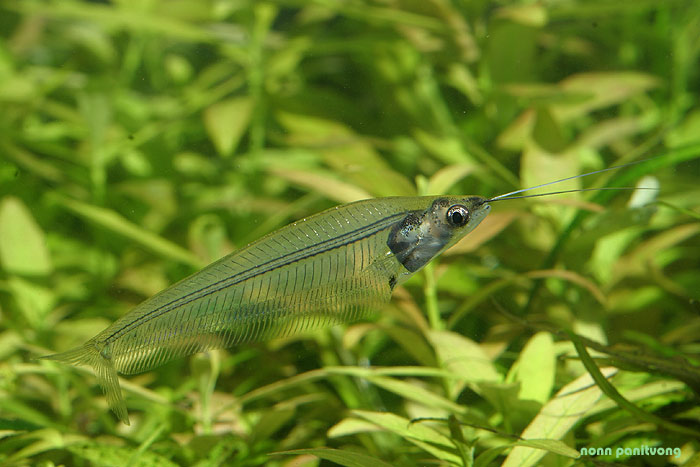
Kryptopterus vitreolusGlass Catfish
Ng & Kottelat, 2013
Max length65mm SL2.6in SLTank90 × 30cm36 × 12inTemp20–26°C68–79°FpH4.0–7.0This species has been available in the trade for decades during which time it's been widely misidentified as the valid congeners K. bicirrhis or, more recently, K. minor. Its identity was not resolved until early 2013 meaning you will find it under one of these two names in the majority of literature published prior to that date. Other trade names include 'Asia...
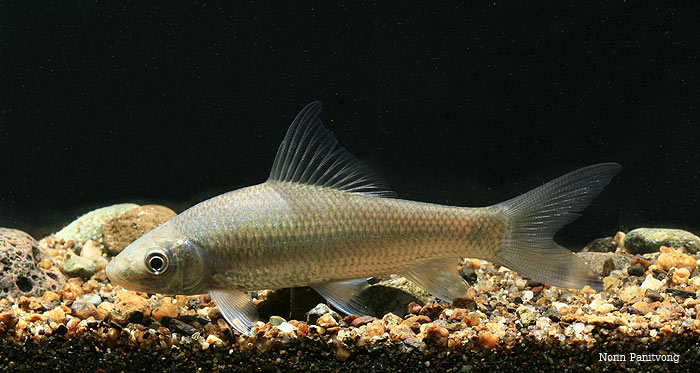
Labeo pierrei
Sauvage, 1880
Max length800mm SL31in SLTanknot recordedTempnot recordedpHnot recordedThis species can be distinguished by the following characters: juveniles with brown body and dark marking at base of caudal-fin; 37-42 + 3-4 lateral line scales; 11½ branched dorsal-fin rays; 7½ scale rows between lateral line and dorsal-fin origin; 20-25 predorsal scales; dorsal-fin relatively small with anterior branched rays shorter than head in juveniles, slightly longer than head in adults.
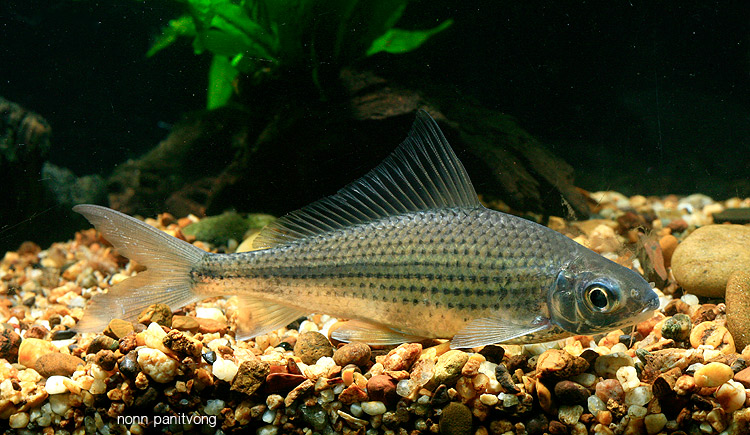
Labiobarbus leptocheilus
Valenciennes, 1842
Max length260mm SL10in SLTank240 × 60cm96 × 24inTemp20–26°C68–79°FpH6.0–8.0Different populations vary in appearance somewhat (see image of Salween specimen for example), and L. leptocheilus may turn out to represent a group of closely-related species rather than a single taxon. The population from the Cambodian Mekong has been considered to represent a distinct species, Labiobarbus lineatus, although that name is currently a synonym of L. leptocheilus following Kottelat (2013). It is widely used in the ornamental trade, however.
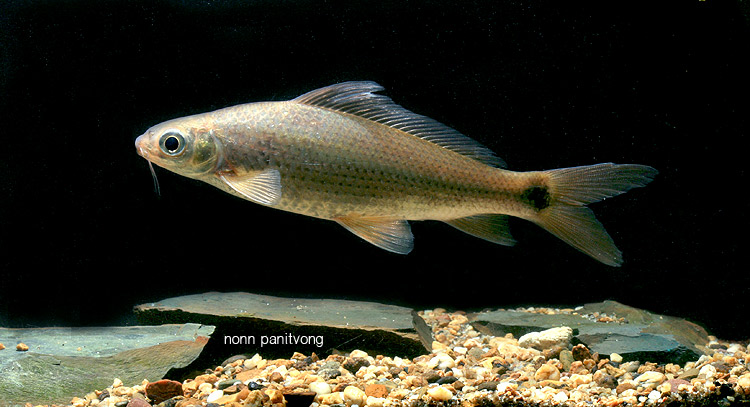
Labiobarbus siamensis
Sauvage, 1881
Max length200mm SL8in SLTanknot recordedTempnot recordedpHnot recordedL. siamensis can be distinguished from congeners by the following combination of characters: 39-42 scales in the lateral series; shoulder spot usually absent, but sometimes well-defined; body with longitudinal stripes formed by a spot on each scale; dorsal fin with dusky median stripe and no red coloration; caudal fin dusky, sometimes with reddish coloration, but no well-defined stripes; 20-23 circumpeduncular scales...
Lasiancistrus tentaculatusL092
authority not recorded
Max length120mm SL5in SLTank75 × 30cm30 × 12inTemp24–28°C75–82°FpH6.0–7.4This lovely little species was only described in 2005 and the same study also reclassified most of the species previously assigned to Laciancistrus. Many were found to be of different genera or representatives of the same species. Laciancistrus can be easily distinguished from Ancistrus (and indeed all other Loricariids) by the presence of whiskerlike odontotes growing among the cheek odontotes. These are very thin and clearly visible, and are indeed reminiscent of mammalian hairs. This part...
Lates niloticusNile Perch
authority not recorded
Max length1930mm SL76in SLTanknot recordedTemp22–28°C72–82°FpH7.0–8.5This species has been introduced into many areas in Africa for commercial purposes, and it's had a hugely detrimental effect on local fish populations in some of these environments. The most notable case is that of Lake Victoria, where much of the endemic cichlid population has been wiped out. L. niloticus is thought to have directly contributed to the extinction of over 200 endemic species in the lake by predation, or outcompeting them for food. The IUCN have included it in their list of t...
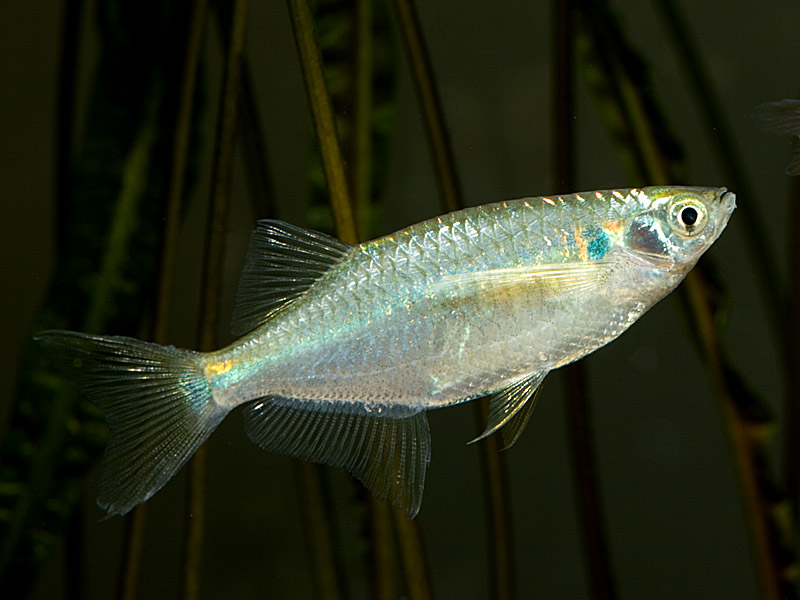
Laubuka caeruleostigmataFlying Minnow
Smith, 1931
Max length70mm SL2.8in SLTank120 × 30cm48 × 12inTemp20–26°C68–79°FpH6.0–8.0This species is also known as 'leaping barb' and was once quite common in the ornamental trade but is now seldom seen. It can be distinguished from other members of the genus by the following characters: bright blue spot on top of head; series of 4-5 short faint bars on anterior portion of body; 19-23½ branched anal-fin rays; body depth fits 2.1-2.9 times in SL.
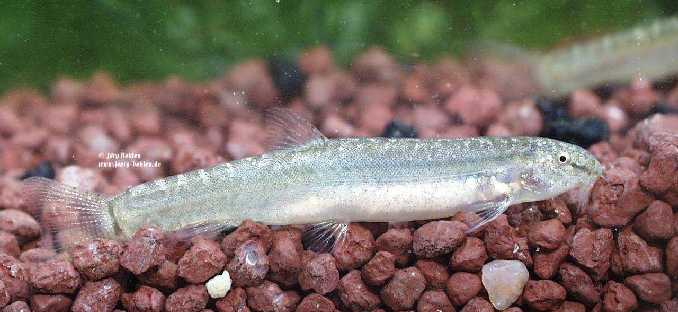
Lepidocephalichthys cf. irrorataLoktak Loach
Hora, 1921
Max length30mm SL1.2in SLTank45 × 30cm18 × 12inTemp20–25°C68–77°FpH5.5–7.5This species is not traded often but may occasionally be exported as bycatch among shipments of other species. It can be distinguished from congeners by the following combination of characters: presence of large, exposed scales on top of head; dorsal-fin origin posterior to pelvic-fin origin; moderate to small size (to 29 mm SL); caudal-fin emarginate and with dark reticulations; caudal-fin lobes with dark, elongated spots along upper and lower edges.