Results for “Furan-2”
Type a name: scientific, common, or one a species used to go by. Or narrow the catalogue with the filters.
Filters
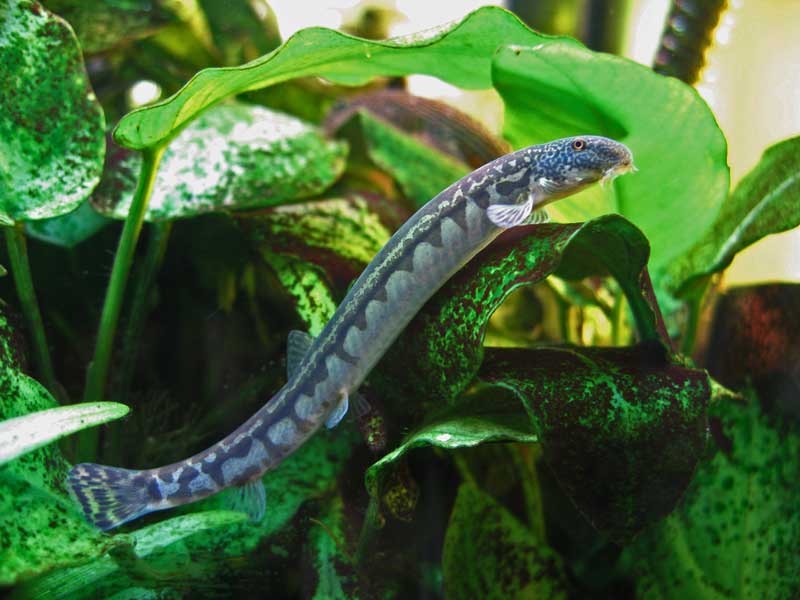
Niwaëlla delicataAjime Loach
Niwa, 1937
Max length110mm SL4in SLTank90 × 30cm36 × 12inTemp20–24°C68–75°FpH6.5–7.5During winter months N. delicata retreats to streams or underflows where it remains dormant between October and April (Kano, 2000) before emerging to spawn. Other species living alongside it in nature include Rhinogobius flumineus, Cottus pollux and Phoxinus spp. Niwaëlla is closely related to Cobitis and N. delicata, also the type species, was described as C. delicata (Niwa, 1937). The combination of characters used to tell it...
Ophthalmotilapia ventralis
authority not recorded
Max length150mm SL6in SLTank135 × 45cm53 × 18inTemp23–27°C73–81°FpH7.5–9.0This is a truly stunning species that does well in a Tanganyikan community with well-chosen tankmates. It exists in well over 20 colour morphs, too many to list here. Obviously these should not be mixed in aquaria as they will hybridise freely. In nature, it is only the largest dominant males that build nests whilst the subdominant males and females shoal together. The territories of these dominant fish may measure several metres across....
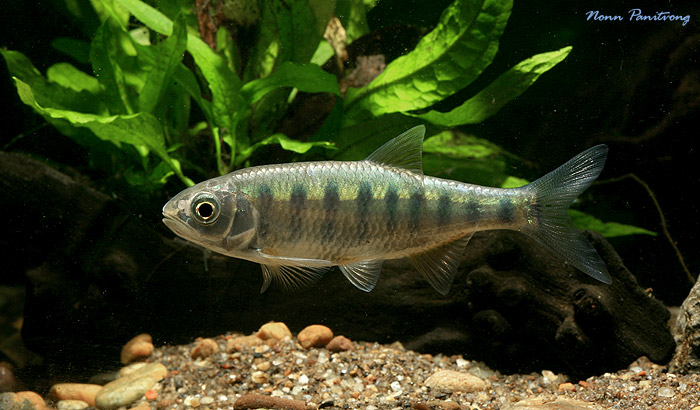
Opsarius infrafasciatus
Fowler, 1934
Max length100mm SL3.9in SLTank120 × 45cm48 × 18inTemp18–26°C64–79°FpH6.0–8.0This species has previously been considered synonymous with both O. ornatus and O. pulchellus but is currently considered to be distinct following (Tejavej, 2012). It can be distinguished from congeners by a combination of characters including: small caudal spot presen...
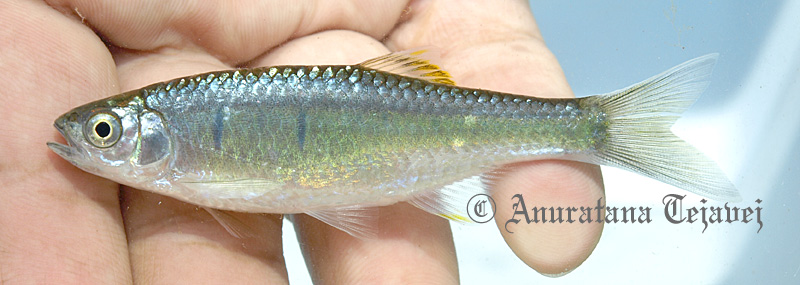
Opsarius koratensis
Smith, 1931
Max length100mm SL3.9in SLTank150 × 45cm60 × 18inTemp22–30°C72–86°FpH6.0–8.0Inhabits well-oxygenated, low-to-medium gradient, slow to moderate-flowing rivers and streams with substrates of gravel, cobbles, larger boulders and exposed bedrock. At the habitat in our image pH was 7.5, temperature 26°C and cond...
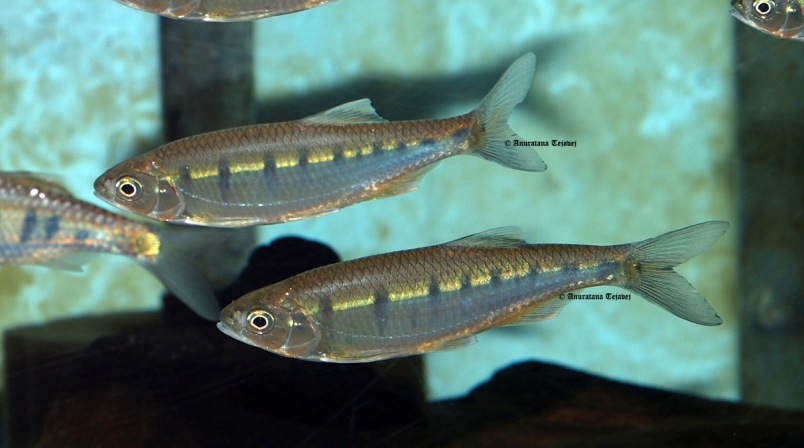
Opsarius ornatus
Sauvage, 1883
Max length110mm SL4in SLTank150 × 60cm60 × 24inTemp18–26°C64–79°FpH6.0–8.0Type locality is 'Mé-Nam River, Thailand', with 'Mé-Nam' having been considered an older name for the Chao Phraya river in central and western Thailand prior to this species' redescription by Tejavej (2012). In fact 'menam' is the Thai word for 'river' and thus could refer to any drainage, and B. ornatus is restricted to...
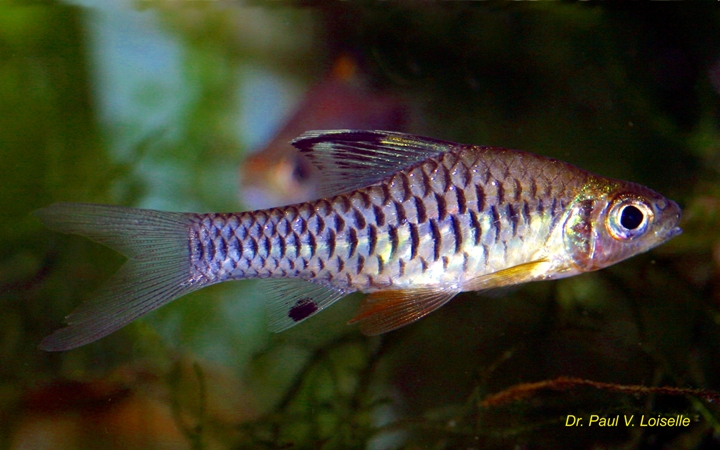
Oreichthys cosuatis
Hamilton, 1822
Max length43mm SL1.7in SLTank60 × 30cm24 × 12inTemp24–28°C75–82°FpH6.5–7.5An assortment of undescribed Oreichthys spp. from India, Myanmar and Thailand are currently traded as O. cosuatis. It can be distinguished from other described members of the genus by lacking a black blotch on the caudal peduncle, plus the following combination of characters: 2-3 perforated scales in lateral line; ½6½ between pelvic-fin origin and dorsal midline; presence of dark stripe in centre of anal-fin, forming a triangular blotch in adult individuals; dorsal-fin with whitish tip and broad, black, subdistal margin in the upper portion of the fin; 11-13 rows...
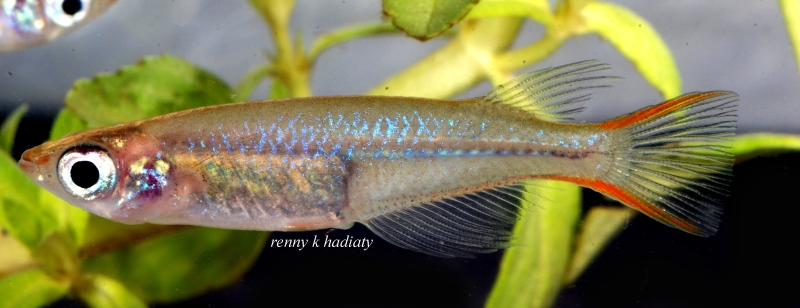
Oryzias asinuaAsinua Ricefish
Parenti, Hadiaty, Lumbantobing & Herder, 2013
Max length25mm SL1.0in SLTank45 × 30cm18 × 12inTempnot recordedpHnot recordedWhen the type series was collected the Sungai Asinua contained clear, slow to fast-moving water with a temperature of 26 °C. The substrate was composed of mud, sand an...
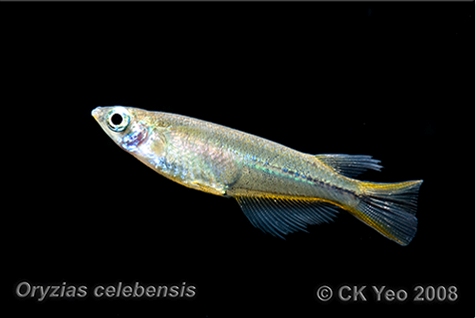
Oryzias celebensisCelebes Ricefish
Weber, 1894
Max length45mm SL1.8in SLTank45 × 30cm18 × 12inTemp23–27°C73–81°FpH7.0–9.0Described from the Maros River (Salo Maros), southwestern Sulawesi, Indonesia and subsequently recorded from rivers and streams throughout the southwestern arm of the island including Lake Tempe (Danau Tempe), plus the Mota Talau River, East Timor state on the nearby island of Timor. More recently Herder and Chapuis (2010) reported it to be more widespread on Sulawesi, with new records pertaining to an unnamed small stre...
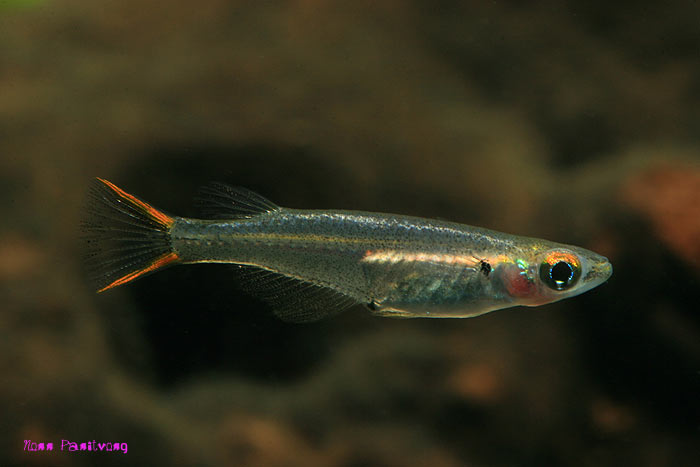
Oryzias songkhramensis
Magtoon, 2010
Max length20mm SL0.8in SLTank40 × 20cm16 × 8inTemp23–30°C73–86°FpH6.0–7.5An exclusive inhabitant of fresh, normally standing, waters including shallow pools, ditches, rice paddies and clear water swamps. The type locality is a small ditch measuring just 3 - 6 metres in width and 0.5 - 2 metres deep. The water was clear and the substrate composed of sand, detritus and mud with growths of the macrophytes Nymphaea lotus, Jussiaea repens and Hydrilla verticillata.
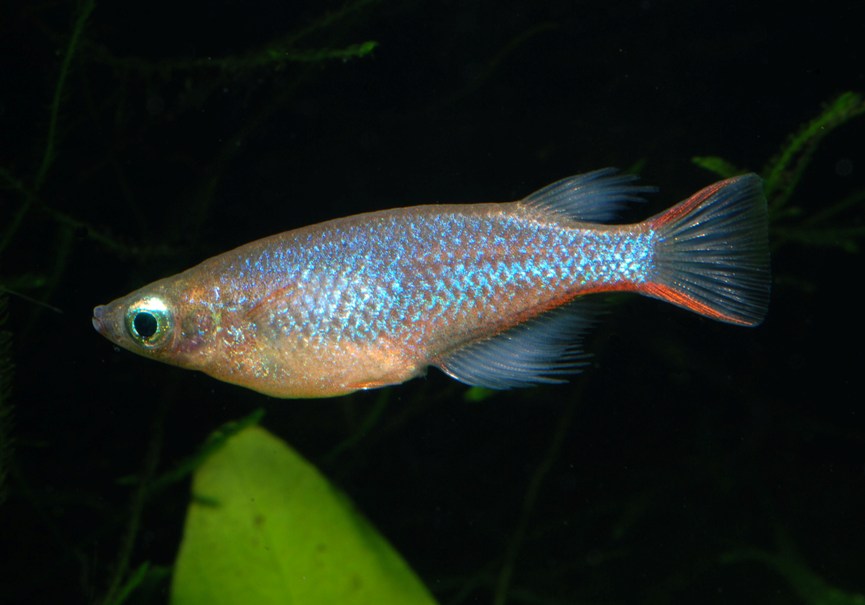
Oryzias wolasiWolasi Ricefish
Parenti, Hadiaty, Lumbantobing & Herder, 2013
Max length35mm SL1.4in SLTank45 × 30cm18 × 12inTemp23–27°C73–81°FpH7.0–8.0This species was discovered in 2009 and as far as we know it has only been collected for the aquarium hobby on a single occasion to date, by Jeffrey Christian of Maju Aquarium, Frank Evers and Hans-Georg Evers. Prior to description it was referred to as O. sp. 'Kendari', O. sp. 'neon' or O. sp. 'Sulawesi'.
Osphronemus goramyGiant Gourami
authority not recorded
Max length700mm SL28in SLTank183 × 61cm72 × 24inTemp20–30°C68–86°FpH6.5–8.0An incredibly hardy, long-lived fish which can survive for over 20 years in captivity. These fish develop real personality and can learn to recognise their owner. They are often sold as cute juveniles in aquatic shops with no information provided as to their adult size. The young have an attractive barred patterning which fades as the fish grow, which they do very quickly. A golden variety also exists in aquaria. O. goramy is cultured commercially for food on a large scale in several countrie...
Pangasionodon hypophthalmusIridescent Shark Catfish
authority not recorded
Max length1300mm SL51in SLTanknot recordedTemp22–26°C72–79°FpH6.5–7.5Previously referred to as Pangasius sutchi, this is the commonest of the Pangasiid catfish seen in the aquatic trade. It's usually seen for sale as a cute silvery-blue 2-3" youngster, most often without adequate information regarding its long term care requirements and potential size. Unfortunately this means it makes it's way into many a beginner's community tank, as it's undeniably attractive when small. The use of common names such as the one stated here don't he...
Pangasius sanitwongseiParoon Shark
authority not recorded
Max length2500mm SL98in SLTanknot recordedTemp24–27°C75–81°FpH6.5–7.5In size and weight terms Pangasius sanitwongsei is second only to the giant Mekong catfish, Pangasianodon gigas in the family Pangasiidae, easily qualifying it as one of the largest freshwater fish species in the world. Alarmingly it's been exported for the trade in quite large numbers in recent years. It's usually seen for sale as a cute silvery 2-3" youngster, most often without adequate information regarding its long term care requirements and potential size. Unfortunately ...
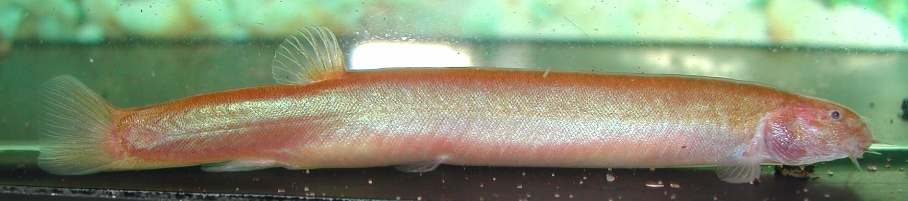
Pangio filinaris
Kottelat & Lim, 1993
Max length50mm SL2.0in SLTank45 × 30cm18 × 12inTemp21–26°C70–79°FpH5.0–7.0It's included in the P. kuhlii-oblonga group of closely-related species within the genus as per Bohlen et al. (2011) and can be...
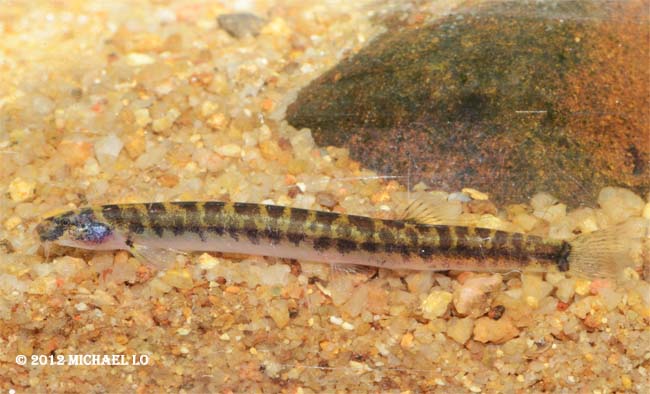
Pangio shelfordii
Popta, 1903
Max length80mm SL3.1in SLTank60 × 30cm24 × 12inTemp21–26°C70–79°FpH4.0–7.0Patterning is highly variable depending both within and between populations and the species may comprise an assemblage containing a number of taxa (Kottelat and Lim, 1993; Tan and Kottelat, 2009). For example, those from Singapore and Johor possessing intricate mottling on the dorsal surface while individuals from Terengganu have a series of saddle-like markings either alternating or connecting with the midlateral markings.
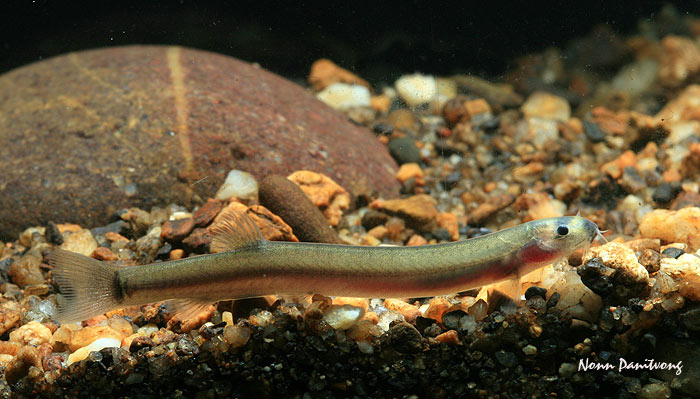
Pangio sp. 'PAN04'Panda Loach
authority not recorded
Max length80mm SL3.1in SLTank60 × 30cm24 × 12inTemp21–26°C70–79°FpH3.5–7.0This unidentified species has been traded since the mid-00s and appears to be a member of the P. khulii-oblonga species group as per Bohlen et al. (2011). There are two similar-looking forms; one has a darker body, dark pigmentation in the pectoral fins and barbels and a blue sheen on the head, while the...
Parambassis pulcinellaHumphead Perchlet
authority not recorded
Max length100mm SL3.9in SLTank90 × 30cm36 × 12inTemp23–27°C73–81°FpH7.0–7.5A new species that was only described to science in 2003, little is known about the natural behaviour of P. pulcinella. It has started to be imported quite regularly over the last couple of years, although it is still quite expensive. Unfortunately this species has suffered the same fate as some of it's close relatives, and artificiallly dyed specimens have been making their way onto the market. These should be avoided at all costs, as the processes involved are cruel and unecessary, and us...
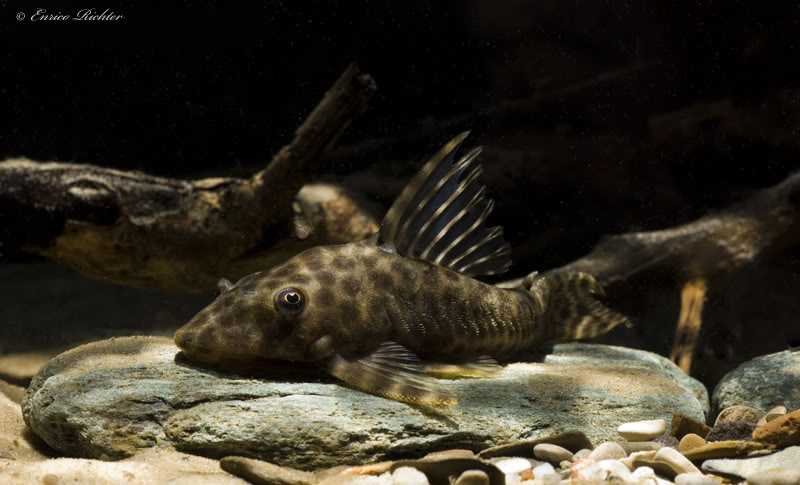
Peckoltia bachiL146
Boulenger, 1898
Max length130mm SL5in SLTank120 × 45cm48 × 18inTemp22–29°C72–84°FpH6.0–8.0This species has had several L-numbers assigned to it, with L146 collected from an unspecified locality in Colombia and L232 from the Río Putomayo/Içá. It's exported for the aquarium trade under a number of different generic names including Hemiancistrus, Sophiancistrus and Peckoltichthys. Following Armbruster (2008) it can be to...
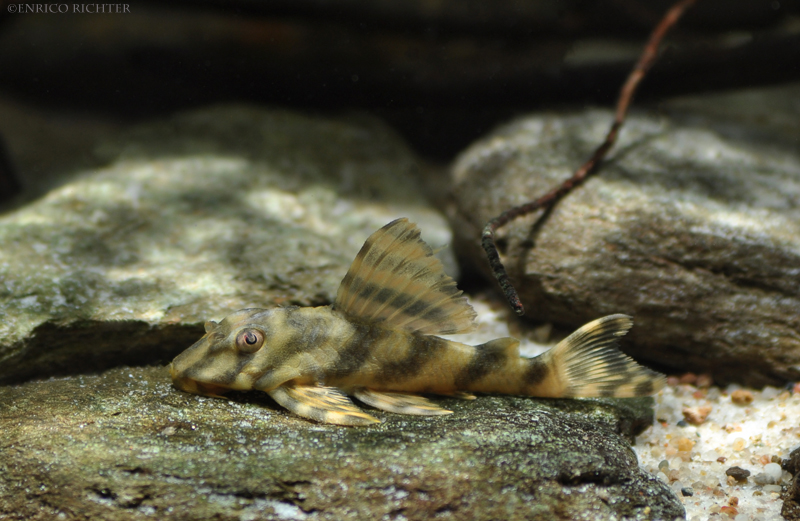
Peckoltia sp.L243
authority not recorded
Max length120mm SL5in SLTank120 × 30cm48 × 12inTemp25–29°C77–84°FpH5.5–7.5Known only from parts of the Río Orinoco drainage in Amazonas state, southern Venezuela. Sometimes confused with Peckoltia lineola (Armbruster, 2008) alongside which it's often exported for the aquarium trade.
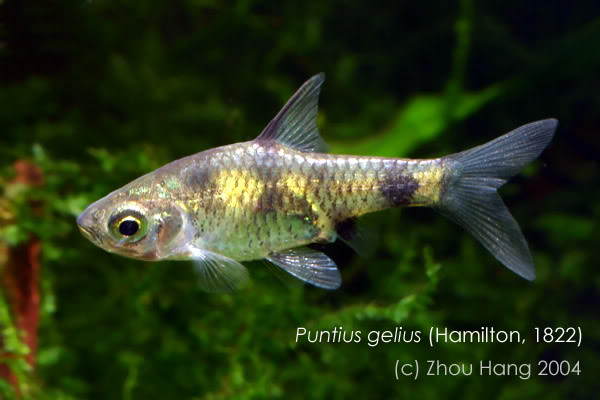
Pethia aurea
Knight, 2013
Max length25mm SL1.0in SLTank45 × 30cm18 × 12inTemp18–24°C64–75°FpH6.0–7.0This species was considered to be a phenotype of the similar-looking P. gelius prior to its description. Following Knight (2013) it is included a group of closely-related species alongside P. gelius and P. canius, the trio being distinguished from other members of the genus Pethia by the following combination of characters: lateral line incomplete with 3-4 por...