Results for “character”
Type a name: scientific, common, or one a species used to go by. Or narrow the catalogue with the filters.
Filters
Synodontis contractaBig-nosed Upside-down Catfish
authority not recorded
Max length75mm SL3.0in SLTank60 × 30cm24 × 12inTemp22–27°C72–81°FpH6.2–7.2Often confused with the similar S.nigriventris, this species is imported infrequently. It is easily distinguished from nigriventris by its larger eyes and broad mouth and head. These features give rise to the common name "Big-nosed upside-down catfish". S. contracta spends the majority of its time swimming in an inverted position and this, along with its exaggerated facial features,make it a characterful and interesting addition to the community aquarium. It is also known as the Bug-e...
Synodontis eupteraFeatherfin Synodontis
authority not recorded
Max length300mm SL12in SLTank120 × 30cm48 × 12inTemp22–27°C72–81°FpH6.0–7.5One of the most popular and commonly seen Synos in the hobby, S. eupterus is usually offered for sale as a small (1-3") juvenile with no information regarding its potential size. These young fish are often sold as Synodontis "Network" due to their attractive reticulated patterning. This patterning breaks up as the fish mature and adult specimens have a simple spotted colouration. The characteristic 'feathered' dorsal also develops with age, with the first few rays develo...
Synodontis granulosa
authority not recorded
Max length270mm SL11in SLTank150 × 60cm60 × 24inTemp24–28°C75–82°FpH7.8–8.5One of the most stunning and sought after species of Synodontis and though the cost of ownership has dropped slightly, it still commands a high price. Its natural deep water habitat, limited range and solitary lifestyle make collection for the hobby difficult and so it is rarely seen for sale. It also appears that the areas of the lake in which it occurs are threatened with ecological disaster. In the aquarium S. granulosa is intelligent and can develop into a real character, with many speci...
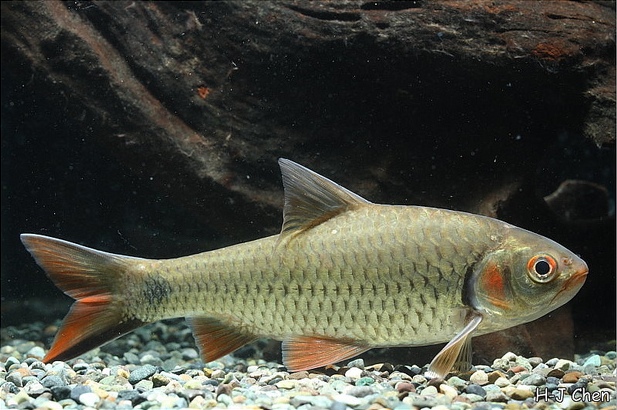
Systomus orphoides
Valenciennes, 1842
Max length250mm SL10in SLTank200 × 60cm79 × 24inTemp18–26°C64–79°FpH6.0–8.0The genus Puntius is currently viewed as something of a catch-all for well over 100 species of small to mid-sized cyprinid. Most experts agree that a full revision is required with the likely outcome that many species will be placed into new or different genera since it is clearly polyphyletic. When describing the grouping in 1822 Hamilton identified the defining characteristics as: presence or absence o...
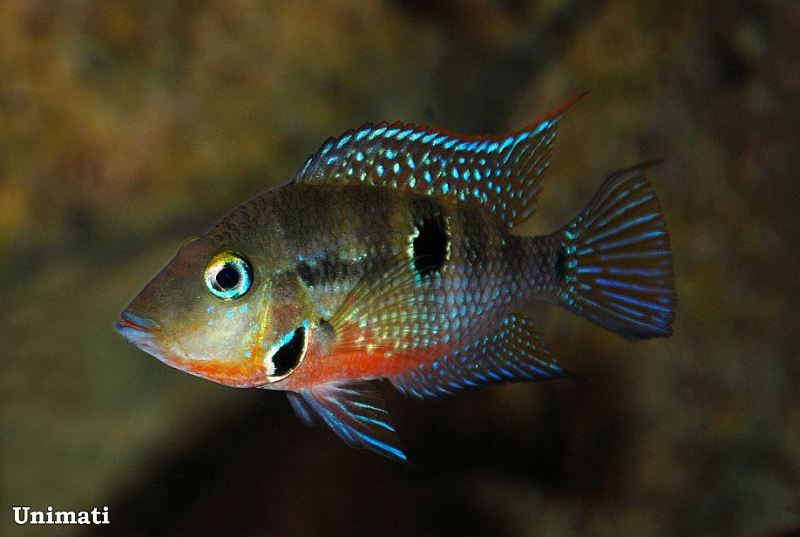
Thorichthys meekiFiremouth Cichlid
Brind, 1918
Max length120mm SL5in SLTank120 × 30cm48 × 12inTemp20–32°C68–90°FpH6.5–8.5This species has been a popular aquarium fish for a considerable period and virtually all fish traded are now raised commercially for the purpose. It is easily identified by the characteristic bright red or orange underside of the head, which is more pronounced in adults. Following Miller and Taylor (1984), the genus Thorichthys is identified...
Xenomystus nigriAfrican Knifefish
authority not recorded
Max length300mm SL12in SLTank120 × 45cm48 × 18inTemp23–28°C73–82°FpH5.8–7.5Originally classified in the genus Notopterus and reclassified in 1984, this is now the only described species of Xenomystus and has several interesting characteristics. Its swim bladder is specially adapted to act as an accessory breathing organ in a similar fashion to Polypteriids. It must rise to the surface to take a gulp of air periodically, often emitting a bell-like sound as it does so. X. nigri is often confused with the similar looking but far more aggressive Asian knifefish, Notopt...
Xiphophorus helleriiGreen Swordtail
Heckel, 1848
Max length140mm SL6in SLTank120 × 30cm48 × 12inTemp16–28°C61–82°FpH7.0–8.0Wild swordtails are a fairly basic green colur. However the vast majority of swordtails available in the hobby today are hybrids of X.helleri with X.maculatus or X.variatus. There are a huge number of selectively-bred varieties available, including wagtail, lyretail, tuxedo, albino, neon, red, green and hi-fin. Swordtails may undergo what appears to be a change in sex. In young fish this may simply be late development. However some adult females develop male characteristics which is thought ...
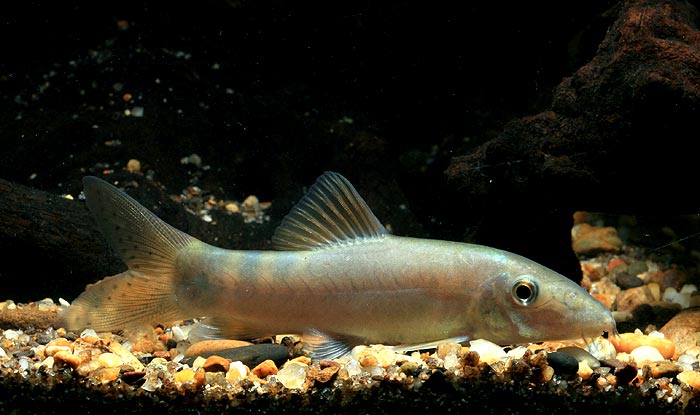
Yasuhikotakia caudipunctataSpeckle-tailed Loach
Taki & Doi, 1995
Max length100mm SL3.9in SLTank120 × 30cm48 × 12inTemp23–30°C73–86°FpH6.0–7.5This specie is relatively rare in the aquarium trade and much sought after by enthusiasts as a result. It looks relatively similar to Y. splendida but can be told apart from it, and indeed all other members of the genus, by the following combination of characters: possession of 8 branched dorsal-fin rays; 32-33 vertebrae; one or two small, brownish, vertically-orientated markings on the dorsal part of the body posterior to the dorsal fi...
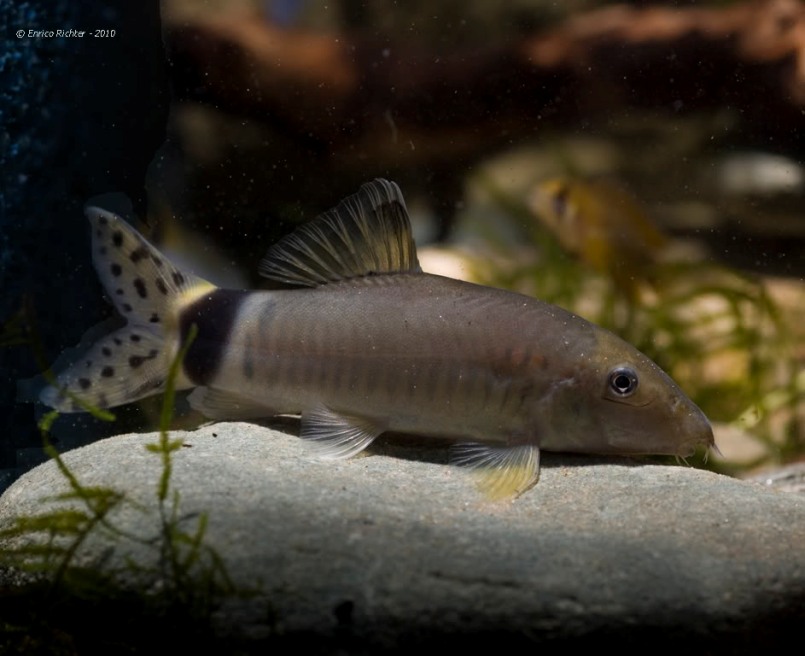
Yasuhikotakia splendida
Roberts, 1995
Max length100mm SL3.9in SLTank120 × 30cm48 × 12inTemp20–28°C68–82°FpH6.0–7.5This species first appeared in the trade during 2009 with prices initially variable but in the main prohibitively expensive, and it remains expensive when available. We've seen it on sale under various names including 'jaguar loach', 'splendid loach' and 'yellow-tail polka dot loach'. It appears superficially similar to Y. caudipunctata, Y. longidorsalis and Y. morleti but can be distinguished from all by a combination of characters of which the most immedia...