Results for “bar”
Type a name: scientific, common, or one a species used to go by. Or narrow the catalogue with the filters.
Filters
Synodontis albertiHigh-fin Synodontis
authority not recorded
Max length200mm SL8in SLTank90 × 30cm36 × 12inTemp21–25.5°C70–78°FpH6.0–8.0S. alberti possesses an incredible set of barbels that are the longest of any Synodontis. It is also very hardy and adaptable and is therefore an ideal beginner's Syno. It has very large eyes exemplifying its nocturnal nature and also prefers cooler conditions to other members of the genus. This fish has a few common names including Bigeye Squeaker and Albert's Synodontis, though it is usually referred to as the High-fin Synodontis....
Trichogaster labiosaThick-lipped Gourami
authority not recorded
Max length100mm SL3.9in SLTank74 × 30cm29 × 12inTemp22–27°C72–81°FpH6.0–7.5Despite its ease of keeping and peaceable nature, this species is not particularly popular in the hobby, although it is imported quite regularly. A gold or 'sunset' strain exists, in which the barred patterning is replaced by an overall orange/gold colouration. This is not a natural variation, but has been selectively bred for the trade. The female of this form is almost as colourful as the male. Like others in the suborder Anabantoidei, the species possesses an accessory breathing...
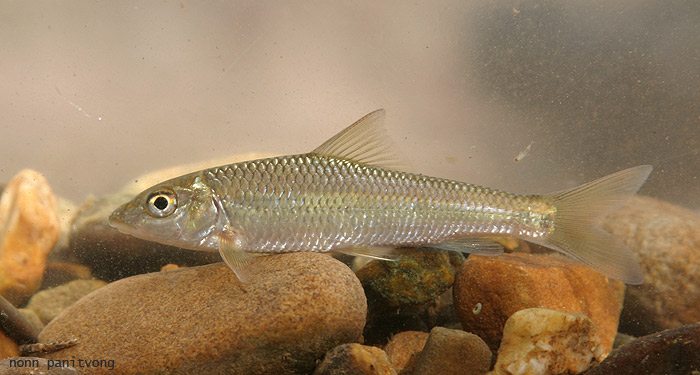
Folifer brevifilis
Peters, 1881
Matched on Barbus brevifilis, a name it was formerly known by
Max length300mm SL12in SLTank240 × 60cm96 × 24inTemp20–26°C68–79°FpH6.0–8.0This species is widely-distributed in the Mekong river system in Thailand, Laos, and Vietnam, Salween and Ayeyarwaddy rivers in southern China, Myanmar, and Thailand, plus various smaller basins in Vietnam and China. It has also been recorded from the islands of Hainan and Hong Kong. Type locality is given as 'China: sent from Hong Kong'.
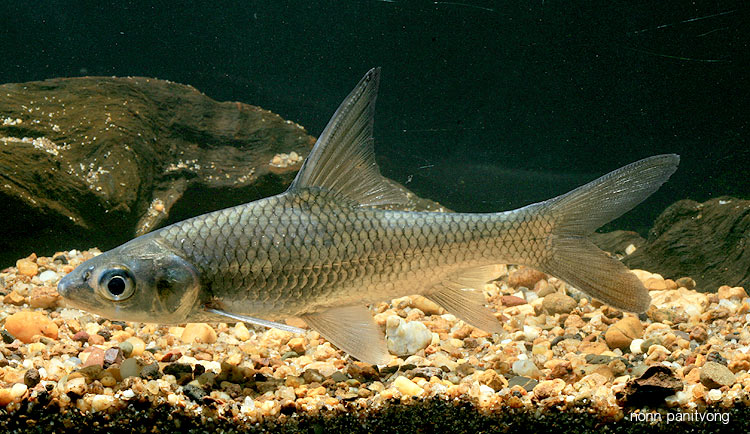
Cyclocheilos enoplos
Bleeker, 1849
Matched on Barbus enoplos, a name it was formerly known by
Max length750mm SL30in SLTanknot recordedTemp20–26°C68–79°FpH6.0–8.0In the Mekong, it has been observed to migrate upstream from Phnom Penh to Khone Falls between November and February, returning downstream between May and August. The downstream migration ends in the Mekong delta area in Vietnam, where the fish remain until the floods reach their peak in October and November. These lower Mekong migrations mostly comprise juveniles and sub-adults, whereas above Khone Falls...
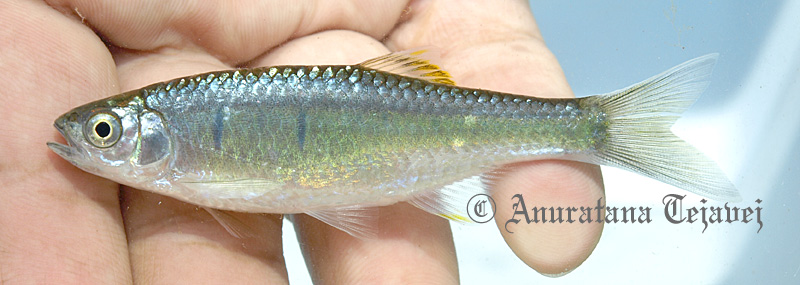
Opsarius koratensis
Smith, 1931
Matched on Barilius koratensis, a name it was formerly known by
Max length100mm SL3.9in SLTank150 × 45cm60 × 18inTemp22–30°C72–86°FpH6.0–8.0Inhabits well-oxygenated, low-to-medium gradient, slow to moderate-flowing rivers and streams with substrates of gravel, cobbles, larger boulders and exposed bedrock. At the habitat in our image pH was 7.5, temperature 26°C and cond...
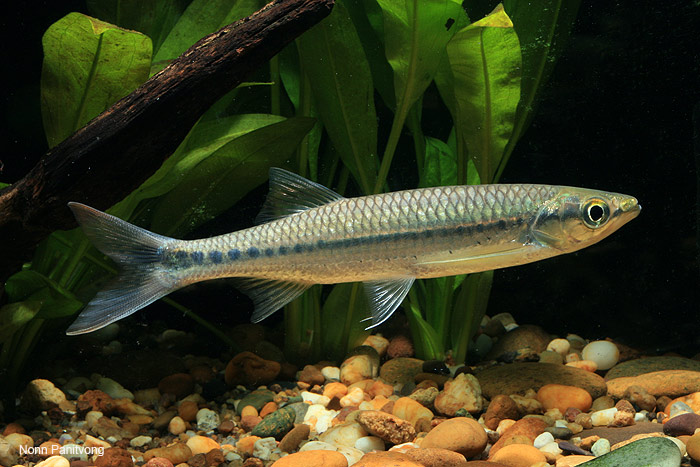
Luciosoma setigerumApollo Shark
Valenciennes, 1842
Matched on Barbus setigerus, a name it was formerly known by
Max length220mm SL9in SLTank240 × 60cm96 × 24inTemp20–26°C68–79°FpH6.0–8.0There is a fish of unknown geographical origin which matches the majority of diagnostic features for L. setigerum with the exception that the dark lateral stripe is absent in the anterior portion of the body and is not composed of interconnected spots. It is relatively common in the aquarium trade and included here as L. cf. setigerum until a confirmed identity is established.
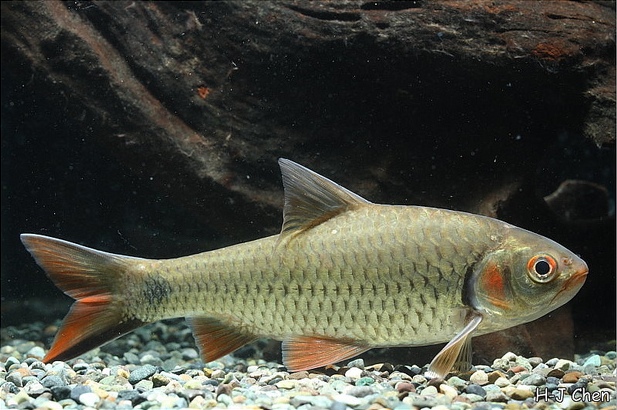
Systomus orphoides
Valenciennes, 1842
Matched on Barbus orphoides, a name it was formerly known by
Max length250mm SL10in SLTank200 × 60cm79 × 24inTemp18–26°C64–79°FpH6.0–8.0The genus Puntius is currently viewed as something of a catch-all for well over 100 species of small to mid-sized cyprinid. Most experts agree that a full revision is required with the likely outcome that many species will be placed into new or different genera since it is clearly polyphyletic. When describing the grouping in 1822 Hamilton identified the defining characteristics as: presence or absence o...
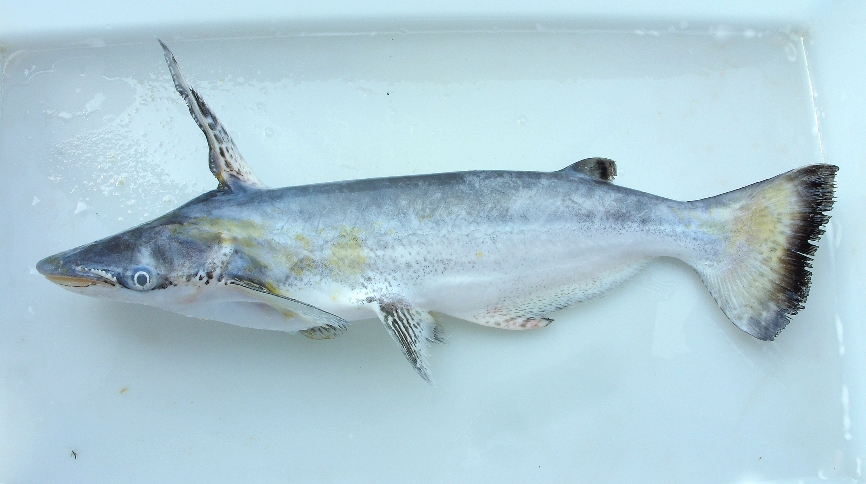
Ageneiosus inermisManduba
Linnaeus, 1766
Matched on Ageneiosus barranquenensis, a name it was formerly known by
Max length470mm SL19in SLTank400 × 120cm157 × 48inTemp22.5–26°C73–79°FpH5.5–7.5The genus Ageneiosus was at one point classified in the family Ageneiosidae alongside the genus Tetranematichthys, but this was not accepted by all authors. The grouping remains poorly-studied with the last major revision having been conducted by Watson (1990) in his unpublished dissertation, in which A. inermis was included under the currently synonymous name A. brevifilis. It can be separated from the majority of the genus (except A. marmoratus) by possession of a truncate caudal fin, and from...
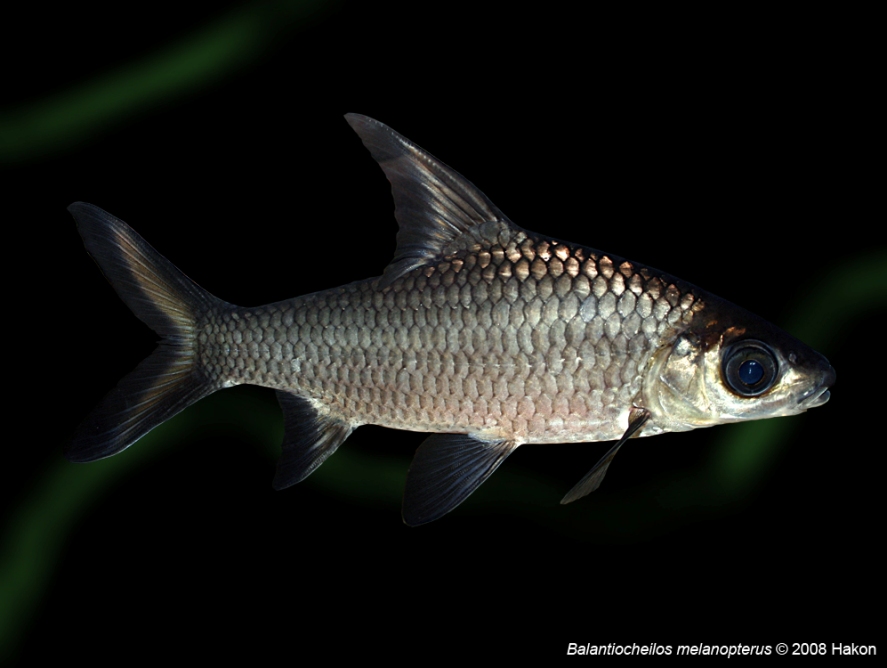
Balantiocheilos melanopterusSilver Shark
Bleeker, 1850
Matched on Barbus melanopterus, a name it was formerly known by
Max length350mm SL14in SLTank240 × 60cm96 × 24inTemp20–28°C68–82°FpH6.0–8.0May also be seen on sale under the trade names 'Bala shark' or 'tricolor shark minnow' and perhaps among the most commonly-encountered ornamental fish species. It is unfortunate that the vast majority of those traded are juveniles and tend to come supplied with little to no information provided regarding their potential size and requirements, a fairly ironic situation given the apparently precarious status of wild populations.
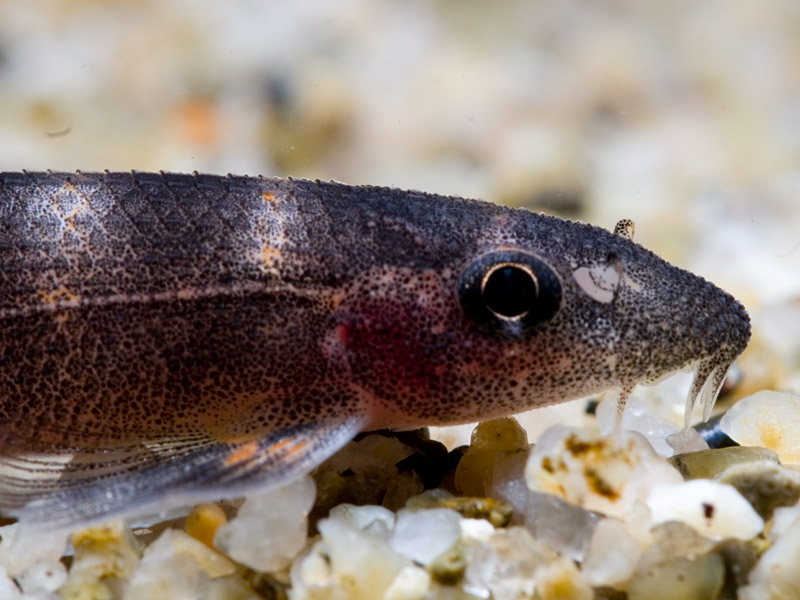
Balitoropsis zollingeri
Bleeker, 1853
Matched on Balitoropsis bartschi, a name it was formerly known by
Max length70mm SL2.8in SLTank60 × 30cm24 × 12inTemp20–25.5°C68–78°FpH6.0–7.5An obligate dweller of swiftly-flowing streams and headwaters containing clear, oxygen-saturated water. It often inhabits riffles and runs and is likely to show a preference for shallower zones. Substrates are generally composed of gravel, rocks, boulders or bedrock carpeted with a rich biofilm formed by algae and other micro-organisms. Juveniles are often found in slower-moving stretches with gravel substrate and submerged tree roots. In both cases patches of aquatic plants are only occasionally pres...
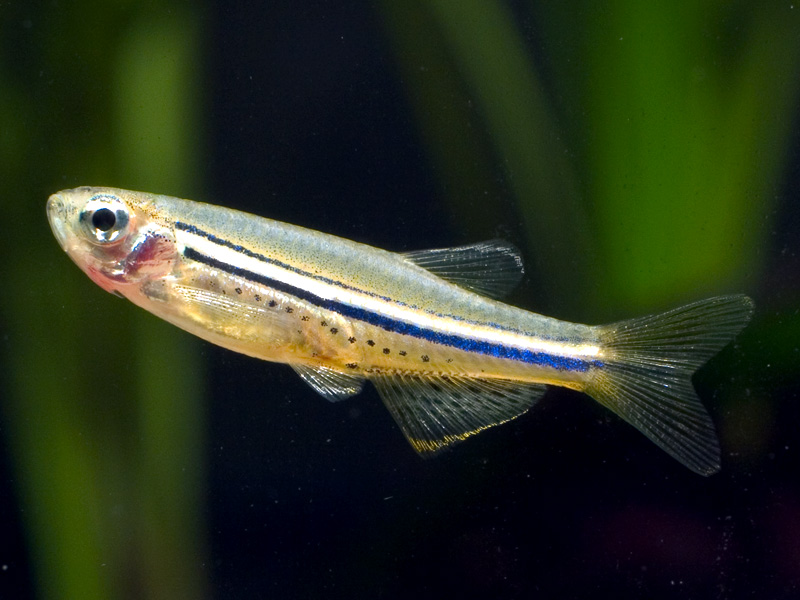
Brachydanio nigrofasciataDwarf Spotted 'Danio'
Day, 1870
Matched on Barilius nigrofasciatus, a name it was formerly known by
Max length40mm SL1.6in SLTank60 × 30cm24 × 12inTemp18–26°C64–79°FpH6.0–7.5The genus Danio contains only the type species, D. dangila, separated on the basis of its larger size and the shape of the caudal-fin, which in adults is only slightly emarginate or even truncate in shape, a feature it shares only with Tinca tinca (the common tench) among other cyprinids. The remaining species, of which B. rerio is thought to be the most ancient, are included in the revalidated genus Brachydanio Weber & de Beaufort, 1916.
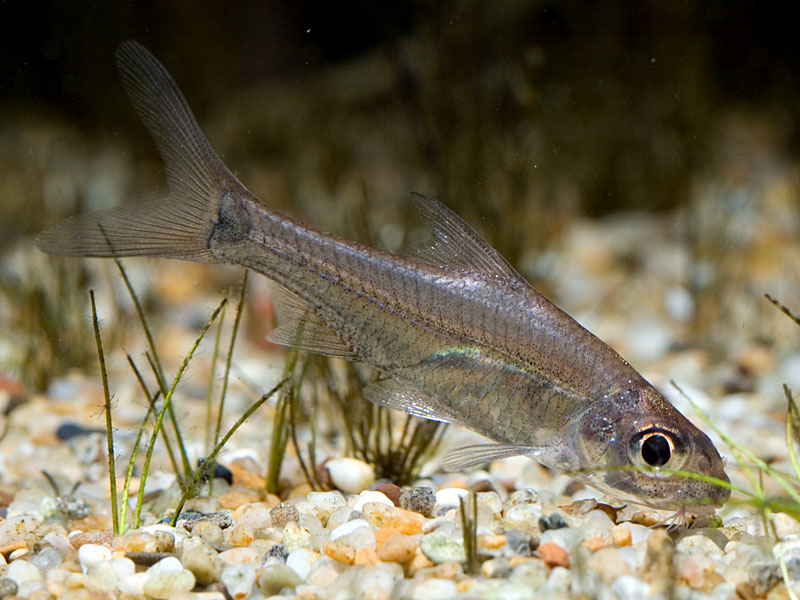
Cyclocheilichthys heteronema
Bleeker, 1854
Matched on Barbus heteronema, a name it was formerly known by
Max length120mm SL5in SLTank120 × 45cm48 × 18inTemp21–26°C70–79°FpH6.0–7.5This species is currently understood to have a considerable natural range extending eastwards from Myanmar via Thailand, Laos, Cambodia as far as Vietnam and to the south through Peninsular Malaysia and into the Greater Sunda Islands of Borneo and Sumatra. It thus occurs in the Mekong, Mae Klong and Chao Phraya drainages as well as a host of other river basins, lakes and reservoirs including the Tonlé Sap river...
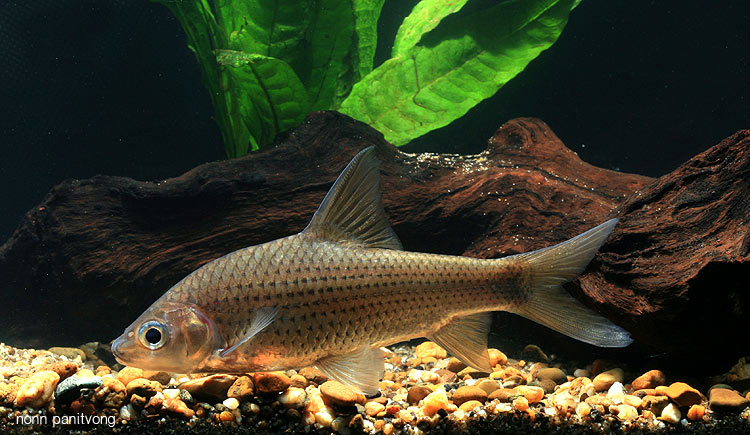
Cyclocheilichthys repasson
Bleeker, 1853
Matched on Barbus repasson, a name it was formerly known by
Max length280mm SL11in SLTank180 × 45cm72 × 18inTemp20–26°C68–79°FpH5.0–8.0An ideal resident of the larger, well-furnished community set-up though it might upset slow-moving or timid companions simply by its size. There are plenty of suitable tankmates including many cyprinids, loaches, cichlids, catfish and characins, but as always when selecting a compatible community of fish proper research is essential. A community based around one of its native countries or river basins...
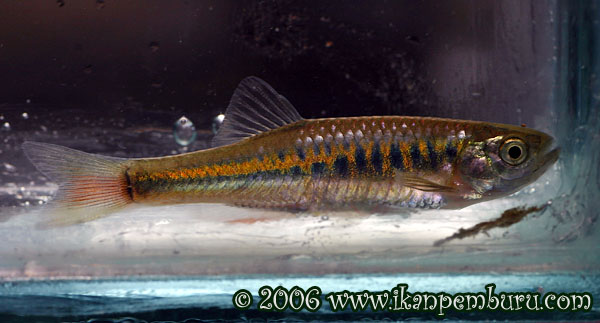
Devario interruptus
Day, 1870
Matched on Barilius interrupta, a name it was formerly known by
Max length60mm SL2.4in SLTank75 × 30cm30 × 12inTemp16–21°C61–70°FpH6.5–7.5This species has mostly been collected from small (1-2 metres wide, 20-40 cm deep), moderate-to-swiftly-flowing streams with clear water, substrates of sand, gravel and rocks and no aquatic vegetation. Marginal vegetation was present in some cases, offering a degree of shade, and sympatric species included an unidentified Schistura sp., S. vinciguerrae, Misgurnus anguillicaudatus, Garra qiaojiensis,...
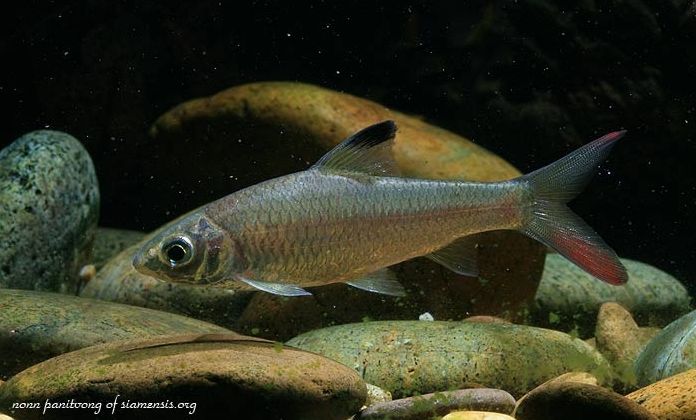
Discherodontus ashmeadi
Fowler, 1937
Matched on Barbus, a name it was formerly known by
Max length135mm SL5in SLTank120 × 45cm48 × 18inTemp23–26°C73–79°FpH6.0–7.5D. ashmeadi is the type species and exhibits differences in dental morphology compared with other members of the genus. It can also be told apart from D. halei by the red/pink (vs. orange) colouration in the dorsal and anal fins and serrated (vs. smooth) dorsal spine. D. schroederi is also similar-looking but as it matures the prominent dark dorsal blotch fades to a thin dark distal band whereas in D. ashmeadi it is retained throughout life.
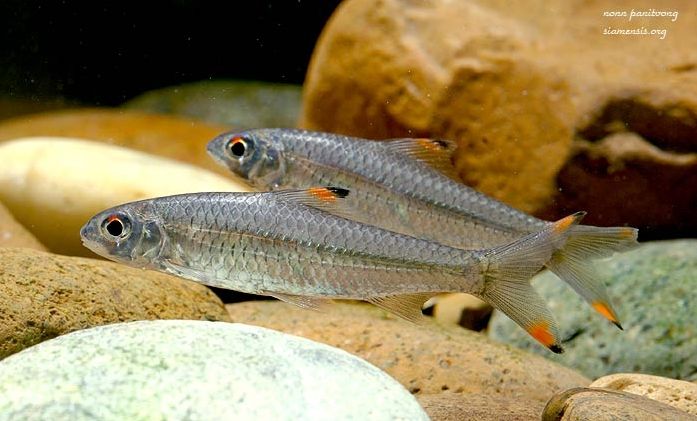
Discherodontus halei
Duncker, 1904
Matched on Barbus halei, a name it was formerly known by
Max length100mm SL3.9in SLTank120 × 45cm48 × 18inTemp21–26°C70–79°FpH6.0–7.5Appears to have a disjunct range with records from Pahang state in central Peninsular Malaysia, plus the Mae Klong and Chao Phraya river systems in Thailand, but it has not been recorded in Peninsular Thailand. Type locality is 'Pahang River, Kuala Tembeling, eastern slope of Sangka Dua Pass, Malaysia, elevation about 2000 feet'.
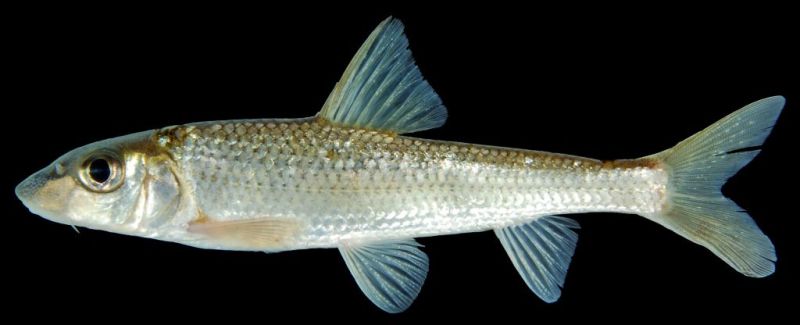
Hemibarbus maculatusSpotted Steed
Bleeker, 1871
Matched on Barbus semibarbus, a name it was formerly known by
Max length400mm SL16in SLTanknot recordedTempnot recordedpHnot recordedWidepread in eastern Asia between the Yangtze and Amur river basins, including China (mainland and islands of Taiwan and Hainan), Korea, Mongolia, Russia, and Japan. It probably been introduced to Vietnam and Laos, or records from these countries represent another species.
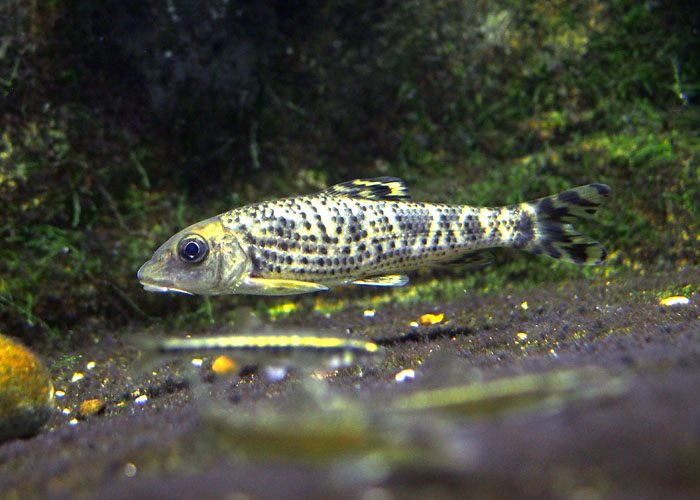
Hemibarbus mylodon
Berg, 1907
Matched on Barbus mylodon, a name it was formerly known by
Max length350mm SL14in SLTanknot recordedTempnot recordedpHnot recordedEndemic to the Korean peninsula where it occurs throughout North Korea and South Korea. Type locality is 'Keumsan River, near Pusan, South Korea.'
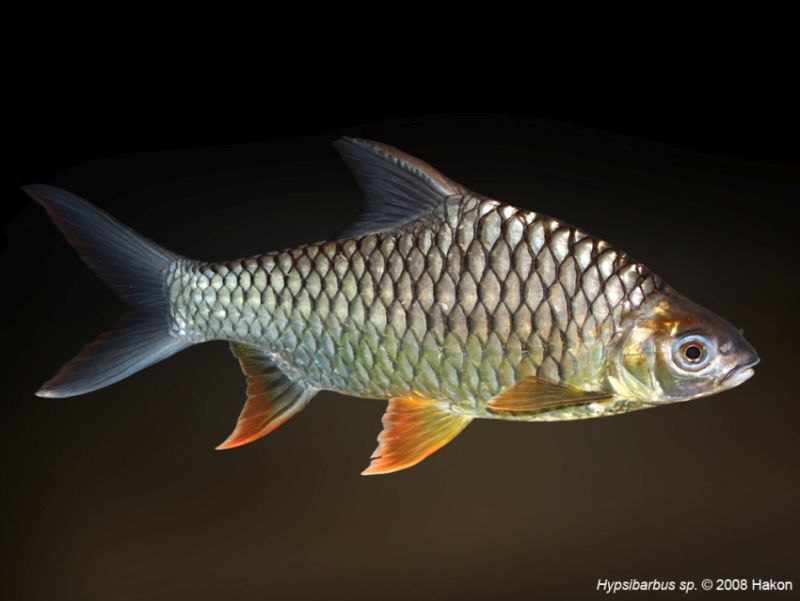
Hypsibarbus wetmorei
Smith, 1931
Matched on Barbus beasleyi, a name it was formerly known by
Max length250mm SL10in SLTank240 × 60cm96 × 24inTemp20–26°C68–79°FpH6.0–8.0H. wetmorei is distinguished from congeners by the following combination of characters: upper body reddish brown; robust body, not compressed; usually 4½ scale rows between lateral line and dorsal-fin origin; 8-12 rakers on first gill arch; 7-9 predorsal scales; 14 circumpeduncular scale rows; usually two scale rows separating vent and anal-fin; <29 lateral line scales; 9-14 serrations on the spinous dorsal-fin ray; distance between distal serrae on posterior margin of last unbranched dorsal-fin ray much greater than the width of their bases.
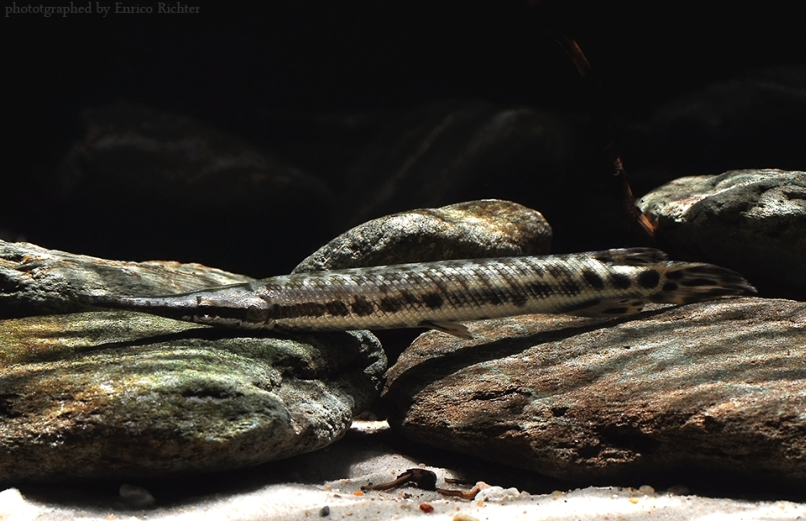
Lepisosteus oculatusSpotted Gar
Winchell, 1864
Matched on Cylindrosteus bartoni, a name it was formerly known by
Max length1250mm SL49in SLTanknot recordedTemp12–20°C54–68°FpH6.0–8.0Known from Great Lakes Erie and Michigan with distribution extending south through the Mississippi River basin to the Gulf of Mexico drainages where it's said to occur between the lower Apalachicola River in Florida and the Nueces River in Texas. It may also be found in the Rio Grande which forms the border between Mexico and the United States further south where records include Falcon International Reservoir, for example.