Search the catalogue
Type a name: scientific, common, or one a species used to go by. Or narrow the catalogue with the filters.
Filters
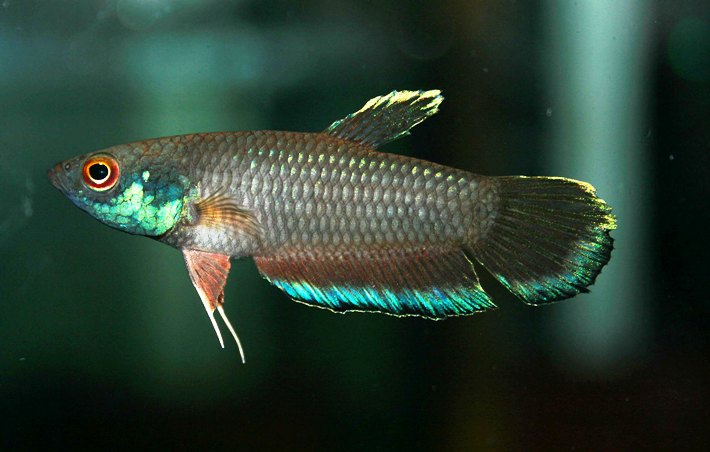
Betta taeniata
Regan, 1910
Max length55mm SL2.2in SLTank60 × 30cm24 × 12inTemp22–27°C72–81°FpH5.0–7.0At one locality close to Serian, Sarawak, the habitat comprised a swiftly-flowing, clear hill stream with a substrate of quartz gravel and variably-sized rocks. The pH was 7.0 and there was no aquatic vegetation. The stream was approximately 10 metres across at its widest point and between 5-80 cm deep. B. taeniata was found in sluggish stretches among submerged tree roots, leaf litter, or overhanging riparian vegetation.
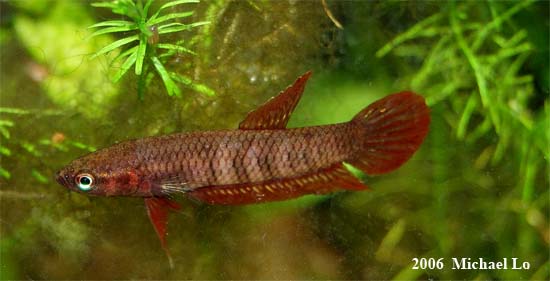
Betta tussyae
Schaller, 1985
Max length37mm SL1.5in SLTank45 × 30cm18 × 12inTemp22–27°C72–81°FpH3.0–6.0This poorly-known betta is included in the B. coccina group of closely-related species within the genus. This assemblage mostly comprises small, red-coloured fishes, with the exceptions of B. persephone and B. miniopinna which are darkish, and identifying some of them can be problematic as external patt...
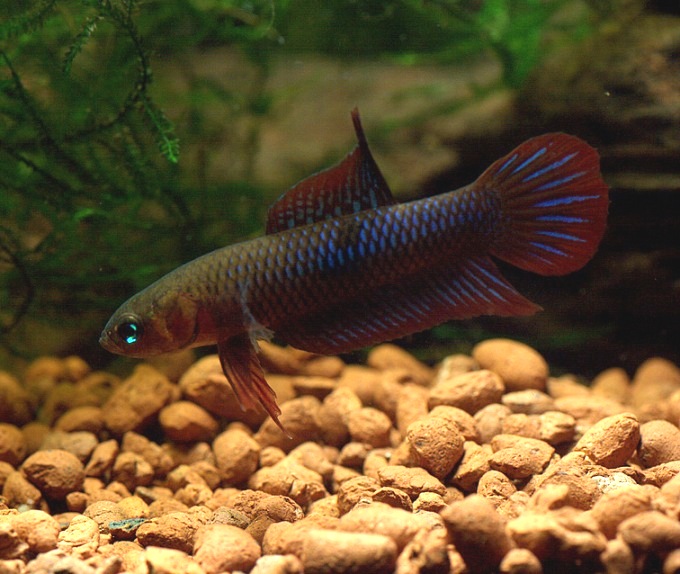
Betta uberis
Tan & Ng, 2006
Max length36mm SL1.4in SLTank45 × 30cm18 × 12inTemp22–27°C72–81°FpH4.0–6.0The majority of records pertain to an area sandwiched between the lower Arut and Kumai rivers, south of the towns of Pangkalan Bun and Kumai in Kalimantan Tengah (Central Kalimantan) province, Borneo, Indonesia. Addditional collections have taken place in the Sampit river basin to the east, and several hundred kilometres further north in Sukadana district Kalimantan Barat (West Kalimantan) province. Type locality is 'Indonesia: Borneo: Kalimantan Tengah: Arut basin: Pankalanbun', with the specimens having been obtained from the aquarium trade.
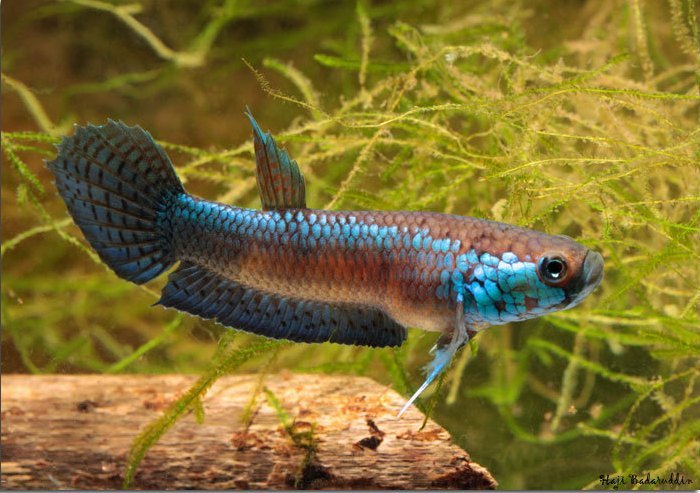
Betta unimaculata
Popta, 1905
Max length115mm SL5in SLTank80 × 30cm31 × 12inTemp21–26°C70–79°FpH5.0–7.5This species is included in the Betta unimaculata complex of closely-related species within the genus, of which members share the following set of characters: body long and slender with depth at dorsal fin origin 18-25 % SL; head large and blunt with width 19-24 % SL; long maxilla and lower lip with distance from tip of lower jaw to posterior end of maxilla 27-54 % HL; caudal-fin rounded in shape, occasionally with elongated median rays; pelvic-fin short and filamentous; dorsal and anal fins relatively pointed.
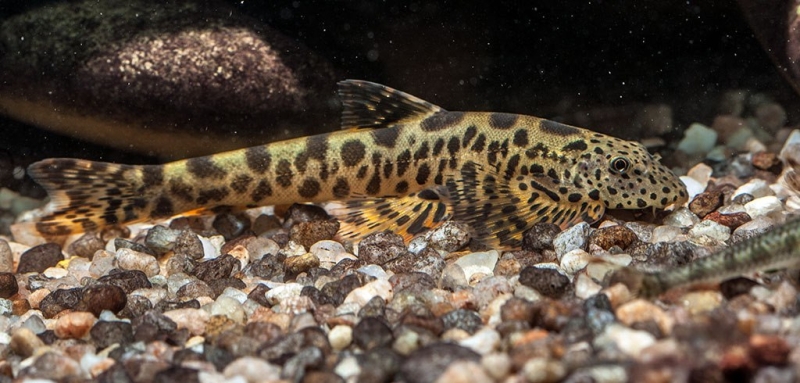
Bhavania australis
Jerdon, 1849
Max length100mm SL3.9in SLTank120 × 30cm48 × 12inTemp16–24°C61–75°FpH6.0–7.5An obligate dweller of shallow, fast-flowing, highly-oxygenated headwaters and minor tributaries characterised by stretches of riffles and runs broken up by pools or cascades in some cases. Substrates are normally composed of smaller rocks, sand and gravel with jumbles of boulders, and whil...
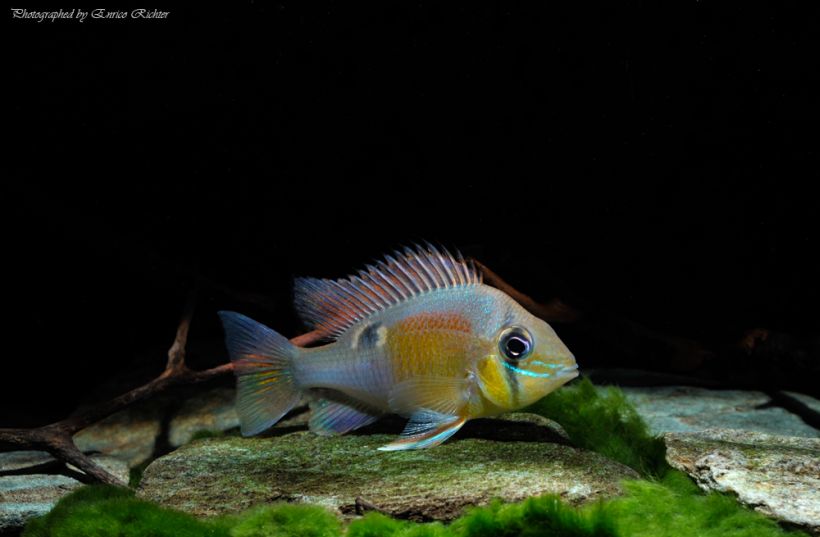
Biotodoma cupidoCupid Cichlid
Heckel, 1840
Max length100mm SL3.9in SLTank150 × 45cm60 × 18inTemp20–30°C68–86°FpH5.0–7.0Recorded throughout much of the Amazon basin, with its range extending eastwards from the Ucayali system in Peru as far as the Tocantins drainage which flows into the Atlantic alongside the Amazon at its delta. The southern extremity of its range appears to be the Río Mamoré in Bolivia, a tributary of the rio Guaporé, and the northern limit the Essequibo basin, Guyana.
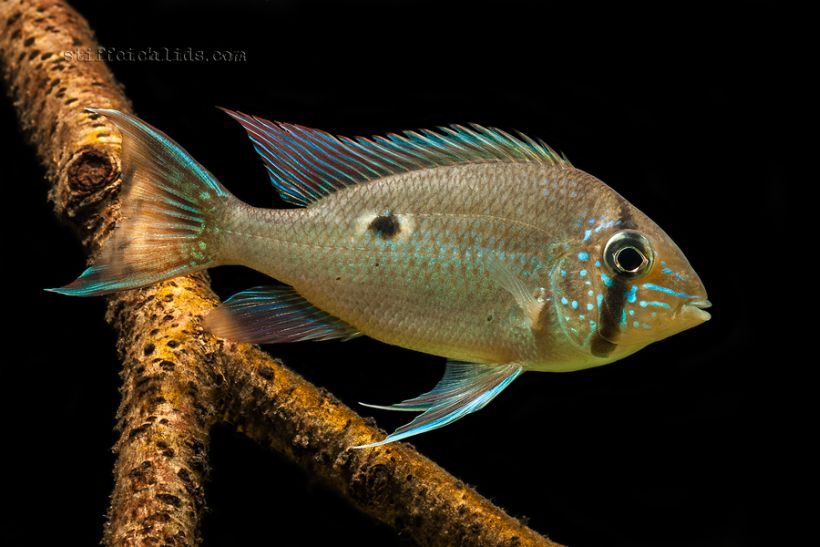
Biotodoma wavriniOrinoco Eartheater
Gosse, 1963
Max length100mm SL3.9in SLTank150 × 45cm60 × 18inTemp20–30°C68–86°FpH4.0–6.5Populations known in the aquarium trade include 'Cuao', 'Orinoco', 'San Antonio', and 'Sipapo Ventuari'. B. wavrini and its congener B. cupido can be separated by body shape and position of the dark blotch on the posterior portion of the flank. In B. cupido the body is relatively compact and the blotch located above the upper lateral line, whereas in B. wavrini the body is noticeably elongate and the blotch on or below the upper lateral line.
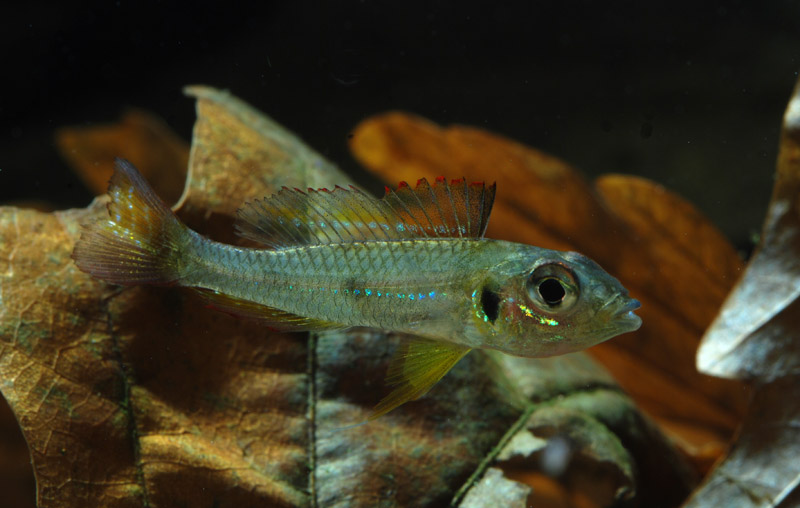
Biotoecus opercularis
Steindachner, 1875
Max length40mm SL1.6in SLTank90 × 30cm36 × 12inTemp25–30°C77–86°FpH4.0–6.5At time of writing there exists no scientific evidence that the different populations of this species seen in the aquarium trade (see 'Distribution') represent anything other than a single, widely-distributed species although some exibit minor morphological differences including relative body depth, longer fin rays in the unpaired fins and yellow or orange colouration in the paired fins. There is apparently a form from the upper rio Negro which may turn out to be distinct but it's...
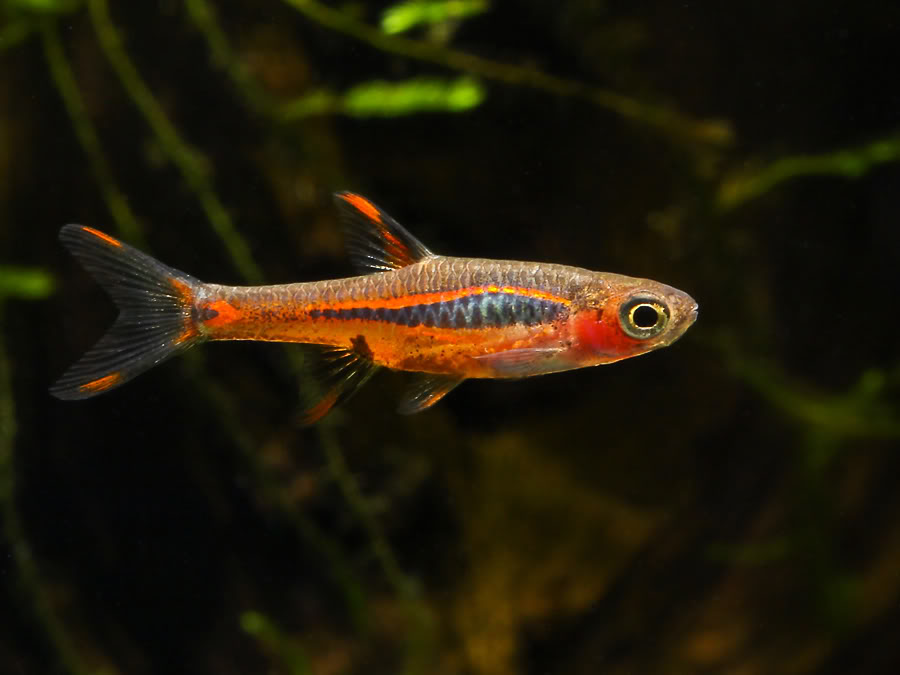
Boraras brigittaeMosquito Rasbora
Vogt, 1978
Max length20mm SL0.8in SLTank45 × 30cm18 × 12inTemp20–28°C68–82°FpH4.0–7.0Appears to be endemic to southwestern Borneo though occurence records are scant. Type locality is 'Bandjarmasin', a port town in the Indonesian province of Kalimantan Selatan (South Kalimantan), and following Kottelat (1991) it's range extends westwards as far as the Jelai Bila river basin, near the town of Sukamara, where it's said to occur sympatrically with the congener B. merah. Boraras was erected in 1993 in order to separa...
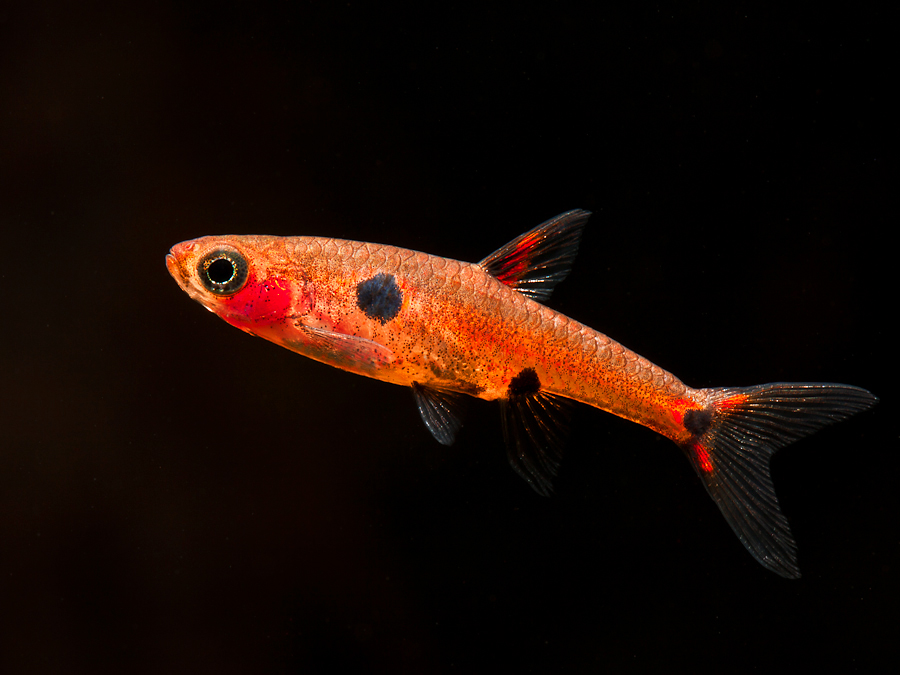
Boraras maculatusDwarf Rasbora
Duncker, 1904
Max length25mm SL1.0in SLTank45 × 30cm18 × 12inTemp20–28°C68–82°FpH4.0–6.5Within the genus Boraras this species is most similar to B. naevus, though in the latter the red body colouration does not extend into the head. The two also differ in the following characters: anteriormost lateral blotch of comparable size in both sexes in B. maculatus vs. significantly larger in male than female B. naevus; 9-10 + 9 principal caudal-fin rays vs. 9 + 8; 26-29 lateral scales vs. 24-26; i.6.i. pelvic-fin rays vs. i.5.i.
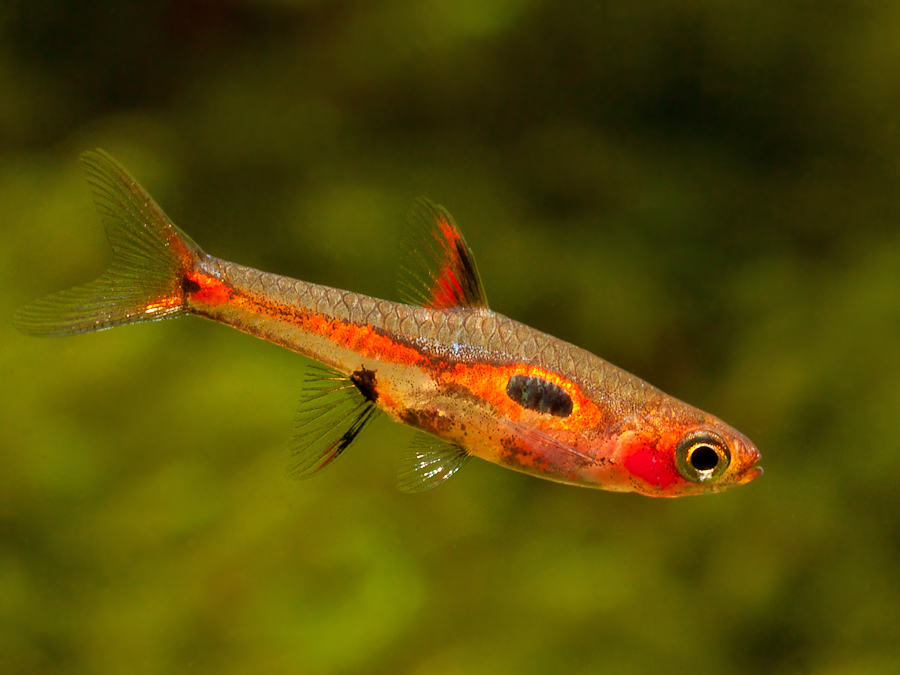
Boraras merah
Kottelat, 1991
Max length20mm SL0.8in SLTank45 × 30cm18 × 12inTemp20–28°C68–82°FpH4.0–6.5Appears endemic to southern Borneo. The type specimens were collected from the Jelai Bila river basin at Nataik Sedawak, presumably a settlement of some kind, near the town of Sukamara in the Indonesian province of Kalimantan Tengah (Central Kalimantan). Its range extends westwards from the Jelai Bila watershed whereas that of the congener B. brigittae, with which it may occur sympatrically there (see 'Notes'), extends east.
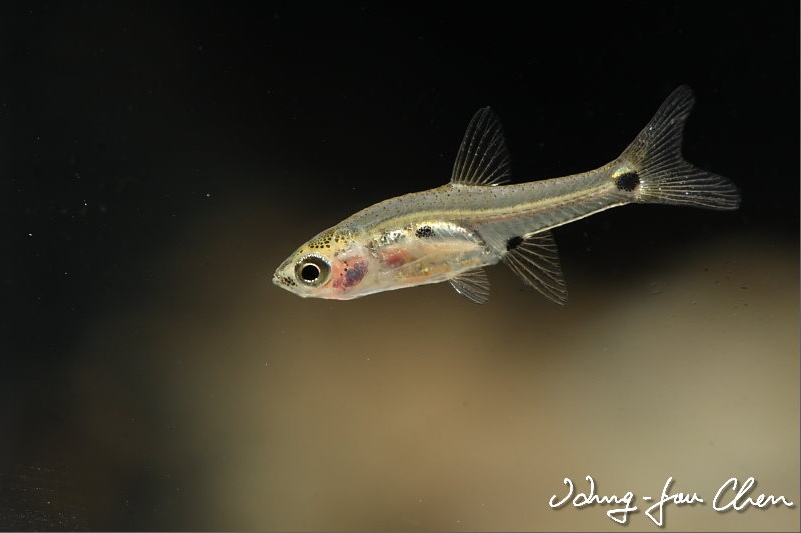
Boraras micros
Kottelat & Vidthayanon, 1993
Max length13mm SL0.5in SLTank45 × 30cm18 × 12inTemp20–28°C68–82°FpH6.0–7.0Bung Khong Long is a lake and confirmed locality in Nong Khai province, Thailand. Aquatic plant species in the lake and surrounding floodplain include Hydrilla verticillata, Ceratophyllum dermersum, Chara zeylanica and Blyxa echinosperma. Salvinia cucullata is found floating on the surface and emergent plants comprise Eleocharis dulcis, Nelumbo nucifera, Lepironia articulata and Nymphaea lotus.
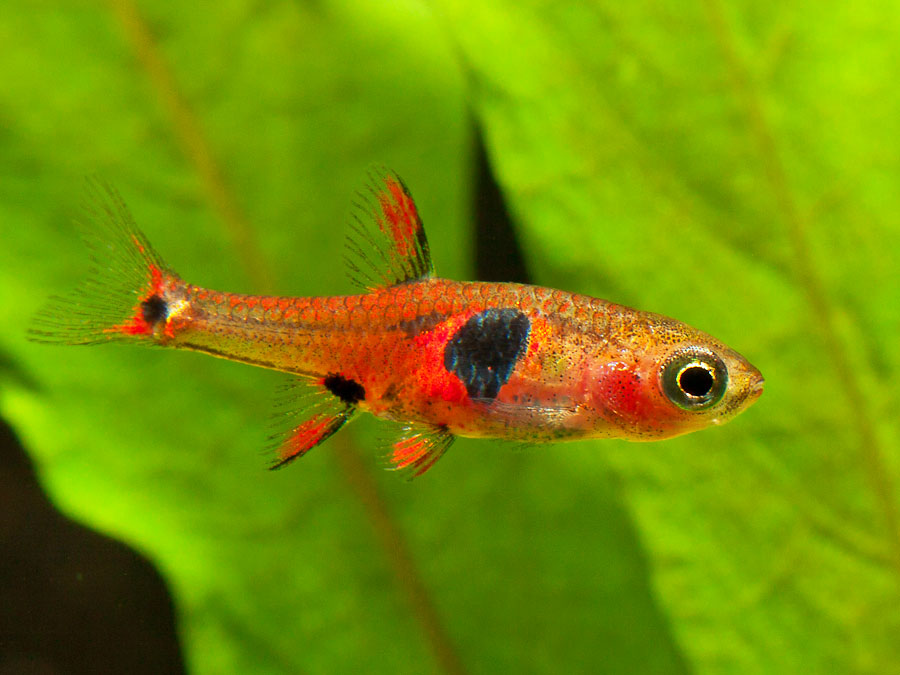
Boraras naevus
Conway & Kottelat, 2011
Max length20mm SL0.8in SLTank45 × 30cm18 × 12inTemp20–28°C68–82°FpH5.0–7.0Known only from southern (peninsular) Thailand with the type series originating from a swamp some 83 km north of Surat Thani city, Surat Thani province. It's been recorded at additional locations, all within the lower Tapi river drainage on the Gulf of Thailand slope of the Malay Peninsula. In the description Conway and Kottelat (2011) report the occurence of a similar-looking, possibly conspecific fish on the Andaman Sea side of the Peninsula, close to Trang province.
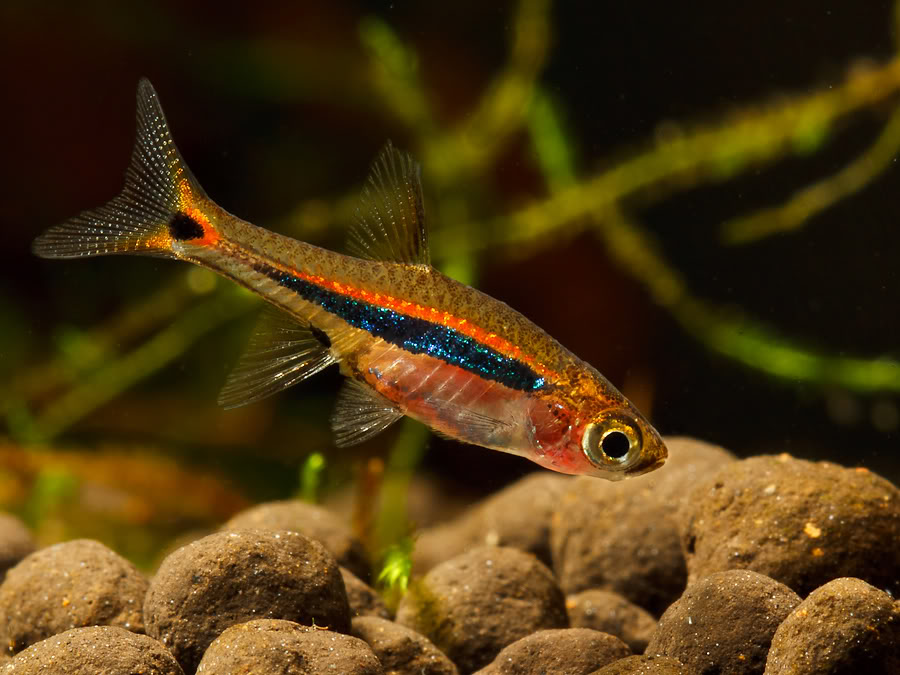
Boraras urophthalmoides
Kottelat, 1991
Max length16mm SL0.6in SLTank45 × 30cm18 × 12inTemp20–28°C68–82°FpH6.0–7.0The anatomical structure of miniaturised cyprinids can vary greatly, and there are two principle 'groupings' with some species possessing intermediate features to some degree. The first contains those fishes which though small are essentially proportionally dwarfed versions of their larger relatives, e.g., Barboides, Microdevario, Microrasbora, Horadandia, Boraras, Sawbwa, Sundadanio, Danio, Laubuca and Rasbora. The other includes those in which anatom...
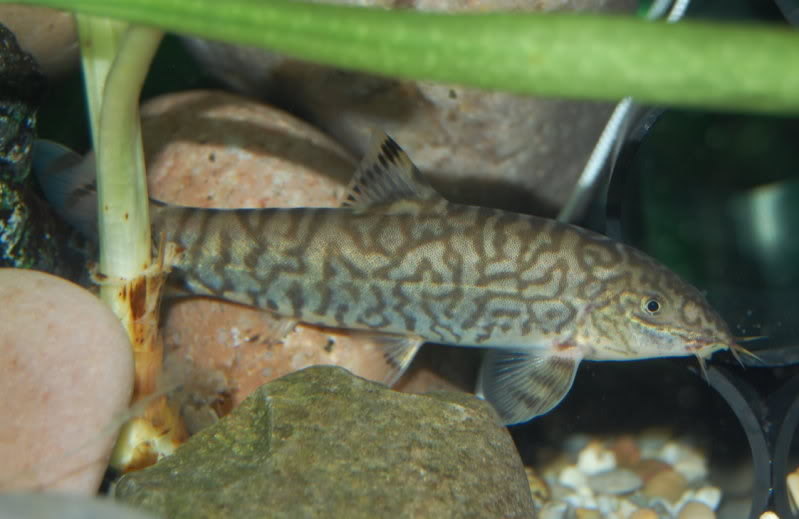
Botia almorhaeYo-Yo Loach
Gray, 1831
Max length160mm SL6in SLTank120 × 45cm48 × 18inTemp19–27.5°C66–82°FpH6.0–7.5The physical appearance of B. almorhae sensu stricto is something of a mystery. No pictures of live specimens appear in any scientific publications we've read and we've been unable to find a certified image of one anywhere meaning it's possibly never been seen in the aquarium trade. Instead the most commonly available members of the nominal species grouping seem to be B. lohachata, B. sp. 'Kosi' and B. sp. 'Teesta' (see individual notes below), plus the assorted hybrids that have appeared since the turn of the century (Grant, 2007).
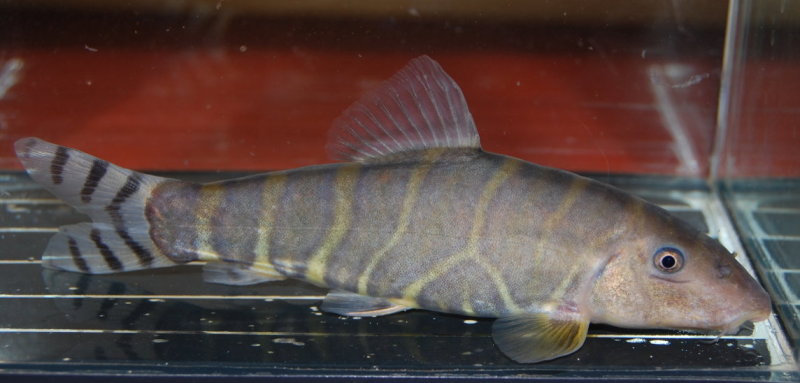
Botia darioBengal Loach
Hamilton, 1822
Max length130mm SL5in SLTank120 × 45cm48 × 18inTemp23–26°C73–79°FpH6.0–7.5Following Grant (2007) this species is included in the B. dario complex of closely-related species within the genus alongside B. striata. They're characterised by body patterning consisting of a base yellow to golden colour with 7-9 blue, green, grey or black body bars usually with thinner, lighter bars between. In some individuals the...
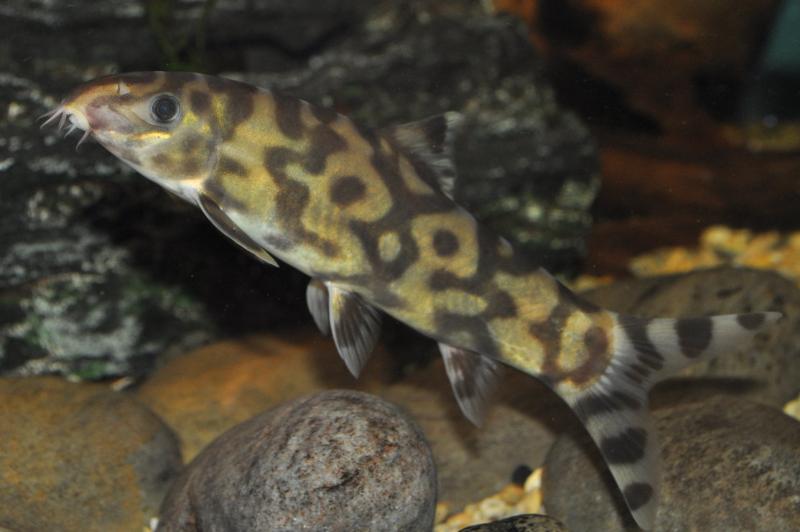
Botia histrionica
Blyth, 1860
Max length130mm SL5in SLTank120 × 45cm48 × 18inTemp22–28°C72–82°FpH6.0–7.5Adult patterning of the different geographical forms can vary considerably though young specimens all possess 5 solid dark bars on each flank and are often confused with those species exhibiting a similar juvenile pattern, particularly B. kubotai. However the horizontal dark bars on the flanks in B. kubotai typically split at quite a young age and/or develop horizontally-orientated 'peaks' whereas those in B. histrionica remain solid for longer and the central bar usually has a pale spot at the top so forms a 'y' shape.
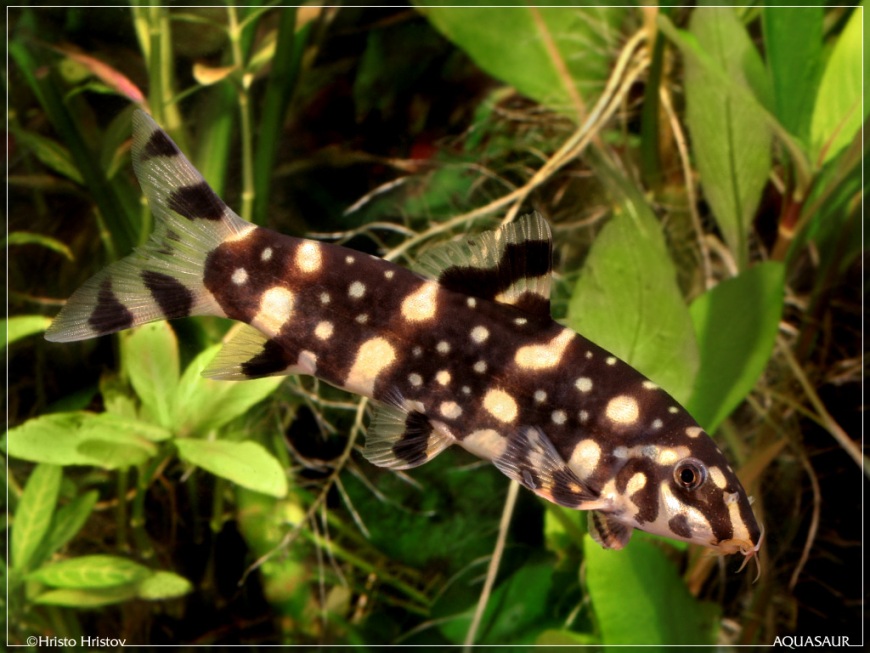
Botia kubotaiPolka-Dot Loach
Kottelat, 2004
Max length150mm SL6in SLTank120 × 45cm48 × 18inTemp22–28°C72–82°FpH6.0–7.5Appears to be endemic to headwaters of the Salween River basin around the border between Myanmar and Thailand. The type specimens were collected from the Megathat Chaung (Megathat stream) in the upper Ataran (known as the Kasat in Thai) River basin, Kayin/Karen State, Myanmar and another population was later discovered in the Hanthayaw River (Suriya in Thai), Tak Province, Thailand.
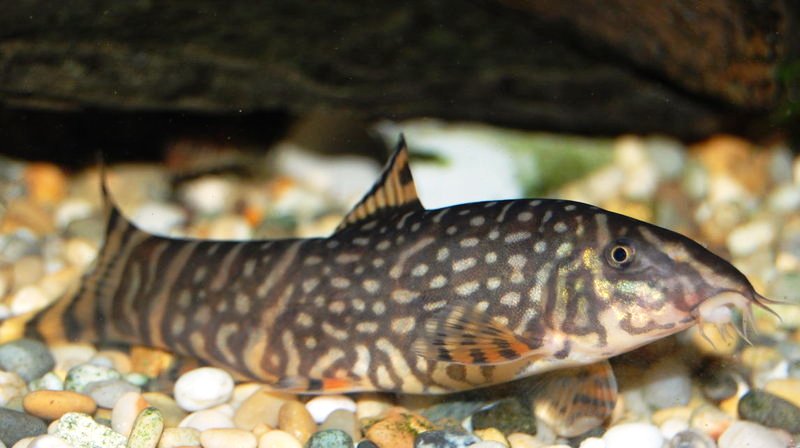
Botia rostrata
Günther, 1868
Max length120mm SL5in SLTank120 × 45cm48 × 18inTemp19–27°C66–81°FpH6.0–7.5Within the nominal species grouping suggested by Grant (2007) almost all B. rostrata sold in the hobby are B. sp. 'upper Brahmaputra' with B. rostrata sensu stricto rarely, if ever, available. Trade names include 'Gangetic loach', 'twin-banded loach' and 'ladder loach'. The defining characters of the group are "Pattern consisiting of 8-10 black to dark brown body bars that exhibit pale and numerous spots in juveniles, and in adults the bars can anast...
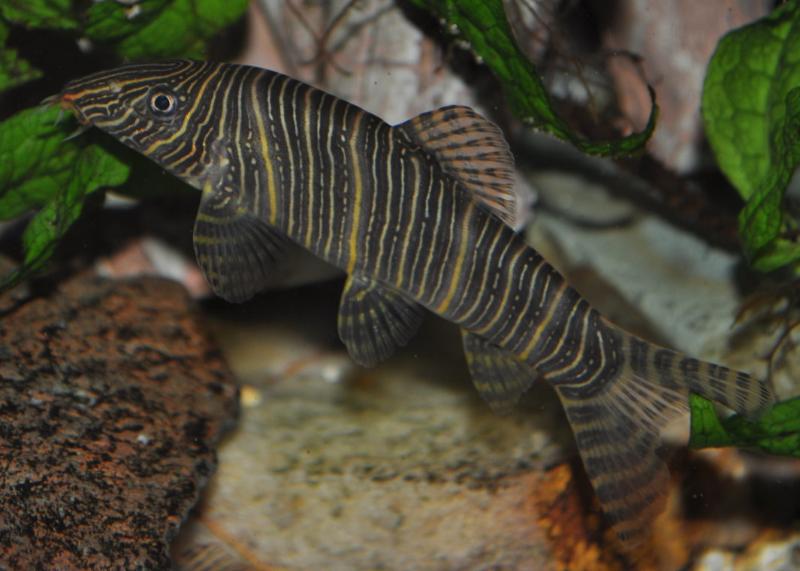
Botia striataZebra Loach
Narayan Rao, 1920
Max length90mm SL3.5in SLTank120 × 30cm48 × 12inTemp21–26°C70–79°FpH6.0–7.5In a survey of fish diversity in the Bhadra River (which joins the Tunga to form the Tungabhadra) it was recorded alongside numerous other species including Puntius chola, Balitora mysorensis, and Mystus armatus. Dry season water paramaters were temperature 69.8°F/21°C, pH 7.0, hardness ~ 2.5°. The substrate was composed of bedrock, boulders, cobbles, gravel, sand and leaf litter in descending order of abundance with a maximum depth of around...