Results for “description”
Type a name: scientific, common, or one a species used to go by. Or narrow the catalogue with the filters.
Filters
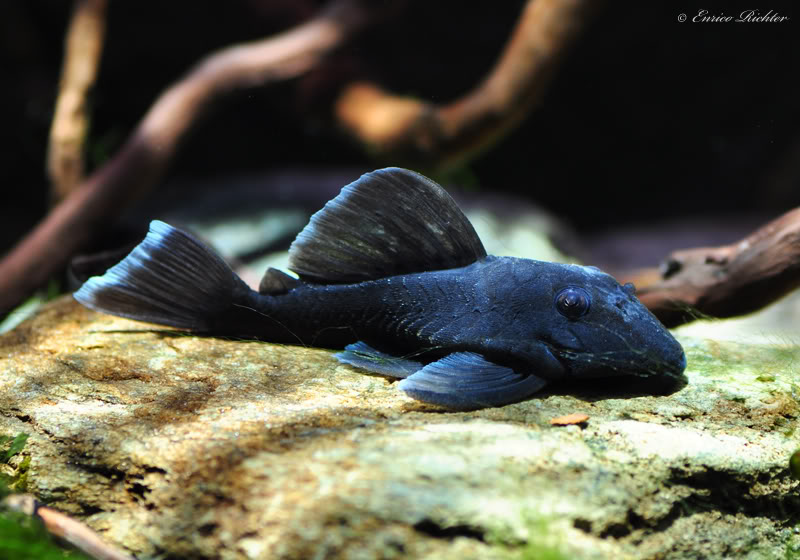
Baryancistrus begginiL239
Lujan, Arce & Armbruster, 2009
Max length81mm SL3.2in SLTank80 × 30cm31 × 12inTemp26–30°C79–86°FpH5.5–7.5Prior to description this species was traded under the DATZ code L239. It can be distinguished from other species in the genus and other hypostomines (see below for definition of this grouping) by its uniformly black to brownish body and fin colouration with a turquoise to bluish sheen, and the acutely bent shape of midventral body plates 3-5 which form a distinctive keel running along the body, above the pectoral fins...
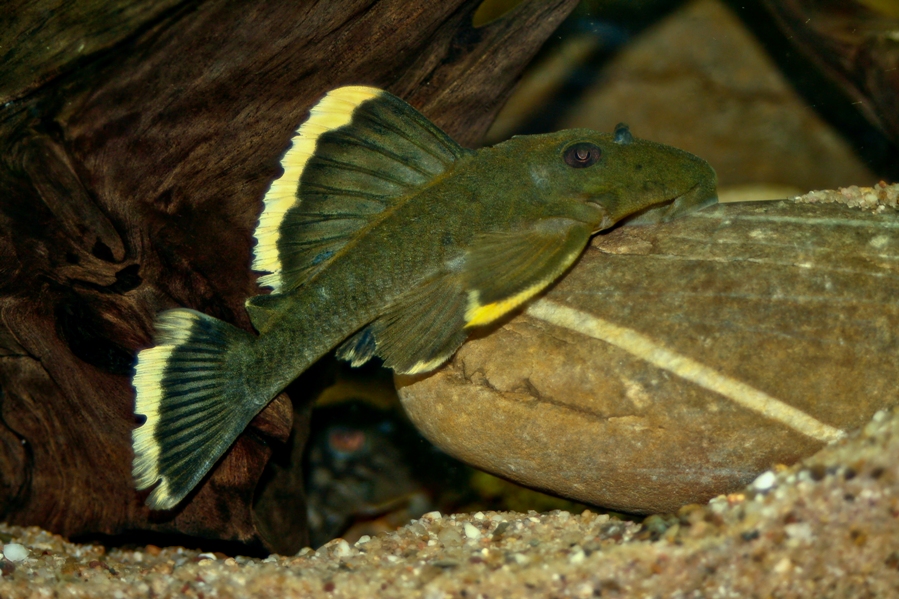
Baryancistrus chrysolomusMango Pleco
Rapp Py-Daniel, Zuanon & Ribeiro de Oliveira, 2011
Max length219mm SL9in SLTank120 × 45cm48 × 18inTemp27–32°C81–90°FpH6.0–7.5Prior to description this species was traded under the DATZ code L047 or the alternative vernacular name 'magnum pleco'. It can be distinguished from congeners by a combination of the following characters: presence of a broad, light-coloured (usually yellowish) distal band on the dorsal and caudal fins throughout life, slightly reduced in adults. The only other member of the genus to possess such bands is B. xanthellus but in that species they are reduced to small markings at the fin tips in adults, and the body is covered in pale, normally yellowish, spots.
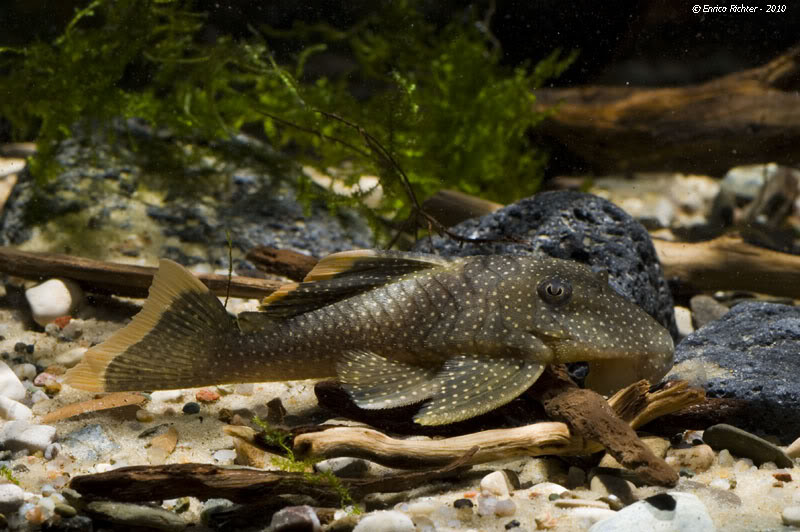
Baryancistrus sp. cf. xanthellusGold Nugget Pleco
authority not recorded
Max length180mm SL7in SLTank120 × 45cm48 × 18inTemp27–32°C81–90°FpH6.4–7.6It remains unconfirmed as to whether this fish represents a colour form of B. xanthellus or not since its DATZ code number of L081 is not referred to in the description paper whereas all other codes for 'gold nugget' plecos, i.e., L018, L085, L177 plus the 'Das Aquarium' code LDA060 are mentioned. In addition, one of the specimens in our images was apparently collected at São Félix do Xingu which is significantl...
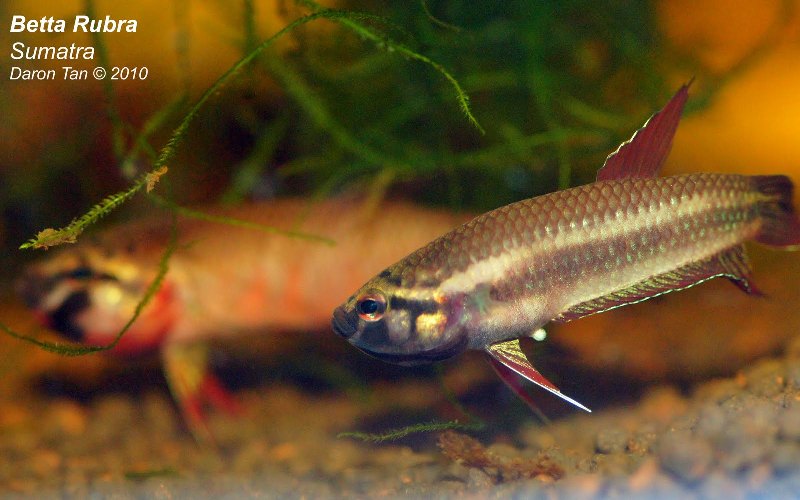
Betta dennisyongi
Tan, 2013
Max length36mm SL1.4in SLTank45 × 30cm18 × 12inTemp22–27°C72–81°FpH5.0–7.0This species is available in the aquarium hobby but is not traded in large numbers and may have been inadvertently hybridised with the similar-looking congener B. rubra prior to its description since they're typically exported mixed together. It's included in the B. rubra group of closely-related species within the genus, an assemblage erected by Schindler and van der Voort (2012) who...
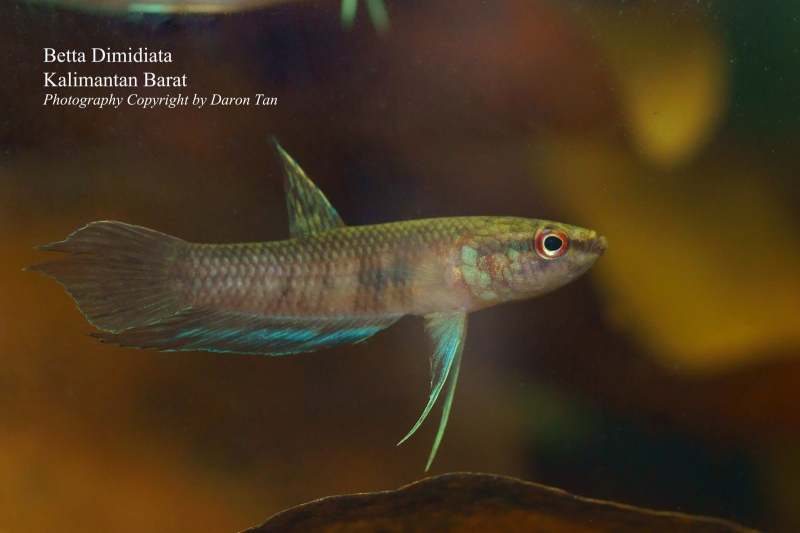
Betta dimidiata
Roberts, 1989
Max length40mm SL1.6in SLTank45 × 30cm18 × 12inTemp22–27°C72–81°FpH5.2–6.5This species is often confused with B. krataios in the aquarium trade, the latter having been known as B. sp. 'Kapuas' prior to description. The two can easily be told apart as the caudal-fin is rounded in B. krataios but spade-shaped and in adults, highly-extended in B. dimidiata. Together these two comprise the B. dimidiata group of closely-related species within the gen...
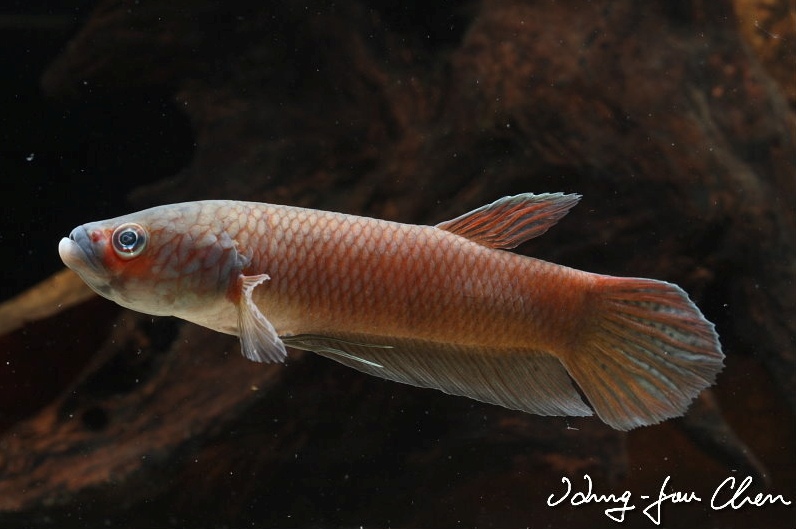
Betta ideii
Tan & Ng, 2006
Max length110mm SL4in SLTank90 × 30cm36 × 12inTemp20–26°C68–79°FpH5.5–7.5Prior to official description this species was traded as B. sp. 'Laut'. It's included in the Betta unimaculata complex of closely-related species within the genus, , of which members share the following set of characters: body long and slender with depth at dorsal fin origin 18-25 % SL; head large and blunt with width 19-24 % SL; long maxilla and lower lip with distance from tip of lower jaw to posterior end of maxilla 27-54 % HL; caudal-fin rounded in sha...
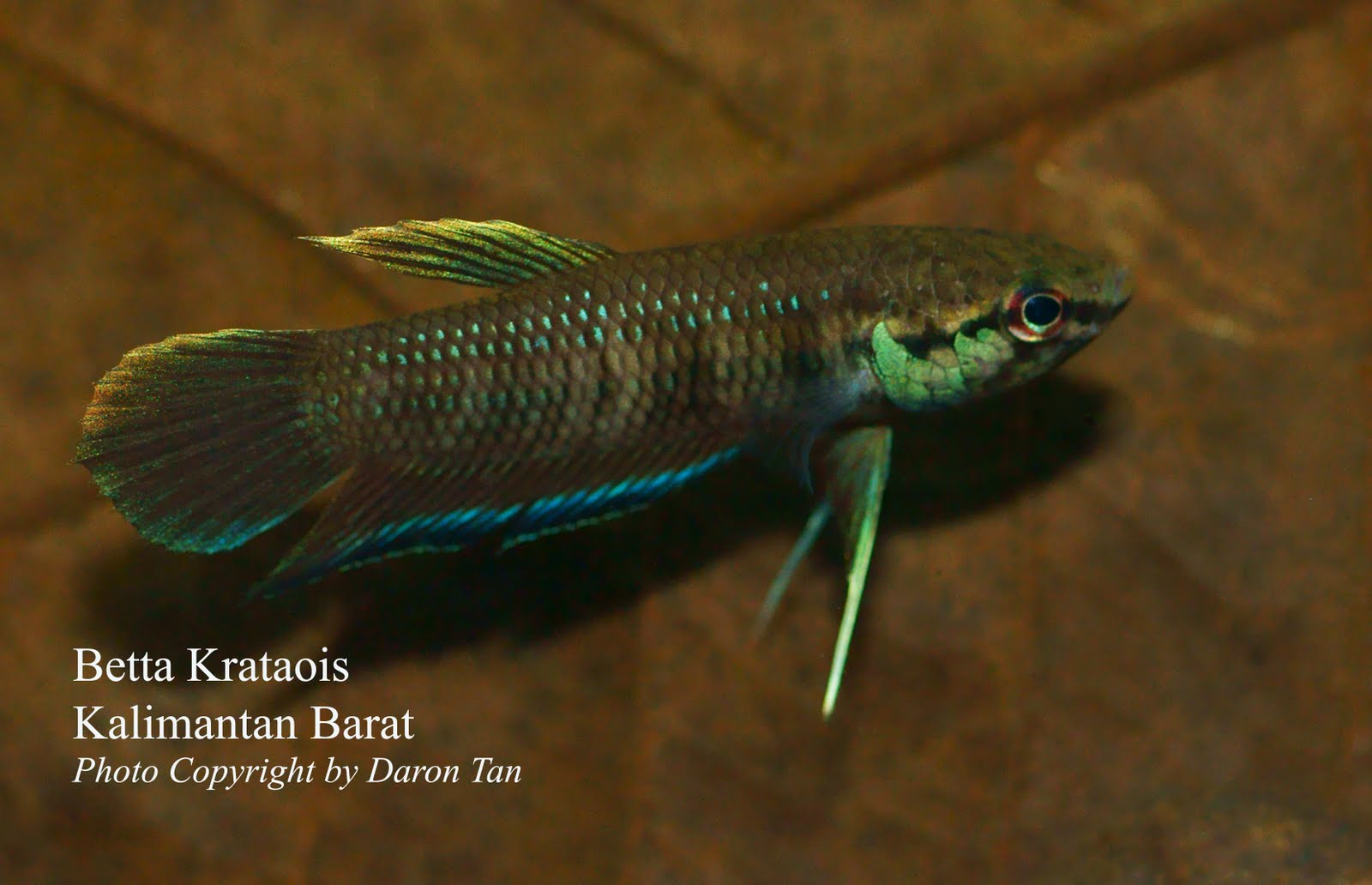
Betta krataios
Tan & Ng, 2006
Max length45mm SL1.8in SLTank45 × 30cm18 × 12inTemp22–28°C72–82°FpH5.0–7.0This species was traded as B. sp. 'Kapuas' prior to its formal description and continues to be mislabelled B. dimidiata. The two can easily be told apart as the caudal-fin is rounded in B. krataios but spade-shaped and in adults, highly-extended in B. dimidiata. Together these two comprise the B. dimidiata group/complex of closely-related species within the genus, members of which can be characterised b...
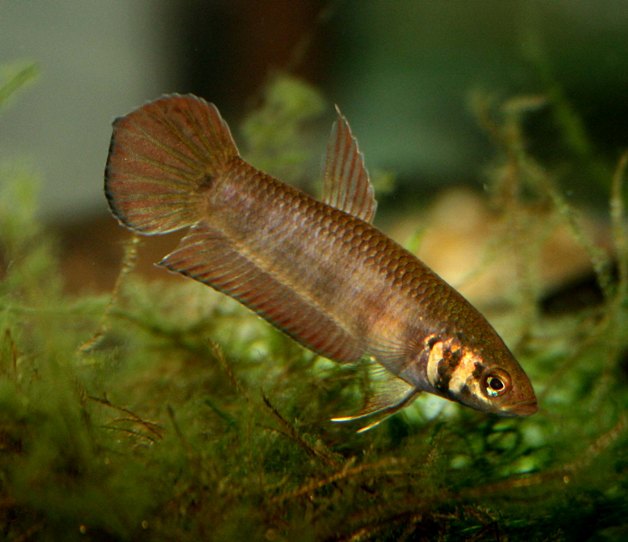
Betta mandor
Tan & Ng, 2006
Max length60mm SL2.4in SLTank60 × 30cm24 × 12inTemp22–27°C72–81°FpH4.0–6.5This species was known as B. sp. 'Mandor' or B. sp. 'ninja' prior to official description. It belongs to the Betta foerschi group/complex of closely-related species within the genus, of which members share the following set of characters: possession of iridescent blue or green unpaired fins; rays and interradial membranes in unpaired fins not contrasting; dorsal fin with thin, bright white distal band; opercle with two, reddish-yellow, vertical bars. Members are regarded as being closely-related to bubble-nesting Betta species since they share exhibit certain similarities in morp...
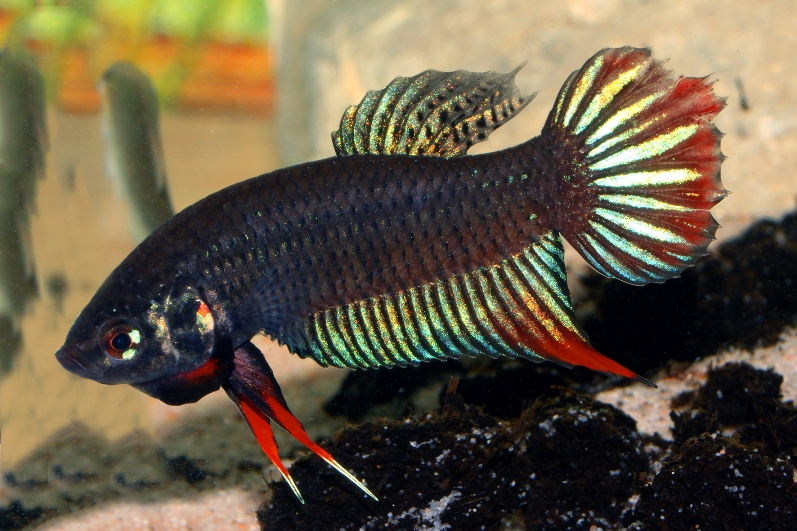
Betta siamorientalis
Kowasupat, Panijpan, Ruenwongsa & Jeenthong, 2012
Max length33mm SL1.3in SLTank45 × 30cm18 × 12inTemp22–28°C72–82°FpH5.5–7.5This species was considered a colour form of the closely-related B. imbellis and commonly-referred to as 'black imbellis' prior to description due to its blackish opercle and body. It's also previously been confused with B. splendens due to the colour of the vertical opercular bars which tend to be reddish (but may also be pale red, greenish-silvery, plain silvery or without colour in some populations), but DNA analysis has demonstrated it...
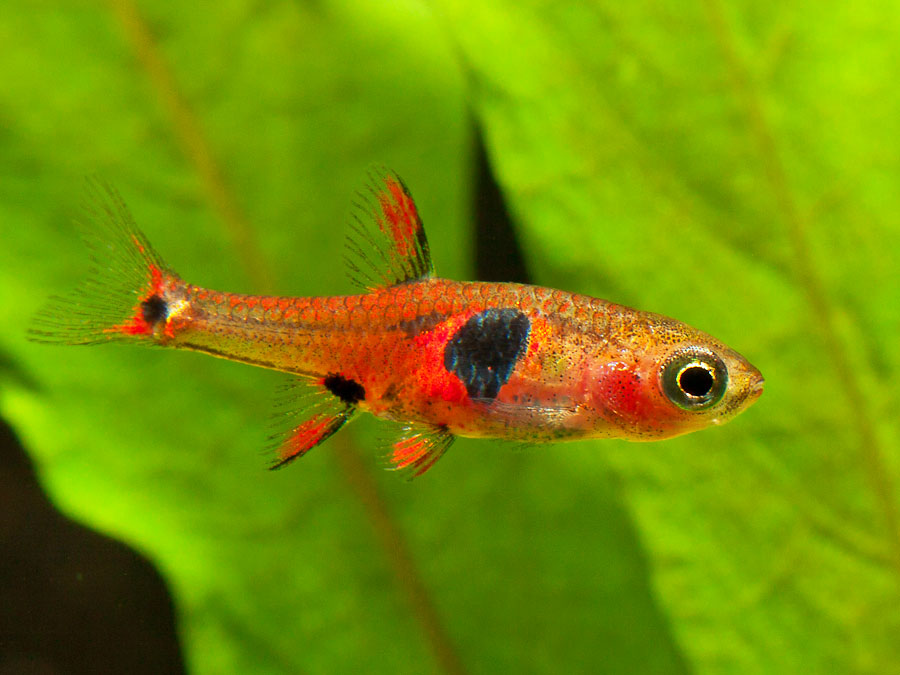
Boraras naevus
Conway & Kottelat, 2011
Max length20mm SL0.8in SLTank45 × 30cm18 × 12inTemp20–28°C68–82°FpH5.0–7.0Known only from southern (peninsular) Thailand with the type series originating from a swamp some 83 km north of Surat Thani city, Surat Thani province. It's been recorded at additional locations, all within the lower Tapi river drainage on the Gulf of Thailand slope of the Malay Peninsula. In the description Conway and Kottelat (2011) report the occurence of a similar-looking, possibly conspecific fish on the Andaman Sea side of the Peninsula, close to Trang province.
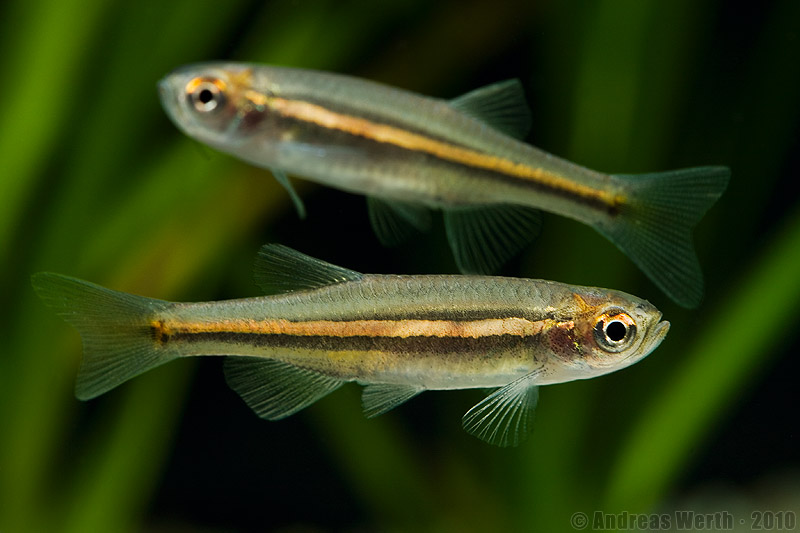
Brachydanio jaintianensis
Sen, 2007
Max length45mm SL1.8in SLTank80 × 30cm31 × 12inTemp18–23°C64–73°FpH6.0–7.0To date known only from the Jaintia Hills district, Meghalaya state, northeastern India meaning its natural waters are part of the Brahmaputra River system. The type locality is given as 'Tre Rangriang, Jowai' in the description paper, but we've been unable to locate this on any map. The paratypes were collected at 'Thlu Muwi', which probably refers to the ancient stone bridge built over the Muwi stream, a place popular with tourists due to the nearby Muwi waterfalls.
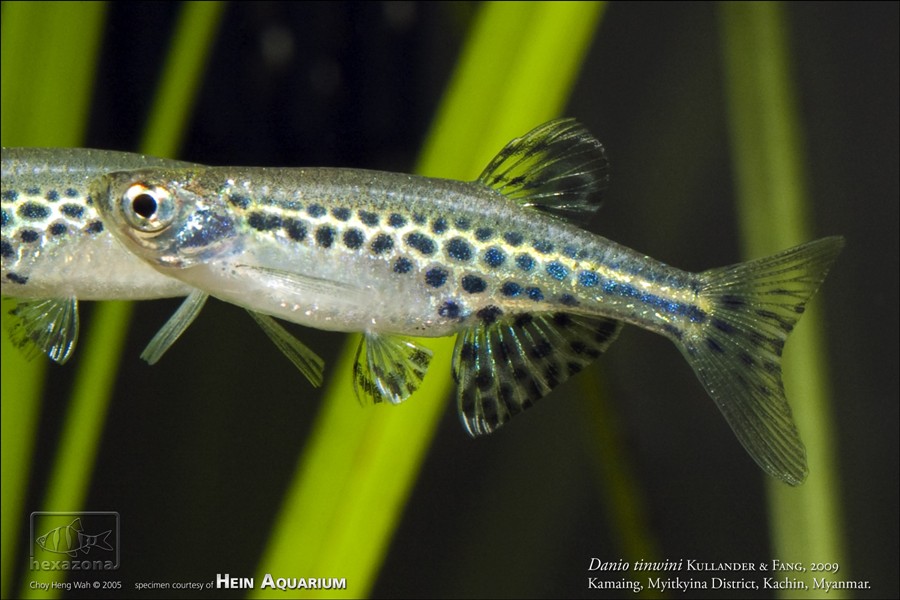
Brachydanio tinwiniGold Ring 'Danio'
Kullander & Fang, 2009
Max length30mm SL1.2in SLTank45 × 30cm18 × 12inTemp18–26°C64–79°FpH6.5–7.5Adult size is comparable to B. nigrofasciata, and in the description paper the authors hypothesise that the two are closely-related given they share other features such as similar barbel length (plus some additional merisitic counts), absent lateral line and spotted pelvic fins. The two are easy to tell apart, however, since in B. tinwini the P+1 stripe is composed of a series of spots (vs. solid), it possesses an indistinct P+2 str...
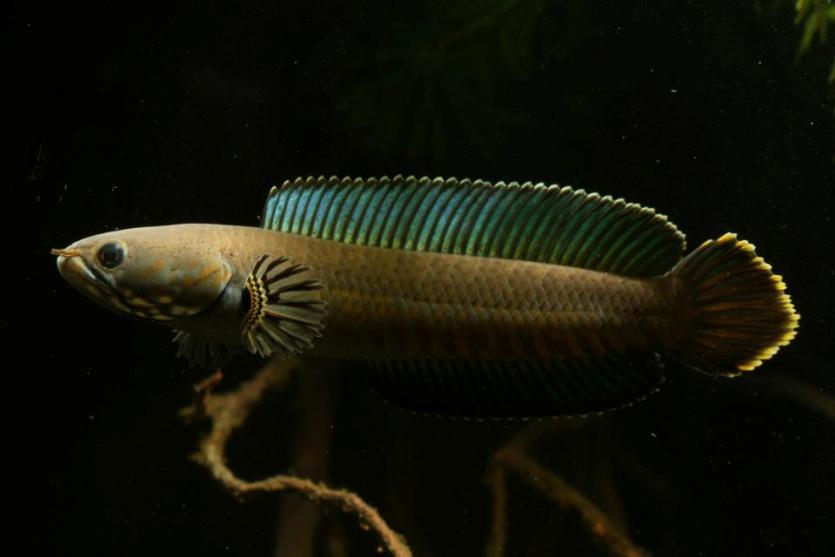
Channa andraoLal Cheng
Britz, 2013
Max length110mm SL4in SLTank80 × 30cm31 × 12inTemp14–28°C57–82°FpH6.0–8.0This species was available in the aquarium hobby for a number of years prior to description and continues to be traded under various names including C. sp. 'Lal Cheng', C. sp. 'Assam', C. sp. 'blue bleheri', C. sp. 'himalayanus', and C. sp. 'red'. The names of valid, but distinct, congeners such as C. amphibeus, C. bleheri or C. stewartii have also been misapplied to it.
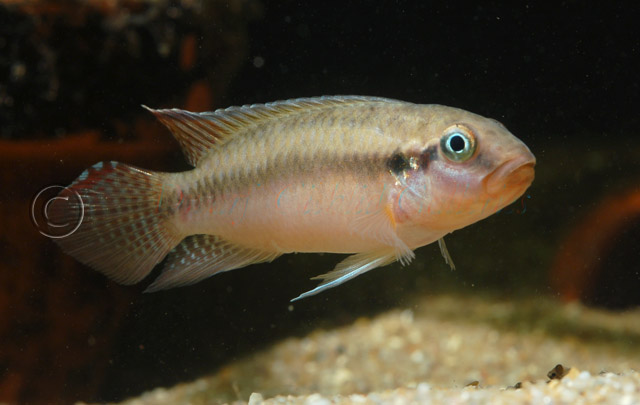
Congochromis sabinae
Lamboj, 2005
Max length70mm SL2.8in SLTank60 × 30cm24 × 12inTemp24–27°C75–81°FpH4.0–6.0This species was present in the hobby for some time prior to being officially described and the spectacular red fish first exported by Pierre Brichard in the 1960s appears to be a regional form of it. It was also known variously as Nanochromis sp. 'Bamanja', N. sp. 'Genema', N. sp. 'Makoua' and N. sp. Bloody Mary' prior to description, and continues to be mislabelled as N. squamiceps on trade lists. Diagnosis of C. sabinae is possible via a combination of c...
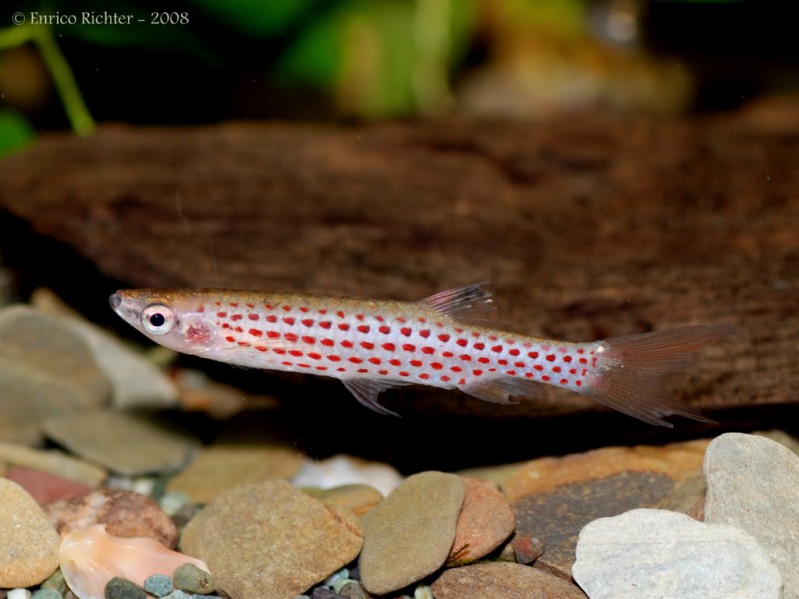
Copella meinkeniSpotted Splashing Tetra
Zarske & Géry, 2006
Max length45mm SL1.8in SLTank60 × 30cm24 × 12inTemp20–28°C68–82°FpH4.0–7.0This species has been widely referred to as the congener C. nattereri in aquarium literature both prior to and post-publication of its official description in 2006. The two can be told apart quite easily by the fact that C. nattereri possesses a dark lateral stripe while C. meinkeni does not. C. meinkeni can be distinguished from all congeners by the followi...
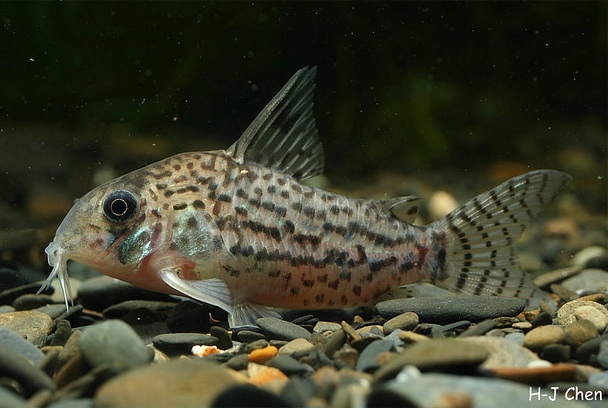
Corydoras acrensisAcre Cory
Nijssen, 1972
Max length55mm SL2.2in SLTanknot recordedTemp21–25°C70–77°FpH6.0–7.5Type locality is 'Furo do Lago São Francisco, 7°40'S, 72°39'W, tributary at left bank of Rio Juruá, Acre State, Brazil', and C. acrensis appears to be endemic to the rio Juruá basin. Unfortunately diagnostic characters cannot be provided since we've been unable to obtain the type description, and little has been written about this species since it was published.
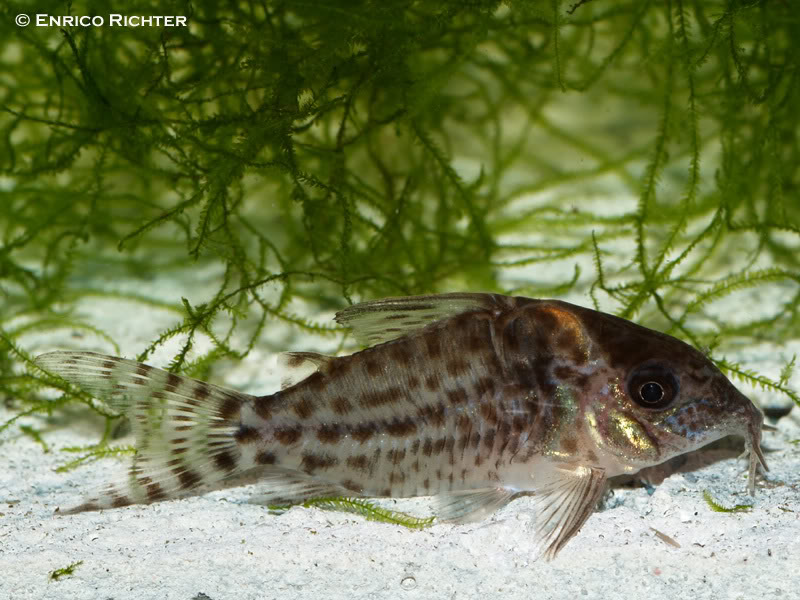
Corydoras agassiziiSpotted Cory
Steindachner, 1876
Max length70mm SL2.8in SLTanknot recordedTemp22–27°C72–81°FpH6.0–8.0This species' name is commonly misapplied to a number of similar-looking fishes and it can be difficult to identify if collection locality is unknown. In addition, colour pattern is variable and it's not clear whether this occurs between, within, or both between and within populations. In the original description, Steindachner did note that the first three dorsal-fin rays are completely black while the remainder is whi...
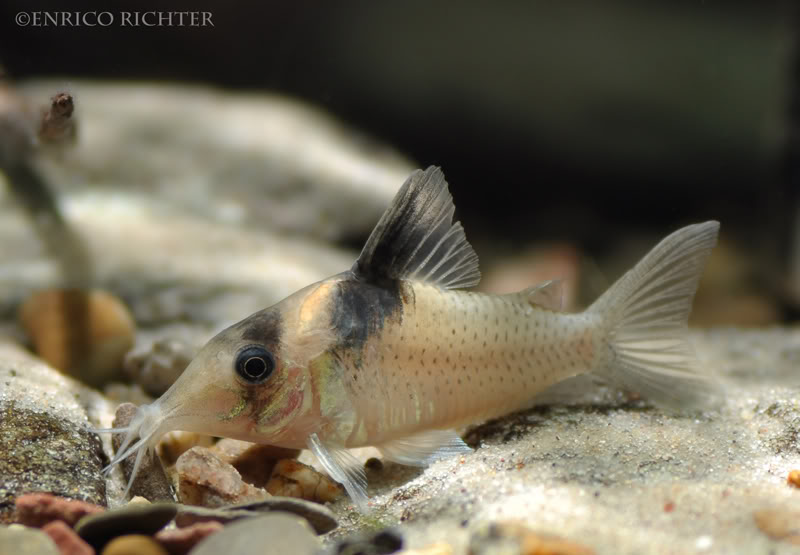
Corydoras amandajanea
Sands, 1995
Max length65mm SL2.6in SLTanknot recordedTemp23–27°C73–81°FpH6.0–7.5C. amandajanea is rare in the aquarium trade and appears to be variable in colour pattern to an extent, with some individuals posssessing relatively larger dark spots on the body, for example. Unfortunately diagnostic characters cannot be provided since we've been unable to obtain the type description, and little has been written about this species since it was published.
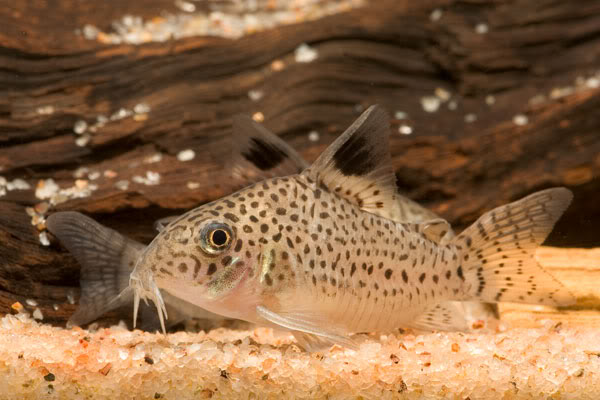
Corydoras copei
Nijssen & Isbrücker, 1986
Max length50mm SL2.0in SLTank80 × 30cm31 × 12inTemp20–26°C68–79°FpH5.0–7.0This species is not well known and rarely traded for the aquarium hobby. Unfortunately diagnostic characters cannot be provided since we’ve been unable to obtain the type description, and little has been written about this species since it was published. It looks very similar to several congeners, particularly C. acrensis and C. cruziensis.
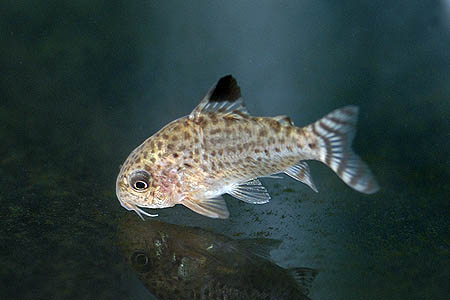
Corydoras cruziensisSanta Cruz Cory
Knaack, 2002
Max length50mm SL2.0in SLTank80 × 30cm31 × 12inTemp20–28°C68–82°FpH6.0–8.5This species is not well-documented but is said to differ from the comparable C. punctatus by possessing larger dark markings on the body which may form an irregular midlateral stripe in some specimens. Unfortunately diagnostic characters cannot be provided since we’ve been unable to obtain the type description, and little has been written about the species since it was published.