Results for “description”
Type a name: scientific, common, or one a species used to go by. Or narrow the catalogue with the filters.
Filters
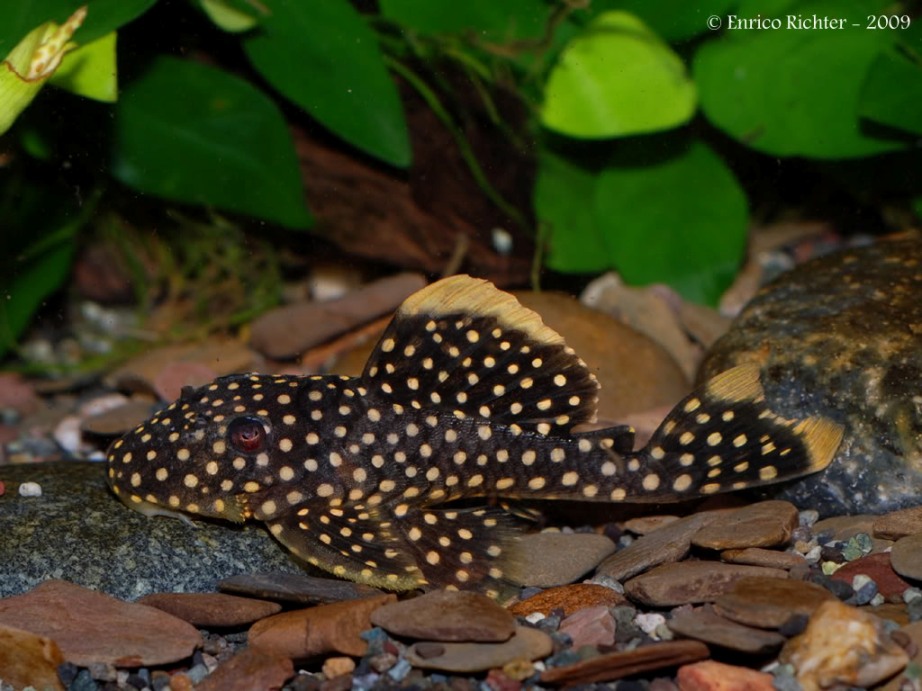
Baryancistrus xanthellusGold Nugget Pleco
Rapp Py-Daniel, Zuanon & Ribeiro de Oliveira, 2011
Max length224mm SL9in SLTank120 × 45cm48 × 18inTemp27–32°C81–90°FpH6.0–8.0Prior to description in 2011 this species was traded under the DATZ code numbers L018, L085, L077 and 'Das Aquarium' code LDA060, while a very similar-looking fish from the lower rio Xingu which has been assigned the code L081 may also represent a form of B. xanthellus but is not mentioned in the description paper. B. xanthellus can be distinguished from congeners by a combination of the following...
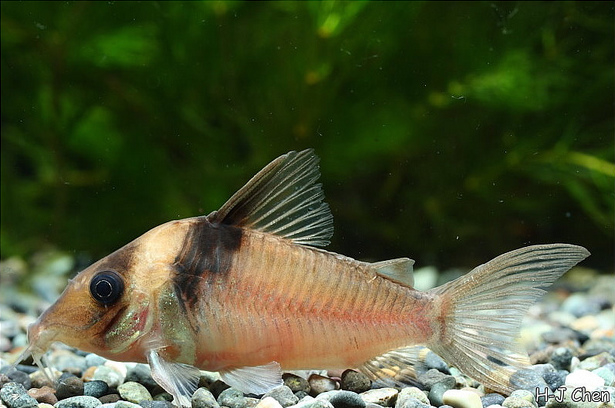
Corydoras virginiaeMiguelito Cory
Burgess, 1993
Max length60mm SL2.4in SLTanknot recordedTemp22–28°C72–82°FpH6.0–7.5This species is sometime referred to as 'Virginia's catfish', Corydoras sp. 'Sangama' or 'Zangama', and prior to description was misidentified as both Corydoras bicolor and C. delphax. Unfortunately additional diagnostic characters cannot be provided since we've been unable to obtain the type description, and little has been written about this species since it was published.
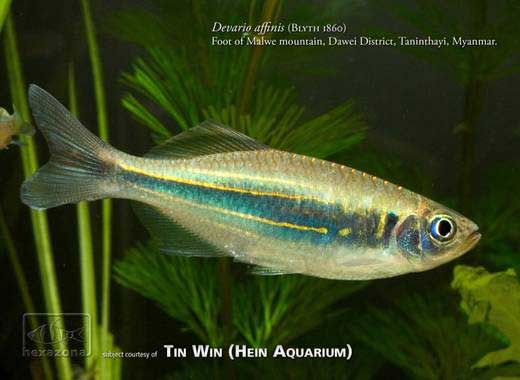
Devario affinis
Blyth, 1860
Max length80mm SL3.1in SLTank120 × 45cm48 × 18inTemp20–26°C68–79°FpHnot recordedType locality is 'Tenasserim, Myanmar' which at time of description was used to refer to the portion of Myanmar lying to the south and east of the Ayeyarwaddy/Irrawaddy river delta, including present-day Kayah, Kayin, and Mon states, Bago Division, and possibly the southern Tanintharyi Region. Blyth's description paper covered fishes collected from the Sittaung River (plus a few Gangetic species) in what is currently Bago Division, but we've been unable to locate any modern records of D. affinis fro...
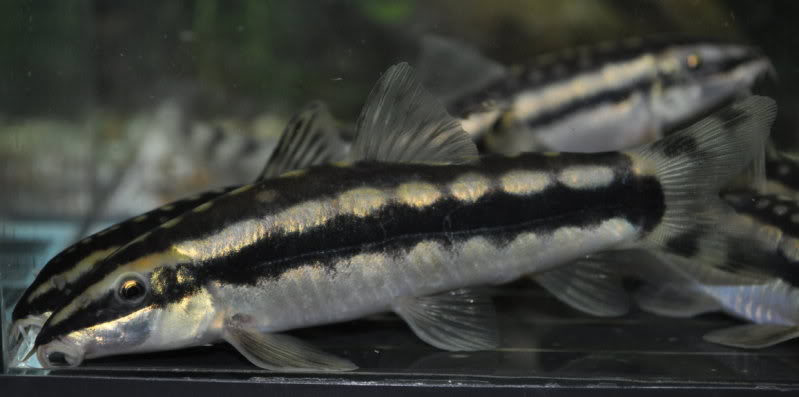
Ambastaia nigrolineataBlack-Lined Loach
Kottelat & Chu, 1987
Max length80mm SL3.1in SLTank90 × 30cm36 × 12inTemp20–25°C68–77°FpH6.5–7.5This specie is relatively rare in the aquarium trade and much sought after by enthusiasts as a result. It looks relatively similar to A. sidthimunki but according to the original description by Kottelat and Chu (1987) can be told apart by colour patterning which uniquely consists of a solid da...
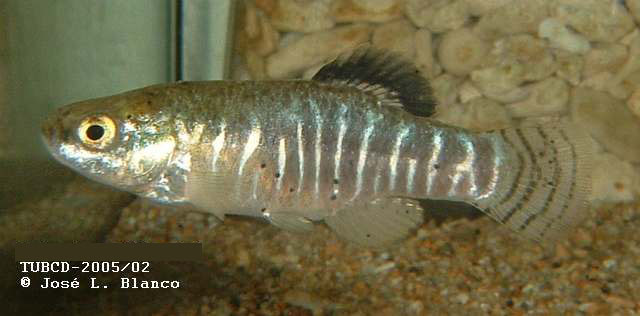
Anatolichthys villwockiSakarya Toothcarp
Hrbek & Wildekamp, 2003
Max length60mm SL2.4in SLTank120 × 30cm48 × 12inTemp2–30°C36–86°FpH6.5–8.5Prior to its description this species had been considered a form of A. anatoliae and also referred to as A. sp. aff. danfordii but collections in the early part of this century motivated new studies and resulted in its elevation to full species level. Phylogenetic analyses have shown it to represent the sister group to all other Anatolian Aphanius spp. The Anatolia region represents a centre of diversity for the genus with ten endemic species described to date. These are thought to have diverged ...
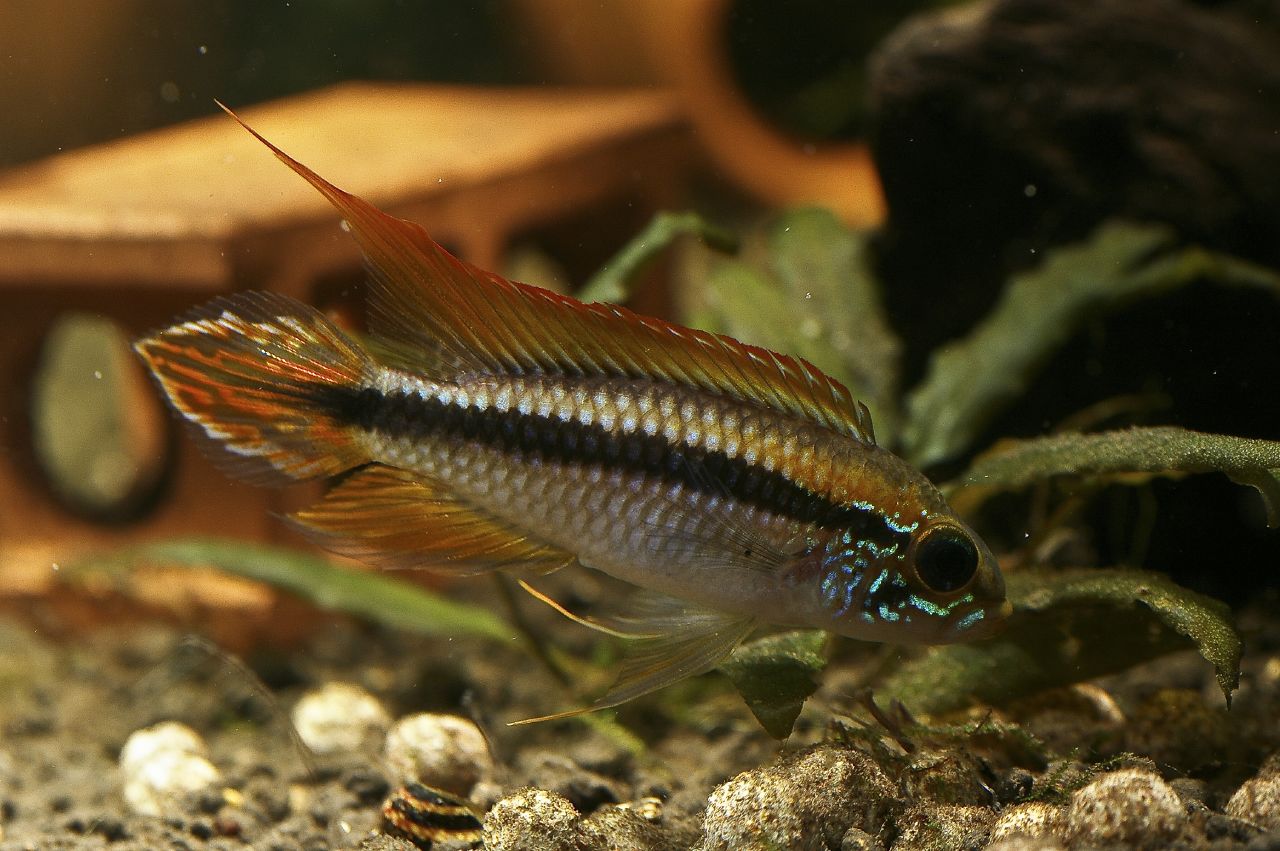
Apistogramma agassiziiAgassizi's Dwarf Cichlid
Steindachner, 1875
Max length♂ 75 · ♀ 50mm SL♂ 3.0 · ♀ 2.0in SLTank60 × 30cm24 × 12inTemp22–29°C72–84°FpH3.0–4.0Numerous ornamental forms of this species have been selectively-bred for the aquarium trade, some of which include. It has also been assigned the 'A' number A234 under the DATZ system with possibly conspecific, related forms similarly numbered A235, A236, A237, A238, A239, A240, A241 and A242 depending on locality. The genus Apistogramma is among the most speciose of South American cichlid genera with around 70 species valid at present but many more awaiting description. In addition ...
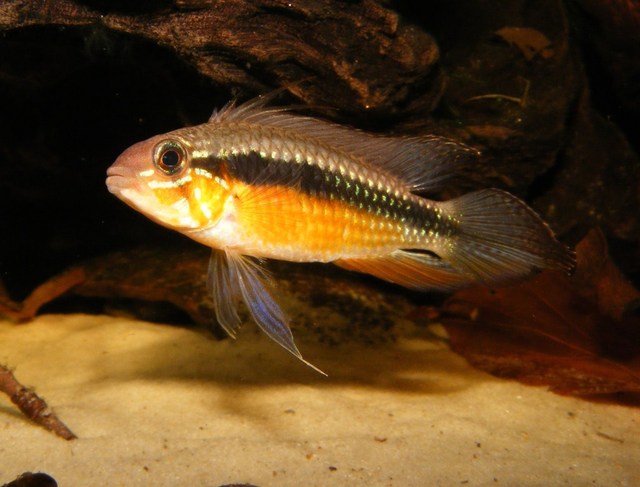
Apistogramma elizabethaeA208
Kullander, 1980
Max length50mm SL2.0in SLTank45 × 30cm18 × 12inTemp23–29°C73–84°FpH4.0–6.0The form from the rio Içana tends to have more blue markings on the head than that from the Uaupés, while a reddish population apparently collected close to the settlement of Tucana (sometimes mis-spelled 'Tucano') on the Uaupés is sometimes traded as A. elizabethae 'super red'. Apistogramma is among the most speciose of South American cichlid genera with around 70 species valid at present but many more awaiting description.
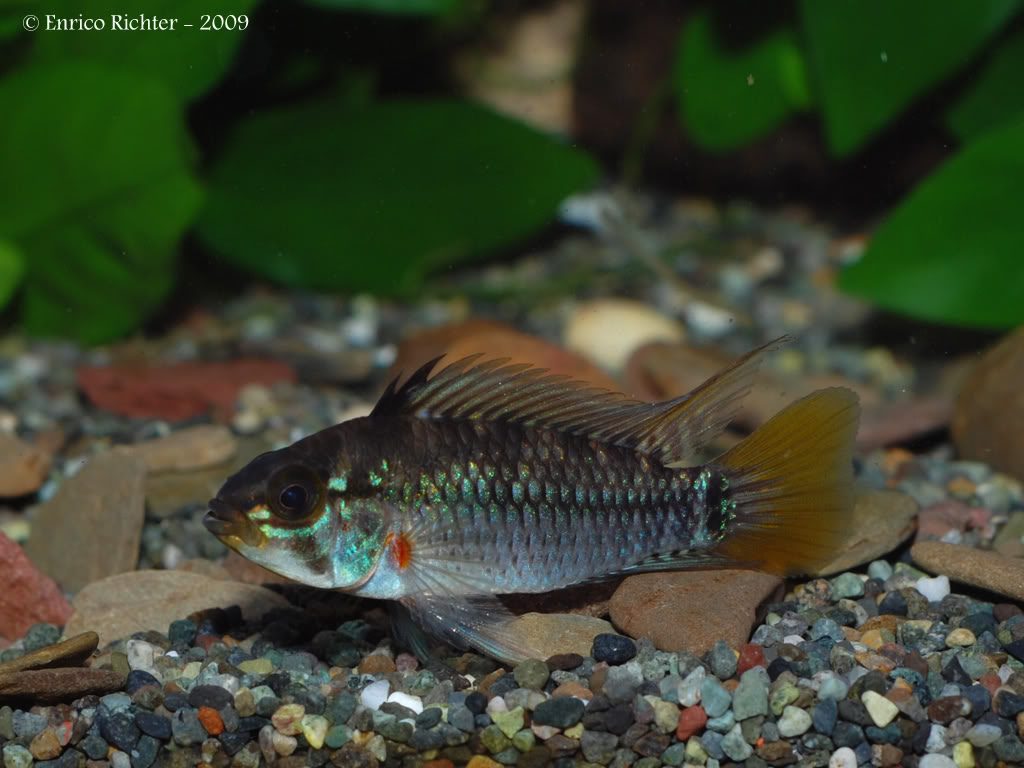
Apistogramma eunotus
Kullander, 1981
Max length♂ 55 · ♀ 40mm SL♂ 2.2 · ♀ 1.6in SLTank45 × 30cm18 × 12inTemp23–29°C73–84°FpH5.5–7.0The genus Apistogramma is among the most speciose of South American cichlid genera with around 70 species valid at present but many more awaiting description. In addition many species exist in two or more geographical colour forms which may or may not turn out to be distinct in the future. Hobbyists tend to label these with collection data if available in order to avoid mixing them and the potential of hybridisation.
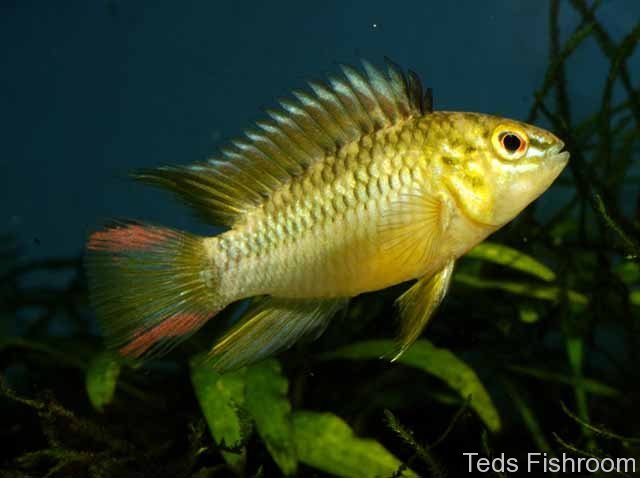
Apistogramma hoignei
Meinken, 1965
Max length60mm SL2.4in SLTank45 × 30cm18 × 12inTemp23–29°C73–84°FpH5.0–7.0The genus Apistogramma is among the most speciose of South American cichlid genera with around 70 species valid at present but many more awaiting description. In addition many species exist in two or more geographical colour forms which may or may not turn out to be distinct in the future. Hobbyists tend to label these with collection data if available in order to avoid mixing them and the potential of hybridisation. Member species have also been organised into a series of species lineages, sublineages, complexes and groups by authors in order to better separate them.
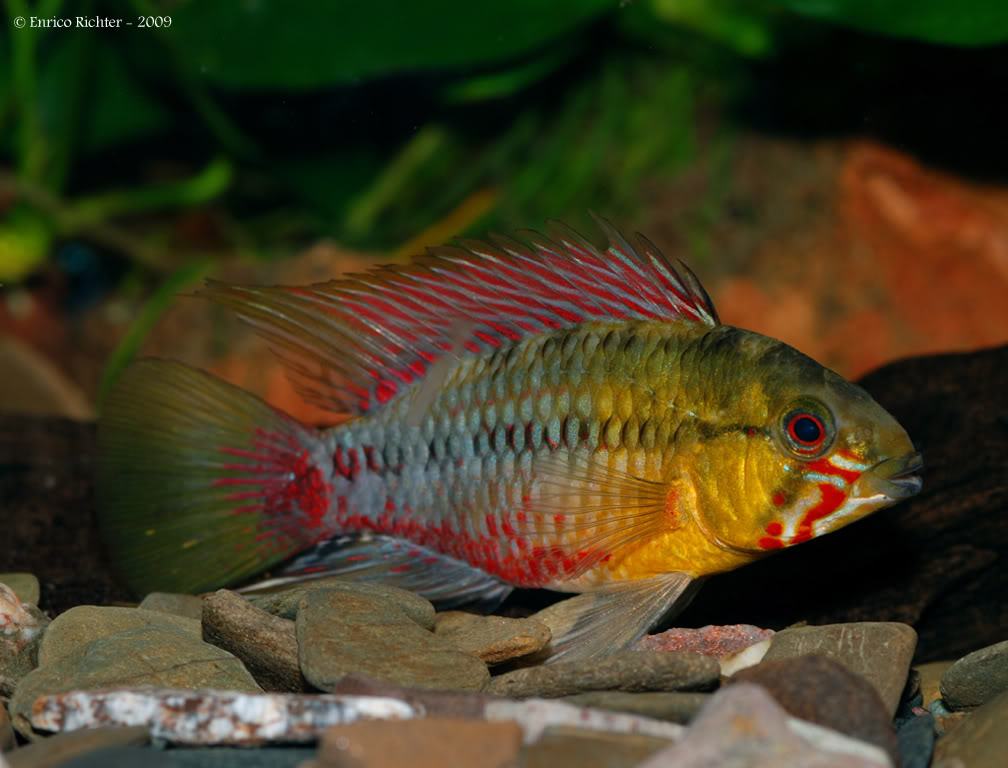
Apistogramma hongsloi
Kullander, 1979
Max length60mm SL2.4in SLTank45 × 30cm18 × 12inTemp23–29°C73–84°FpH5.5–7.0The genus Apistogramma is among the most speciose of South American cichlid genera with around 70 species valid at present but many more awaiting description. In addition many species exist in two or more geographical colour forms which may or may not turn out to be distinct in the future. Hobbyists tend to label these with collection data if available in order to avoid mixing them and the potential of hybridisation.
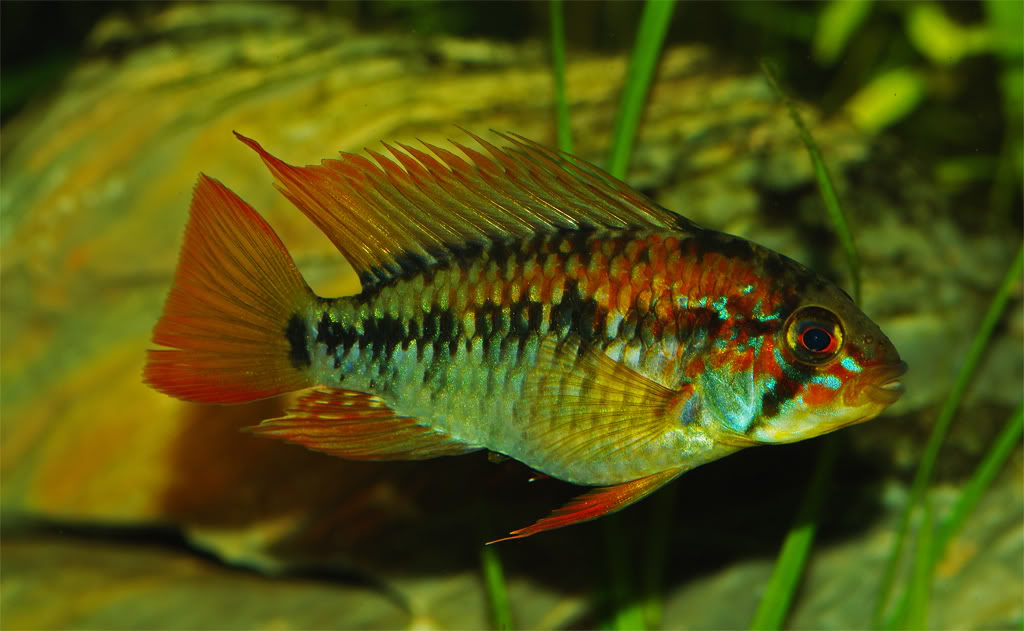
Apistogramma macmasteri
Kullander, 1979
Max length♂ 55 · ♀ 40mm SL♂ 2.2 · ♀ 1.6in SLTank45 × 30cm18 × 12inTemp24–28°C75–82°FpH5.5–7.0The genus Apistogramma is among the most speciose of South American cichlid genera with around 70 species valid at present but many more awaiting description. In addition many species exist in two or more geographical colour forms which may or may not turn out to be distinct in the future. Hobbyists tend to label these with collection data if available in order to avoid mixing them and the potential of hybridisation. Member species have also been organised into a series of species lineages, complexes and groups by authors in order to better separate them.
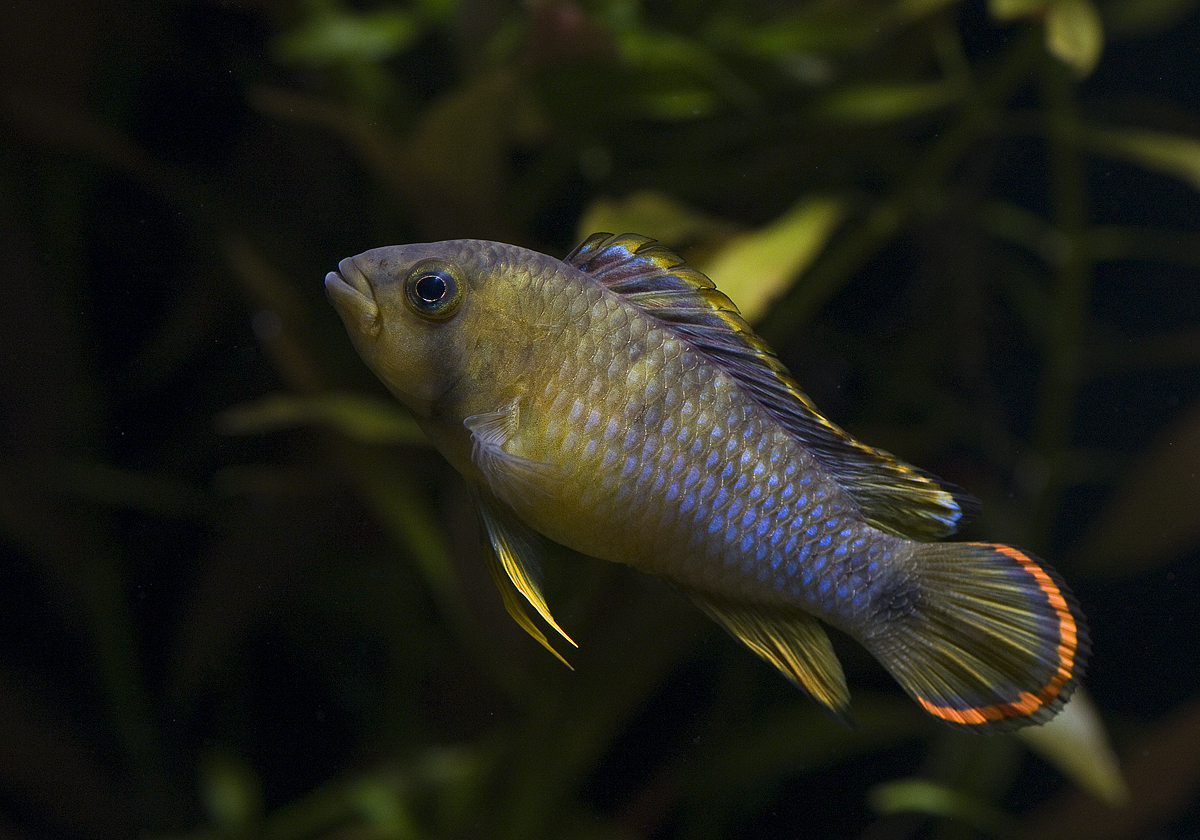
Apistogramma nijsseni
Kullander, 1979
Max length♂ 85 · ♀ 70mm SL♂ 3.3 · ♀ 2.8in SLTank60 × 30cm24 × 12inTemp24–28°C75–82°FpH5.0–6.5The genus Apistogramma is among the most speciose of South American cichlid genera with around 70 species valid at present but many more awaiting description. In addition many species exist in two or more geographical colour forms which may or may not turn out to be distinct in the future. Hobbyists tend to label these with collection data if available in order to avoid mixing them and the potential of hybridisation. Member species have also been organised into a series of species lineages, complexes and groups by authors in order to better separate them. Such lists have been augmented by fish that have appeared in the aquarium trade and are in a state of near-constant flux
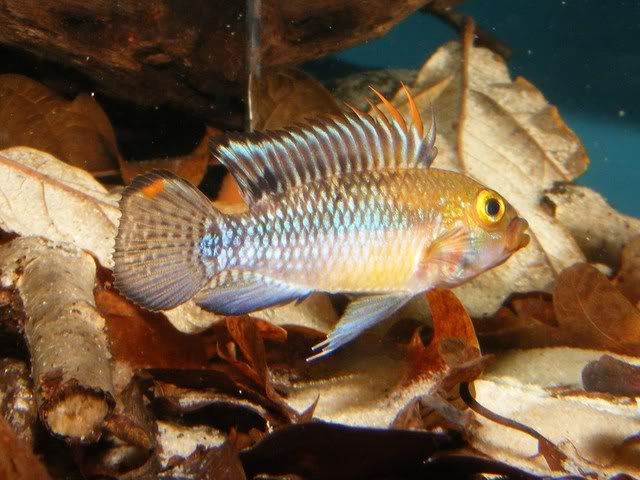
Apistogramma norberti
Staeck, 1991
Max length♂ 60 · ♀ 40mm SL♂ 2.4 · ♀ 1.6in SLTank45 × 30cm18 × 12inTemp24–28°C75–82°FpH4.5–6.5Prior to decription this species was known as A. sp. 'großmaul' or 'bigmouth', and it has also been assigned the code A190 under the DATZ system. The genus Apistogramma is among the most speciose of South American cichlid genera with around 70 species valid at present but many more awaiting description. In addition many species exist in two or more geographical colour forms which may or may not turn out to be distinct in the future. Hobbyists tend to label these with collection data if available in order to avoid mixing them and the potential of hybridisation.
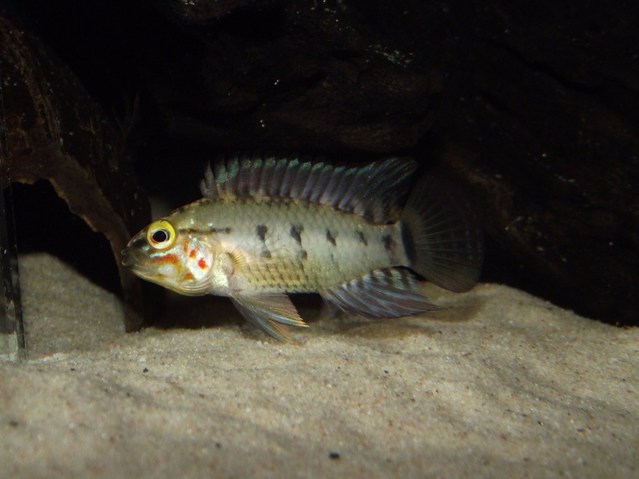
Apistogramma paulmuelleriA52
Römer, Beninde, Duponchelle, García Dávila, Vela Díaz & Renno, 2013
Max length♂ 42 · ♀ 33mm SL♂ 1.7 · ♀ 1.3in SLTank45 × 30cm18 × 12inTemp22–31°C72–88°FpH4.0–6.5This species is assigned the code A52 under the DATZ 'A' number system and is also known by the trade names A. sp. 'Apache', A. sp. 'Peru (II)', A. sp. 'Peru-regani', A. sp. cf. regani (Belém) and A. sp. 'carapintada'. Apistogramma is among the most speciose of South American cichlid genera with around 70 species valid at present but many more awaiting description. In addition many species exist in two or more geographical colour forms which may or ma...
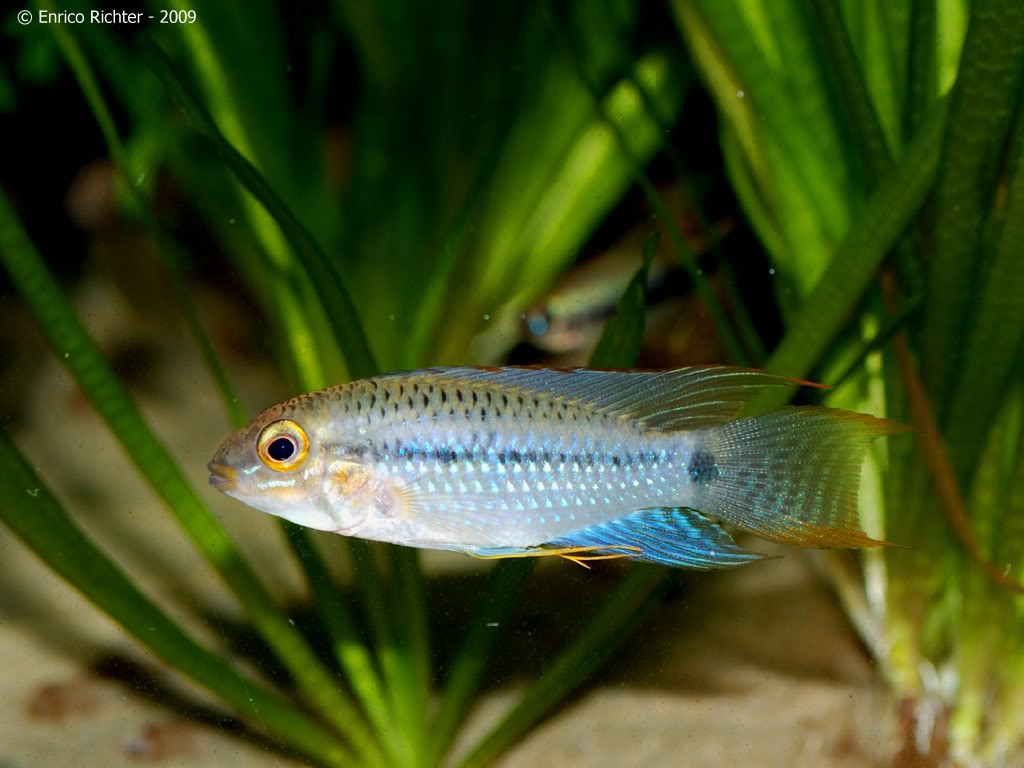
Apistogramma steindachneriSteindachner's Apisto
Regan, 1908
Max length♂ 80 · ♀ 50mm SL♂ 3.1 · ♀ 2.0in SLTank90 × 30cm36 × 12inTemp20–25°C68–77°FpH4.0–7.5This species is assigned the code A138 under the DATZ system, with the Venezuelan variant referred to as A139 for easy reference. The genus Apistogramma is among the most speciose of South American cichlid genera with around 70 species valid at present but many more awaiting description. In addition many species exist in two or more geographical colour forms which may or may not turn out to be distinct in the future. Hobbyists tend to label these with collection dat...
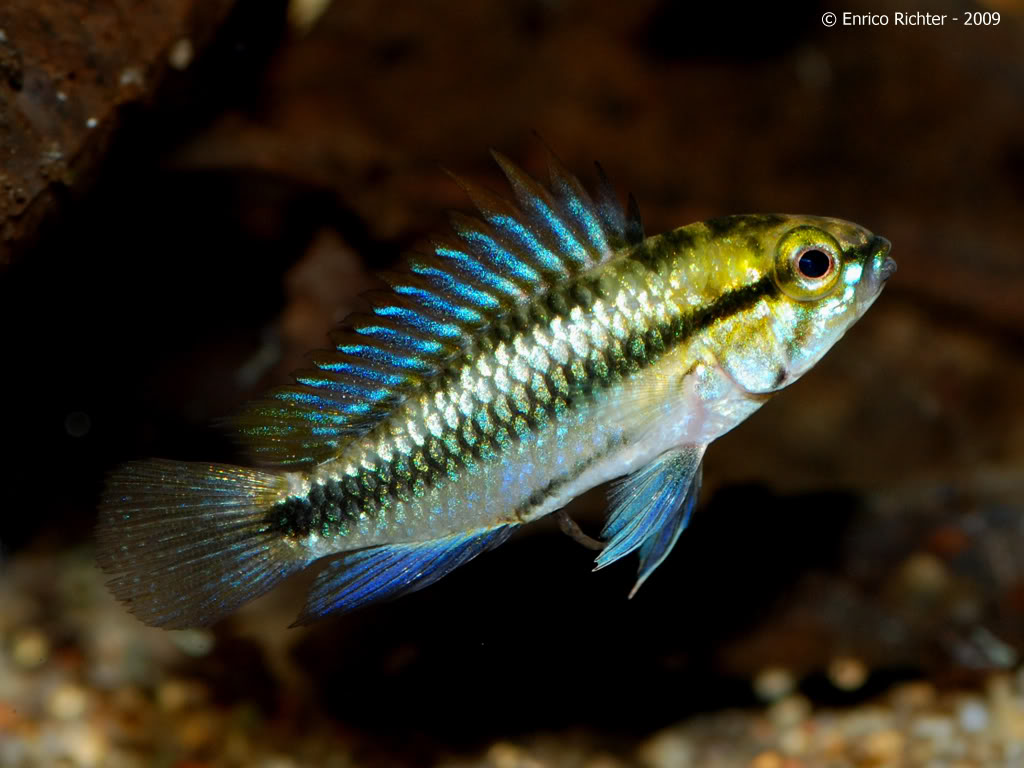
Apistogramma trifasciataThree-striped Apisto
Eigenmann & Kennedy, 1903
Max length♂ 55 · ♀ 40mm SL♂ 2.2 · ♀ 1.6in SLTank45 × 30cm18 × 12inTemp20–25°C68–77°FpH5.0–7.0This species is assigned the 'A' number A204 under the DATZ system with possibly conspecific, related forms coded A205 or A206 depending on collection locality and representing populations from Argentina and the rio Guaporé, respectively. The genus Apistogramma is among the most speciose of South American cichlid genera with around 70 species valid at present but many more awaiting description.
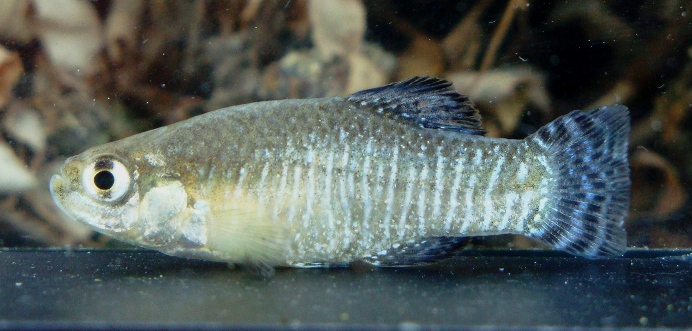
Apricaphanius baeticusBaetican Toothcarp
Doadrio, Carmona & Fernández-Delgado, 2002
Max length50mm SL2.0in SLTank120 × 30cm48 × 12inTemp2–30°C36–86°FpH7.0–9.0Prior to its description this species was considered a geographic variant of A. iberus but the 2002 paper revealed the pair to be genetically quite distinct and also highlighted some morphological differences. It is distinguished from A. iberus by possessing 8-9 (usually 8 ) branched dorsal-fin rays (vs. 8-9, sometimes 10), 9-11 branched anal-fin rays (vs. 8-9), a deeper, more elongate body shape, noticeably shorter snout, relatively thick (vs. thin) vertical bars in males and a flank patterning consisting of a few la...
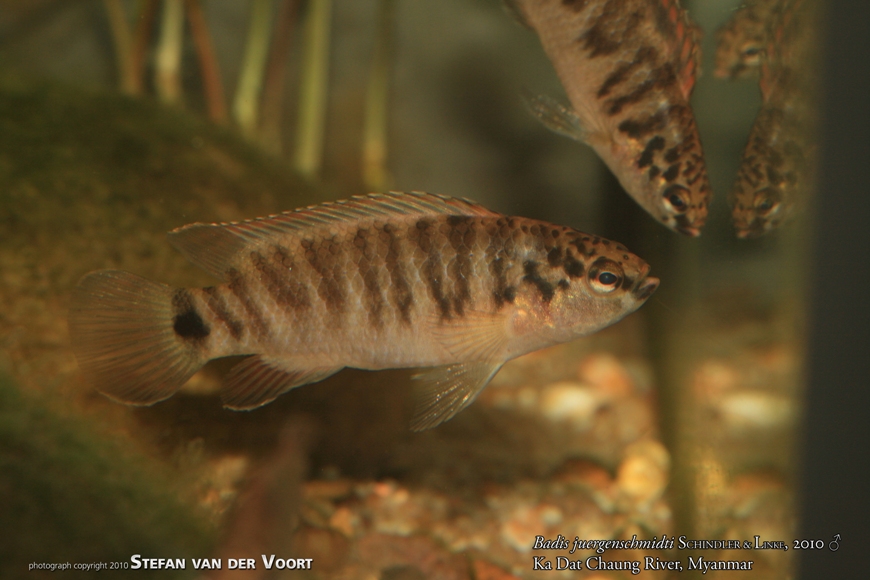
Badis juergenschmidti
Schindler & Linke, 2010
Max length50mm SL2.0in SLTank60 × 30cm24 × 12inTempnot recordedpH6.0–7.0This species is essentially unknown in the hobby at time of writing. It was discovered by German aquarist Horst Linke in early 2010 and before official description was known as B. sp. ‘East Myanmar’ (‘Ost Myanmar’ in Germany). It can be differentiated from other members of the genu...
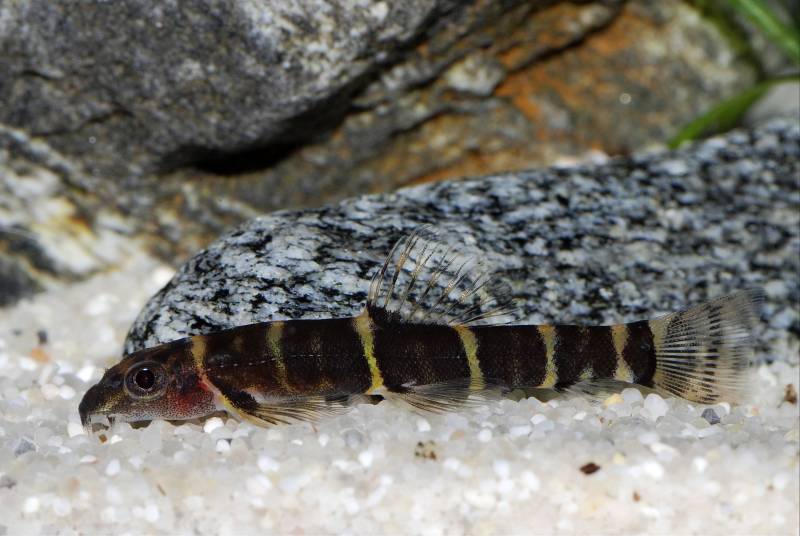
Barbucca diabolica
Roberts, 1989
Max length50mm SL2.0in SLTank60 × 30cm24 × 12inTemp20–25°C68–77°FpH5.5–7.5Barbucca spp. are uncommon in the aquarium trade but available periodically. There exist several undescribed species and it's possible that more than one has been exported, although to date only B. diabolica is officially recognised. Most of the fish we've seen possess red eyes (when viewed at certain angles), unique tuberculation and six dark body stripes as mentioned in Roberts' description although there are exceptio...
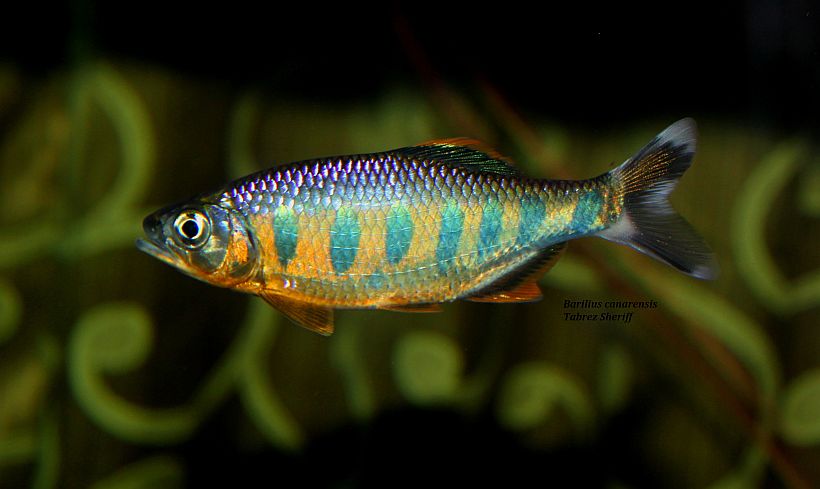
Barilius ardens
Knight, Rai, d'Souza & Vijaykrishnan, 2015
Max length105mm SL4in SLTank150 × 60cm60 × 24inTemp18–26°C64–79°FpH6.0–7.5Prior to its description this species was typically identified as the congener B. canarensis in the ornamental trade. It can be distinguished from congeners by the following combination of characters: uni...