Results for “genera”
Type a name: scientific, common, or one a species used to go by. Or narrow the catalogue with the filters.
Filters
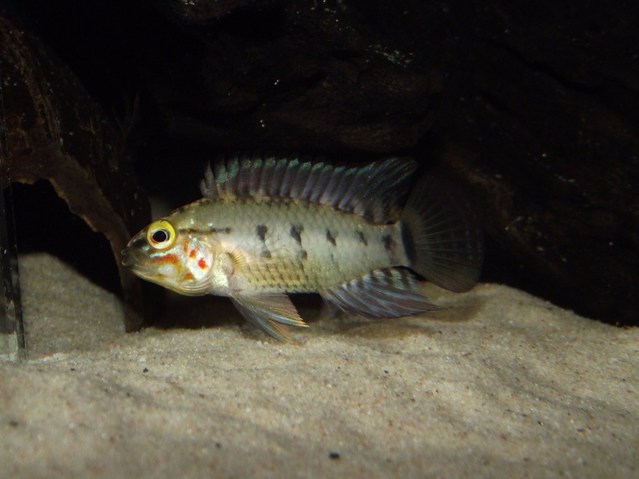
Apistogramma paulmuelleriA52
Römer, Beninde, Duponchelle, García Dávila, Vela Díaz & Renno, 2013
Max length♂ 42 · ♀ 33mm SL♂ 1.7 · ♀ 1.3in SLTank45 × 30cm18 × 12inTemp22–31°C72–88°FpH4.0–6.5This species is assigned the code A52 under the DATZ 'A' number system and is also known by the trade names A. sp. 'Apache', A. sp. 'Peru (II)', A. sp. 'Peru-regani', A. sp. cf. regani (Belém) and A. sp. 'carapintada'. Apistogramma is among the most speciose of South American cichlid genera with around 70 species valid at present but many more awaiting description. In addition many species exist in two or more geographical colour forms which may or ma...
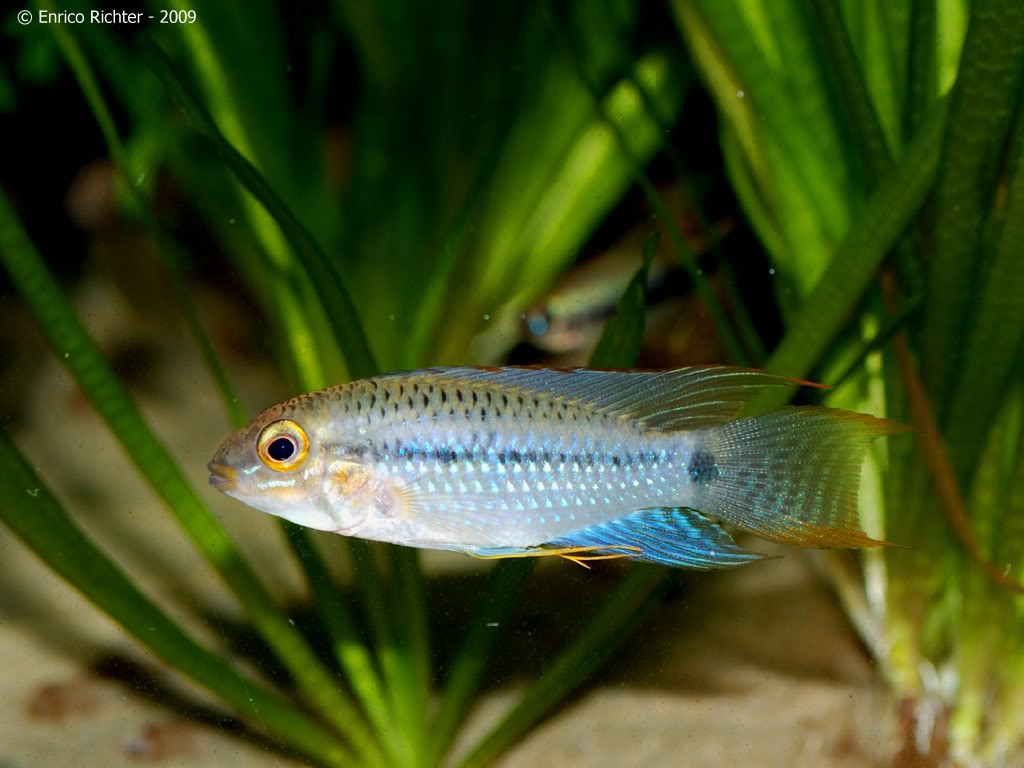
Apistogramma steindachneriSteindachner's Apisto
Regan, 1908
Max length♂ 80 · ♀ 50mm SL♂ 3.1 · ♀ 2.0in SLTank90 × 30cm36 × 12inTemp20–25°C68–77°FpH4.0–7.5This species is assigned the code A138 under the DATZ system, with the Venezuelan variant referred to as A139 for easy reference. The genus Apistogramma is among the most speciose of South American cichlid genera with around 70 species valid at present but many more awaiting description. In addition many species exist in two or more geographical colour forms which may or may not turn out to be distinct in the future. Hobbyists tend to label these with collection dat...
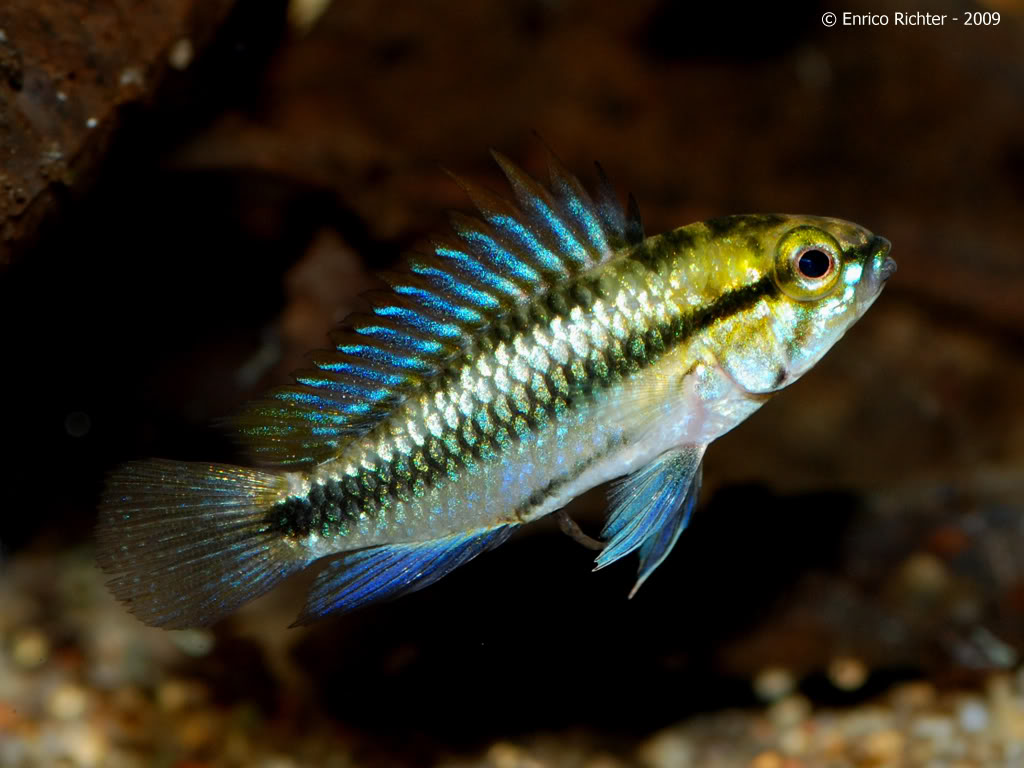
Apistogramma trifasciataThree-striped Apisto
Eigenmann & Kennedy, 1903
Max length♂ 55 · ♀ 40mm SL♂ 2.2 · ♀ 1.6in SLTank45 × 30cm18 × 12inTemp20–25°C68–77°FpH5.0–7.0This species is assigned the 'A' number A204 under the DATZ system with possibly conspecific, related forms coded A205 or A206 depending on collection locality and representing populations from Argentina and the rio Guaporé, respectively. The genus Apistogramma is among the most speciose of South American cichlid genera with around 70 species valid at present but many more awaiting description.
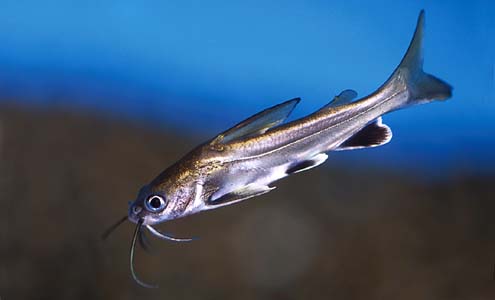
Ariopsis seemanniColombian Shark Catfish
Günther, 1864
Max length350mm SL14in SLTank240 × 60cm96 × 24inTemp22–26°C72–79°FpH6.8–8.5This species is not recommended to those lacking the facilities to house it for life. Sadly it's all too often seen for sale as an attractive, silvery 2-3" juvenile, supposedly suitable for the general freshwater community tank. To make matters worse, it is also usually given an 'alluring' name such as 'black-finned' or 'silvertip' shark catfish. The fate of the majority of these specimens is in all likelihood a depressing one.
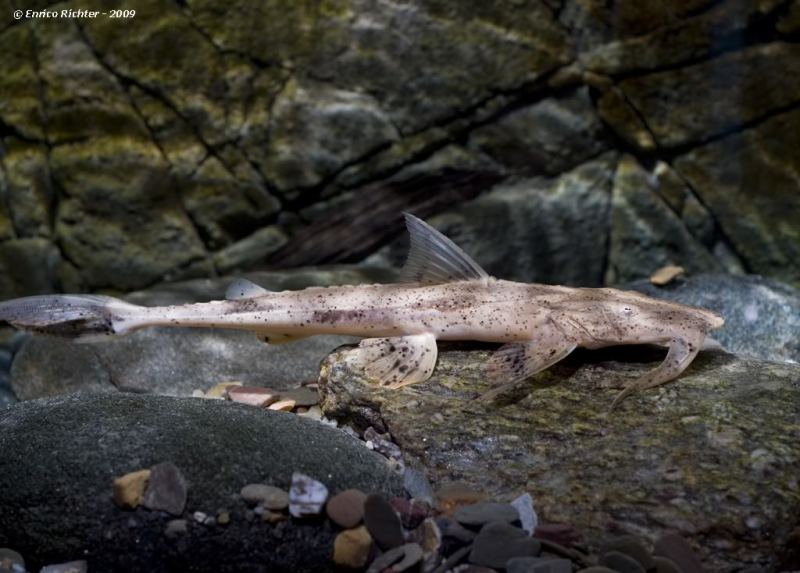
Bagarius suchusCrocodile Catfish
Roberts, 1983
Max length700mm SL28in SLTanknot recordedTemp18–23°C64–73°FpH6.0–7.5The genus Bagarius is distinguished from all other genera in the putative subfamily Sisoridae by having markedly heterodont teeth in the lower jaw. Teeth are present in two or three outer rows of relatively numerous, close-set conical teeth, and one or two inner rows of less numerous, widely separated, and much larger conical teeth (vs. dentition of the lower jaw consisting of only small conical teeth, or a roughened bony plate).
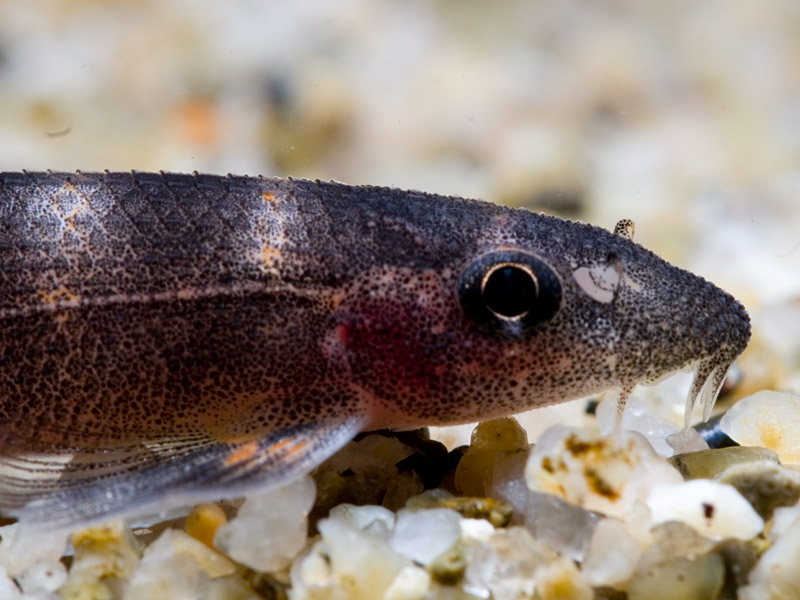
Balitoropsis zollingeri
Bleeker, 1853
Max length70mm SL2.8in SLTank60 × 30cm24 × 12inTemp20–25.5°C68–78°FpH6.0–7.5An obligate dweller of swiftly-flowing streams and headwaters containing clear, oxygen-saturated water. It often inhabits riffles and runs and is likely to show a preference for shallower zones. Substrates are generally composed of gravel, rocks, boulders or bedrock carpeted with a rich biofilm formed by algae and other micro-organisms. Juveniles are often found in slower-moving stretches with gravel substrate and submerged tree roots. In both cases patches of aquatic plants are only occasionally pres...
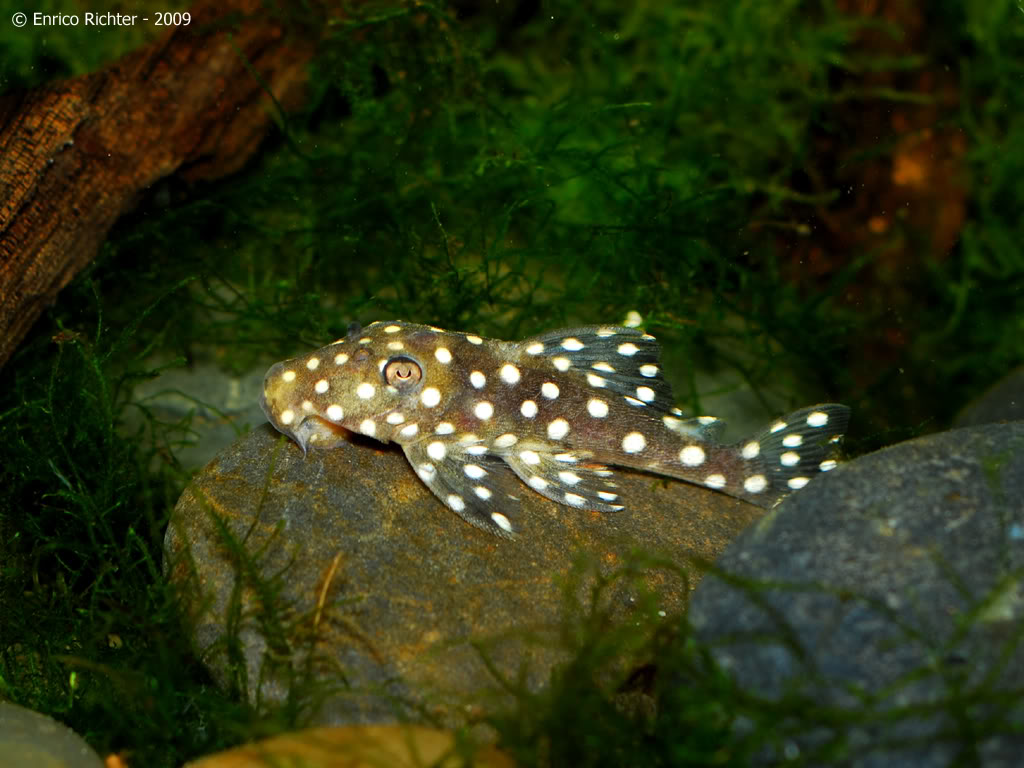
Baryancistrus sp. L142Big White Spot Pleco
authority not recorded
Max length250mm SL10in SLTank120 × 45cm48 × 18inTemp27–32°C81–90°FpH6.0–7.5The genus Baryancistrus can be distinguished from all other loricariids by possession of an enlarged membrane located posteriorly to the last branched dorsal-fin ray. This membrane may or may not reach the supporting structure of the adipose fin and in this way members can be told apart from the genera Oligancistrus, Parancistrus, and Spectracanthicus, in which the dorsal and adipose fins are completely connected, and Hemiancistrus...
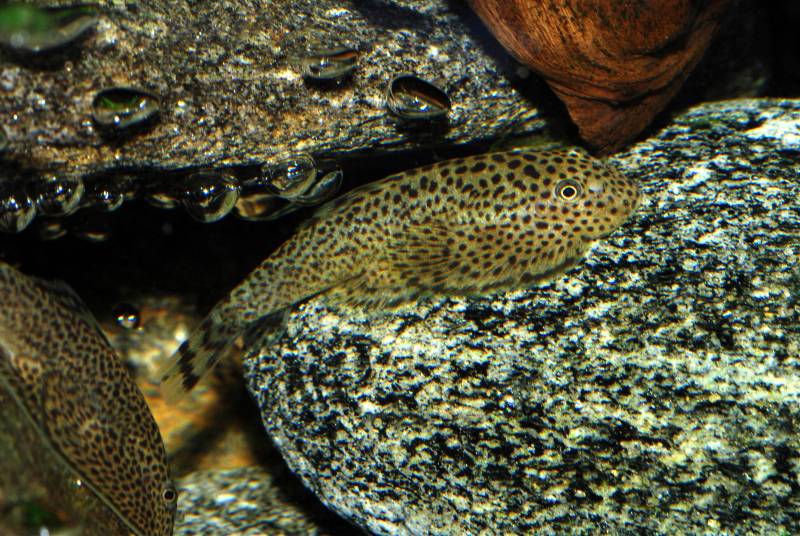
Beaufortia kweichowensisButterfly Loach
Fang, 1931
Max length75mm SL3.0in SLTank60 × 30cm24 × 12inTemp16–24°C61–75°FpH6.5–8.0This species is one of several traded variously as 'butterfly loach', 'butterfly plec', 'Hong Kong plec(o)', 'Chinese hillstream loach' or simply 'hill stream loach'. In many countries it's the most common balitorid in the shops but is also often found in mixed shipments containing members of other genera. Like all balitorids it's an obligate bottom-dweller with specialised morphology adapted to life in fast-flowing water. The paire...
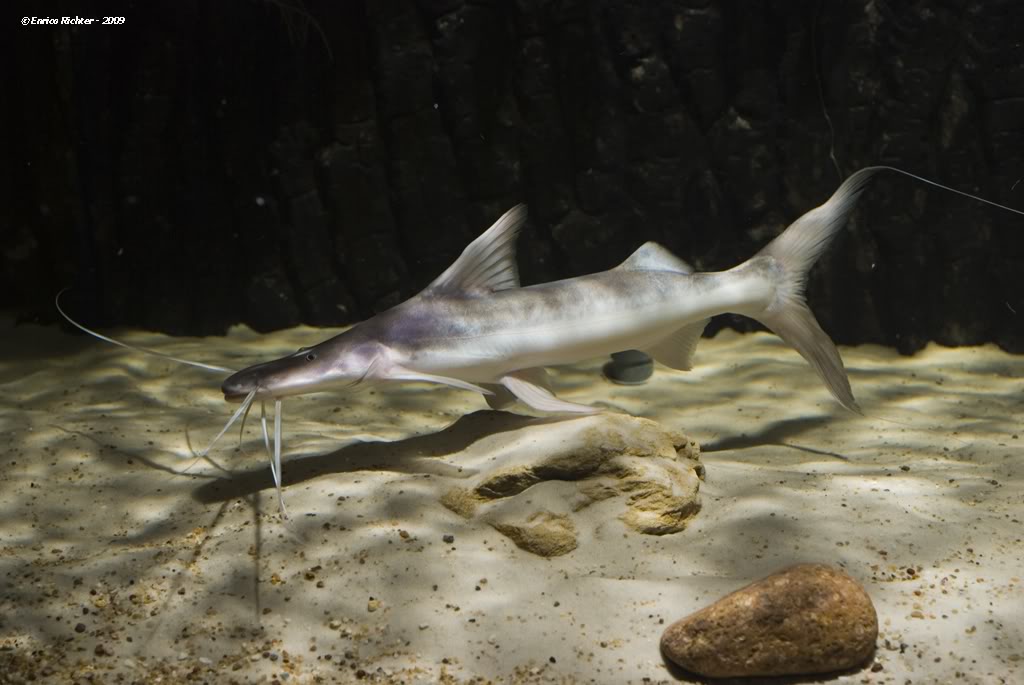
Brachyplatystoma platynemumSlobbering Catfish
Boulenger, 1898
Max length1000mm SL39in SLTanknot recordedTemp22–28°C72–82°FpH6.0–8.0Found in a number of habitat-types, though rarely in smaller tributaries, generally preferring deeper, flowing channels through which it travels for considerable distances at certain times of year. Like other large, migratory pimelodids these movements are typically associated with nutrient-rich, white water drainages rather than nutrient-poor black waters.
Bunocephalus coracoideusBanjo Catfish
authority not recorded
Max length150mm SL6in SLTank60 × 38cm24 × 15inTemp20–27°C68–81°FpH5.8–7.8Bunocephalus is the largest genus within the Aspredinidae family and there are several undescribed species. B. coracoideus is the most common member seen in dealers' tanks. Its native name "Guitarrita" translates as "little guitar" and refers to the shape of the fish when viewed from above. Despite the regularity with which it is seen for sale, it isn't really a good catfish for the general community tank because it's a largely inactive, secretive species, ...
Campylomormyrus tamanduaWorm-Jawed Mormyrid
authority not recorded
Max length400mm SL16in SLTank180 × 60cm72 × 24inTemp23–28°C73–82°FpH5.0–7.0C. tamandua is quite a rare fish in the hobby, but is imported occasionally. It's not a good beginner's fish as it requires pristine soft, acidic water conditions, will generally not feed on standard foods and attains a very respectable adult size. It's also sensitive to many aquarium medications. It can sometimes be found as a contaminant among imports of the much more common Elephant Fish, Gnathonemus petersii. Unlike this species, C. tamandua has both upper and lower jaws exten...
Catoprion mentoWimpel Piranha
authority not recorded
Max length150mm SL6in SLTank120 × 38cm48 × 15inTemp23–26°C73–79°FpH5.8–6.5This species is not actually a piranha in ichthyologic terms, being monotypic and therefore unique. It was so named due to its general resemblance to true piranha, and the fact that it is quite closely related to Pygocentrus species. Mento means "chin", referring to the protruding jaw of the fish. This jaw structure, along with the adapted teeth, is used in its natural feeding behaviour. It has been observed to swim at great speed into a selected target, biting hard as it collides w...
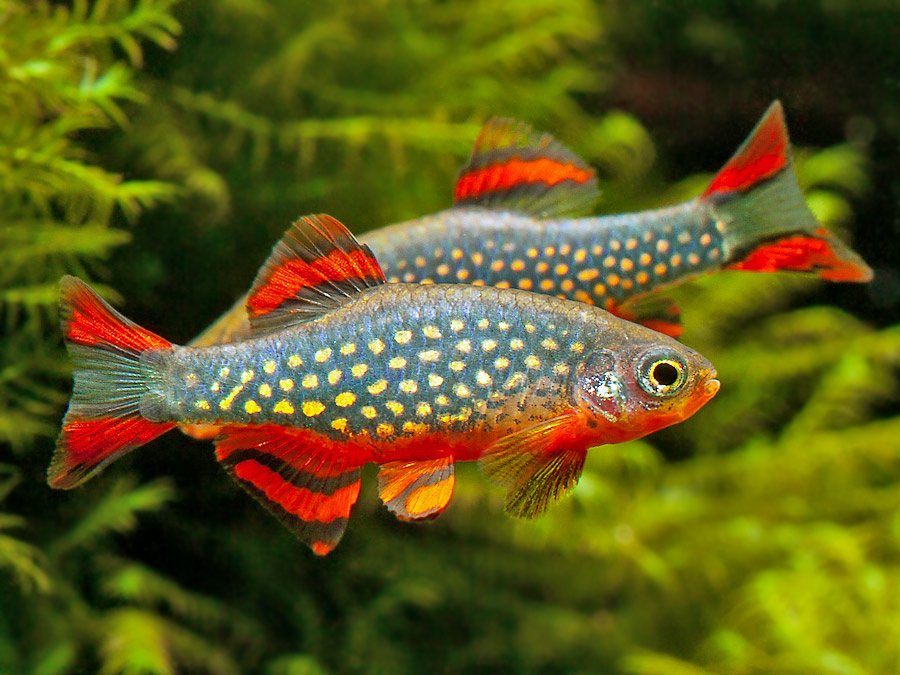
Celestichthys margaritatusCelestial Pearl 'Danio'
Roberts, 2007
Max length21mm SL0.8in SLTank45 × 30cm18 × 12inTemp20–26°C68–79°FpH6.5–7.5The type locality is an area of permanently-flooded grassland formed by the damming of a spring for agricultural purposes. The water is only around 30cm deep, transparent and supports dense growths of aquatic plants, mostly from the family Hydrocharitaceae which includes such genera as Elodea, Egeria and Blyxa. Sympatric species included Devario sondhii, a Microrasbora very similar to M. rubescens, an undescribed Yunnanilus known to aquarists as the 'rosy' loach and Channa harcourtbutleri.
Chaca bankanensisChocolate Frogmouth Catfish
authority not recorded
Max length200mm SL8in SLTanknot recordedTemp22–26°C72–79°FpH6.0–8.0Chaca are unsuitable subjects for the general aquarist, but are relatively popular among lovers of oddball species. This species is very similar in appearance to the closely related C. chaca. However, it is somewhat darker and redder in colour than its relative, and lacks the hooklets that occur on the lips and body of chaca. It is a true master of disguise, and is also known as the angler catfish, due to it's ability to use its barbels as a kind of lure, using them to simulate the movement...
Chaca chacaFrogmouth Catfish
authority not recorded
Max length200mm SL8in SLTanknot recordedTemp22–25°C72–77°FpH6.0–8.0Chaca are unsuitable subjects for the general aquarist, but are quite popular among lovers of oddball species. This species is very similar in appearance to the closely related C. bankanensis. However, it's usually a bit lighter in colour than its relative and possesses small hooklets on the lower lip and body that are not present in bankanensis. It's a true master of disguise and is also known as the angler catfish, due to its ability to use its barbels as a kind of lure. These can be...
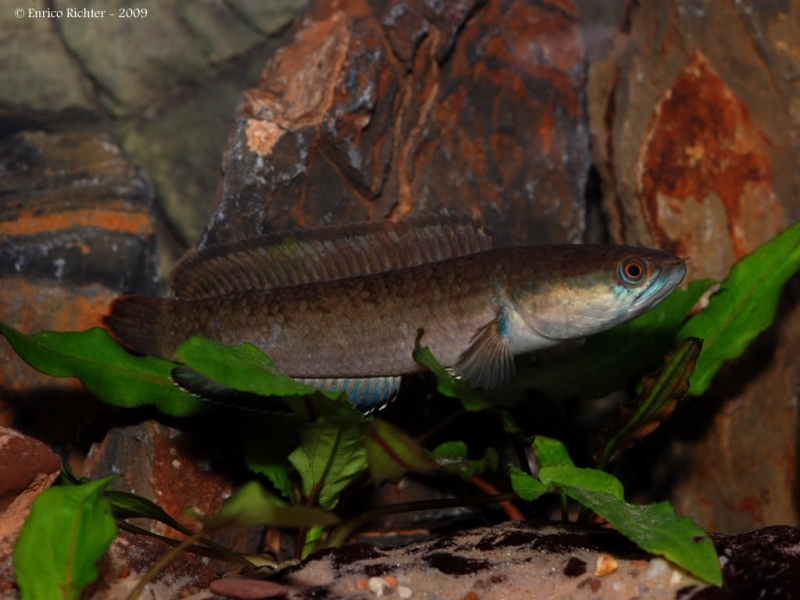
Channa gachuaDwarf Snakehead
Hamilton, 1822
Max length200mm SL8in SLTank120 × 45cm48 × 18inTemp18–28°C64–82°FpH5.0–8.0Generally considered to have an enormous natural range extending from Iran to Taiwan and Bali, with records existing from Iran, Iraq, Afghanistan, Pakistan, Nepal, India, Sri Lanka, Bangladesh, Bhutan, China, Myanmar, Thailand, Laos, Cambodia, Vietnam, Malaysia, Indonesia, and Singapore. However there exists significant evidence to suggest that C. gachua as currently understood represents a complex of similar-looking species, and a taxonomic review of the group is clearly required.
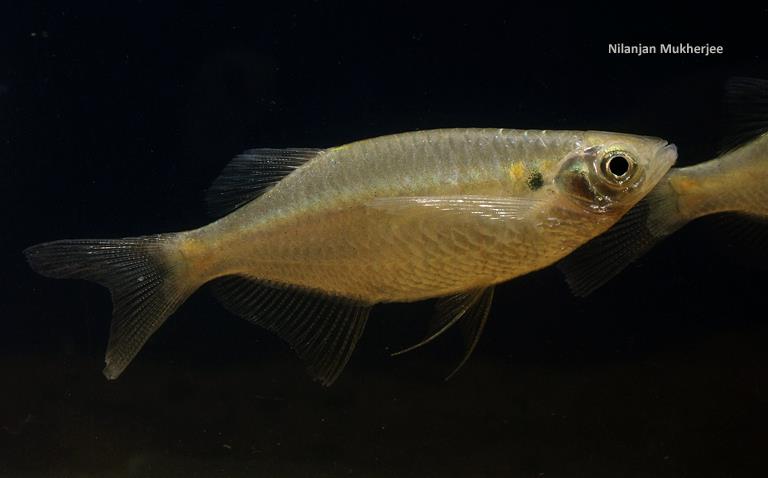
Chela cachiusNeon Hatchet Fish
Hamilton, 1822
Max length50mm SL2.0in SLTank90 × 30cm36 × 12inTemp18–24°C64–75°FpH6.0–8.0It is currently the only valid member of the genus but it is possible that additional taxa exist, particularly in Myanmar, while a number of former species are contained within the Laubuka assemblage, to which C. cachius is closely related. Phylogenetic studies suggest the existence of a monophyletic clade consisting of the genera Devario, Chela, Laubuca, Microdevario and Microrasbora plus the genus Betadevario.
Chiloglanis polypogonAfrican Suckermouth Catfish
authority not recorded
Max length55mm SL2.2in SLTank45 × 30cm18 × 12inTemp22–26°C72–79°FpH6.5–7.0This fish belongs to a very distinctive genus of mochokid. There are almost 50 species of Chiloglanis described to science, but most are never imported and even the commoner species, such as this one, are seen only rarely. They are very difficult to identify down to species level, as many are very similar in looks. Some are strongly sexually dimorphic with the males having thickened or enlarged anal and caudal fins. Chiloglanis are also sometimes confused with the other 2 genera of African sucke...
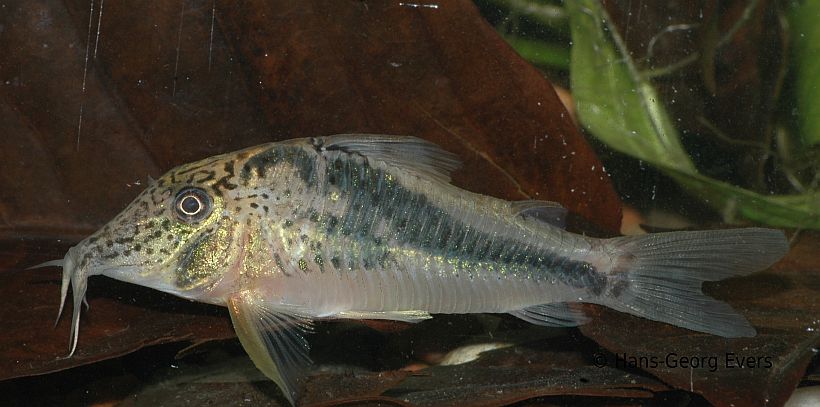
Corydoras fowleriFowler's Cory
Böhlke, 1950
Max length70mm SL2.8in SLTank120 × 45cm48 × 18inTemp20–28°C68–82°FpH5.0–7.5In addition, the colour pattern in aquarium fish traded or identified as C. fowleri is highly variable, but it is unclear whether such differences represent diversity within or between populations. Nevertheless, colour pattern is typically used to distinguish them, with fish from Peru possessing a greater extent of dark pigmentation on the body generally referred to...
Corydoras geryi
authority not recorded
Max length70mm SL2.8in SLTank60 × 38cm24 × 15inTemp22–26°C72–79°FpH6.0–7.2There are currently over 180 described species of Corydoras (commonly shortened to "cory"), making it one of the most speciose of all South American fish genera. There are also loads of undescribed species, many of which have been assigned a "C number" for identification purposes. This is a very simple system of numbering and is similar to the L number scheme used to identify undescribed Loricariids. Both systems were implemented by the German aquarium magazine DATZ (Die Aqua...