Results for “juvenile”
Type a name: scientific, common, or one a species used to go by. Or narrow the catalogue with the filters.
Filters
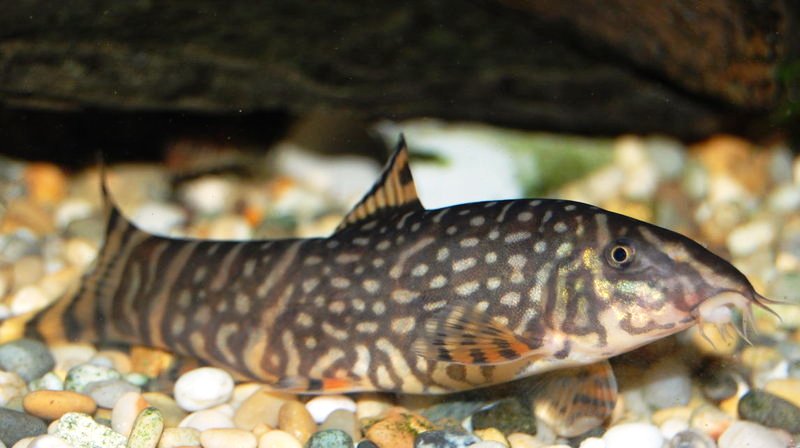
Botia rostrata
Günther, 1868
Max length120mm SL5in SLTank120 × 45cm48 × 18inTemp19–27°C66–81°FpH6.0–7.5Within the nominal species grouping suggested by Grant (2007) almost all B. rostrata sold in the hobby are B. sp. 'upper Brahmaputra' with B. rostrata sensu stricto rarely, if ever, available. Trade names include 'Gangetic loach', 'twin-banded loach' and 'ladder loach'. The defining characters of the group are "Pattern consisiting of 8-10 black to dark brown body bars that exhibit pale and numerous spots in juveniles, and in adults the bars can anast...
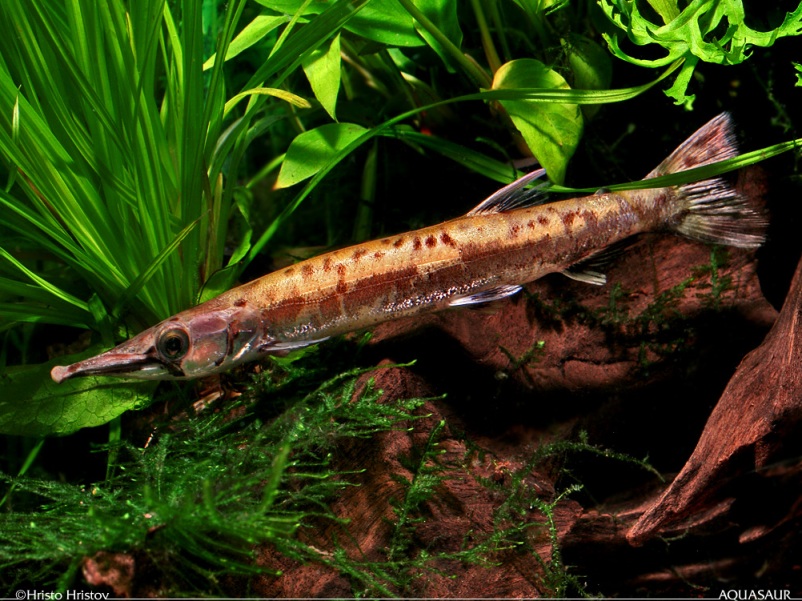
Boulengerella lucius
Cuvier, 1816
Max length420mm SL17in SLTanknot recordedTemp22–28°C72–82°FpH4.0–7.0This species is largely unsuitable for the home aquarium given its eventual size and natural behaviour, and we know of only a handful of private aquarists with the facilities required to house it long-term. Nonetheless juveniles and subadults are sometimes available in the trade although often misidentified as the congener B. maculata.
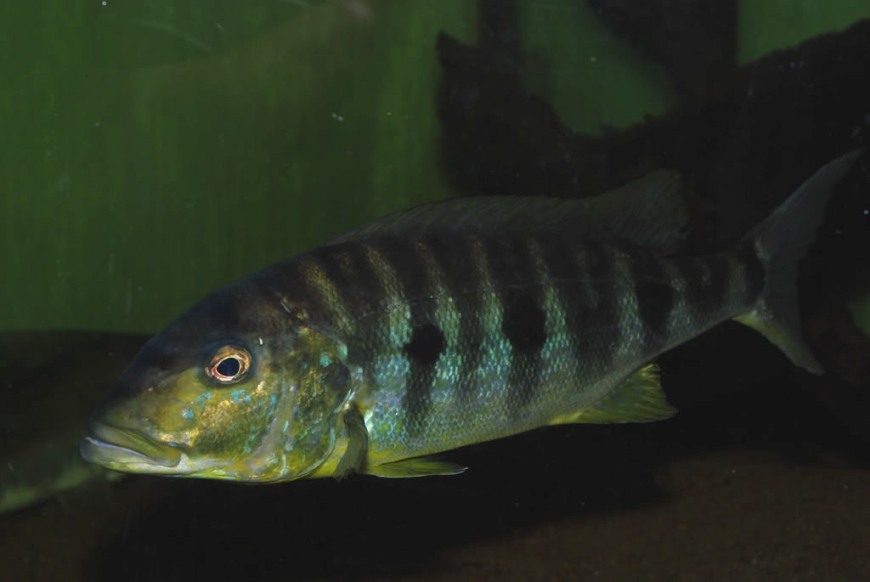
Boulengerochromis microlepisEmperor Cichlid
Boulenger, 1899
Max length550mm SL22in SLTanknot recordedTemp24–28°C75–82°FpH7.5–9.0Mostly inhabits littoral to sublittoral zones, habitats which normally comprise a mixture of rocky rubble and exposed sandy areas, but has been recorded to depths of around 100 m. When not breeding adults exhibit a more-or-less pelagic lifestyle and apparently tends to form small, foraging groups in open water, whereas juveniles inhabit shallower, sandy nursery zones with some rock cover. There exists some evidence to suggest that adults move inshore at night or during early morning in order to feed.
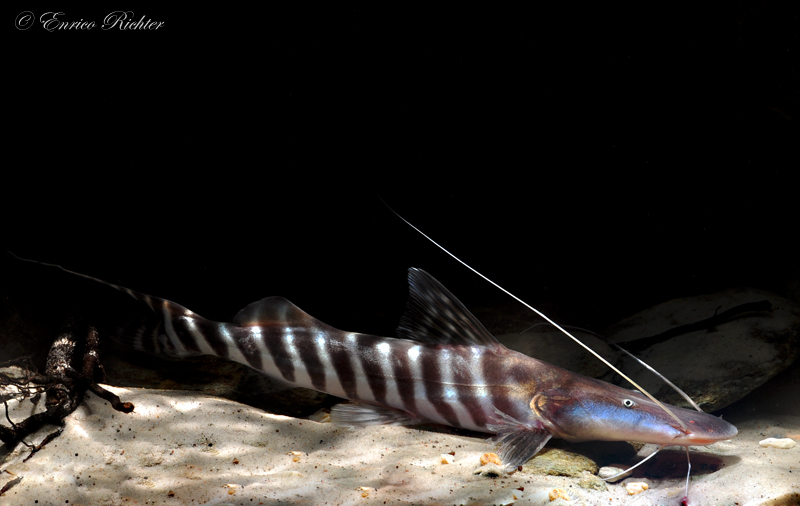
Brachyplatystoma tigrinumZebra Shovelnose
Britski, 1981
Max length500mm SL20in SLTank1000 × 400cm394 × 157inTemp22–32°C72–90°FpH6.0–7.6This species is sometimes confused with B. juruense, especially when juvenile, but can be told apart quite easily by it's more well-defined colour pattern, relatively slender body shape and longer barbels. It was described in the genus Meredontotus, but is currently included in Brachyplatystoma based on a pair of synapomorphies shared by memb...
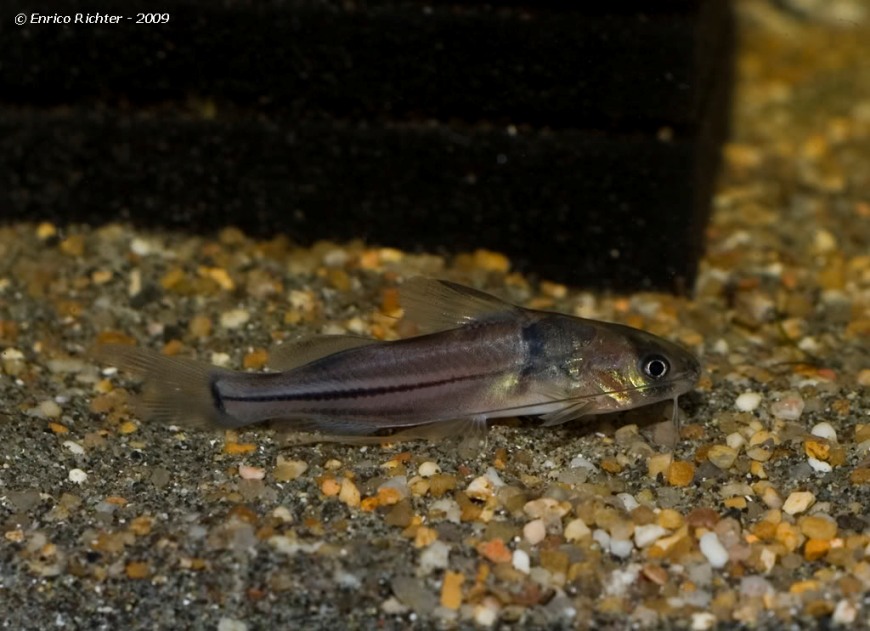
Brachyrhamdia meesi
Sands & Black, 1985
Max length61mm SL2.4in SLTank80 × 30cm31 × 12inTemp24–28°C75–82°FpH6.0–7.5Several Brachyrhamdia species have developed colour patterns that mimic syntopically-occurring Corydoras spp. throughout the life-cycle, and the remainder, including B. meesi, may mimic Otocinclus or smaller Corydoras spp. when juvenile. They're easily told apart from Corydoras by their significantly longer barbels and lack of scute-like plates on the body.
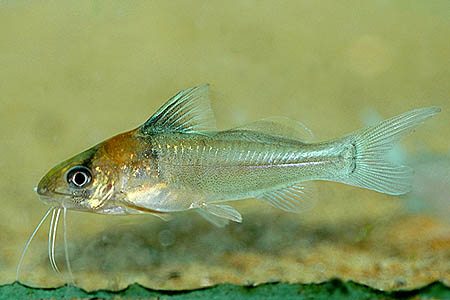
Brachyrhamdia rambarraniFalse Adolfoi
Axelrod & Burgess, 1987
Max length55mm SL2.2in SLTank80 × 30cm31 × 12inTemp24–28°C75–82°FpH4.0–7.0Several Brachyrhamdia species have developed colour patterns that mimic syntopically-occurring Corydoras spp. throughout the life-cycle, and the remainder may mimic Otocinclus or smaller Corydoras spp. when juvenile. Among other catfishes they're closely-related to members of the genus Pimelodella, but differ in...
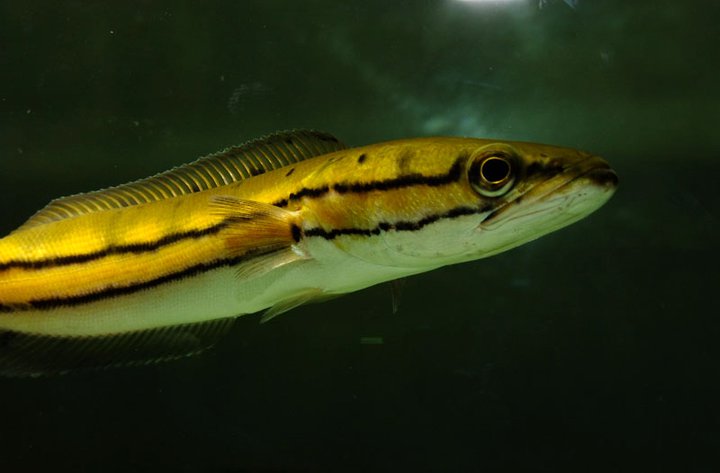
Channa diplogrammaMalabar Snakehead
Day, 1865
Max length480mm SL19in SLTanknot recordedTemp22–32°C72–90°FpH6.0–8.0This species was considered synonymous with the Indochinese congener C. micropeltes for over a century before being revalidated in 2011. Like in C. micropeltes colour pattern varies depending on the age of the fish. Juveniles possess two longitudinal black stripes on the head and body with the are...
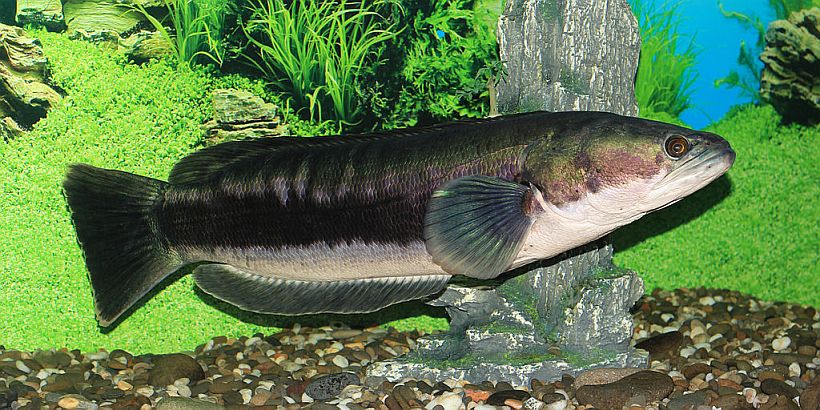
Channa micropeltesGiant Snakehead
Cuvier, 1831
Max length1300mm SL51in SLTanknot recordedTemp20–30°C68–86°FpH6.0–8.0C. micropeltes is also referred to as 'Indonesian', 'red', or 'redline' snakehead, the latter names in reference to the appearance of juveniles which often appear in the ornamental trade despite its unsuitability for home aquaria. It is somewhat hyperbolised in the media as a fearsome, invasive "monster" fish with a reputation for killing more fish than it can eat, and even the occasional human, although in reality...
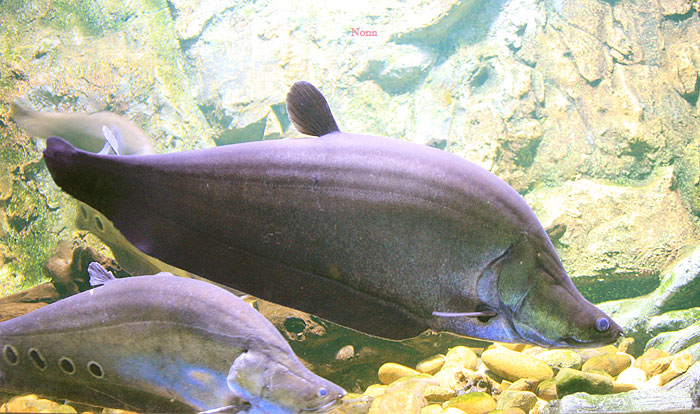
Chitala lopisGiant Featherback
Bleeker, 1851
Max length1500mm SL59in SLTanknot recordedTemp22–28°C72–82°FpH6.0–8.0This species is not collected for the aquarium trade at time of writing. In contrast to other members of the genus older juvenile and adult individuals lack dark markings on the body while the jaw is more pronounced.
Cichlasoma festaeRed Terror
authority not recorded
Max length508mm SL20in SLTank210 × 60cm84 × 24inTemp25–29°C77–84°FpH6.0–8.0The Red Terror can be troublesome to breed due to pairing problems - if a pair of fish are incompatible and are housed together for any length of time, it is likely that the weaker fish will be killed. The best way of getting a true pair is to grow 6 juveniles up until a noticeably strong pair has formed. Also, its size means finding an aquarium and suitable breeding surfaces can be difficult. As previously mentioned, rocks (siliconed if necessary) and bits of slate used to create man-made caves...
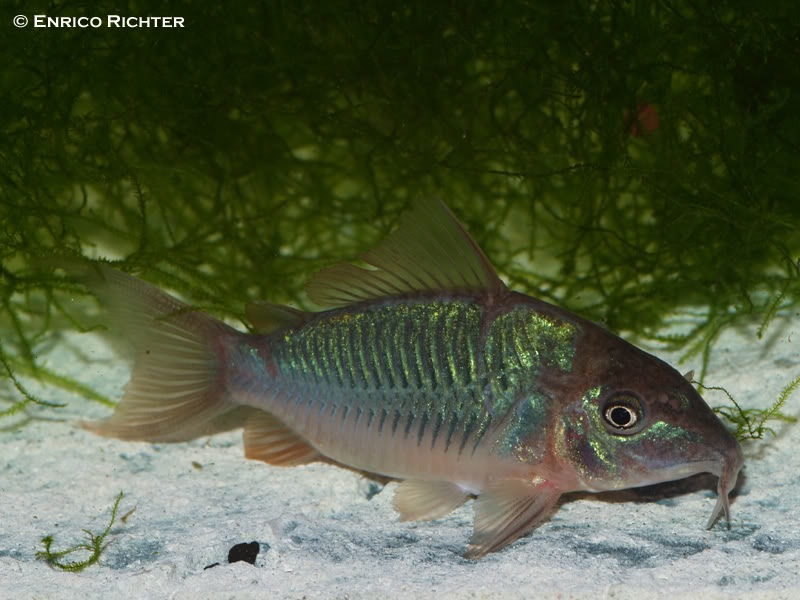
Corydoras splendensEmerald 'Brochis'
Castelnau, 1855
Max length80mm SL3.1in SLTank120 × 45cm48 × 18inTemp20–28°C68–82°FpH5.0–8.0This species was formerly included in the genus Brochis alongside C. britskii and C. multiradiatus, and is sometimes referred to as 'common brochis'. Juveniles have a mottled colour pattern and are sometimes traded as 'hi-fin cory' due to their enlarged dorsal-fin. C. splendens can be told apart from other ex-Brochis species by possession of 10-12 dorsal-fin rays...
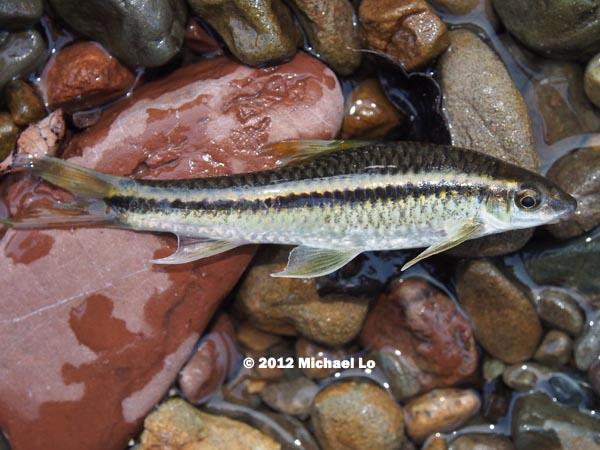
Crossocheilus cobitis
Bleeker, 1854
Max length52mm SL2.0in SLTank100 × 30cm39 × 12inTemp20–26°C68–79°FpHnot recordedGiven its wide natural range it seems logical that this species is or has been available in the aquarium trade, although its correct name may never have been applied. It is told apart from congeners by the following combination of characters: two pairs of barbels; a continuous midlateral stripe from the tip of the snout to the base of the caudal-fin, with a conspicuous small blotch at the posterior extremity, faintly marked on the caudal-fin; a faint mark between the anus and the anal-fin origin in juveniles; a narrow mouth.
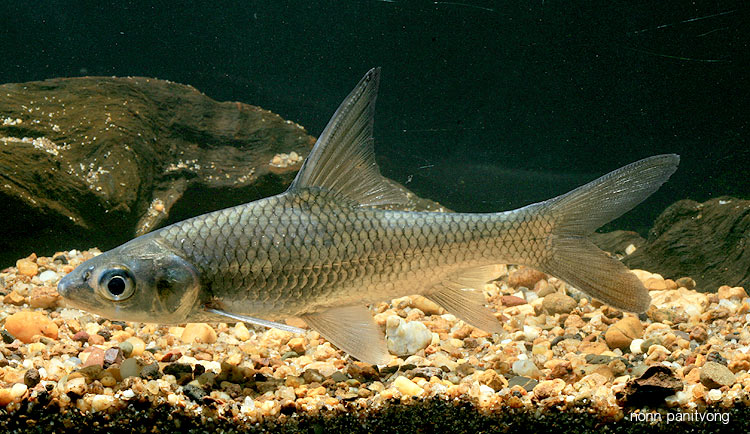
Cyclocheilos enoplos
Bleeker, 1849
Max length750mm SL30in SLTanknot recordedTemp20–26°C68–79°FpH6.0–8.0In the Mekong, it has been observed to migrate upstream from Phnom Penh to Khone Falls between November and February, returning downstream between May and August. The downstream migration ends in the Mekong delta area in Vietnam, where the fish remain until the floods reach their peak in October and November. These lower Mekong migrations mostly comprise juveniles and sub-adults, whereas above Khone Falls...
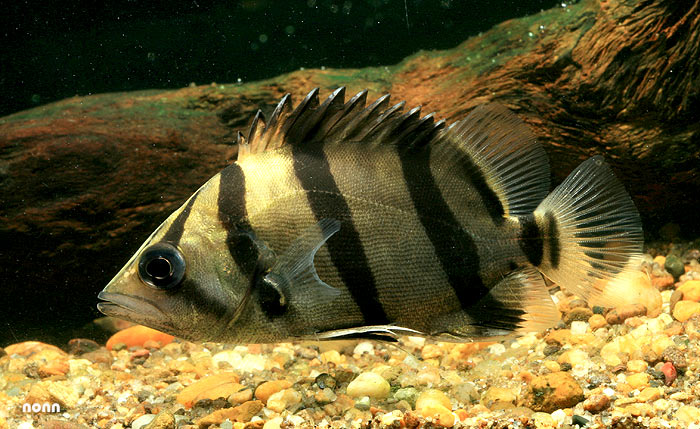
Datnioides undecimradiatusMekong Tiger Perch
Roberts & Kottelat, 1994
Max length300mm SL12in SLTank180 × 60cm72 × 24inTemp20–28°C68–82°FpH5.5–7.5An efficient, largely piscivorous, predator with highly protrusible mouthparts. In the aquarium, juveniles can be offered chironomid larvae (bloodworm), small earthworms, chopped prawn, and suchlike, while adults will accept strips of fish flesh, whole prawns, mussels, live river shrimp, larger earthworms, etc. Older individuals do not require feeding on a daily basis, with 2-3 times per week sufficient.
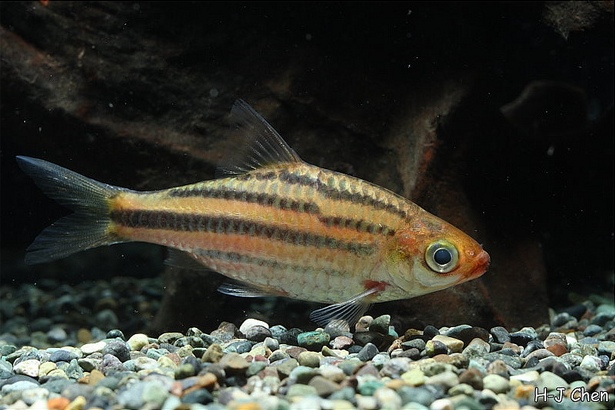
Desmopuntius trifasciatus
Kottelat, 1996
Max length100mm SL3.9in SLTank120 × 45cm48 × 18inTemp20–25°C68–77°FpH5.0–7.0This species is one of three similar-looking members of the genus alongside D. johorensis and D. trifasciatus, while it may also be confused with Striuntius lineatus. Juveniles of all except S. lineatus exhibit a vertically-barred rather than laterally-striped colour pattern, the metamorphosis to adult patterning beginning at around 20 mm SL and normally being complete by 30-40 mm.
Dimidiochromis compressicepsMalawi Eye-Biter
authority not recorded
Max length250mm SL10in SLTank150 × 38cm60 × 15inTemp23–28°C73–82°FpH7.5–8.8D. compressiceps is an ambush predator in nature, its laterally compressed shape and head-down hunting position allowing it to remain hidden among Vallisneria beds and making it tricky to spot in open water. It has a dark stripe running from the snout along the back to the tail which serves to provide further camouflage. Despite its common name, it does not prey solely on the eyes of other species, preferring to hunt small fish (particularly juvenile Copadichromis sp.). It swallows these tai...
Distichodus lusossoLong-nosed Distichodus
authority not recorded
Max length375mm SL15in SLTanknot recordedTemp22–26°C72–79°FpH6.5–7.5One of only a handful of Distichodus seen with any regularity in the hobby. This species is undeniable attractive when juvenile, but unfortunately loses much of its colour and patterning as it matures. It is superficially similar to the more commonly seen D. sexfasciatus but has a much smaller adult size and a narrow, pointed head....
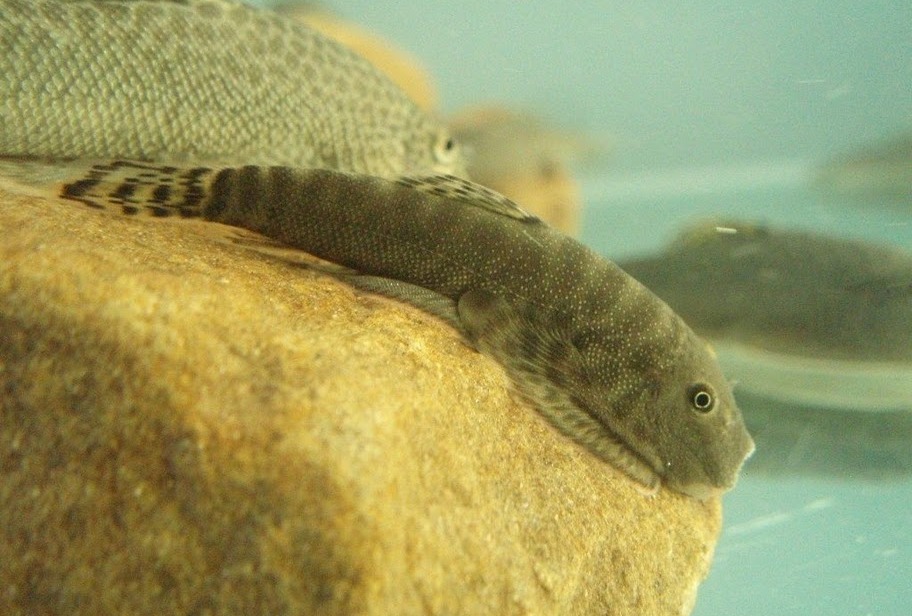
Gastromyzon cornusaccus
Tan, 2006
Max length50mm SL2.0in SLTank75 × 30cm30 × 12inTemp20–24°C68–75°FpH6.0–8.0G. cornusaccus can be distinguished from congeners by the following combination of characters: secondary rostrum present; incomplete postoral pouch present reduced to pockets located posterior to mouth corners; sublacrymal groove present and visible when viewed laterally; juveniles with thick, cream-coloured bars and blotches on body, adults uniformly-coloured; head dorsum plain; subopercular groove absent; gill slit vertical; snout truncate when viewed dorsally; no scales on abdomen; 55-61 lateral line scale...
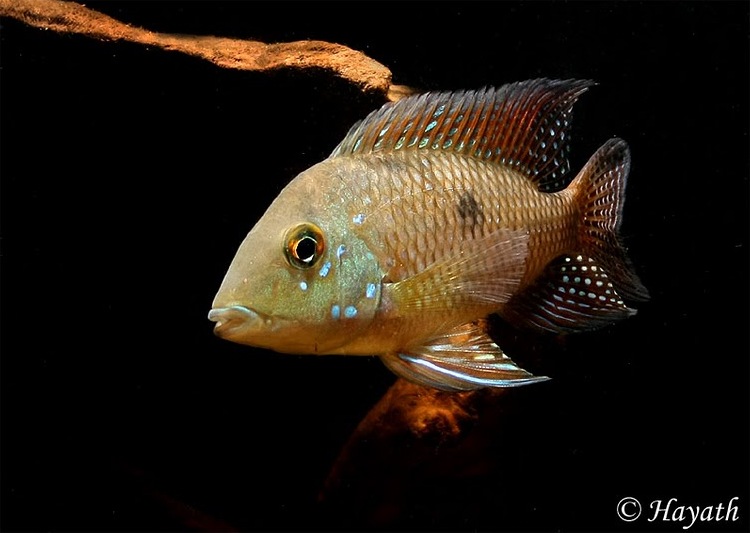
'Geophagus' iporangensis
Haseman, 1911
Max length100mm SL3.9in SLTank120 × 30cm48 × 12inTemp20–26°C68–79°FpH6.0–7.0Juvenile specimens of this species are readily confused with those of other members of the 'G.' brasiliensis species group, but adults are easily-distinguished by their relatively smaller adult size and comparative lack of reflective blue scales on the body and head. The genus Geophagus was rediagnosed by Kullander (1986) who restricted it to include only those species with paired caudal extensions to the swi...
Gymnocorymbus bondiSilver Tetra
authority not recorded
Max length50mm SL2.0in SLTank60 × 38cm24 × 15inTemp22–27°C72–81°FpH5.5–7.5Not often seen in the hobby, probably because it's a fairly bland species when mature. Juveniles are more attractive, possessing reddish unpaired fins, but these fade as the fish mature. It is, however, both peaceful and hardy and is a good choice for the beginner. It is sometimes seen labelled as G. socolofi. This name is now considered a junior synonym of G. bondi....