Results for “native species”
Type a name: scientific, common, or one a species used to go by. Or narrow the catalogue with the filters.
Filters
Paratilapia polleni
authority not recorded
Max length280mm SL11in SLTank120 × 45cm48 × 18inTemp17–28°C63–82°FpH6.5–8.0Now the only species in the genus Paratilapia, P. polleni is known as the "marakely" to many natives in Madagascar, which means "black fish". As with most Madagascan cichlid species, it is highly endangered in the wild due to habitat destruction and competition from introduced species and all attempts at captive breeding are to be encouraged. There is still some confusion as to the identity of the "true" P. polleni as there are both large and small-spotted forms...
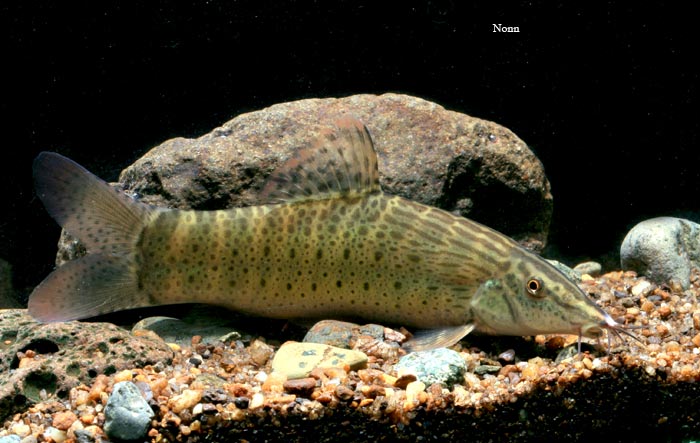
Syncrossus beaufortiChameleon Loach
Smith, 1931
Max length250mm SL10in SLTank150 × 45cm60 × 18inTemp22–30°C72–86°FpH6.0–7.5This species is very similar in appearance to S. berdmorei which is native to India and Myanmar, and has been widely mislabelled under that name in older aquarium literature. The two can appear identical on first glance but there are some notable differences, most obviously possession of 9-10 branchedrays in S. beauforti vs. 11-14 in S. bermorei, and the fact that even young specimens of S. beauforti exhibit laterally-orientated rows of small, dark markings running across the ...
Trichopodus microlepisMoonlight Gourami
authority not recorded
Max length150mm SL6in SLTank90 × 30cm36 × 12inTemp25–30°C77–86°FpH6.0–7.5T. microlepis is not as colourful as some other gouramis but can make a striking addition to the community tank. The modified ventral fins are considerably longer than in other gourami species. It is often used as a food fish in its native countries....
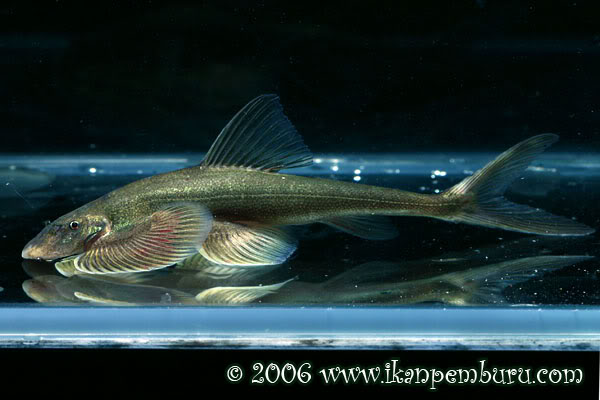
Jinshaia sinensis
Sauvage & Dabry de Thiersant, 1874
Max length75mm SL3.0in SLTank90 × 30cm36 × 12inTemp20–24°C68–75°FpH6.0–7.5This species may not yet have been seen in the aquarium trade outside its native country but has been maintained by a few private collectors. There are currently three species recognised in the genus, all endemic to the Yangtze river drainage, and they're separated from other balitorids by a combination of characters including: relatively long, deeply-forked caudal-fin; roun...
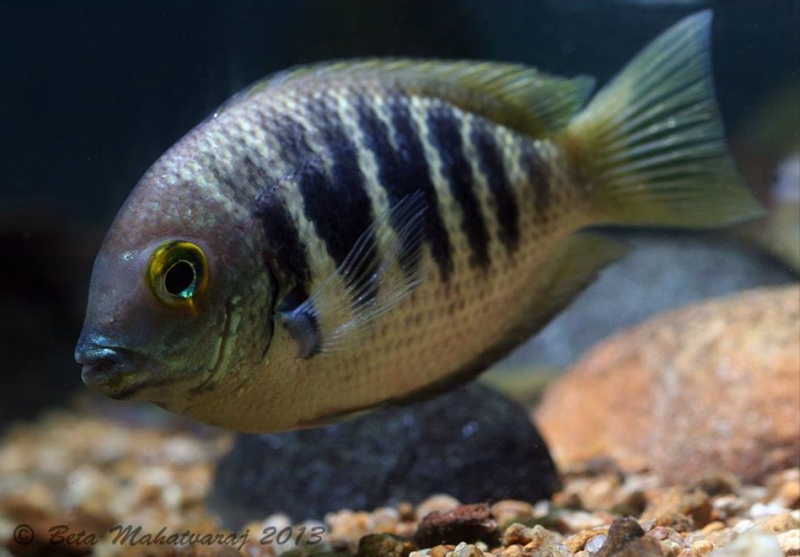
Etroplus canarensisCanara Pearlspot Cichlid
Day, 1877
Max length110mm SL4in SLTank120 × 45cm48 × 18inTemp22–32°C72–90°FpH6.0–7.5Etroplus is the only cichlid genus native to the Indian subcontinent and Sri Lanka and currently comprises three species among which E. canarensis is uniquely limited to freshwater and restricted in range. Its congeners E. maculatus and E. suratensis are both euryhaline inhabiting estuaries, coastal lagoons and the lower reaches of rivers around coastlines of western and southern India plus northern Sri Lanka.
Oreochromis mossambicusMozambique Mouthbrooder
authority not recorded
Max length390mm SL15in SLTank210 × 60cm84 × 24inTemp21–27°C70–81°FpH6.2–8.5One of the most invasive fish species in the world, O. mossambicus is one of the species farmed for supermarkets and restaurants across the globe. Several colour varieties have been selectively bred from the natural green fish to make the fish more appealing to consumers and unsurprisingly, it is these more brightly coloured forms which are usually seen in aquaria. Some of these variants are cross breeds with other species of Oreochromis. The destructive effect of O. mossambicus on non-nativ...
Parambassis wolffiiDuskyfin Glass Fish
authority not recorded
Max length200mm SL8in SLTank120 × 30cm48 × 12inTemp18–25°C64–77°FpH6.5–8.0This species is an infrequent import. It is very common in it's native countries, where it is used as a food fish.
Rasbora kottelati
authority not recorded
Max length70mm SL2.8in SLTank120 × 30cm48 × 12inTemp23–28°C73–82°FpHnot recordedIt is unclear if this species has been available in the aquatic trade as collections from its native waters only occur sporadically, therefore we have based much of the information here on experience with its closest relative R. kalochroma. These two are almost identical in appearance and share some meristic features but R. kottelati possesses an additional, oval-shaped dark blotch on the caudal peduncle, lacks the stripe in the middle of the seen in R. kalochroma and is consequently easy to dis...
Bunocephalus coracoideusBanjo Catfish
authority not recorded
Max length150mm SL6in SLTank60 × 38cm24 × 15inTemp20–27°C68–81°FpH5.8–7.8Bunocephalus is the largest genus within the Aspredinidae family and there are several undescribed species. B. coracoideus is the most common member seen in dealers' tanks. Its native name "Guitarrita" translates as "little guitar" and refers to the shape of the fish when viewed from above. Despite the regularity with which it is seen for sale, it isn't really a good catfish for the general community tank because it's a largely inactive, secretive species, ...
Mystus singaringan
authority not recorded
Max length300mm SL12in SLTank120 × 45cm48 × 18inTemp22–27°C72–81°FpH5.6–7.0This large Mystus is not often seen in the hobby. It makes a fine bottom dweller for communities containing other robust species. It is used as a food fish in many of it's native countries....
Marosatherina ladigesiCelebes Rainbowfish
authority not recorded
Max length80mm SL3.1in SLTank76 × 30cm30 × 12inTemp22–28°C72–82°FpH7.0–8.0For many years, this species was included in the genus Telmatherina, and is still listed as such in much of the avilable literature. In fact it's now the only species in the recently erected genus Marosatherina. Unfortunately, it has been overfished for the aquarium trade in its native waters and is listed as 'vulnerable' on the IUCN red list of threatened species. Thankfully, it's now being mass-produced on fish farms in both the Far East and Eastern Europe, meaning that few...
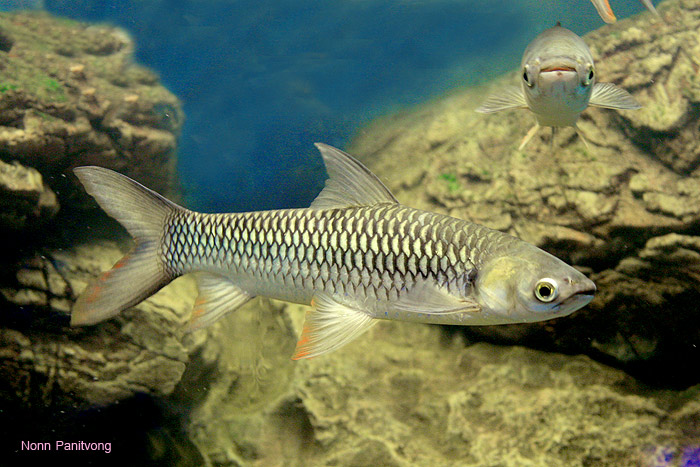
Leptobarbus rubripinnaRed-finned Cigar Shark
Fowler, 1937
Max length1000mm SL39in SLTanknot recordedTemp20–26°C68–79°FpH6.0–8.0This species was referred to as its congener Leptobarbus hoevenii for a number of decades and continues to be misidentified as such in the aquarium hobby, with both species traded under the same name. It is a popular sport fish in its native countries and is wholly unsuitable for private aquaria. Unfortunately it is...
Semaprochilodus insignisFlagtail Prochilodus
authority not recorded
Max length350mm SL14in SLTank150 × 60cm60 × 24inTemp23–29°C73–84°FpH5.5–7.2Semaprochilodus are one of the most common and widespread shoaling fish found in South America. Over a dozen species have been described but most are never imported. They are used as food fish in their native countries. It makes a stunning addition to a community of larger fish. Along with some congeners, S. insignis is commonly known as the Jaraqui in Brazil. It is an interesting species both ecologically and biologically. In nature it migrates over large distances in huge shoals according ...
Semaprochilodus taeniurusFlagtail Characin
authority not recorded
Max length300mm SL12in SLTank150 × 60cm60 × 24inTemp23–29°C73–84°FpH5.5–7.5Semaprochilodus are one of the most common and widespread shoaling fish found in South America. Over a dozen species have been described but most are never imported. They are used as food fish in their native countries. It makes a stunning addition to a community of larger fish. S. taeniurus is also sold as the Silver Prochilodus or Fei Feng. Along with some congeners, it is commonly known as the Jaraqui in Brazil. It is an interesting species both ecologically and biologically. In nature it...
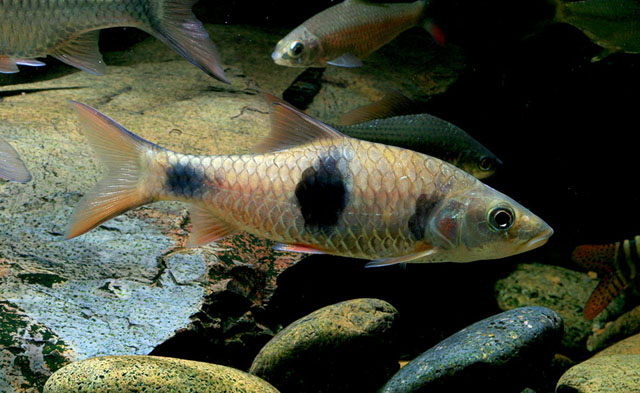
Hampala salweenensis
Doi & Taki, 1994
Max length201mm SL8in SLTank240 × 60cm96 × 24inTemp20–26°C68–79°FpH6.0–8.0This species is poorly-known in the aquarium hobby and may have never been maintained outside its native countries. It can be distinguished from congeners by the following combination of characters: 26-27 lateral line scales; two roundish, dark blotches on each flank, one beneath dorsal-fin origin and above the lateral line, the other on the caudal peduncle and passing thro...
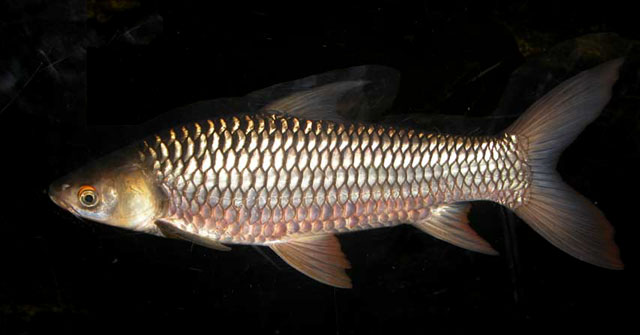
Leptobarbus hoeveniiMad Barb
Bleeker, 1851
Max length1000mm SL39in SLTanknot recordedTemp20–26°C68–79°FpH6.0–8.0Apparently native to Peninsular Malaysia plus the Greater Sunda Islands of Borneo, Sumatra, and Java. Reports of this species from the Mekong, Chao Phraya, and other rivers in Indochina refer to the congener L. rubripinna (see 'Notes'). Type locality is 'Indonesia: Borneo: Kalimantan Selatan: Banjarmasin'.
Triportheus angulatusDusky Narrow Hatchetfish
authority not recorded
Max length165mm SL6in SLTank120 × 30cm48 × 12inTemp22–30°C72–86°FpH5.0–7.5An attractive but not often seen species in the hobby. This is quite odd considering how common it is in many of its native habitats, where it is known as sardina. It has very strong pectoral muscles, and uses these to jump from the water to catch flying insects or to escape potential predators. It can make leaps of several metres in length....
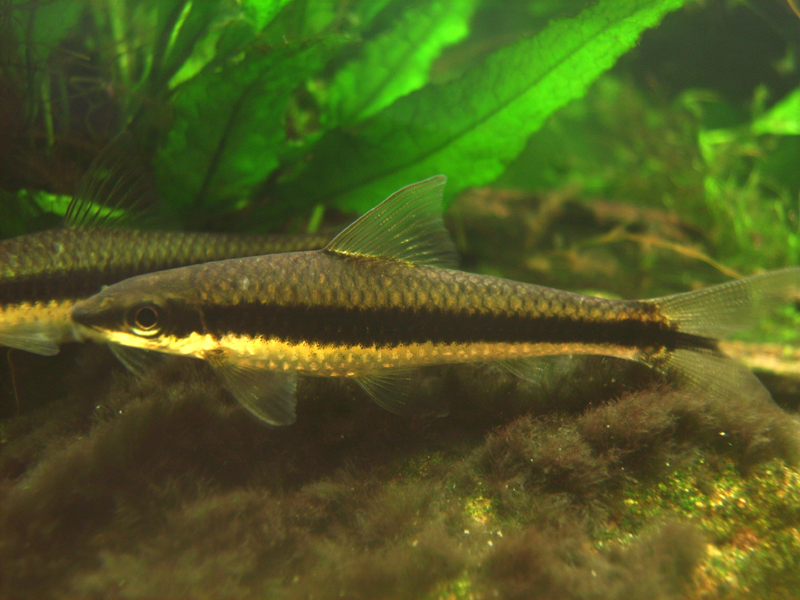
Crossocheilus langeiSiamese Algae Eater
Bleeker, 1860
Max length150mm SL6in SLTank150 × 45cm60 × 18inTemp20–26°C68–79°FpH6.0–7.5C. oblongus is another name widely misused in the trade but that species has seemingly never been exported and was described as a blueish fish with yellow fins. It's native to streams of Gunung Salak mountain in Bogor Regency, West Java, Indonesia where collecting of ornamental fishes is almost non-existent. Other species of laterally-striped Crossocheilus also exist and may be available from time-to-time but are more easily told apart from the group described above.
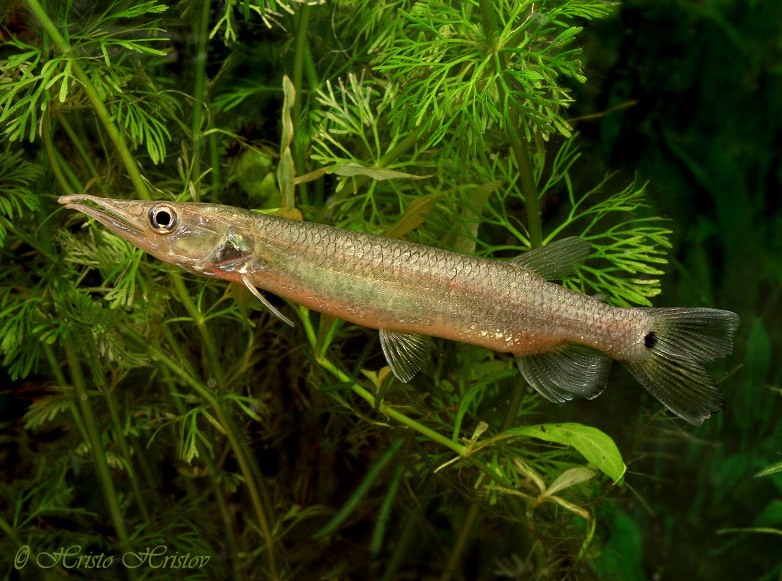
Ctenolucius hujetaGar 'Characin'
Valenciennes, 1850
Max length250mm SL10in SLTank180 × 60cm72 × 24inTemp22–28°C72–82°FpH5.0–7.5C. hujeta is traded under various names including 'slant-nosed gar', 'hujeta gar', 'rocket gar' and 'freshwater barracuda' but it and other members of the family Ctenoluciidae have traditionally been referred to as 'pike characids'. They're all predatory fishes native to South America, included in the order Characiformes and currently spread across two genera; Ctenolucius with two species and Boulengerella with five. The two genera are ...
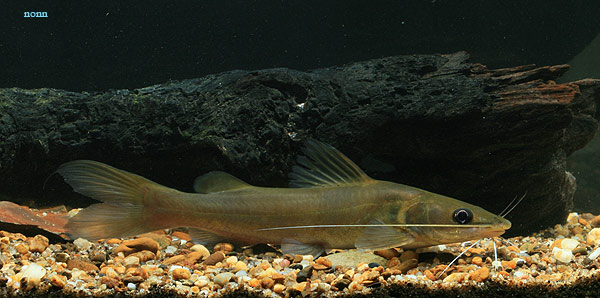
Hemibagrus spilopterus
Ng & Rainboth, 1999
Max length500mm SL20in SLTanknot recordedTemp20–27°C68–81°FpH6.0–8.0This species is relatively common in the aquarium trade but has been widely misidentified as the congener H. nemurus which is native to Java and may never have been exported for ornamental purposes. Hemibagrus has been divided into a number of putative species groups which may or may not rep...