Trichopodus microlepis
Moonlight Gourami
Last revised 2012Edit this page
On this page11 sections
Quick factsEdit
Difficulty3 of 8 measures
- Space
- large tank
- Water
- flexible
- Temp
- flexible
- Diet
- unknown
- Temperament
- unknown
- Social
- unknown
- Compatibility
- unknown
Other demands
Each of these can raise the rating on its own, whatever the measures above say.
- Hardiness
- unknown
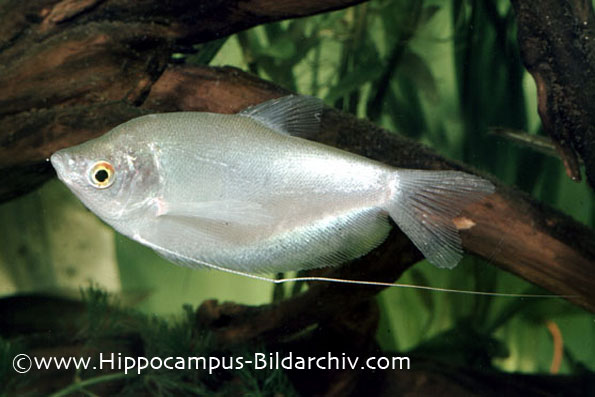
The moonlight gourami, Trichopodus microlepis, is a labyrinth fish from Vietnam, Cambodia and Thailand. It inhabits lowland ponds, bogs and swamps where vegetation grows densely, and its modified ventral fins are considerably longer than in other gouramis. It is often used as a food fish in its native countries, and most fish on sale are mass-produced.
Distribution
EditHabitat
Write a noteEditAquarium size
Write a noteEdit90 ∗ 30 ∗ 30 cm36 ∗ 12 ∗ 12 in
Maintenance
Write a noteEditA planted setup with open areas for swimming and slow water flow suits this species.
Water conditions
EditTemperature: 25 – 30 °C77 – 86 °F
pH: 6.0-7.5
Hardness: 2-25 dH
These recommendations come from this profile’s own figures. They contain affiliate links, so we may earn a commission.
Diet
Write a noteEditOmnivorous. Will take most commercially-prepared foods but supplement with frozen and live foods.
Behaviour and compatibility
Write a noteEditDo not keep with fish so small as to be seen as food, or that are too vigorous for these skittish fish. Ideal tankmates include other Trichogaster, Colisa, Botia, Corydoras, Barbs, Angelfish and loricariids. Males may become territorial with other males and gouramis.
Sexual dimorphism
Write a noteEditThe male has orange or red pelvic fins, while the female’s are yellow.
Reproduction
Write a noteEditNot easy. Bubblenester. If you wish to breed T. microlepis provide the pair with their own tank, which should be densley planted and contain floating plants. Decrease the water level to 6-8 inches and slowly raise the temperature to 85F. Feed the pair lots of live food. When he is ready the male will construct a loose bubblenest amongst surface vegetation. The pair will position themselves under the nest and adopt the typical anbantoid spawning embrace. Spawning may last up to 2 hours, and up to 2000 eggs may be released. At this stage it is advisable to remove the female. Fry hatch in 1-2 days, with the fry becoming free swimming 2 days later. The male can now also be removed. The fry must be fed very small foods such as infusoria 3-4 times daily for the first fortnight, at which point they will start taking newly hatched brine shrimp and powdered flake food. The fry are very sensitive to changes in water chemistry. It is recommended to change no water until the fry measure 1/2" or so.
Notes
EditT. microlepis is not as colourful as some other gouramis but can make a striking addition to the community tank. The modified ventral fins are considerably longer than in other gourami species. It is often used as a food fish in its native countries.
Species images · 3
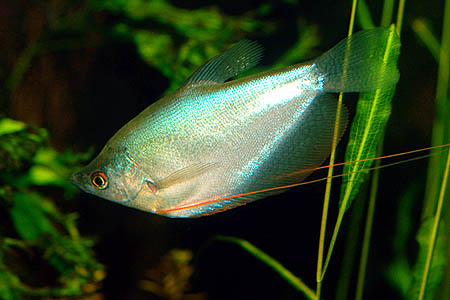
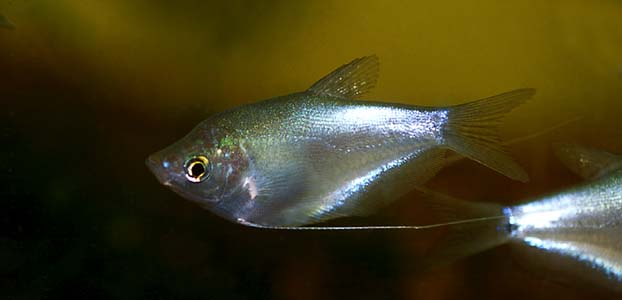
These photographs are used with each photographer's permission.
Send a photographProfile completeness17 of 24
Community
Questions about Trichopodus microlepis?
Ask on Discord