Results for “ocellate”
Type a name: scientific, common, or one a species used to go by. Or narrow the catalogue with the filters.
Filters
Lamprologus stappersi
authority not recorded
Max length63mm SL2.5in SLTanknot recordedTemp23–27°C73–81°FpH7.5–9.0This fish was originally thought to be a morph of L. ocellatus but has now been described as a distinct species. It is still occasionally offered for sale as "pearly ocellatus" and may also be seen under the invalid name L. meleagris....
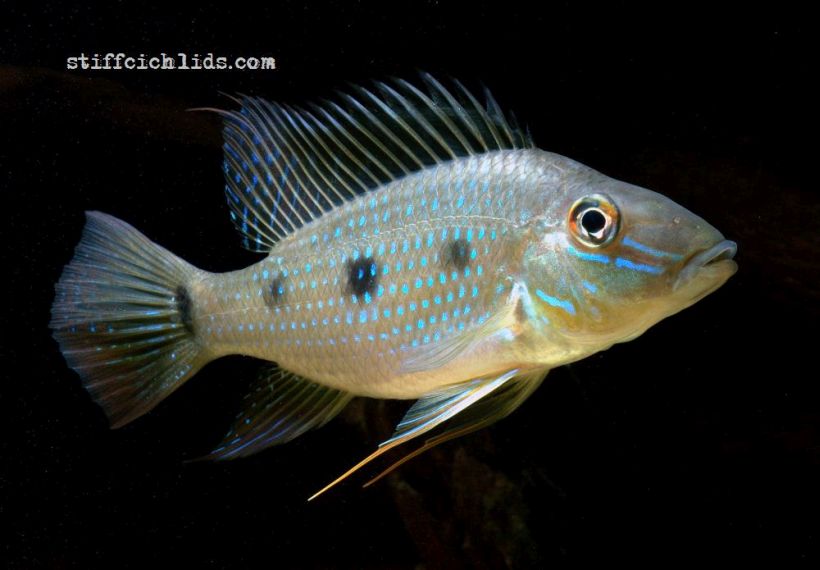
Satanoperca acuticepsSharphead Eartheater
Heckel, 1840
Max length170mm SL7in SLTank180 × 60cm72 × 24inTemp20–28°C68–82°FpH5.5–7.5This species is relatively rare in the ornamental trade, where it is sometimes confused with its similarly-patterned congeners S. daemon and S. lilith. These three species all possess 1-3 dark blotches on the side of the body and a relatively large ocellus on the upper caudal-fin base, characters that immediately separate them from the remainder of the genus which lack blotches on the body and have a relatively small ocellus on the upper caudal-fin base.
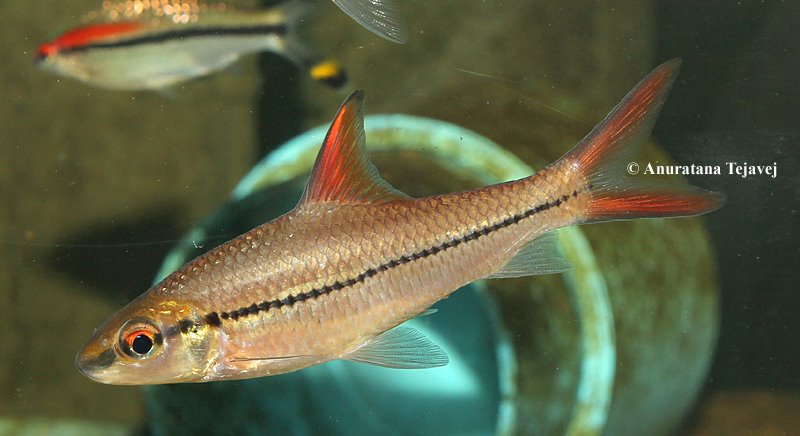
Cyclocheilichthys janthochir
Bleeker, 1854
Max length200mm SL8in SLTank180 × 45cm72 × 18inTemp22–27°C72–81°FpH4.0–7.0In the exceptionally diverse Danau Sentarum lake system of the upper Kapuas River basin, West Kalimantan, sympatric species include Scleropages formosus, Barbonymus gonionotus, B. schwanenfeldii, Crossocheilus nigriloba, Cyclocheilichthys apogon, C. repasson, Epalzeorhynchos kalopterus, Labiobarbus ocellatus , Leptobarbus hoevenii, Luciosoma spilopleura plus various representatives of Barbodes, Rasbora and Osteochilus.
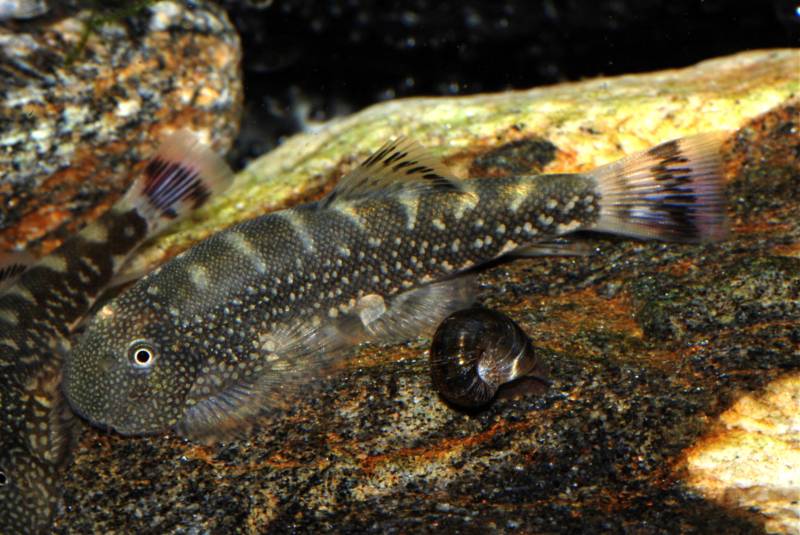
Gastromyzon farragus
Tan & Leh, 2006
Max length40mm SL1.6in SLTank60 × 30cm24 × 12inTemp20–24°C68–75°FpH6.0–7.5In fact G. farragus and G. ocellatus represent one of 12 pairs of cryptospecies to be found in the genus, differing in subtle aspects of patterning. Cryptospecies are defined as morphologically similar, but reproductively isolated species which in fishes often inhabit adjacent river basins but in some cases occur sympatrically. The phenomenon may be a result of parallel evolution, and is not normally considered to represent an early stage of speciation.
Hemigrammus hyanuaryJanuary Tetra
authority not recorded
Max length40mm SL1.6in SLTank60 × 38cm24 × 15inTemp23–27°C73–81°FpH6.0–7.0Also known as the costello or green neon tetra, this species is seen much less often in the hobby than it used to be. It's occasionally confused with the common head and tail light tetra, H. ocellifer, as it resembles an elongated version of that species. Like all Hemigrammus, its taxonomic status is currently Incertae Sedis, meaning uncertain. The genus is currently used as something of a catch-all for over 70 species of small characin. Most experts agree that a full revision is require...
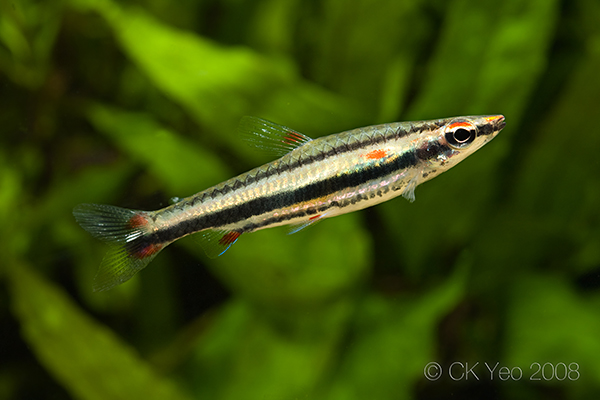
Nannostomus trifasciatusThree-lined Pencilfish
Steindachner, 1876
Max length33mm SL1.3in SLTank75 × 30cm30 × 12inTemp22–28°C72–82°FpH4.0–7.5Wild populations vary in colour pattern depending on origin, and some populations have previously been described as distinct species. A form from Peru has a particularly silvery body colour, for example, while another, marketed as 'super red' possesses an unusually long red stripe on the body, extending much of the length of the dark central stripe. A population from around Boa Vista in the rio Branco system, Pará state, Brazil has an ocellus o...
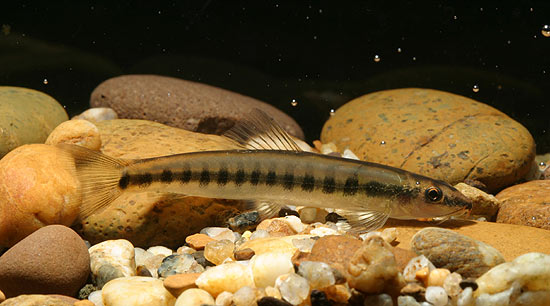
Nemacheilus ornatus
Kottelat, 1990
Max length45mm SL1.8in SLTank60 × 30cm24 × 12inTemp23–26°C73–79°FpH6.0–7.5This species is distinguished from similar-looking congeners such as N. longistriatus and N. ornatus by its unique colour pattern consisting of a black lateral body stripe with 9-16 vertically-orientated blotches extending along it both above and below, plus an irregular stripe running along the dorsal surface. The anterior lateral blotch is surrounded by lighter pigment, forming an ocellus similar to that seen in N. binotatus.
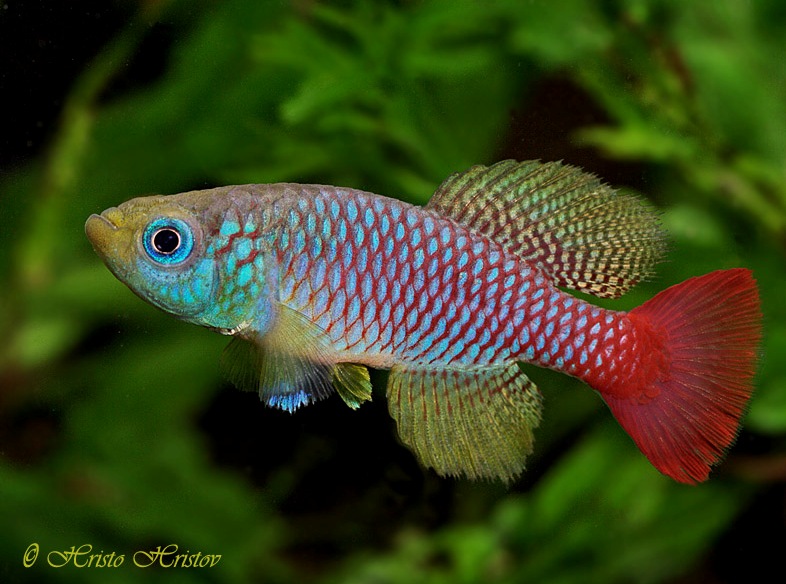
Nothobranchius foerschi
Wildekamp & Berkenkamp, 1979
Max length♂ 55 · ♀ 40mm SL♂ 2.2 · ♀ 1.6in SLTank45 × 30cm18 × 12inTemp20–24°C68–75°FpH6.5–7.5Inhabits ephemeral, water-filled depressions, pools and swamps mostly located in lowland floodplains. Water levels in these seasonally-variable habitats typically decrease during the dry season and eventually become completely dessicated for several months each year. Near Bagamoyo it's been collected from pools of a flat, grassy floodplain alongside the congeners N. annectens, N. janpapi and N. melanospilus, while at Soga it occus together with N. janpapi and N. ocellatus. Most habitats appear to be heavily overgrown with terrestrial vegetation.
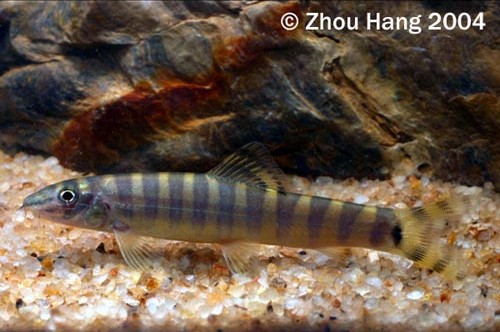
Parabotia lijiangensis
Chen, 1980
Max length83mm SL3.3in SLTank120 × 30cm48 × 12inTemp20–24°C68–75°FpH6.0–7.5It's told apart from congeners by a combination of characters as follows: large scales present on body and sides of head; caudal fin deeply forked with subequal lobes; 10-13 dark, vertical bars on the body; a dark, ocellated spot in the centre of the caudal-fin base; two bars on top of head, dorsal-fin with two rows of greyish spots; caudal-fin lobes with 3-4 dark bands on each; anal-fin with one indistinct band and another, more distinct, submarginal band; ventral fins with two indistinct bands.
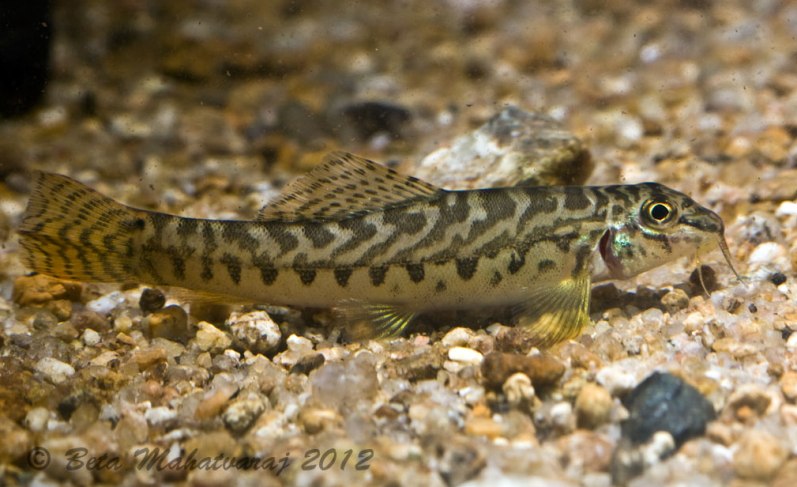
Paracanthocobitis botiaZipper Loach
Hamilton, 1822
Max length152mm SL6in SLTank75 × 30cm30 × 12inTemp21–26°C70–79°FpH6.0–7.5Traded under various names including 'mottled', 'eyepot', 'sand' and 'striped' loach. It's perhaps one of the better choices for those new to keeping nemacheilids being relatively hardy, peaceful and exhibiting some quirky behavioural traits. The characteristic ocellus, a dark marking at the top of the caudal peduncle that resembles an eye, is thought to have some function in predator distraction and is normally more intense in younger specimens.
Paracanthocobitis zonalternans
Blyth, 1860
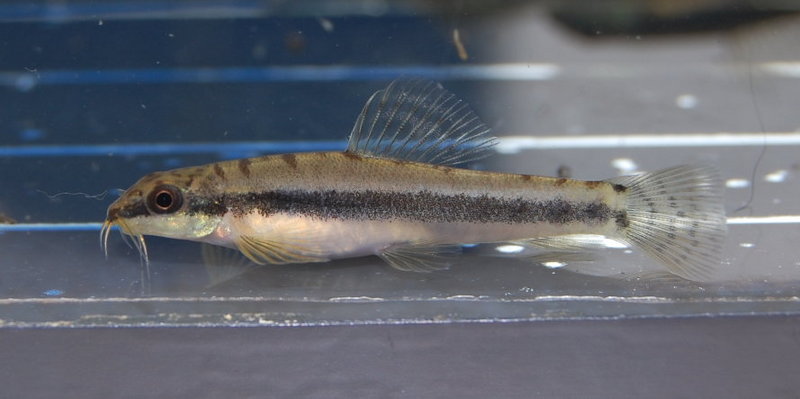
Max length78mm SL3.1in SLTank60 × 30cm24 × 12inTemp20–25°C68–77°FpH6.0–7.5According to Kottelat (1990) the chief distinguishing characters for the genus are: possession of 9-18½ branched dorsal-fin rays; colour pattern without black basal caudal bar, but with an ocellus at upper base of caudal-fin; upper lip with or without several rows of papillae; lower lip with a broad median interruption and a widened, papillated pad on each side.
Satanoperca daemonThreespot Eartheater
Heckel, 1840
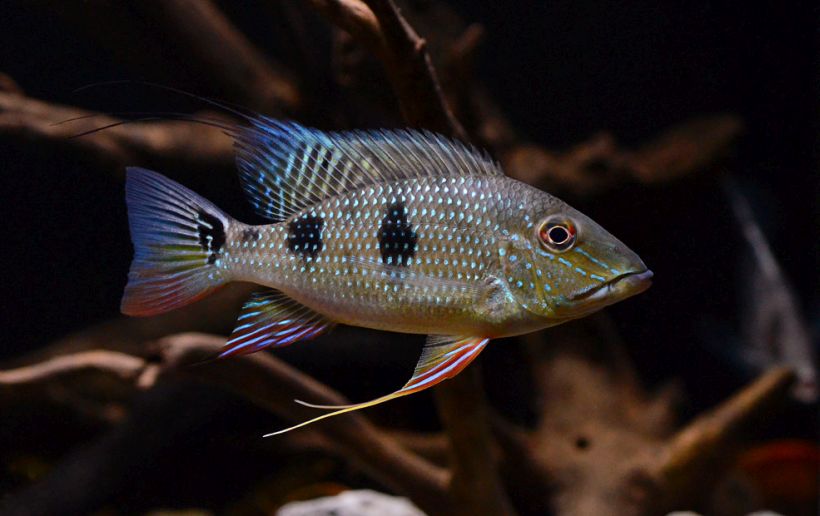
Max length250mm SL10in SLTank210 × 60cm84 × 24inTemp24–28°C75–82°FpH3.5–6.0S. daemon is relatively common in the aquarium trade but is by no means easy to maintain, with particular attention to space, diet, water quality, and chemistry required in order for it to thrive. It can be distinguished from other members of the genus by possessing two dark blotches on the flank and a prominent ocellus at the caudal-fin base. Among the named species it is most similar to...
Satanoperca jurupariDemon Eartheater
Heckel, 1840
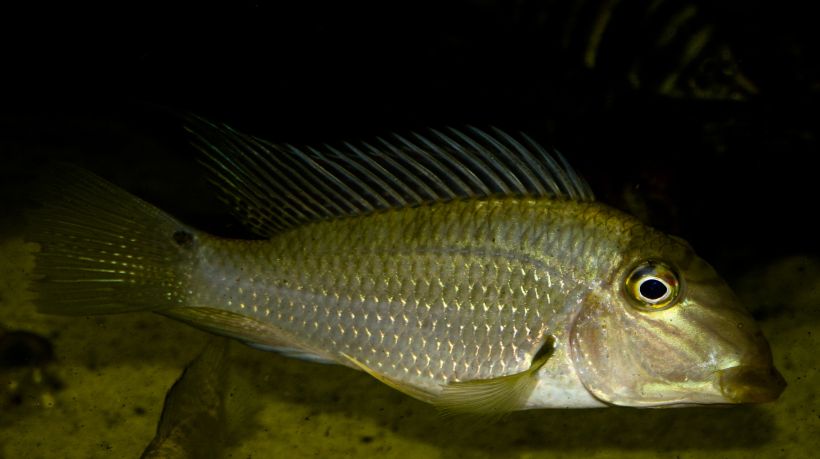
Max length185mm SL7in SLTank210 × 60cm84 × 24inTemp20–28°C68–82°FpH5.5–7.5S. jurupari is also known as 'demon fish', 'jurupari earth eater', 'green horse face', or simply 'jurupari' in the aquarium hobby. It can be distinguished from other members of the genus by the following combination of characters: presence of a relatively small dark ocellus on the upper caudal-fin base; absence of well-defined dark blot...
Satanoperca lilith
Kullander & Ferreira, 1988
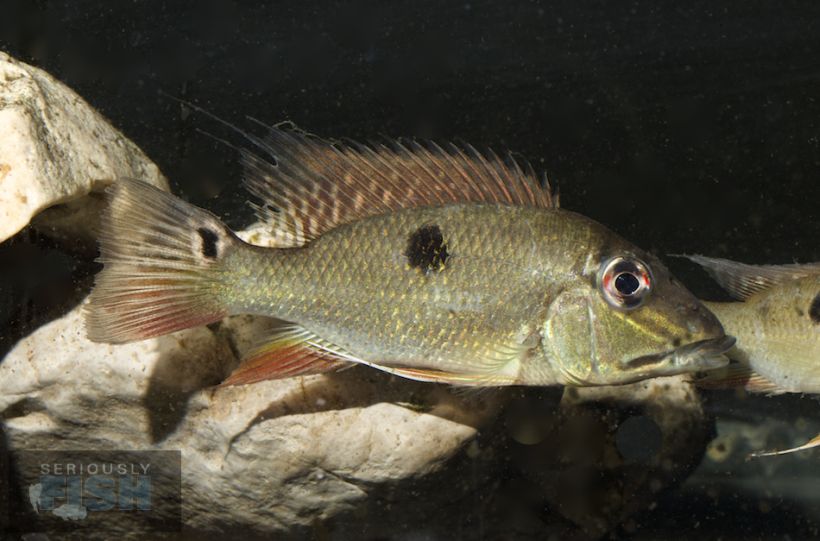
Max length255mm SL10in SLTank210 × 60cm84 × 24inTemp20–28°C68–82°FpH5.0–7.5Despite its extensive natural distribution S. lilith is uncommon in the ornamental trade, where it is sometimes referred to as 'one-spotted demon fish' or 'one spot eartheater'. It can be distinguished from other members of the genus by possessing a single dark blotch on the flank and a prominent ocellus at the caudal-fin base. Among the named species it is most similar to S. daemon, but that species possesses two blotches on the flank.
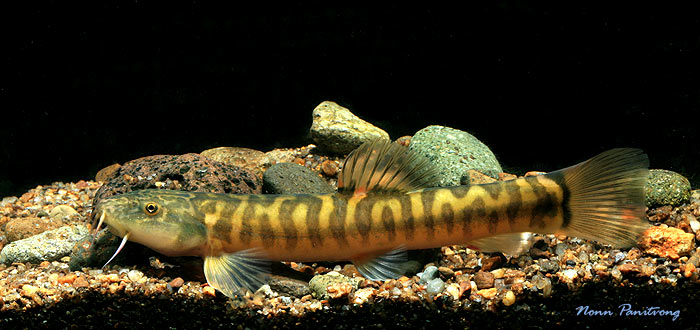
Schistura schultzi
Smith, 1945
Max length93mm SL3.7in SLTank120 × 30cm48 × 12inTemp16–24°C61–75°FpH6.0–8.0There appears to be some discrepancy between Smith's original description and Kottelat (1990) in that Smith states the fish is a member of a group of species lacking an ocellus at the upper caudal-fin base, whereas Kottelat mentions the presence of 'a black spot at upper extremity of caudal-fin base, surrounded by a whitish area'.
Synodontis notataOne-spot Synodontis
authority not recorded
Max length275mm SL11in SLTank120 × 30cm48 × 12inTemp22–25°C72–77°FpH6.5–7.5Also known as the Domino Synodontis or the One-spot Squeaker, several regional variants of S. notata are known, some of which have 3, 6 or 12 spots and others none at all. Some of these are seen for sale under the invalid name S. ocellata. It is also often imported with similar species such as S. nummifer or S.congica. These are usually then all sold as notata. S. notata is more active during the day than many Syno species and therefore makes a good addition to aquariums with more boisterous...
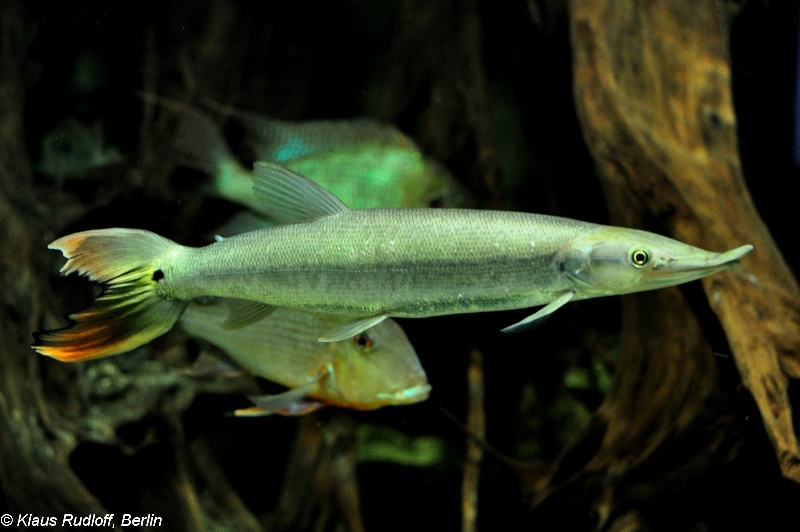
Boulengerella cuvieri
Spix & Agassiz, 1829
Matched on Xiphostoma ocellatum, a name it was formerly known by
Max length800mm SL31in SLTanknot recordedTemp22–28°C72–82°FpH5.0–7.5It's known by various vernacular names including 'Pirá-pacu', 'Pira-pucu' or 'Diente de cao' (central Amazon), 'Bicuda' or 'Uena' (rio Tocantins), 'Bicuda' (rio Tapajós), 'Aguejeta' or 'Picua' (Venezuela), and 'Moruwi' or 'Pirapoko' (Guyana). The entire dorsal-fin base is located anteriorly to a vertical through the anal-fin origin and this character distinguishes it from all other ctenolucids except B. lucius and B. xyrekes.
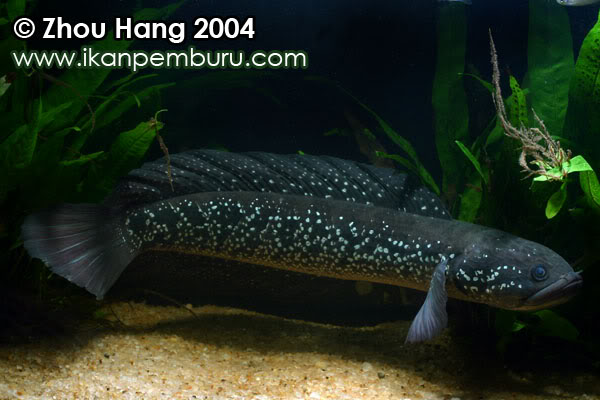
Channa asiaticaChinese Snakehead
Linnaeus, 1758
Matched on Channa ocellata, a name it was formerly known by
Max length350mm SL14in SLTank100 × 40cm39 × 16inTemp15–25°C59–77°FpH6.0–8.0No bubble nest is built and several thousand eggs simply float at the surface with both male and female remaining to defend the eggs and fry. The eggs hatch after 24-36 hours depending on temperature and the fry are free swimming in a further 24 hours. At this point they resemble 6-7 mm long black tadpoles. It is important to constantly feed...
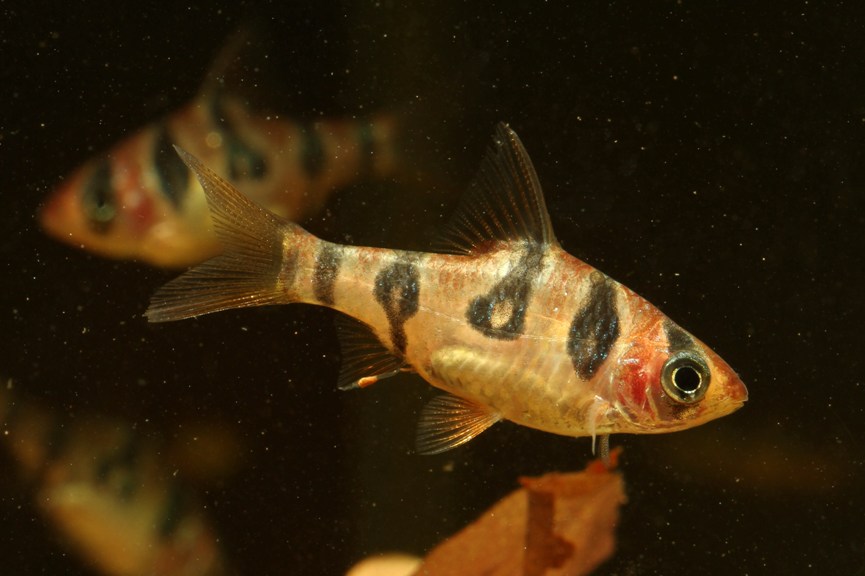
Desmopuntius rhomboocellatusSnakeskin Barb
Koumans, 1940
Matched on Puntius rhombo-ocellatus, a name it was formerly known by
Max length55mm SL2.2in SLTank80 × 30cm31 × 12inTemp20–28°C68–82°FpH4.0–7.0Endemic to southern Kalimantan, the Indonesian portion of Borneo where it's been recorded from several river systems including the Kapuas, Kepayang, Barito and Kahajan. Type locality is given as 'Canal along the highway from Oelin to Bandjermasin, about 15 kilometers from Bandjermasin, Borneo.' Often referred to as the 'rhomb' or 'rhombo' barb and included in a group of closely-related, similar-looking congeners which also includes...
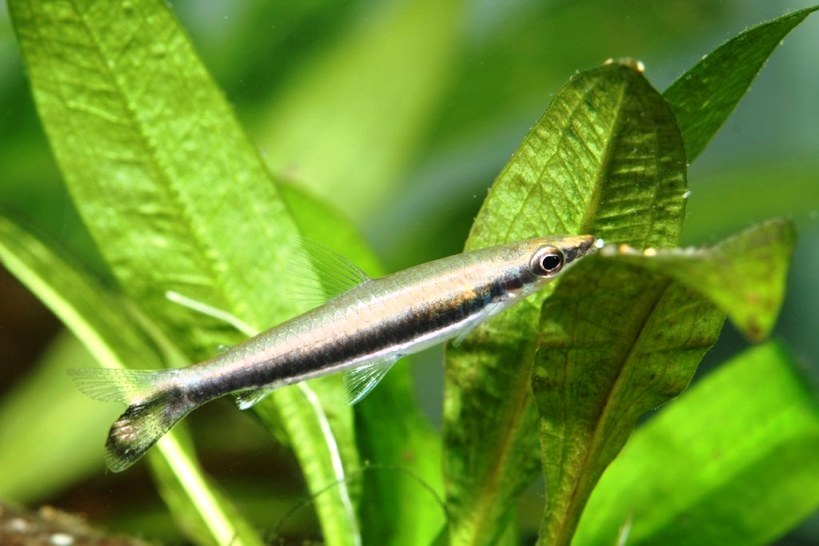
Nannostomus unifasciatusOne-lined Pencilfish
Steindachner, 1876
Matched on Poecilobrycon ocellatus, a name it was formerly known by
Max length40mm SL1.6in SLTank75 × 30cm30 × 12inTemp23–28°C73–82°FpH4.0–7.0This species has been referred to the genera Poecilobrycon and Nannobrycon in the past and in the aquarium hobby is also known as 'oneline' or 'red fin' pencilfish. It's a popular aquarium fish and has an interesting oblique swimming-style, a behavioural trait shared only with N. eques among congeners. The most recent diagnosis of the species appears to be that giv...