Results for “serra”
Type a name: scientific, common, or one a species used to go by. Or narrow the catalogue with the filters.
Filters
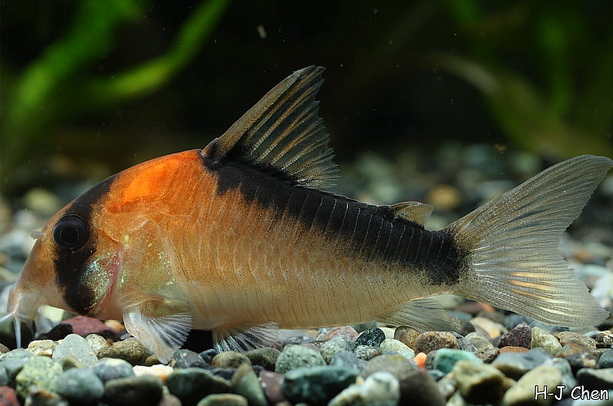
Corydoras duplicareus
Sands, 1995
Max length50mm SL2.0in SLTanknot recordedTemp20–26°C68–79°FpH4.0–7.0This species is among a number of congeners native to the rio Negro region to possess a colour pattern with an oblique dark bar running along the dorsal surface of the body. This unofficial group also includes C. burgessi, C. davidsandsi, C. duplicareus, C. imitator, C. melini, and C. serratus, and among these C. duplicareus is most easily-confused with C. adolfoi.
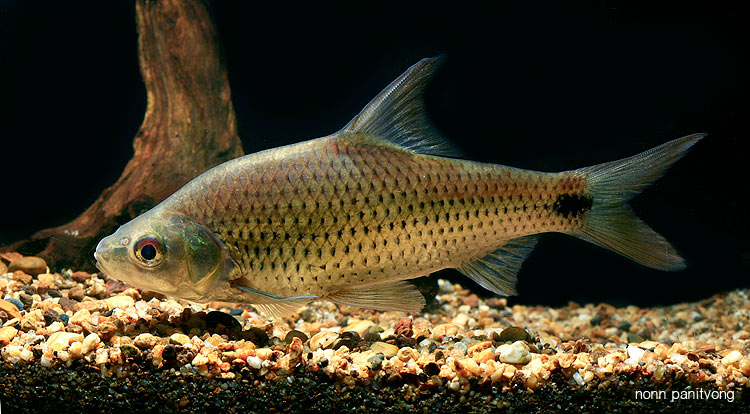
Cyclocheilichthys armatus
Valenciennes, 1842
Max length230mm SL9in SLTank180 × 60cm72 × 24inTemp20–26°C68–79°FpH6.0–8.0It can be distinguished from congeners by possessing one or two pairs of barbels, a black blotch at the base of the caudal-fin, and rows of dark spots along the lateral scale rows. Members of Cyclocheilichthys are characterised by possessing a serrated dorsal fin spine, 9 branched pelvic fin rays, a conical snout, small, subterminal...
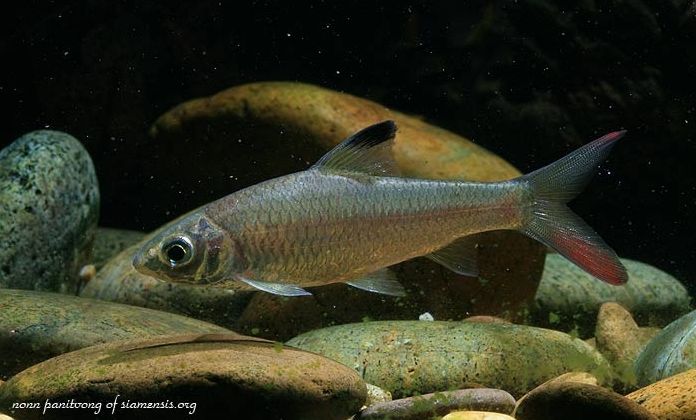
Discherodontus ashmeadi
Fowler, 1937
Max length135mm SL5in SLTank120 × 45cm48 × 18inTemp23–26°C73–79°FpH6.0–7.5D. ashmeadi is the type species and exhibits differences in dental morphology compared with other members of the genus. It can also be told apart from D. halei by the red/pink (vs. orange) colouration in the dorsal and anal fins and serrated (vs. smooth) dorsal spine. D. schroederi is also similar-looking but as it matures the prominent dark dorsal blotch fades to a thin dark distal band whereas in D. ashmeadi it is retained throughout life.
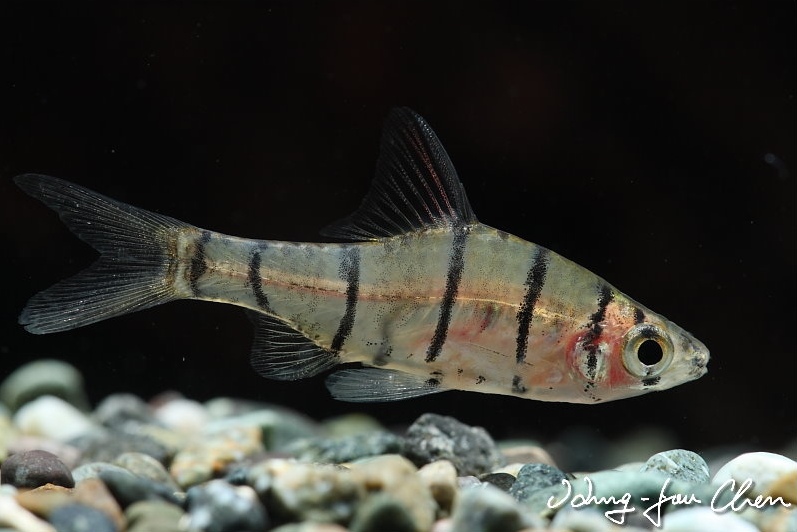
Eirmotus octozona
Schultz, 1959
Max length36mm SL1.4in SLTank60 × 30cm24 × 12inTemp22–26°C72–79°FpH5.0–7.0E. octozona can be told apart from congeners by the following combination of characters: bar 1 present; presence of a large and distinct black mark anterior to anus, visible in lateral and ventral views; simple dorsal-fin rays black, sometimes extending onto first branched ray; other rays hyaline or with diffused chromatophores on last dorsal-fin ray, adjacent to upper extremity of bar 6; 25-31 serrae on last simple dorsal-fin ray; uppermost ray of pectoral-fin with faint black margin; width of bar 5 equal to 1-1½ lat...
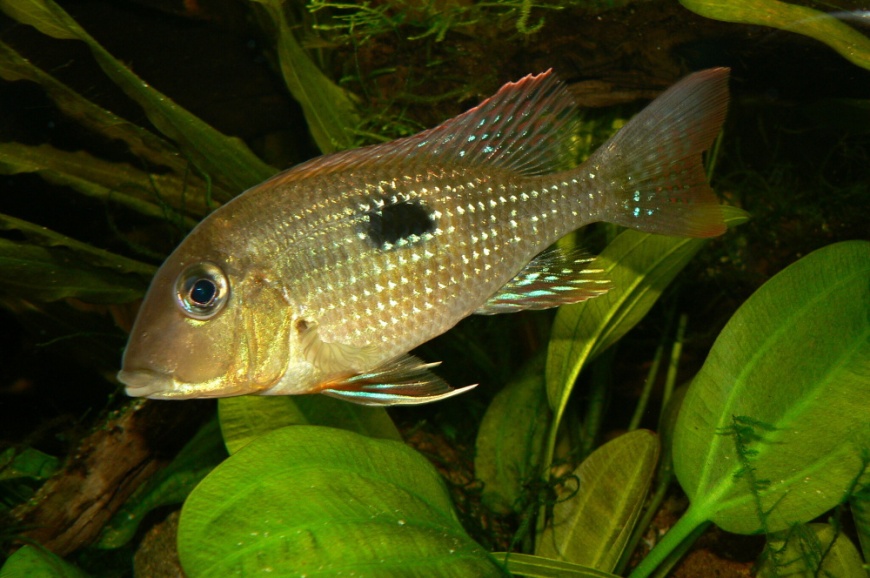
Geophagus camopiensisOiapoque Eartheater
Pellegrin, 1903
Max length200mm SL8in SLTank150 × 45cm60 × 18inTemp25–33°C77–91°FpH6.0–7.5In a study conducted on the Arataye River, the main tributary of the Approuage, this species was mostly collected from stretches of rapids with rocky substrate which were reduced to a series of pools during the dry season. Other fishes observed at the same site were Auchenipterus nuchalis, Hypostomus gymnorhynchus and Moenkhausia cf. intermedia while at other localities in the river Bryconops affinis, Myleus ternetzi, M. rhomboidalis, Moenkhausia aff. barbouri, Curimata sp. and Serrasalmus sp. were collected.
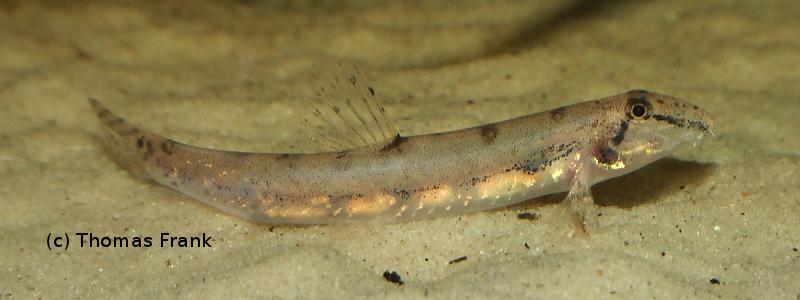
Kottelatlimia hipporhynchos
Kottelat & Tan, 2008
Max length52mm SL2.0in SLTank60 × 30cm24 × 12inTemp23–26°C73–79°FpH4.0–6.5This species differs from congeners in the presence of papillae covering the mouthparts (lips, barbels, and lobes) which are absent in other species. It's also the largest species in the genus and the serrae on the second pectoral fin rays in males form a broa...
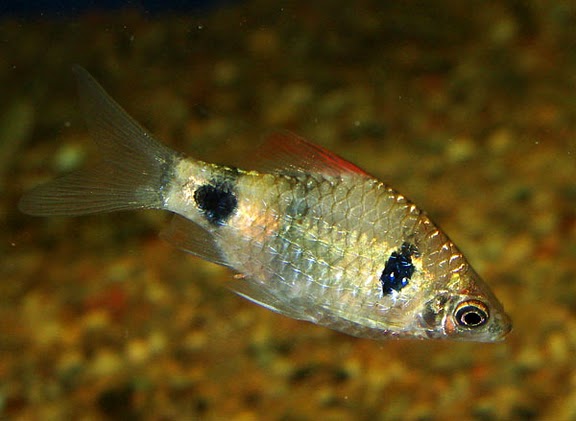
Pethia setnaiNarayan Barb
Chhapgar & Sane, 1992
Max length65mm SL2.6in SLTank90 × 30cm36 × 12inTemp20–26°C68–79°FpH6.0–7.5This species is widely referred to and traded as the congener 'Puntius' narayani (Hora, 1937). The precise identity of the latter is in doubt, however, plus P. setnai possesses a serrated dorsal-fin spine whereas 'P.' It was formerly included in the Puntius conchonius 'group' of closely-related species alongside P. ater, P. bandula, P. conchonius, P. cumingii, P. erythromycter,...
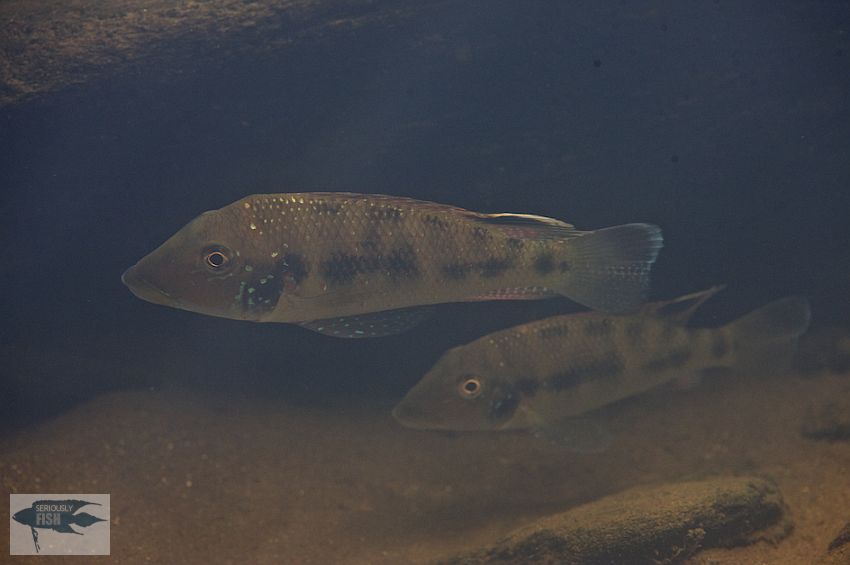
Retroculus acherontos
Landin, Mareira & Figueiredo, 2015
Max length194mm SL8in SLTanknot recordedTempnot recordedpHnot recordedKnown only from affluents within the upper rio Tocantins basin draining into the enormous Serra da Mesa hydroelectric reservoir in Goiás state, Brazil. It has been collected from the rios Maranhão, das Almas, Traíras, and Palmerinha/Palmeira(?). Type locality is 'Brazil, Goiás, Rio Tocantins basin, Rio das Almas, tributary of left margin of Rio Maranhão, 14˚37′51.2″S, 49˚1′56.6″W'.
Synodontis waterloti
authority not recorded
Max length185mm SL7in SLTank90 × 30cm36 × 12inTemp23–25°C73–77°FpH6.5–7.5This is an uncommonly imported Syno that is nevertheless very attractive. It has distinctive serrated edges to the pectoral fins and will exhibit its strongest colouration over a light coloured substrate....
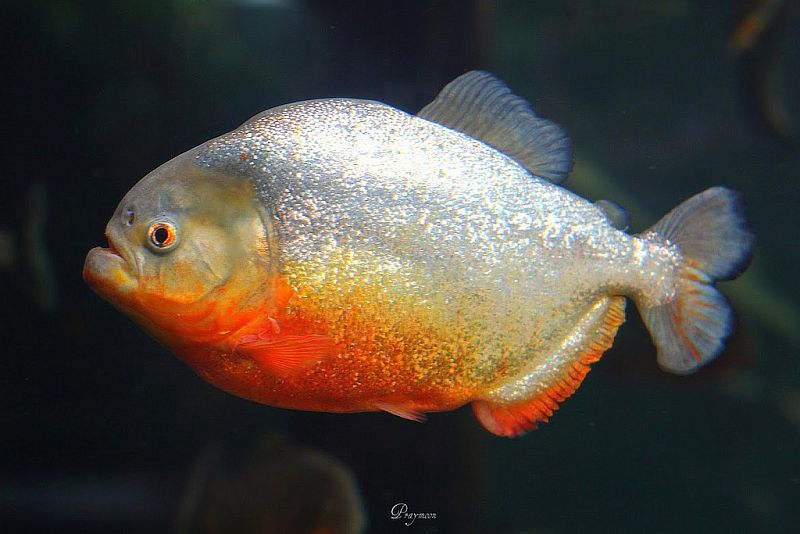
Pygocentrus nattereriRed Bellied Piranha
Kner, 1858
Matched on Serrasalmo ternetzi, a name it was formerly known by
Max length350mm SL14in SLTank240 × 90cm96 × 36inTemp24–28°C75–82°FpH5.5–7.5Famed as a rapacious predator capable of rapidly stripping flesh from bone and a danger to any animal entering its native waters, P. nattereri is among the most notorious freshwater fishes in the world. As a result, displays featuring this “bloodthirsty” creature are found in most public aquaria, grisly Hollywood movies have been released, and the species has become popular in the aquarium trade. Little of this infamy is based on factual evidence, however.