Results for “várzea”
Type a name: scientific, common, or one a species used to go by. Or narrow the catalogue with the filters.
Filters
Hemigrammus hyanuaryJanuary Tetra
authority not recorded
Max length40mm SL1.6in SLTank60 × 38cm24 × 15inTemp23–27°C73–81°FpH6.0–7.0Also known as the costello or green neon tetra, this species is seen much less often in the hobby than it used to be. It's occasionally confused with the common head and tail light tetra, H. ocellifer, as it resembles an elongated version of that species. Like all Hemigrammus, its taxonomic status is currently Incertae Sedis, meaning uncertain. The genus is currently used as something of a catch-all for over 70 species of small characin. Most experts agree that a full revision is require...
Hemiodontichthys acipenserinusPinocchio Whiptail Catfish
authority not recorded
Max length135mm SL5in SLTank75 × 30cm30 × 12inTemp24–28°C75–82°FpH6.0–7.0Also known as the knob nosed whiptail, this species is difficult to confuse with any other Loricariid due to its distinctive 'diamond' shape when viewed from above, and peculiarly shaped rostrum (nose), which is enlarged at the tip. It also lacks discernible odontotes on the head and pectoral fins. So distinctive is it, in fact, that it is currently monotypic (the only species in its genus). The species name is derived from its superficial resemblance to the sturgeons of the genus Acip...
Heros efasciatusSeverum
authority not recorded
Max length300mm SL12in SLTank120 × 45cm48 × 18inTemp22.2–28.9°C72–84°FpH5.5–7.0The severum is one of the most poular and readily available cichids in the hobby, however not everyone realises that these fish can attain a fairly large size and are therefore not suitable for every aquarium. The fish is normally sold in the standard green variety and also gold. Severums make good fish for a South American community setup, as long as there are no fish small enough for them to eat. They grow quite quickly, so should be housed in an adequately sized tank from the start....
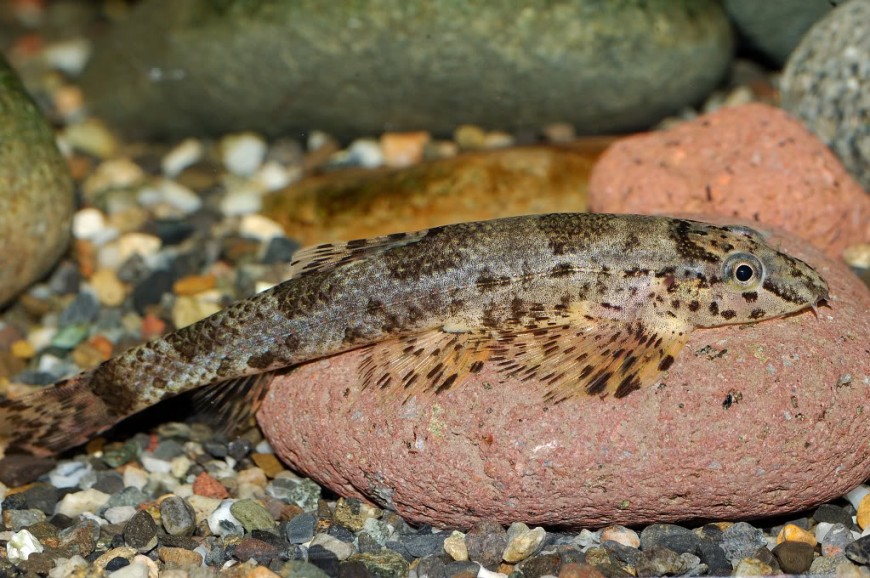
Homalopteroides tweediei
Herre, 1940
Max length40mm SL1.6in SLTank45 × 30cm18 × 12inTemp20–25.5°C68–78°FpH6.0–7.5Described from Kota Tinggi district, Johor state, Peninsular Malaysia but since recorded throughout much of the country as well as parts of the the Mekong river system in Thailand, Laos, Cambodia and Vietnam plus the Kapuas and several other river basins in Kalimantan Barat (West Kalimantan) province, Indonesian Borneo. In the Kahang River, part of the Endau drainage in Jo...
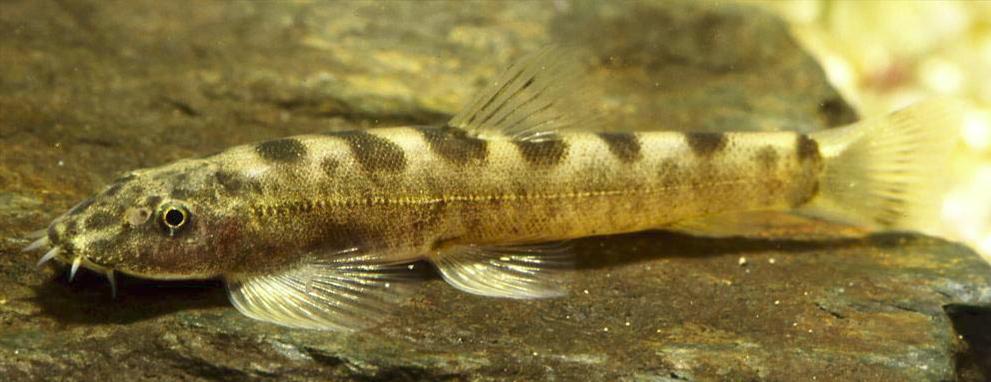
Homalopterula ripleyi
Fowler, 1940
Max length59mm SL2.3in SLTank80 × 30cm31 × 12inTemp20–25.5°C68–78°FpH6.0–7.5Fowler (1940) described this species as the unique member of his new genus Homalopterula on the basis of a single specimen, separated from related genera by the curved shape of the jaws, truncate caudal-fin and scaleless ventral surface.
Hoplerythrinus unitaeniatusGold Wolf Fish
authority not recorded
Max length400mm SL16in SLTanknot recordedTemp23–27°C73–81°FpH5.5–7.5Also known as the golden trahira, H. unitaeniatus is the only one of the three recognised species currently in the genus to appear in the trade with any regularity. It's really a fish suitable only for the specialist, and as with any predatory species, care must be taken when performing tank maintenance. It's a representative of an ancient group of fishes, and possesses a modified, highly vascularised swim bladder that acts as an accessory breathing organ, allowing the fish to survi...
Horabagrus brachysomaSun Catfish
authority not recorded
Max length450mm SL18in SLTanknot recordedTemp23–25°C73–77°FpH6.0–7.5Also known as the bullseye, solar, eclipse or golden red-tailed catfish, this species is relatively common in the trade. Unfortunately, it's a victim of some rather misplaced marketing, as it's often sold as being suitable for the general community tank found in homes worldwide. The majority of specimens seen for sale measure only 2-3", which only serves to make the situation worse. Obviously, given its adult size it's totally unsuitable for this kind of setup, but makes a fi...
Horabagrus nigricollarisBlack Collared Catfish
authority not recorded
Max length300mm SL12in SLTank120 × 45cm48 × 18inTemp23–25°C73–77°FpH5.5–7.5There are only 2 species currently in the genus Horabagrus, with this one being the rarer in the hobby. H. brachysoma is the other, and it resembles H. nigricollaris quite closely. It is a much larger fish and is unsuitable for most home aquaria. Confusion can arise as both are usually sold as juveniles, at around 2-3" in length. They can be told apart by examining the black shoulder markings found on either side of the fish. In H. brachysoma this is no more than a vaguely circular dark blo...
Hyalobagrus flavusShadow Catfish
authority not recorded
Max length45mm SL1.8in SLTank45 × 30cm18 × 12inTemp21–26°C70–79°FpH5.5–7.0For many years this species has (and still is) imported as Pelteobagrus ornatus. It was assigned to the new genus Hyalobagrus, and discovered to be a distinct species, during a taxonomic revision of the Bagridae family in 1998. The other 2 species which were also thought to be P. ornatus are H. leiacanthus and H. ornatus. Apparently these two are imported rarely, if ever. Unlike the vast majority of catfish, H. flavus is a diurnal species, and spends much of its time swimming in shoals in m...
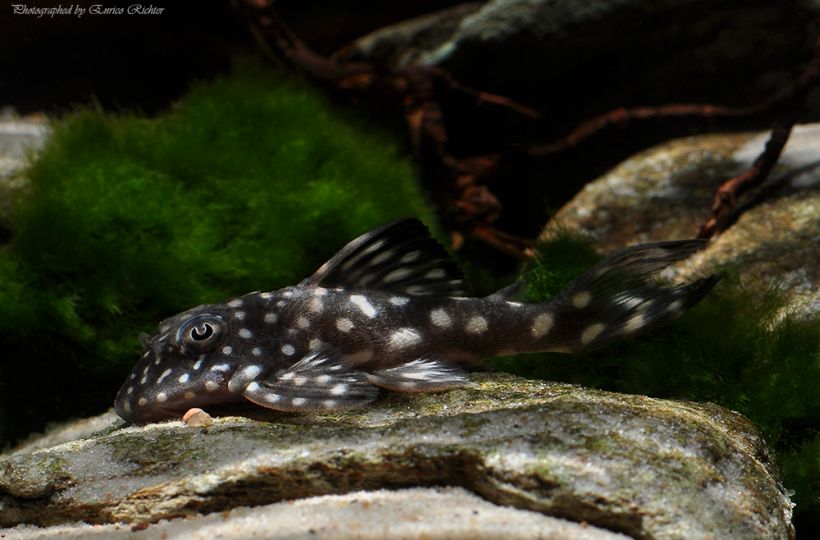
Hypancistrus inspectorL102
Armbruster, 2002
Max length160mm SL6in SLTank120 × 45cm48 × 18inTemp22–30°C72–86°FpH5.0–7.5H. inspector can be told apart from other described species in the genus by the following combination of characters: colour pattern comprising brown to black base with large whitish to yellow spots; adpressed dorsal-fin not reaching the adipose-fin spine; spots on head much smaller than on rest of body; spots in the upper caudal-fin lobe combining to form bands in adults; 24 plates in the mid-ventral series.
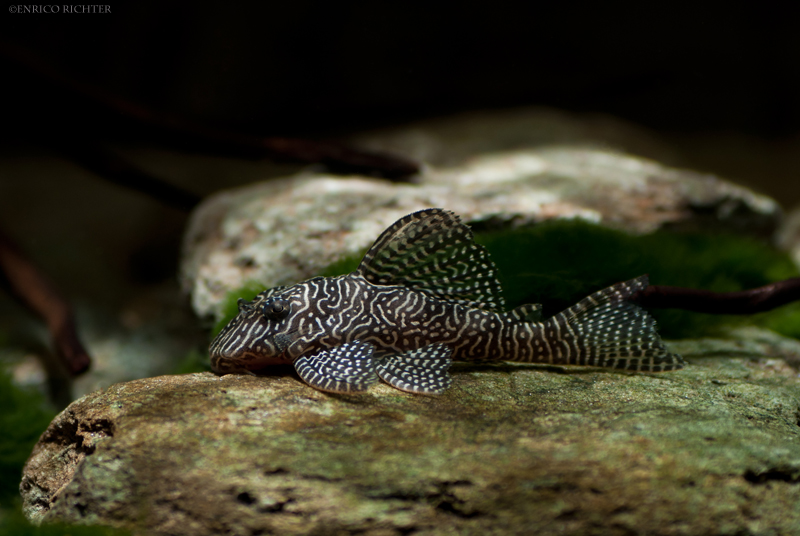
Hypancistrus sp.L260
authority not recorded
Max length90mm SL3.5in SLTank90 × 30cm36 × 12inTemp24–30°C75–86°FpH5.5–7.5A similar-looking, larger form from the rio Jarí, which enters the Amazon from the opposite bank a few hundred kilometres downstream from the Tapajós has been assigned the code L411. The two can be told apart relatively easily since in L260 the white vermiculations on the body are significantly finer than in L411, in which the black and white components of the colour pattern are of more-or-less equivalent width.
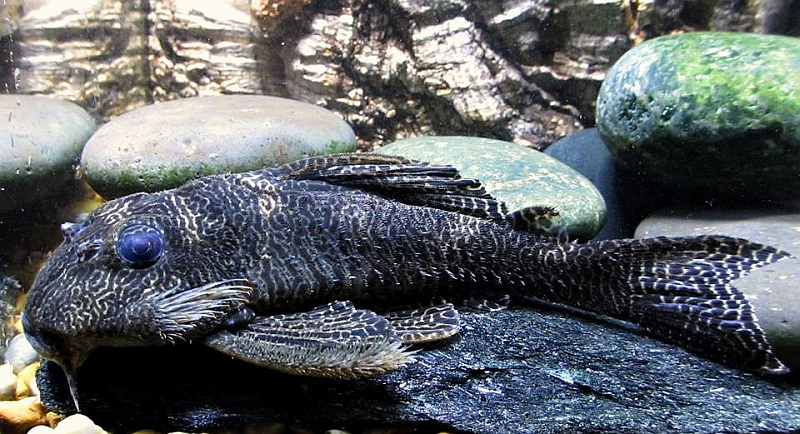
Hypancistrus sp.L066
authority not recorded
Max length140mm SL6in SLTank120 × 45cm48 × 18inTemp26–30°C79–86°FpH5.0–7.0Collected from the rio Xingu downstream and in the vicinity of Belo Monte, Pará state, northern Brazil. The majority of its natural habitat is likely to be severely degraded in the near future due to ongoing construction of the Belo Monte dam.
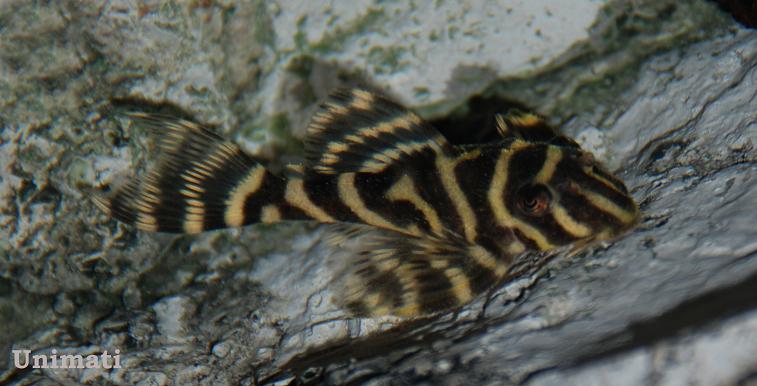
Hypancistrus sp.L333
authority not recorded
Max length150mm SL6in SLTank120 × 45cm48 × 18inTemp26–30°C79–86°FpH5.5–7.5This unidentified species possesses a highly variable colour pattern with the pale, randomly-arranged spots and blotches on the body ranging in colour from whitish to yellowish to rusty orange depending on the specimen. It's regularly confused with similar-looking relativ...
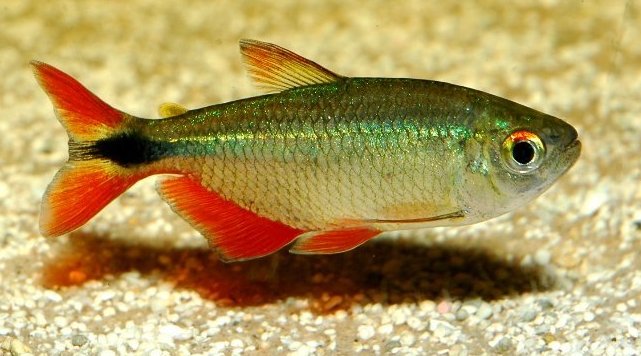
Hyphessobrycon anisitsiBuenos Aires Tetra
Eigenmann, 1907
Max length60mm SL2.4in SLTank90 × 30cm36 × 12inTemp16–28°C61–82°FpH5.5–8.5Widely-distributed throughout much of the Paraná and Uruguay river systems in Brazil, Paraguay, Argentina and Uruguay. Some records from Buenos Aires province, Argentina are now considered to refer to the congener H. togoi (Miquelarena and López, 2006) so the common vernacular name 'Buenos Aires tetra' may not...
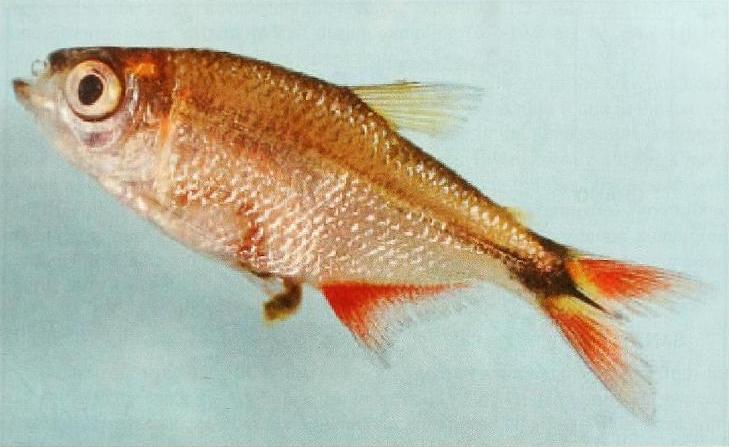
Hyphessobrycon auca
Almirón, Casciotta, Bechara & Ruíz Díaz, 2004
Max length55mm SL2.2in SLTanknot recordedTempnot recordedpHnot recordedThe two ponds where H. auca was collected were located on a sand bar deposited by the nearby Paraná river during the Pleistocene. At time of collection the substrates were composed of sand with submerged vegetation dominated by Egeria najas plus floating Eichhornia in marginal areas.
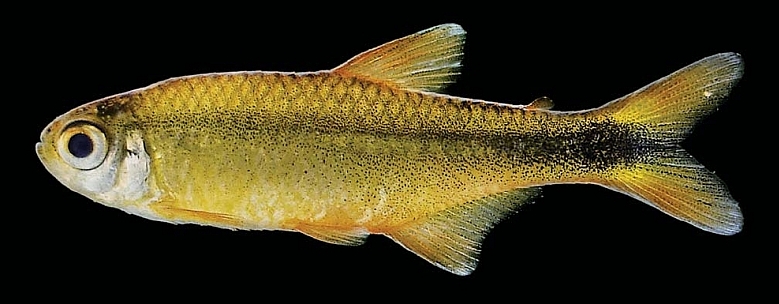
Hyphessobrycon brumado
Zanata & Camelier, 2010
Max length32mm SL1.3in SLTanknot recordedTempnot recordedpHnot recordedThis species superficially resembles the popular silver-tipped tetra, Hasemania nana, but can easily be told apart by presence (vs. absence) of an adipose-fin. It can be told apart from other Hyphessobrycon sp...
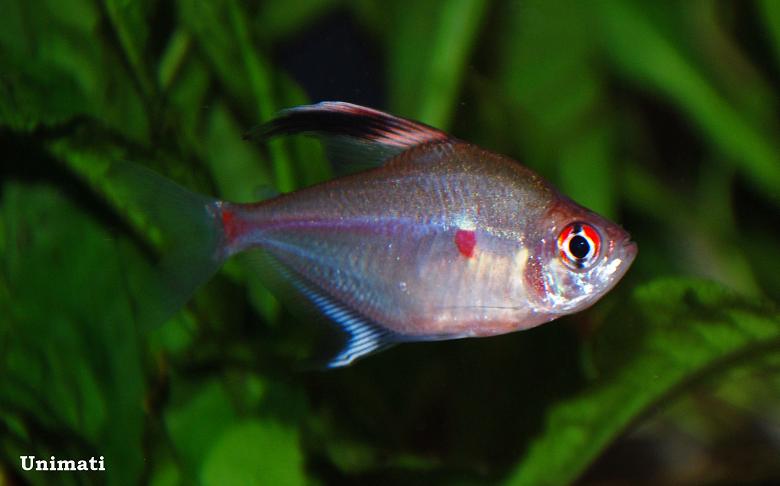
Hyphessobrycon erythrostigmaBleeding Heart Tetra
Fowler, 1943
Max length60mm SL2.4in SLTank90 × 30cm36 × 12inTemp21–28°C70–82°FpH4.0–7.5In the igarapés Baré and Ubim, western Brazil H. erythrostigma was collected from stretches measuring 5-7 metres in width with thick riparian and overhanging vegetation. The substrate was mostly composed of sand and the fish displayed a preference for boundary zones between shallow and deeper water. Conductivity was measured at 14.2-62.1 mS/cm³, dissolved oxy...
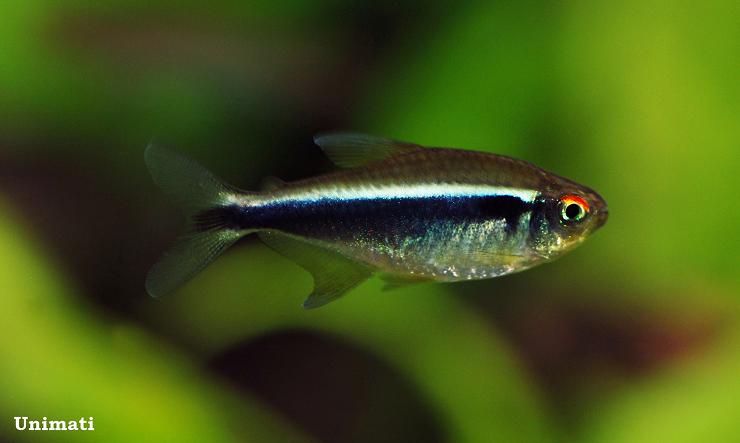
Hyphessobrycon herbertaxelrodiBlack Neon Tetra
Géry, 1961
Max length35mm SL1.4in SLTank80 × 30cm31 × 12inTemp20–28°C68–82°FpH5.0–7.5This species has been a ubiquitous aquarium fish since its discovery, and is produced on a commercial basis in several countries, therefore wild fish are no longer collected. An ornamental albino form is sometimes available. Apart from its distinctive colour pattern, it can be identified from related species via the following combination of charac...
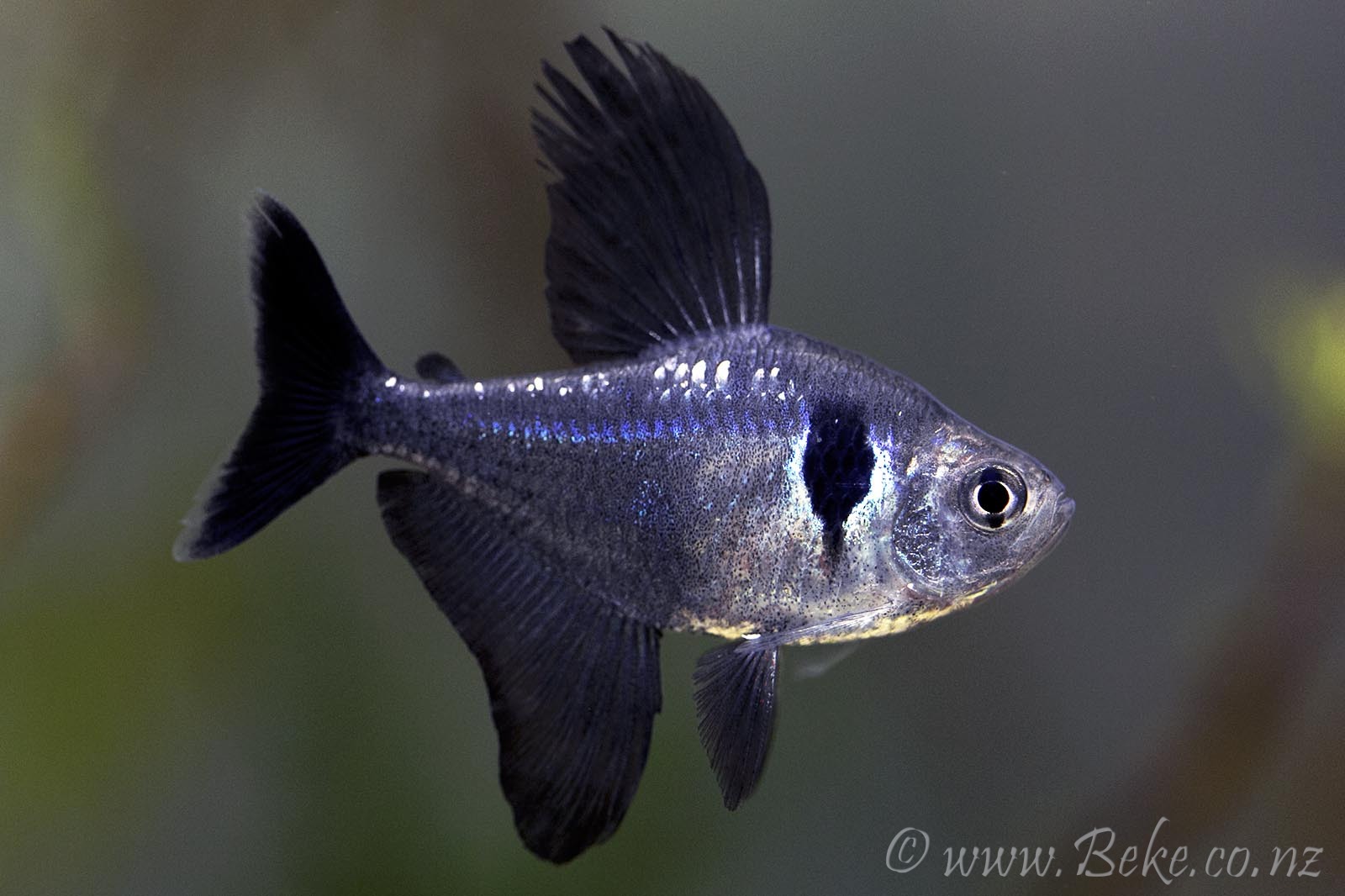
Hyphessobrycon megalopterusBlack Phantom Tetra
Eigenmann, 1915
Max length36mm SL1.4in SLTank80 × 30cm31 × 12inTemp20–28°C68–82°FpH5.0–7.0The majority of records pertain to the rio Guaporé (Río Iténez in Bolivia), the main affluent of the rio Mamoré, which drains the vast tropical wetland known as the Pantanal, and the upper rio Paraguai, which also has its headwaters in the Pantanal but flows in the opposite direction. The Guaporé and Paraguai are connected due to rising water levels during the annual wet season.
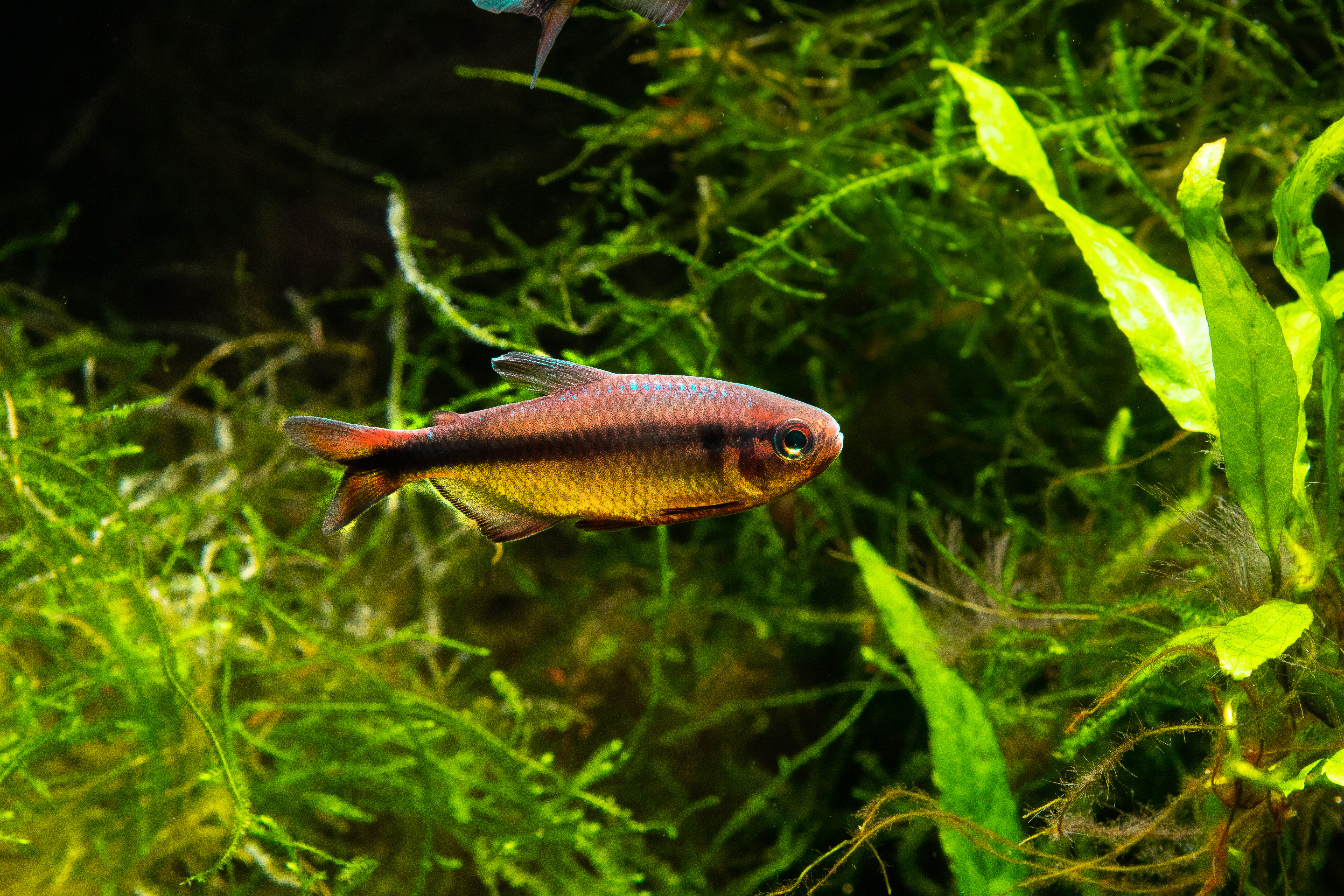
Hyphessobrycon melanostichosBlack Stripe Tetra
Carvalho & Bertaco, 2006
Max length25mm SL1.0in SLTank60 × 30cm24 × 12inTemp23–28°C73–82°FpH5.5–7.5Hyphessobrycon melanostichos shares a number of similarities with Hyphessobrycon sp. Blue Ribbon. The former can be differentiated from the latter by a lighter set, more streamlined body , smaller humeral spot and also red colouring, which is not present on the Blue Ribbon tetra. Care and maintenance of the two species is however, virtually the same.