Results for “várzea”
Type a name: scientific, common, or one a species used to go by. Or narrow the catalogue with the filters.
Filters
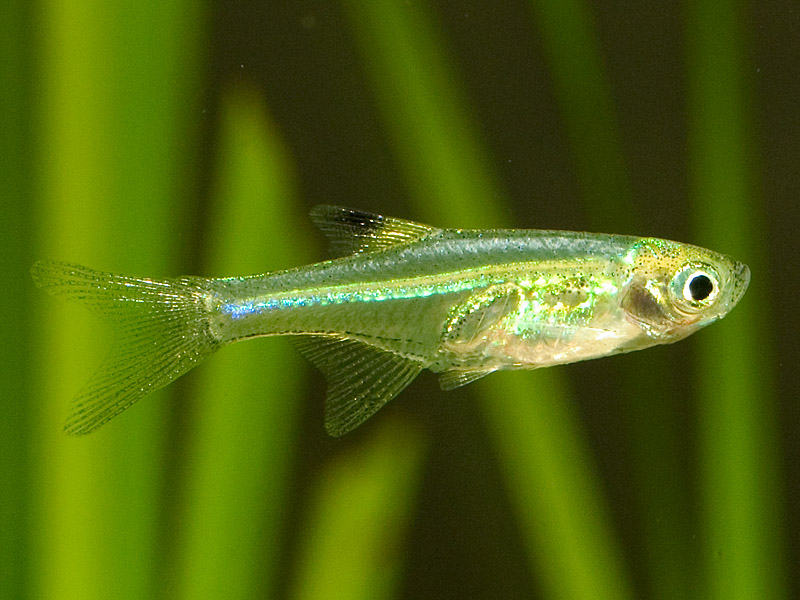
Microdevario nanus
Kottelat & Witte, 1999
Max length16mm SL0.6in SLTank45 × 30cm18 × 12inTemp20–27°C68–81°FpH6.0–7.5Towards the Andaman Sea the lower part of the delta gives way to brackish mangrove swamps. The climate is wet, with annual precipitati0n of 1500 - 2500 mm, up to 90% of which falls between mid May and mid November, and warm with average air temperatures of 22 - 37 °C over the course of the year. At one locality M. nanus was collected in less then 30cm of water from an oxbow lake among floating Pistia-like vegetation and gra...
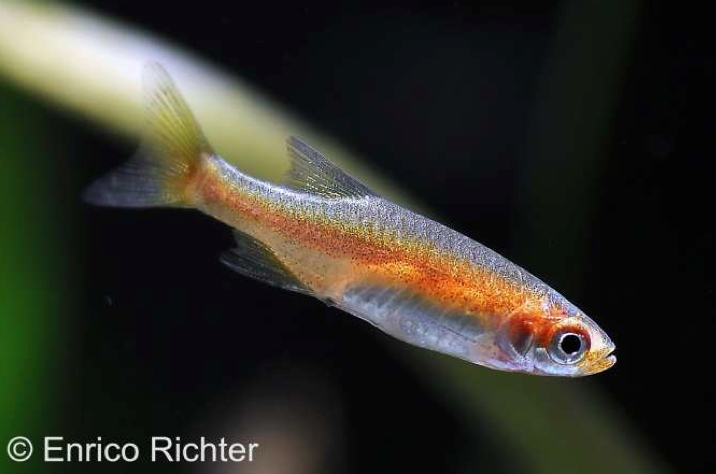
Microrasbora rubescensRed Dwarf 'Rasbora'
Annandale, 1918
Max length30mm SL1.2in SLTank60 × 30cm24 × 12inTemp20–24°C68–75°FpH6.0–8.0This species may be seen on sale under various trade names including 'red-line dwarf rasbora', 'emerald dwarf rasbora', or 'red dwarf rasbora'. A similar-looking, apparently undescribed congener has been collected near the town of Hopong, also in Shan State. It differs from M. rubescens by possessing a greenish to bluish lateral stripe plus a larger adult size, and is traded as Microrasbora cf. rubescens, M. 'thuzari', M. sp. 'rose blue line', 'Asian Cardinal Rasbora', or 'flame red rasbora'.
Mogurnda mogurndaNorthern Purple Spotted Gudgeon
authority not recorded
Max length170mm SL7in SLTank120 × 30cm48 × 12inTemp24–26°C75–79°FpH6.0–8.0A good species of gudgeon for the beginner, being tolerant of a wide range of water conditions, hardy and easily bred. We've even seen them spawning in dealer's tanks on more than one occasion. It's easily confused with the similar looking, but rarer Southern purple spotted gudgeon, Mogurnda adspersa, a fish which is now being farmed for the trade despite being endangered in nature....
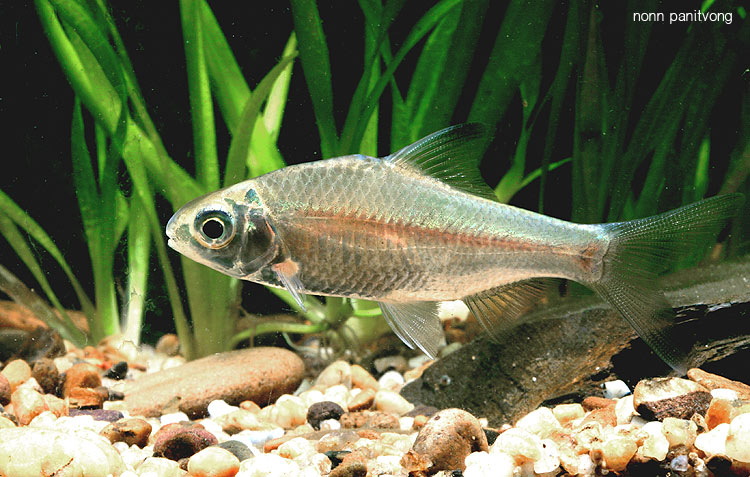
Mystacoleucus ectypus
Kottelat, 2000
Max length80mm SL3.1in SLTanknot recordedTempnot recordedpHnot recordedKnown from the middle Mekong basin in Laos and Thailand, and may be endemic to the Khorat Plateau. Records exist from the Mun and Songkhram watersheds in northeastern Thailand, and a number of Mekong tributaries in laos, including the Nam Mang and Nam Kou drainages. Type locality is 'Nam Mang downstream of Ban Thabok, between 18°22'25"N, 103°13'30"E, and about 1 kilometer upstream, Vientiane Province, Laos'.
Mystus bleekeriDay's Mystus
authority not recorded
Max length155mm SL6in SLTank120 × 30cm48 × 12inTemp18–26°C64–79°FpH5.8–8.0This species superficially resembles the more common (in the hobby) M. vittatus, but can be distinguished by its larger adult size and much longer adipose fin. It is an ideal peaceful catfish for larger communities and as with many other bagrids, is in our opinion somewhat underrated in the hobby....
Mystus leucophasisAsian Upside Down Catfish
authority not recorded
Max length300mm SL12in SLTank120 × 60cm48 × 24inTemp23–27°C73–81°FpH6.0–8.0Like some members of the African catfish genus Synodontis, this species spends the vast majority of it's time swimming in an inverted position. It is often seen for sale at only a couple of inches in length and may be confused with the popular (and much smaller) Synodontis nigriventris. It can easily be distinguished from this species by its patterning. It does not exhibit the or brown colours of the Synodontis and is a uniform black colour all over. Larger specimens may have some lighter c...
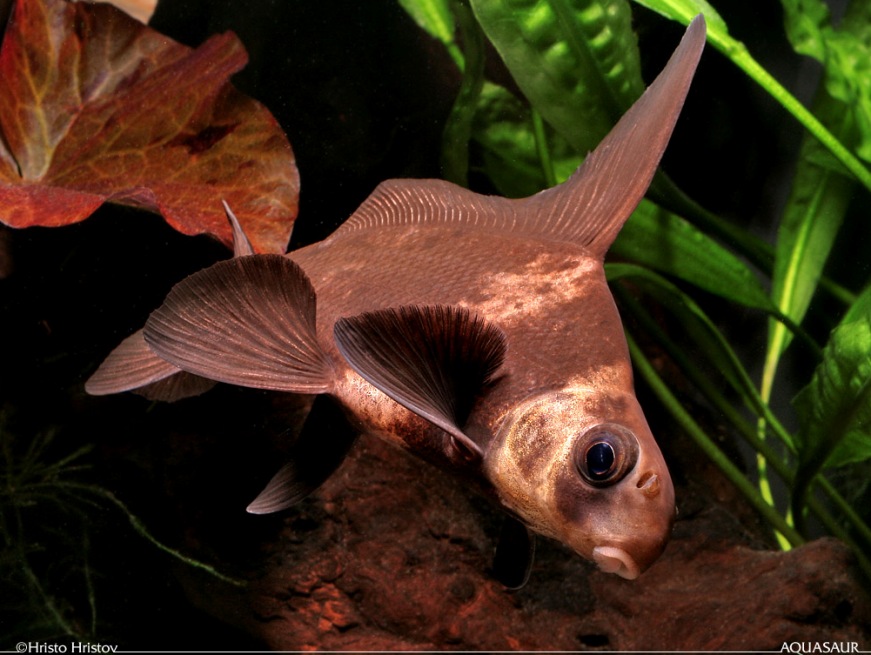
Myxocyprinus asiaticusChinese Sailfin Sucker
Bleeker, 1864
Max length900mm SL35in SLTanknot recordedTemp15.5–21°C60–70°FpH6.0–8.0This species is traded under various names including 'Chinese banded shark', 'Chinese sucker', 'freshwater batfish', 'high-fin banded loach', etc. It's currently illegal to import or own privately in several countries, including the UK, but continues to be available with only the attractive juvenile form traded, and almost always without information regarding adult size of almost a metre or potential lifepan of 25 years+. Myxocyprinus is a monotypic genus and the only Asian representative of the family Cato...
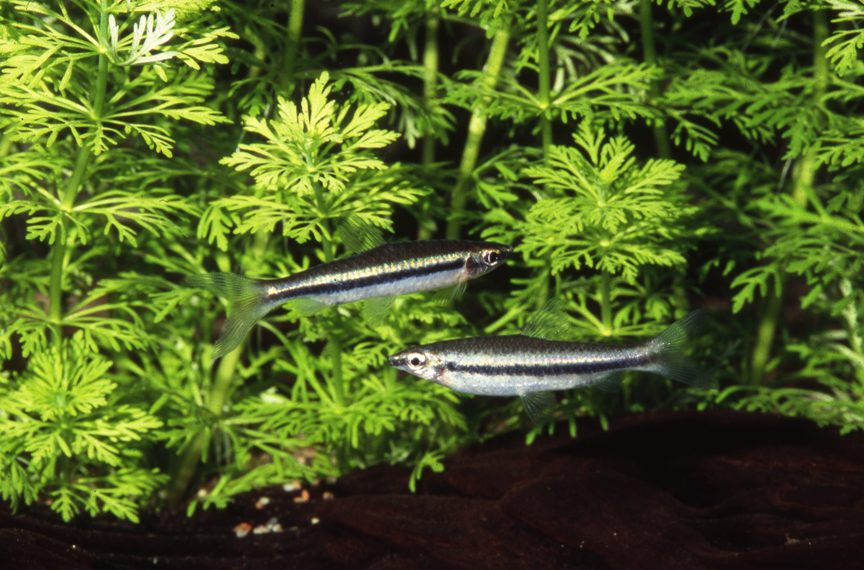
Nannostomus grandis
Zarske, 2011
Max length46mm SL1.8in SLTank60 × 30cm24 × 12inTemp22–28°C72–82°FpH5.0–7.0This species is poorly-known in the aquarium hobby but is sometimes exported as bycatch among shipments of other species, especially Nannostomus beckfordi to which it appears quite similar. The easiest way to tell the two apart is that N. grandis lacks pale white or bluish tips to the ventral fins. It can be further distinguished from all congeners by the following combination of characters: body size up to 46.2 mm, the largest in the genus; bo...
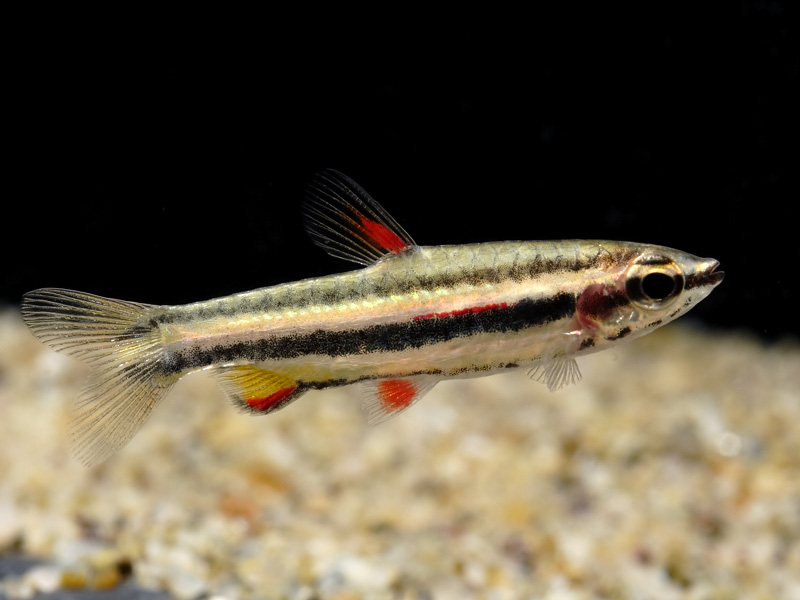
Nannostomus marginatusDwarf Pencilfish
Eigenmann, 1909
Max length25mm SL1.0in SLTank45 × 30cm18 × 12inTemp22–28°C72–82°FpH4.0–7.0There also exist a number of minor differences in colour pattern between populations. For example some Peruvian forms have yellow pigmentation on the body and fins, and those from Guyana and Suriname possess a short red stripe on vertical scale rows 6-9, above the central dark stripe on the body. Rio Negro forms have a similar red stripe but overlapping the central dark stripe and extending along most of the flank, while a form from Colombia has an elongate red stripe which is broken in two beneath the dorsal-fi...
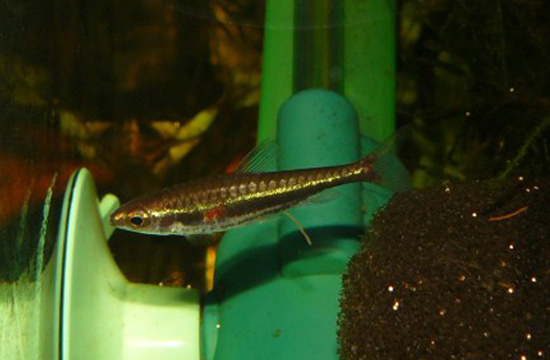
Nannostomus minimusLeast Pencilfish
Eigenmann, 1909
Max length23mm SL0.9in SLTank45 × 30cm18 × 12inTemp22–28°C72–82°FpH4.0–6.5Inhabits sluggish blackwater tributaries, small rivers and swampy areas, particularly in areas with dense growth of aquatic or overhanging riparian vegetation, submerged woody structures and leaf litter. The water is typically stained darkly with humic acids and other chemicals released by decaying organic material, the dissolved mineral content is generally negligible and pH can be as low as 4.0. N. minimus occurs sympat...
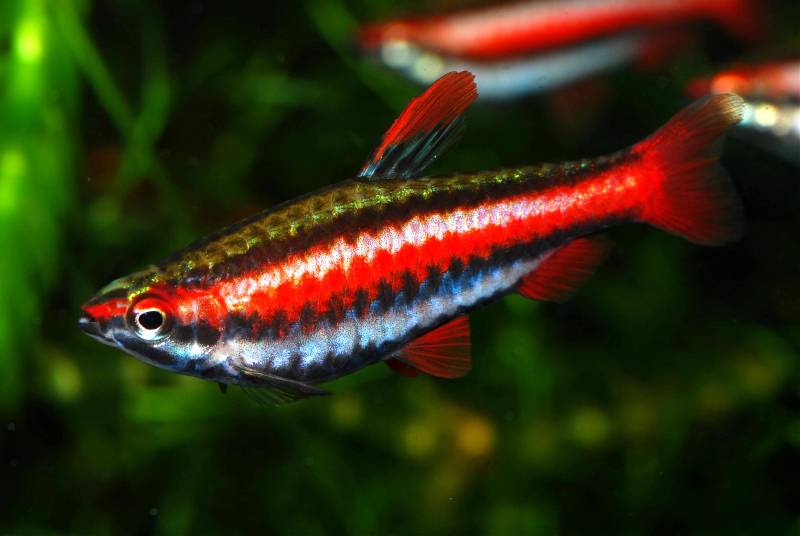
Nannostomus mortenthaleriCoral Red Pencilfish
Paepke & Arendt, 2001
Max length30mm SL1.2in SLTank90 × 30cm36 × 12inTemp24–28°C75–82°FpH4.0–7.0This species is traded under various other names including 'red arc pencilfish', 'Peruvian red pencilfish', 'ruby red pencilfish', 'red pencilfish', and Nannostomus cf. marginatus 'red'. It was initially described as a subspecies of N. marginatus but can be identified by the following combination of characters: pronounced sexual dimorphism with adult males exhibiting bright red pigmentation between the central...
Nanochromis parilus
authority not recorded
Max length80mm SL3.1in SLTanknot recordedTemp22–25°C72–77°FpH6.0–7.0N. parilus is one of the commoner Nanochromis in the hobby as it is more easily collected from its natural waters than most species. It is easily confused with the less often seen N. nudiceps but can be distinguished by the fact that male fish exhibit a barred patterning inn the upper half of the which is not present in nudiceps. Females can be distinguished by the unpatterned lower part of the caudal, which is spotted in nudiceps. There are a couple of geographical variants available. We do ...
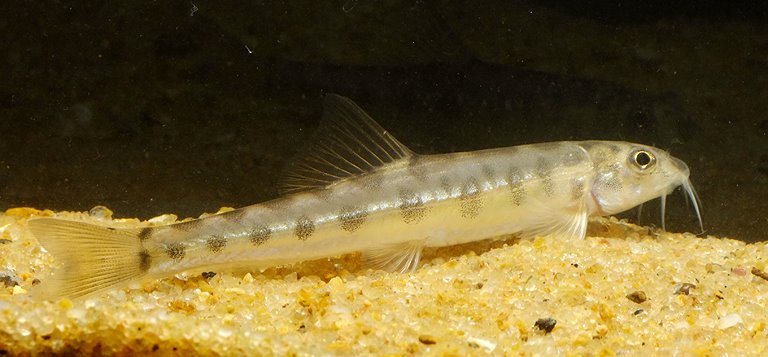
'Nemacheilus' corica
Hamilton, 1822
Max length45mm SL1.8in SLTank60 × 30cm24 × 12inTemp15–24°C59–75°FpH6.0–8.0This species has been widely regarded as a member of the genus Nemacheilus since the late 1970s with the vast majority of subsequent authors considering it as such, although in the aquarium hobby it's more commonly referred to Schistura.
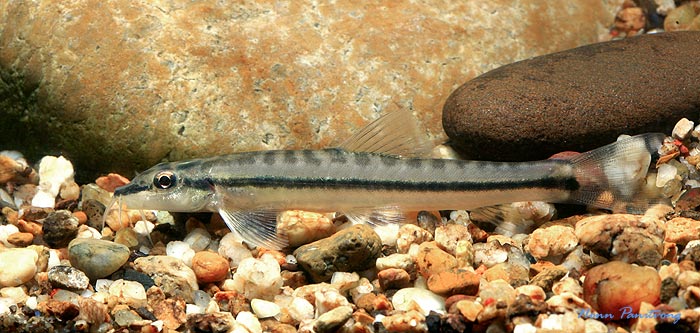
Nemacheilus longistriatusLaos Blackline Torpedo Loach
Kottelat, 1990
Max length125mm SL5in SLTank90 × 30cm36 × 12inTemp23–26°C73–79°FpH6.5–7.5Fishes which inhabit similar biotopes in nature constitute the best options, especially peaceful, open water-dwelling cyprinids since the presence of one or two schools can make a visible difference to the confidence of this naturally reclusive loach. Other possibilities include rheoph...
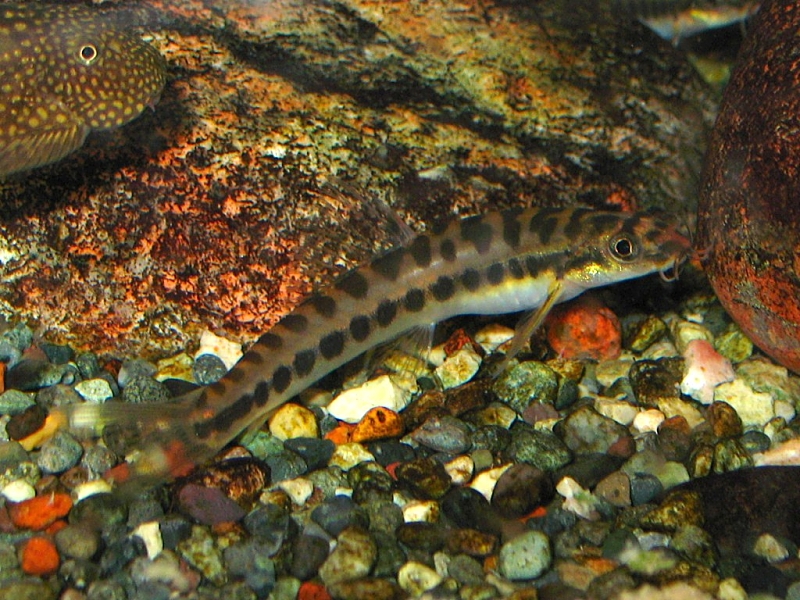
Nemacheilus masyaeArrow Loach
Smith, 1933
Max length70mm SL2.8in SLTank60 × 30cm24 × 12inTemp23–26°C73–79°FpH6.0–7.5This species was originally named Nemacheilus masyae but following ICZN rules the spelling was later corrected to N. masyai because it's named after a man. It can be distinguished from the majority of congeners by body patterning comprising 14-18 short, dark vertical bars on each flank, 12-17 saddle-like markings running along the dorsal surface, a dark spot on the caudal peduncle at the termination of the lateral line and a dark blotch in the lower half of the first few dorsal-fin rays.
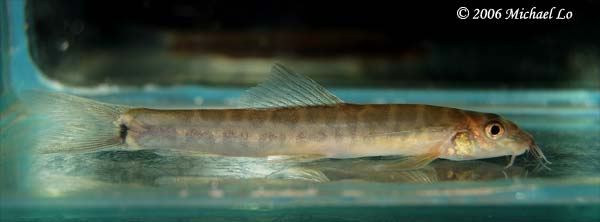
Nemacheilus saravacensis
Boulenger, 1894
Max length50mm SL2.0in SLTank60 × 30cm24 × 12inTemp23–26°C73–79°FpH4.5–7.0Images depict clear, tea-coloured forest streams with dense marginal vegetation and substrates of sand and/or small rocks and pebbles. It's also known from environments with sandy substrate and organic debris in the form of submerged roots/branches and le...
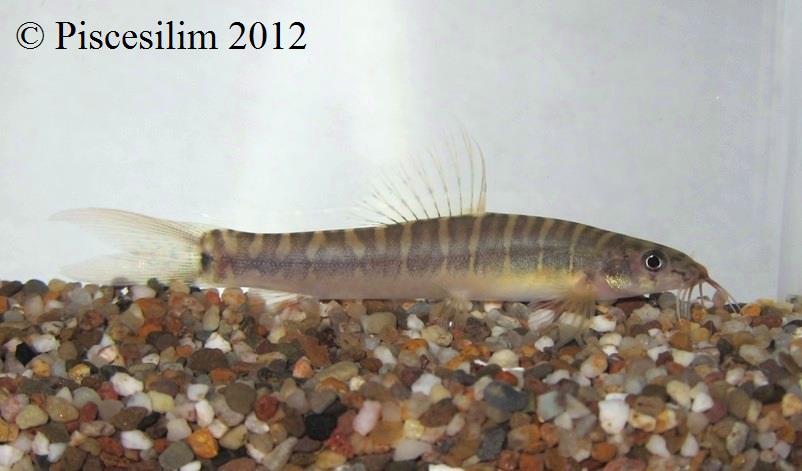
Nemacheilus selangoricus
Duncker, 1904
Max length60mm SL2.4in SLTank60 × 30cm24 × 12inTemp20–25°C68–77°FpH5.0–7.5N. selangoricus is most similar to N. spiniferus since it possesses acuminate scales above and below the lateral line on the caudal peduncle, a feature not shared with any other congener. It can however be distinguished by the following characters: presence of 8-12 very regular dark bars on flanks (vs. 10-13 irregularly-shaped bars in N. spiniferus), 3-5 times...
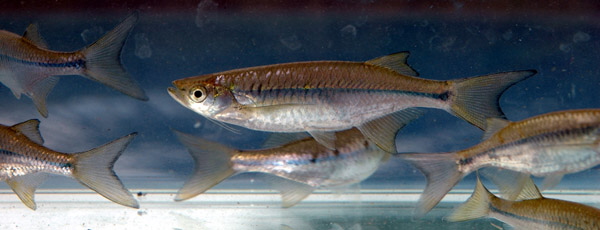
Nematabramis borneensis
Inger & Chin, 1962
Max length105mm SL4in SLTanknot recordedTempnot recordedpHnot recordedIt looks particularly similar to N. alestes with both species possessing a colour pattern comprising a dark lateral stripe on the body, but can be distinguished immediately by possessing barbels longer than the head (vs. shorter than the head in N. alestes).
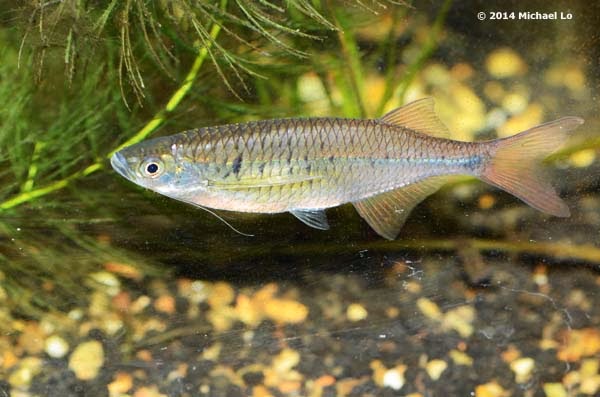
Nematabramis everetti
Boulenger, 1894
Max length105mm SL4in SLTanknot recordedTempnot recordedpHnot recordedNematabramis species are found a variety of habitat-types, from swiftly-flowing affluent streams to pools, lakes, and degraded swamps. Based on the available collection records juveniles and subadults of N. everetti display a preference for fast-moving water whereas adults are found in deeper, slower stretches of minor tributaries.
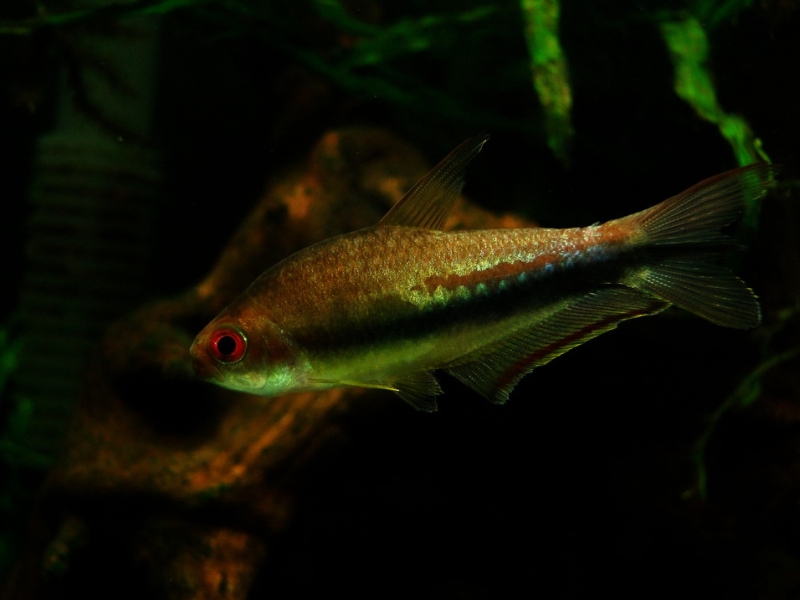
Nematobrycon lacorteiRainbow Tetra
Weitzman & Fink, 1971
Max length36mm SL1.4in SLTank120 × 30cm48 × 12inTemp20–28°C68–82°FpH5.0–7.2Type locality is the Río Calima in Valle del Cauca department, western Colombia. The Calima is a major tributary within the Río San Juan system and N. lacortei is considered endemic to this drainage.