Nematabramis everetti
On this page9 sections
Quick facts
Difficulty3 of 6 measures
More bars, more demanding.
- Space
- modest tank
- Water
- unknown
- Temp
- unknown
- Temperament
- unknown
- Social
- shoal
- Compatibility
- community tank
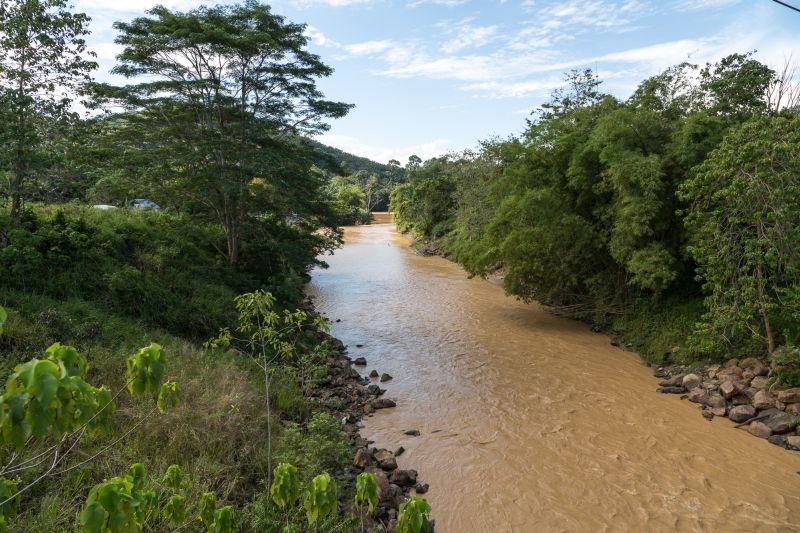
Nematabramis species are found a variety of habitat-types, from swiftly-flowing affluent streams to pools, lakes, and degraded swamps. Based on the available collection records juveniles and subadults of N. everetti display a preference for fast-moving water whereas adults are found in deeper, slower stretches of minor tributaries.
Etymology
Nematabramis: from the Ancient Greek νῆμᾰ (nêma), meaning 'thread', and presumably the generic name Abramis.
everetti: presumably named in honour of British naturalist, civil servant, and administrator in Borneo Alfred Hart Everett (1848-1898), who collected the type series.
Distribution
Habitat
Nematabramis species are found a variety of habitat-types, from swiftly-flowing affluent streams to pools, lakes, and degraded swamps. Based on the available collection records juveniles and subadults of N. everetti display a preference for fast-moving water whereas adults are found in deeper, slower stretches of minor tributaries.
Diet
Feeds chiefly on terrestrial and aquatic invertebrates taken near the water surface.
Sexual dimorphism
Mature females are likely to be deeper-bodied than males.
Reproduction
Apparently prefers to spawn in warm, shallow water.
Notes
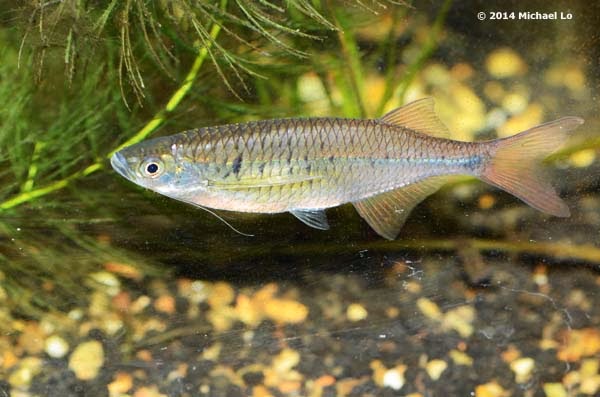
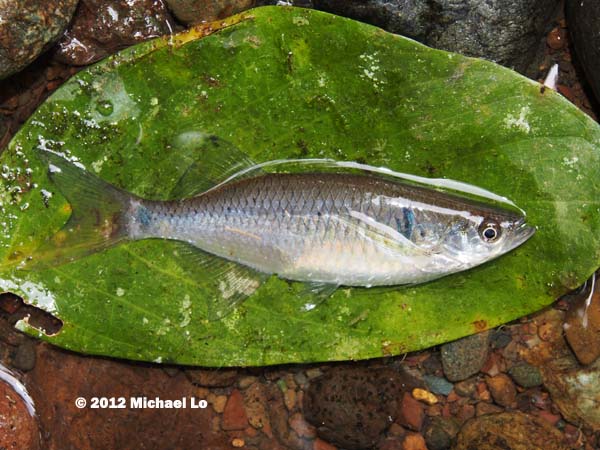
This species can be distinguished from congeners by the following combination of characters: barbels longer than head and extending to or beyond the centre of the pectoral-fin; body relatively deep, depth fits 2.5-3.5 times in SL; 9-11 scale rows between dorsal-fin origin and anal-fin origin; 8-13 branched dorsal-fin rays; 15-20 branched anal-fin rays.
It also possesses a distinctive dark, vertically-elongate, humeral marking which is much more prominent than in other Nematabramis species.
References
- Boulenger, G. A. (1894). Descriptions of new freshwater fishes from Borneo. Annals and Magazine of Natural History (Series 6) v. 13 (no. 75), 245-251
- Kottelat, M. (2013). The fishes of the inland waters of southeast Asia: a catalogue and core bibiography of the fishes known to occur in freshwaters, mangroves and estuaries. The Raffles Bulletin of Zoology Supplement 27, 1-663
- Martin-Smith, K. M. and H. H. Tan (1998). Diversity of freshwater fishes from eastern Sabah: annotated checklist for Danum Valley and a consideration of inter- and intra-catchment variability. Raffles Bulletin of Zoology 46(2), 573-604
- Riehl, R. and H.A. Baensch (1997). Aquarium Atlas. Volume 1, 6th Edition. Microcosm, 1-992
- Inger, R. F. and P. K. Chin (1962). The fresh-water fishes of North Borneo. Fieldiana Zoology v.45, 1-268
Species images · 3
Used with the photographer’s permission. Not licensed for reuse.
Distribution
Profile completeness15 of 24
63% complete
Missing: water parameters, hardness, aquarium size, a common name, temperament, aquarium notes, maintenance, water condition notes, behaviour and compatibility.