Results for “Solimões”
Type a name: scientific, common, or one a species used to go by. Or narrow the catalogue with the filters.
Filters
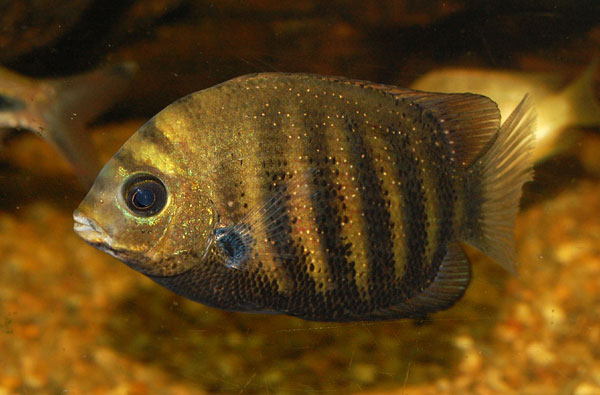
Etroplus suratensisGreen Chromide
Bloch, 1790
Max length350mm SL14in SLTanknot recordedTemp20–30°C68–86°FpH7.0–8.5This species is euryhaline and mostly inhabits brackish estuaries, coastal lagoons and the lower reaches of rivers. It also occurs in freshwater habitats, however, including a number of inland lakes in Sri Lanka although it appears to have been introduced intentionally.
Fossorochromis rostratus
authority not recorded
Max length250mm SL10in SLTank150 × 38cm60 × 15inTemp25–29°C77–84°FpH7.5–8.8F. rostratus was formerly classified as Haplochromis rostratus. When startled, it may bury itself in the substrate. It often displays its natural sand-sifting method of feeding in aquaria, and a substrate of sand is essential as gravel may injure the fish. In nature, it is only the largest dominant males that build nests, whilst the subdominant males and females shoal together. There also exists a feeding relationship between this species and Cyrtocara moorii in the wild, in which shoals of C. m...
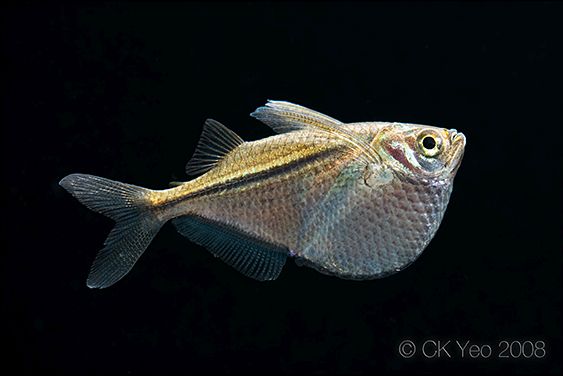
Gasteropelecus sterniclaCommon Hatchetfish
Linnaeus, 1758
Max length40mm SL1.6in SLTank120 × 30cm48 × 12inTemp20–28°C68–82°FpH5.0–7.5This species spends almost all of its time at or just below the water surface, although it will sometimes retreat into midwater if threatened or feeding. Like other freshwater hatchetfishes, it is renowned for its ability to leap from the water surface and glide for distances of several metres. This behaviour is used both to catch flying insects, and to escape potential predators.
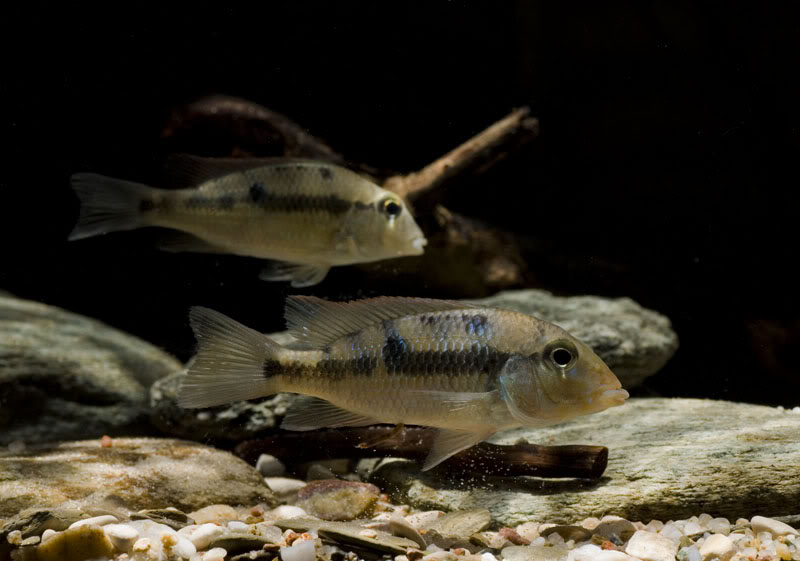
'Geophagus' crassilabrisPanamanian Eartheater
Steindachner, 1876
Max length240mm SL9in SLTank180 × 60cm72 × 24inTemp22–30°C72–86°FpH6.0–8.0The most essential item of décor is a soft, sandy substrate so that the fish can browse naturally (see 'Diet'). Coarser materials such as gravel or small pebbles can inhibit feeding, damage gill filaments and even be ingested with the potential of internal damage or blockages. Additional furnishings ar...
Hemiodus argenteus
authority not recorded
Max length235mm SL9in SLTank120 × 45cm48 × 18inTemp23–27°C73–81°FpH6.0–7.0Hemiodus species can be a very skittish when first introduced to the aquarium, but usually settle down over time, especially if a large number are being kept together. All of them look superficially similar, but can be distinguished by differences in patterning. None are particularly common in the hobby....
Hemiodus atranalis
authority not recorded
Max length90mm SL3.5in SLTank120 × 30cm48 × 12inTemp23–27°C73–81°FpH6.0–7.0Hemiodus species can be a very skittish when first introduced to the aquarium, but usually settle down over time, especially if a large number are being kept together. All of them look superficially similar, but can be distinguished by differences in patterning. None are particularly common in the hobby....
Hemiodus gracilisSlender Hemiodus
authority not recorded
Max length160mm SL6in SLTank120 × 45cm48 × 18inTemp23–27°C73–81°FpH5.8–7.2Hemiodus species can be very nervous when first introduced to the aquarium but usually settle down over time, especially if a large number are being kept together. All of them look superficially similar, but can be distinguished by differences in patterning. None are particularly common in the hobby, but H. gracilis is probably the most often seen. It is sometimes sold as the red or red-tailed hemiodus and was previously considered a member of the now defunct genus Hemiodopsis....
Hemiodus orthonops
authority not recorded
Max length250mm SL10in SLTank120 × 45cm48 × 18inTemp22–26°C72–79°FpH6.5–7.5Hemiodus species can be very nervous when first introduced to the aquarium, but usually settle down over time, especially if a large number are being kept together. All of them look superficially similar, but can be distinguished by differences in patterning. None are particularly common in the hobby....
Hemiodus ternetzi
authority not recorded
Max length105mm SL4in SLTank120 × 30cm48 × 12inTemp23–27°C73–81°FpH6.0–7.0Hemiodus species can be a very skittish when first introduced to the aquarium, but usually settle down over time, especially if a large number are being kept together. All of them look superficially similar, but can be distinguished by differences in patterning. None are particularly common in the hobby. H. ternetzi can be identified by the fact that the black lateral stripe extends to behind the eye, and thehas no pigmentation....
Hemiodus unimaculatus
authority not recorded
Max length215mm SL8in SLTank120 × 45cm48 × 18inTemp22–26°C72–79°FpH5.5–7.5Hemiodus species can be a very skittish when first introduced to the aquarium, but usually settle down over time, especially if a large number are being kept together. All of them look superficially similar, but can be distinguished by differences in patterning. None are particularly common in the hobby....
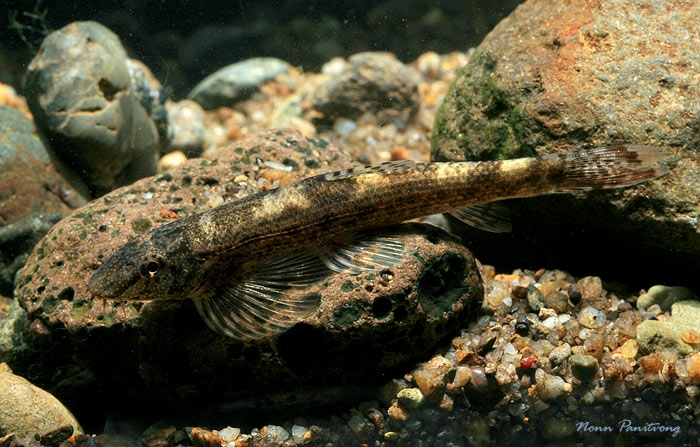
Homalopteroides modestus
Vinciguerra, 1890
Max length44mm SL1.7in SLTank60 × 30cm24 × 12inTemp18–25.5°C64–78°FpH6.0–7.5Homalopteroides spp. are specialised micropredators feeding on small crustaceans, insect larvae and other invertebrates. In captivity some sinking dried foods may be accepted but regular meals of live or frozen Daphnia, Artemia, bloodworm, etc., are essential for the maintenance of good health.
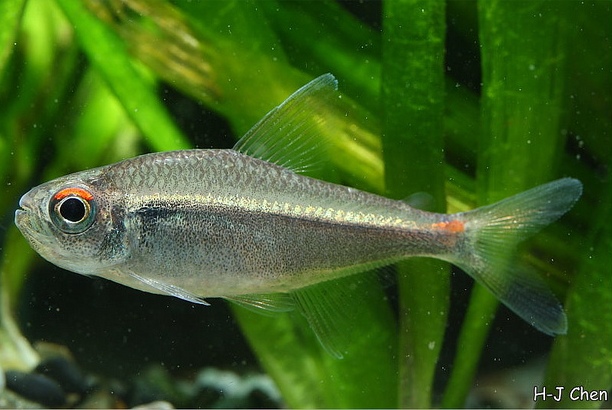
Hyphessobrycon agulha
Fowler, 1913
Max length42mm SL1.7in SLTank80 × 30cm31 × 12inTemp20–28°C68–82°FpH5.5–7.5This species is relatively rare in the aquarium hobby but is occasionally traded as 'red-tailed flag tetra'. It lends its name to the H. aghula group of closely-related species within the genus as proposed by Géry (1977, see below) of which members share the following characters which set them apart from other characids: lower half of the body dark, especially above the anal-fin; usually possessing a laterally-elongate humeral spot, more-or-less united wit...
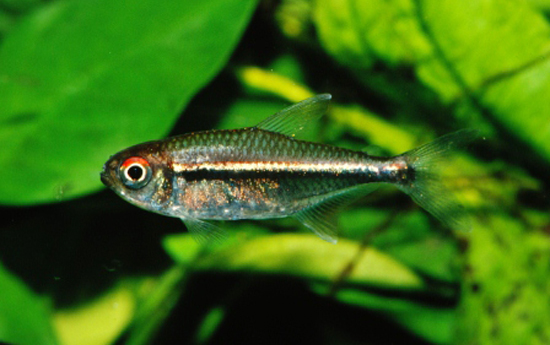
Hyphessobrycon heterorhabdusFlag Tetra
Ulrey, 1894
Max length35mm SL1.4in SLTank80 × 30cm31 × 12inTemp20–26°C68–79°FpH5.5–7.5Its name appears to have been misapplied to similar-looking fishes occurring throughout much of the middle and lower Amazon in Brazil and Colombia, plus the rio Orinoco drainage in Colombia and Venezuela, and coastal systems of the Guianas. Some of these have been described as distinct species (e.g. Hyphessobrycon amapaensis Zarske & Géry 1998; H. eschwartzae García-Alzate, Román-Valencia & Ortega 2013; H. montagi Lima, Couthino & Woziacki 2014), whereas the identity of others remains un...
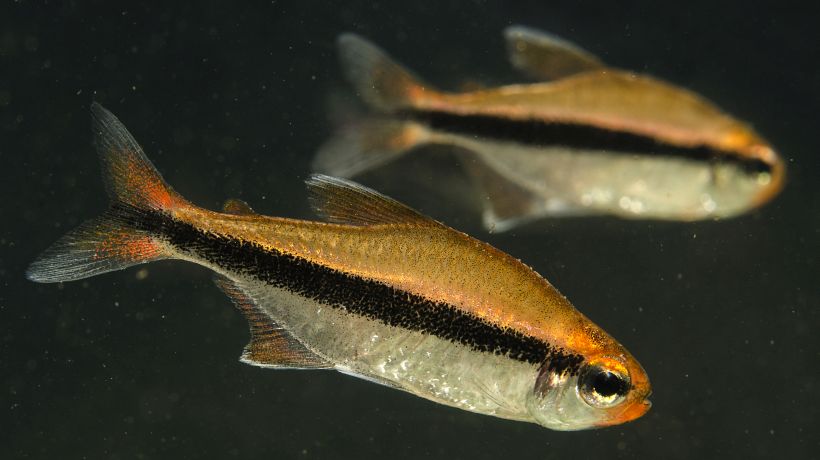
Hyphessobrycon vilmae
Géry, 1966
Max length30mm SL1.2in SLTank60 × 30cm24 × 12inTemp20–26°C68–79°FpH5.0–7.0Choice of décor is not especially critical although it tends to show better colouration when maintained in a well-furnished set-up with live plants and a dark substrate. A natural-looking arrangement might consist of a soft, sandy substrate with wood roots and bran...
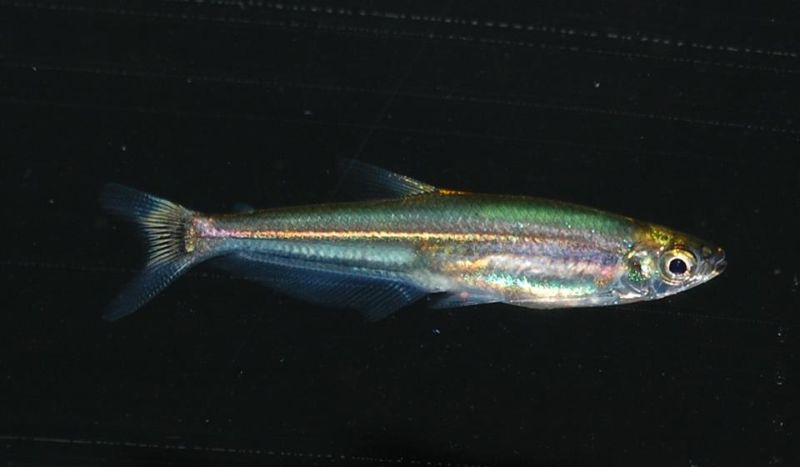
Iguanodectes spilurusGreen Line Lizard Tetra
Günther, 1864
Max length102mm SL4in SLTank120 × 45cm48 × 18inTemp20–28°C68–82°FpH5.0–7.5Widely-distributed throughout the Amazon, Orinoco, Essequibo, and Tocantins river systems in Brazil, Peru, Bolivia, Ecuador, Colombia, Venezuela, and Guyana. Type locality is 'Rio Cupai [= Rio Cupari], Rio Tapajós basin, Amazon River drainage, Pará State, Brazil'.
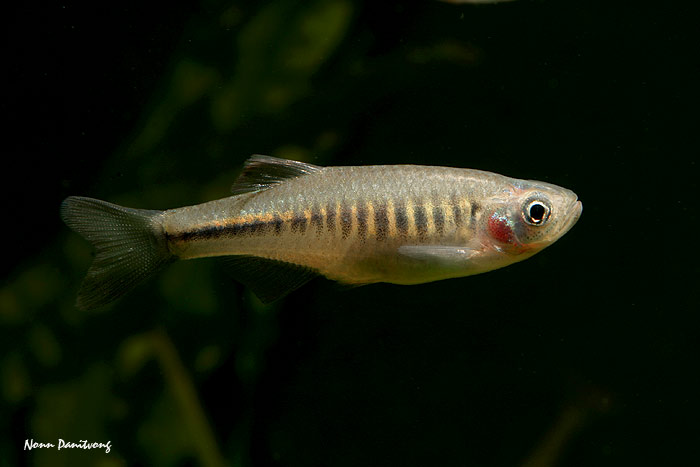
'Inlecypris' maetaengensisFire Bar 'Danio'
Fang, 1997
Max length50mm SL2.0in SLTank75 × 30cm30 × 12inTemp20–26°C68–79°FpH6.0–8.0A peaceful species suited to a well-chosen community aquarium. There are plenty of potential tankmates including many cyprinids, loaches, cichlids, catfishes and characins, although as always proper research is essential in order to avoid problems.
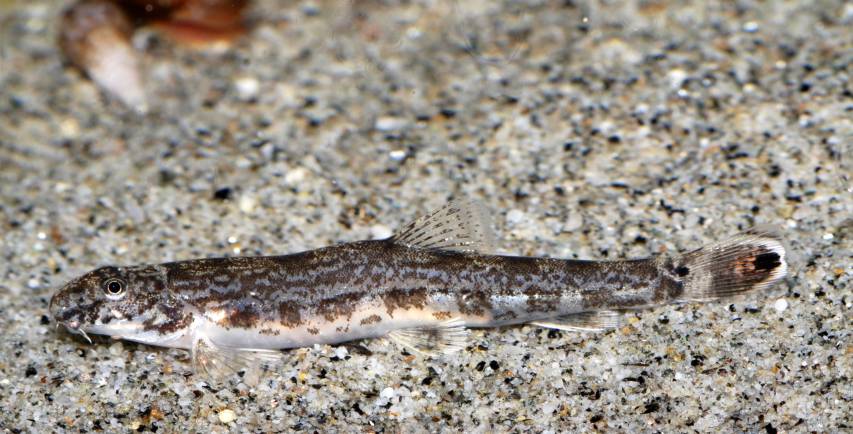
Lepidocephalichthys annandalei
Chaudhuri, 1912
Max length45mm SL1.8in SLTank45 × 30cm18 × 12inTemp22.5–26°C73–79°FpH5.5–7.5Sand-dwelling loaches from the families Botiidae, Cobitidae and Nemacheilidae are also suitable but proper research is essential as some can be excessively territorial or otherwise aggressive. A community based around fishes from its natural waters could include species such as Badis badis,...
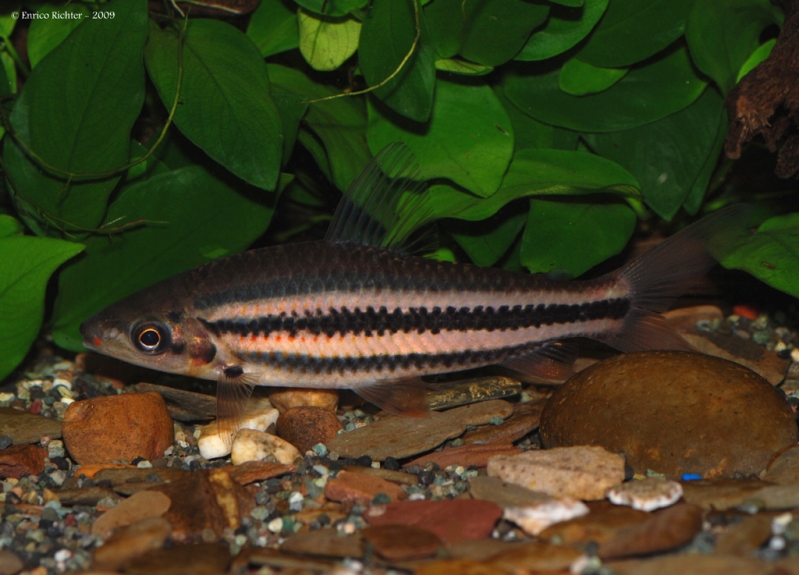
Leporinus arcusLipstick Leporinus
Eigenmann, 1912
Max length300mm SL12in SLTank210 × 60cm84 × 24inTemp20–28°C68–82°FpH6.0–7.5Type locality is 'Tukeit, Guyana', and this species is known from various river drainages of Venezuela, Guyana, Suriname and French Guiana including the Orinoco, Essequibo, and upper Courantyne (aka Corantijn) basins. Additional records exist from the upper Amazon basin in Guyana, these presumably corresponding to the Takutu river basin, itself part of the upper rio Branco.
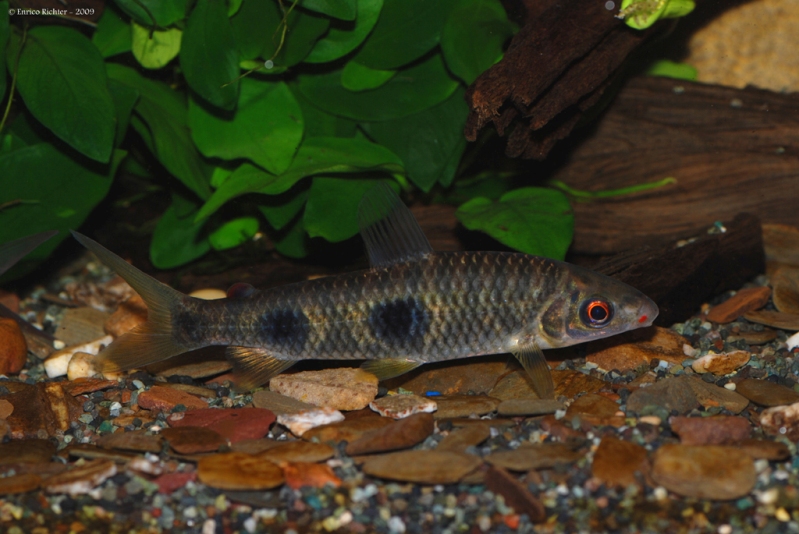
Leporinus copelandii
Steindachner, 1875
Max length200mm SL8in SLTank180 × 60cm72 × 24inTemp20–28°C68–82°FpH6.0–7.5Type locality is giev as 'Rio Parahyba and tributaries at Mendez; Juiz de Fora; River Doce; River São Matheos; Rio Jequitinhonha; Rio Quenda at Santa Cruz', all of which pertain to localities within the Paraíba do Sul and Doce river systems in Minas Gerais, Espírito Santo, rio de Janeiro and São Paulo states, southeastern Brazil.
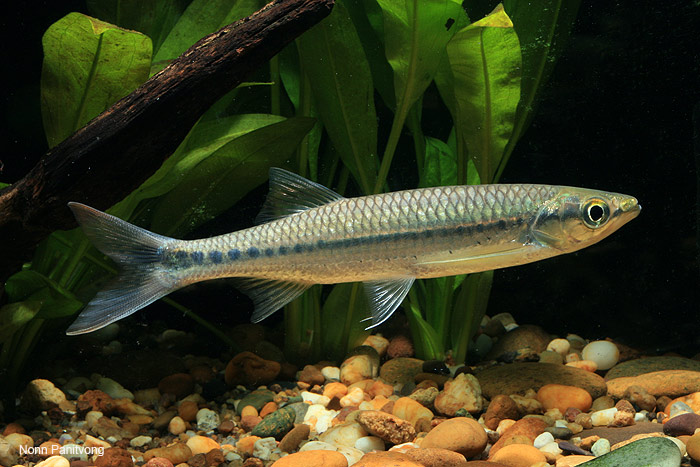
Luciosoma setigerumApollo Shark
Valenciennes, 1842
Max length220mm SL9in SLTank240 × 60cm96 × 24inTemp20–26°C68–79°FpH6.0–8.0There is a fish of unknown geographical origin which matches the majority of diagnostic features for L. setigerum with the exception that the dark lateral stripe is absent in the anterior portion of the body and is not composed of interconnected spots. It is relatively common in the aquarium trade and included here as L. cf. setigerum until a confirmed identity is established.