Results for “dorsal”
Type a name: scientific, common, or one a species used to go by. Or narrow the catalogue with the filters.
Filters
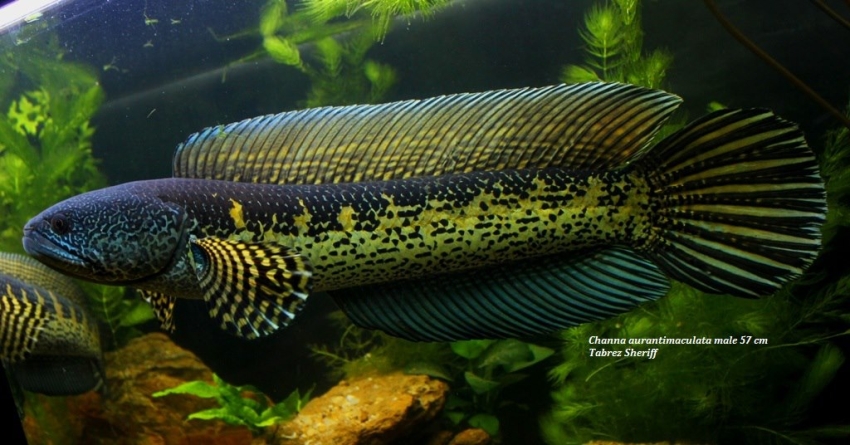
Channa aurantimaculataOrange-spotted Snakehead
Musikasinthorn, 2000
Max length400mm SL16in SLTank150 × 60cm60 × 24inTemp10–28°C50–82°FpH6.0–8.0This species is also traded as 'golden cobra snakehead' and is available in the aquarium trade on a regular basis. It can be distinguished from other Channa species by the following combination of characters: 51-54 lateral line scales; 45-47 dorsal-fin rays; 28-30 anal-fin rays; 8-12 cheek scales; 50-52 total verte...
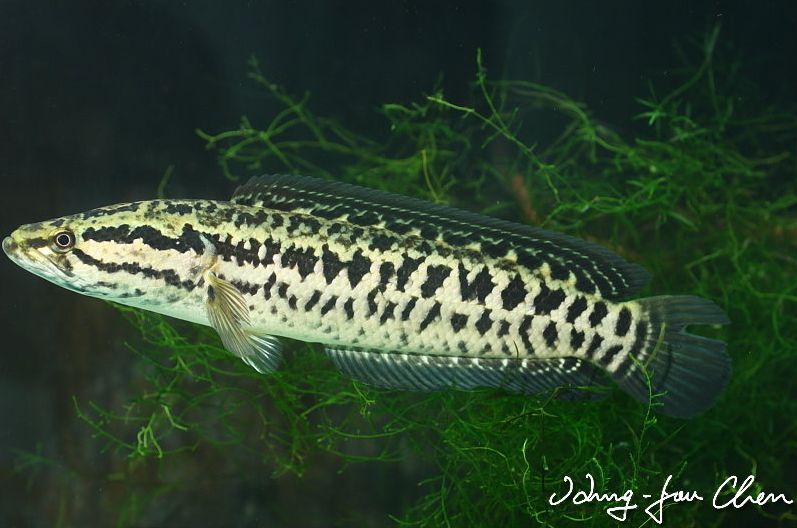
Channa maculataBlotched Snakehead
Lacepède, 1801
Max length300mm SL12in SLTanknot recordedTempnot recordedpHnot recordedThis species is frequently confused with C. argus but can be distinguished by the following characters: dorsal-fin rays 38-45 (vs. 47-50 in C. argus); anal fin rays 26-29 (vs. 31-36); lateral line scales 50-56 (vs. 60-66); 2-3 rounded blotches on caudal peduncle (vs. no blotches on caudal peduncle). It is widely-distributed in Pacific coastal drainages of southeastern China (e.g. the Yangtze, Minjiang, Hangjiang River, and Pearl (Nanjiu...
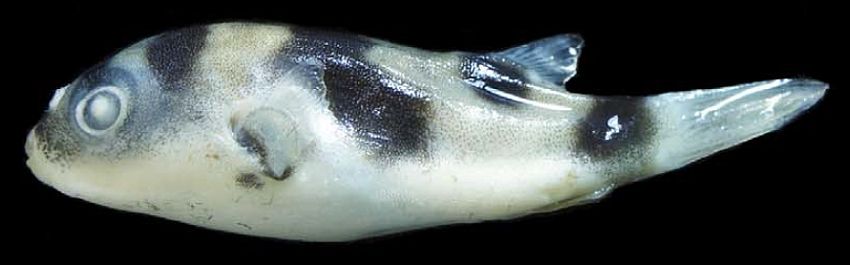
Colomesus tocantinensis
Amaral, Brito, Silva & Carvalho, 2013
Max length35mm SL1.4in SLTanknot recordedTempnot recordedpHnot recordedIt is distinguished from congeners by the following combination of characters: anal-fin with 6-7 basal pterygiophores and 9 rays (vs. 10-11 rays in C. asellus and C. psittacus; dorsal-fin with 10 bas...
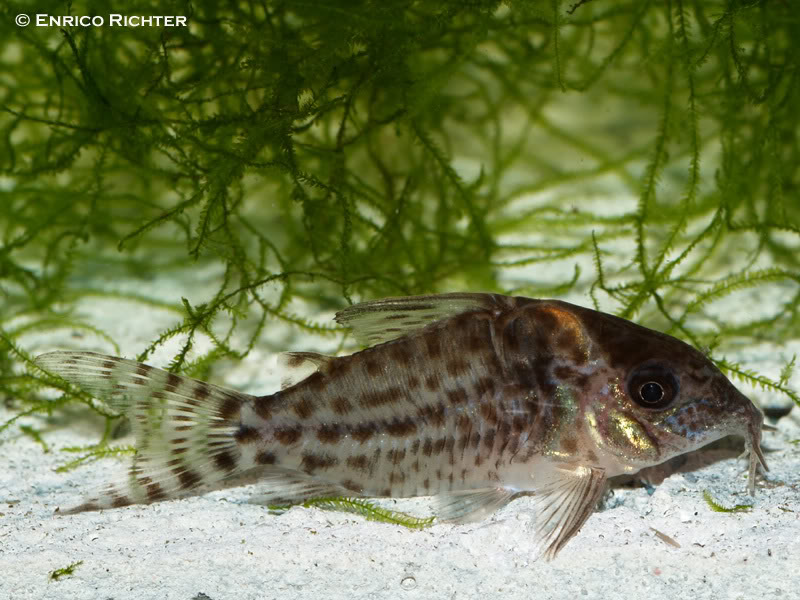
Corydoras agassiziiSpotted Cory
Steindachner, 1876
Max length70mm SL2.8in SLTanknot recordedTemp22–27°C72–81°FpH6.0–8.0This species' name is commonly misapplied to a number of similar-looking fishes and it can be difficult to identify if collection locality is unknown. In addition, colour pattern is variable and it's not clear whether this occurs between, within, or both between and within populations. In the original description, Steindachner did note that the first three dorsal-fin rays are completely black while the remainder is whi...
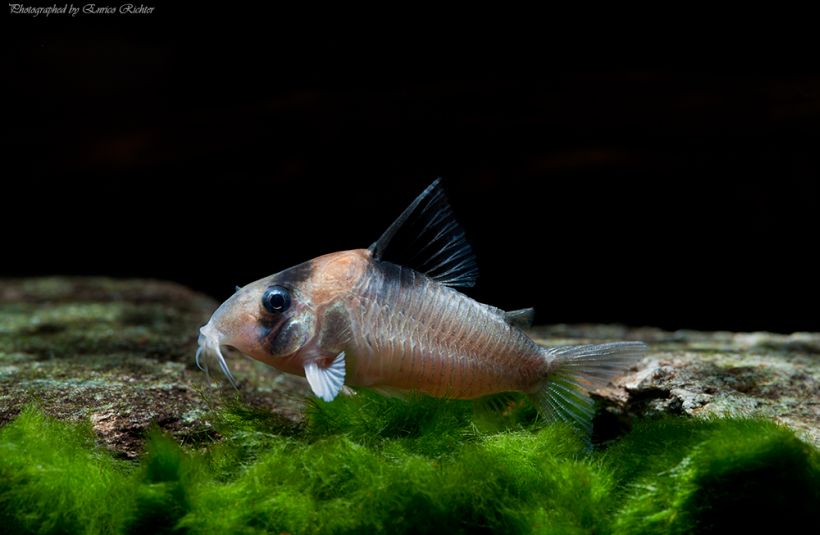
Corydoras burgessiBurgess' Cory
Axelrod, 1987
Max length55mm SL2.2in SLTank80 × 30cm31 × 12inTemp20–28°C68–82°FpH5.0–7.0The most obvious distinguishing characters are that the black marking in the upper part of the body is restricted to the area beneath the dorsal-fin and extends into the majority of the fin , while the paler patch anterior to it, on top of the head, is yellowish rather than orangish. Additional diagnostic characters have proven unavailable thus far since it was described in a hobbyist magazi...
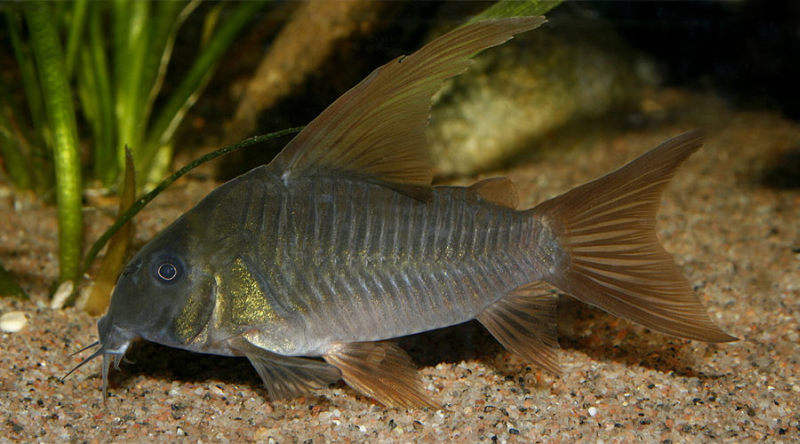
Corydoras concolorSlate Cory
Weitzman, 1961
Max length60mm SL2.4in SLTank80 × 30cm31 × 12inTemp20–26°C68–79°FpH5.5–7.0This species can be told apart from congeners by its uniformly greyish colour pattern, deep body (fitting 2.1-2.4 times in standard length), large eye (3.2-4.0 times in head length), having the pectoral fins completely surrounded by the coracoid, and relatively long dorsal-fin spine (1.1-1.2 times in head length).
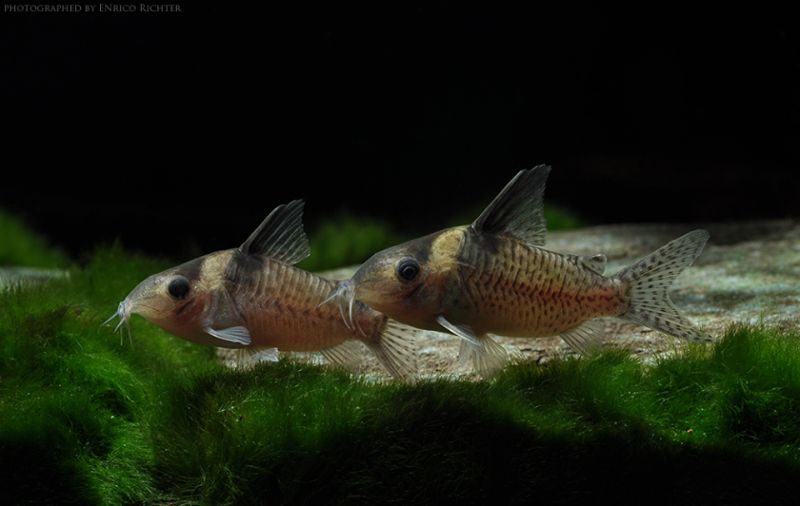
Corydoras delphax
Nijssen & Isbrücker, 1983
Max length60mm SL2.4in SLTank90 × 30cm36 × 12inTemp22–27°C72–81°FpH5.5–7.5Unfortunately, precise diagnostic characters cannot currently be provided since we’ve been unable to obtain the type description, and little has been Characters said to separate it from species such as C. ambiacus, C. agassizii, C. brevirostris, C. ephippifer, and C. melanistius include a combination of relatively elongated snout, dark spots on body fading in adults, dark anterior dorsal-fin patch extending to upper extremity of fin, and presence of spots in the caudal-fin.
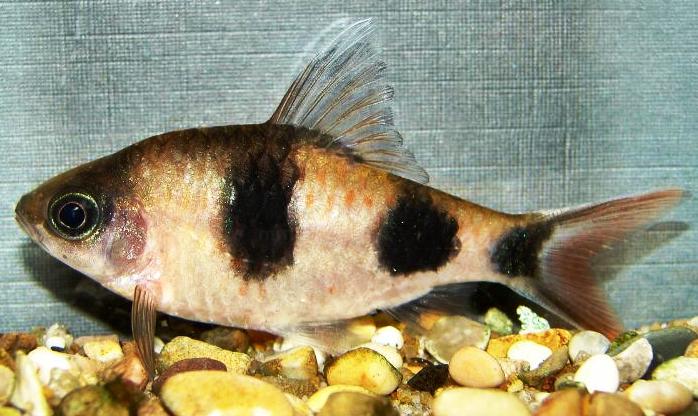
Dawkinsia arulius
Jerdon, 1849
Max length100mm SL3.9in SLTank120 × 45cm48 × 18inTemp19–25°C66–77°FpH6.0–7.5The fish appearing in the majority of earlier literature as P. arulius or 'arulius barb', and often still traded as such, is the related D. tambraparniei. Though similar the latter can be told apart from D. arulius by possession of filamentous extensions to the dorsal-fin rays in males, longer maxillary barbels measuring > ½ eye diameter, i.e., 2.4 - 4.7 % SL, and some aspects of colour pattern.
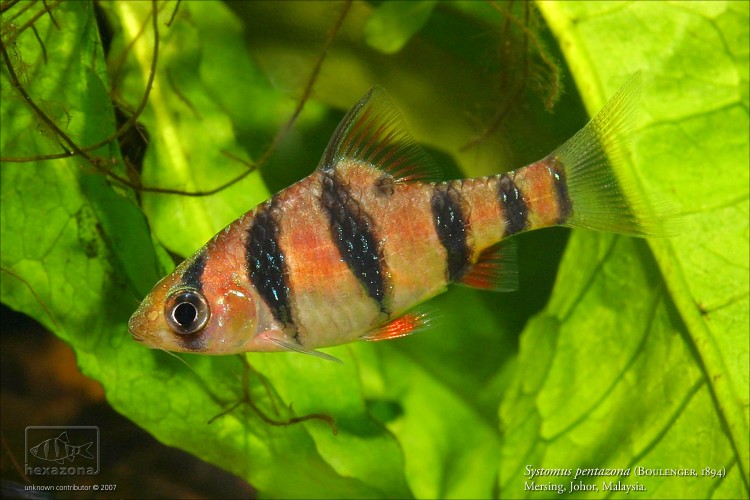
Desmopuntius pentazonaFive-banded Barb
Boulenger, 1894
Max length55mm SL2.2in SLTank80 × 30cm31 × 12inTemp21–26°C70–79°FpH4.0–7.0This species is rare in the aquarium trade with the majority of fish available under the name or the vernacular 'pentazona barb' being the closely-related D. hexazona. The two are almost identical in terms of both appearance and meristics but can be separated by the fact that D. pentazona possesses a small dark marking at the posterior base of the dorsal-fin which is absent in D. hexazona.
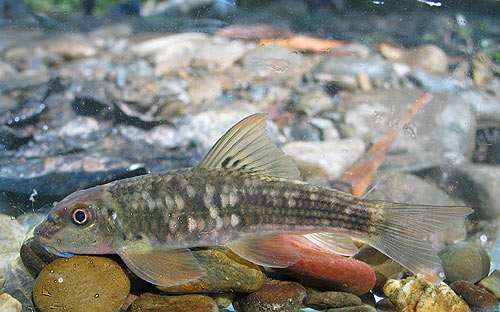
Garra notata
Blyth, 1860
Max length120mm SL5in SLTanknot recordedTempnot recordedpHnot recordedG. notata is one of a number of congeners to lack both a transverse groove and a proboscis on the snout. It also possesses 33-34 lateral line scales and a series of dark spots at the base of the dorsal-fin rays, and lacks scales on the lower portion of the body and abdomen. The genus Garra is a particularly enigmatic grouping with new taxa...
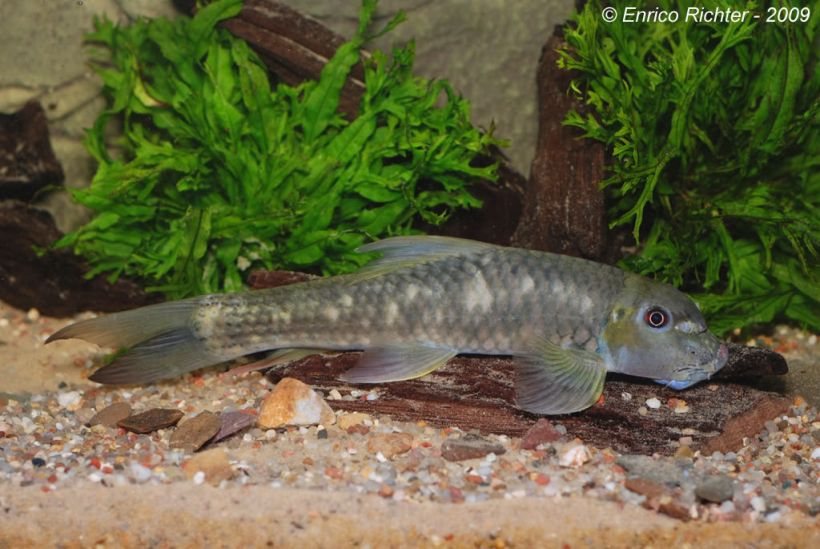
Garra salweenica
Hora & Mukerji, 1934
Max length175mm SL7in SLTanknot recordedTempnot recordedpHnot recordedG. salweenica can be distinguished from other congeners inhabiting the Salween watershed by the following combinatuion of characters: body brownish; presence of a trilobed proboscis on the snout; snout blunt; a series of black spots at the base of the central dorsal-fin rays; presence of longitudinal stripes on the posterior portion of the body; a dark marking at the tip of the upper (and lower in some specimens) caudal-fin lobe; body depth 22.4-25.3 % SL.
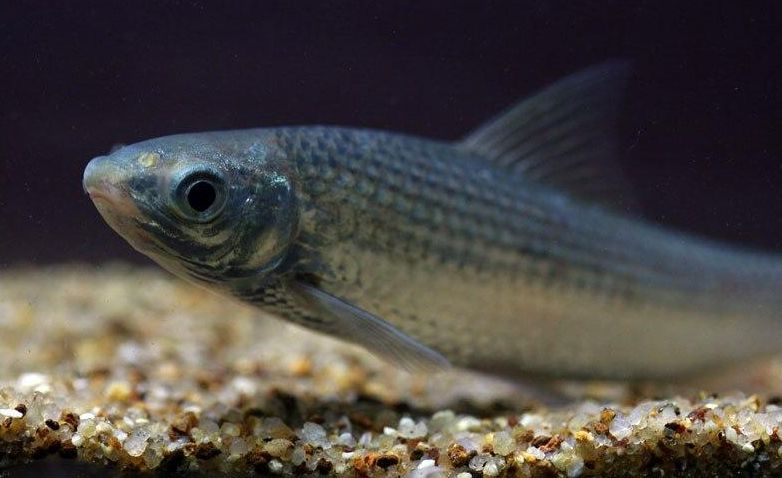
Gymnostomus ariza
Hamilton, 1807
Max length300mm SL12in SLTanknot recordedTempnot recordedpHnot recordedFollowing Roberts (1997) G. ariza can be diagnosed by the following combination of characters: body with variably intense thin stripes dustributed mostly above the lateral line; larger individuals sometimes with a broad midlateral stripe; 32-35 lateral scales; 7-8/1/5-6 transverse scale rows; 8-9 branched dorsal-fin rays 8-9; 22-24+ 11-12=34(4), 35 (3) vertebrae; live colour pattern variable, overall dull dirty white to greyish, silvery or yellow.
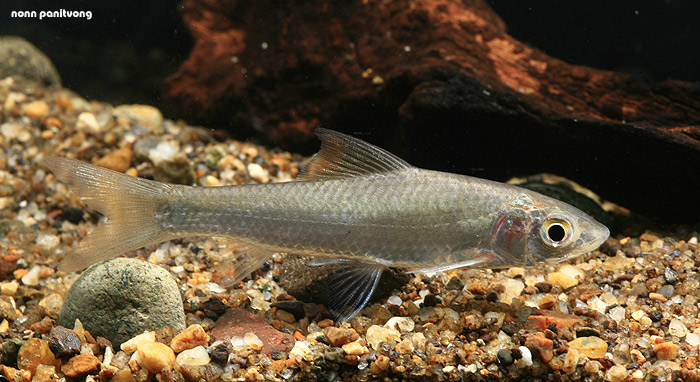
Gymnostomus lobatus
Smith, 1945
Max length150mm SL6in SLTanknot recordedTempnot recordedpHnot recordedG. lobatus can be distinguished from congeners by the following combination of characters: possession of 32-33 + 2-3 lateral line scales; 5½ scale rows between lateral line and base of dorsal-fin; body relatively slender, depth fits 3.7-4.0 times in SL; snout often projecting strongly; body plain silver in colour.
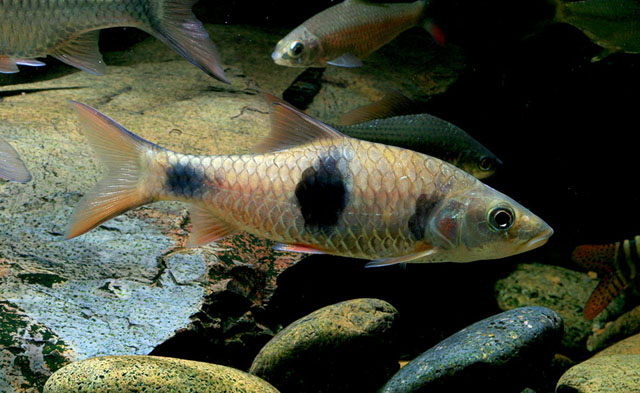
Hampala salweenensis
Doi & Taki, 1994
Max length201mm SL8in SLTank240 × 60cm96 × 24inTemp20–26°C68–79°FpH6.0–8.0This species is poorly-known in the aquarium hobby and may have never been maintained outside its native countries. It can be distinguished from congeners by the following combination of characters: 26-27 lateral line scales; two roundish, dark blotches on each flank, one beneath dorsal-fin origin and above the lateral line, the other on the caudal peduncle and passing thro...
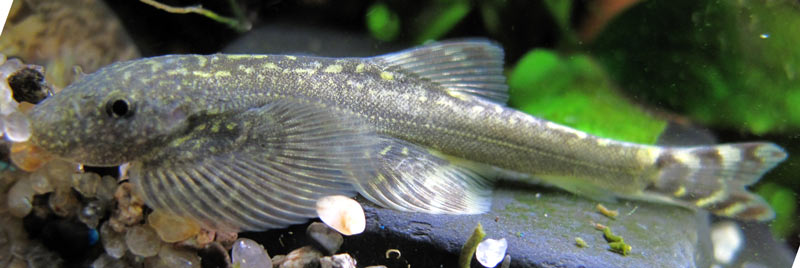
Hemimyzon formosanus
Boulenger, 1894
Max length100mm SL3.9in SLTank120 × 30cm48 × 12inTemp16–22°C61–72°FpH6.5–8.0Current knowledge suggests that H. formosanus is the most widely-distributed and following Chen and Fang (2009) it can be distinguished by the following suite of characters: 3+7 dorsal-fin rays; 10-12 pectoral-fin rays (modally 11) +9-11 (modally 10)...
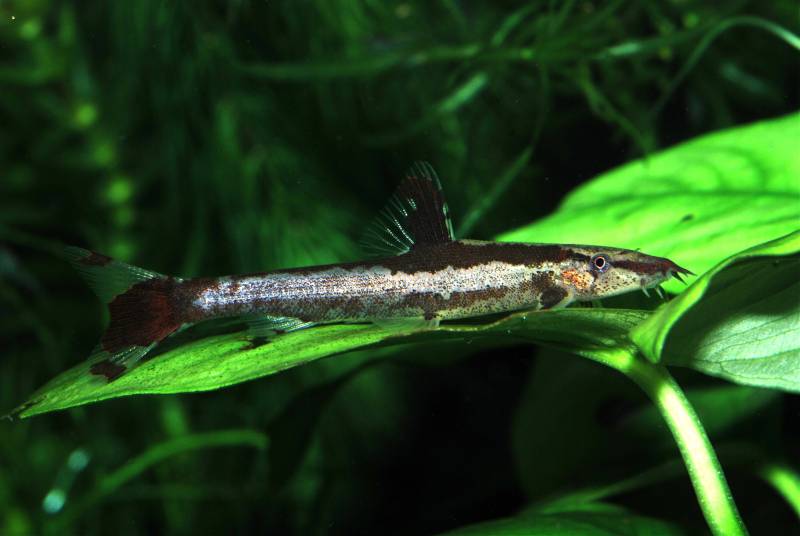
Homaloptera bilineata
Blyth, 1860
Max length100mm SL3.9in SLTank120 × 30cm48 × 12inTemp20–25.5°C68–78°FpH6.0–7.5This rarely-traded species is a member of the H. ocellata 'group' of closely-related congeners, an assemblage which currently comprises H. ocellata, H. bilineata, H. confuzona, H. orthogoniata, H. ogilviei and H. parclitella. Following Tan and Ng (2005) these share possession of a colour pattern with reddish tints and dark brown head markings, elongate head, slightly compressed body, 61-77 lateral line scales and dorsal-fin origin placed in advance of pelvic-fin origin.
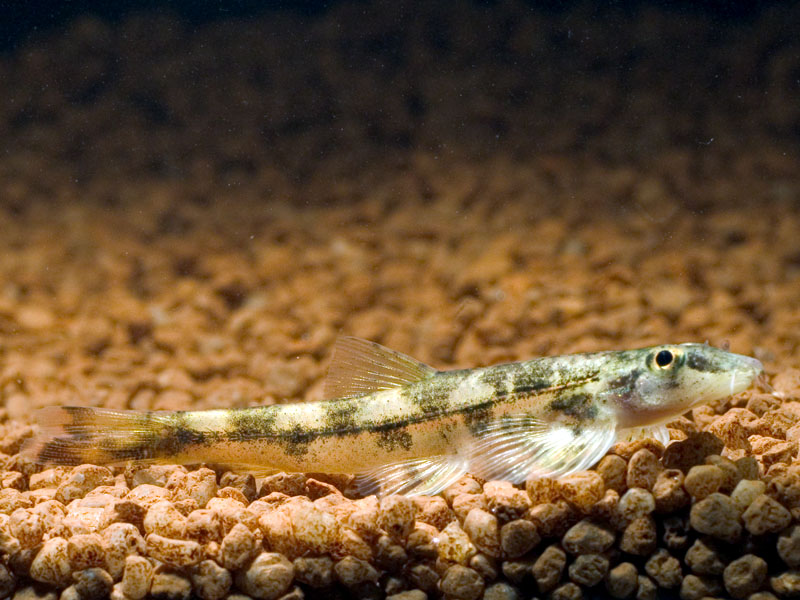
Homalopteroides nebulosus
Alfred, 1969
Max length36mm SL1.4in SLTank60 × 30cm24 × 12inTemp20–25.5°C68–78°FpH6.0–7.5The genus Homalopteroides was revalidated by Randall and Page (2012) and is told apart from the related Homaloptera by the following character combination: dorsal-fin origin above pelvic-fin; ≤ 60 lateral-line scales; ≤ 30 predorsal scales; oral morphology consisting of two thin and widely separated rostral barbels on each side of the mouth, thin crescent-shaped lips, the absence of any structure such as a mental pad or lobes between the lateral portions of the lower lip, and a chin that extends anterior to the lateral portions of the lower lip.
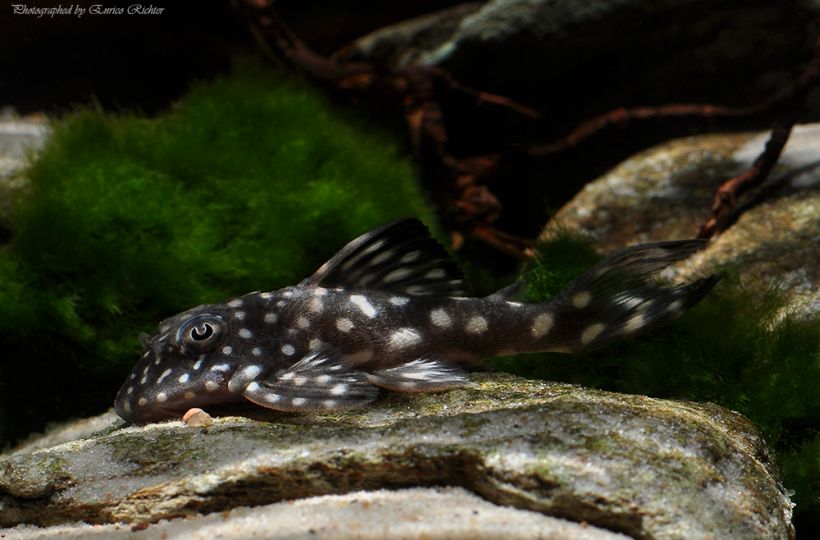
Hypancistrus inspectorL102
Armbruster, 2002
Max length160mm SL6in SLTank120 × 45cm48 × 18inTemp22–30°C72–86°FpH5.0–7.5H. inspector can be told apart from other described species in the genus by the following combination of characters: colour pattern comprising brown to black base with large whitish to yellow spots; adpressed dorsal-fin not reaching the adipose-fin spine; spots on head much smaller than on rest of body; spots in the upper caudal-fin lobe combining to form bands in adults; 24 plates in the mid-ventral series.
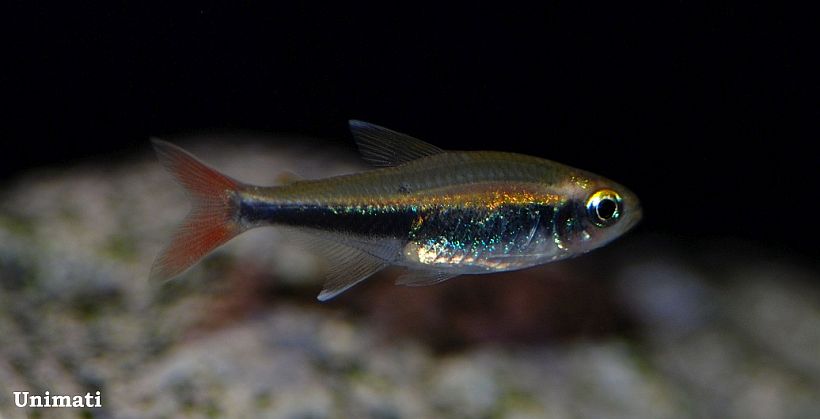
Hyphessobrycon loretoensisLoreto Tetra
Ladiges, 1938
Max length25mm SL1.0in SLTank60 × 30cm24 × 12inTemp22–28°C72–82°FpH5.0–7.0The most recent diagnosis appears to be that of Géry (1977), in which it was separated from other members of the group by the following combination of characters: dorsal-fin insertion at or slightly anterior to mid-body; caudal-fin brick red to orange-red; body depth fits less than 3.6 times in SL; head length fits 3.5-4.0 times in SL; caudal peduncle length u...
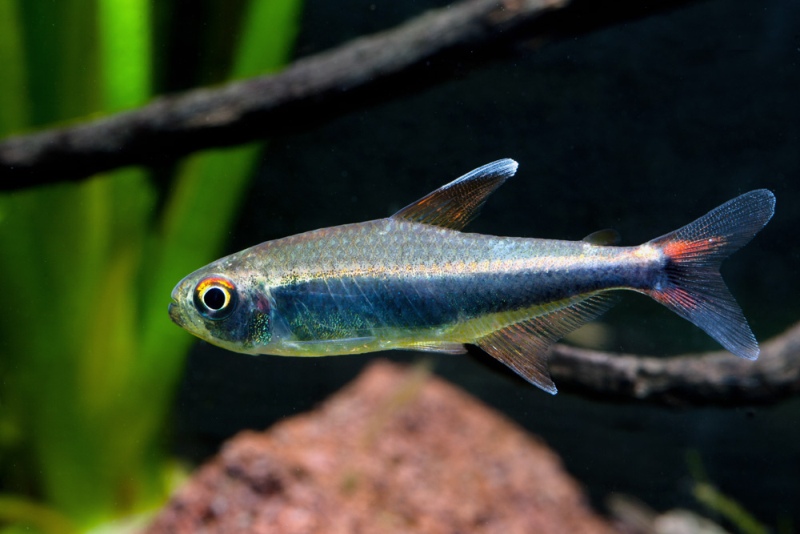
Hyphessobrycon peruvianusPeruvian Tetra
Ladiges, 1938
Max length40mm SL1.6in SLTank60 × 30cm24 × 12inTemp22–27°C72–81°FpH5.0–7.0This species is available on a relatively regular basis, although it's sometimes confused with the similar-looking congeners H. loretoensis and H. metae. It can be identified via the following combination of characters as per Géry (1977): elongate in shape with body depth fitting 3.8-3.9 times in its standard length; caudal peduncle narrow, its depth fitting 1.8 times in its length; head short, interorbital broad, snout short and rounded; dorsal-fin insertion an...