Results for “sand”
Type a name: scientific, common, or one a species used to go by. Or narrow the catalogue with the filters.
Filters
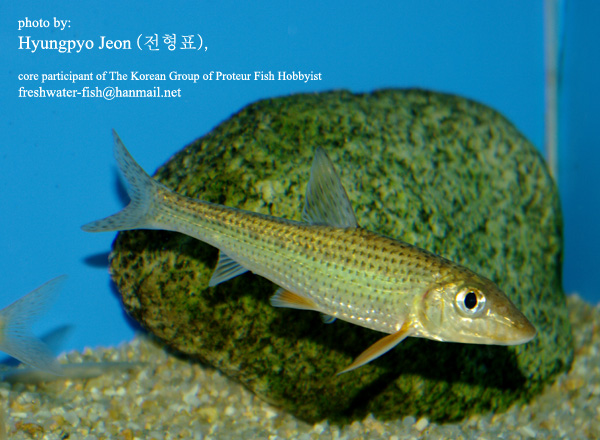
Hemibarbus longirostris
Regan, 1908
Max length250mm SL10in SLTanknot recordedTempnot recordedpHnot recordedA predominantly riverine fish preferring clear, well-oxygenated, running waters with substrates of sand, gravel, rock or mud, where adults tend to form schools just above the substrate in slower-moving sections.
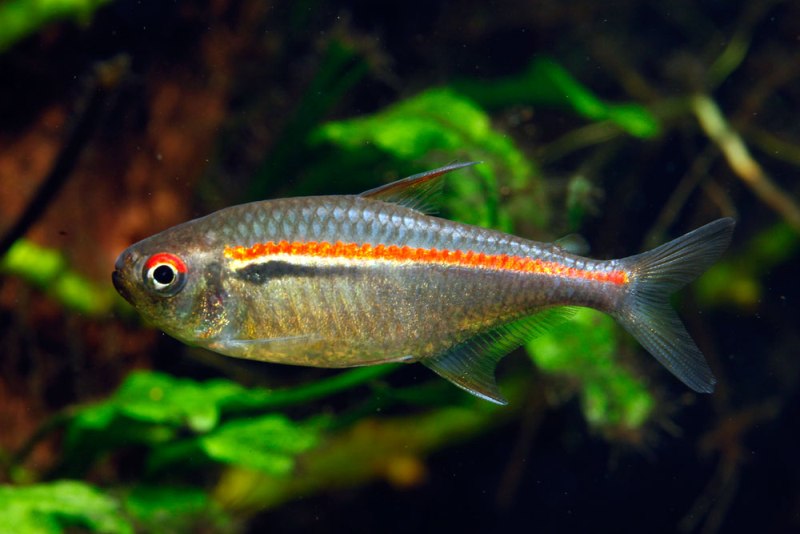
Hyphessobrycon amapaensisAmapá Tetra
Zarske & Géry, 1998
Max length30mm SL1.2in SLTank60 × 30cm24 × 12inTemp23–28°C73–82°FpH5.0–7.0Collected from small streams flowing through savanna grassland containing clear, light brown-coloured water with substrates of sand and gravel and little in the way of submerged or riparian vegetation. At the type locality pH varied between 5.8 – 6.3, GH and KH were both <1°, conductivity was 9-13 μs and temperature 24.7 – 27.2°C/76.6 – 80.1°F.
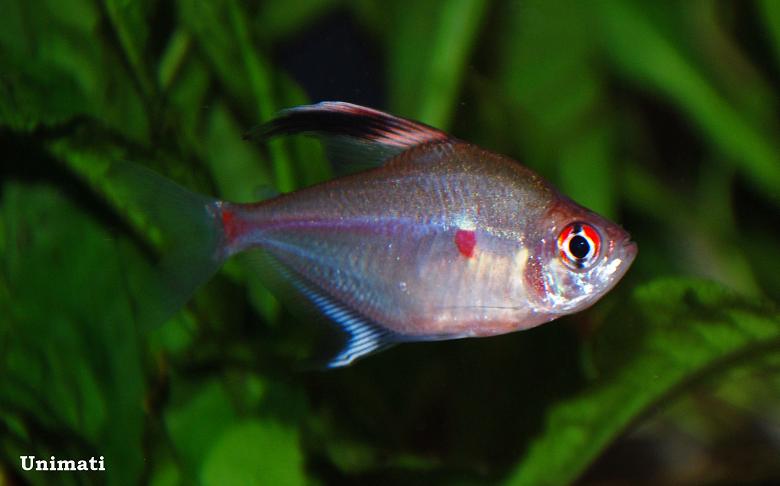
Hyphessobrycon erythrostigmaBleeding Heart Tetra
Fowler, 1943
Max length60mm SL2.4in SLTank90 × 30cm36 × 12inTemp21–28°C70–82°FpH4.0–7.5In the igarapés Baré and Ubim, western Brazil H. erythrostigma was collected from stretches measuring 5-7 metres in width with thick riparian and overhanging vegetation. The substrate was mostly composed of sand and the fish displayed a preference for boundary zones between shallow and deeper water. Conductivity was measured at 14.2-62.1 mS/cm³, dissolved oxy...
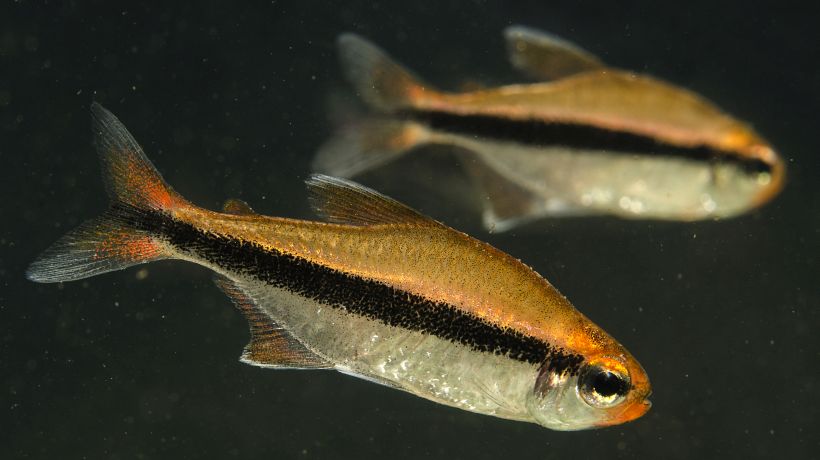
Hyphessobrycon vilmae
Géry, 1966
Max length30mm SL1.2in SLTank60 × 30cm24 × 12inTemp20–26°C68–79°FpH5.0–7.0Choice of décor is not especially critical although it tends to show better colouration when maintained in a well-furnished set-up with live plants and a dark substrate. A natural-looking arrangement might consist of a soft, sandy substrate with wood roots and bran...
Lamprologus ocellatusOcellated Shell-dweller
authority not recorded
Max length60mm SL2.4in SLTanknot recordedTemp23–27°C73–81°FpH7.5–9.0A charming little cichlid with real character, L. ocellatus is a deservedly popular hobbyists' fish. It has an endearing habit of burying its shell and defending it against all-comers. Many an unsuspecting hobbyist has recieved a sharp nip from an ocellatus who feels its territory is being invaded. Neighbouring shells may also be buried to prevent other fish moving in. Koning has hypothesisesd that the burying of the shell and the resultant pile of sand around it not only provides additiona...
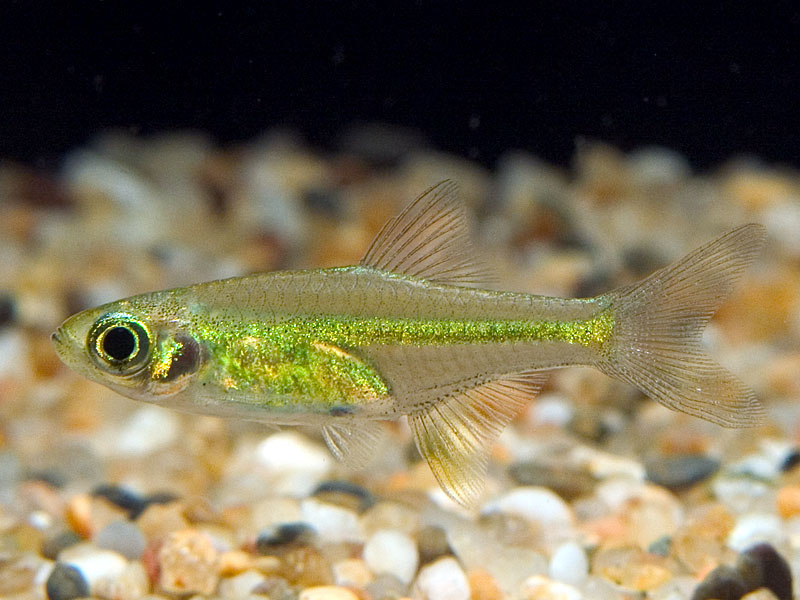
Microdevario kubotai
Kottelat & Witte, 1999
Max length20mm SL0.8in SLTank60 × 30cm24 × 12inTemp20–27°C68–81°FpH6.0–7.0Apparently inhabits calm to moderately-flowing stretches of well-oxygenated headwaters and minor tributaries. Such habitats tend to comprise transparent water, substrates of sand, gravel, rocks, boulders, and patches of leaf litter, with submerged driftwood, roots of riparian vegetation, and aquatic vegetation in places.
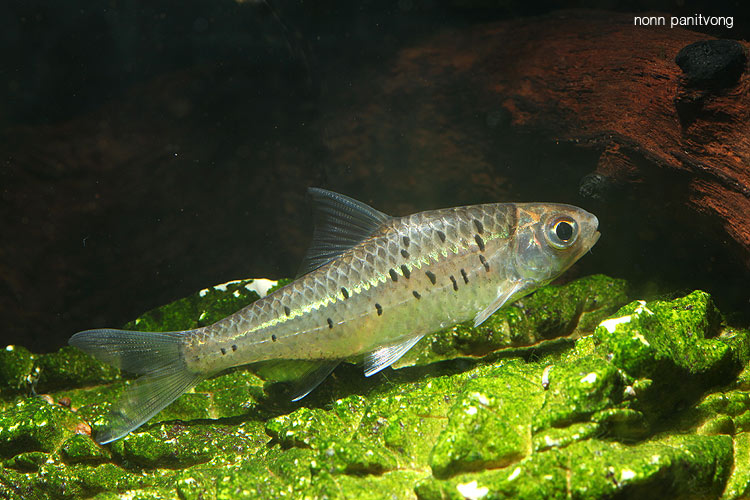
Mystacoleucus greenwayi
Pellegrin & Fang, 1940
Max length100mm SL3.9in SLTank120 × 45cm48 × 18inTemp20–27°C68–81°FpH6.0–7.5Predominantly a riverine fish favouring clear, well-oxygenated, running water with substrates of sand or gravel and often present in rock and boulder-filled headwater streams. In the Mun River, close to the Pak Mun dam, Thailand, sympatric species included Hampala dispar, Cyclocheilichthys apogon, Osteochilus hasseltii,...
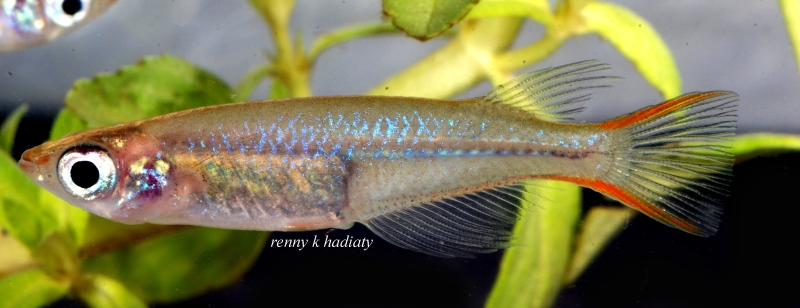
Oryzias asinuaAsinua Ricefish
Parenti, Hadiaty, Lumbantobing & Herder, 2013
Max length25mm SL1.0in SLTank45 × 30cm18 × 12inTempnot recordedpHnot recordedWhen the type series was collected the Sungai Asinua contained clear, slow to fast-moving water with a temperature of 26 °C. The substrate was composed of mud, sand an...
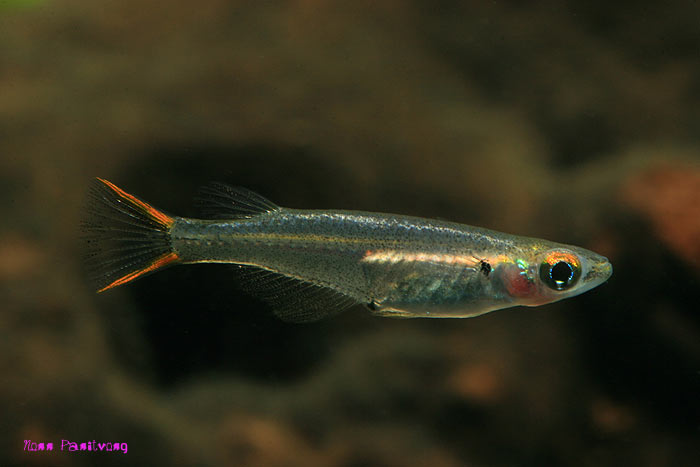
Oryzias songkhramensis
Magtoon, 2010
Max length20mm SL0.8in SLTank40 × 20cm16 × 8inTemp23–30°C73–86°FpH6.0–7.5An exclusive inhabitant of fresh, normally standing, waters including shallow pools, ditches, rice paddies and clear water swamps. The type locality is a small ditch measuring just 3 - 6 metres in width and 0.5 - 2 metres deep. The water was clear and the substrate composed of sand, detritus and mud with growths of the macrophytes Nymphaea lotus, Jussiaea repens and Hydrilla verticillata.
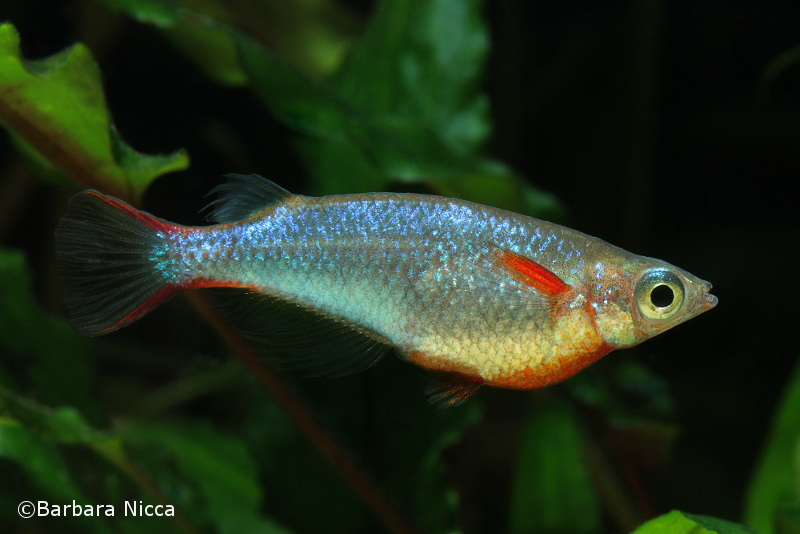
Oryzias woworaeDaisy's Ricefish
Parenti & Hadiaty, 2010
Max length30mm SL1.2in SLTank45 × 30cm18 × 12inTemp23–27°C73–81°FpH6.0–7.5The type locality is a karstic freshwater stream flowing under 80% forest cover with a mixed substrate of mud and sand plus patches of leaf litter. O. woworae was collected from a still pool around 3-4 m deep, opposite an affluent spring, where it was schooling with a species of Nomorhamphus which may turn out to be a form of N. ebrardtii but has subsequently appeared in the aquarium trad...
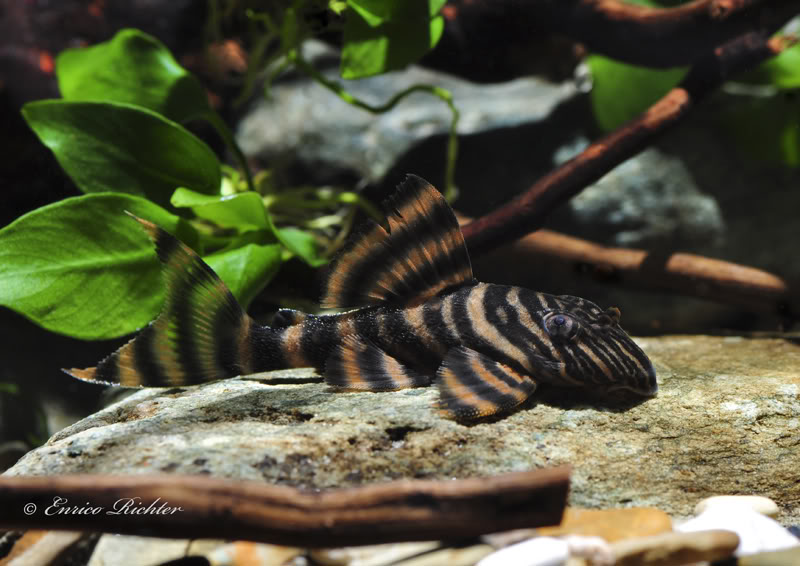
Panaqolus sp.L403
authority not recorded
Max length120mm SL5in SLTank120 × 30cm48 × 12inTemp24–30°C75–86°FpH6.0–7.0Not difficult to maintain under the correct conditions; we strongly recommend keeping it in a tank designed to simulate a flowing stream with a substrate of variably-sized rocks, sand, fine gravel, and some water-worn boulders. This can be further furnished with driftwood branches, terracotta pipes, plant pots, etc., arranged to form a network of nooks, crannies, and shaded spots, thus providing broken lines of sight.
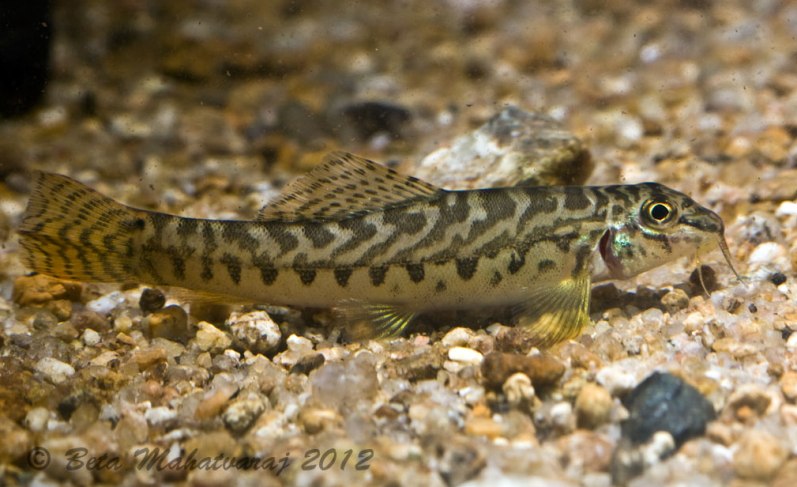
Paracanthocobitis botiaZipper Loach
Hamilton, 1822
Max length152mm SL6in SLTank75 × 30cm30 × 12inTemp21–26°C70–79°FpH6.0–7.5Traded under various names including 'mottled', 'eyepot', 'sand' and 'striped' loach. It's perhaps one of the better choices for those new to keeping nemacheilids being relatively hardy, peaceful and exhibiting some quirky behavioural traits. The characteristic ocellus, a dark marking at the top of the caudal peduncle that resembles an eye, is thought to have some function in predator distraction and is normally more intense in younger specimens.
Periophthalmus barbarusAtlantic Mudskipper
authority not recorded
Max length150mm SL6in SLTanknot recordedTemp25–30°C77–86°FpH7.0–8.5Due to its highly amphibious nature this must be one of the most interesting, endearing species that can be kept in aquaria. Some specimens rarely enter deep water, preferring to sit in the shallows with the body submerged and eyes protruding above the surface. Others seem to favour resting completely exposed on rocks, sand or bogwood, returning to the water periodically to wet themselves. Subdominant individuals (those that are unable to secure a favourable territory) tend to attach themselves ...
Periophthalmus novemradiatusDwarf Indian Mudskipper
authority not recorded
Max length100mm SL3.9in SLTanknot recordedTemp25–30°C77–86°FpH7.0–8.5Due to its highly amphibious nature this must be one of the most interesting, endearing species that can be kept in aquaria. Some specimens rarely enter deep water, preferring to sit in the shallows with the body submerged and eyes protruding above the surface. Others seem to favour resting completely exposed on rocks, sand or bogwood, returning to the water periodically to wet themselves. Subdominant individuals (those that are unable to secure a favourable territory) tend to attach themselves ...
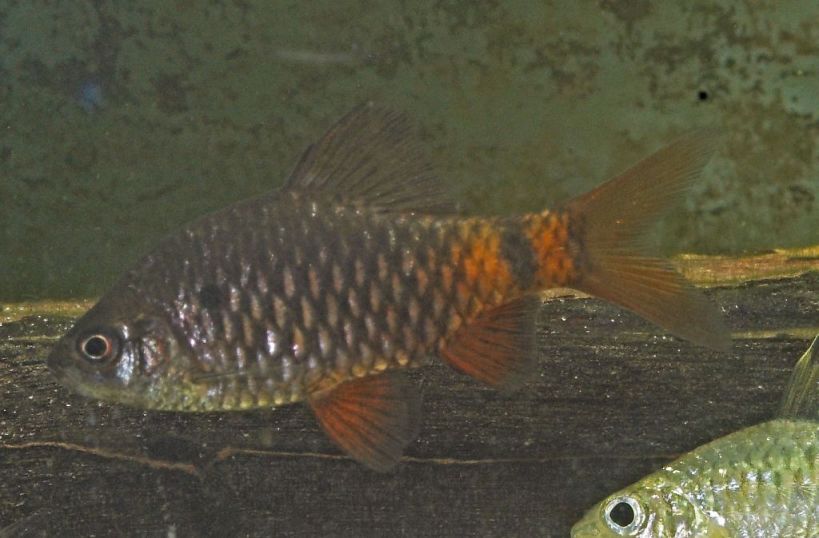
Pethia nigripinnis
Knight, Rema Devi, Indra & Arunachalam, 2012
Max length45mm SL1.8in SLTank90 × 30cm36 × 12inTemp16–21°C61–70°FpH5.5–7.5At one locality in the Kalindhi drainage the water was clear, 1 m at its deepest point and flowing either side of a small check dam, below which the flow was stronger though still not particularly fast. The substrate was composed of rocks and cobbles with a thick layer of fine silt and sand above the dam. There were no aquatic plants but marginal grasses and shrubs were growing to the margins with some submerged roots protruding into the water.
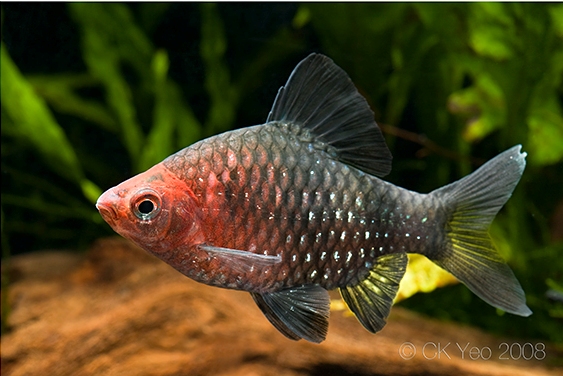
Pethia nigrofasciataBlack Ruby Barb
Günther, 1868
Max length55mm SL2.2in SLTank80 × 30cm31 × 12inTemp20–27°C68–81°FpH5.5–7.5Little sun is able to penetrate the forest floor so aquatic habitats are shaded and water temperature may be relatively cool, while conductivity and hardness are generally low and pH slightly acid. Macrophytes are uncommon though there may be dense, marginal vegetation, sometimes overhanging the full width of the stream, the roots of which may penetrate the banks underwater. Typical substrates are sandy but covered by a layer of leaf litter with fallen twigs and branches.
Protomelas pleurotaenia
authority not recorded
Max length140mm SL6in SLTank120 × 45cm48 × 18inTemp24–28°C75–82°FpH7.6–8.8This species has an interesting method of feeding in nature. It 'blows' at the top layer of the substrate (usually sand) and feeds on any invertebrates or other morsels that are uncovered. It is rare in the hobby and little information regarding it's care is available....
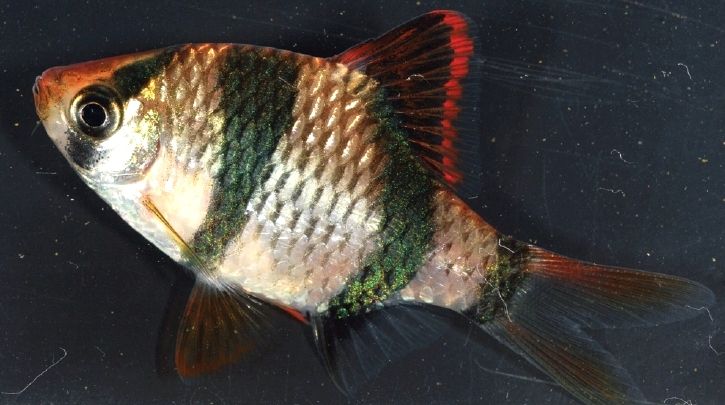
Puntigrus navjotsodhii
Tan, 2012
Max length48mm SL1.9in SLTanknot recordedTempnot recordedpHnot recordedThe type series was collected from a small clear-water stream with a pH of 6.0, forming a series of riffles and deeper pools, with a maximum width of 5 metres and depth ranging from 10 cm to 1 metre. The substrate was composed of sand gravel and rocks, with some leaf litter and overhanging marginal vegetation.
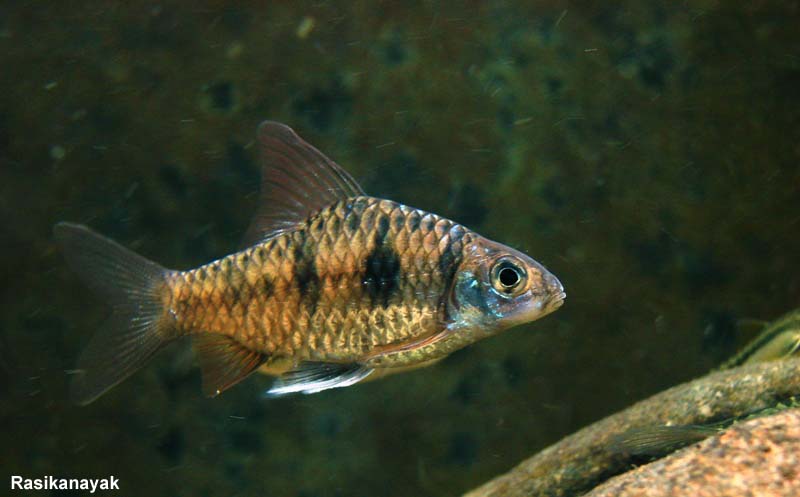
Puntius sahyadriensisMaharaja Barb
Silas, 1953
Max length65mm SL2.6in SLTank80 × 30cm31 × 12inTemp18–24°C64–75°FpH6.0–7.8The hill streams in which this fish can be found are generally shaded by the forest canopy and dense marginal vegetation. Substrates are typically composed of boulders, smaller stones, sand or gravel with submerged tree roots around the margins and quieter areas in which fallen branches and leaf litter collect. Other fish species occurring in the Tunga...
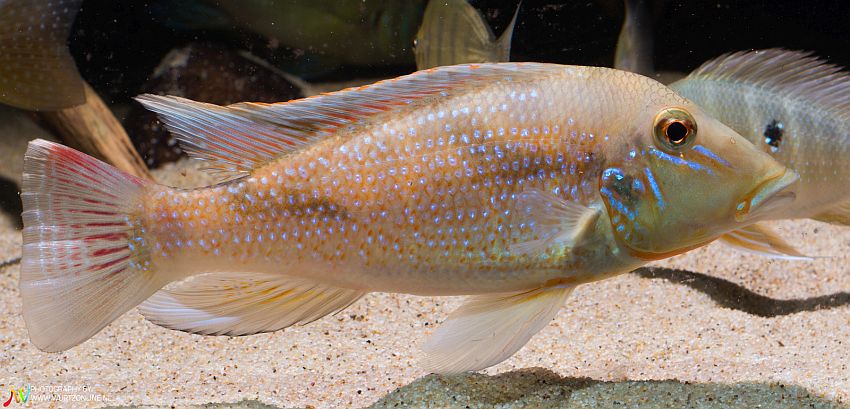
Retroculus lapidifer
Castelnau, 1855
Max length200mm SL8in SLTank210 × 60cm84 × 24inTemp26–32°C79–90°FpH6.0–8.0Retroculus spp. are unsuitable for the standard community aquarium, and should be maintained in a set-up designed to resemble a flowing river. The substrate should be composed of soft sand mixed with small pebbles if the aim is to breed the fish (see 'Reproduction'). Rocks, boulders, roots, branches, and aquatic plants can also be added, although the la...