Results for “spp.”
Type a name: scientific, common, or one a species used to go by. Or narrow the catalogue with the filters.
Filters
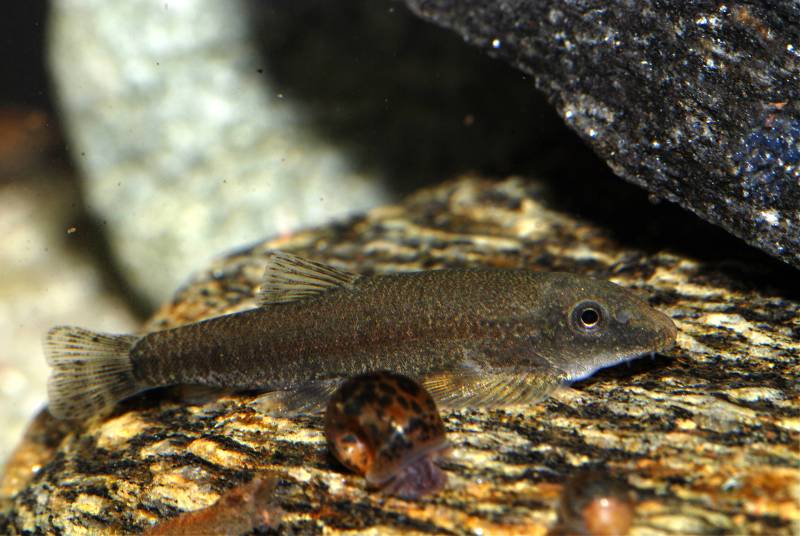
Erromyzon sp. 'ER01'
authority not recorded
Max length45mm SL1.8in SLTank60 × 30cm24 × 12inTemp18–24°C64–75°FpH6.5–8.0Erromyzon spp. are obligate dwellers of shallow, fast-flowing, highly-oxygenated headwaters/minor tributaries characterised by stretches of riffles and runs broken up by pools or cascades in some cases. Substrates are normally composed of smaller rocks, sand and gravel with jumbles of boulders, and while riparian/stream-side vegetation and patches of submerged leaf litter are common features aquatic plants aren't usually present.
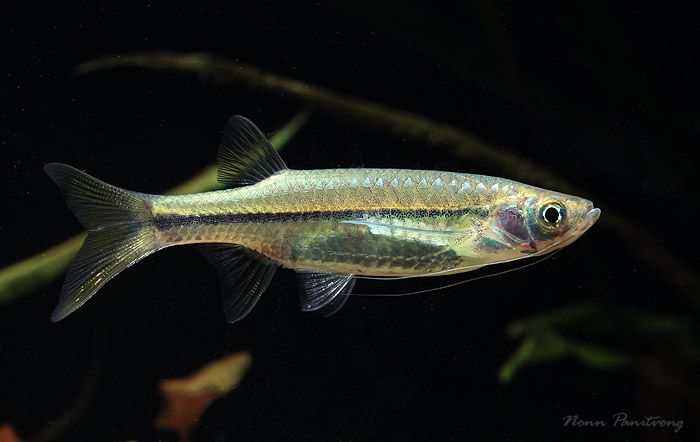
Esomus metallicusStriped Flying Barb
Ahl, 1923
Max length75mm SL3.0in SLTank120 × 30cm48 × 12inTemp20–26°C68–79°FpH6.0–7.0There currently exist a dozen described Esomus spp. alhough few are seen in the aquarium trade and none are especially popular. Most are commonplace in their native countries and also quite plainly-patterned so generally overlooked by collectors. Their most common use in some areas is actually as a feeder fish in the aquaculture of larger species. They're characterised by greatly-enlarged pectoral fins and two pairs of barbels, of which the maxillary pair are extremely long and usually reach the pectoral fins.
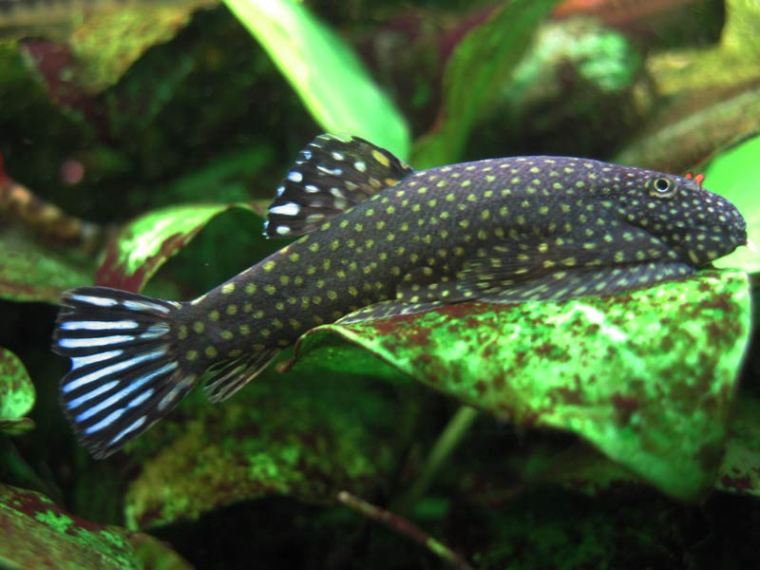
Gastromyzon ctenocephalus
Roberts, 1982
Max length40mm SL1.6in SLTank60 × 30cm24 × 12inTemp20–24°C68–75°FpH6.0–7.5One of the more commonly-traded members of the genus and often found in mixed shipments which may contain other Gastromyzon spp. or related fishes like Beaufortia kweichowensis, these often labelled collectively as 'Borneo sucker', 'Hong Kong pleco', 'butterfly loach', etc. It's sometimes misidentified as G. punctulatus, a species not currently traded which possesses yellow finnage and a lighter-coloured, less-intensely spotted body.
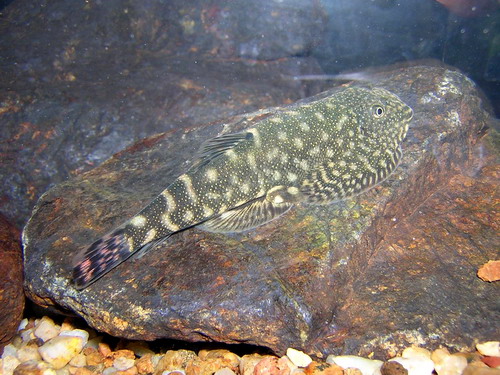
Gastromyzon sp. 'SK01'
authority not recorded
Max length50mm SL2.0in SLTank60 × 30cm24 × 12inTemp20–24°C68–75°FpH6.5–8.0This undescribed species has probably not been seen in the aquarium trade yet but is occasionally maintained private collectors. The 'SK' numbering system used here refers to 'South Kalimantan', home to several unidentified members of the genus. Gastromyzon spp. are placed into various 'species groups' (artificial assemblages of species which may or may not be monophyletic) for ease of reference, and based on colour and patterning G. sp. 'SK01' appears similar to members of the G. ridens group which also includes G. crenastus, G. stellatus and G. zebrinus.
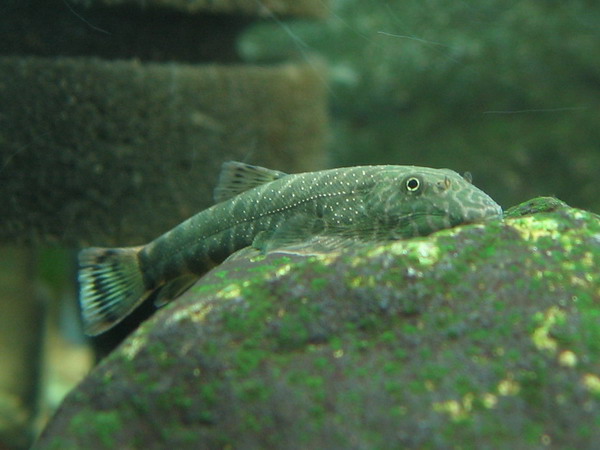
Gastromyzon sp. 'SK03'
authority not recorded
Max length50mm SL2.0in SLTank60 × 30cm24 × 12inTemp20–24°C68–75°FpH6.5–8.0Gastromyzon spp. are obligate dwellers of swift, shallow streams containing clear, oxygen-saturated water and have been recorded from sea level to 1350 m amsl throughout hill regions of Borneo. They typically inhabit riffles and runs and are often found above or below cascades and waterfalls. Substrates are generally composed of gravel, rocks, boulders or bedrock carpeted with a rich biofilm formed by algae and other micro-organisms.
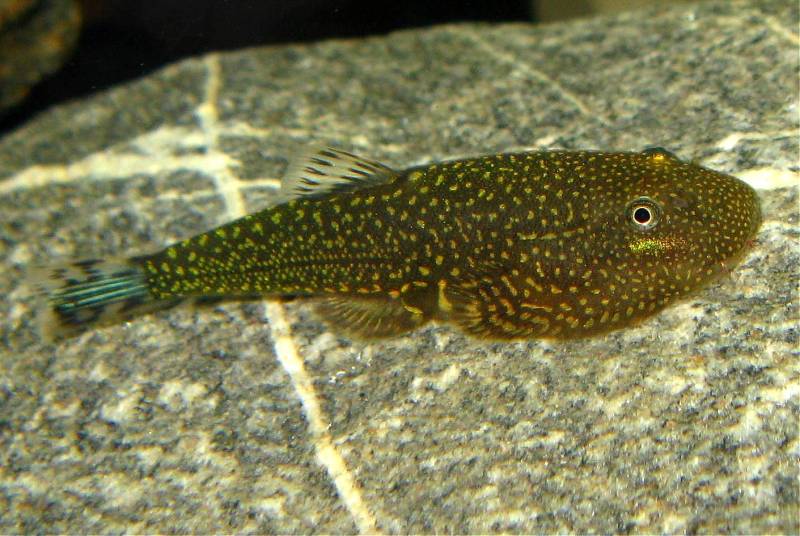
Gastromyzon stellatus
Tan, 2006
Max length55mm SL2.2in SLTank75 × 30cm30 × 12inTemp20–24°C68–75°FpH6.0–7.5One of the more commonly-traded members of the genus and often found in mixed shipments which may contain other Gastromyzon spp. or related fishes like Beaufortia kweichowensis. These are typically labelled 'Borneo sucker', 'Hong Kong pleco', 'butterfly loach', etc. regardless of species. It's sometimes misidentified as G. punctulatus, a species not currently traded which possesses yellow finnage and a lighter-coloured, less-intensely spo...
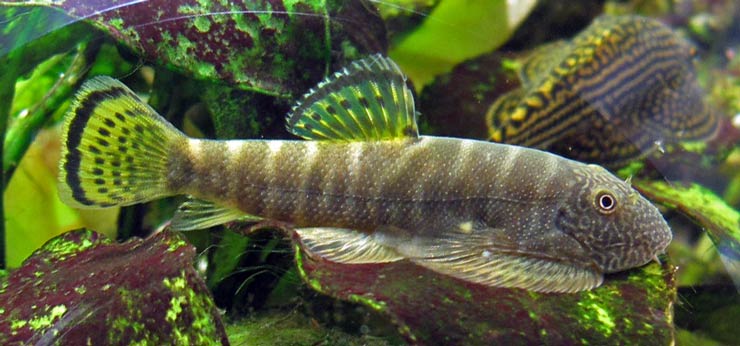
Gastromyzon viriosus
Tan, 2006
Max length55mm SL2.2in SLTank75 × 30cm30 × 12inTemp20–24°C68–75°FpH6.0–7.5Many loaches from the families Nemacheilidae, Balitoridae and Gastromyzontidae are also suitable but research your choices before purchase in order to be sure as some are excessively aggressive or otherwise competitive. Gastromyzon spp. tend to exist in lo...
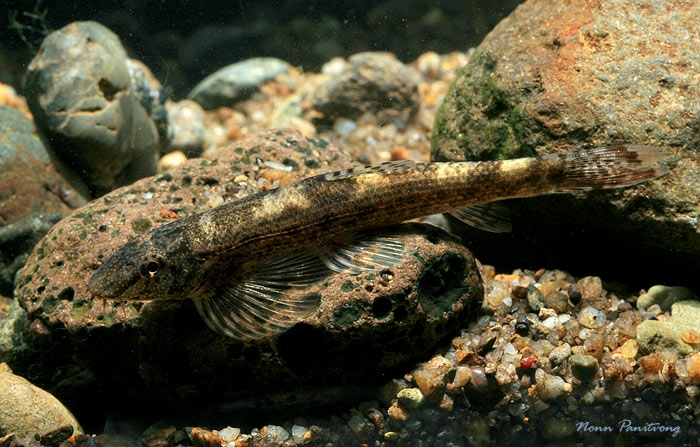
Homalopteroides modestus
Vinciguerra, 1890
Max length44mm SL1.7in SLTank60 × 30cm24 × 12inTemp18–25.5°C64–78°FpH6.0–7.5Homalopteroides spp. are specialised micropredators feeding on small crustaceans, insect larvae and other invertebrates. In captivity some sinking dried foods may be accepted but regular meals of live or frozen Daphnia, Artemia, bloodworm, etc., are essential for the maintenance of good health.
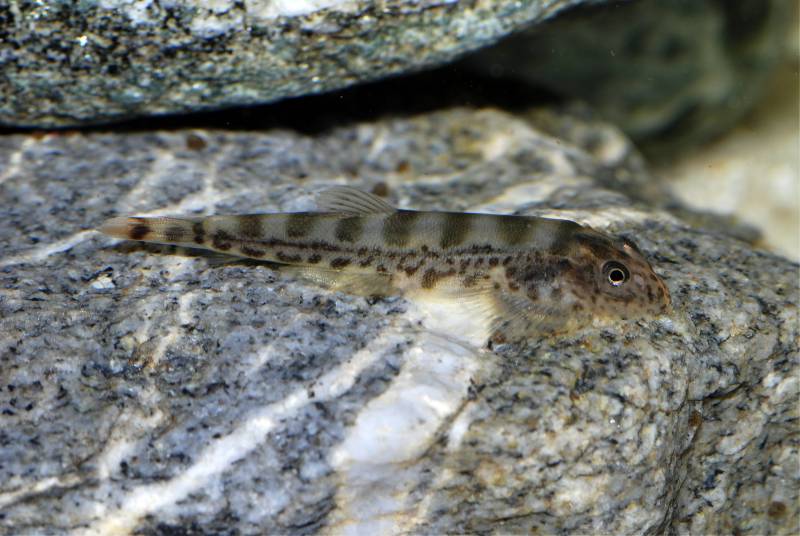
Hypergastromyzon humilis
Roberts, 1989
Max length35mm SL1.4in SLTank45 × 30cm18 × 12inTemp20–24°C68–75°FpH6.0–7.5The differences in pelvic-fin structure and gill openings led Roberts to redefine the genus when describing H. eubranchus, whereas Tan (2006) expressed doubts that the two are even congeneric but was unable to reach a definitive conclusion in the absence of fresh material. At any rate both species can be easily differentiated from Gastromyzon and Neogastromyzon spp. by observing the mo...
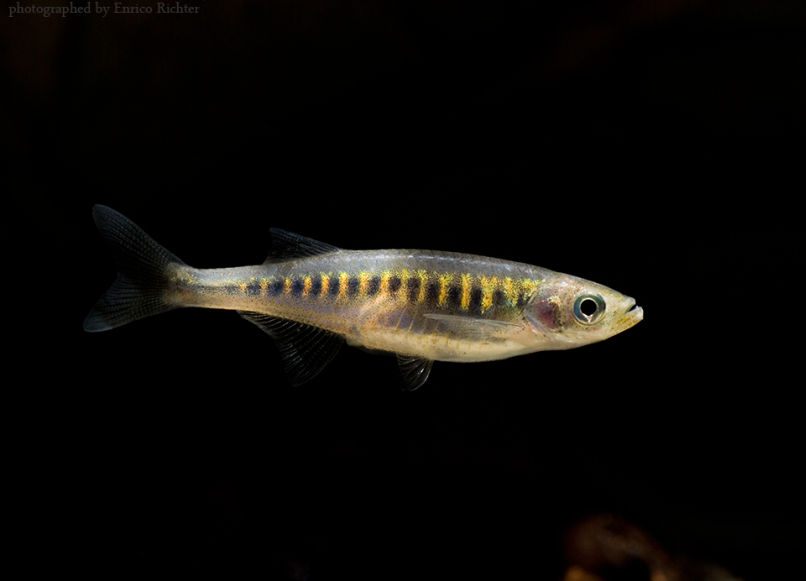
Inlecypris auropurpurea
Annandale, 1918
Max length80mm SL3.1in SLTank90 × 30cm36 × 12inTemp20–24°C68–75°FpH6.0–8.0Originally described as a member of Barilius (Annandale, 1918) but Howes (1980a) considered it more closely related to cheline cyprinids (Chela and Laubuca spp.) based on morphological characters and erected the genus Inlecypris for it (Howes, 1980b). Fang (2003) supported Howes' conclusions in her 2003 phylogenetic study of the genus Danio, hypothesising that Inlecypris and Chela together form a sister group to Devario.
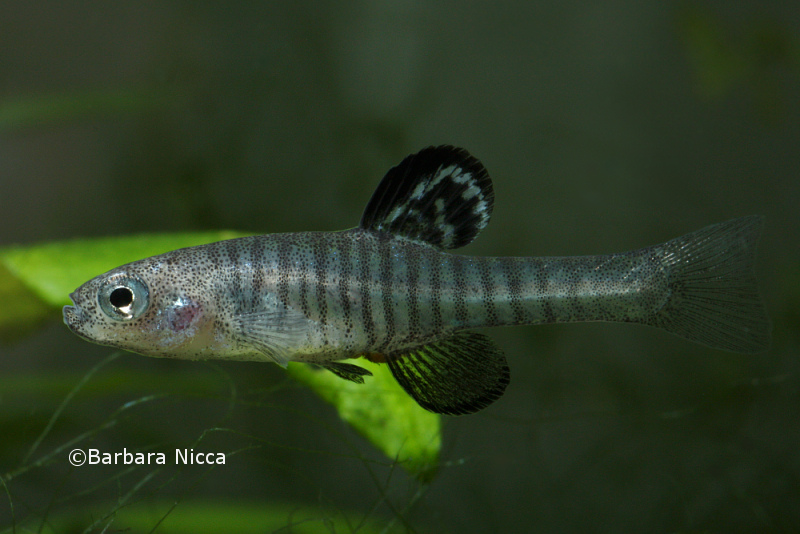
Kosswigichthys asquamatusHazar Toothcarp
Sözer, 1942
Max length40mm SL1.6in SLTank120 × 30cm48 × 12inTemp12–28°C54–82°FpHnot recordedThis little-known, relict species possesses some unique morphological and behavioural traits when compared with its congeners and the genus Kosswigichthys was erected for it in the original description. It has a much more elongate body profile than other Aphanius spp., almost total absence of scalation on the body and three rows of conical (as opposed to tricuspid in all other species) teeth which set it apart. Work by Franz and Villwock in the 1970s revealed it to be a member of Aphanius and showed ...
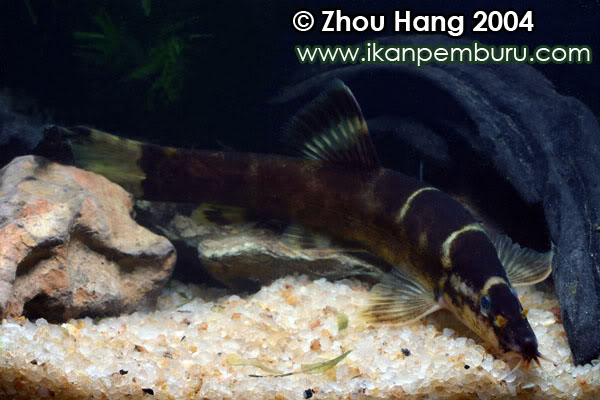
Leptobotia rubrilabris
Dabry de Thiersant, 1872
Max length150mm SL6in SLTank120 × 45cm48 × 18inTemp15.5–21°C60–70°FpH6.5–7.5Should be kept in a set-up designed to resemble a flowing stream with a substrate of variably-sized rocks, gravel and some water-worn boulders. This can be further furnished with driftwood roots and branches arranged to form some shaded spots while lengths of PVC piping or similar can be used to provide additional cover. Although most plant species will fail to thrive in such surroundings hardy genera such as Microsorum, Bolbitis or Anubias spp. can be grown attached to the décor and bright lighting will promote the growth of aufwuchs.
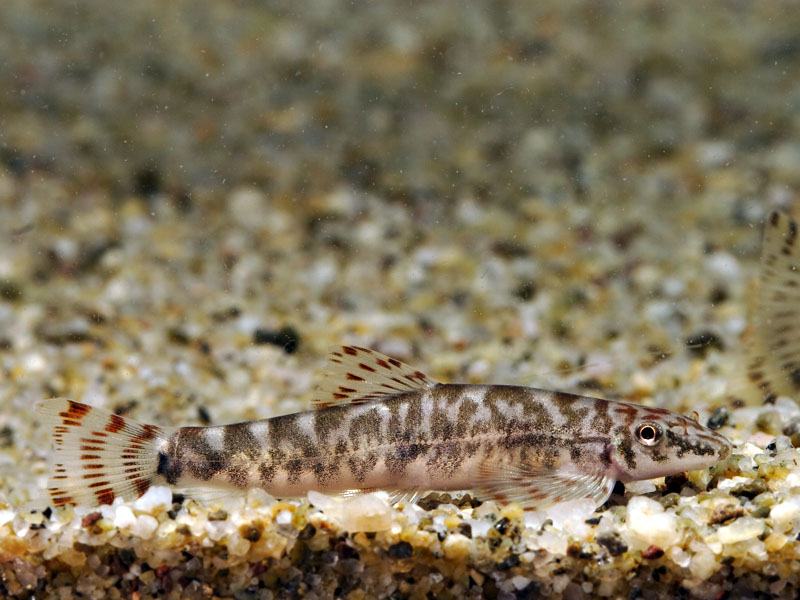
Liniparhomaloptera disparisBroken-band Hillstream Loach
Lin, 1934
Max length80mm SL3.1in SLTank80 × 30cm31 × 12inTemp20–24°C68–75°FpH6.5–8.0L. disparis is sometimes available as bycatch among shipments of other species such as Rhinogobius duospilus but also appears on trade lists under the fictitious scientific name 'Homaloptera hoffmani'. It can be told apart from similar-looking members of the genus Formosania by its noticeably shorter barbels and from Vanmanenia spp. by the fact that the rostral fold is not lobed and the mouth is relatively small (25% head width. In addition the lower lip in Liniparhomaloptera is not divided and has a flat, papillated edge.
Mchenga flavimanus
authority not recorded
Max length120mm SL5in SLTank120 × 45cm48 × 18inTemp25–29°C77–84°FpH7.5–8.5The genus Mchenga was erected in 2006 by Stauffer and Konings and currently numbers half a dozen species, all of which are previous members of Copadichromis. The reclassification was based on various morphological and behavioural traits, including habitat preference and breeding strategy. Together with Copadichromis, Mchenga spp. form an exclusive group of Malawian cichlids commonly referred to as "Utaka" (prounounced "ooh-taw-kuh"). They're specialised to a pelagic l...
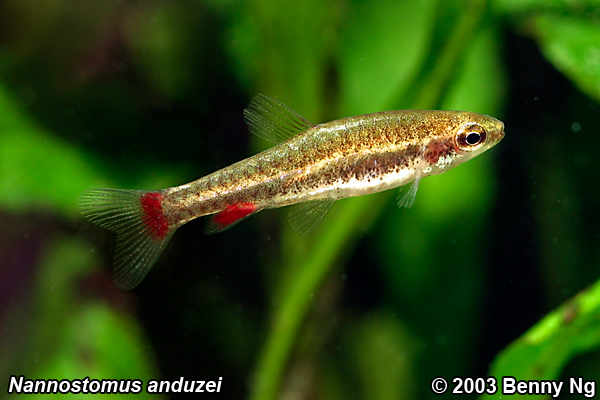
Nannostomus anduzei
Fernandez & Weitzman, 1987
Max length16mm SL0.6in SLTank45 × 30cm18 × 12inTemp22–28°C72–82°FpH5.0–7.0This is the smallest member of the genus and rarely traded in numbers, though it's a relatively common contaminant among shipments of wild fishes from Manaus. Unlike other Nannostomus spp. it does not exhibit a specific colour pattern of spots or bars at night-time, rather displaying an overall paleness. The family Lebiasinidae is included in the order Characiformes and sometimes split into the nominal subfamilies Lebiasininae a...
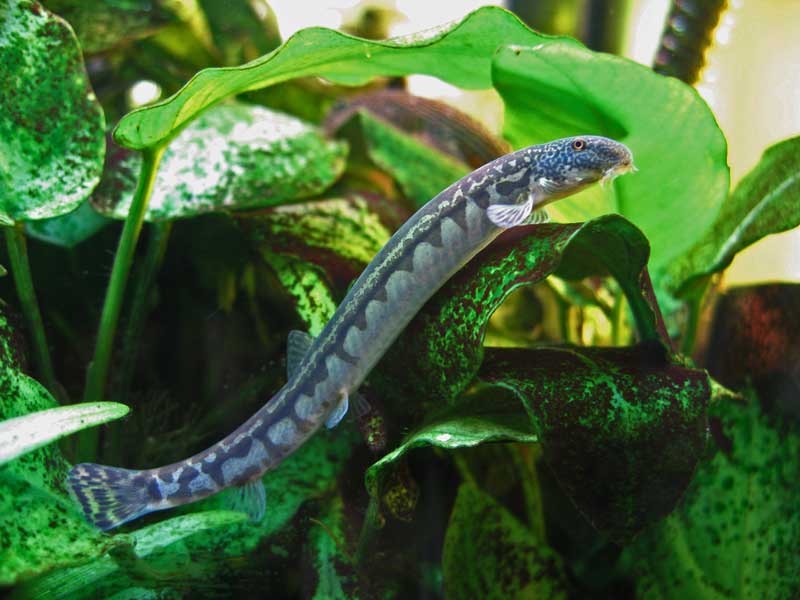
Niwaëlla delicataAjime Loach
Niwa, 1937
Max length110mm SL4in SLTank90 × 30cm36 × 12inTemp20–24°C68–75°FpH6.5–7.5During winter months N. delicata retreats to streams or underflows where it remains dormant between October and April (Kano, 2000) before emerging to spawn. Other species living alongside it in nature include Rhinogobius flumineus, Cottus pollux and Phoxinus spp. Niwaëlla is closely related to Cobitis and N. delicata, also the type species, was described as C. delicata (Niwa, 1937). The combination of characters used to tell it...
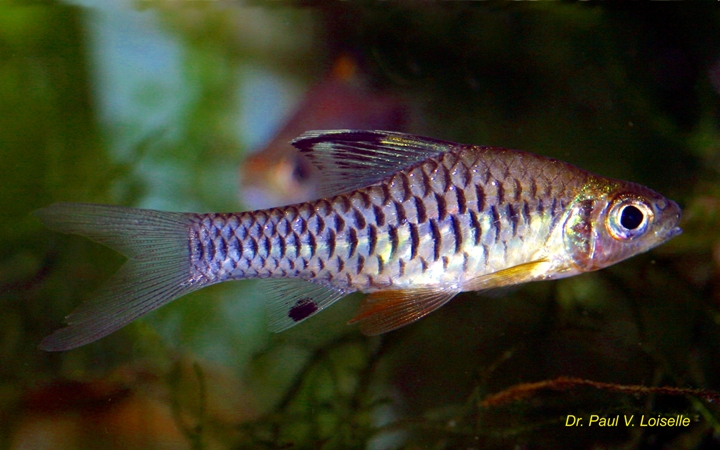
Oreichthys cosuatis
Hamilton, 1822
Max length43mm SL1.7in SLTank60 × 30cm24 × 12inTemp24–28°C75–82°FpH6.5–7.5An assortment of undescribed Oreichthys spp. from India, Myanmar and Thailand are currently traded as O. cosuatis. It can be distinguished from other described members of the genus by lacking a black blotch on the caudal peduncle, plus the following combination of characters: 2-3 perforated scales in lateral line; ½6½ between pelvic-fin origin and dorsal midline; presence of dark stripe in centre of anal-fin, forming a triangular blotch in adult individuals; dorsal-fin with whitish tip and broad, black, subdistal margin in the upper portion of the fin; 11-13 rows...
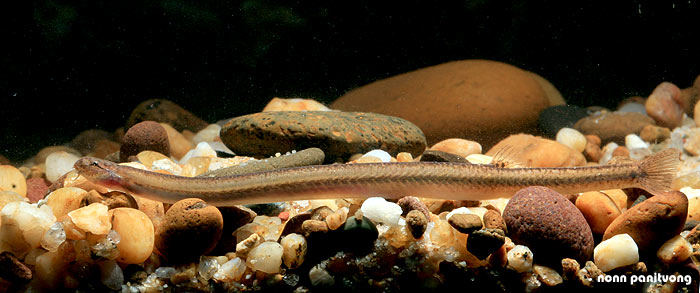
Pangio anguillaris
Vaillant, 1902
Max length120mm SL5in SLTank60 × 30cm24 × 12inTemp22–29°C72–84°FpH6.0–7.5One of a handful of Pangio spp. traded under the generic name 'eel loach'. Wild populations tend to differ in colour pattern to some extent, with some exhibiting a more intense lateral stripe while others display an irregular pattern of fine dark spots on the body, for example.
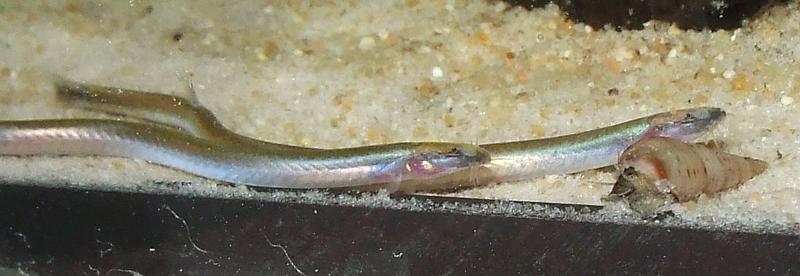
Pangio doriae
Perugia, 1892
Max length90mm SL3.5in SLTank60 × 30cm24 × 12inTemp21–26°C70–79°FpH3.5–7.0One of a handful of Pangio spp. traded under the generic name 'eel loach', though it's most commonly available as bycatch among shipments of other fishes. Some authors have suggested it may be synonymous with P. anguillaris bu...
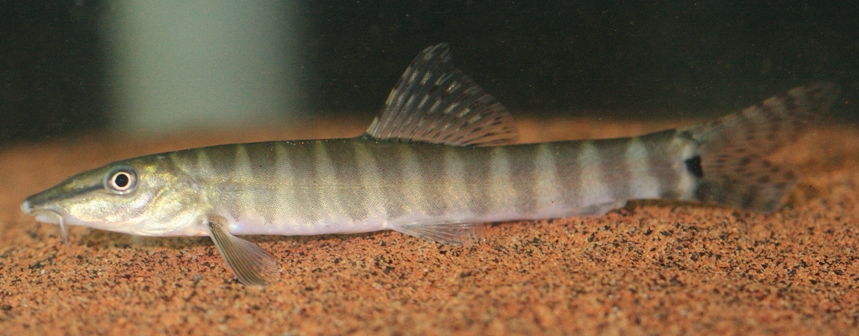
Parabotia fasciata
Dabry de Thiersant, 1872
Max length150mm SL6in SLTank120 × 45cm48 × 18inTemp20–24°C68–75°FpH6.0–7.5P. fasciata is rarely seen in the trade and is typically available only as bycatch among shipments of Sinibotia spp., particularly S. robusta. According to current classification numerous species from several genera are considered synonymous with it.