Results for “várzea”
Type a name: scientific, common, or one a species used to go by. Or narrow the catalogue with the filters.
Filters
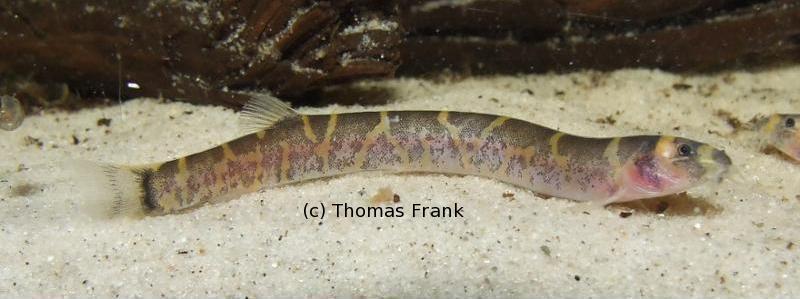
Pangio sp. 'PAN03'
authority not recorded
Max length80mm SL3.1in SLTank60 × 30cm24 × 12inTemp21–26°C70–79°FpH3.5–7.0Pangio species are often generically referred to as 'kuhli' or 'coolie' loaches in the aquarium hobby, the latter a variation of the former which was itself derived from the surname of German naturalist Heinrich Kuhl (1797-1821). Ichthyo...
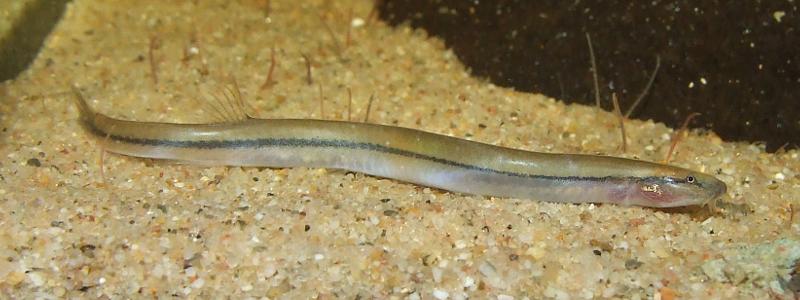
Pangio sp. 'PAN05'
authority not recorded
Max length80mm SL3.1in SLTank60 × 30cm24 × 12inTemp21–26°C70–79°FpH6.0–7.5Unclear but usually imported for the aquarium trade alongside P. anguillaris which according to current knowledge has an irregular distribution including Laos, Cambodia, Vietnam, Thailand, Peninsular Malaysia, and the Greater Sunda Islands of Sumatra and Borneo.
Pantodon buchholziAfrican Butterfly Fish
authority not recorded
Max length120mm SL5in SLTank90 × 30cm36 × 12inTemp23–30°C73–86°FpH6.0–7.5The common name of this surface-dwelling species is derived from it's appearance when viewed from above, the large pectoral fins giving it the appearance of a butterfly. In reality, these fins serve a dual purpose. They help to camouflage the fish, making it look like a dead leaf floating on the surface, and along with the caudal fin, power the incredible jumps that it is capable of making. The fish jumps from the water to catch flying insects or to escape potential predators and it can mak...
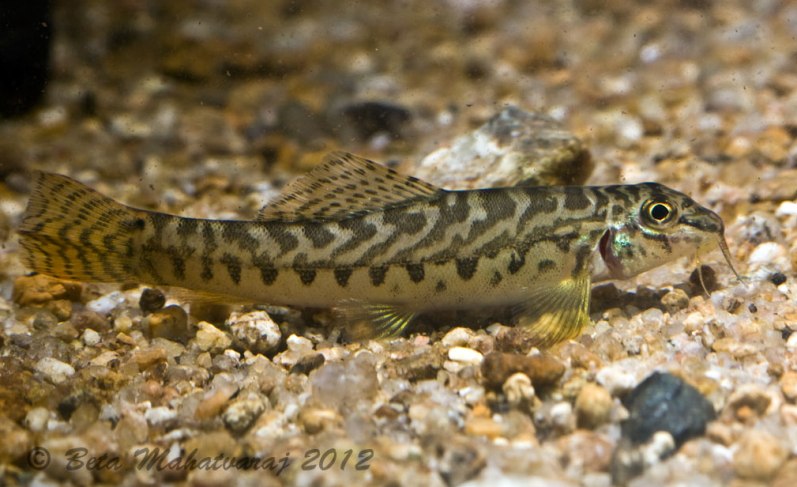
Paracanthocobitis botiaZipper Loach
Hamilton, 1822
Max length152mm SL6in SLTank75 × 30cm30 × 12inTemp21–26°C70–79°FpH6.0–7.5Traded under various names including 'mottled', 'eyepot', 'sand' and 'striped' loach. It's perhaps one of the better choices for those new to keeping nemacheilids being relatively hardy, peaceful and exhibiting some quirky behavioural traits. The characteristic ocellus, a dark marking at the top of the caudal peduncle that resembles an eye, is thought to have some function in predator distraction and is normally more intense in younger specimens.
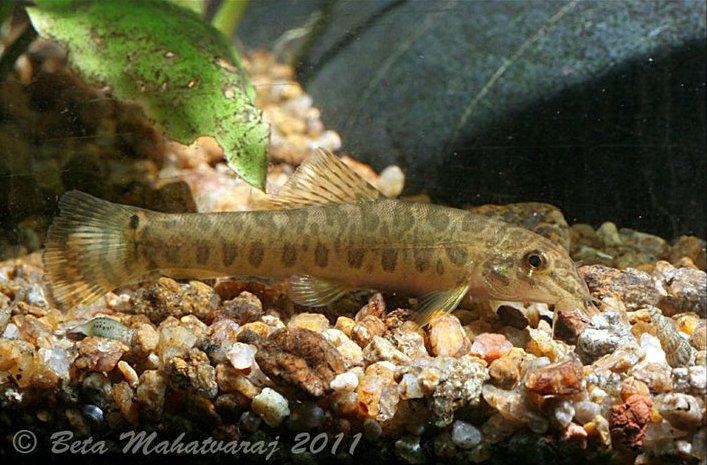
Paracanthocobitis mooreh
Sykes, 1839
Max length75mm SL3.0in SLTank75 × 30cm30 × 12inTemp20–26°C68–79°FpH6.0–7.5This species is still considered a member of the genus Nemacheilus by some sources, but it was reclassified and placed in Acanthocobitis by Grant (2008). Acanthocobitis sinuata, generally considered a junior synonym of A. mooreh (Kottelat, 2012b), also appears distinct and differs in geographical distribution plus number of dorsal-fin rays (2-3/9-10 in A. mooreh vs. 2/8-9 in A. sinuata) and some aspects of colour pattern.
Parachanna obscuraAfrican snakehead
authority not recorded
Max length406mm SL16in SLTank38 × 38cm15 × 15inTemp26–30°C79–86°FpH6.0–7.5This fish is spawned very infrequently in captivity but some reports have been made. Fish are sexually mature from 4" and a pair should be obtained by growing on a group of youngsters and allowing a pair to form naturally. Once this occurs the other fish will most likely be eliminated so it is wise to be vigilant in order to avoid uneccessary losses. Apparently courtship occurs in an open section of water surrounded by floating plant material. The courtship consists of the fish circling ...
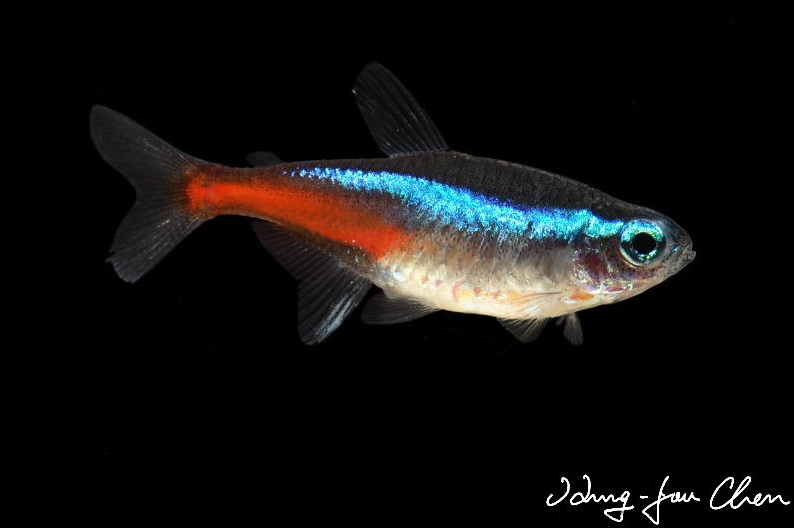
Paracheirodon innesiNeon Tetra
Myers, 1936
Max length30mm SL1.2in SLTank60 × 30cm24 × 12inTemp21–25°C70–77°FpH4.0–7.5One of the most popular and instantly recognisable fishes in the aquarium hobby, this species has been selectively-bred to produce a number of additional strains including albino, 'golden' (leucistic), short-bodied, long-finned and 'diamond' (in which the dorsal surface is covered in reflective scales). Unfortunately years of commercial breeding have somewhat affected the genetic vigour of the ornamental strain meaning morphological defects an...
Paracyprichromis brieni
authority not recorded
Max length110mm SL4in SLTank120 × 45cm48 × 18inTemp24–27°C75–81°FpH7.5–9.0Although P. brieni is better kept in a group, it tends to form much looser shoals than the similar Cyprichromis species. Male fish form territories under overhangs if they are available and can often be seen hanging upside down under these or vertically against rock walls. In the aquarium if it is not provided with such retreats, or if it is housed under bright lighting or with boisterous fish it will rapidly lose its best colouration. It is quite easily confused with P. nigripinnis, it'...
Paracyprichromis nigripinnis
authority not recorded
Max length110mm SL4in SLTank120 × 45cm48 × 18inTemp24–27°C75–81°FpH7.5–9.0Although P. nigripinnis is better kept in a group, it tends to form much looser shoals than the similar Cyprichromis species. Male fish form territories under overhangs if they are available and can often be seen hanging upside down under these or vertically against rock walls. In the aquarium, if it is not provided with such retreats, or if it is housed under bright lighting or with boisterous fish, it will rapidly lose it's best colouration. It is quite easily confused with P. brieni,...
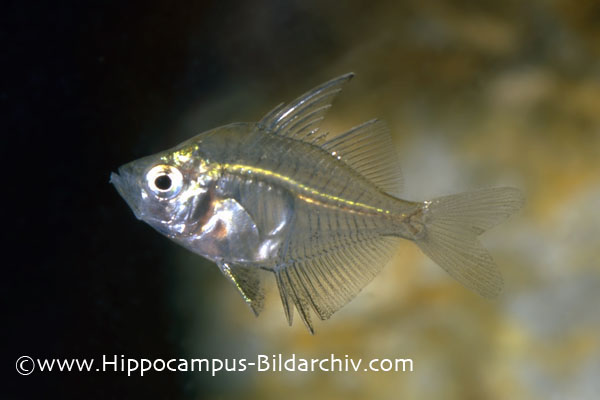
Parambassis rangaIndian Glass Fish
authority not recorded
Max length80mm SL3.1in SLTank80 × 30cm31 × 12inTemp20–30°C68–86°FpH6.5–8.0Previously known as Chanda ranga, the common name of this species arose because it's translucent skin means that the bone structure and internal organs are clearly visible. For many years it has been artificially injected with luminous dyes on fish farms in Asia and then sold as "Painted" glass fish or "Disco fish". This abhorrent act involves injecting the fish repeatedly with a large needle and most fish do not survive more than a few months afterwards. Whilst painted ...
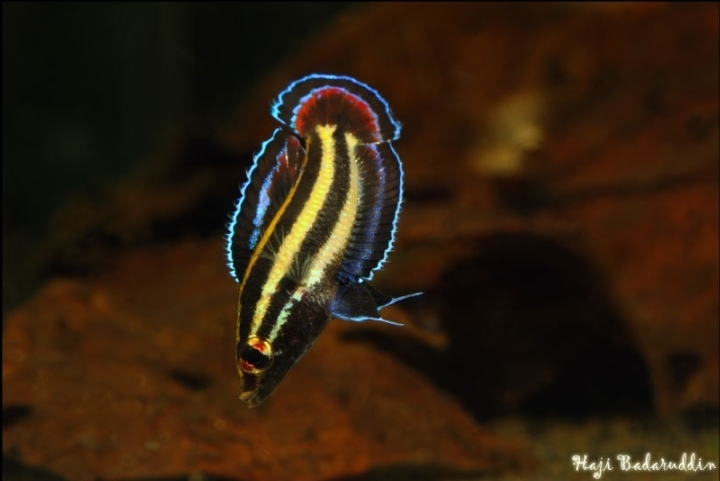
Parosphromenus alfredi
Kottelat & Ng, 2005
Max length26mm SL1.0in SLTank40 × 20cm16 × 8inTemp22–28°C72–82°FpH3.0–6.5Type locality is 'Kota Tinggi, Mawai-Desaru road, Johor, Peninsula Malaysia' and this species is endemic to a small portion of eastern Johor state, Peninsular Malaysia around the towns of Kota Tinggi, Mawai and Desaru. A great deal of its original habitat has been lost via deforestation and other human alterations and it's considered in grave danger of extinction.
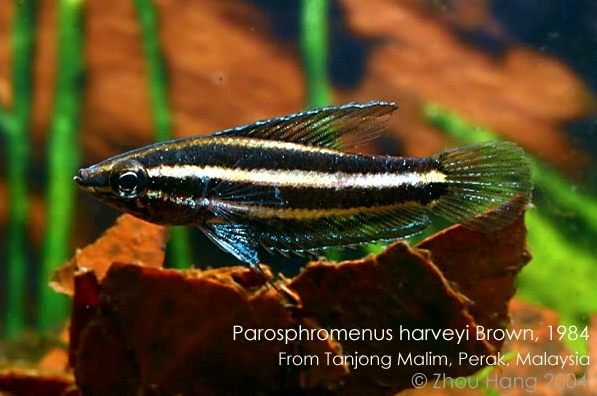
Parosphromenus harveyi
Brown, 1987
Max length35mm SL1.4in SLTank40 × 20cm16 × 8inTemp22–28°C72–82°FpH3.0–6.5Parosphromenus spp. have been grouped arbitrarily based on courtship behaviour in males which adopt a 'head-down', 'head-up', or 'horizontal' position depending on species. P. harveyi belongs to the former, most abundant, assemblage in which the male assumes a near-vertical position with the head lowermost and fins splayed during nuptial displays.
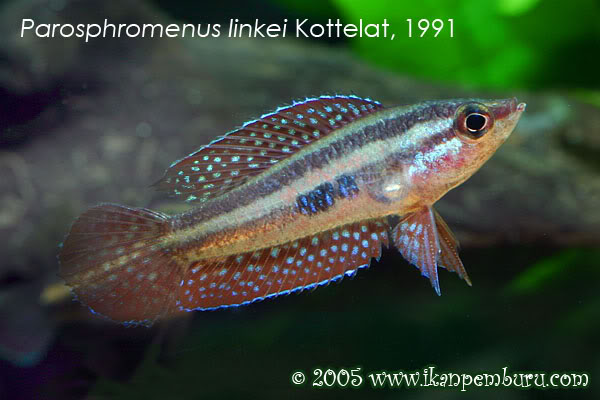
Parosphromenus linkei
Kottelat, 1991
Max length35mm SL1.4in SLTank40 × 20cm16 × 8inTemp22–28°C72–82°FpH3.0–6.5This species is said to be slightly easier to maintain than the majority of congeners and is therefore a recommended choice for those new to maintaining Parosphromenus spp. in the aquarium. It's occasionally available on a commercial basis and we've seen it traded as 'moonspot licorice gourami' in the past. There exist at least three colour forms on...
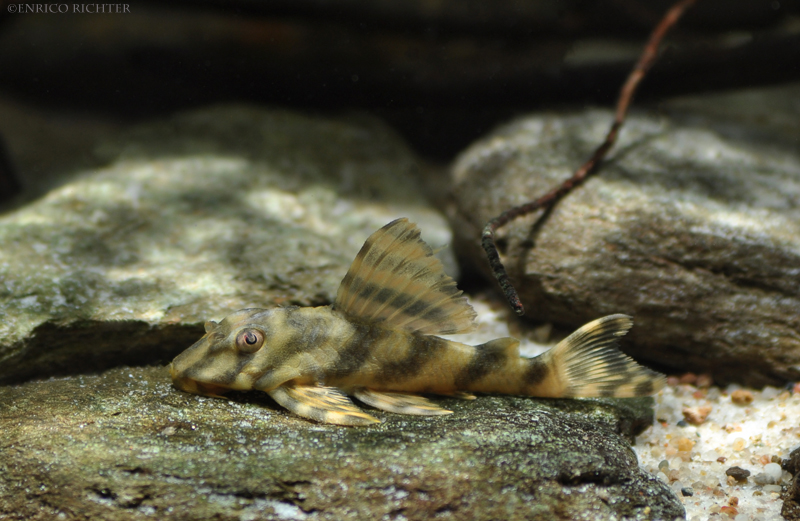
Peckoltia sp.L243
authority not recorded
Max length120mm SL5in SLTank120 × 30cm48 × 12inTemp25–29°C77–84°FpH5.5–7.5Known only from parts of the Río Orinoco drainage in Amazonas state, southern Venezuela. Sometimes confused with Peckoltia lineola (Armbruster, 2008) alongside which it's often exported for the aquarium trade.
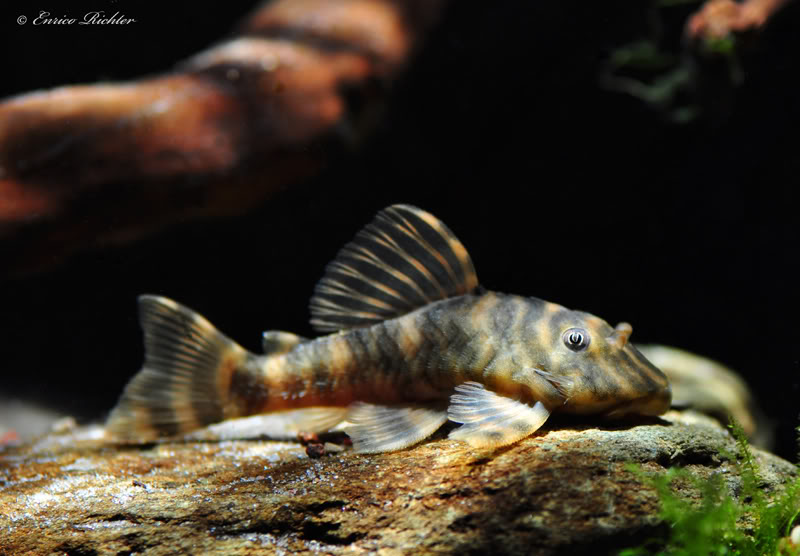
Peckoltia sp.L038
authority not recorded
Max length120mm SL5in SLTank120 × 30cm48 × 12inTemp23–29°C73–84°FpH6.0–7.5Wild specimens are probably omnivorous foragers but with a preference for aquatic invertebrates and suchlike. In the aquarium it does best when offered a varied diet comprising sinking dried foods, frozen Daphnia, mosquito larvae, chironomid larvae (bloodworm), and prawn/shrimp, for, example, plus some fresh fruit, parboiled potato, etc.
Pelvicachromis pulcherKribensis
authority not recorded
Max length100mm SL3.9in SLTanknot recordedTemp24–27°C75–81°FpH5.0–7.5One of the most common and popular Cichlid species in the hobby, the vast majority of Kribensis (often simply called "Krib" by many fishkeepers) seen in the hobby today are captive bred and are far more adaptable in terms of water chemistry than the wild fish. They also tend to be less aggressive when breeding. An aquarium sport albino form is available and is fairly popular. This fish is one of the best choices for newcomers to both Cichlids and fish breeding, being of a manageable...
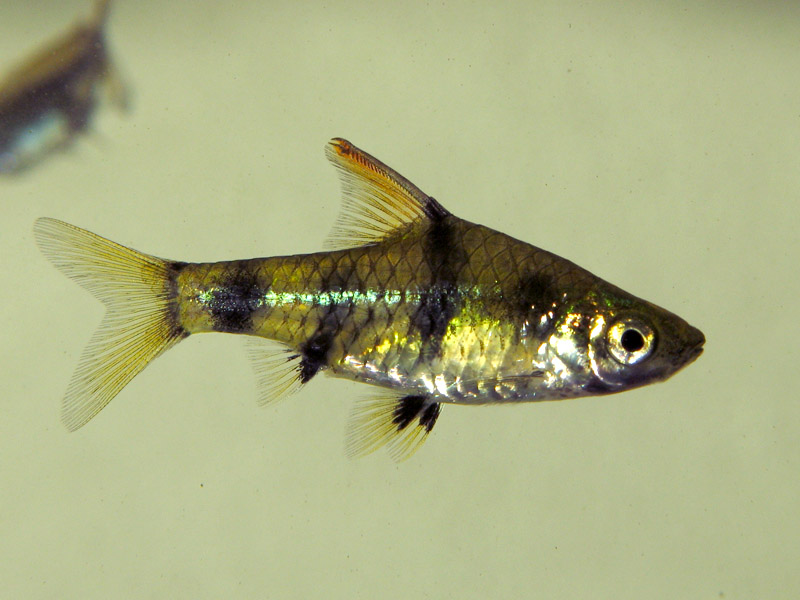
Pethia canius
Hamilton, 1822
Max length30mm SL1.2in SLTank60 × 30cm24 × 12inTemp18–24°C64–75°FpH6.0–7.0This species' identity was settled and a neotype designated by Knight (2013), with its validity having been discussed since the late 19th century. P. canius and the closely-related P. gelius were both described by Hamilton (1822) and share the type locality of 'northeastern Bengal'. Although Hamilton did not provide drawings M'Clelland (1839) included colour illustrations depicting two quite different-looking species.
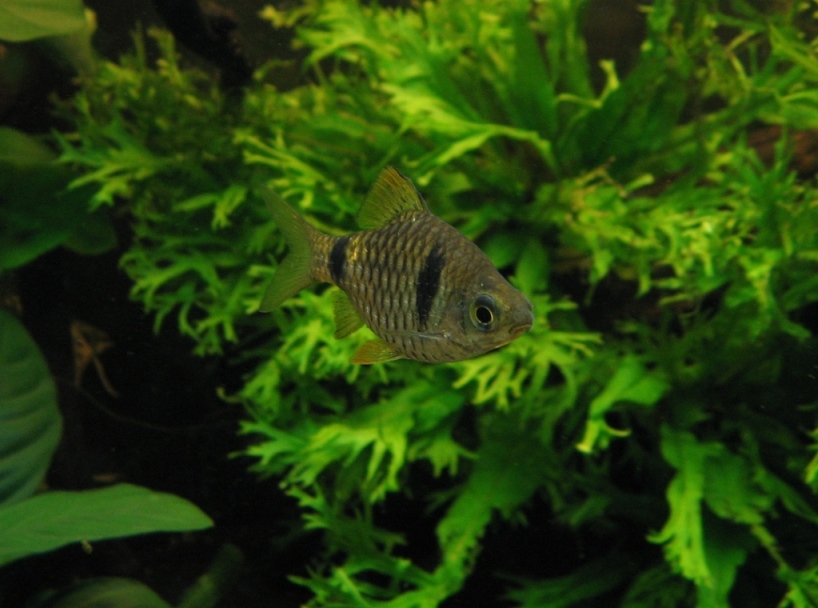
Pethia cumingiiCuming's Barb
Günther, 1868
Max length41mm SL1.6in SLTank60 × 30cm24 × 12inTemp20–27°C68–81°FpH5.5–7.0For many years this species was considered to occur in two colour forms with yellow or red dorsal, anal, and pelvic fins, respectively, but the red-finned variant has now been elevated to full species status as P. reval (Meegaskumbura et al. 2008). The latter is a smaller fish with a maximum SL of 33.6 mm recorded to date. As well as the obvious differences in body size and fin colour P. cumingii can be told apart from P. reval by the following...
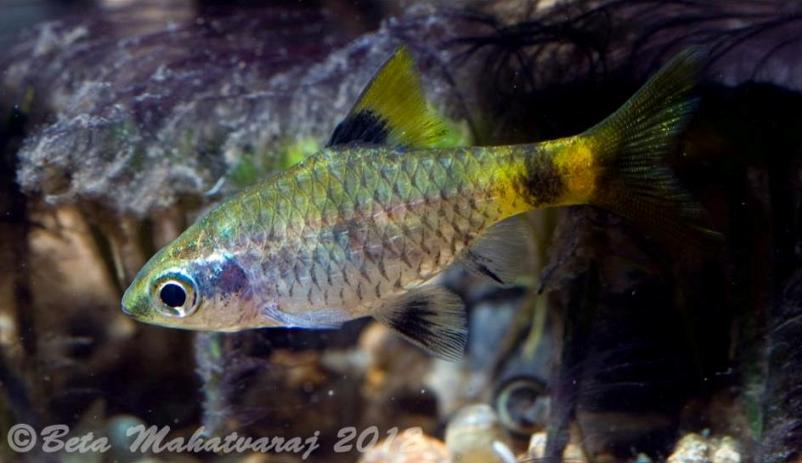
Pethia geliusGolden Dwarf Barb
Hamilton, 1822
Max length40mm SL1.6in SLTank60 × 30cm24 × 12inTemp18–24°C64–75°FpH6.0–7.0This species' identity was settled and a neotype designated by Knight (2013) who also revalidated the congener P. canius (Hamilton, 1822) and described the closely-related P. aurea. These three had previously been considered to represent geographic forms of P. gelius, albeit on a tentative basis, with the validity of P. canius having been discussed since the late 19th century.
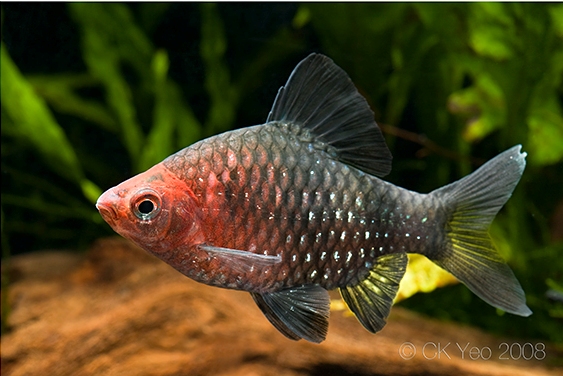
Pethia nigrofasciataBlack Ruby Barb
Günther, 1868
Max length55mm SL2.2in SLTank80 × 30cm31 × 12inTemp20–27°C68–81°FpH5.5–7.5Little sun is able to penetrate the forest floor so aquatic habitats are shaded and water temperature may be relatively cool, while conductivity and hardness are generally low and pH slightly acid. Macrophytes are uncommon though there may be dense, marginal vegetation, sometimes overhanging the full width of the stream, the roots of which may penetrate the banks underwater. Typical substrates are sandy but covered by a layer of leaf litter with fallen twigs and branches.