Results for “species”
Type a name: scientific, common, or one a species used to go by. Or narrow the catalogue with the filters.
Filters
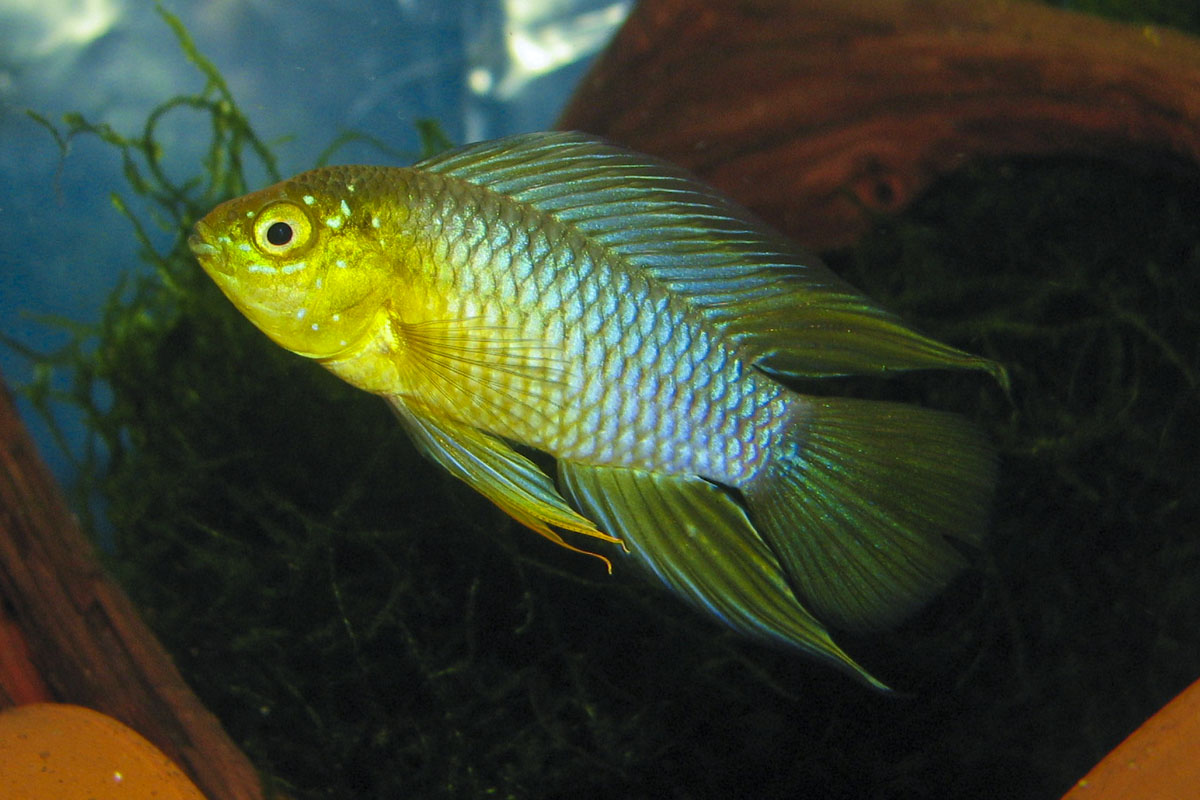
Apistogramma borelliiBorelli's Dwarf Cichlid
Regan, 1906
Max length♂ 65 · ♀ 50mm SL♂ 2.6 · ♀ 2.0in SLTank45 × 30cm18 × 12inTemp20–26°C68–79°FpH5.0–8.0Numerous ornamental forms of this species have been selectively-bred for the aquarium trade. It has also been assigned the 'A' number A234 under the DATZ system with possibly conspecific, related forms similarly numbered A103, A104, and A105 depending on locality.
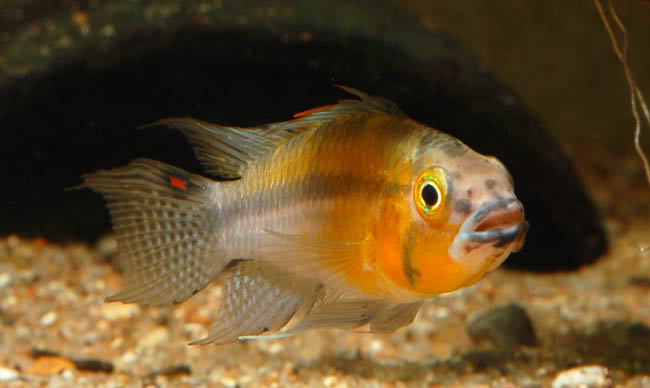
Apistogramma cacatuoidesCockatoo Cichlid
Hoedeman, 1951
Max length♂ 75 · ♀ 50mm SL♂ 3.0 · ♀ 2.0in SLTank60 × 30cm24 × 12inTemp22–29°C72–84°FpH5.0–6.0Numerous ornamental forms of this species have been selectively line-bred for the aquarium trade, vernacular names for which include "sunset", "sunburst", "double red", "triple red", "gold", "white gold", "orange flash" and "albino". It has also been assigned the 'A' number A200 under the DATZ system with possibly conspecific, related forms similarly numbered A201, A202 and A203 depending on locality. Th...
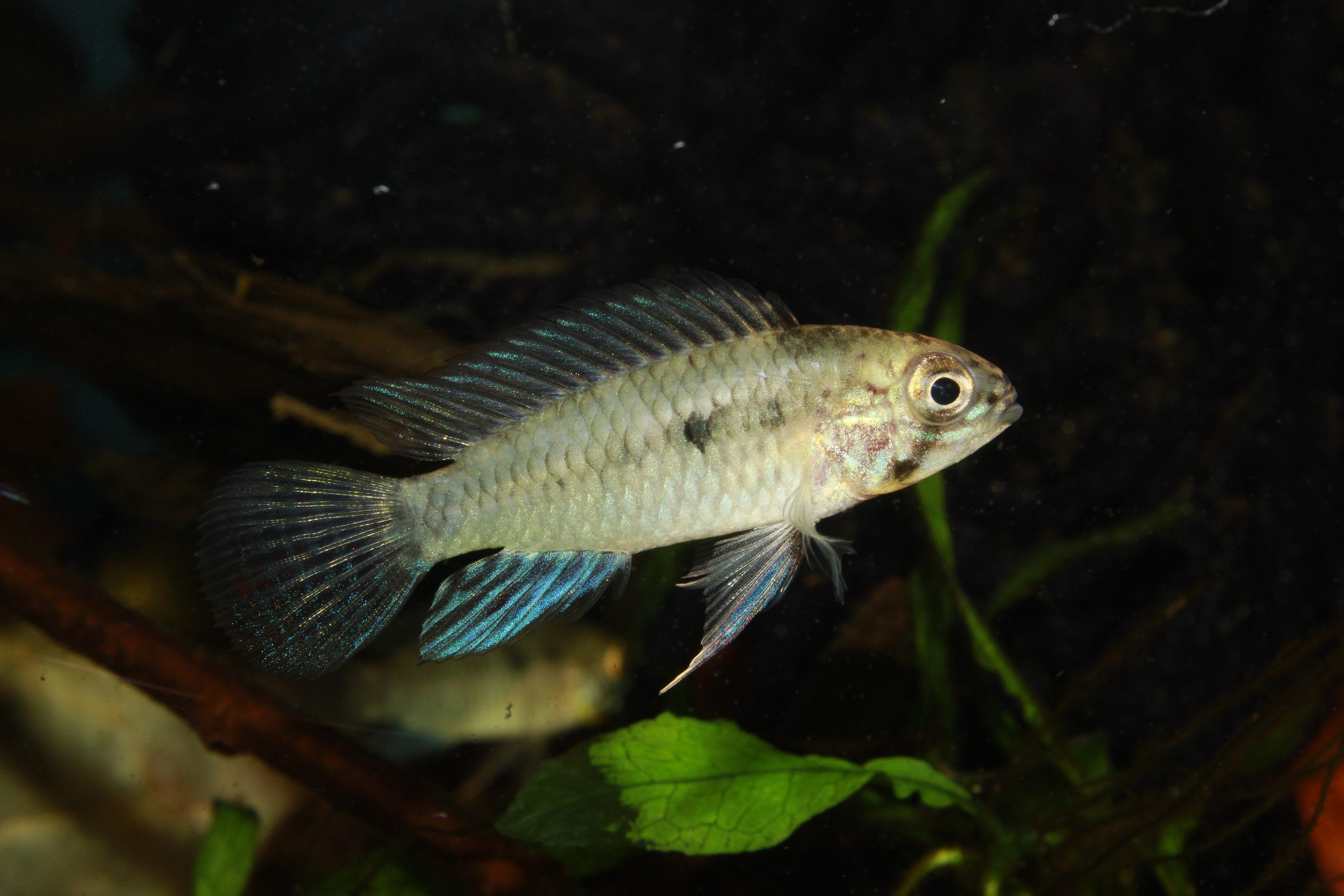
Apistogramma commbraeA93
Regan, 1906
Max length♂ 50 · ♀ 30mm SL♂ 2.0 · ♀ 1.2in SLTank60 × 30cm24 × 12inTemp15–27°C59–81°FpH6.0–7.4Apistogramma commbrae and other members of the commbrae complex can be distinguished from congeners by the conspicuous double caudal peduncle spot. This species may also be polymorphic, with some males exhibiting red and blue markings on the cheeks and a yellow gular region.
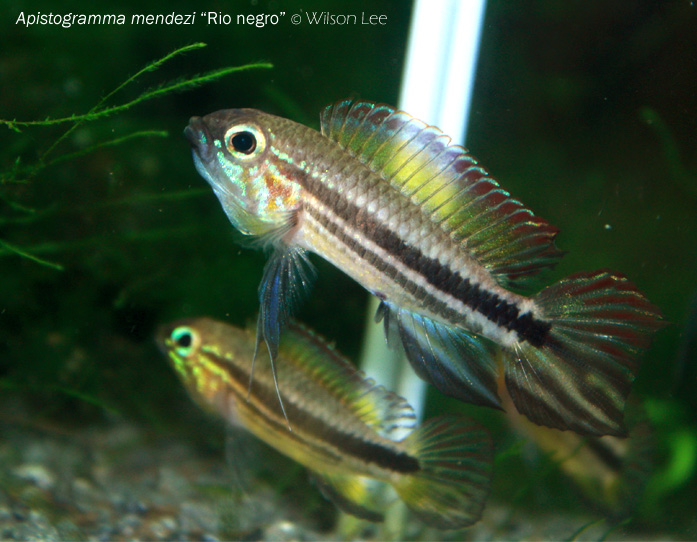
Apistogramma mendeziA220
Römer, 1994
Max lengthnot recordedTank45 × 30cm18 × 12inTemp23–29°C73–84°FpH4.0–6.0This species is assigned the codes A220, A221 and A222 under the DATZ 'A' number system with these referring to similar-looking, possibly conspecific, populations. These differ in some aspects of colour pattern, particularly the orientation of the caudal-fin markings which may be horizontal, vertical, or somewhere inbetween. One population displays an orange colouration on the belly and is som...
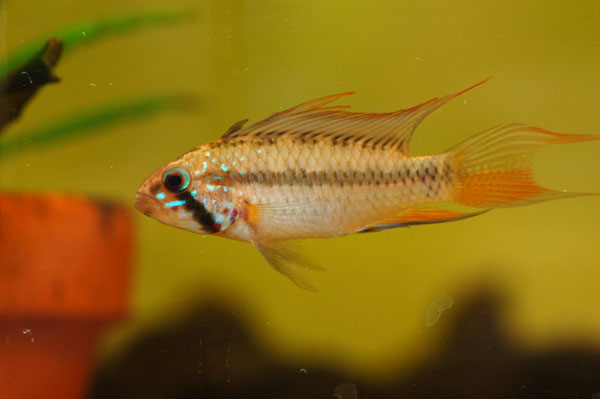
Apistogramma sp. 'breitbinden'A164
authority not recorded
Max length♂ 70 · ♀ 50mm SL♂ 2.8 · ♀ 2.0in SLTank60 × 30cm24 × 12inTemp22–29°C72–84°FpH4.0–6.5The German term 'breitbinden' translates literally as "broad-banded" and refers to the uniformly broad suborbital stripe seen in males of this 'species' which remains undescribed despite being known in the aquarium hobby for several decades. It's often imported as bycatch among shipments of wild-collected A. iniridae. Some of the populations have also been assigned th...
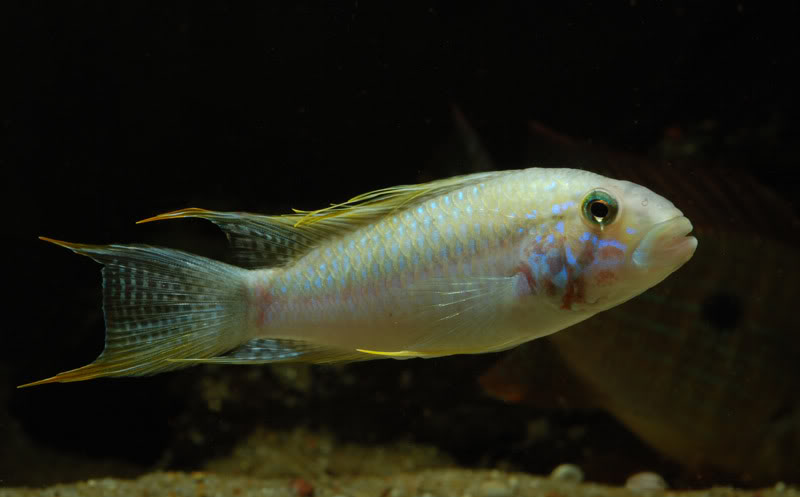
Apistogramma sp. 'Kelleri'
authority not recorded
Max length♂ 80 · ♀ 65mm SL♂ 3.1 · ♀ 2.6in SLTank60 × 30cm24 × 12inTemp22–29°C72–84°FpH4.0–6.0This undescribed species was first collected and subsequently appeared in the aquarium hobby during 2008. It was exported again in late 2009 and early 2010 under the names A. sp. 'Jutai' and A. sp. 'diamond face', and said to have been collected in the Río Jutai, Amazonas state, Brazil. The Jutai is a south bank tributary of the Solimões but lies several hundred kilometres downstream of Leticia so this information, from a purportedly trustworthy source, initiall...
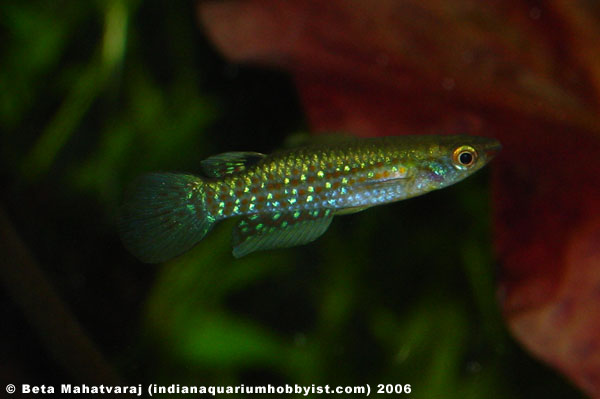
Aplocheilus blockiiGreen Panchax
Arnold, 1911
Max length45mm SL1.8in SLTank45 × 30cm18 × 12inTemp20–28°C68–82°FpH6.0–8.5This species is euryhaline and mostly inhabits lowland, often coastal, habitats containing still or slow-moving brackish or freshwater. It displays a preference for habitats with surface vegetation or overhanging cover and is commonly found in mangrove swamps and rice paddies.
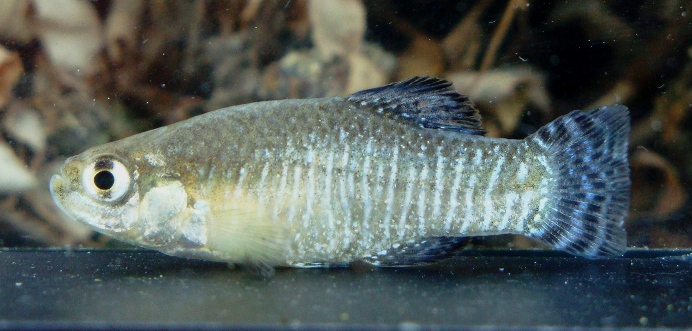
Apricaphanius baeticusBaetican Toothcarp
Doadrio, Carmona & Fernández-Delgado, 2002
Max length50mm SL2.0in SLTank120 × 30cm48 × 12inTemp2–30°C36–86°FpH7.0–9.0Prior to its description this species was considered a geographic variant of A. iberus but the 2002 paper revealed the pair to be genetically quite distinct and also highlighted some morphological differences. It is distinguished from A. iberus by possessing 8-9 (usually 8 ) branched dorsal-fin rays (vs. 8-9, sometimes 10), 9-11 branched anal-fin rays (vs. 8-9), a deeper, more elongate body shape, noticeably shorter snout, relatively thick (vs. thin) vertical bars in males and a flank patterning consisting of a few la...
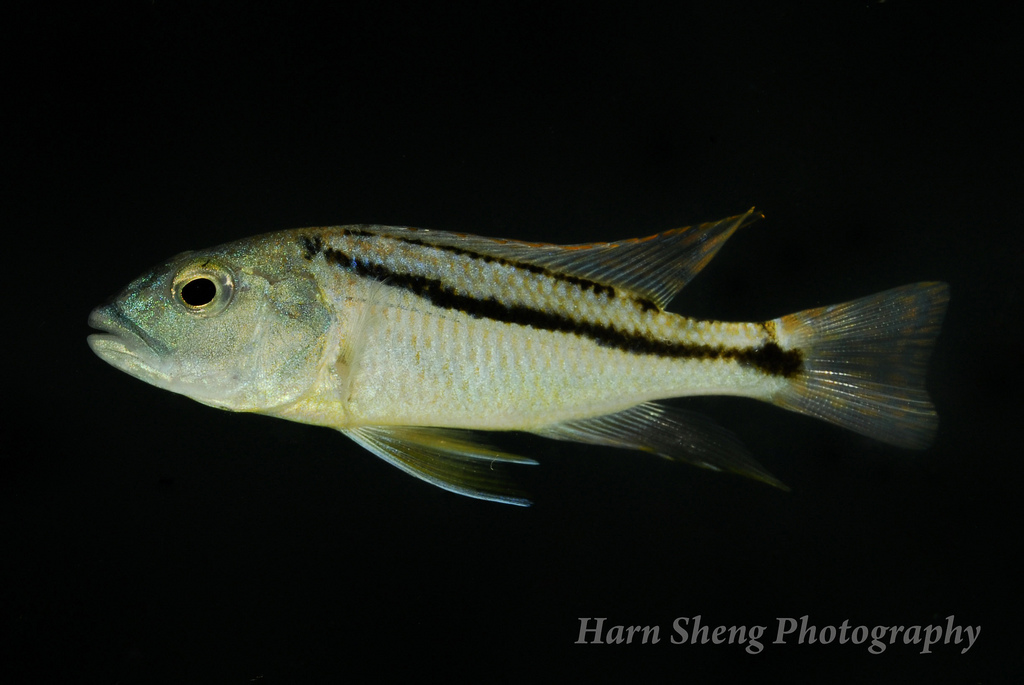
Aristochromis christyi
Trewavas, 1935
Max length300mm SL12in SLTank180 × 60cm72 × 24inTemp24–26°C75–79°FpH7.5–9.0This is currently the only described member ofthe genus and despite having a wide distribution, it's not particularly common in Lake Malawi. Correspondingly it's not seen all that often in the hobby either. It's beak-like mouthparts are specially adapted to allow it to hunt smaller fish among crevices between rocks. It can also extend the mouth in all four directions at once, allowing it to swallow prey up to around 4" long! As well as hunting amongst rocks, Aristoch...
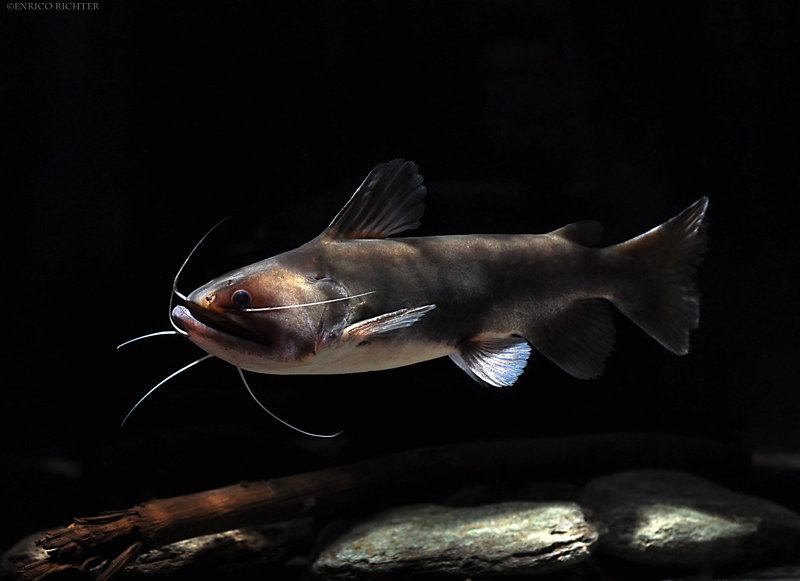
Asterophysus batrachusGulper Catfish
Kner, 1858
Max length250mm SL10in SLTank150 × 60cm60 × 24inTemp22–28°C72–82°FpH5.0–7.0An obligate predator by nature, but captive specimens readily accept strips of white fish, whole shrimp, earthworms, and similar once they are recognised as food. Adult individuals are unlikely to require feeding on a daily basis with 1-2 meals per week sufficient.
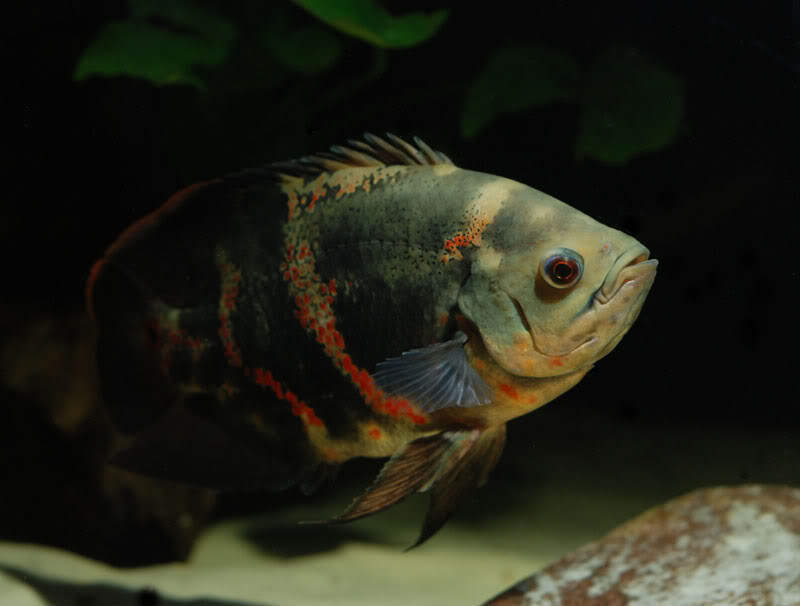
Astronotus ocellatusOscar
Agassiz, 1831
Max length350mm SL14in SLTank150 × 60cm60 × 24inTemp20–28°C68–82°FpH6.0–7.5This species is also referred to as 'velvet cichlid', 'red oscar', 'tiger oscar', or 'marble cichlid'. It is a popular aquarium fish although its adult size and typical life-span of 10-20 years must be taken into account before purchase. Numerous ornamental strains are now available, and while care is more-or-less identical for all of them a degree of additional care must be taken with the 'long-finned' variety which is a little less competitive than other forms.
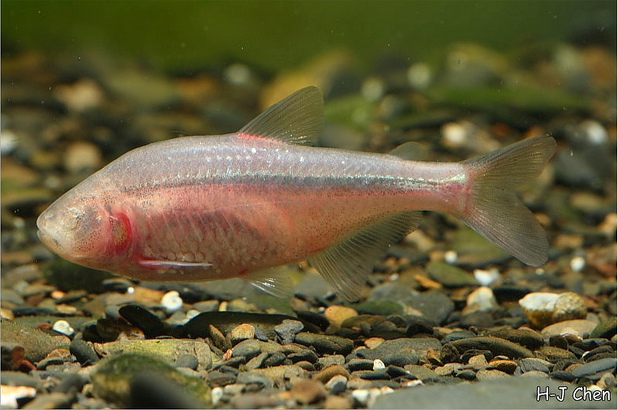
Astyanax mexicanusBlind Cave Tetra
De Filippi, 1853
Max length95mm SL3.7in SLTank80 × 30cm31 × 12inTemp20–25°C68–77°FpH6.5–8.0While the surface-dwelling form of this species is fairly unremarkable and rarely-seen in the hobby, the blind form is very popular indeed. The two may have diverged as recently as within the last 10,000 years, with the blind form losing its eyes and much of its pigment. This probably happened because the fish needed better development in other sensory areas. Losing unnecessary and energy-consuming aspects of its physiology allowed it to devote more energy to developments such as increased numbers of taste receptors on the head.
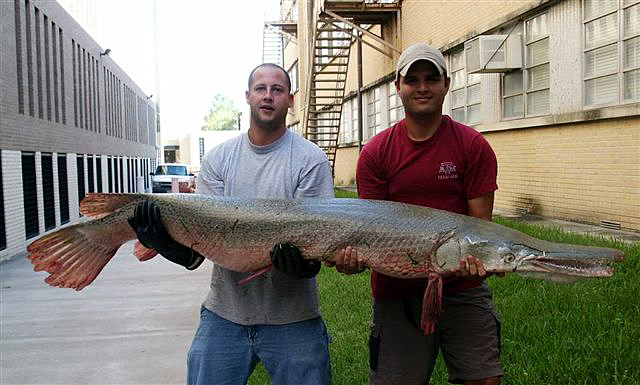
Atractosteus spatulaAlligator Gar
Lacepède, 1803
Max length3050mm SL120in SLTanknot recordedTemp11–23°C52–73°FpH6.0–8.0This is one of the largest freshwater fish species in the world, and clearly shouldn't be considered a home aquarium subject at all given its eventual size and the fact it can live for well in excess of 50 years. We include it here only because some public aquaria are able to maintain it long-term. Unfortunately, juveniles are seen for sale quite regularly in the aquari...
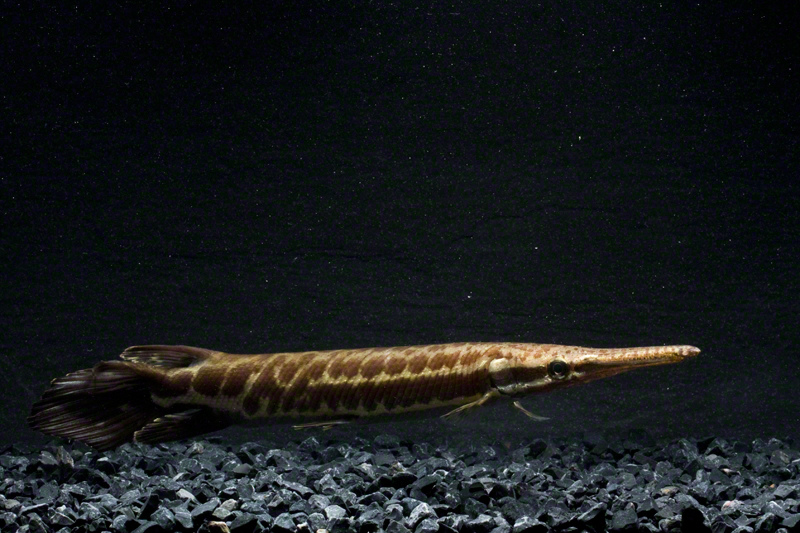
Atractosteus tropicusTropical Gar
Gill, 1863
Max length1250mm SL49in SLTanknot recordedTemp22–28°C72–82°FpH6.0–8.5Found in both Caribbean and Pacific-slope drainage basins in Central America, from southern Mexico through Belize, Guatemala, Honduras and Nicaragua, and into Costa Rica. This species clearly shouldn't be considered a home aquarium subject at all given its eventual size and the fact it can live for several decades.
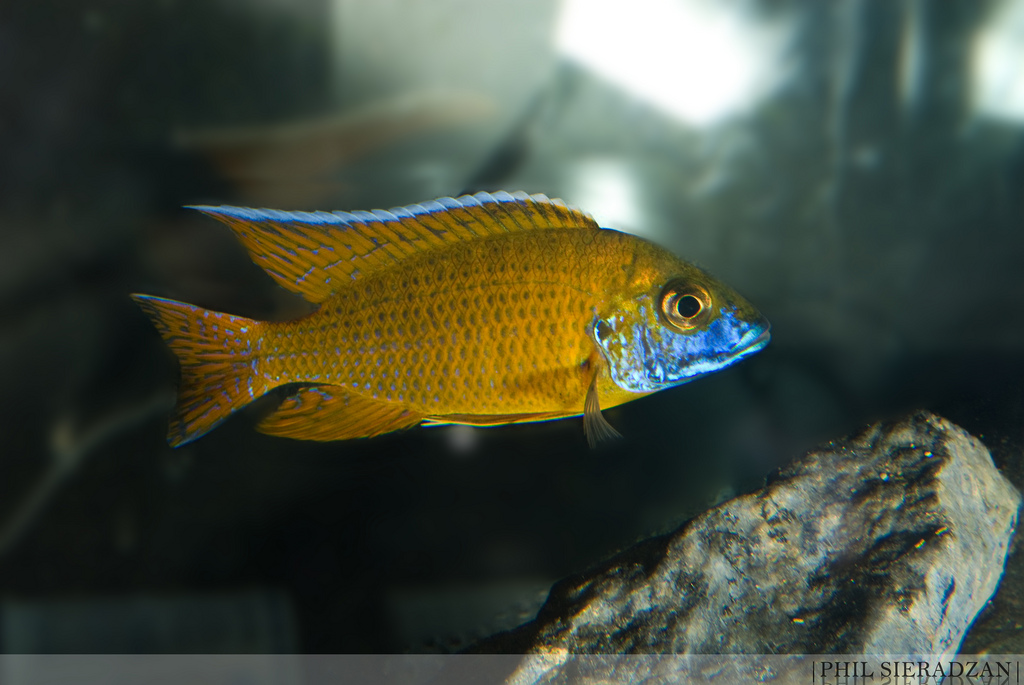
Aulonocara baenschiNew Yellow Regal Peacock
Meyer & Riehl, 1985
Max length♂ 120 · ♀ 90mm SL♂ 5 · ♀ 3.5in SLTank120 × 45cm48 × 18inTemp25–29°C77–84°FpH7.5–9.0This species may also be sold variously as 'yellow regal cichlid', 'Baensch's peacock', 'sunshine peacock' and 'Nkhomo-Benga peacock'. The easiest way to distinguish it from similar-looking congeners is to look at the profile of the snout, which is steeper and more curved than that of its congeners. Aulonocara spp. are benthophagous by nature employing a method of feeding whereby mouthfuls of substrate are taken and sifted for edible items with the remaining material expelled via the gills and mouth. They're equally-skilled at hunting as grazing, tending to hover above the substrate until tiny movements are detected, and possess enlarged sensory pores on the head which assist in this technique.
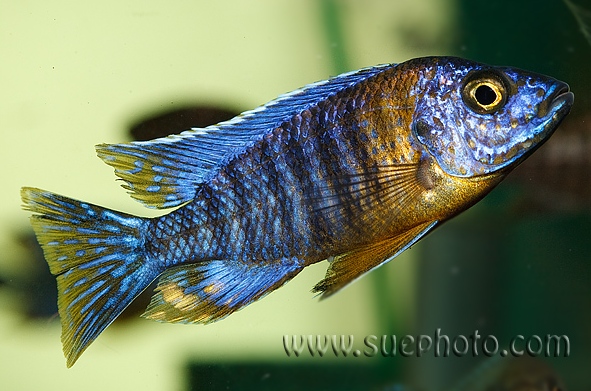
Aulonocara hansbaenschiRed Shoulder Peacock
Meyer, Riehl & Zetzsche, 1987
Max length120mm SL5in SLTank90 × 45cm36 × 18inTemp24–29°C75–84°FpH7.4–9.0Some eminent authors believe this species to be a geographical variant of the highly variable congener A. stuartgranti rather than a distinct taxon but since most popular resources continue to view it as valid we also list it here. At Masinje it has been observed to show a distinct preference for rocky caves and crevices in relatively shallow (3-6 metres deep) water. This is in contrast to most other members of the genus, which tend to forage over sand, but similar to behaviour seen in A. jacobfreibergi.
Aulonocara maylandiSulphurhead Peacock
Trewavas, 1984
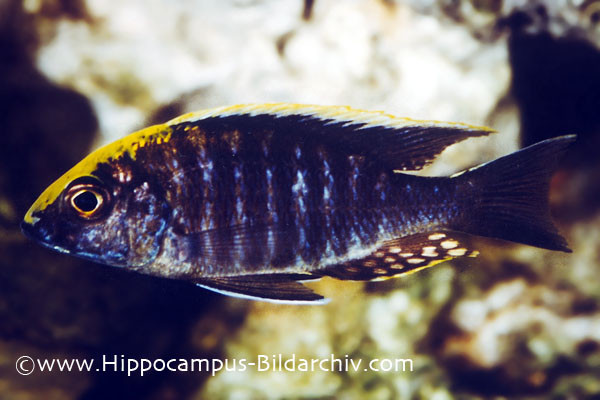
Max length100mm SL3.9in SLTank120 × 30cm48 × 12inTemp25–29°C77–84°FpH7.5–9.0This species exists in two distinctive phenotypes, with male individuals from West reef and Eccles reef possessing a bright yellow stripe of colour running from the tip of the snout over the anterior portion of the dorsal surface and along the distal margin of the dorsal fin. This form is commonly referred to as 'sulphurhead' or 'sulfurhead' in the aquarium hobby. At Kande Island males exhibit a similar overall colour patterm but the dorsal stripe is whitish in colour and both males and females possess an enlarged lower pharyngeal bone. This population was described...
Aulonocara sp. 'stuartgranti maleri'Sunshine Peacock
authority not recorded
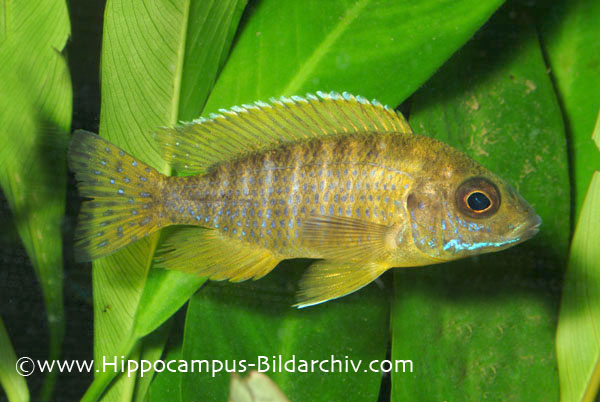
Max length120mm SL5in SLTank120 × 45cm48 × 18inTemp25–29°C77–84°FpH7.5–9.0It remains unclear whether this fish represents an as yet undescribed species or not but in either case the unofficial, vernacular name is confusing due to it being based on that of a described taxon. As a result it is often referred to as A. stuartgranti 'Maleri' or 'Maleri Islands', either through error or because some authors believe it to be conspecific with A. stuartgranti. The population from the Maleri Islands is traded as 'yellow regal peacock' (not to be confused with the 'new yellow regal peacock', i.e., A. baenschi) and the one from Chidunga Rocks as 'sunshine peacock' or 'orange peacock'.
Axelrodia rieseiRuby Tetra
Géry, 1966
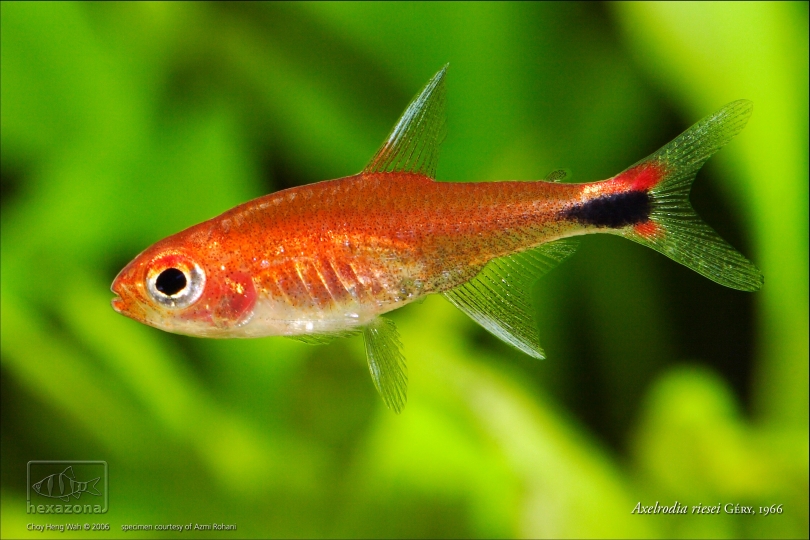
Max length20mm SL0.8in SLTank60 × 30cm24 × 12inTemp20–28°C68–82°FpH4.0–6.5This species is much rare in the hobby than its congener A. stigmatias, presumably a reflection of its more remote, restricted natural range. The red pigmentation on the body can vary in both extent and intensity, and apparently begins to fade when the fish have been maintained in aquaria for a period.
Axelrodia stigmatias
Fowler, 1913
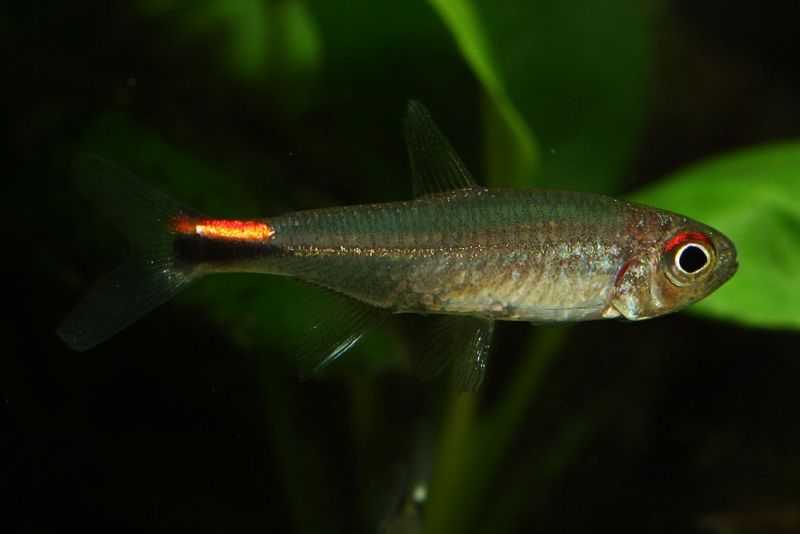
Max length20mm SL0.8in SLTank60 × 30cm24 × 12inTemp20–28°C68–82°FpH4.0–6.5It's most similar to A. riesei but can be told apart by its more-elongate body (depth 4-5 times, vs. 3.1-3.5 times, in SL), live body colour (silvery yellow, vs. red) and suborbital bone structure (almost complete, vs. reduced). The third species, A. lindeae, is quite different posses...