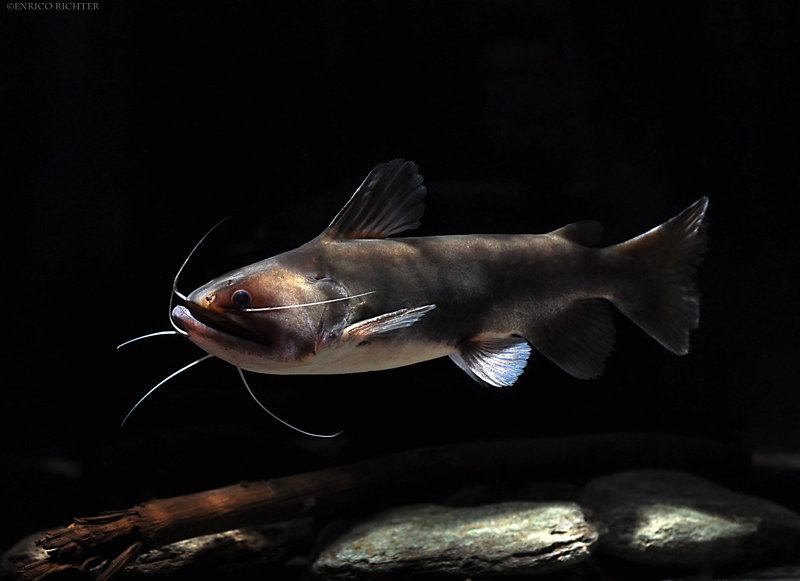
Asterophysus batrachus
Gulper Catfish
On this page13 sections
Quick facts
Difficulty6 of 6 measures
More bars, more demanding.
- Space
- very large tank
- Water
- tap water
- Temp
- unfussy
- Temperament
- species tank
- Social
- kept alone
- Compatibility
- not a community fish
An obligate predator by nature, but captive specimens readily accept strips of white fish, whole shrimp, earthworms, and similar once they are recognised as food. Adult individuals are unlikely to require feeding on a daily basis with 1-2 meals per week sufficient.
Etymology
Asterophysus: from the Ancient Greek ἀστήρ (aster), meaning 'a celestial body', and physa, meaning 'bladder, bellows', in reference to the
batrachus: from the Ancient Greek βατραχος (batrakhos), meaning 'frog', in reference to this species' overall appearance.
Distribution
Habitat
Inhabits blackwater tributaries where it tends to hunt in shallow water and is typically active at night.
Aquarium size
An aquarium with minimum base dimensions of 150 ∗ 60 cm60 ∗ 24 in cm is recommended.
Maintenance
Ideally a soft, sandy substrate should be used though it is not essential. Additional furnishings are as much a case of personal taste as anything else but the most favourable set-ups tend to feature relatively dim lighting plus some chunks of driftwood and scattered tree roots/branches arranged to form potential refuges.
Efficient filtration is a must when keeping predatory species due to the amount of waste produced so install one or more external canister filters and/or a sump system, organising the return in such a way that some surface movement and a degree of flow is created.
Weekly water changes of 30-50% should be considered mandatory as this species can be sensitive to organic pollutants, and therefore must never be introduced to biologically immature set-ups.
Water conditions
These boxes carry affiliate links and we may earn a commission. What they recommend comes from each profile’s own figures, never chosen by hand or paid for.
Diet
An obligate predator by nature, but captive specimens readily accept strips of white fish, whole shrimp, earthworms, and similar once they are recognised as food.
Adult individuals are unlikely to require feeding on a daily basis with 1-2 meals per week sufficient.
Like the vast majority of predatory fishes this species should not be fed mammalian/avian meat such as beef heart or chicken, and similarly there is little benefit in the long-term use of 'feeder' fish such as livebearers or small goldfish which carry with them the risk of parasite or disease introduction and at any rate tend not have a high nutritional value unless properly conditioned beforehand.
Behaviour and compatibility
Capable of consuming fishes almost twice as large as itself and thus not recommended for the community aquarium.
Sexual dimorphism
In sexually-active males the unbranched and first few branched anal-fin rays become thickened, elongate and fused together, forming a structural support for the intromittent organ which itself becomes displaced in such a way that the genital pore is situated at the tip of the modified rays.
Reproduction
Unreported.
Notes
This species is also referred to as 'ogre catfish'.
References
- Kner, R. (1858). Ichthyologische Beiträge. II. Abtheilung. Sitzungsberichte der Kaiserlichen Akademie der Wissenschaften. Mathematisch-Naturwissenschaftliche Classe v. 26 (s. 373), 373-448
- Ferraris, C. J., Jr. (2007). Checklist of catfishes, recent and fossil (Osteichthyes: Siluriformes), and catalogue of siluriform primary types. Zootaxa 1418, 1-628
- Reis, R. E., S. O. Kullander and C. J. Ferraris, Jr. (eds) (2003). Check list of the freshwater fishes of South and Central America. CLOFFSCA. EDIPUCRS, Porto Alegre, i-xi + 1-729
Species images · 5
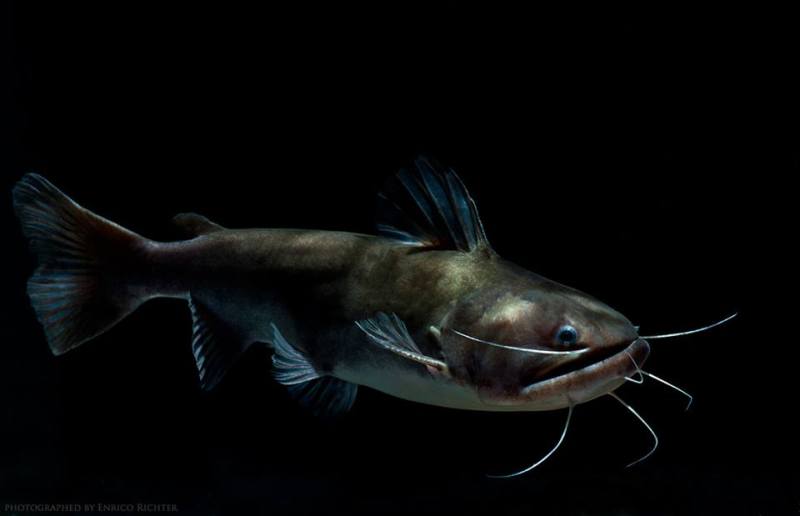
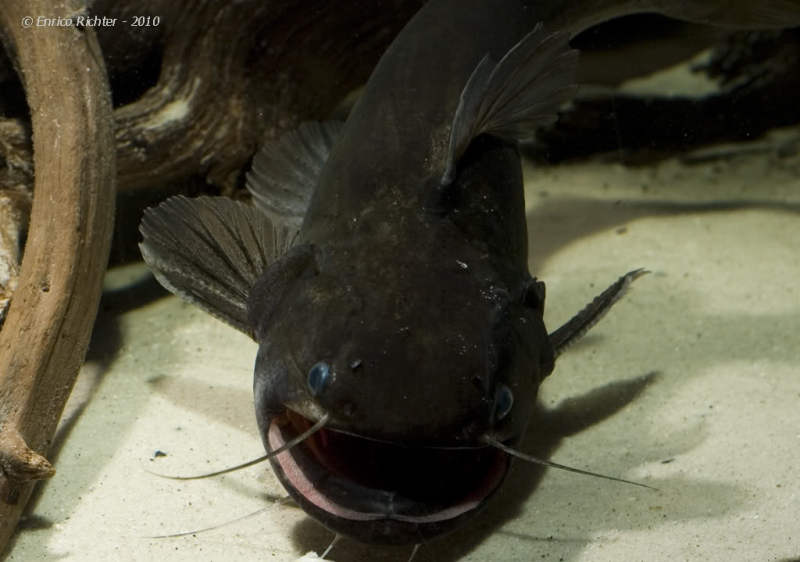
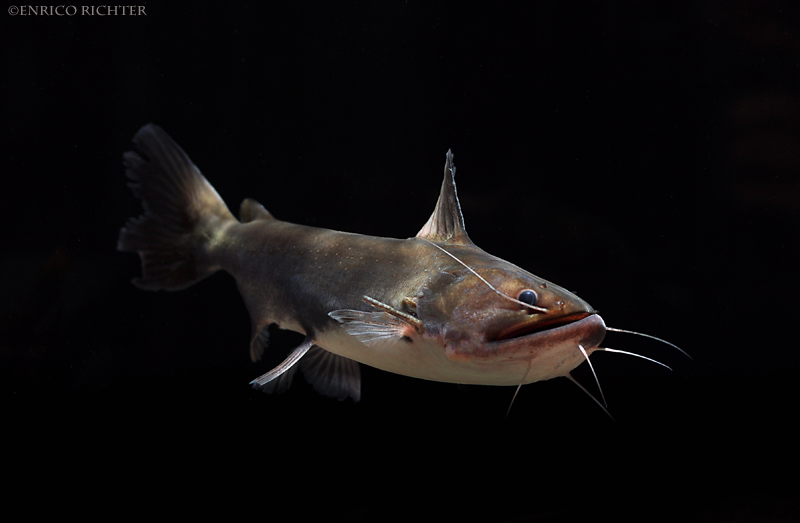
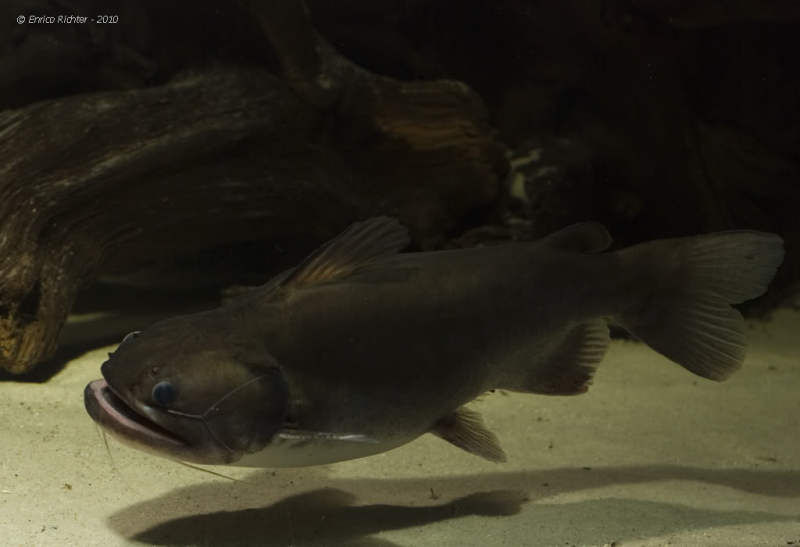
Used with the photographer’s permission. Not licensed for reuse.