River
Orinoco
84 profiles across 19 families name the Orinoco as a locality.
- Species
- 84
- Families
- 19
- Photographed
- 81 of 84
- Difficulty rated
- 84 of 84
Shares fishes withspecies recorded from both
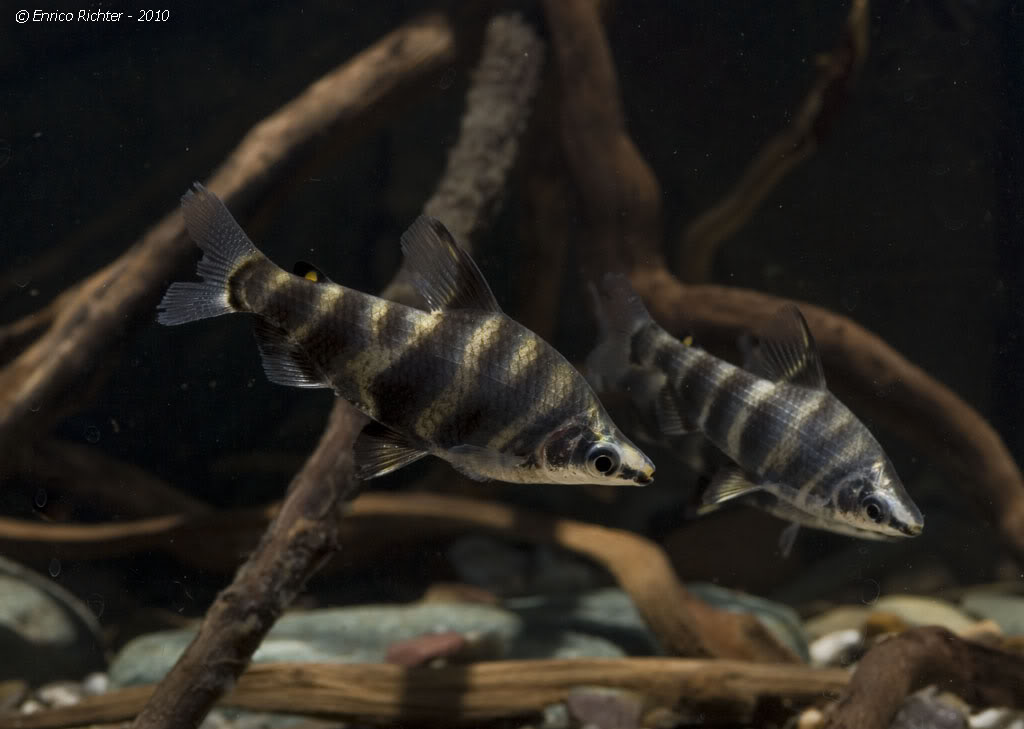
Abramites hypselonotusMarbled Headstander
Anostomidae · Günther, 1868
Abramites spp. are separated from other anostomids primarily on the basis of their relatively deeper bodies and presence of a prominent, post-pelvic median keel, a feature unique to the genus. At time of writing A. eques is the only other species recognised and is native to the Río Magdalena drainage in western Colombia. It can be distinguished by possession of 13-14 bra...
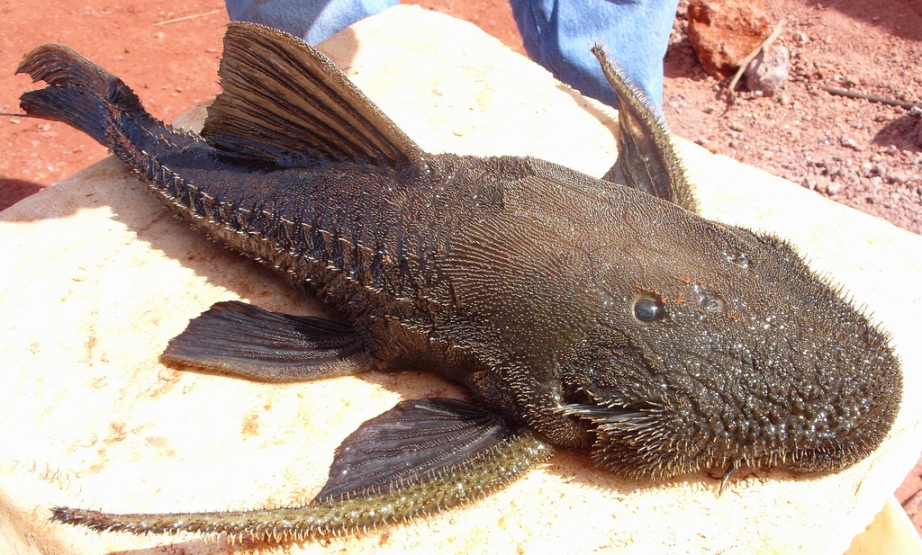
Acanthicus hystrixL155
Loricariidae · Spix & Agassiz, 1829
Despite its patent unsuitability as an aquarium subject attractively-coloured juvenile specimens of this species are traded in quite large numbers, although the scarcity of privately-maintained adults would suggest that most fail to reach their potential. The striking, spotted patterning also disappears as this species matures, and since it also becomes increasingly bellligerent with age it can only be recommended to owners of the largest private aquaria or tropical ponds. There exists an albino...
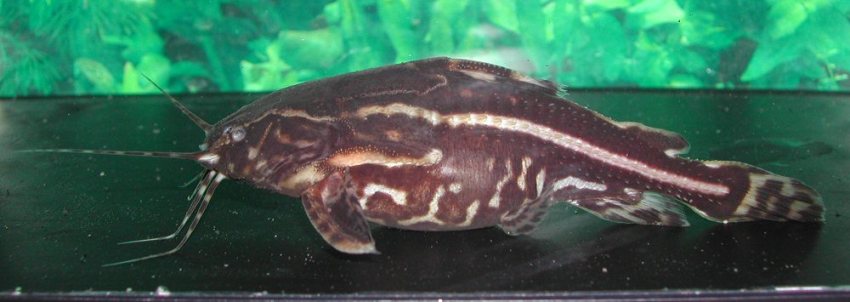
Acanthodoras cataphractusChocolate Talking Catfish
Doradidae · Linnaeus, 1758
This species, which may also be referred to by the alternative vernacular names 'spiny catfish', 'painted talking catfish' or 'chocolate raphael', isn't particularly common in the trade and most often exported only as bycatch among shipments of Platydoras armatulus. It appears very similar to the congener A. spinosissimus with the most useful external distinguishing character being the presence of pale blotches on the dorsal surface, between the dorsal and caud...
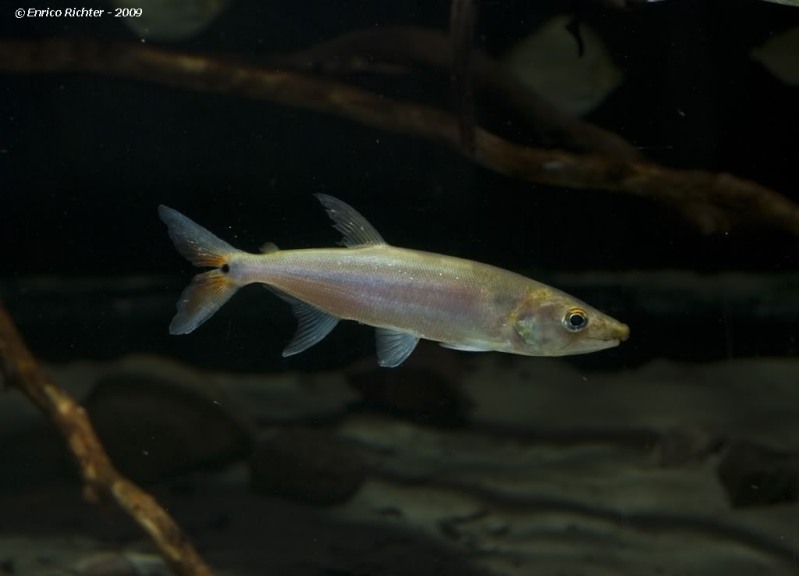
Acestrorhynchus falcatusRed-Tailed Freshwater Barracuda
Acestrorhynchidae · Bloch, 1794
The vernacular name of this fish is derived from its appearance and behaviour, rather than a genetic association with the marine barracuda, and it's also sometimes referred to as 'pike characin' or 'spotted cachorro' with local vernacular names including 'Grand dent-chien' (French Guiana), ' Cachorrinho' or 'Ueua' (Brazil). Although most species of Acestrorhynchus appear superficially similar to one another most exhibit distinguishable external chara...
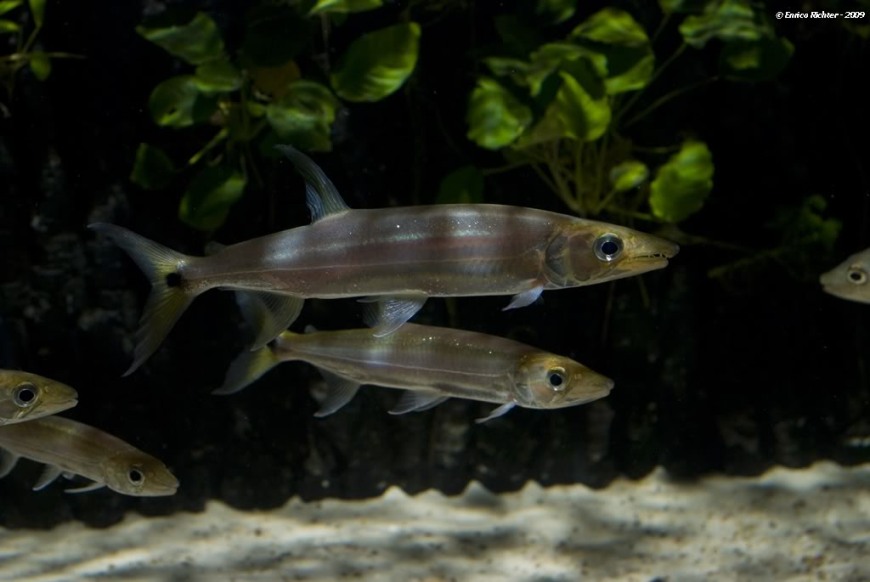
Acestrorhynchus falcirostrisBig-Eyed Cachorro
Acestrorhynchidae · Cuvier, 1819
This species is a member of the putative A. nasutus group of closely-related species within the genus alongside A. nasutus, A. maculipinna and A. isalineae. These are characterised by possession of two dark, longitudinal stripes, one running from the tip of the snout to the base and the other from the posterior edge of the lower maxilla to the underside of the caudal peduncle.
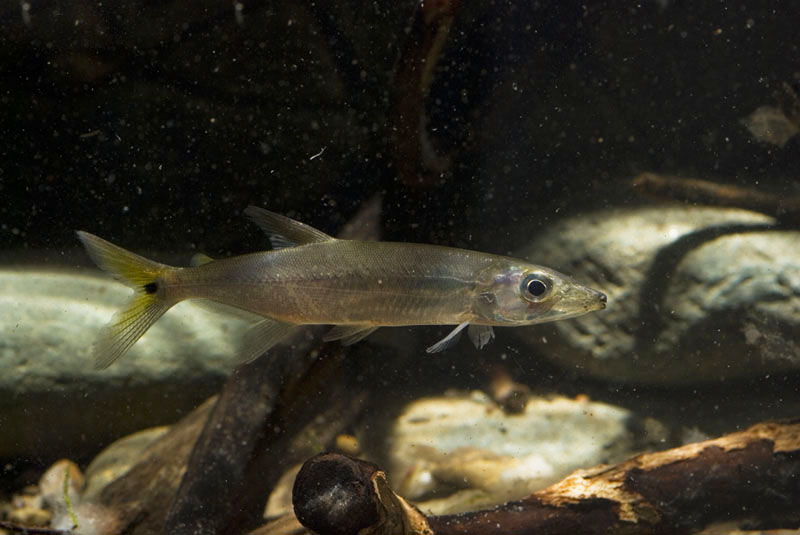
Acestrorhynchus microlepisPike Tetra
Acestrorhynchidae · Jardine, 1841
An obligate piscivore capable of consuming quite large prey in relation to its body size although it tends to focus on smaller prey such as tetras and related species. Newly-imported specimens may refuse to accept anything but live fishes although most can be weaned onto dead alternatives once they recognise them as edible, and some even learn to accept dried foods.
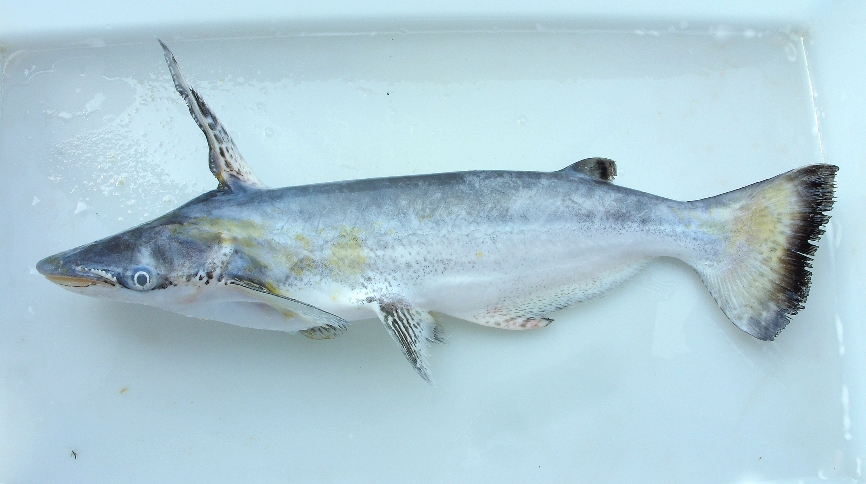
Ageneiosus inermisManduba
Auchenipteridae · Linnaeus, 1766
The genus Ageneiosus was at one point classified in the family Ageneiosidae alongside the genus Tetranematichthys, but this was not accepted by all authors. The grouping remains poorly-studied with the last major revision having been conducted by Watson (1990) in his unpublished dissertation, in which A. inermis was included under the currently synonymous name A. brevifilis. It can be separated from the majority of the genus (except A. marmoratus) by possession of a truncate caudal fin, and from...
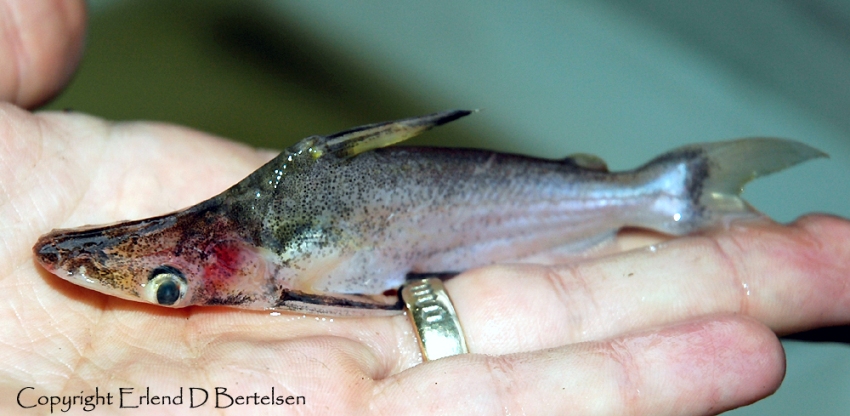
Ageneiosus ucayalensisDuck Catfish
Auchenipteridae · Castelnau, 1855
Apparently this species is polymorphic with body patterning varying significantly depending on locality. Individuals collected from black water habitats tend to be noticeably darker in overall colouration, for example, with this being particularly evident among populations from the Guiana Shield. The genus Ageneiosus was at one point classified in...
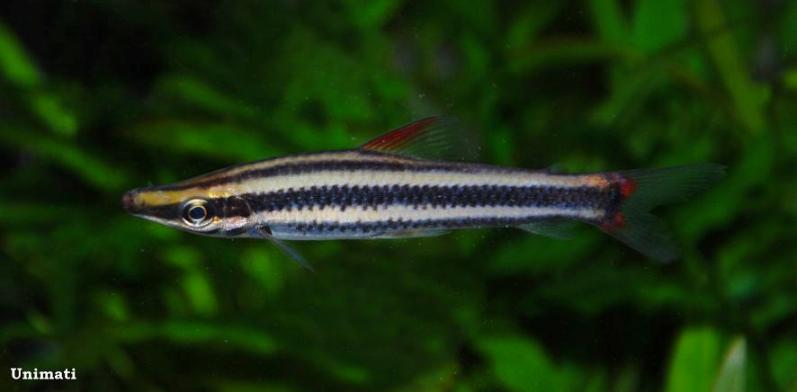
Anostomus anostomusStriped Headstander
Anostomidae · Linnaeus, 1758
A biotope-style set-up could consist of a sandy substrate, piles of smooth rocks and driftwood roots and branches, some of which should penetrate the water surface. Aquatic vegetation can be included if you wish but is likely to be eaten.
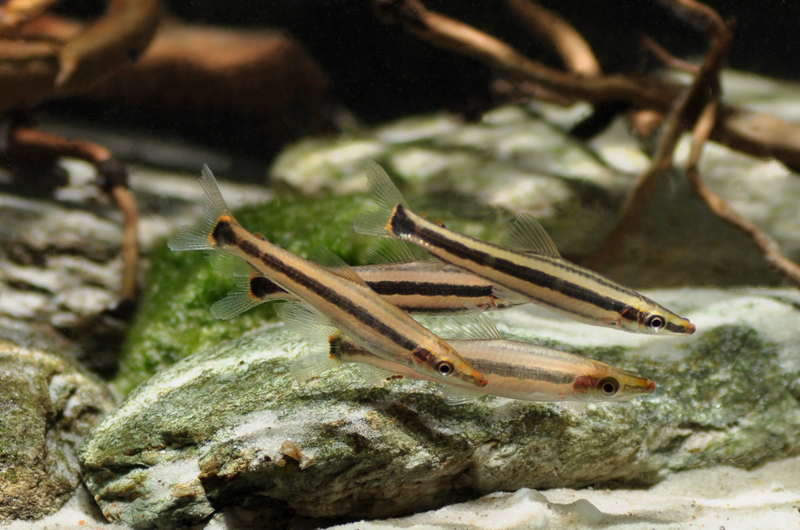
Anostomus ternetziGold-Striped Headstander
Anostomidae · Fernández-Yépez, 1949
This species is widely-distributed in the Río Orinoco system in Brazil, Colombia and Venezuela plus coastal drainages in Guyana, Suriname and French Guiana including the Essequibo and Mazaruni. Type locality is 'Palital, Estado Guárico, Venezuela' which appears to correspond to a wetland called Esteros de Palital in the Aguaro-Guariquito National Park of Guárico state, northern Venezuela.
Apistogramma alacrinaRedspot Dwarf Cichlid
Cichlidae · Kullander, 2004
This species differs from all other described members of the genus by the presence of dark blotches at the dorsal and ventral base of the pectoral fins. Three very similar-looking fishes have been assigned the codes A106, A107 and A108 under the DATZ system and are also known in the aquarium hobby as A. sp. 'rotpunkt' (this form has been in the hobby for decades with its precise origin unclear), A. sp. 'rotpunkt Orteguazas' (the paratype form of A. alacrina) and A. sp. 'rotpunkt Guayas', respectively. It remains to be seen whether they're conspecific with A. alacrina or not since they exhibit some differences in colour pattern and morphology.
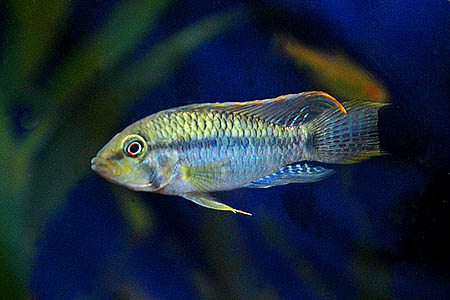
Apistogramma brevis
Cichlidae · Kullander, 1980
Apistogrammas are identified by the use of "A numbers"in a similar fashion to the "L number" system used to identify loricariids. Apistogramma brevis is identified as A168. Additionally, apistos are also grouped into type families and this species is the species type of the brevis group. Unlike some apistogramma species, a. brevis occurs only in a relatively small range and has not been found outside this. personata complex gibbiceps group...
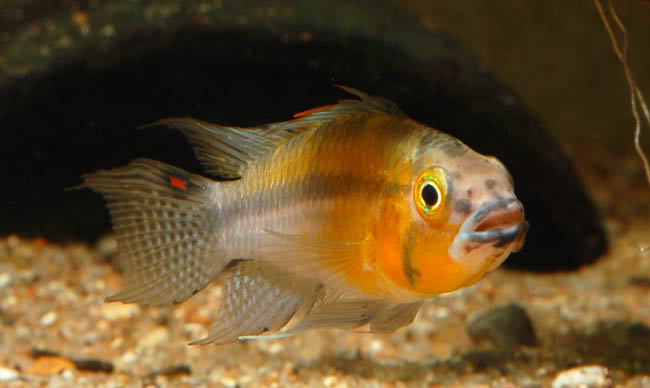
Apistogramma cacatuoidesCockatoo Cichlid
Cichlidae · Hoedeman, 1951
Numerous ornamental forms of this species have been selectively line-bred for the aquarium trade, vernacular names for which include "sunset", "sunburst", "double red", "triple red", "gold", "white gold", "orange flash" and "albino". It has also been assigned the 'A' number A200 under the DATZ system with possibly conspecific, related forms similarly numbered A201, A202 and A203 depending on locality. Th...
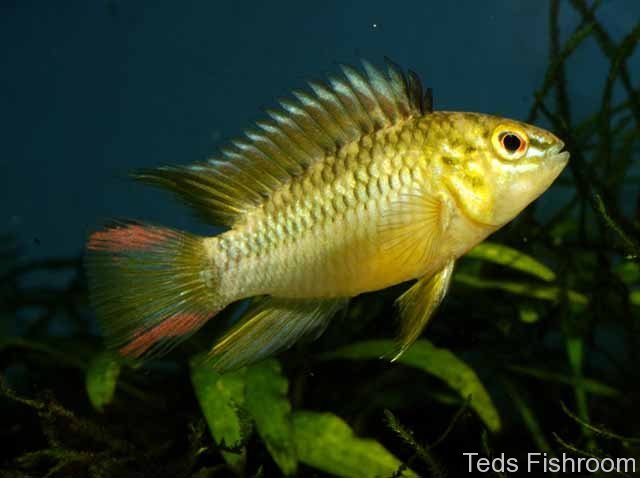
Apistogramma hoignei
Cichlidae · Meinken, 1965
The genus Apistogramma is among the most speciose of South American cichlid genera with around 70 species valid at present but many more awaiting description. In addition many species exist in two or more geographical colour forms which may or may not turn out to be distinct in the future. Hobbyists tend to label these with collection data if available in order to avoid mixing them and the potential of hybridisation. Member species have also been organised into a series of species lineages, sublineages, complexes and groups by authors in order to better separate them.
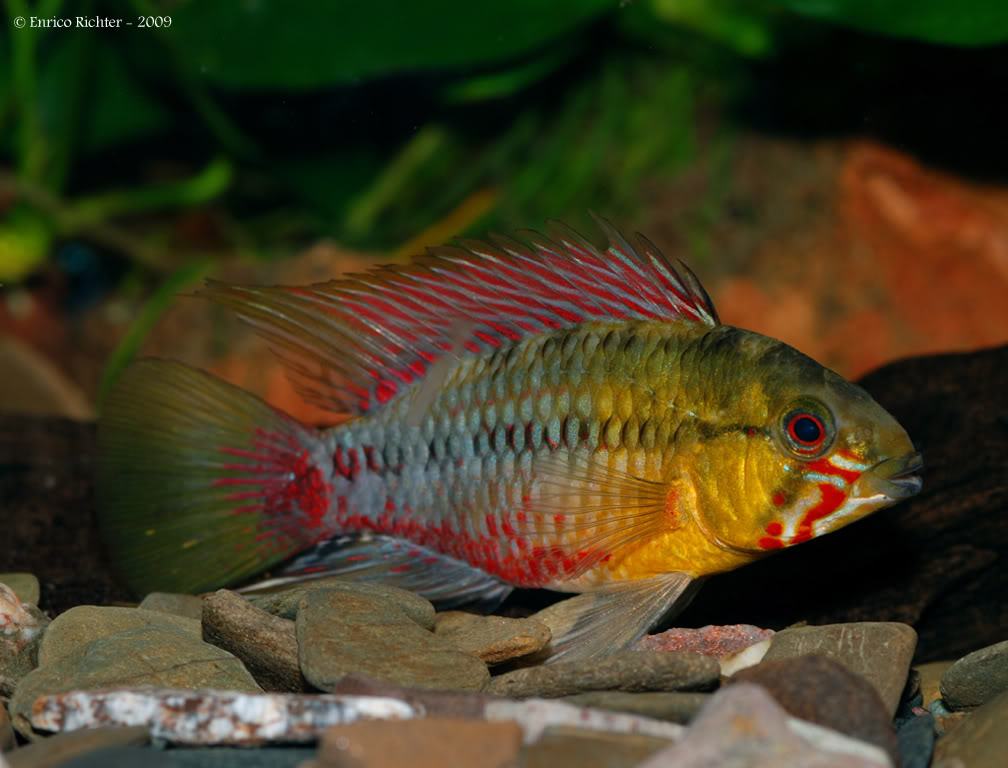
Apistogramma hongsloi
Cichlidae · Kullander, 1979
The genus Apistogramma is among the most speciose of South American cichlid genera with around 70 species valid at present but many more awaiting description. In addition many species exist in two or more geographical colour forms which may or may not turn out to be distinct in the future. Hobbyists tend to label these with collection data if available in order to avoid mixing them and the potential of hybridisation.
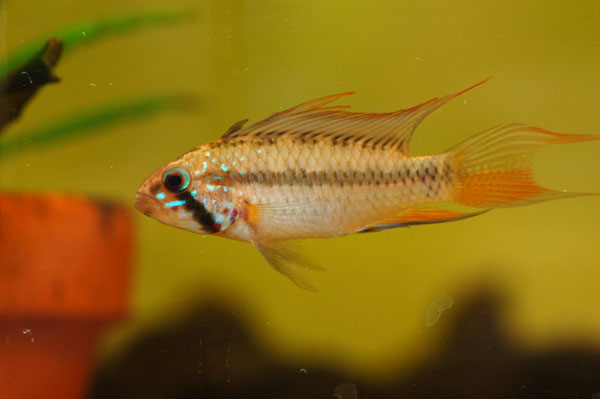
Apistogramma sp. 'breitbinden'A164
Cichlidae · authority not recorded
The German term 'breitbinden' translates literally as "broad-banded" and refers to the uniformly broad suborbital stripe seen in males of this 'species' which remains undescribed despite being known in the aquarium hobby for several decades. It's often imported as bycatch among shipments of wild-collected A. iniridae. Some of the populations have also been assigned th...
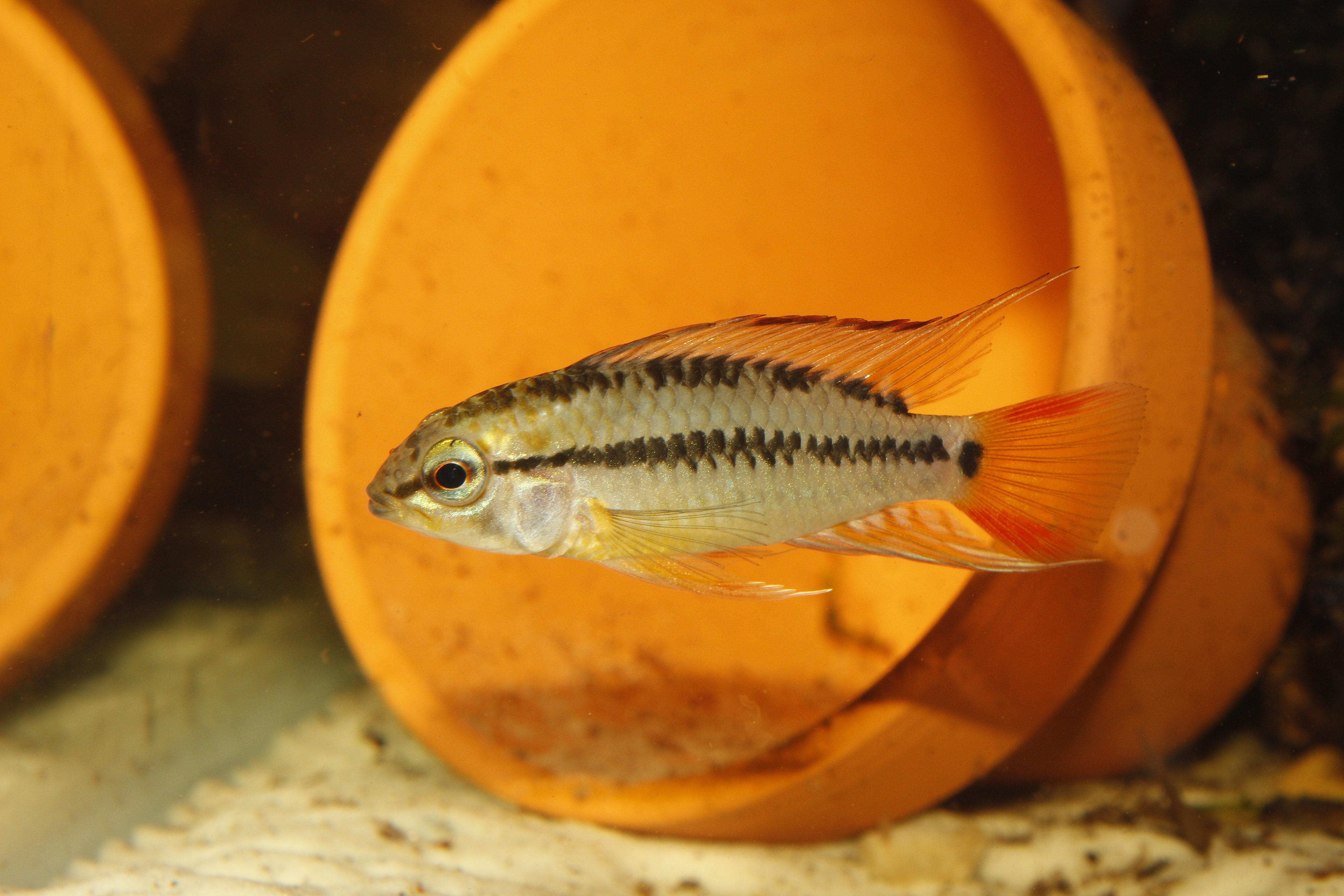
Apistogramma viejitaRed Edge Apisto
Cichlidae · Kullander, 1979
Apistogramma viejita
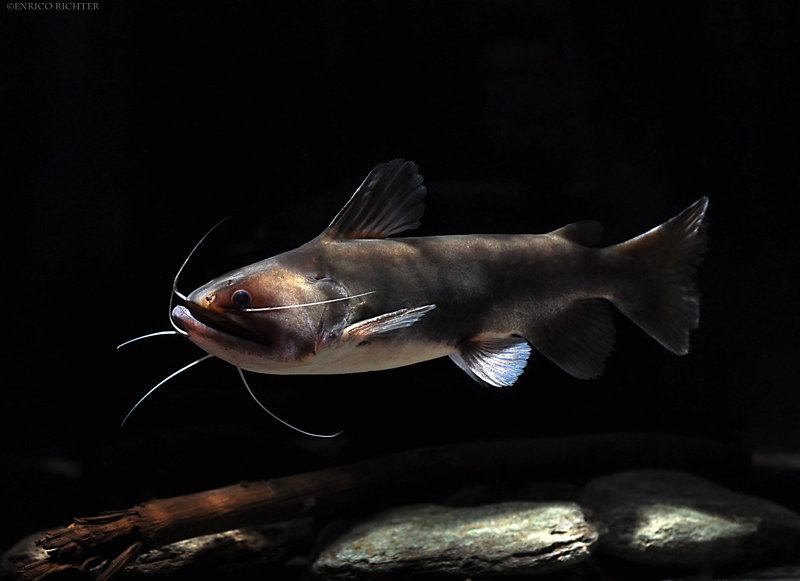
Asterophysus batrachusGulper Catfish
Auchenipteridae · Kner, 1858
An obligate predator by nature, but captive specimens readily accept strips of white fish, whole shrimp, earthworms, and similar once they are recognised as food. Adult individuals are unlikely to require feeding on a daily basis with 1-2 meals per week sufficient.
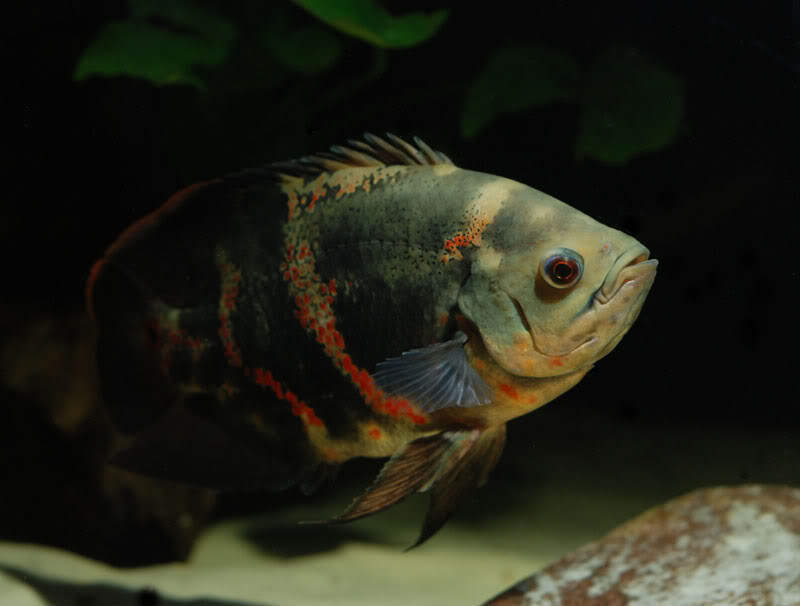
Astronotus ocellatusOscar
Cichlidae · Agassiz, 1831
This species is also referred to as 'velvet cichlid', 'red oscar', 'tiger oscar', or 'marble cichlid'. It is a popular aquarium fish although its adult size and typical life-span of 10-20 years must be taken into account before purchase. Numerous ornamental strains are now available, and while care is more-or-less identical for all of them a degree of additional care must be taken with the 'long-finned' variety which is a little less competitive than other forms.
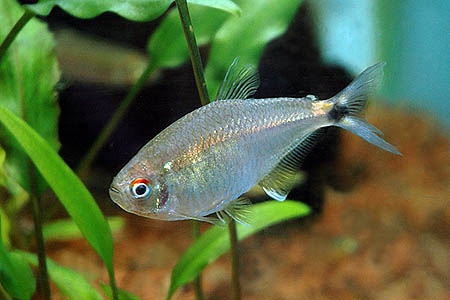
Astyanax bimaculatusTwo Spot Astyanax
Characidae · Linnaeus, 1758
A. bimaculatus is not a popular aquarium fish but is available on occasion exception, most often as a contaminant among shipments of other species. It's identity is also in question to an extent with the name currently applied to what is considered to represent a species complex comprising at least four taxa.
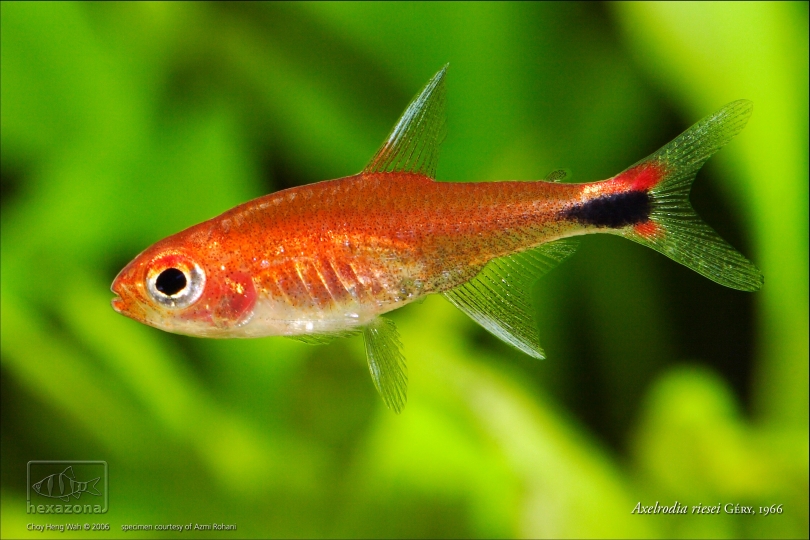
Axelrodia rieseiRuby Tetra
Characidae · Géry, 1966
This species is much rare in the hobby than its congener A. stigmatias, presumably a reflection of its more remote, restricted natural range. The red pigmentation on the body can vary in both extent and intensity, and apparently begins to fade when the fish have been maintained in aquaria for a period.
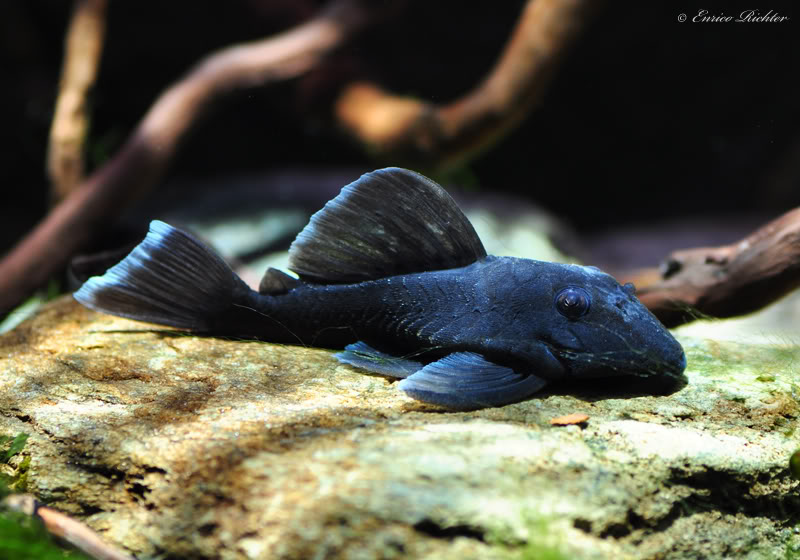
Baryancistrus begginiL239
Loricariidae · Lujan, Arce & Armbruster, 2009
Prior to description this species was traded under the DATZ code L239. It can be distinguished from other species in the genus and other hypostomines (see below for definition of this grouping) by its uniformly black to brownish body and fin colouration with a turquoise to bluish sheen, and the acutely bent shape of midventral body plates 3-5 which form a distinctive keel running along the body, above the pectoral fins...
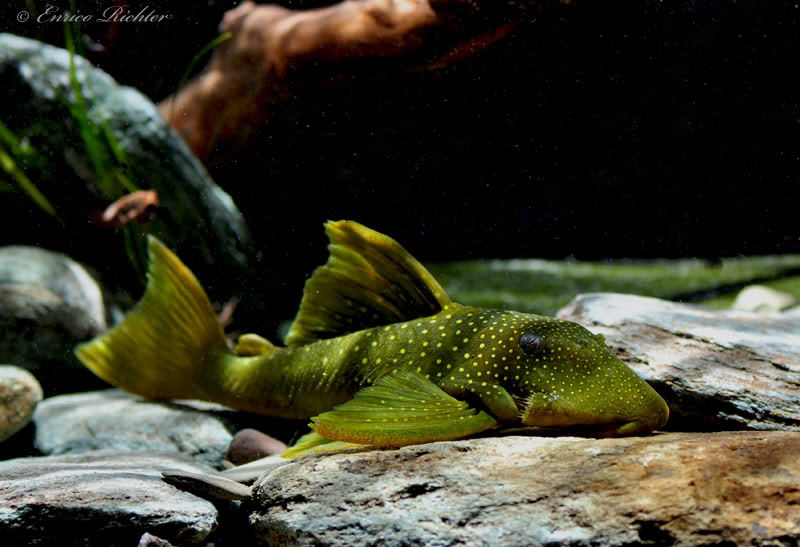
Baryancistrus demantoidesGreen Phantom Pleco
Loricariidae · Werneke, Sabaj Pérez, Lujan & Armbruster, 2005
This species is very similar to Hemiancistrus subviridis in appearance and the two occur sympatrically in nature, although B. demantoides is less common in the aquarium trade. Both have been marketed under the DATZ code L200 with B. demantoides sometimes referred to as 'L200 high-fin' or 'L200a', the former name in reference to its comparatively long dorsal-fin spine (average length in the type series 42.1 mm vs. 34.3 mm in H. subviridis).
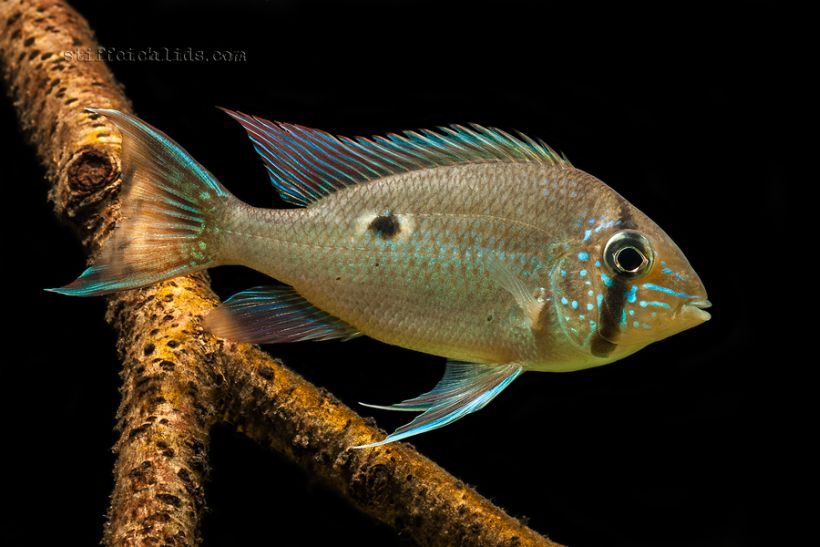
Biotodoma wavriniOrinoco Eartheater
Cichlidae · Gosse, 1963
Populations known in the aquarium trade include 'Cuao', 'Orinoco', 'San Antonio', and 'Sipapo Ventuari'. B. wavrini and its congener B. cupido can be separated by body shape and position of the dark blotch on the posterior portion of the flank. In B. cupido the body is relatively compact and the blotch located above the upper lateral line, whereas in B. wavrini the body is noticeably elongate and the blotch on or below the upper lateral line.
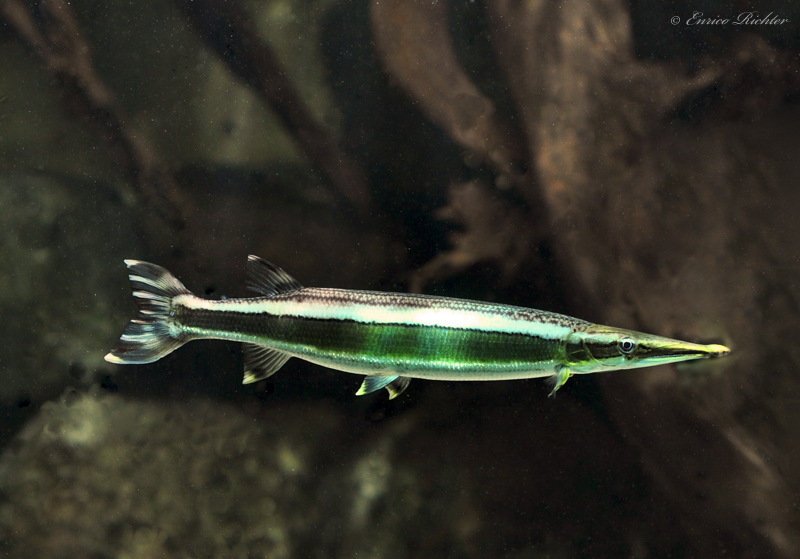
Boulengerella lateristrigaStriped Pike 'Characin'
Ctenoluciidae · Boulenger, 1895
Boulengerella differs from Ctenolucia, the only other genus currently contained in the family Ctenolucidae, by a series of derived features including possession of 87-124 (vs. 45-50) lateral line scales, presence of a strongly (vs. weakly) developed fleshy appendage at the tip of the snout and absence (vs. presence) of fleshy flaps on the lower jaw. Within the order Characiformes the family Ctenoluciidae is also distinguished by a set o...
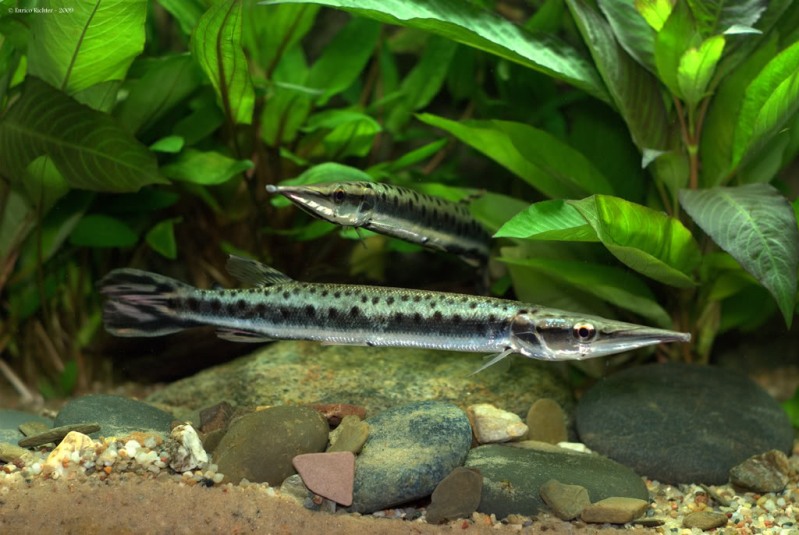
Boulengerella maculata
Ctenoluciidae · Valenciennes, 1850
Both species also possesses a broader dark midlateral stripe on the body which tends to be more well-defined in B. lateristriga than in B. maculata. Colour pattern in B. maculata varies considerably with some specimens noticeably paler than others, for example, and the the broad midlateral stripe usually less intense in such individuals. This does not app...
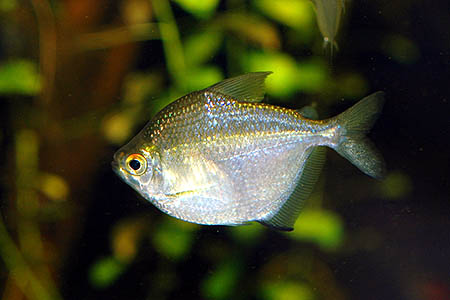
Brachychalcinus orbicularisDiscus Tetra
Characidae · Valenciennes, 1850
The genus Brachychalcinus currently contains four other species: B. copei (Steindachner 1882) from the rio Madeira and rio Solimões; B. nummus Böhlke 1958 from the Upper Amazon region in Colombia, Ecuador and Peru; B. parnaibae Reis 1989 from the rio Parnaíba basin, and B. retrospina Boulenger 1892 from the Rio Paraguay system. The group is often referred to collectively as 'silver dollar tetras' and tho...
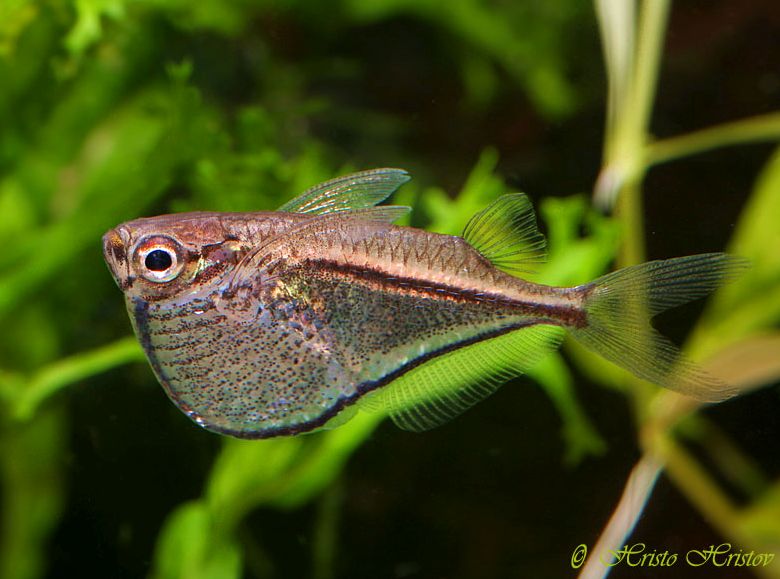
Carnegiella marthaeBlackwing Hatchetfish
Gasteropelecidae · Myers, 1927
Gasteropelecids are commonly-referred to as 'freshwater hatchetfishes' due to their heavily-keeled body shape which has evolved in such a way due to possessing an enlarged, heavily-muscled pectoral girdle, and which resembles the shape of a hatchet head. They are sometimes said to be capable of propelled flight above the water surface by beating their pectoral fins but in fact this is not the case and was disproven by Wiest (1995) who used...
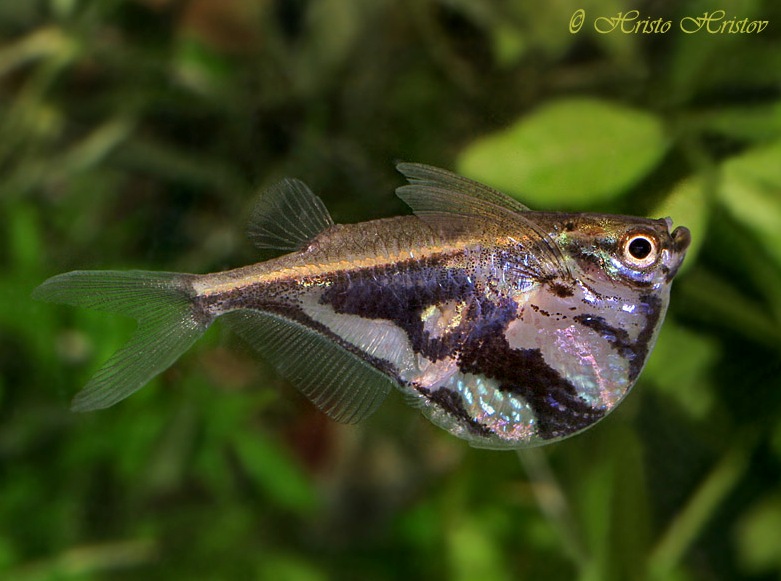
Carnegiella strigataMarbled Hatchetfish
Gasteropelecidae · Günther, 1864
C. strigata is an enduringly popular species in the aquarium hobby but is not bred on a commercial basis with all fish offered for sale collected in the wild. It can be told apart from other members of the genus by its larger adult size and dark, marbled colour pattern appearing as a series of dark and light stripes running diagonally across the body below the lateral line. This colour pattern is variable and popul...
Chaetostoma formosaeStriped Bulldog Pleco
Loricariidae · Ballen, 2011
This species is traded under a number of English vernacular names, of which some others include 'blonde bulldog pleco', 'blonde rubber pleco', 'blonde rubbernose pleco', 'striped rubber pleco', and 'striped rubbernose pleco'. It may also be seen referred to as 'L146', 'L146a', or 'L187b', these codes having been used for it in the Aqualog series of books. It can be told apart from all congeners except C. anale and C. jegui by...
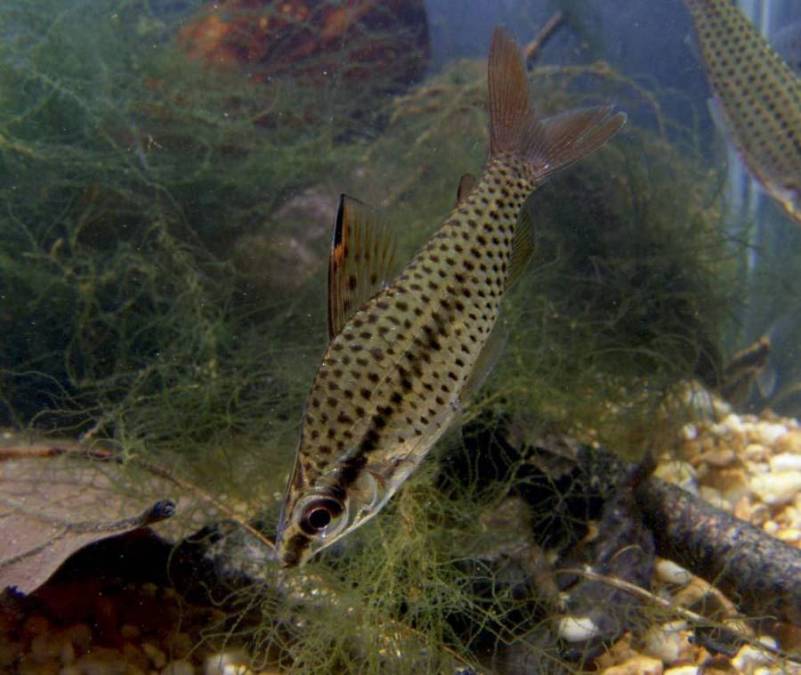
Chilodus punctatusSpotted Headstander
Chilodontidae · Müller & Troschel, 1844
Omnivorous and will accept most foods offered, with the stomach contents of wild specimens varying on a seasonal basis but mostly comprising insects and insect larvae (orders Trichoptera, Hemiptera, Homoptera) plus some terrestrial fruits and even scales of other fishes (Sánchez et al., 2003). In the aquarium offer live Daphnia, Artemia, Moina, bloodowrm, etc., vegetable matter in the form of blanched spinach, lettuce, cucumber, fruit, algae wafers, etc., and good quality, sinking dried foods.
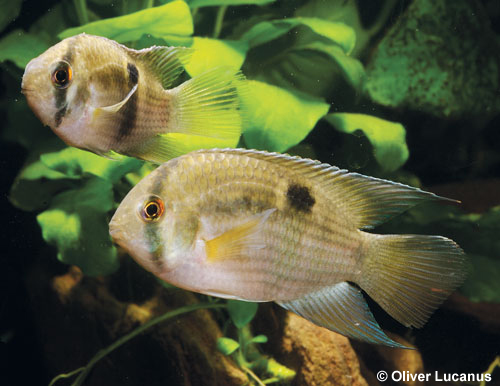
Cleithracara maroniiKeyhole Cichlid
Cichlidae · Steindachner, 1881
This species can be told apart from relatives by the characteristic 'keyhole' shaped marking on each side of the body. It's one of few fishes in which the current generic name is derived from the common name popularised in the aquarium hobby with 'Cleithracara' a combination of the Greek kleithron, meaning lock, and, acará, the Guaraní word for cichlids.
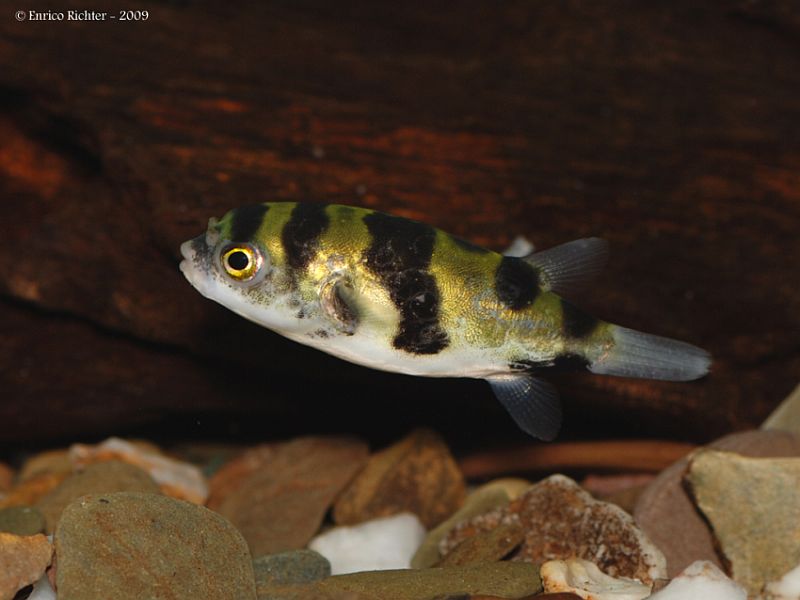
Colomesus asellusAmazon Puffer
Tetraodontidae · Müller & Troschel, 1849
This species is also referred to as 'South American puffer', 'SAP', 'Amazonian puffer', 'Peruvian puffer', or 'Brazilian puffer' in the ornamental trade. Within the genus Colomesus, C. asellus can be immediately identified by possessing a unique transverse row of dermal flaps across the chin which is absent in its congeners C. psittacus and C. tocantinensis.
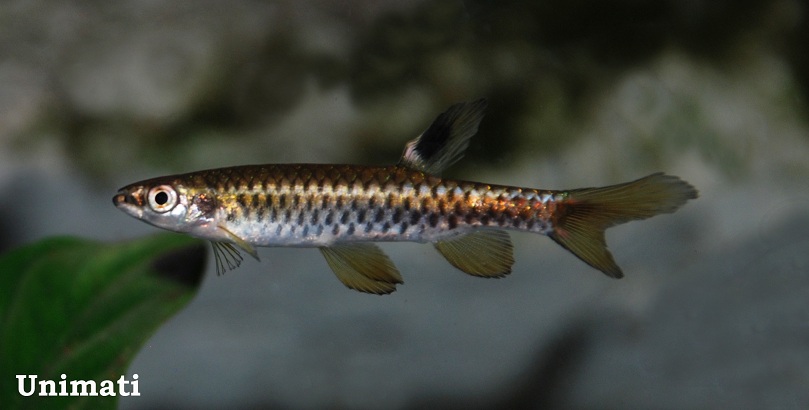
Copella eigenmanni
Lebiasinidae · Regan, 1912
This species does appear in the aquarium trade from time-to-time, often among shipments of other wild-caught fishes from the Orinoco basin. Populations from Colombia were formerly referred to as C. metae until Zarske (2011) synonymised the two when designating a lectoty...
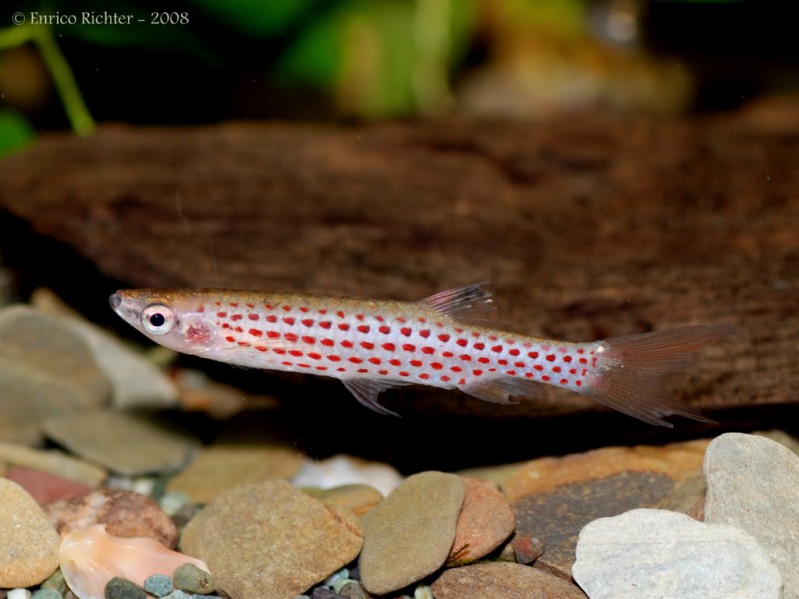
Copella meinkeniSpotted Splashing Tetra
Lebiasinidae · Zarske & Géry, 2006
This species has been widely referred to as the congener C. nattereri in aquarium literature both prior to and post-publication of its official description in 2006. The two can be told apart quite easily by the fact that C. nattereri possesses a dark lateral stripe while C. meinkeni does not. C. meinkeni can be distinguished from all congeners by the followi...
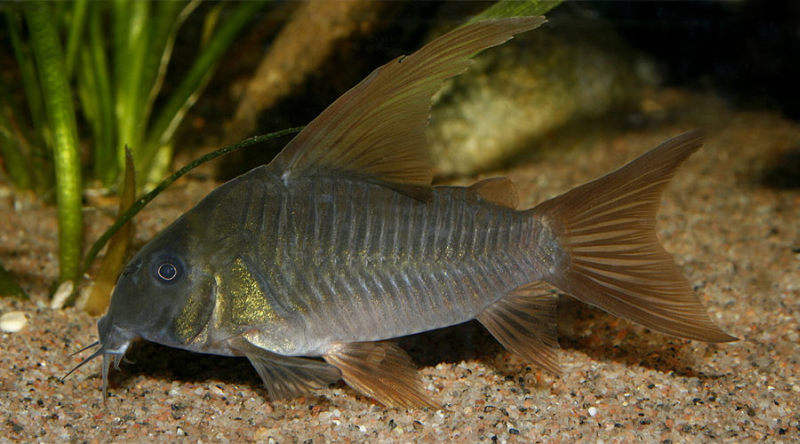
Corydoras concolorSlate Cory
Callichthyidae · Weitzman, 1961
This species can be told apart from congeners by its uniformly greyish colour pattern, deep body (fitting 2.1-2.4 times in standard length), large eye (3.2-4.0 times in head length), having the pectoral fins completely surrounded by the coracoid, and relatively long dorsal-fin spine (1.1-1.2 times in head length).
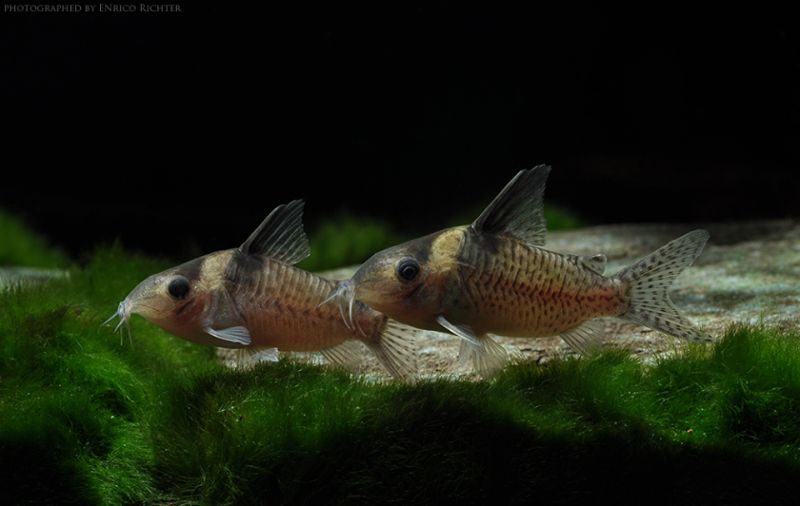
Corydoras delphax
Callichthyidae · Nijssen & Isbrücker, 1983
Unfortunately, precise diagnostic characters cannot currently be provided since we’ve been unable to obtain the type description, and little has been Characters said to separate it from species such as C. ambiacus, C. agassizii, C. brevirostris, C. ephippifer, and C. melanistius include a combination of relatively elongated snout, dark spots on body fading in adults, dark anterior dorsal-fin patch extending to upper extremity of fin, and presence of spots in the caudal-fin.
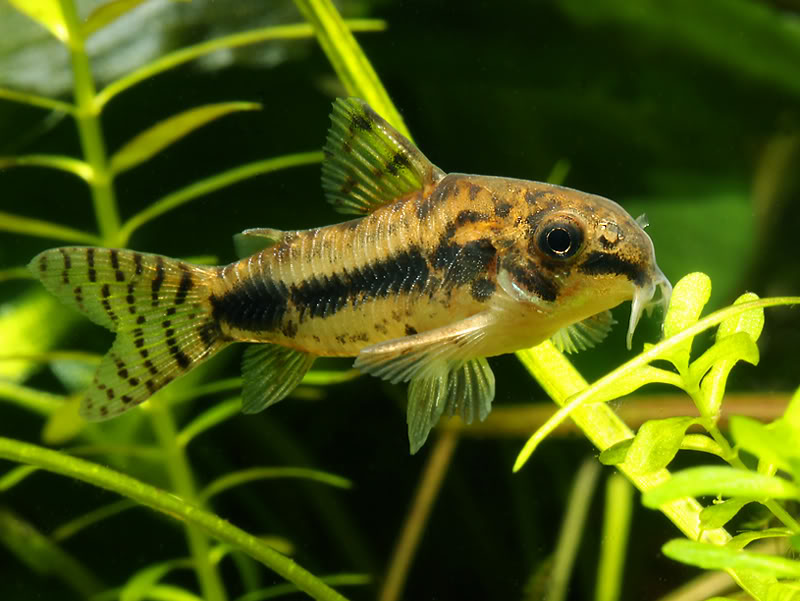
Corydoras habrosusSalt and Pepper Cory
Callichthyidae · Weitzman, 1960
The majority of records derive from the Río Apure watershed in southwestern Venezuela, where C. habrosus has been collected in the states of Portuguesa, Cojedes, Barinas, Guárico, and Apure. Its distribution in Colombia is less clear but it is known with certainty from the Río Arauca and Río Casanare, the latter a tributary of the lower Río Meta, and it makes sense that it should also be found in other left bank Orinoco affluents between the Meta and Apure, which include the ríos Cinaruco and Capanaparo.
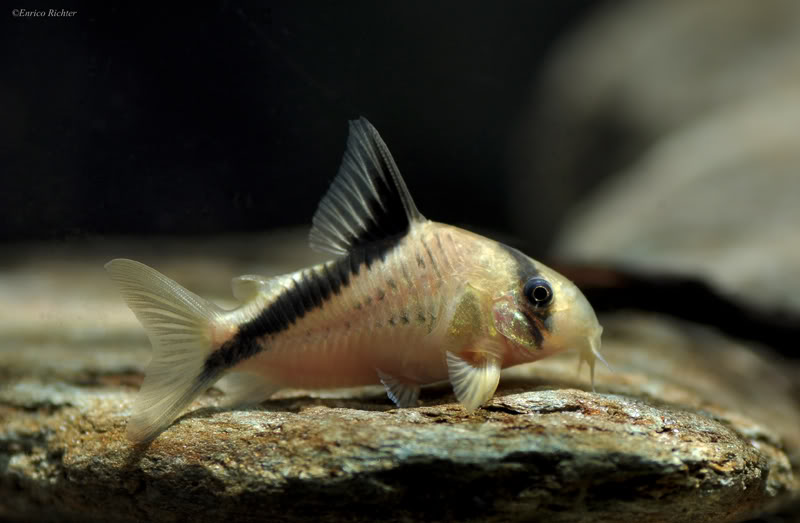
Corydoras meliniFalse Bandit Cory
Callichthyidae · Lönnberg & Rendahl, 1930
In the aquarium hobby, the population from the rio Tiquié has been referred to as 'C084', while a similar, but larger, form from the Río Huallaga in Peru is known as 'C085'. Both forms have been marketed as C. sp. 'mega metae'. The existence of multiple, similarly-coloured species which coexist and sometimes form mixed schools is relatively common in the genus.
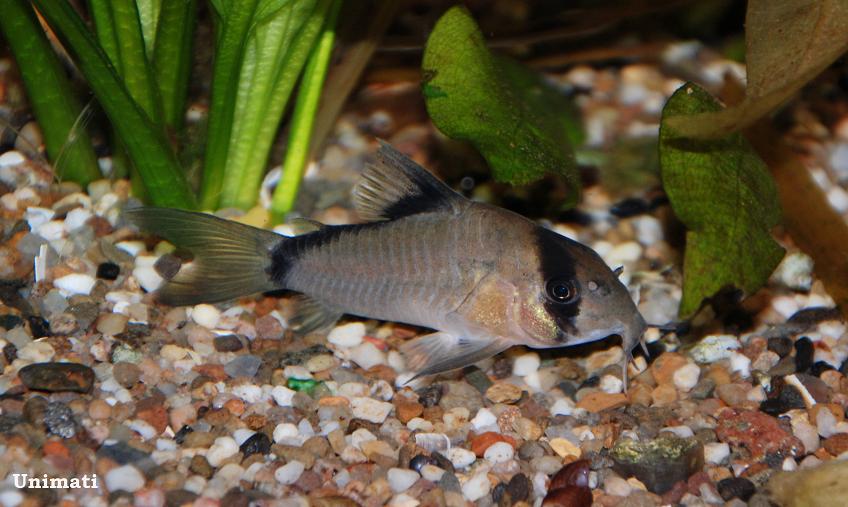
Corydoras metaeBandit Cory
Callichthyidae · Eigenmann, 1914
Endemic to the Río Meta, a major tributary of the Río Orinoco in eastern Colombia and western Venezuela. It is known from several tributaries within the upper basin including the ríos Humea, Ocoa, Guatiquía (including its two branches the ríos Negrito and Guayuriba), Manacacias, and Metica (the name given to the upper Río Meta above its confluence with the Río Humea). It appears to be absent from the lower Meta and has not been recorded in Venezuela.
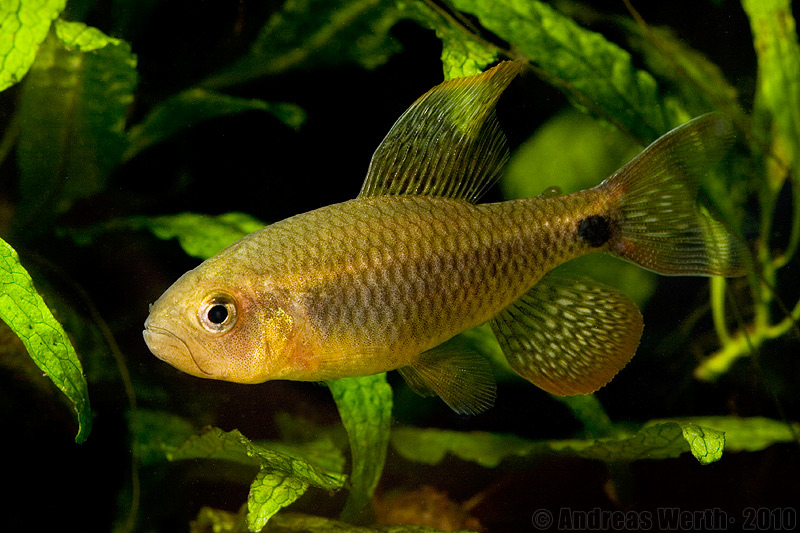
Crenuchus spilurusSailfin Characin
Crenuchidae · Günther, 1863
This species is currently the only described member of its genus although colour pattern and morphology vary considerably across its range. You may see reference to this species being the only fish species to possess infra-red vision, but other species also possess this ability and we suspect that infra-red plays an important role in the reproductive cycle of many fishes.
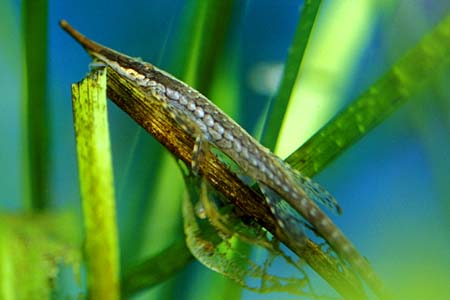
Farlowella vittataTwig Catfish
Loricariidae · Myers, 1942
Although often sold as the closely related F. acus (a species that is highly endangered and imported very rarely, if at all), F. vittata is the most common representative of the genus in hobbyists' tanks. The easiest way to distinguish the two is by comparing the shape of the rostrum, which is longer and more slender in vittata, although there are also differences in the arrangement of the ventral scutes. They are adapted for life among peripheral vegetation and tree roots along the edges o...
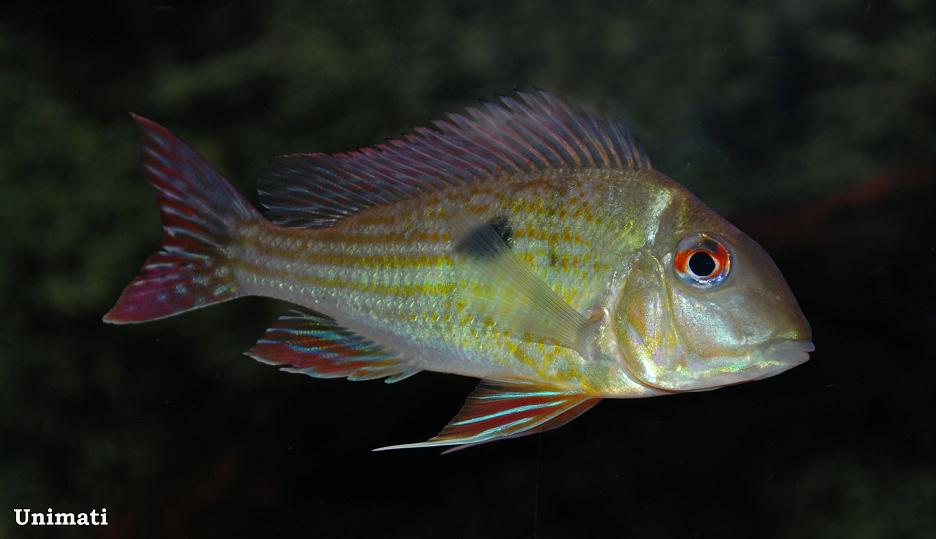
Geophagus abalios
Cichlidae · López-Fernández & Taphorn, 2004
It also occurs in the río Caura on the Guyana Shield plus the Ventauri and Mavaca drainages in the middle and upper Orinoco where it’s also known from some white water, referring to turbidity rather than turbulence, habitats. To the north its distribution appears limited by the Las Majaguas dam on the Río Cojedes, a tributary of the Apure where a probable introduced population inhabits the res...
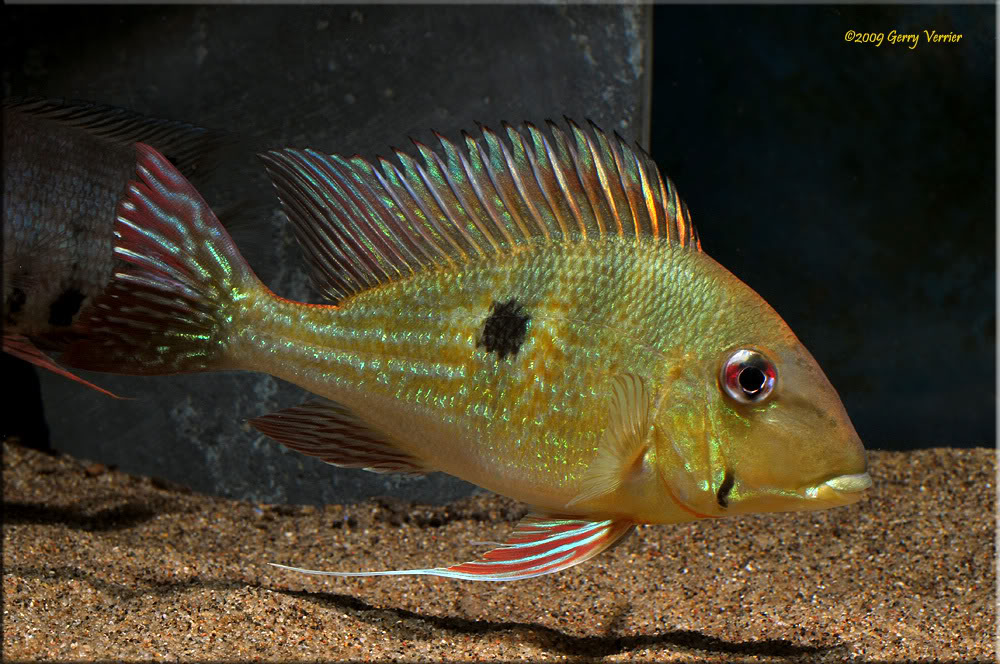
Geophagus dicrozoster
Cichlidae · López-Fernández & Taphorn, 2004
It's a member of the nominal G. surinamensis 'group' of closely-related species within the genus and can be identified by a combination of characters including: presence of dark preopercular markings; seven parallel vertical bars on each flank (normally visible only when the fish are stressed, spawning or preserved); vertical bars four and five meet in such a way that they form a 'Y' shape; dark lateral spot positioned within the third vertical bar; caudal fin reddish with variable pattern of iridescent blue spots and stripes.
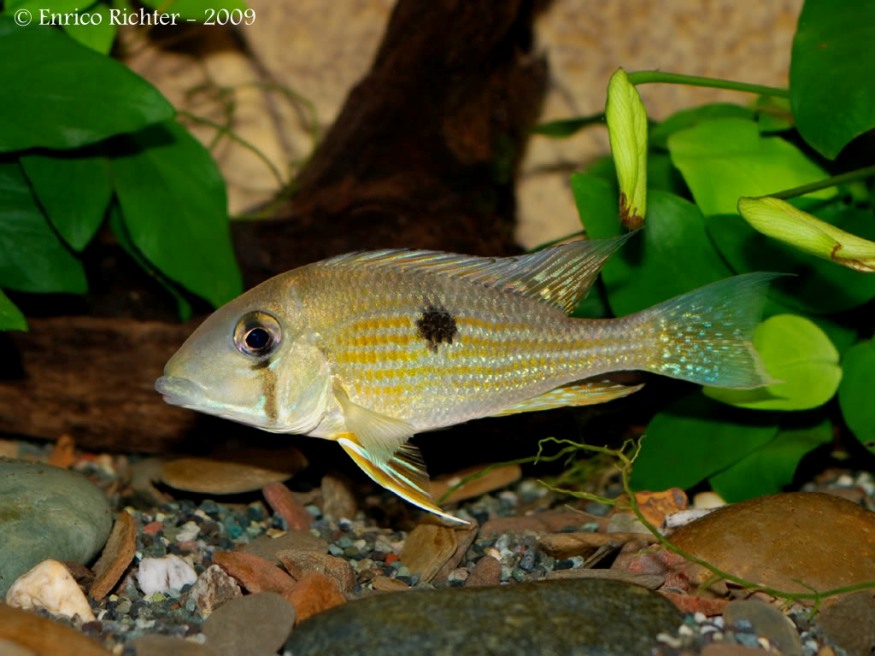
Geophagus taeniopareius
Cichlidae · Kullander & Royero, 1992
This species is relatively rare in the hobby but sometimes available from specialist retailers or private breeders. Though described in 1992 it was first collected much earlier and has been in the hobby since the late 1970s, being known as 'Wangenstrich-Erdfresser' (cheek-stripe eartheater) in Germany. It's one of just five Geophagus species not to be included in the nominal G. surinamensis 'group' of closely-related species within the genus along with G. argyrostictus, G. gottwaldi, G. grammepareius and G. harreri.
Hyphessobrycon metaePurple Tetra
Characidae · Eigenmann & Henn, 1914
A beautiful species that's not often seen for sale in the hobby, and is usually a little more expensive than other tetras when available. This is mainly due to the wild caught nature of most specimens entering the trade. It can be a little delicate when initially imported, and is sensitive to deteriorating water conditions in general. As a result, it's not a good choice for the beginner, and should only be added to well-matured tanks. As with the closely related Hemigrammus, the ta...
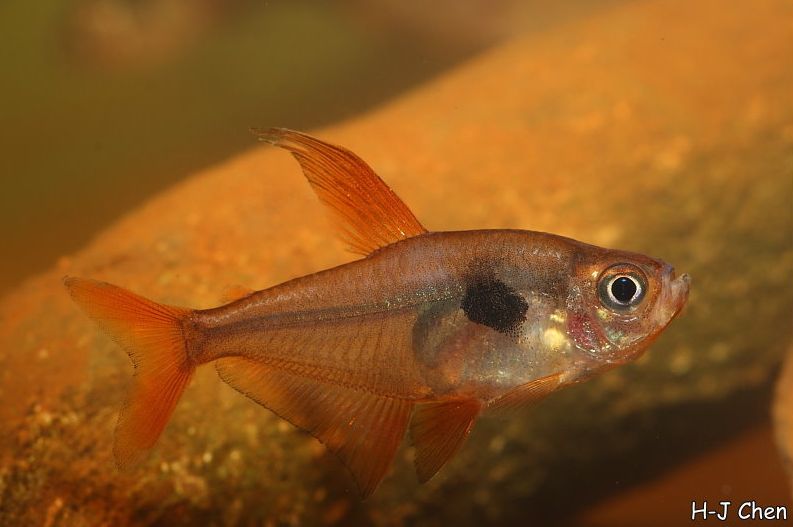
Hyphessobrycon sweglesiRed Phantom Tetra
Characidae · Géry, 1961
At least two colour forms have been traded, one of which is more intensely-coloured and has been referred to as H. sweglesi 'red' or 'rubra'. The bright red pigmentation is retained in long-term captive specimens, suggesting that it is not considered to be an artefact of diet, but we suspect it might reflect conditions at the collection locality with the reddest fish putatively inhabiting blackwater and plainer forms clearwater environments. Zarske (2014) found the two forms to be identical in terms of morphology an...
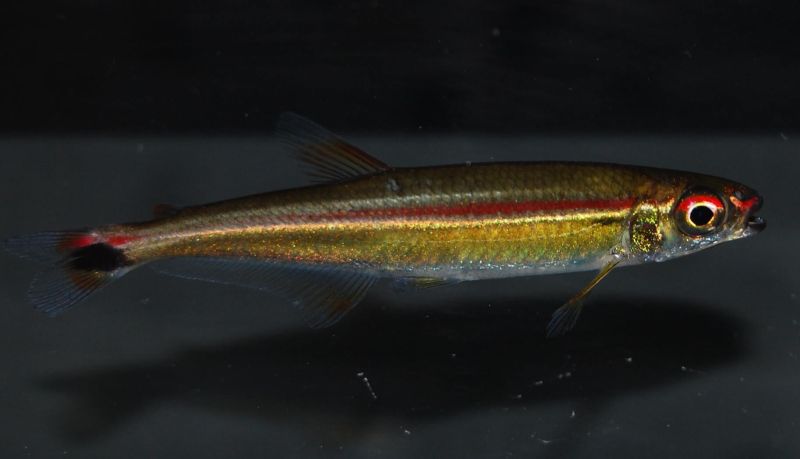
Iguanodectes adujai
Iguanodectidae · Géry, 1970
This species is known from the rio Negro within the Brazilan Amazon basin and upper Río Orinoco system in Venezuela. Type locality is 'Rio Adujá, Rio Itú, tributary of middle Rio Negro, Amazonia, Brazil'.
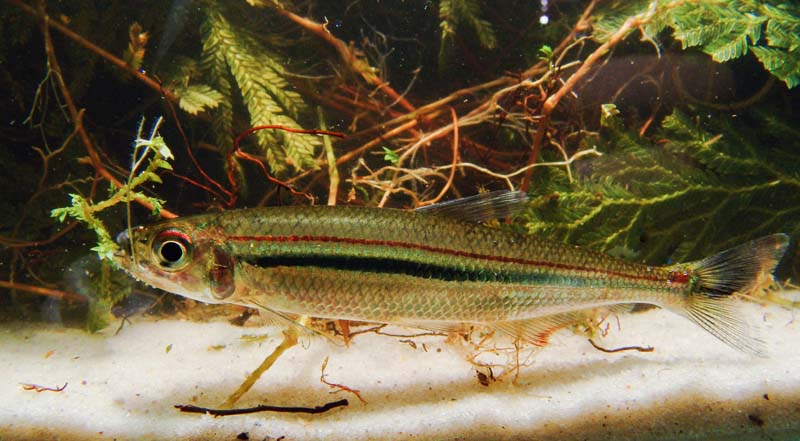
Iguanodectes geisleri
Iguanodectidae · Géry, 1970
I. geisleri is typically exported for the aquarium trade alongside the similar-looking congener I. adujai (Géry, 1970) but can be identified by presence (vs. absence in I. adujai) of a black lateral stripe on the body beneath the red stripe, and possession of 20-25 (vs. 28-34) anal-fin rays.
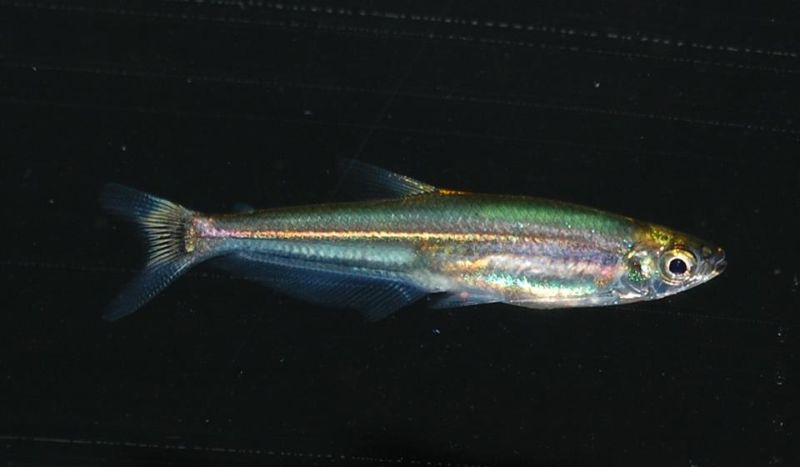
Iguanodectes spilurusGreen Line Lizard Tetra
Iguanodectidae · Günther, 1864
Widely-distributed throughout the Amazon, Orinoco, Essequibo, and Tocantins river systems in Brazil, Peru, Bolivia, Ecuador, Colombia, Venezuela, and Guyana. Type locality is 'Rio Cupai [= Rio Cupari], Rio Tapajós basin, Amazon River drainage, Pará State, Brazil'.
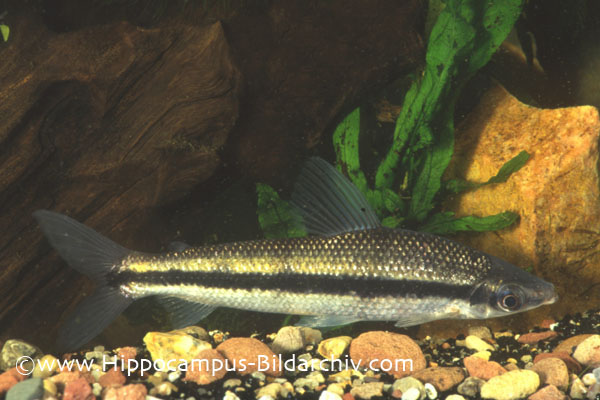
Laemolyta taeniataStriped Headstander
Anostomidae · Kner, 1858
L. taeniata is the largest-growing and second most widely-distributed member of the genus although it's a rarely-seen in the aquarium trade. It can be distinguished from all congeners since it uniquely possesses 5 lateral scale rows between the lateral line and dorsal-fin origin (vs. 4 or 6–8 in the remaining species).
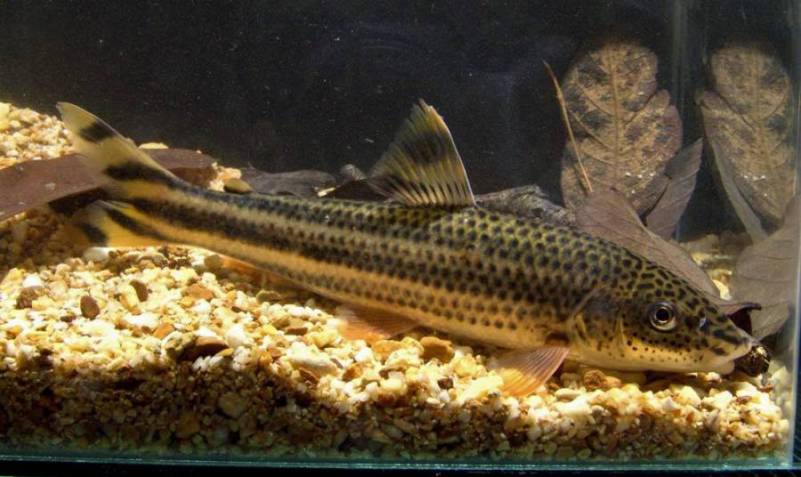
Leporellus vittatus
Anostomidae · Valenciennes, 1850
Type locality is given simply as 'Amazon River, Brazil' and according to current thinking this species has a huge natural range encompassing the Amazon River system in Brazil and Peru plus the Paraná-Paraguay drainage in southern Brazil and Paraguay and rio São Francisco basin in southern Brazil. Specimens in our images were collected fro...
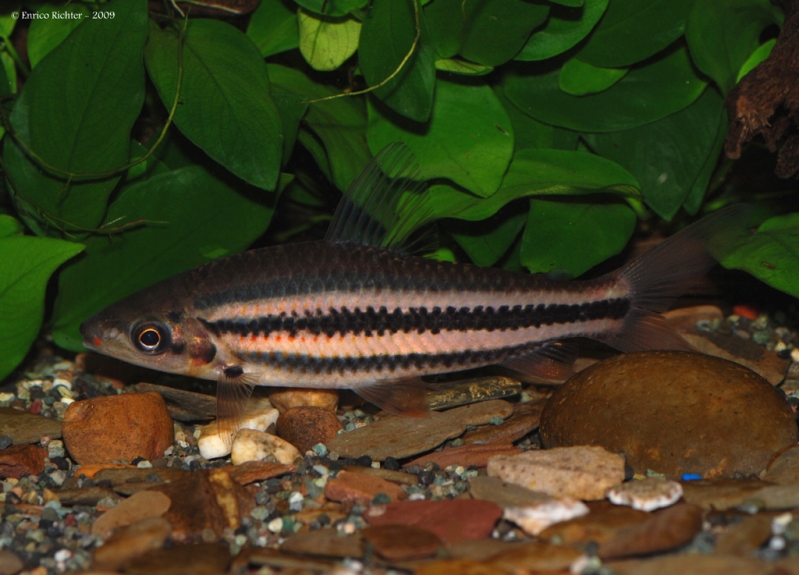
Leporinus arcusLipstick Leporinus
Anostomidae · Eigenmann, 1912
Type locality is 'Tukeit, Guyana', and this species is known from various river drainages of Venezuela, Guyana, Suriname and French Guiana including the Orinoco, Essequibo, and upper Courantyne (aka Corantijn) basins. Additional records exist from the upper Amazon basin in Guyana, these presumably corresponding to the Takutu river basin, itself part of the upper rio Branco.
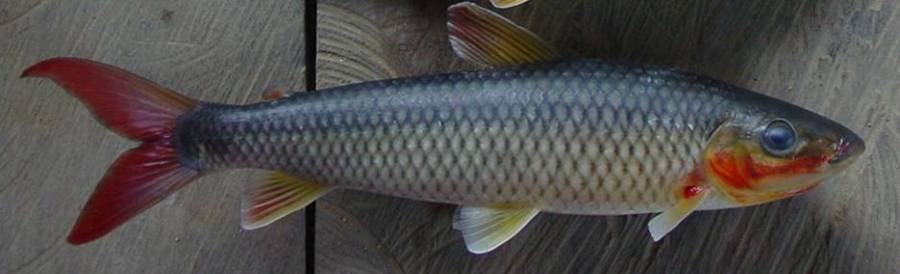
Leporinus brunneus
Anostomidae · Myers, 1950
Décor is relatively unimportant and maintenance simple provided sufficient space is available. A natural-style arr...
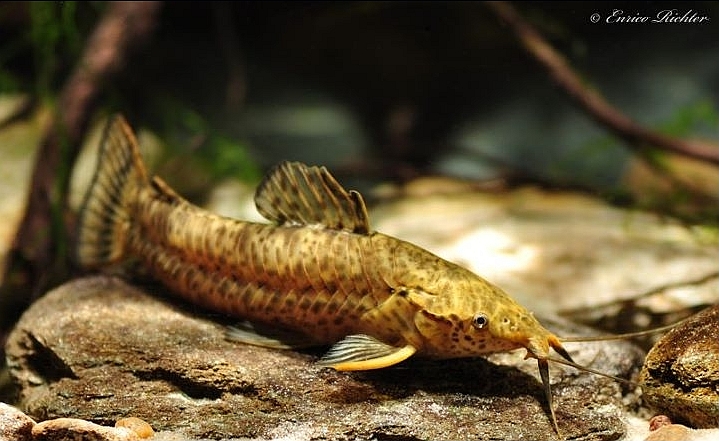
Megalechis pictaBar-tailed Hoplo
Callichthyidae · Müller & Troschel, 1849
This species was previously referred to as M. thoracata, but that name is now applied to the species with a relatively short dorsal-fin spine which was formerly known as M. personata. M. picta can be told apart from M. thoracata by presence of a dark vertical bar in the caudal-fin, a comparatively longer dorsal-fin spine (52.0-64.0% vs. 32.0-48.0% of dorsal-fin base in specimens measur...
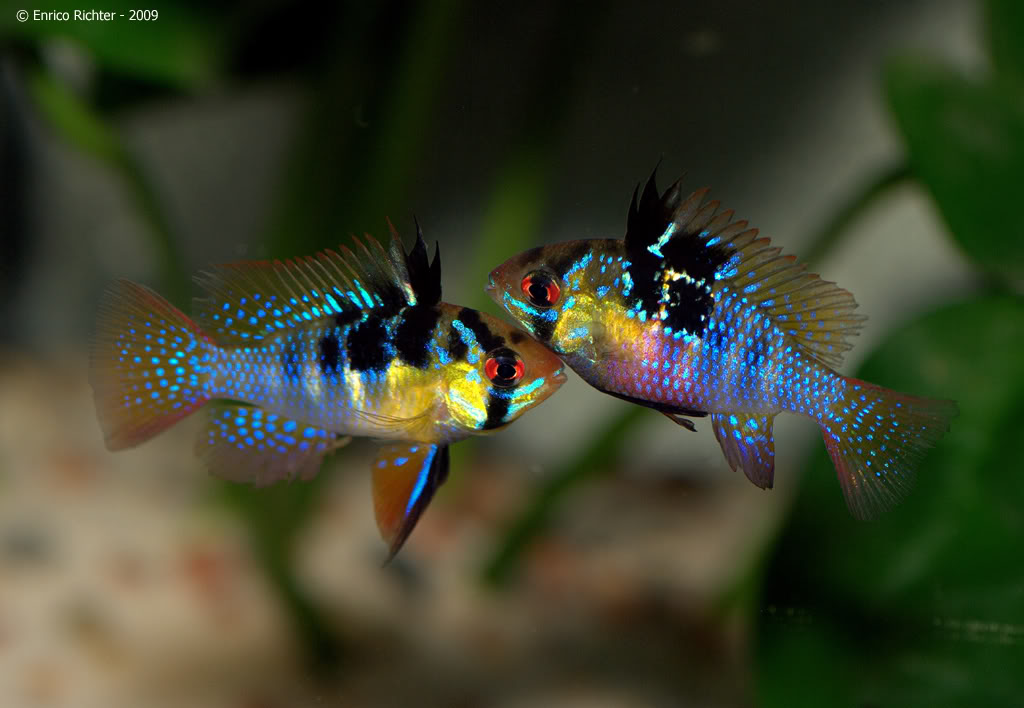
Mikrogeophagus ramireziRam
Cichlidae · Myers & Harry, 1948
M. ramirezi is also known by the names 'Ramirez' dwarf cichlid' and 'butterfly cichlid' and is among the more popular dwarf cichlids in the aquarium hobby. As a result, it is produced on a commercial basis in huge numbers and a number of ornamental strains have been developed including 'gold', 'long-finned' (both blue and gold forms; also traded as 'lyre-tail', 'veil-tail' and 'hi-fin'), 'electric/neon blue', 'super neon blue gold' 'pearl/perlmutt' and 'balloon'.
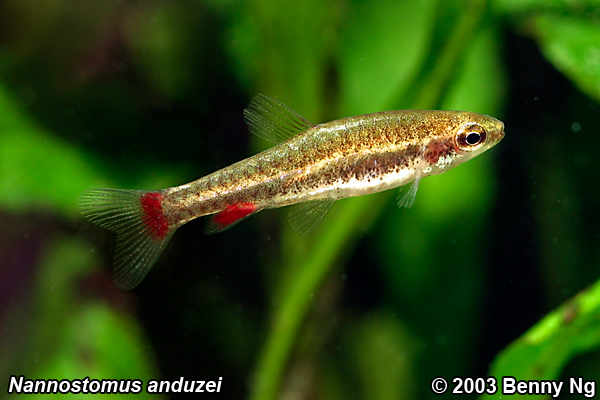
Nannostomus anduzei
Lebiasinidae · Fernandez & Weitzman, 1987
This is the smallest member of the genus and rarely traded in numbers, though it's a relatively common contaminant among shipments of wild fishes from Manaus. Unlike other Nannostomus spp. it does not exhibit a specific colour pattern of spots or bars at night-time, rather displaying an overall paleness. The family Lebiasinidae is included in the order Characiformes and sometimes split into the nominal subfamilies Lebiasininae a...
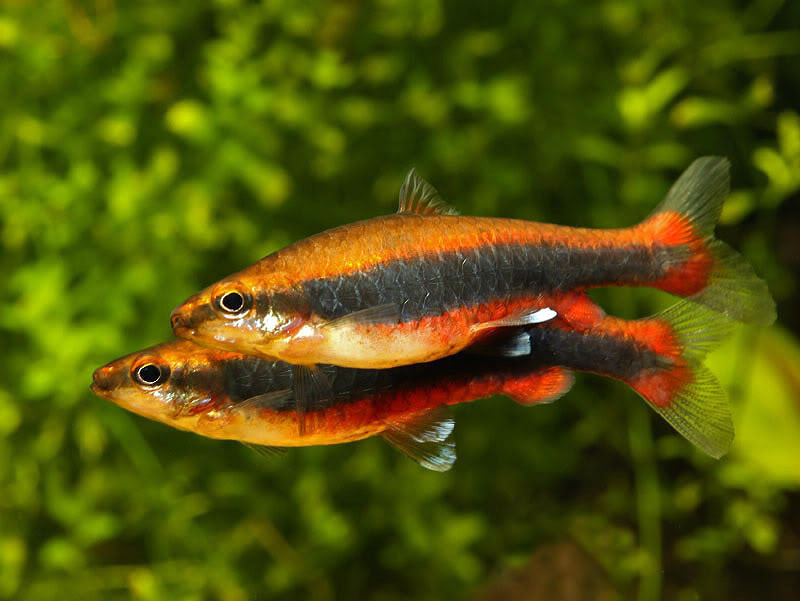
Nannostomus beckfordiGolden Pencilfish
Lebiasinidae · Günther, 1872
This is the type species of the genus, fairly ubiquitous in the aquarium trade, and represents an excellent choice for the newcomer to fishkeeping since it's less demanding than most congeners. It's sometimes referred to as 'Beckford's pencil fish' or 'brown pencilfish'. Don't worry if your fish look different when you switch on the aquarium lights after dark or in the morning as like most Nannostomus species it assumes a cryptic, vertically-barred colour pattern at ni...
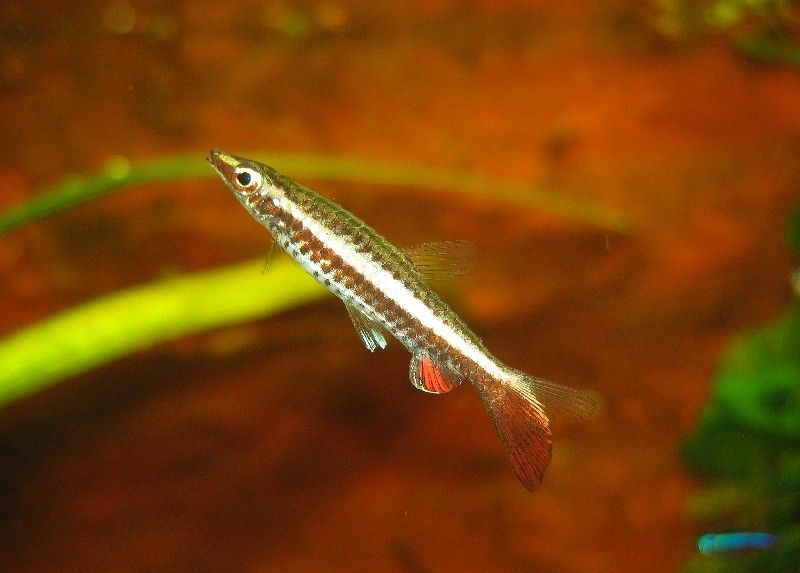
Nannostomus equesHockeystick Pencilfish
Lebiasinidae · Steindachner, 1876
This species has been referred to the genera Poecilobrycon and Nannobrycon in the past and in the aquarium hobby is also known as 'rocket', 'brown', 'brown-tailed', 'diptail', or 'tubemouth' pencilfish.It's a popular aquarium fish and has an interesting oblique swimming-style, a behavioural trait shared only with N. unifasciatus among congeners. In the original description the colour pattern is given by Steindachner as a brown lateral stripe exte...
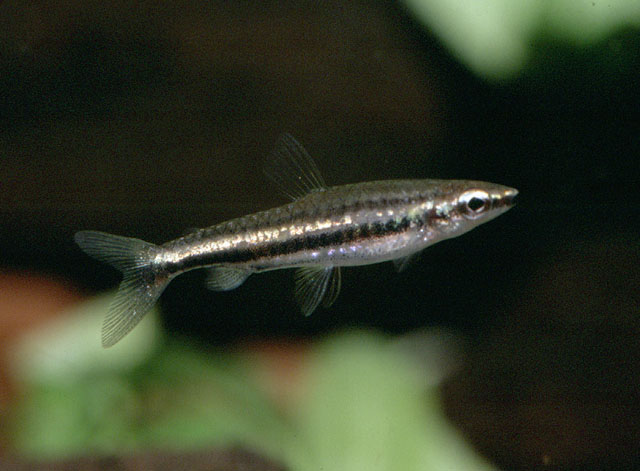
Nannostomus marilynaeGreenstripe Pencilfish
Lebiasinidae · Weitzman & Cobb, 1975
This species is also known as 'Marilyn's pencilfish'. It's rarely traded in numbers and more often seen as bycatch among shipments of other species, particularly Paracheirodon axelrodi. It can be identified by the following combination of characters: three dark lateral stripes (sometimes referred to as primary, secondary, and tertiary); nocturnal oblique bars relatively narrow, with the anterior bar reaching, but not extending past, the anterior base of the dorsal-fi...
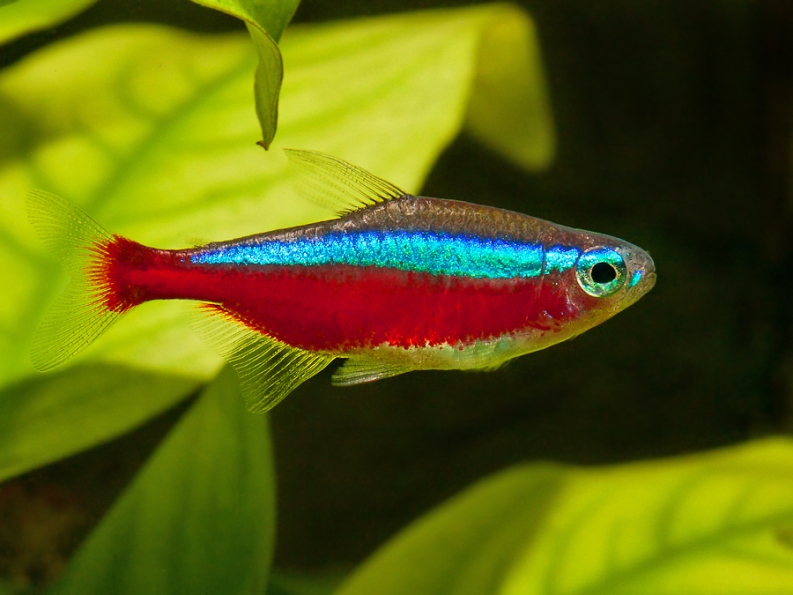
Paracheirodon axelrodiCardinal Tetra
Characidae · Schultz, 1956
It was initially going to be described as Hyphessobrycon cardinalis by Myers and Weitzman (1956) but just before this was due to be published Schultz presented an alternative description in the hobbyist magazine 'Tropical Fish Hobbyist' and named the fish after the publication's founder, Dr. Herbert R. Axelrod. A significant proportion of the fish available in the aquarium trade are still wild caught or derive from community-led breeding projects such as Project Piaba in the middle Negro region, where this sp...
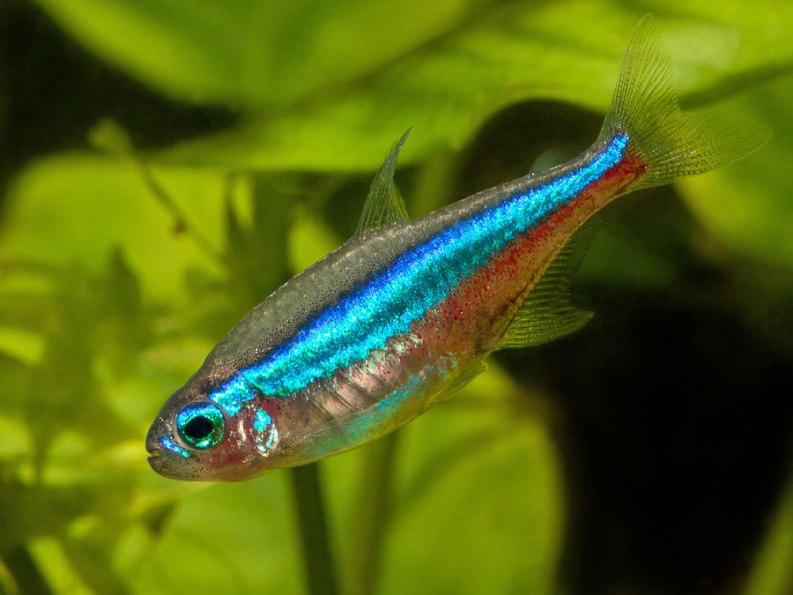
Paracheirodon simulansGreen Neon Tetra
Characidae · Géry, 1963
For aquarists perhaps more useful are the subtle differences in colour pattern with P. simulans differing from both P. innesi and P. axelrodi in possessing a greener (vs. bluer) lateral stripe which covers more (vs. less) of the eye/head and extends to the caudal-fin base (vs. terminating anterior to caudal-fin base), a lesser (vs. greater) amount of relatively duller (vs. brighter) red pigmentation on the flanks. The taxonomic history of all three species is complicated with earlier authors such as Géry (1960, 1977) ten...
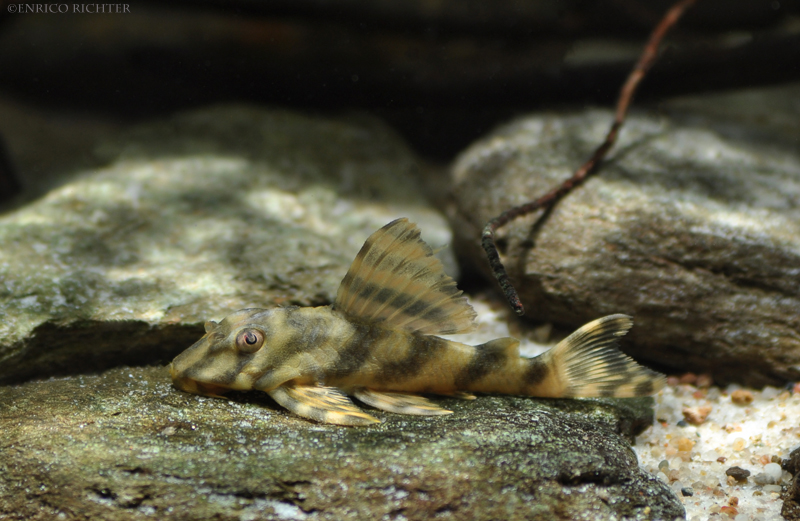
Peckoltia sp.L243
Loricariidae · authority not recorded
Known only from parts of the Río Orinoco drainage in Amazonas state, southern Venezuela. Sometimes confused with Peckoltia lineola (Armbruster, 2008) alongside which it's often exported for the aquarium trade.
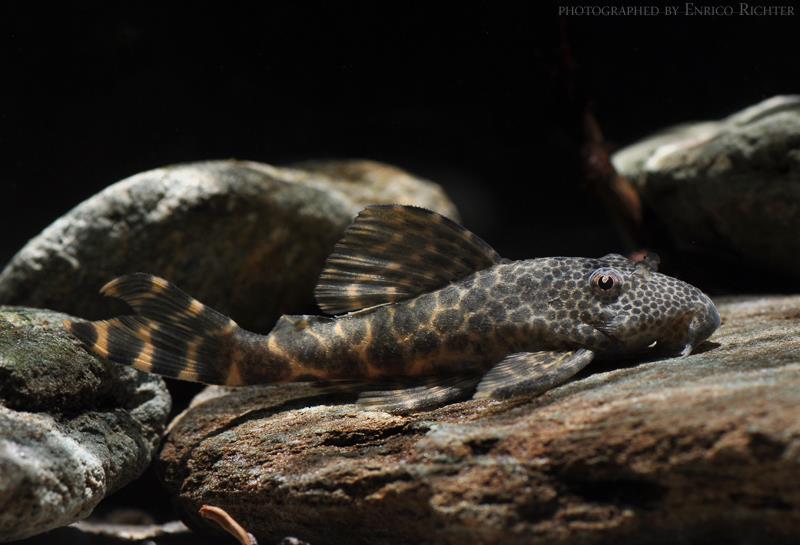
Peckoltia sp.L147
Loricariidae · authority not recorded
Known with certainty from tributaries of the middle Río Orinoco between the city of Puerto Ayacucho, Amazonas state, Venezuela and the lower Río Meta, Colombia. It may have a wider distribution within the Meta system since some reports suggest it to occur around Villavicencia, Colombia, some 600 km upriver.
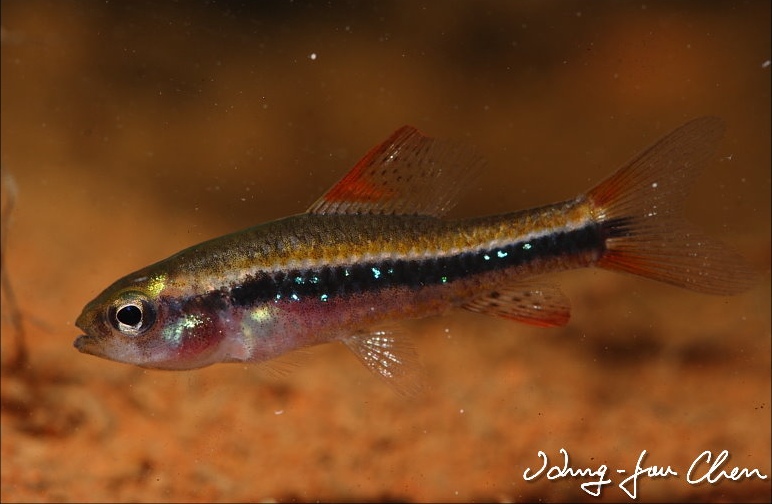
Poecilocharax weitzmaniBlack Darter Tetra
Crenuchidae · Géry, 1965
Quite widely distributed having been recorded from Brazil, Colombia, Peru and Venezuela. It's been collected from the upper parts of several major river drainages including the Río Negro, Río Orinoco (including the Río Inírida and Casiquiare canal) and Río Solimões. The type series was collected from 'Igarapé Préto', Brazil, said to be 60 kilometres to the south of the Colombian border city Leticia. Populations from Colombia and Brazil tend to be more intensely-coloured, and the Peruvian populations may apparently represent an undescribed species.
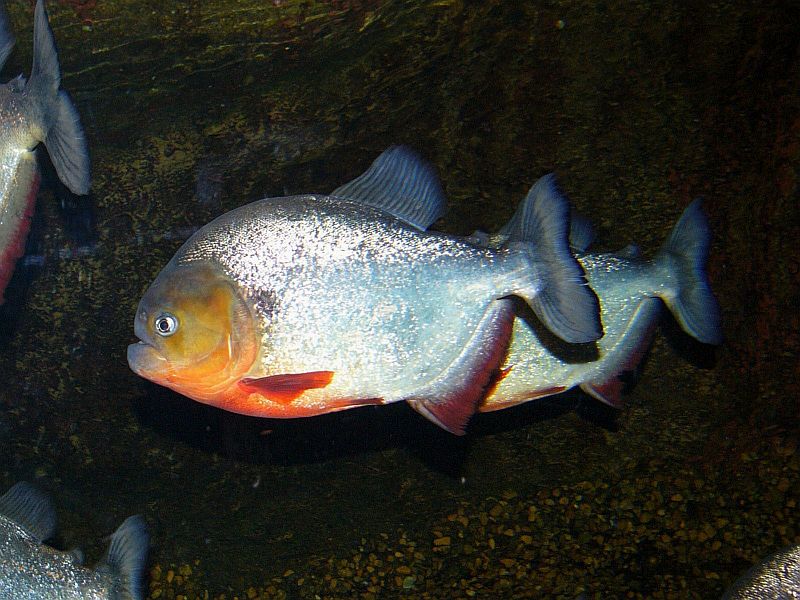
Pygocentrus caribaBlack Spot Piranha
Serrasalmidae · Humboldt, 1821
Has been recorded from major river channels, smaller tributaries, and floodplain lakes, many of which comprise acidic, mineral-poor blackwater environments with brownish, tannin-stained water, although it has been observed to inhabit clear waters as well. Many of its habitats lie within the Venezuelan and Colombian llanos, a vast, highly biodiverse system of tropical savannah grasslands, seasonally-flooded plains and forests covering an area measuring almost 600,000 square kilo...
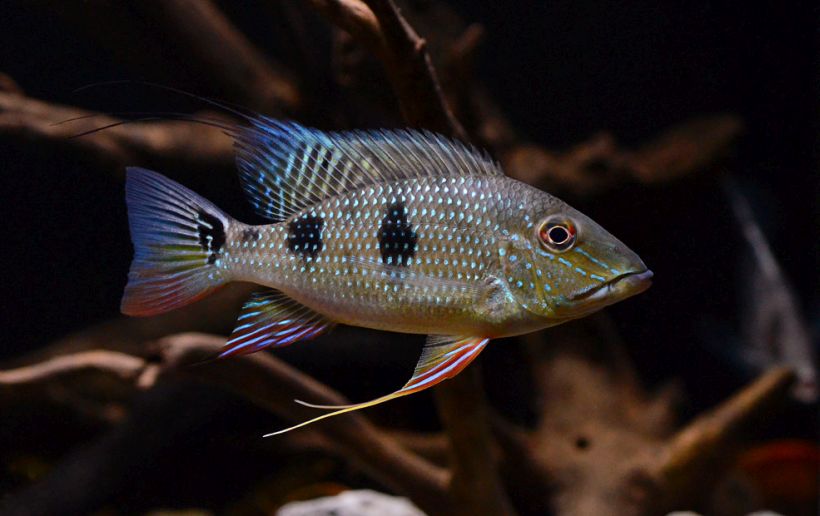
Satanoperca daemonThreespot Eartheater
Cichlidae · Heckel, 1840
S. daemon is relatively common in the aquarium trade but is by no means easy to maintain, with particular attention to space, diet, water quality, and chemistry required in order for it to thrive. It can be distinguished from other members of the genus by possessing two dark blotches on the flank and a prominent ocellus at the caudal-fin base. Among the named species it is most similar to...
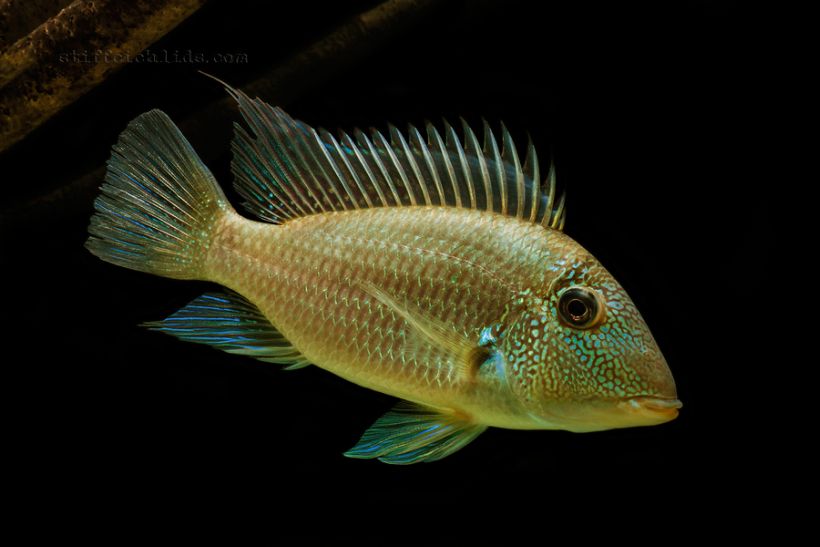
Satanoperca mapiritensis
Cichlidae · Fernández-Yépez, 1950
Recent genetic research has revealed there to be a possibility that although S. mapiritensis is genetically distinct from S. leucosticta, it may turn out to be conspecific with S. jurupari and S. rhynchitis. There appears to be no clear genetic separation between these three putative species nor a form known to aquarists as S. sp. 'Negro-Alto Orinoco' which replaces S. mapiritensis in the middle and upper Orinoco, Casiquiare Canal, and upper rio Negro.
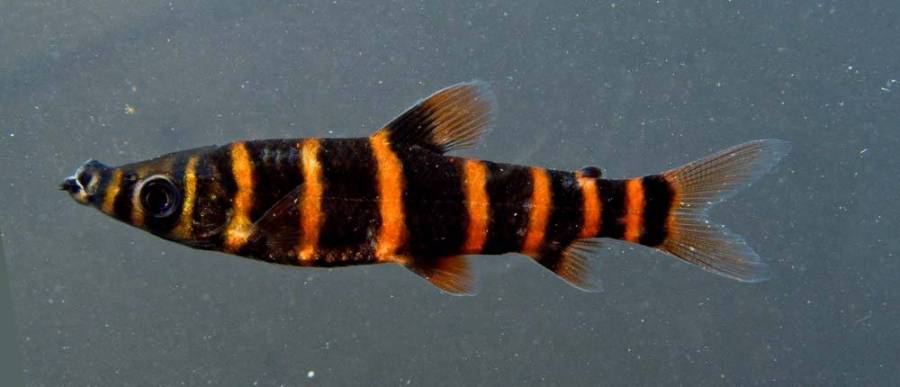
Synaptolaemus latofasciatus
Anostomidae · Steindachner, 1910
This species was described from a single specimen and included in the genus Leporinus until 2011 at which point the holotype was examined and recognised as corresponding to the fish described as Synaptolaemus cingulatus (Myers & Fernández-Yépez, 1950).
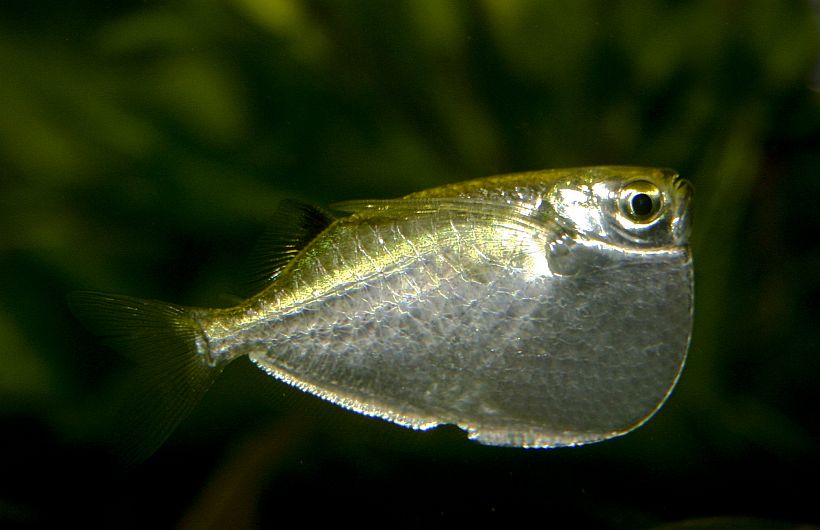
Thoracocharax stellatusSpotfin Hatchetfish
Gasteropelecidae · Kner, 1858
T. stellatus is superficially similar to its only congener T. securis, but can immediately be identified by the presence (vs. absence) of a prominent dark spot in the dorsal-fin. It is sometimes traded as 'platinum hatchetfish'. The genus Thoracocharax was originally erected by Fowler in 1906 as a subgenus of Gasteropelecus, but was elevated to generic status by Weitzman (1960).
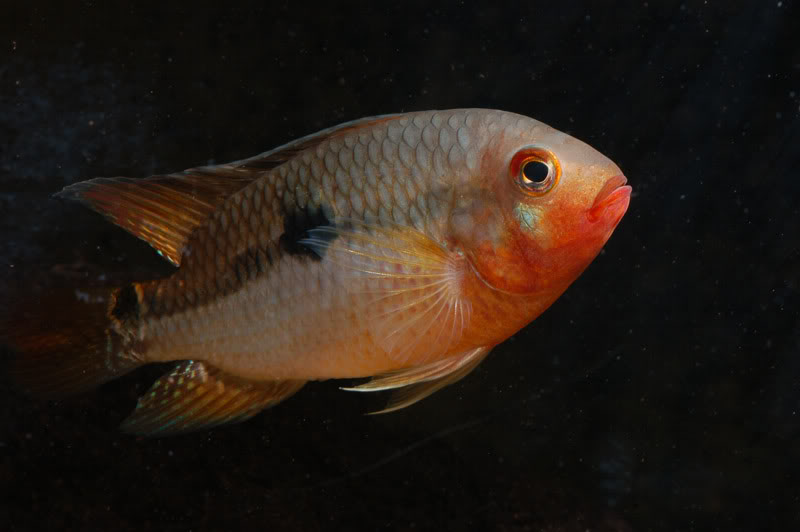
Aequidens tetramerusSaddle Cichlid
Cichlidae · Heckel, 1840
This is the type species of the genus Aequidens and has the widest distribution of any member species. It exists in various colour forms depending on locality with variants from Ecuador and Peru being particularly sought after since they develop striking red (Ecuador) or orange (Peru) colouration on the lower part of the jaw, head and anterior portion of the belly whereas those from Brazil tend to have an overall grey/blue/green colouration, for example. Despite its type status it's long...
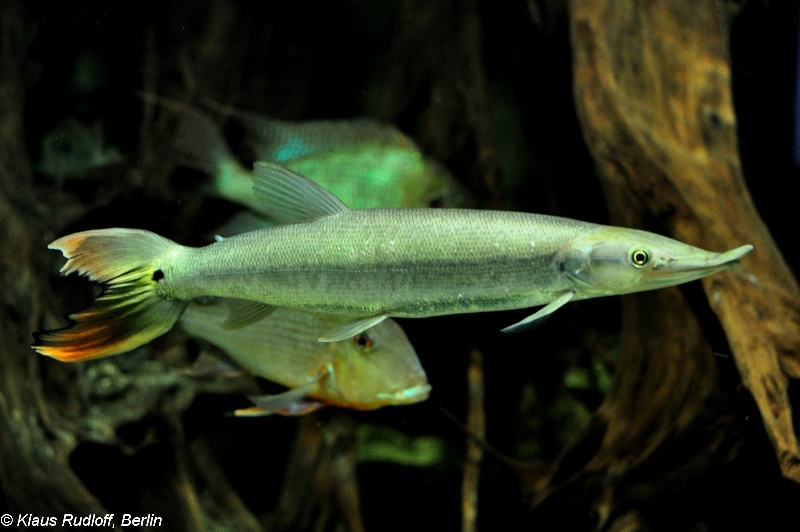
Boulengerella cuvieri
Ctenoluciidae · Spix & Agassiz, 1829
It's known by various vernacular names including 'Pirá-pacu', 'Pira-pucu' or 'Diente de cao' (central Amazon), 'Bicuda' or 'Uena' (rio Tocantins), 'Bicuda' (rio Tapajós), 'Aguejeta' or 'Picua' (Venezuela), and 'Moruwi' or 'Pirapoko' (Guyana). The entire dorsal-fin base is located anteriorly to a vertical through the anal-fin origin and this character distinguishes it from all other ctenolucids except B. lucius and B. xyrekes.
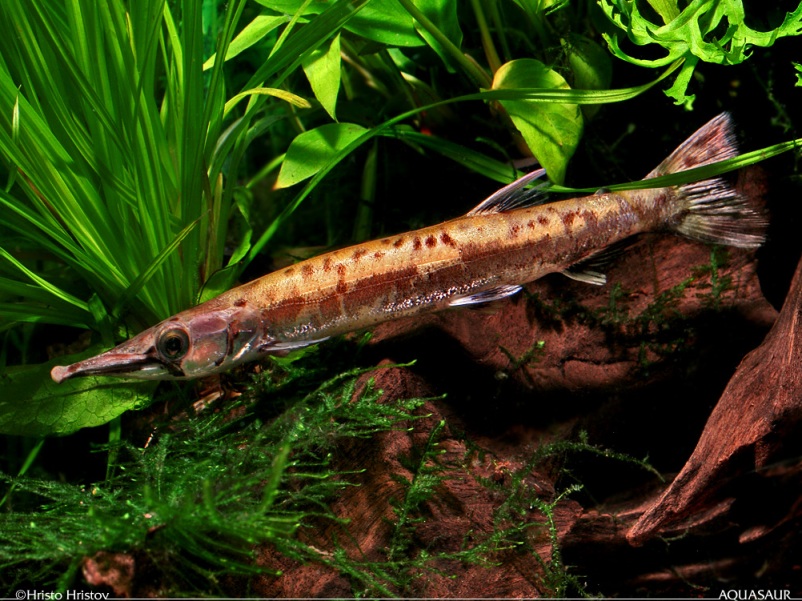
Boulengerella lucius
Ctenoluciidae · Cuvier, 1816
This species is largely unsuitable for the home aquarium given its eventual size and natural behaviour, and we know of only a handful of private aquarists with the facilities required to house it long-term. Nonetheless juveniles and subadults are sometimes available in the trade although often misidentified as the congener B. maculata.
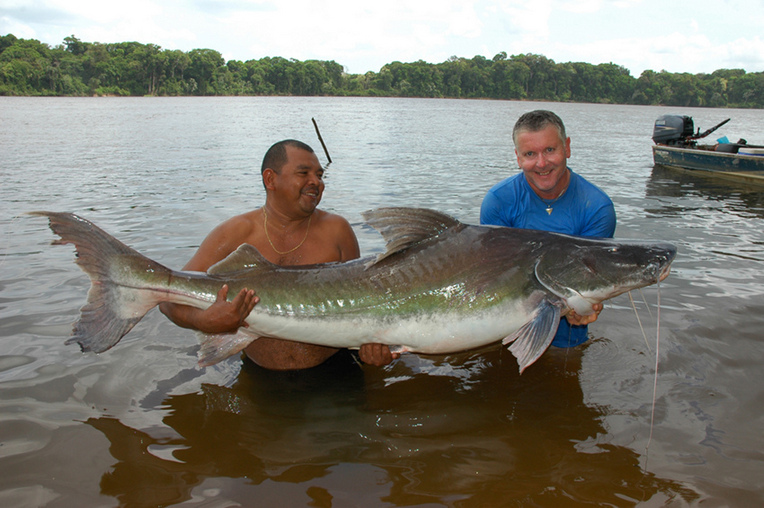
Brachyplatystoma filamentosumPiraíba
Pimelodidae · Lichtenstein, 1819
In the Amazon region it is only specimens larger than around 160 cm and werighing in excess of 50 kg that are referred to as 'Piraíba' with the name 'filhote' normally applied to smaller individuals. Other vernacular names include 'Salton catfish', 'Kumakuma'; and 'tiger antenna catfish'; with members of the genus often referred to collectively as 'goliath catfishes'.
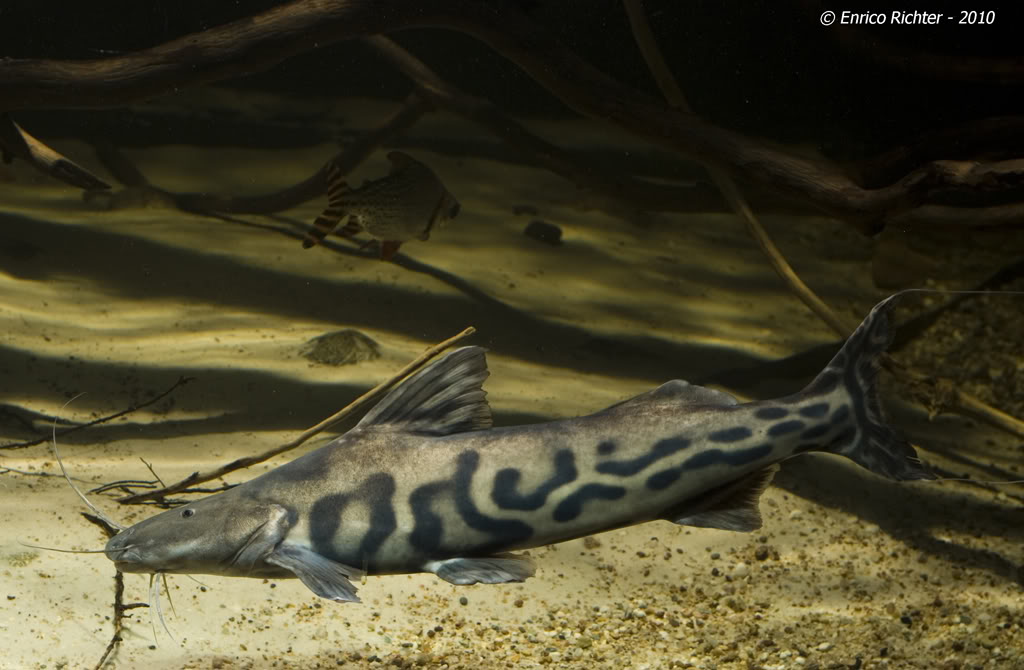
Brachyplatystoma juruenseGold Zebra Catfish
Pimelodidae · Boulenger, 1898
Brachyplatystoma spp. are distinguished from all other catfishes by two synapomorphies. The first comprises several morphological characters relating to the skull, specifically that the mandibular suspensorium (that which connects the lower jaw bone to the skull) is greatly expanded mediodorsally to form a large plate approaching the parasphenoid bone, with the hyomandibula and metapterygoid similarly enlarged.
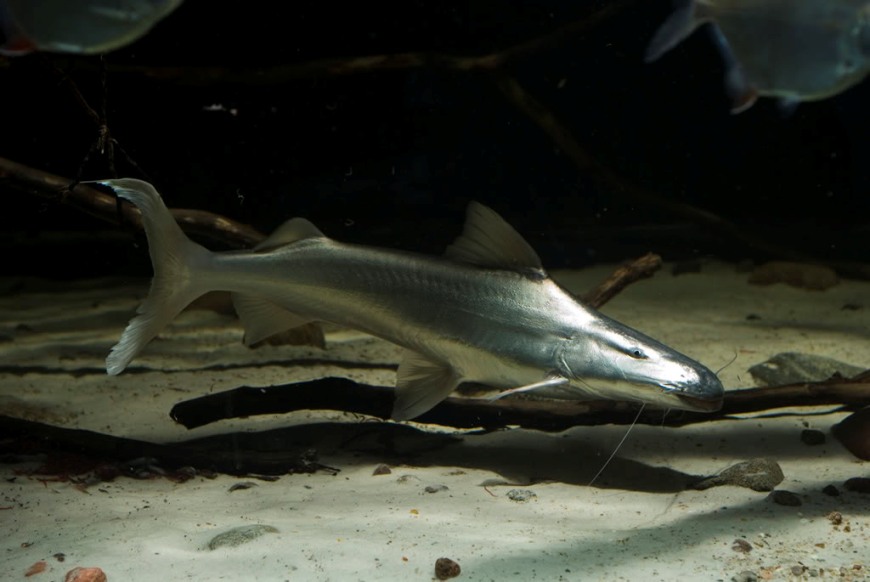
Brachyplatystoma rousseauxiiDourada
Pimelodidae · Castelnau, 1855
Study of B. rousseauxii has revealed that sexually mature adults are found only in the western Amazon, with no mature individual ever recorded east of Manaus despite the intensive commercial fishery operating there. The total distance covered by some populations during migration from the delta was as much as 5500 km, making it the longest known in any freshwater fish species.
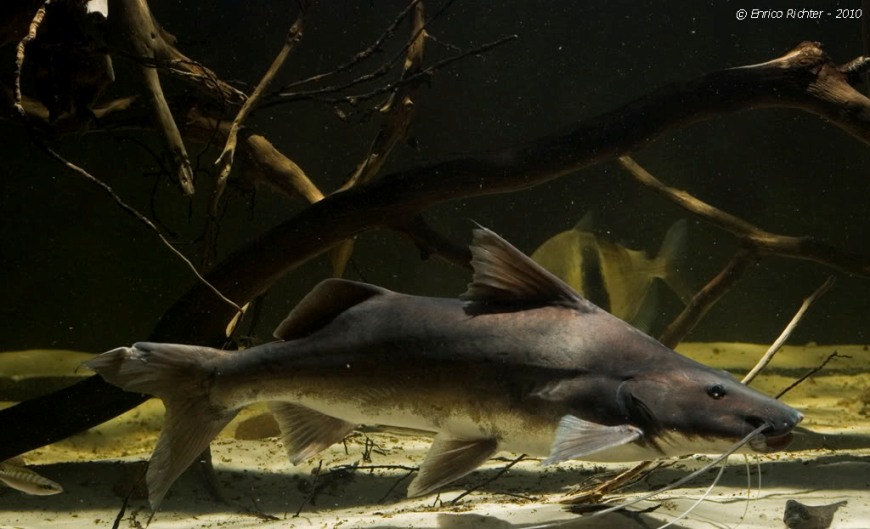
Brachyplatystoma vaillantii
Pimelodidae · Valenciennes, 1840
This rich feeding ground is exploited until the sea water returns, at which point the catfishes begin to migrate upstream in massive numbers, moving up the Amazon and its tributaries. Sexually mature individuals are not normally recorded during these events so they're thought related to feeding and dispersal rather than spawning. The fish are subject to intensive capture by commercial and artisanal fishing operations during this upstream movement.
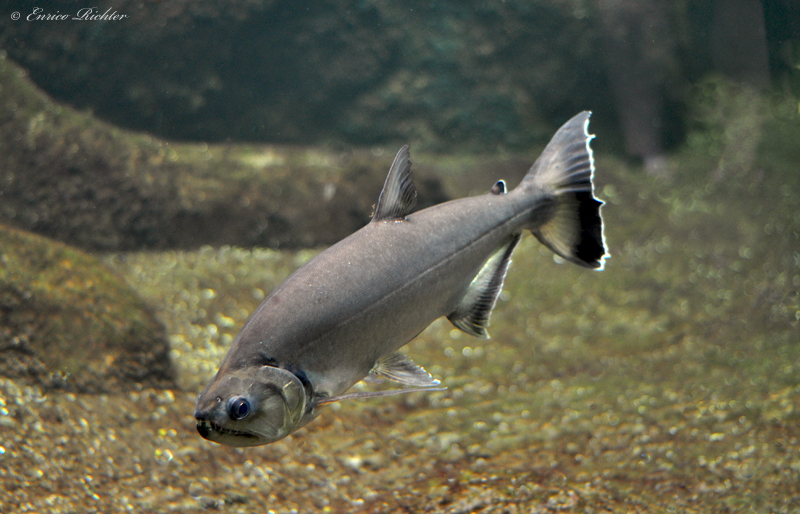
Hydrolycus armatusPayara
Cynodontidae · Jardine, 1841
H. armatus should probably not be considered a home aquarium subject at all given its eventual size and migratory natural behaviour. Unfortunately, juveniles are seen for sale quite regularly, most often without adequate information regarding their long-term care, and it's common to see them being maintained in medium-sized aquaria with no possibility of achieving their potential.
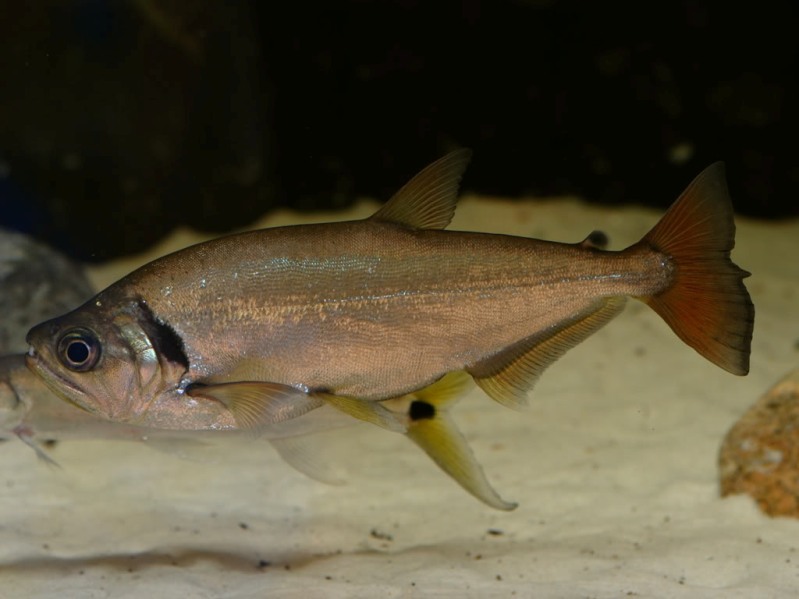
Hydrolycus tatauaia
Cynodontidae · Toledo-Piza, Menezes & Santos, 1999
Vernacular names in Brazil include 'Cachorra' or 'Pirandirá', although these are also applied to congeners. It can be told apart from all congeners by the following combination of characters: head and body silvery with dark dorsal surface; an elongate dark blotch posterior to the opercle; dorsal, caudal and anal-fin rays reddish to orange proximally with some individual variation in intensity and tonality; adipose fin dark, with diffuse black pigmentation.
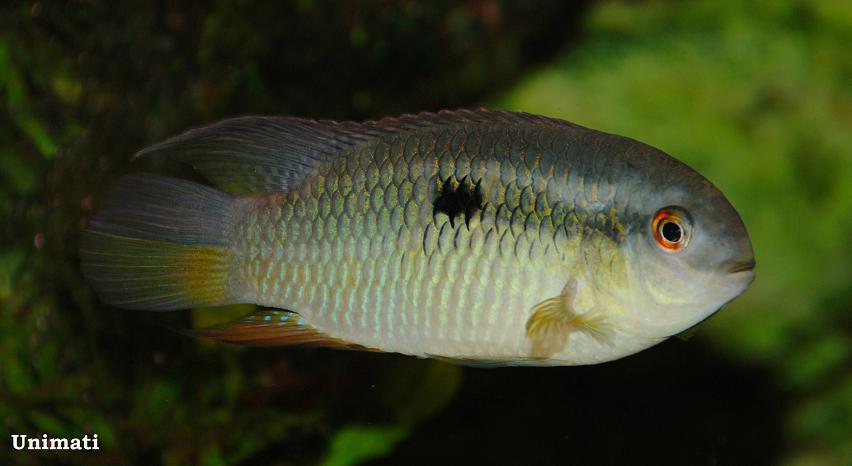
Laetacara fulvipinnis
Cichlidae · Staeck & Schindler, 2007
Has been collected from habitats containing clear, soft, acidic, tea-coloured blackwater, most typically among leaf litter or submerged vegetation in very shallow (10-50 cm depth) water along the margins of streams and other minor tributaries. At a village called El Niñal close to the mouth of the rio Pasimoni in the Casiquiare drainage pH was...
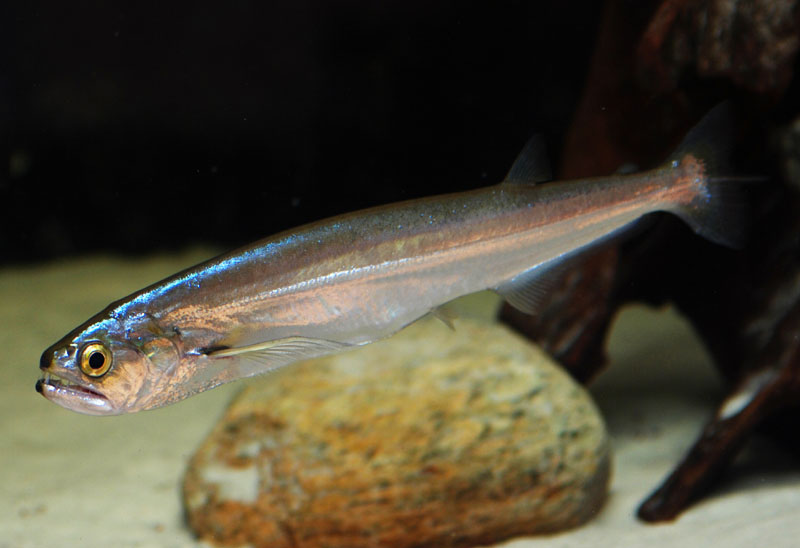
Rhaphiodon vulpinusBiara
Cynodontidae · Spix & Agassiz, 1829
R. vulpinus is the most widely-distributed member of the family Cynodontidae. Type locality is given simply as 'Brazilian rivers', but this species is currently understood to be distributed in the Amazon basin from the Río Ucayali system in Peru, eastward as far as the rio Xingu in Brazil, plus the rio Tocantins and Rio Capim basins. It's also known from the Río Orinoco ba...
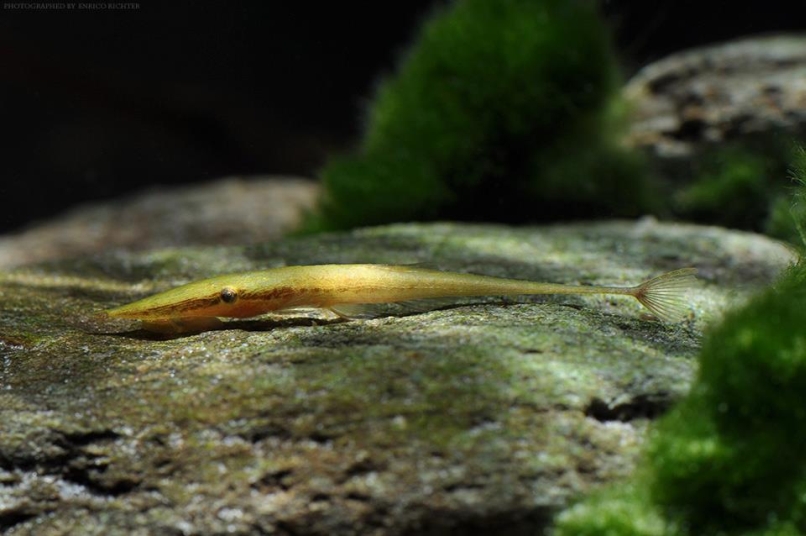
Acestridium dichromumGreen Whiptail
Loricariidae · Retzer, Nico & Provenzano, 1999
Acestridium dichromum
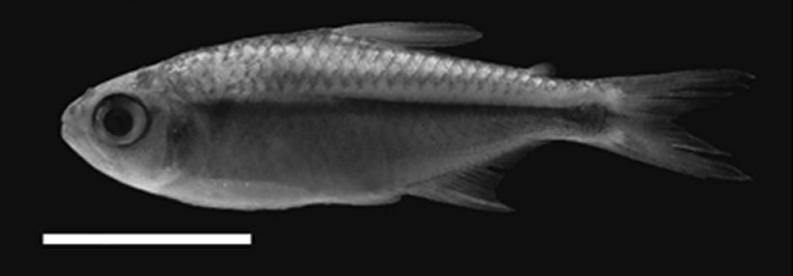
Hyphessobrycon acaciae
Characidae · García-Alzate, Román-Valencia & Prada-Pedreros, 2010
It differs from H. paucilepis by possessing 30-31 scales in the lateral row (vs. 28-29), 3 scales between the lateral line and anal-fin (vs. 4), 10 predorsal scales (vs. 9), ii, 9 dorsal-fin rays (vs. iii, 8), 4 maxillary teeth (vs. 1), and the distance between the dorsal-fi...
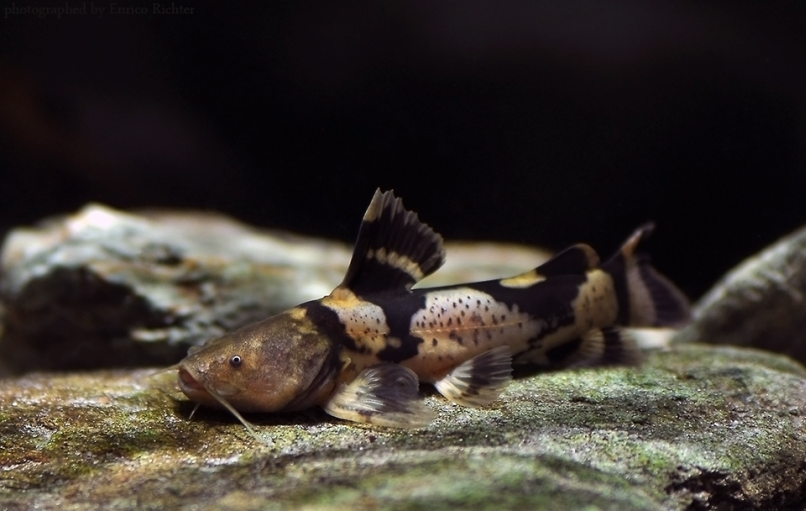
Pseudopimelodus bufoniusGiant Bumblebee Catfish
Pseudopimelodidae · Valenciennes, 1840
Pseudopimelodus bufonius