Results for “species”
Type a name: scientific, common, or one a species used to go by. Or narrow the catalogue with the filters.
Filters
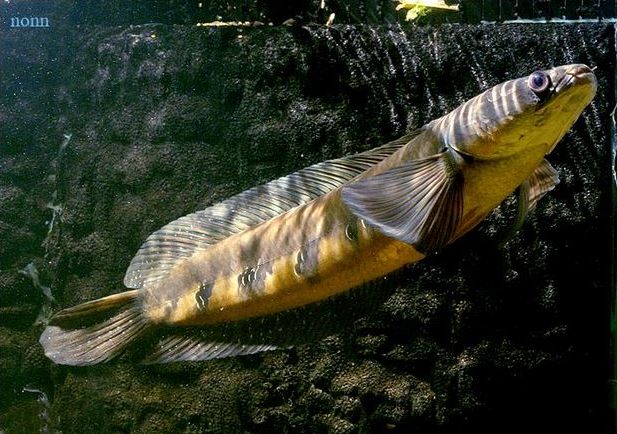
Channa marulioidesEmperor Snakehead
Bleeker, 1851
Max length650mm SL26in SLTanknot recordedTemp22–30°C72–86°FpH6.0–8.0This species is often confused with the nominal congeners C. marulius (Hamilton, 1822) and C. melanoptera (Bleeker, 1855) with all three presenting taxonomic problems. For example, C. marulioides exhibits a number of variations in colour pattern depending on collection locality with the most common possessing a brownish base colour with a series of dark, chevron-like markings along each flank and some scales margined posteriorly in white.
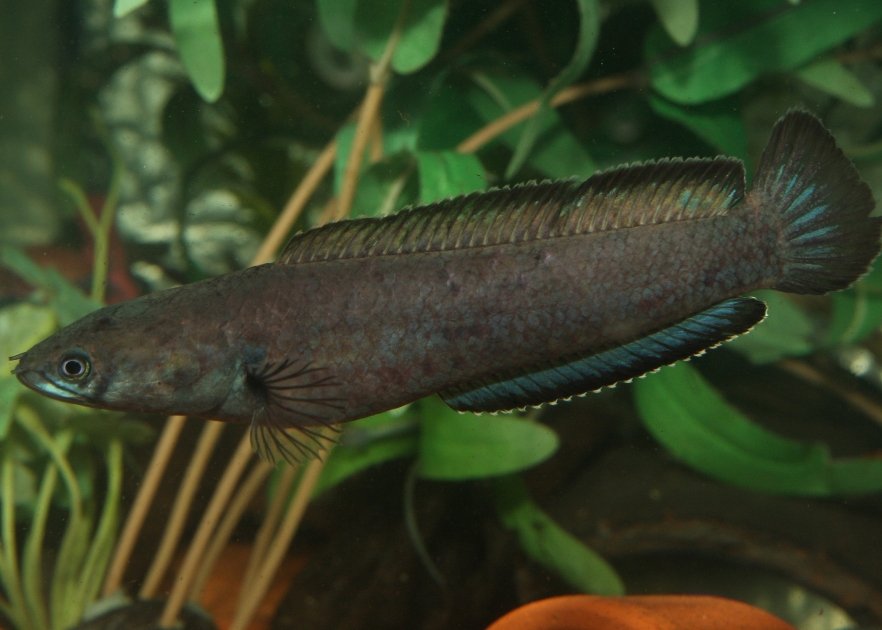
Channa orientalisCeylon snakehead
Bloch & Schneider, 1801
Max length100mm SL3.9in SLTank90 × 30cm36 × 12inTemp16–24°C61–75°FpH5.0–7.5Endemic to southwestern Sri Lanka where it appears restricted to the so-called ‘wet zone’ (see 'Habitat'). Confirmed localities are all within the Bentota and Kelani river systems and Kottawa Forest Reserve in Galle district, Southern Province. Type locality is given simply as 'Habitat in India orientale' and this appears to have caused confusion regarding the species' distribution with it of...
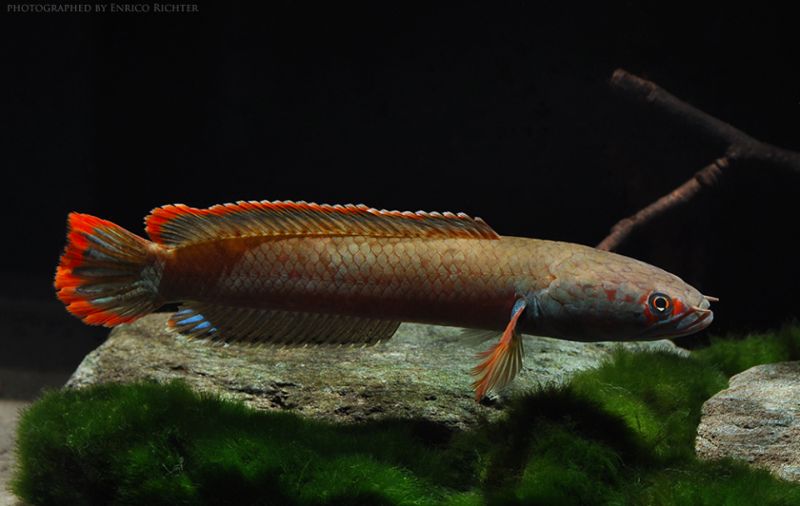
Channa sp. 'fire and ice'
authority not recorded
Max length150mm SL6in SLTank120 × 30cm48 × 12inTemp22–28°C72–82°FpH6.0–7.5This unidentified species first appeared in the aquarium trade during 2009. It's easily told apart from similar-looking congeners by the patches of vivid red pigmentation surrounding the eye and sides of the mouth plus the thick, reddish, marginal band in the caudal-fin.
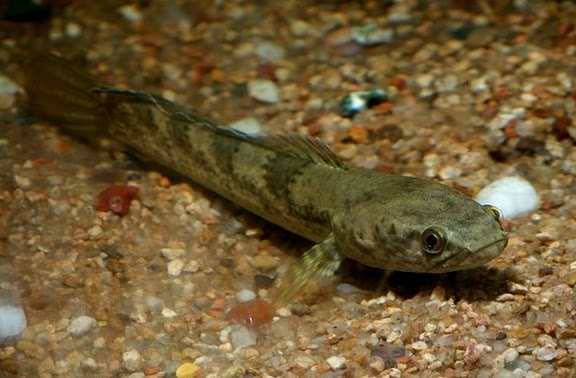
Channa sp. 'five stripe'
authority not recorded
Max lengthnot recordedTank90 × 30cm36 × 12inTemp15–28°C59–82°FpH6.0–8.0Based on its colour pattern and limited details regarding its natural habitat this species may be adapted to dwelling between and under rocks. Alipurduar lies in the moist tropical region of floodplains and foothills of the eastern Himalayas commonly referred to as the Dooars or Duars, traditionally considered the gateway to Bhutan.
Charax condeiSmall-scale Glass Tetra
authority not recorded
Max length55mm SL2.2in SLTank60 × 38cm24 × 15inTemp23–25°C73–77°FpH6.0–7.4This rarely seen Characin occasionally shows up in the trade, usually as a contaminant among shipments of more popular species. It's sometimes referred to as Asiphonichthys condei in older literature.
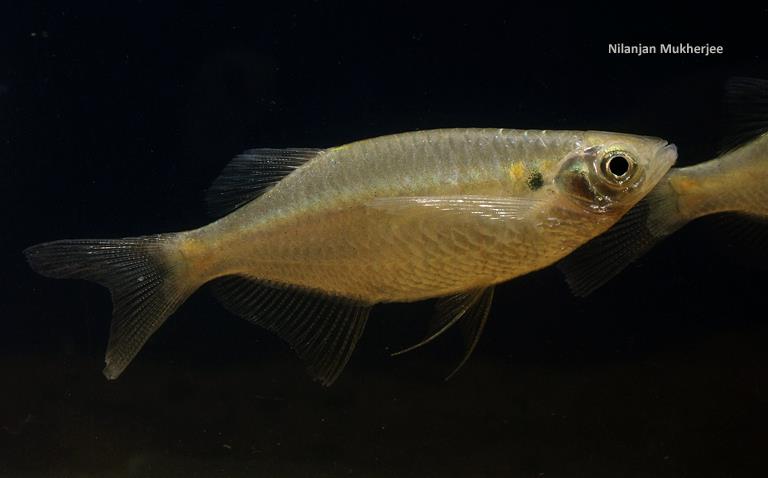
Chela cachiusNeon Hatchet Fish
Hamilton, 1822
Max length50mm SL2.0in SLTank90 × 30cm36 × 12inTemp18–24°C64–75°FpH6.0–8.0It is currently the only valid member of the genus but it is possible that additional taxa exist, particularly in Myanmar, while a number of former species are contained within the Laubuka assemblage, to which C. cachius is closely related. Phylogenetic studies suggest the existence of a monophyletic clade consisting of the genera Devario, Chela, Laubuca, Microdevario and Microrasbora plus the genus Betadevario.
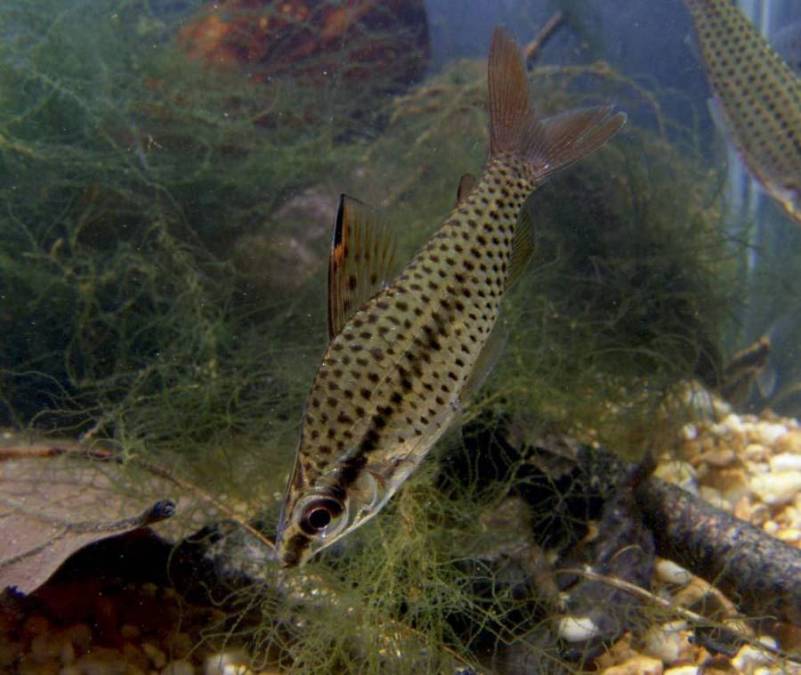
Chilodus punctatusSpotted Headstander
Müller & Troschel, 1844
Max length80mm SL3.1in SLTank90 × 30cm36 × 12inTemp20–28°C68–82°FpH5.0–7.5Omnivorous and will accept most foods offered, with the stomach contents of wild specimens varying on a seasonal basis but mostly comprising insects and insect larvae (orders Trichoptera, Hemiptera, Homoptera) plus some terrestrial fruits and even scales of other fishes (Sánchez et al., 2003). In the aquarium offer live Daphnia, Artemia, Moina, bloodowrm, etc., vegetable matter in the form of blanched spinach, lettuce, cucumber, fruit, algae wafers, etc., and good quality, sinking dried foods.
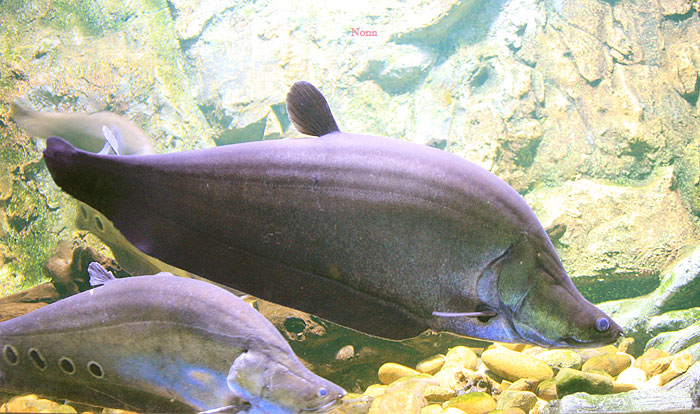
Chitala lopisGiant Featherback
Bleeker, 1851
Max length1500mm SL59in SLTanknot recordedTemp22–28°C72–82°FpH6.0–8.0This species is not collected for the aquarium trade at time of writing. In contrast to other members of the genus older juvenile and adult individuals lack dark markings on the body while the jaw is more pronounced.
Cichla monoculusTucanare Peacock Bass
authority not recorded
Max length800mm SL31in SLTanknot recordedTemp25–28°C77–82°FpH6.5–7.5Due to their large size, Peacock Bass are only really recommended for the experienced fishkeeper that can house them adequately. That said, they are a hardy and robust species that will adapt to a variety of conditions. Peacock Bass are becoming much more available in the hobby and are often seen for sale as cute 2" babies, often tempting people into buying a fish they will not be able to care for in the long term. Peacock Bass are also fished as a sport fish....
Cichla ocellarisPeacock Bass
authority not recorded
Max length750mm SL30in SLTanknot recordedTemp24–27°C75–81°FpH6.5–7.0Due to their large size, Peacock Bass are only really recommended for the experienced fishkeeper that can house them adequately. That said, they are a hardy and robust species that will adapt to a variety of conditions. Peacock Bass are becoming much more available in the hobby and are often seen for sale as cute 2" babies, often tempting people into buying a fish they will not be able to care for in the long term. Peacock Bass are also fished as a sport fish....
Cichla orinocensisOrinoco Peacock bass
authority not recorded
Max length600mm SL24in SLTanknot recordedTemp27–29°C81–84°FpH5.5–6.5Due to their large size, Peacock Bass are only really recommended for the experienced fishkeeper that can house them adequately. That said, they are a hardy and robust species that will adapt to a variety of conditions. Peacock Bass are becoming much more available in the hobby and are often seen for sale as cute 2" babies, often tempting people into buying a fish they will not be able to care for in the long term. Peacock Bass are also fished as a sport fish....
Clarotes laticepsWidehead Catfish
authority not recorded
Max length800mm SL31in SLTank150 × 60cm60 × 24inTemp20–26°C68–79°FpH6.5–8.0This is not a particularly common species in the trade, probably as it's not especially attractive to look at and grows very large. It's unsuitable for all but the biggest aquaria.
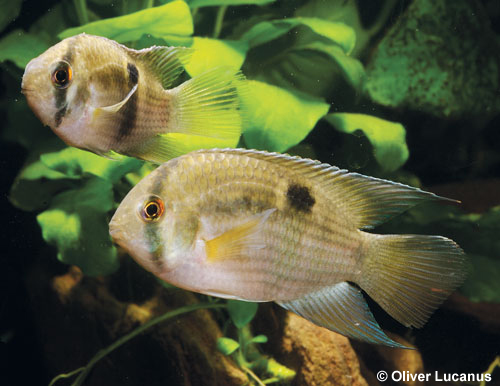
Cleithracara maroniiKeyhole Cichlid
Steindachner, 1881
Max length110mm SL4in SLTank90 × 30cm36 × 12inTemp21–28°C70–82°FpH4.0–7.5This species can be told apart from relatives by the characteristic 'keyhole' shaped marking on each side of the body. It's one of few fishes in which the current generic name is derived from the common name popularised in the aquarium hobby with 'Cleithracara' a combination of the Greek kleithron, meaning lock, and, acará, the Guaraní word for cichlids.
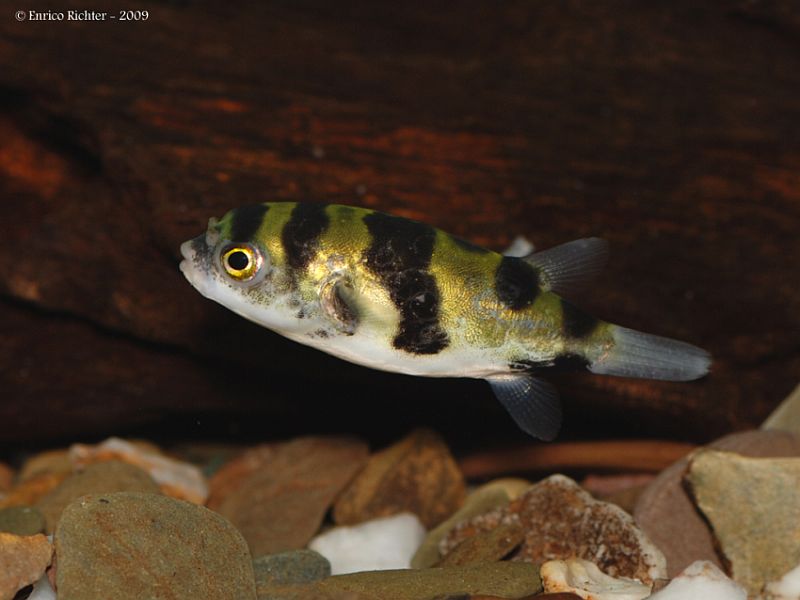
Colomesus asellusAmazon Puffer
Müller & Troschel, 1849
Max length128mm SL5in SLTank120 × 30cm48 × 12inTemp20–26°C68–79°FpH5.5–8.0This species is also referred to as 'South American puffer', 'SAP', 'Amazonian puffer', 'Peruvian puffer', or 'Brazilian puffer' in the ornamental trade. Within the genus Colomesus, C. asellus can be immediately identified by possessing a unique transverse row of dermal flaps across the chin which is absent in its congeners C. psittacus and C. tocantinensis.
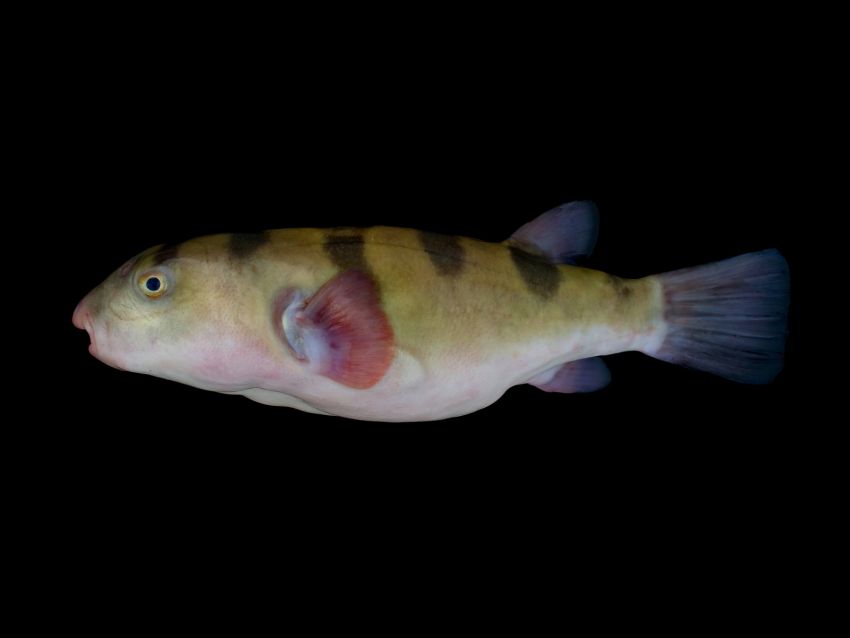
Colomesus psittacusBanded Puffer
Bloch & Schneider, 1801
Max length290mm SL11in SLTank180 × 60cm72 × 24inTemp20–26°C68–79°FpH7.0–9.0Although it does penetrate the lower basins of rivers, particularly the Amazon where it has been collected from the rio Xingu several hundred kilometres from its mouth, this species is predominantly an inhabitant of mangrove swamps, estuaries, and other such saline habitats. It is particularly common in tidal channels, shallow inshore lagoons, and the lower reaches of rivers.
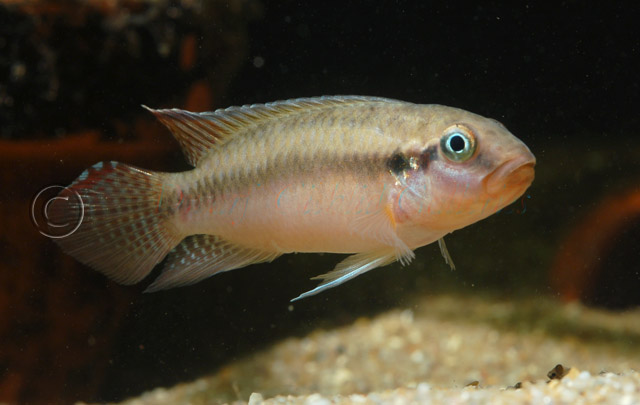
Congochromis sabinae
Lamboj, 2005
Max length70mm SL2.8in SLTank60 × 30cm24 × 12inTemp24–27°C75–81°FpH4.0–6.0This species was present in the hobby for some time prior to being officially described and the spectacular red fish first exported by Pierre Brichard in the 1960s appears to be a regional form of it. It was also known variously as Nanochromis sp. 'Bamanja', N. sp. 'Genema', N. sp. 'Makoua' and N. sp. Bloody Mary' prior to description, and continues to be mislabelled as N. squamiceps on trade lists. Diagnosis of C. sabinae is possible via a combination of c...
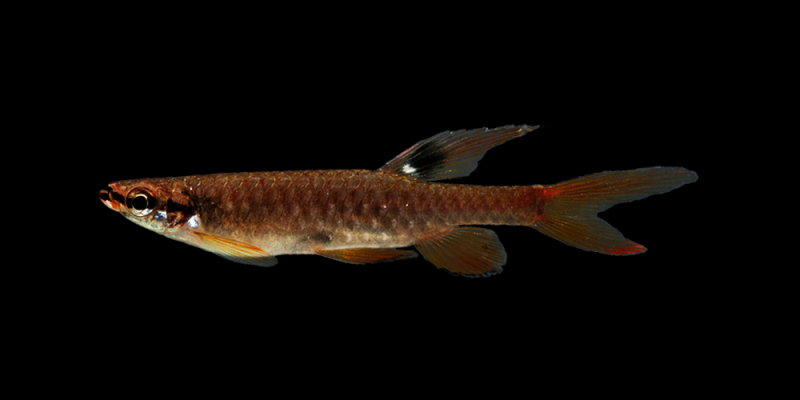
Copella arnoldiSplash Tetra
Regan, 1912
Max length55mm SL2.2in SLTank90 × 30cm36 × 12inTemp20–28°C68–82°FpH4.0–7.5This species is also known as the 'spraying', 'splashing' or 'jumping' tetra and these names are also sometimes applied to its congeners although none of them exhibit a comparable spawning strategy, simply depositing their eggs among vegetation at or around the water surface.
Copella callolepis
Regan, 1912
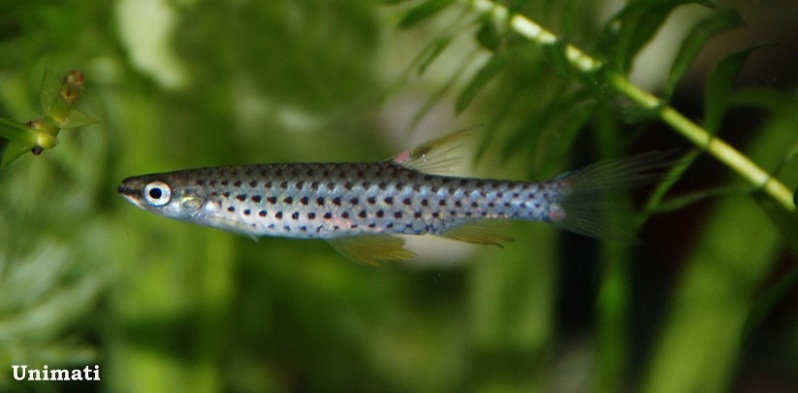
Max length42mm SL1.7in SLTank60 × 30cm24 × 12inTemp20–28°C68–82°FpH4.0–7.0This species is quite common in the aquarium trade although normally misidentified as the congeners C. nattereri or the very similar C. meinkeni. It was considered synonymous with C. nattereri for a number of years and was also referred to as C. cf. meinkeni by Zarske and Géry (2006) befo...
Copella eigenmanni
Regan, 1912
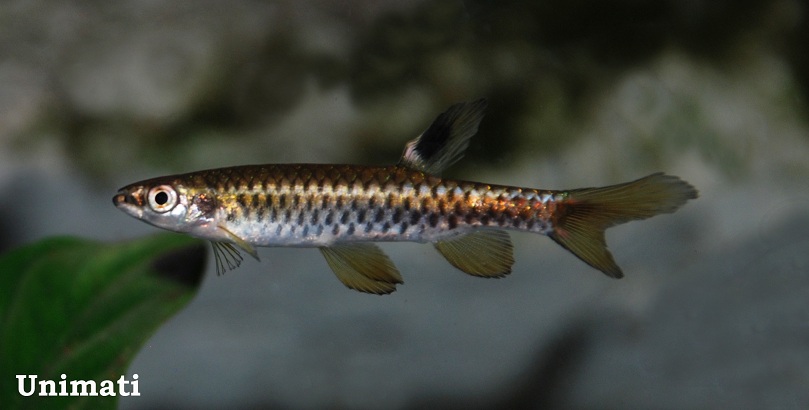
Max length45mm SL1.8in SLTank80 × 30cm31 × 12inTemp20–28°C68–82°FpH4.0–7.0This species does appear in the aquarium trade from time-to-time, often among shipments of other wild-caught fishes from the Orinoco basin. Populations from Colombia were formerly referred to as C. metae until Zarske (2011) synonymised the two when designating a lectoty...
Copella meinkeniSpotted Splashing Tetra
Zarske & Géry, 2006
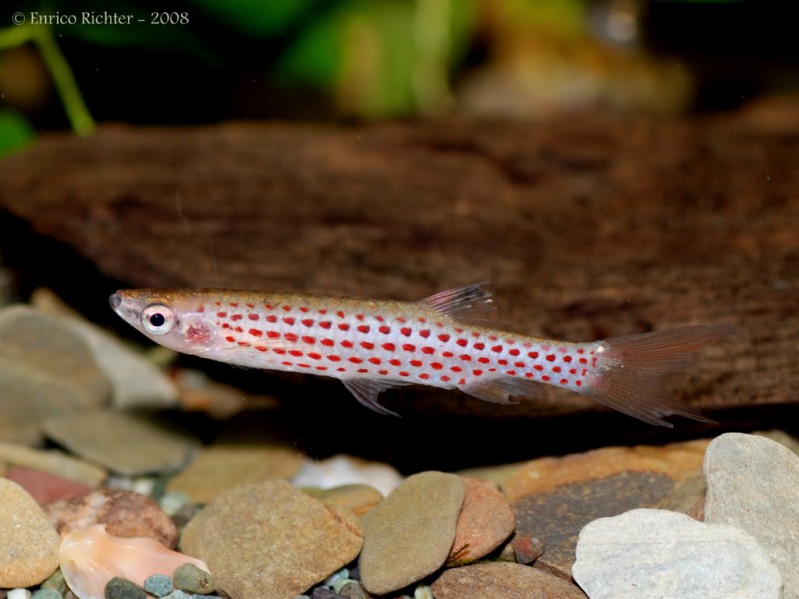
Max length45mm SL1.8in SLTank60 × 30cm24 × 12inTemp20–28°C68–82°FpH4.0–7.0This species has been widely referred to as the congener C. nattereri in aquarium literature both prior to and post-publication of its official description in 2006. The two can be told apart quite easily by the fact that C. nattereri possesses a dark lateral stripe while C. meinkeni does not. C. meinkeni can be distinguished from all congeners by the followi...