Results for “species”
Type a name: scientific, common, or one a species used to go by. Or narrow the catalogue with the filters.
Filters
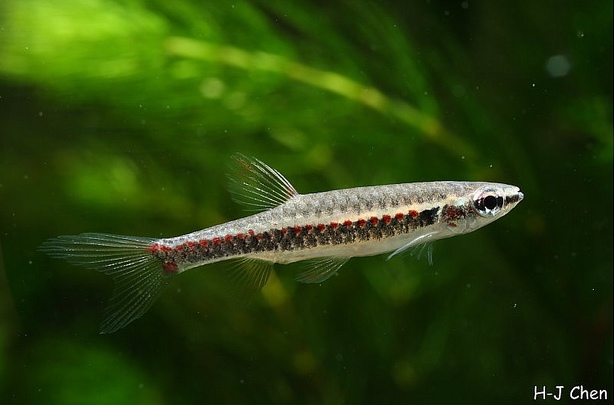
Copella nattereri
Steindachner, 1876
Max length45mm SL1.8in SLTank60 × 30cm24 × 12inTemp20–28°C68–82°FpH4.0–7.0This species is sometimes traded as C. sp. 'red line', 'spotted tetra' or as its congener C. nigrofasciata. In the past it's name was also widely applied to the fish now identified as C. callolepis and C. meinkeni, and this misidentification continues to an extent although the two are easily-distinguished by the fact that C. nattereri is the only one of the three possessing a dark lateral stripe on each side of the body.
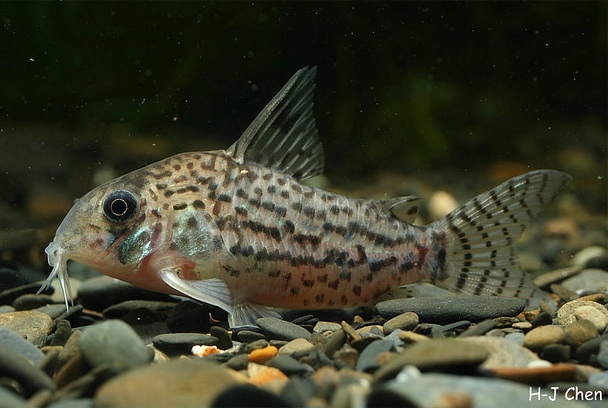
Corydoras acrensisAcre Cory
Nijssen, 1972
Max length55mm SL2.2in SLTanknot recordedTemp21–25°C70–77°FpH6.0–7.5Type locality is 'Furo do Lago São Francisco, 7°40'S, 72°39'W, tributary at left bank of Rio Juruá, Acre State, Brazil', and C. acrensis appears to be endemic to the rio Juruá basin. Unfortunately diagnostic characters cannot be provided since we've been unable to obtain the type description, and little has been written about this species since it was published.
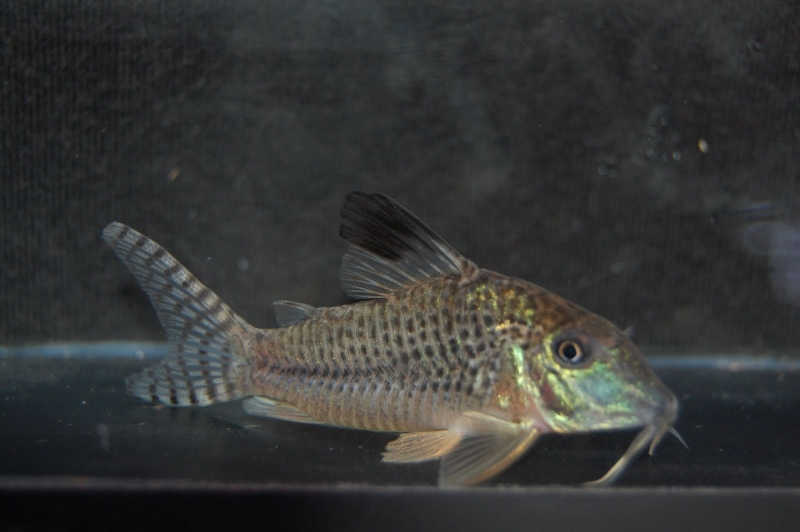
Corydoras acutusBlacktop Cory
Cope, 1872
Max length70mm SL2.8in SLTanknot recordedTemp22–28°C72–82°FpH6.0–7.5This species can be confused with three similar-looking fishes of uncertain taxonomic status which have been assigned the C numbers C024, C077, and C109 in the aquarium hobby. C024 and C109 are unlikely to be conspecific in that they occur in Pará state, Brazil, several thousand kilometers outside the range of C. acutus, in the rio Guamá (Tocantins drainage), and lower rio Xingu, respectively.
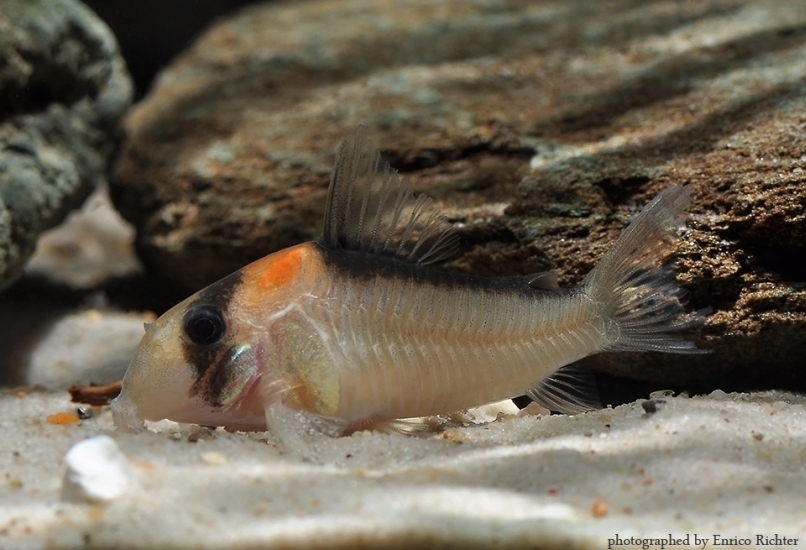
Corydoras adolfoiAdolfo's Cory
Burgess, 1982
Max length60mm SL2.4in SLTanknot recordedTemp20–26°C68–79°FpH4.0–7.0Type locality is given as 'Small tributary of the upper Rio Negro on the equator near São Gabriel da Cachoeira, Brazil', and this species is apparently highly endemic there. Some sources state that it also occurs in the rio Uaupés (known as 'Vaupés' in Colombia), a major tributary of the Negro, but we've been unable to obtain confirmation thus far.
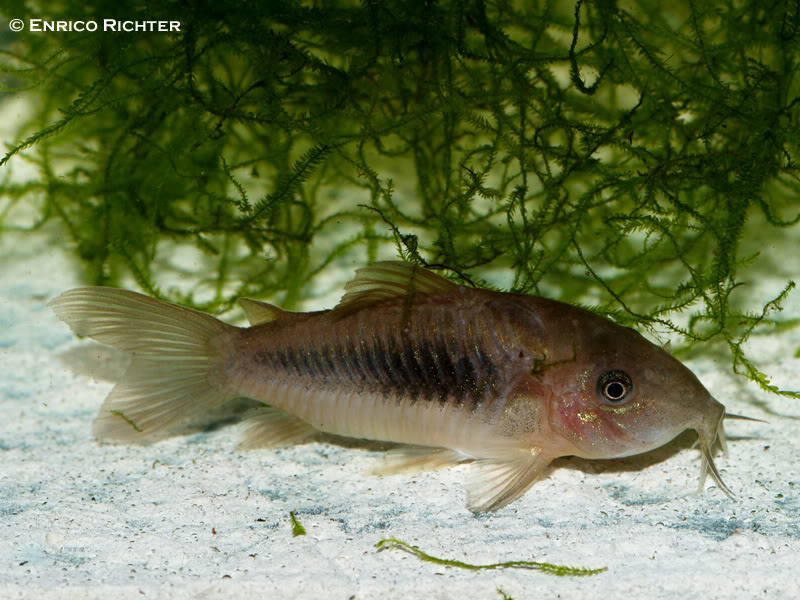
Corydoras aeneusBronze Cory
Gill, 1858
Max length75mm SL3.0in SLTank80 × 30cm31 × 12inTemp21–27°C70–81°FpH6.0–8.0Despite the ubiquity of its name in aquarium literature, confusion surrounds its true identity. Given it's the only member of the genus occurring on the island, fish from Trinidad do presumably represent C. aeneus (see our image), but the classification of those from other localities appears far from certain. Today the species is accepted to occur throughout much of South America, and indeed similarly-patterned fish do occur across a large portion of the continent. Some of these, such as the gree...
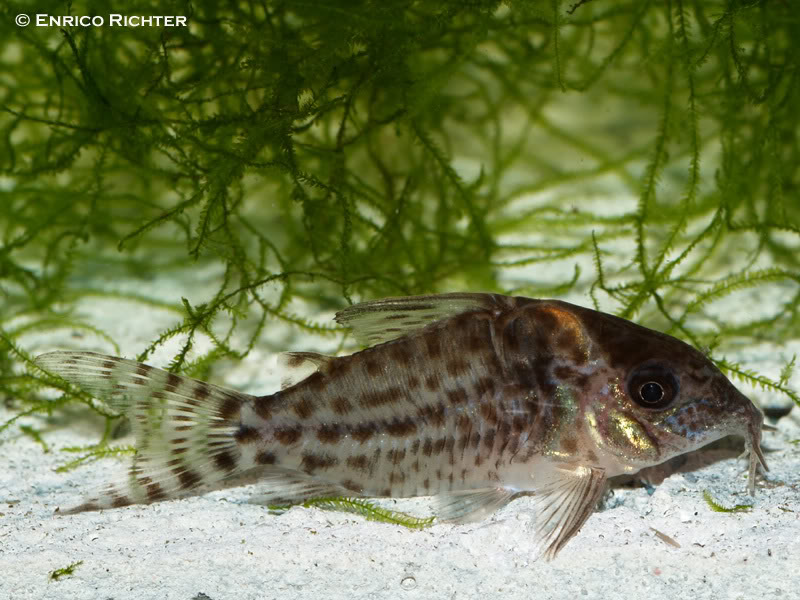
Corydoras agassiziiSpotted Cory
Steindachner, 1876
Max length70mm SL2.8in SLTanknot recordedTemp22–27°C72–81°FpH6.0–8.0This species' name is commonly misapplied to a number of similar-looking fishes and it can be difficult to identify if collection locality is unknown. In addition, colour pattern is variable and it's not clear whether this occurs between, within, or both between and within populations. In the original description, Steindachner did note that the first three dorsal-fin rays are completely black while the remainder is whi...
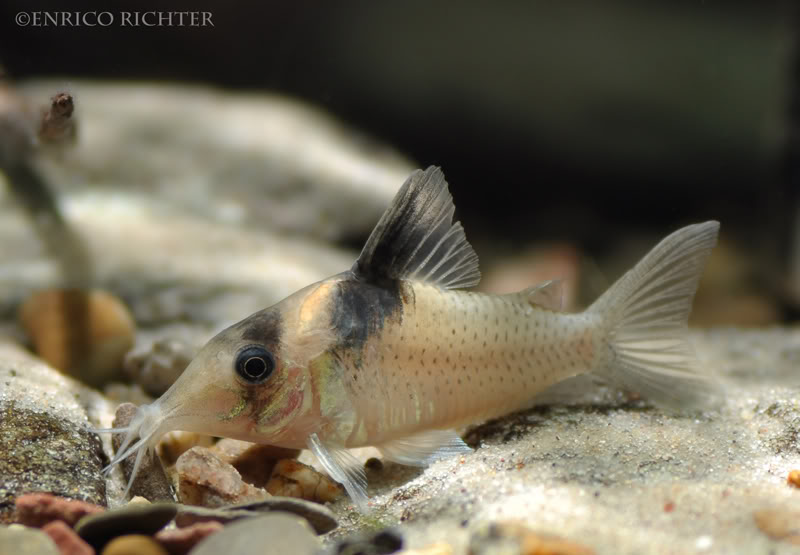
Corydoras amandajanea
Sands, 1995
Max length65mm SL2.6in SLTanknot recordedTemp23–27°C73–81°FpH6.0–7.5C. amandajanea is rare in the aquarium trade and appears to be variable in colour pattern to an extent, with some individuals posssessing relatively larger dark spots on the body, for example. Unfortunately diagnostic characters cannot be provided since we've been unable to obtain the type description, and little has been written about this species since it was published.
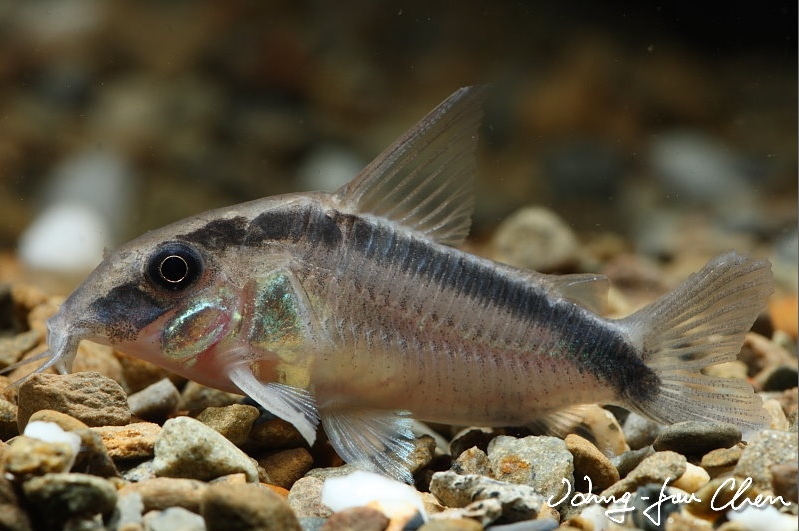
Corydoras arcuatusSkunk Cory; C020
Elwin, 1938
Max length55mm SL2.2in SLTanknot recordedTemp20–28°C68–82°FpH5.0–7.5This species is among the more popular Corydoras in the aquarium hobby and is widely available. It may also be referred to as 'arched cory'. There exist a number of similar-looking congeners, particularly C. urucu (Britto et al., 2009), described from the rio Urucu in Coari municipality, Amazonas state, Brazil, and C. narcissus from the rio Purus. The latter appears to have also been traded as C. sp. 'super arcuatus longnose' while a larg...
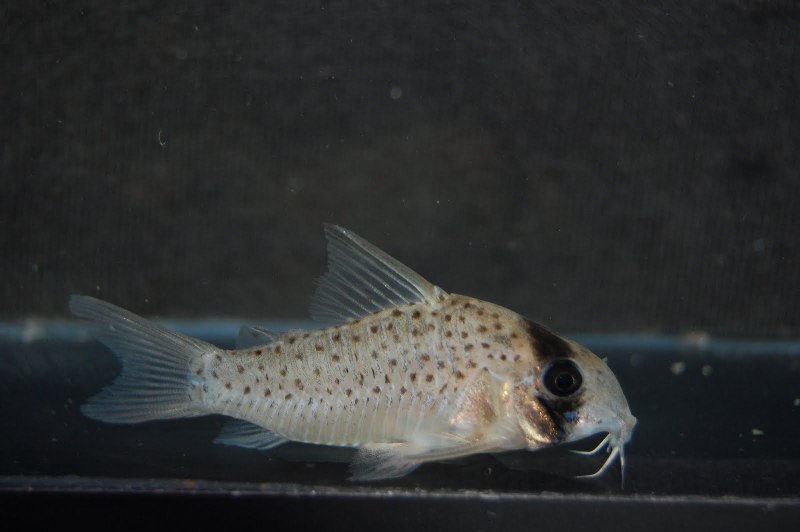
Corydoras atropersonatusFairy Cory
Weitzman & Nijssen, 1970
Max length50mm SL2.0in SLTanknot recordedTemp21–27°C70–81°FpH5.0–7.0This species is sometimes confused any of several similar-looking fishes such as C. sychri or C. sp. C097. While the former is a more elongate fish with a longer snout and quite easy to identify, C097 resembles C. atropersonatus more closely, despite being traded as C. sychri 'longnose'. Its snout is longer than that of C. atropersonatus but shorter than that of C. sychri, and the dark spots on the body tend to be more well-defined and spaced out than in the other two.
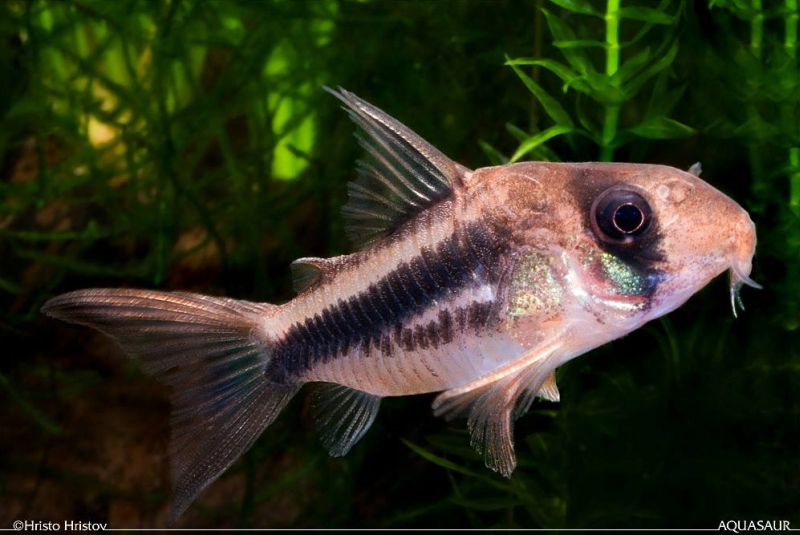
Corydoras axelrodiAxelrod's Cory
Rössel, 1962
Max length50mm SL2.0in SLTanknot recordedTemp22–26°C72–79°FpH5.0–7.0This species is somewhat variable in appearance and can have between 1-3 dark lateral stripes on each flank, for example. It's also known by the alternative common name 'pink corydoras'. It looks similar to the congener C. loxozonus plus unidentified fishes which have been assigned the codes C003 and CW021, and all four are sometimes traded under the fabricated names C. 'deckeri' or C. sp. 'decker/deker'.
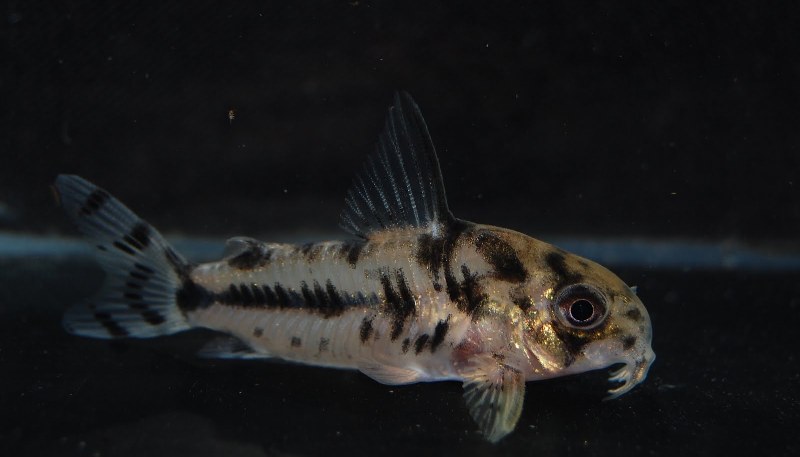
Corydoras boesemaniBoeseman's Catfish
Nijssen & Isbrücker, 1967
Max length45mm SL1.8in SLTanknot recordedTemp21–28°C70–82°FpH5.5–7.5This species appears endemic to and abundant within the upper Suriname River system, Suriname. Type locality is given as 'little tributaries of Gran Rio between Ligolio and Awaradam Falls', this corresponding to a section of the Suriname River, which is known as 'Gran Río' in parts of its upper basin, upstream of Brokopondo reservoir and not...
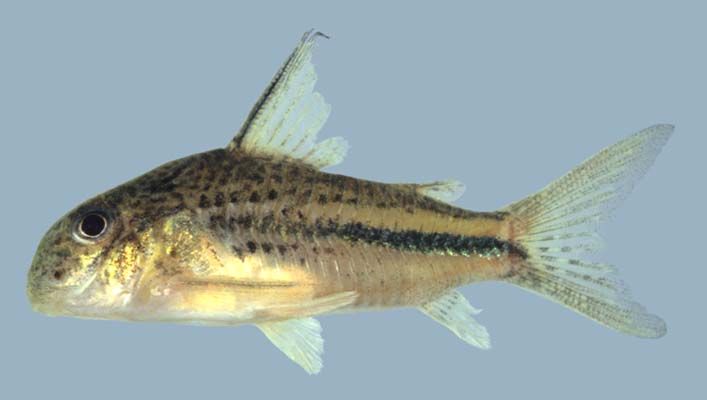
Corydoras bondiBlackstripe Cory
Gosline, 1940
Max length50mm SL2.0in SLTanknot recordedTemp20–26°C68–79°FpH6.0–7.5Type locality is 'Río Yuruari, 3 kilometers east of El Callao, 7°18'N, 61°50'W, Bolivar, Venezuela', and this species is also known from the Rupununi River drianage in Guyana and the Courantyne/Corantijn system in Suriname. The Yuruari, an affluent of the Río Cuyuni, an...
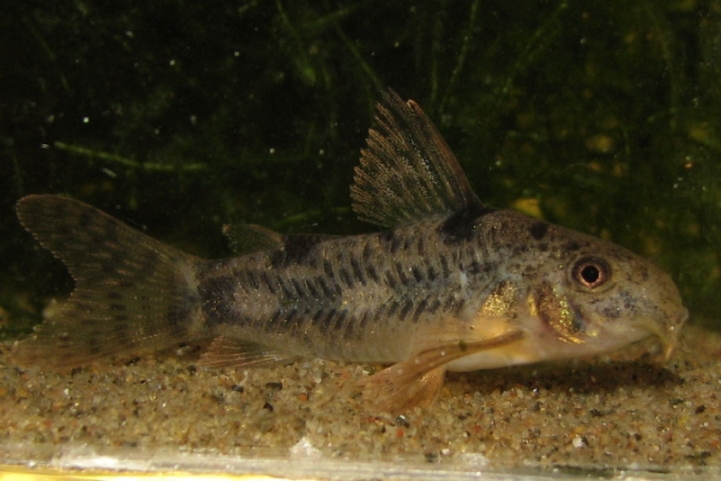
Corydoras carlae
Nijssen & Isbrücker, 1983
Max length45mm SL1.8in SLTanknot recordedTemp15–22°C59–72°FpH6.5–8.0This species is not available on a commercial basis but was collected and introduced to the aquarium hobby by Hans Georg-Evers in 2010. It's similar in appearance to a number of congeners including C. diphyes, C. erhardti, C. garbei, C. paleatus and C. steindachneri but can be told apart from most of them by possession of two large, indistinct, dark blotches in the middle of each flank.
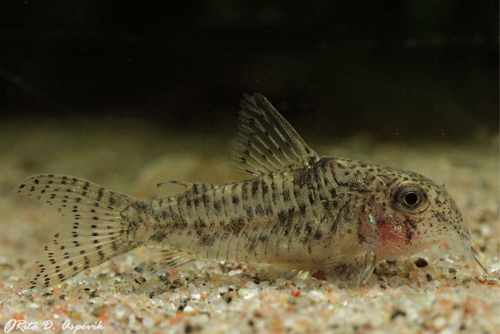
Corydoras cochuiBarredtail Cory
Myers & Weitzman, 1954
Max length35mm SL1.4in SLTanknot recordedTemp20–28°C68–82°FpH6.0–7.5This small species can be told apart from the similar-looking congener C. habrosus by possession of 4-5 (vs. 2-3) dark markings along the side of the body.
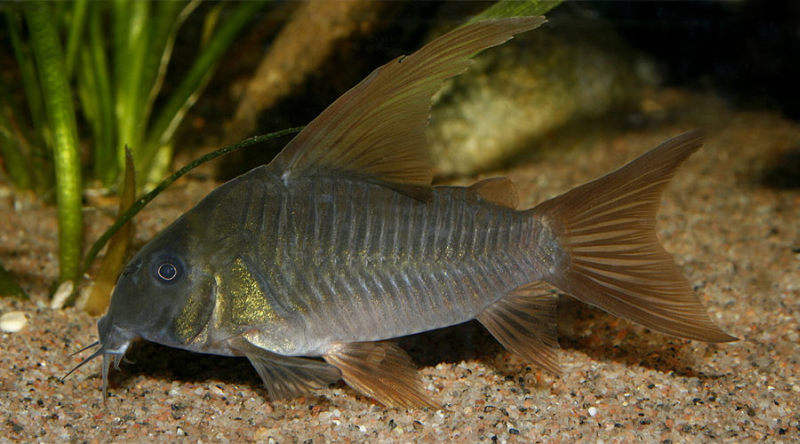
Corydoras concolorSlate Cory
Weitzman, 1961
Max length60mm SL2.4in SLTank80 × 30cm31 × 12inTemp20–26°C68–79°FpH5.5–7.0This species can be told apart from congeners by its uniformly greyish colour pattern, deep body (fitting 2.1-2.4 times in standard length), large eye (3.2-4.0 times in head length), having the pectoral fins completely surrounded by the coracoid, and relatively long dorsal-fin spine (1.1-1.2 times in head length).
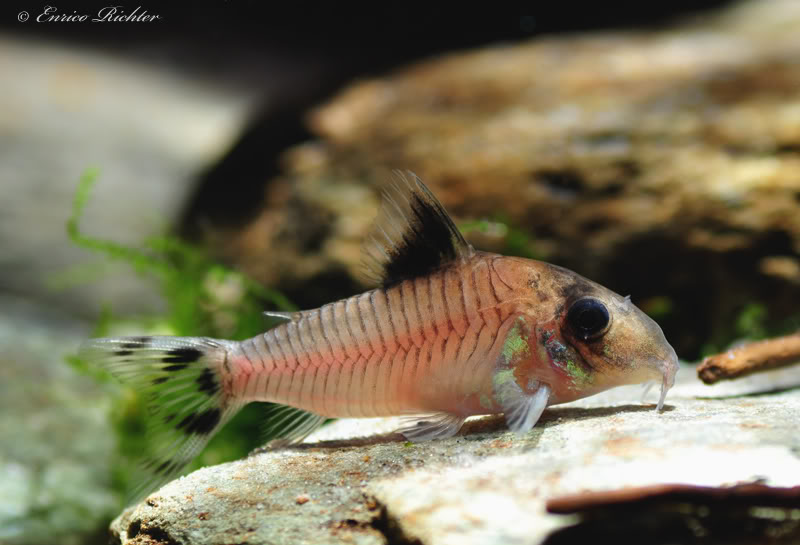
Corydoras condiscipulus
Nijssen & Isbrücker, 1980
Max length65mm SL2.6in SLTank90 × 30cm36 × 12inTemp20–26°C68–79°FpH6.0–7.5This species occurs alongside the similar-looking congener C. oiapoquensis in nature, from which it can be told apart by the following combination of characters: larger adult size; narrower body (body breadth fits 4.0-4.4 times in standard length vs. 3.4-3.8 times in C. oiapoquensis); shorter pectoral spine (3.4-3.8 times in SL vs. 2.7-3.2 times); longer snout (1.7-1.9 times in SL vs. 2.0-2.2).
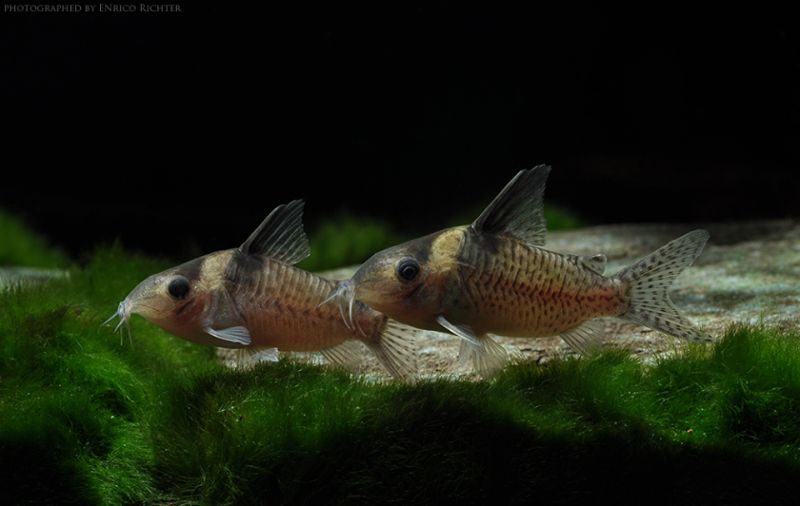
Corydoras delphax
Nijssen & Isbrücker, 1983
Max length60mm SL2.4in SLTank90 × 30cm36 × 12inTemp22–27°C72–81°FpH5.5–7.5Unfortunately, precise diagnostic characters cannot currently be provided since we’ve been unable to obtain the type description, and little has been Characters said to separate it from species such as C. ambiacus, C. agassizii, C. brevirostris, C. ephippifer, and C. melanistius include a combination of relatively elongated snout, dark spots on body fading in adults, dark anterior dorsal-fin patch extending to upper extremity of fin, and presence of spots in the caudal-fin.
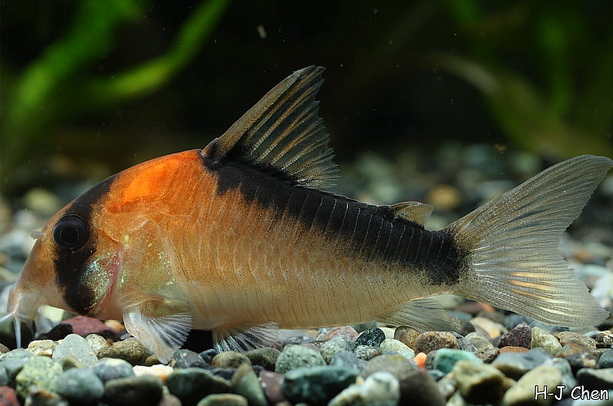
Corydoras duplicareus
Sands, 1995
Max length50mm SL2.0in SLTanknot recordedTemp20–26°C68–79°FpH4.0–7.0This species is among a number of congeners native to the rio Negro region to possess a colour pattern with an oblique dark bar running along the dorsal surface of the body. This unofficial group also includes C. burgessi, C. davidsandsi, C. duplicareus, C. imitator, C. melini, and C. serratus, and among these C. duplicareus is most easily-confused with C. adolfoi.
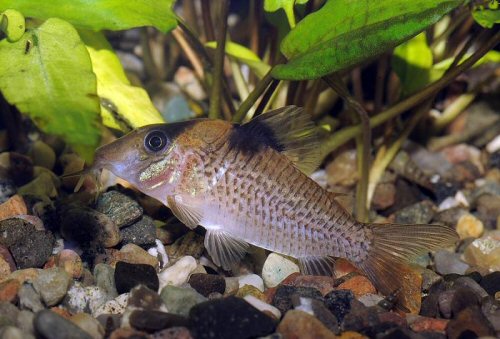
Corydoras ephippiferSaddle Cory
Nijssen, 1972
Max length60mm SL2.4in SLTanknot recordedTemp20–25°C68–77°FpH6.0–7.5This species appears superficially similar to a number of congeners including C. ambiacus, C. agassizii, C. brevirostris, C. delphax, and C. melanistius. Among these C. ephippifer seems to be unique in that all fins except the dorsal are transparent and lack markings.
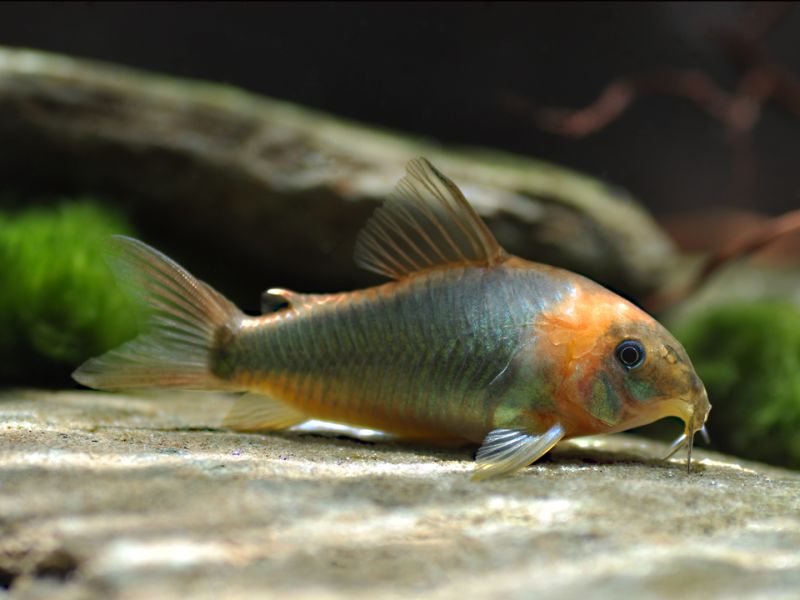
Corydoras eques
Steindachner, 1876
Max length50mm SL2.0in SLTank90 × 30cm36 × 12inTemp20–26°C68–79°FpH6.0–8.0Although described as a member of Corydoras this species was later moved into the genus Osteogaster by Cope (1894), but this was later synonymised with Corydoras by Gosline (1940). It is sometimes confused with C. venezuelanus, while two similar-looking, unidentified fishes from Peru have been assigned the codes CW007 and CW043, respectively.