Results for “dorsal-fin”
Type a name: scientific, common, or one a species used to go by. Or narrow the catalogue with the filters.
Filters
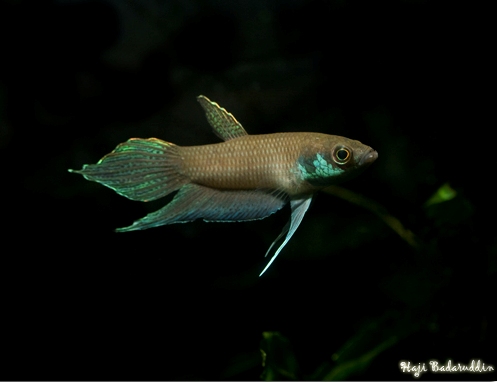
Betta lehi
Tan & Ng, 2005
Max length61mm SL2.4in SLTank60 × 30cm24 × 12inTemp22–27°C72–81°FpH4.0–7.0It can be told apart from other members of the B. pugnax group by the following characters: chin bar absent; prsence of transverse bars in the dorsal-fin; no transverse bars in caudal-fin; green iridescent scales present on opercle and body; anal fin with iridescent, light blue distal band; a pair black markings below the postorbital stripe on the opercle of females and juveniles; anal-fin rays 25-29 (mode 28); lateral scales 28-30 (mode 29); postdorsal scales 10-11 (mode 12); pelvic-fin length 34.8-50.6% SL; head length 33.4-36.8% SL; inter-orbital width 31.7-37.4% HL.
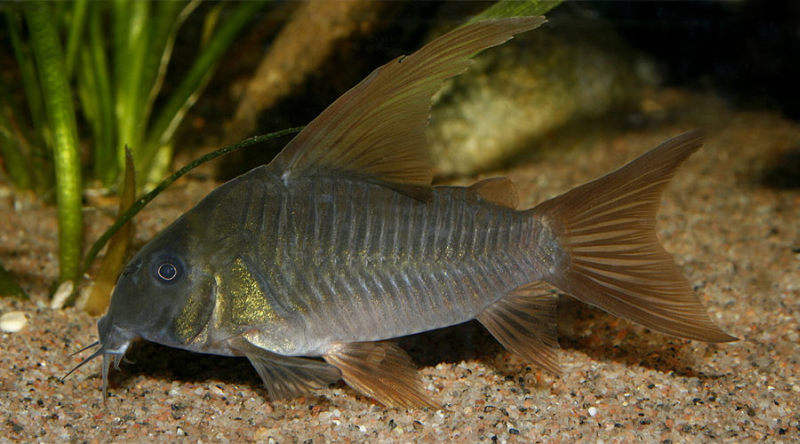
Corydoras concolorSlate Cory
Weitzman, 1961
Max length60mm SL2.4in SLTank80 × 30cm31 × 12inTemp20–26°C68–79°FpH5.5–7.0This species can be told apart from congeners by its uniformly greyish colour pattern, deep body (fitting 2.1-2.4 times in standard length), large eye (3.2-4.0 times in head length), having the pectoral fins completely surrounded by the coracoid, and relatively long dorsal-fin spine (1.1-1.2 times in head length).
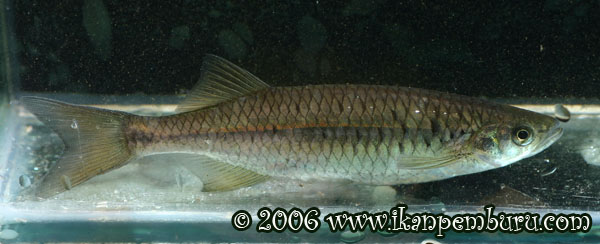
Nematabramis alestes
Seale & Bean, 1907
Max length105mm SL4in SLTanknot recordedTempnot recordedpHnot recordedN. alestes is the only member of the genus in which the barbels are shorter than the head, with additional diagnostic characters as follows: 8-9 branched dorsal-fin rays; 12-14 branched anal-fin rays; 22-23 predorsal scales; body with a pronounced ventral keel.
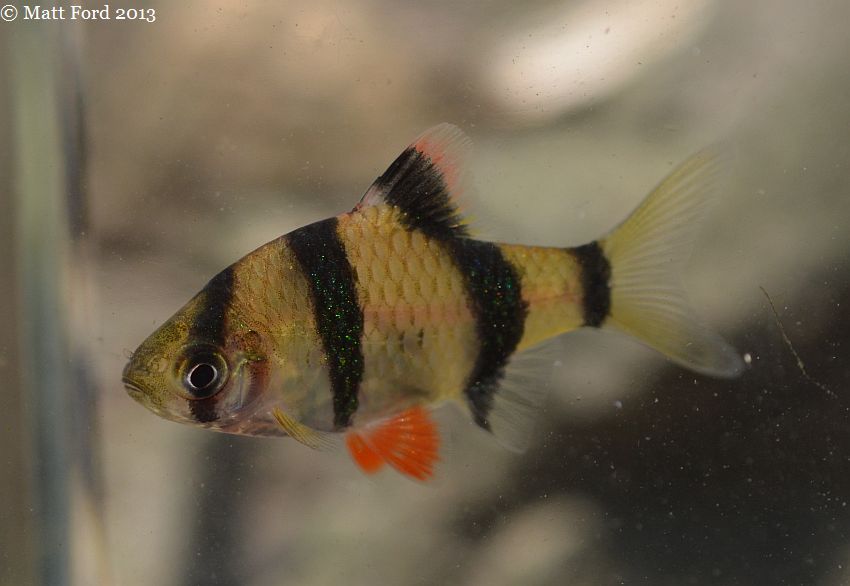
Puntigrus anchisporus
Vaillant, 1902
Max length60mm SL2.4in SLTank80 × 30cm31 × 12inTemp20–26°C68–79°FpH5.5–7.0This species occasionally appears in the aquarium hobby, but the trade is largely reliant on commercially-produced 'tiger barbs' of questionable origin. It is distinguished from congeners by the following combination of characters: lateral line complete; 14 circumpeduncular scales; 21-23+2 scales in the lateral row; dorsal-fin black with red outer band; pelvic fins red.
Melanotaenia irianjayaIrian Jaya Rainbowfish
authority not recorded
Max length120mm SL5in SLTank90 × 30cm36 × 12inTemp23–26°C73–79°FpH6.5–8.0This beautiful rainbow is not often seen in the hobby. It can be identified by the fact that the middle rays in the dorsal and anal fins are longer than the other fin rays. This feature is usually associated with the closely-realated Glossolepis genus of rainbowfish....
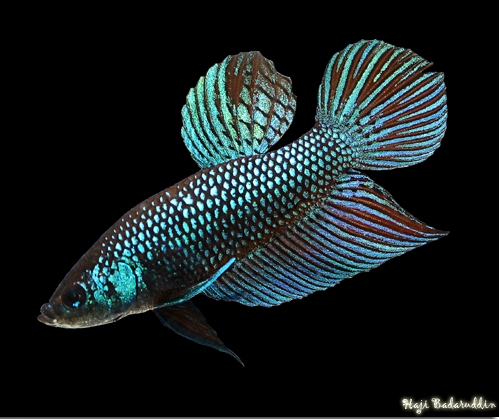
Betta smaragdinaEmerald Betta
Ladiges, 1972
Max length60mm SL2.4in SLTank45 × 30cm18 × 12inTemp22–28°C72–82°FpH5.5–7.5This species is included in the Betta splendens complex of closely-related species within the genus, of which members share the following set of characters: head length short 22-31 % SL; often a brightly-coloured body; iris of the eye with iridescent green or blue patches; body elongate or slender; opercles parallel when head viewed dorsally; caudal-fin rays red or brown and contrasting with the iridescent interradial membranes; unpaired fins without an iridescent margin; opercle with red or blue vertical bars in males; dorsal-fin rays 0-II, 7-9; anal-fin rays II-V, 21-26.
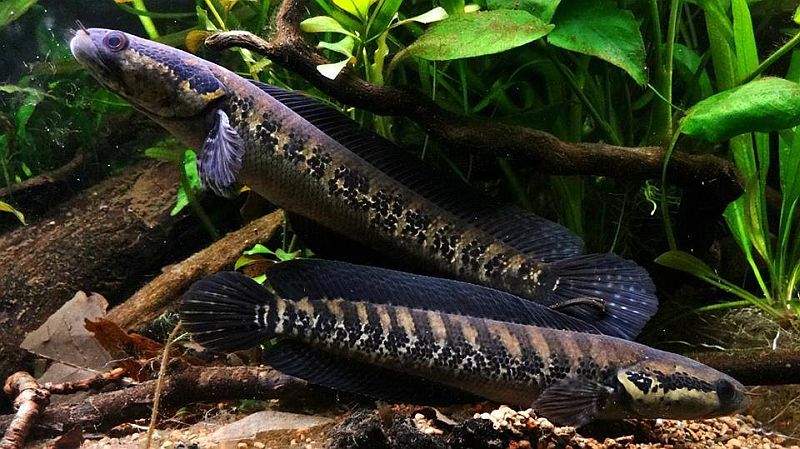
Parachanna africana
Steindachner, 1879
Max length300mm SL12in SLTank120 × 60cm48 × 24inTemp20–25°C68–77°FpH5.0–7.5Following Bonou and Teugels (1985), P. africana can be distinguished from congeners by the following combination of characters: colour pattern unique, comprising a series of 8-11 dark, chevron-shaped markings extending along the body posterior to the pectoral fins; 19-24 scales in the transverse series; lateral line complete with 73-83 pored scales; 45-48 dorsal-fin rays 45-48; 32-35 anal-fin rays.
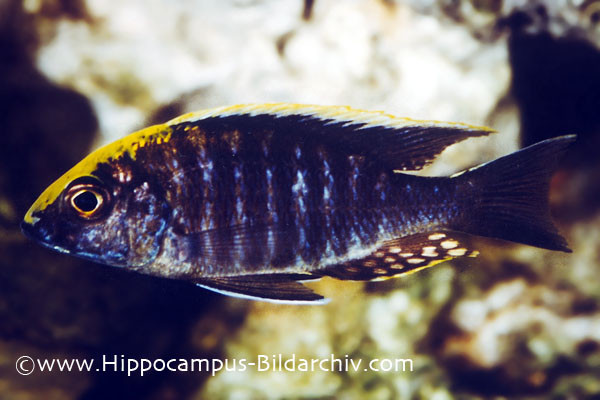
Aulonocara maylandiSulphurhead Peacock
Trewavas, 1984
Max length100mm SL3.9in SLTank120 × 30cm48 × 12inTemp25–29°C77–84°FpH7.5–9.0This species exists in two distinctive phenotypes, with male individuals from West reef and Eccles reef possessing a bright yellow stripe of colour running from the tip of the snout over the anterior portion of the dorsal surface and along the distal margin of the dorsal fin. This form is commonly referred to as 'sulphurhead' or 'sulfurhead' in the aquarium hobby. At Kande Island males exhibit a similar overall colour patterm but the dorsal stripe is whitish in colour and both males and females possess an enlarged lower pharyngeal bone. This population was described...
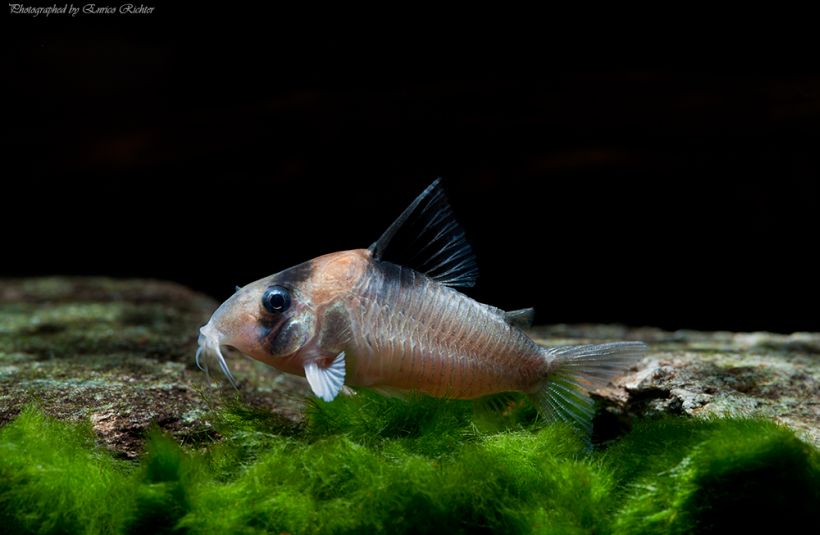
Corydoras burgessiBurgess' Cory
Axelrod, 1987
Max length55mm SL2.2in SLTank80 × 30cm31 × 12inTemp20–28°C68–82°FpH5.0–7.0The most obvious distinguishing characters are that the black marking in the upper part of the body is restricted to the area beneath the dorsal-fin and extends into the majority of the fin , while the paler patch anterior to it, on top of the head, is yellowish rather than orangish. Additional diagnostic characters have proven unavailable thus far since it was described in a hobbyist magazi...
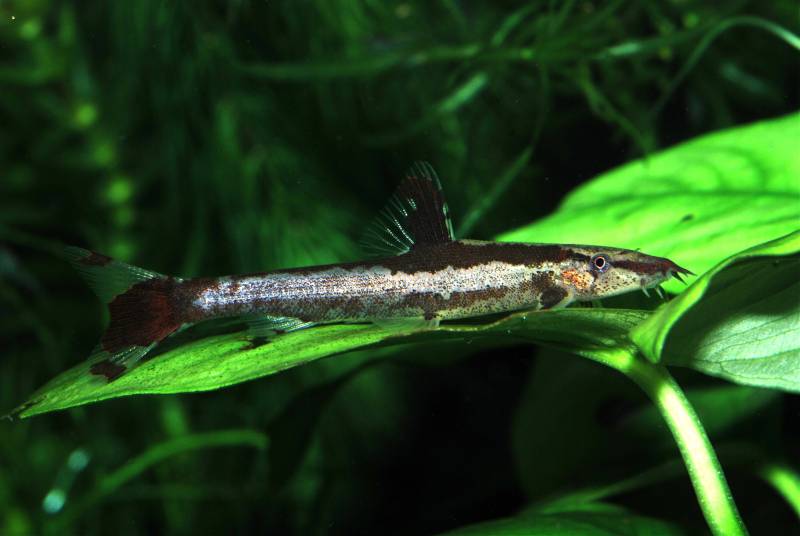
Homaloptera bilineata
Blyth, 1860
Max length100mm SL3.9in SLTank120 × 30cm48 × 12inTemp20–25.5°C68–78°FpH6.0–7.5This rarely-traded species is a member of the H. ocellata 'group' of closely-related congeners, an assemblage which currently comprises H. ocellata, H. bilineata, H. confuzona, H. orthogoniata, H. ogilviei and H. parclitella. Following Tan and Ng (2005) these share possession of a colour pattern with reddish tints and dark brown head markings, elongate head, slightly compressed body, 61-77 lateral line scales and dorsal-fin origin placed in advance of pelvic-fin origin.
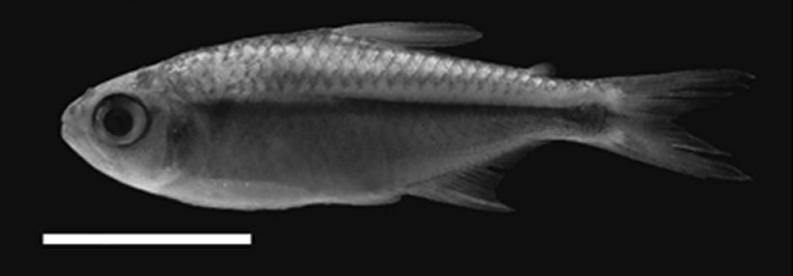
Hyphessobrycon acaciae
García-Alzate, Román-Valencia & Prada-Pedreros, 2010
Max length30mm SL1.2in SLTanknot recordedTempnot recordedpHnot recordedIt differs from H. paucilepis by possessing 30-31 scales in the lateral row (vs. 28-29), 3 scales between the lateral line and anal-fin (vs. 4), 10 predorsal scales (vs. 9), ii, 9 dorsal-fin rays (vs. iii, 8), 4 maxillary teeth (vs. 1), and the distance between the dorsal-fi...
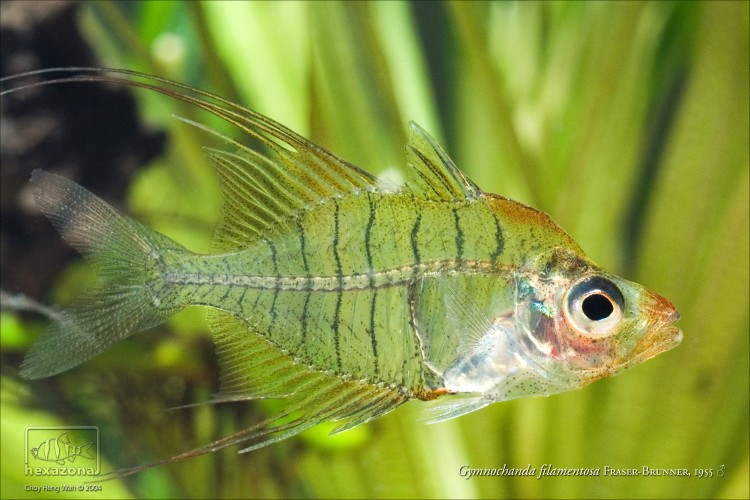
Gymnochanda filamentosa
Fraser-Brunner, 1955
Max length32mm SL1.3in SLTank60 × 30cm24 × 12inTemp20–28°C68–82°FpH4.0–6.0G. filamentosa has appeared in the ornamental trade but is evidently delicate and therefore recommended only to experienced aquarists. It can be told apart from congeners by the following combination of characters: possession of filamentous dorsal and anal-fin rays in males; body transparent to translucent yellowish-brown colour in life; absence of a highly-extended second anal-fin spine; absence of carmine-red pigmentation in the dorsal, anal an...
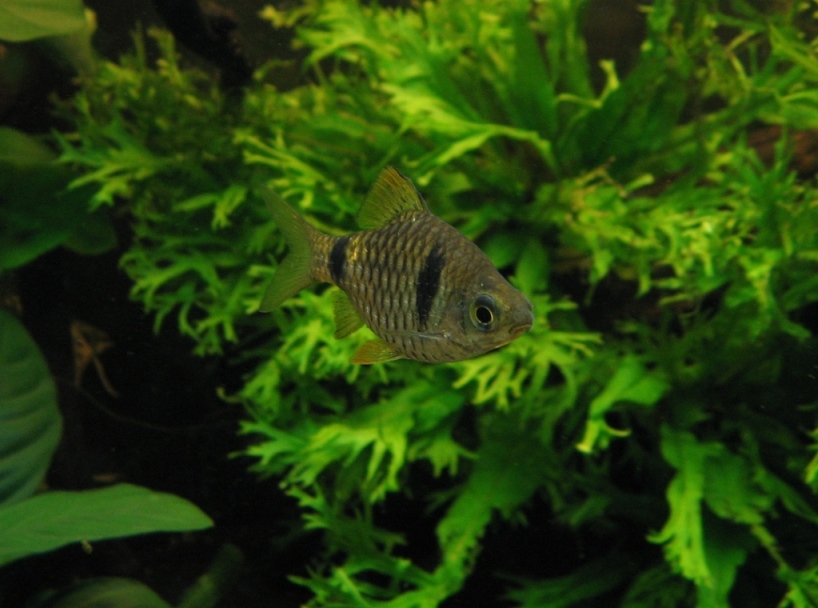
Pethia cumingiiCuming's Barb
Günther, 1868
Max length41mm SL1.6in SLTank60 × 30cm24 × 12inTemp20–27°C68–81°FpH5.5–7.0For many years this species was considered to occur in two colour forms with yellow or red dorsal, anal, and pelvic fins, respectively, but the red-finned variant has now been elevated to full species status as P. reval (Meegaskumbura et al. 2008). The latter is a smaller fish with a maximum SL of 33.6 mm recorded to date. As well as the obvious differences in body size and fin colour P. cumingii can be told apart from P. reval by the following...
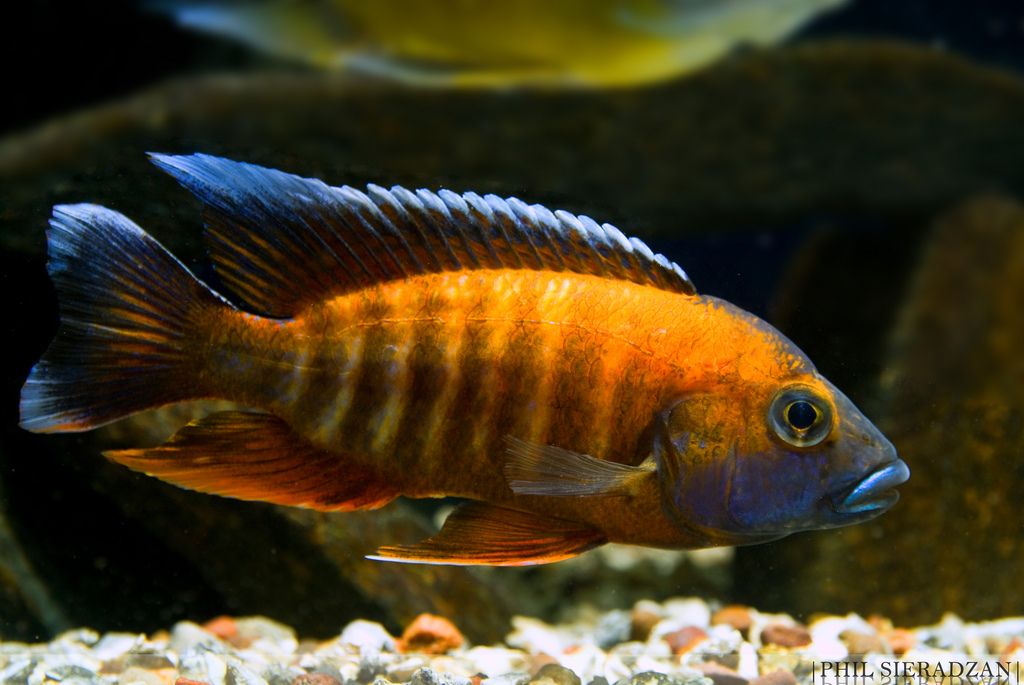
Aulonocara jacobfreibergiMalawi Butterfly
Johnson, 1974
Max length170mm SL7in SLTank120 × 60cm48 × 24inTemp25–29°C77–84°FpH7.5–9.0This was one of the first Aulonocara spp. to enter the hobby and its popularity has endured. It's known by several other vernacular names including 'Freiberg's peacock', 'fairy cichlid' and 'African butterfly' as well as the erroneous 'scientific' names Trematocranus trevori, T. jacobfreigbergi and T. regina. A naturally-occurring, yellowish form from Undu reef, Tanzania is often referred to as 'lemon jake'. It can be told apart from most other members of the genus by the broad, pale distal margins in the dorsal, anal and caudal fins, more deeply-forked caudal fin and larger adult size.
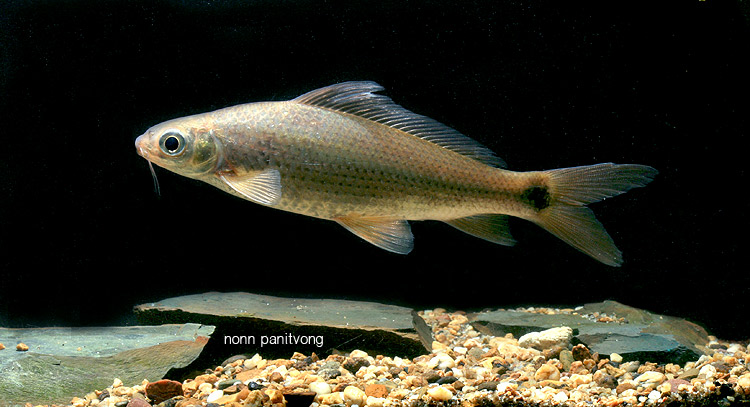
Labiobarbus siamensis
Sauvage, 1881
Max length200mm SL8in SLTanknot recordedTempnot recordedpHnot recordedL. siamensis can be distinguished from congeners by the following combination of characters: 39-42 scales in the lateral series; shoulder spot usually absent, but sometimes well-defined; body with longitudinal stripes formed by a spot on each scale; dorsal fin with dusky median stripe and no red coloration; caudal fin dusky, sometimes with reddish coloration, but no well-defined stripes; 20-23 circumpeduncular scales...
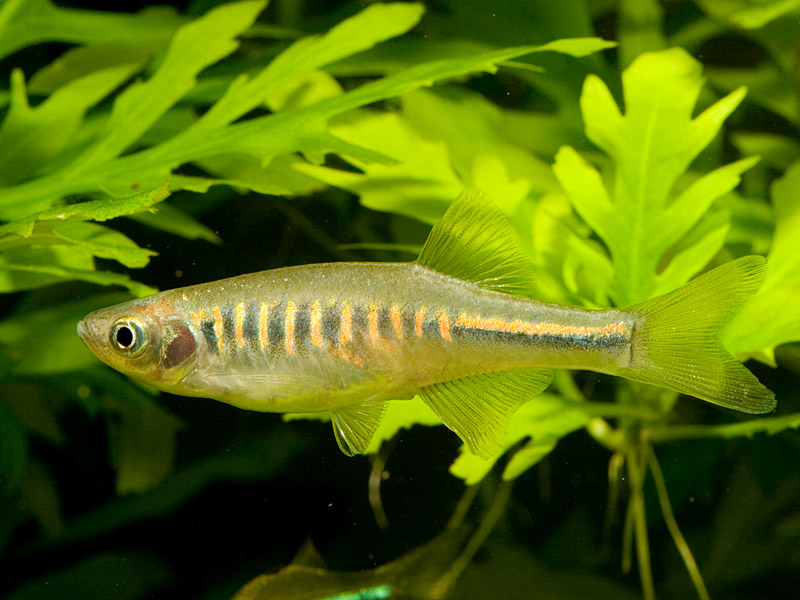
'Inlecypris' shanensis
Hora, 1928
Max length60mm SL2.4in SLTank80 × 30cm31 × 12inTemp18–26°C64–79°FpH6.0–8.0This species is sometimes referred to as 'Hora danio' or Salween danio'. It is distinguished from similar-looking species by a combination of characters as follows: lateral line complete or incomplete with 22-33 pored scales; absence of infraorbital process; 7 branched dorsal-fin rays; usually 10 or 11 branched anal-fin rays; barbels absent or rudimentary; flank markings comprising a series of narrow vertical bars on the anterior portion of each flank, fol...
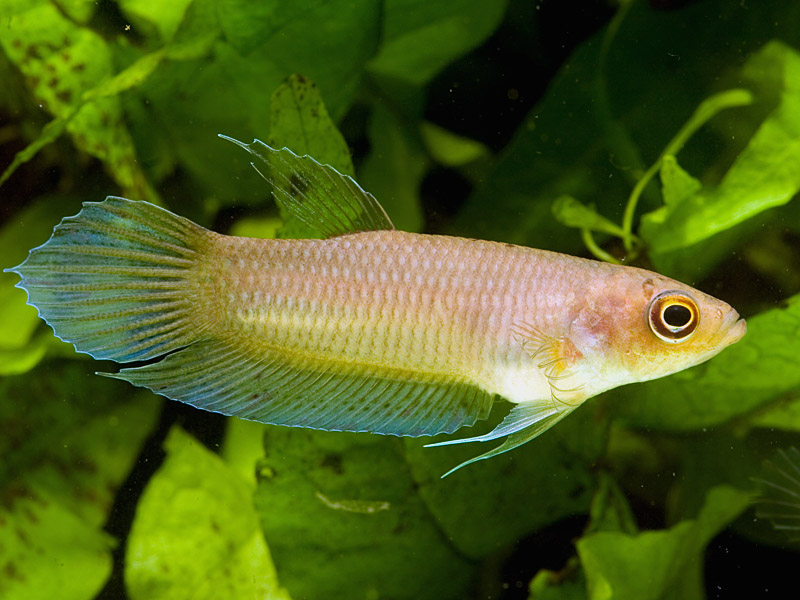
Betta hipposideros
Ng & Kottelat, 1994
Max length80mm SL3.1in SLTank80 × 30cm31 × 12inTemp22–28°C72–82°FpH3.5–6.0The easiest way to distinguish these is by examining the throat markings, which vary according to species, and in the case of B. hipposideros form a black horse-shoe shape. It can also be separated from other group members by the following suite of characters: dark blotch on throat joined to black lower lip; presence of transverse bars in dorsal and caudal fins; absence of dark margin in anal-fin; opercle usually with gold scales, without iridescrent green scales; ventral margin of opercle brown; 6.5-7 subdorsal scales (mode 6.5); 9-10 postdorsal scales (mode 9.5); 31-32 lateral scales (mode 32).
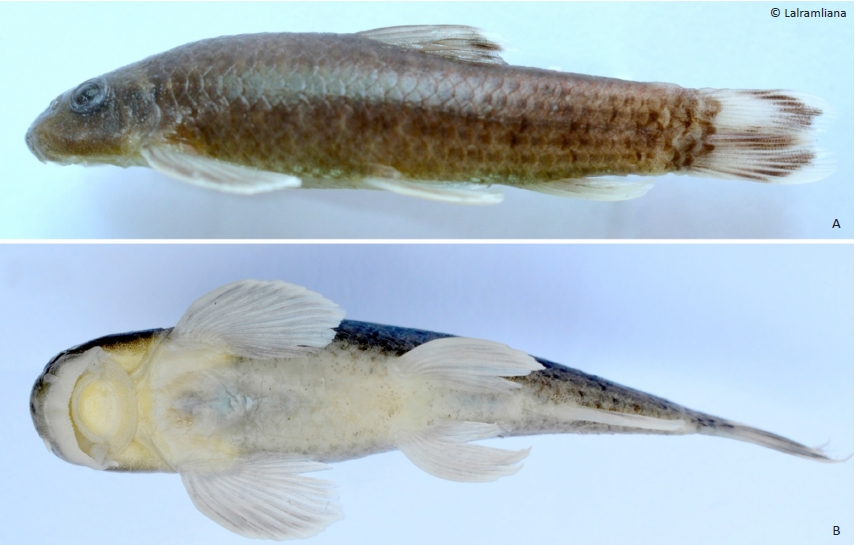
Garra dampaensis
Laironunga, Lainuntluanga & Lairamliana, 2013
Max length55mm SL2.2in SLTanknot recordedTempnot recordedpHnot recordedThis species can be told apart from Indian congeners by the following combination of characters: no transverse groove or proboscis on the snout; tip of dorsal fin falcate; long axillary scale present at the base of pelvic fin, reaching base of last pelvic fin ray; 27–29 lateral-line scales, 10–11 regularly arranged predorsal scales; W-shaped black band across middle of caudal fin; presence of scales on the abdomen.
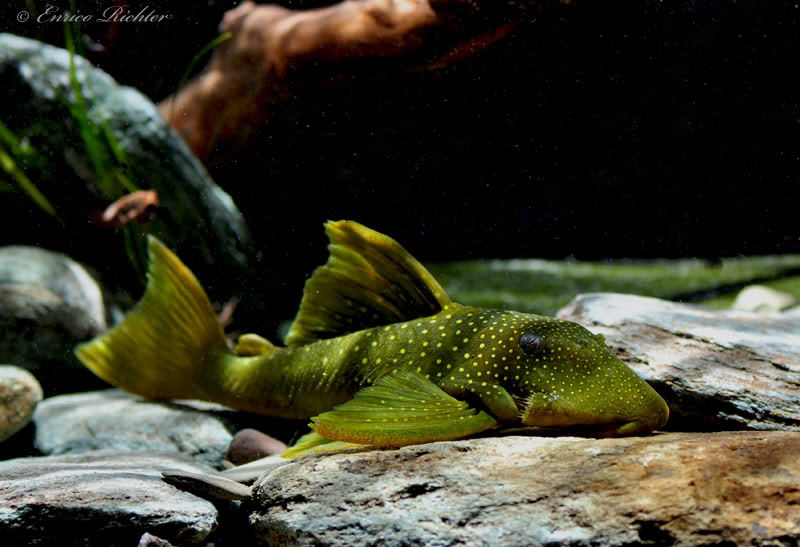
Baryancistrus demantoidesGreen Phantom Pleco
Werneke, Sabaj Pérez, Lujan & Armbruster, 2005
Max length151mm SL6in SLTank120 × 45cm48 × 18inTemp26–30°C79–86°FpH5.5–7.5This species is very similar to Hemiancistrus subviridis in appearance and the two occur sympatrically in nature, although B. demantoides is less common in the aquarium trade. Both have been marketed under the DATZ code L200 with B. demantoides sometimes referred to as 'L200 high-fin' or 'L200a', the former name in reference to its comparatively long dorsal-fin spine (average length in the type series 42.1 mm vs. 34.3 mm in H. subviridis).
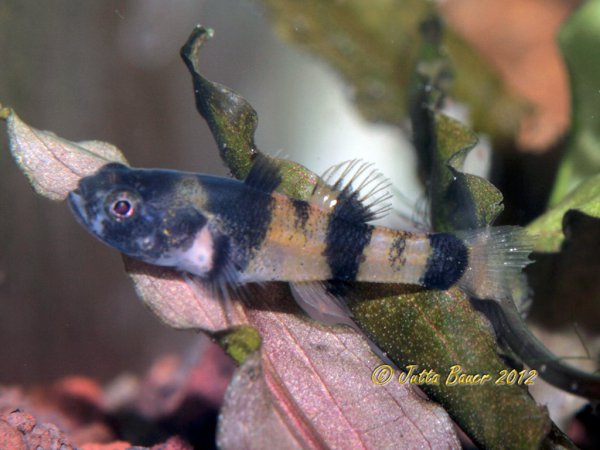
Brachygobius sabanusSabanus Bumblebee Goby
Inger, 1958
Max length27mm SL1.1in SLTank45 × 30cm18 × 12inTemp22–28°C72–82°FpH7.0–8.5B. sabanus is very similar to B. doriae and these two are easily confused. However in B. doriae most of the first-dorsal-fin and two-thirds of the pectoral-fin are black while in B. sabanus the last one or two rays of the first dorsal-fin are colourless and less than half of the pectoral-fin is black. In addition there are usually smaller dark 'saddles' betw...