Search the catalogue
Type a name: scientific, common, or one a species used to go by. Or narrow the catalogue with the filters.
Filters
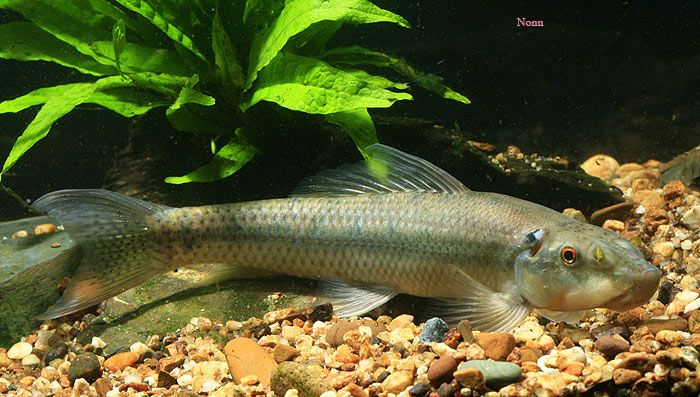
Gyrinocheilus aymonieriSucking 'Loach'
Tirant, 1883
Max length280mm SL11in SLTank150 × 45cm60 × 18inTemp22–26°C72–79°FpH6.0–8.0This species is among the most well-known fishes in the aquarium trade but juveniles are typically being offered for sale with little to no information regarding temperament, eventual size, and potential age in excess of 15 years. Wild examples are not currently traded, with all of those seen on sale produced on a commercial basis.
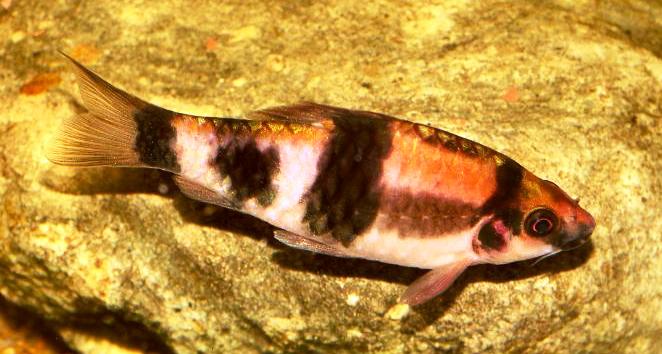
Haludaria fasciataMelon Barb
Jerdon, 1849
Max length70mm SL2.8in SLTank90 × 30cm36 × 12inTemp22–26°C72–79°FpH6.0–7.5This species is traded under various vernacular names including 'ember barb', 'banded barb' and 'black spot barb', and is perhaps among the more undervalued small cyprinids in the aquarium hobby being peaceful, relatively hardy, colourful, and of interesting behaviour. It exists in a number of colour for...
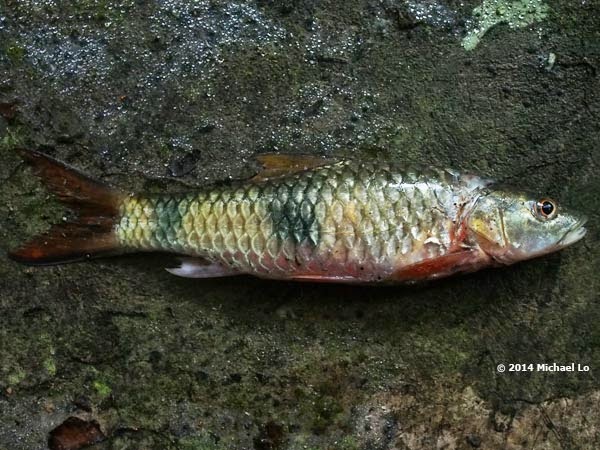
Hampala bimaculata
Popta, 1905
Max length500mm SL20in SLTanknot recordedTempnot recordedpHnot recordedPredominantly a riverine fish preferring clear, well-oxygenated, running waters with substrates of sand, gravel, rock or mud, typically flowing through tropical forest. In the habitat seen in our images sympatric fish species included Barbonymus balleroides, B. collingwoodi, Cyclocheilichthys repasson, C. apogon, Diplocheilichthys pleurotaenia, Garra borneensis, Leptobarbus hosii, and an unidentified Gastromyzon sp.
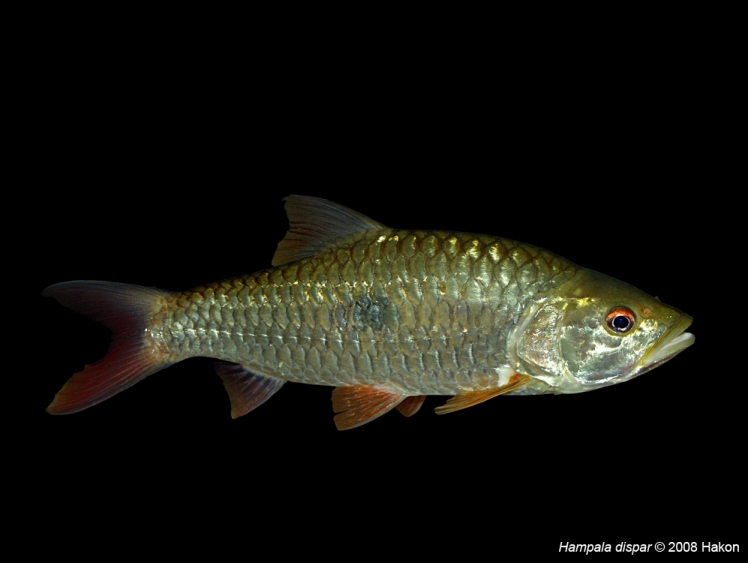
Hampala disparSpotted Hampala Barb
Smith, 1934
Max length350mm SL14in SLTank240 × 60cm96 × 24inTemp20–25°C68–77°FpH6.0–8.0The genus currently contains seven species of which H. macrolepidota and, to a lesser extent, H. dispar are the only ones seen with any regularity in the aquarium trade. As well as having the widest distribution H. macrolepidota is also the largest member of the group. All representatives can appear superficially similar at first glance, the exception being H. lopezi which is endemic to a single island in The Philippines and displays a unique lateral band-like marking on the flanks.
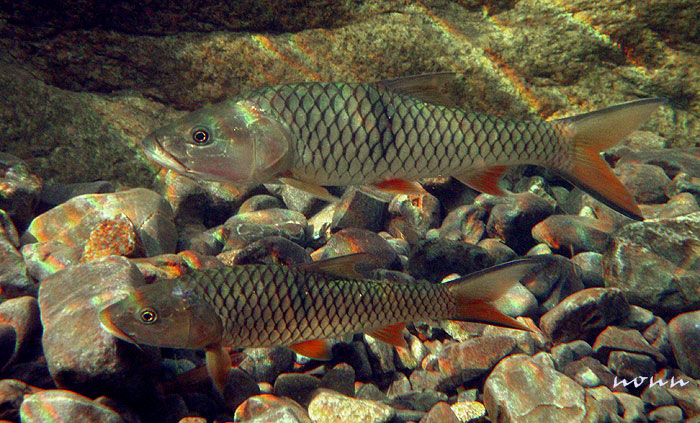
Hampala macrolepidotaHampala Barb
Kuhl & van Hasselt, 1823
Max length700mm SL28in SLTanknot recordedTemp20–26°C68–79°FpH5.5–8.0This species is also known by the vernacular 'jungle perch' or 'sidebar barb' and should not be considered an aquarium subject in all but the most extreme circumstances since it can grow to over 2 feet in length, weigh in excess of 5 kg and is a powerful, pelagic predator. It's also a popular sport fish with a reputation for striking hard.
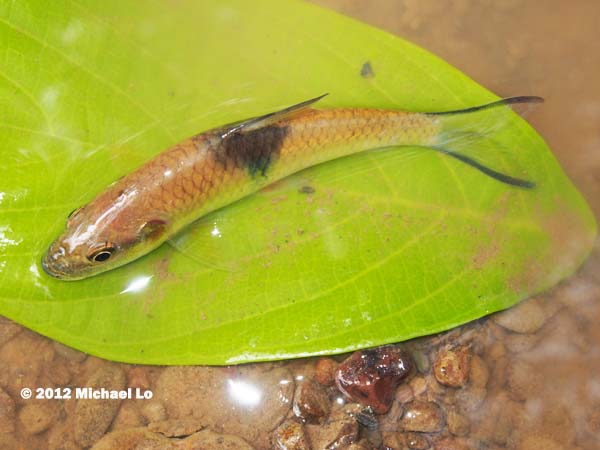
Hampala sabana
Inger & Chin, 1962
Max length410mm SL16in SLTanknot recordedTempnot recordedpHnot recordedPredominantly a riverine fish preferring clear, well-oxygenated, running waters with substrates of sand, gravel, rock or mud, and apparently displays a preference for deeper, slower-moving stretches. In Sabah such habitats typically flow through tropical forest, although in recent years freshwater habitats throughout much of the state have been extensively modified by human activity such as conversion to palm or rubber plantations.
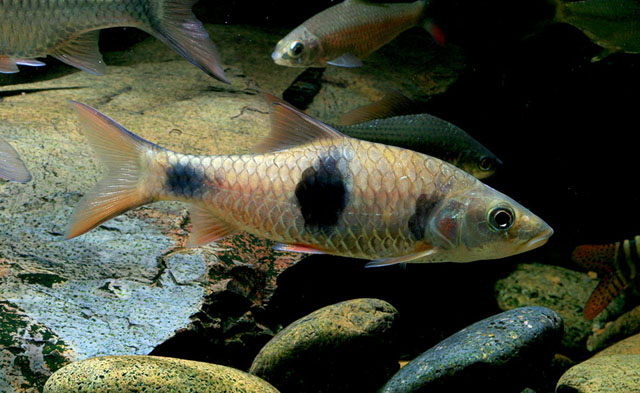
Hampala salweenensis
Doi & Taki, 1994
Max length201mm SL8in SLTank240 × 60cm96 × 24inTemp20–26°C68–79°FpH6.0–8.0This species is poorly-known in the aquarium hobby and may have never been maintained outside its native countries. It can be distinguished from congeners by the following combination of characters: 26-27 lateral line scales; two roundish, dark blotches on each flank, one beneath dorsal-fin origin and above the lateral line, the other on the caudal peduncle and passing thro...
Haplochromis latifasciatus
authority not recorded
Max length125mm SL5in SLTank120 × 30cm48 × 12inTemp23–28°C73–82°FpH7.2–8.2This beautiful species is critically endangered in nature but is not that rare in the hobby being quite easily bred. Many sources refer to it by the invalid scientific name Astatotilapia latifasciata and may also be seen for sale as Haplochromis sp. "zebra obliquidens" or H. obliquidens. Sadly it's thought that the latter fish has never even been exported and is extinct in nature. Furthermore, H. obliquidens is a Victorian species and does not even inhabit the same lake as H. l...
Hara jerdoniAsian Stone Catfish
authority not recorded
Max length30mm SL1.2in SLTank30 × 20cm12 × 8inTemp18–24°C64–75°FpH5.6–7.6This delightful little species can be distinguished from others in the genus by its elongated pectoral spines. It, and others in the genus (and also the closely related genus Erithistes), also go by the common name of moth catfish due to their patterning and shape when viewed from above....
Hasemania nanaSilvertip Tetra
authority not recorded
Max length50mm SL2.0in SLTank60 × 38cm24 × 15inTemp23–28°C73–82°FpH6.0–8.0The genus Hasemania is one of the few in the family Characidae in which members do not possess an adipose fin. This species is ubiquitous in most dealers' tanks and is one of the best choices for the newcomer to fishkeeping. All the fish sold in the trade have been captive bred and as such are unfussy with regard to both water chemistry and diet. It is sometimes seen for sale with the common name 'copper tetra'....
Hassar orestisBlack-top Mouse Catfish
authority not recorded
Max length180mm SL7in SLTank120 × 38cm48 × 15inTemp22–27°C72–81°FpH6.0–7.5This species can be quite delicate when first imported, but once settled is usually quite hardy. When buying the fish, check that it has a rounded belly and that its eyes aren't sunken. These are classic signs of emaciation in newly imported specimens, and fish in this condition do not often survive for long. If you can find healthy specimens for sale, it is a charming addition to the larger community tank. It is superficially similar to the closely related Nemadoras leporhinus. The two ...
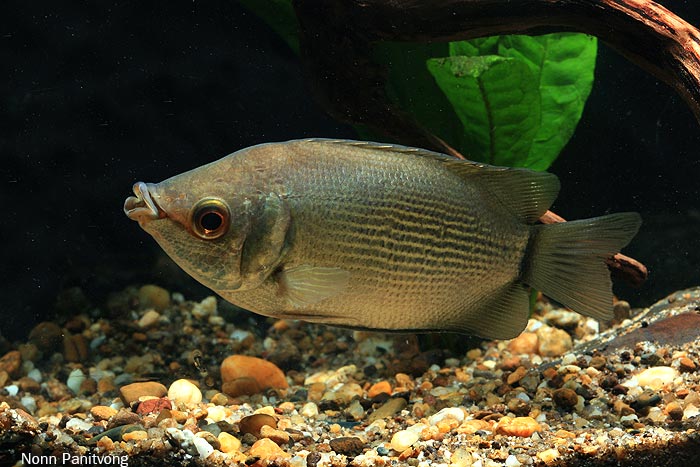
Helostoma temminkiiKissing Gourami
Cuvier, 1829
Max length250mm SL10in SLTank150 × 45cm60 × 18inTemp22–30°C72–86°FpH6.0–8.0The pinkish-white form of this species is among the most widely-traded aquarium fishes in the world but does not occur naturally and is in fact a leucistic variant bred specifically for ornamental purposes. The 'short-bodied' or 'balloon' variety also continues to be fashionable but under no circumstances do we recommend the purchase of these intentionally disfigured animals which tend to have much shorter life spans than the naturally-shaped fish. There also exists a less-po...
Hemiancistrus guahiborumL106
authority not recorded
Max length150mm SL6in SLTank120 × 30cm48 × 12inTemp22–26°C72–79°FpH6.0–7.5This species was only described to science in 2005, the species name being taken from the name of a local tribe. It's also known as the spotted orange seam plec, due to its patterning. It's found living alongside other Loricariid species in nature, including Peckoltia and other Hemiancistrus species. There's ongoing discussion as to whether this species and the currently undescribed L122 are one and the same, as these two were apparently both included in the scientific description...
Hemiancistrus sp.Blue Phantom Plec
authority not recorded
Max length180mm SL7in SLTank120 × 30cm48 × 12inTemp22–25°C72–77°FpH6.0–7.0This stunning species must surely rank among the most attractive Loricariids available in the hobby. There are several colour forms available, depending on collection locality. These vary in base colour and in the number, size and positioning of the spots on the body. The true identity of this fish is shrouded in confusion. It may or may not be Hemiancistrus subviridis, also known as the green phantom plec (L200), which it resembles very closely in morphology. The two are also found in diffe...
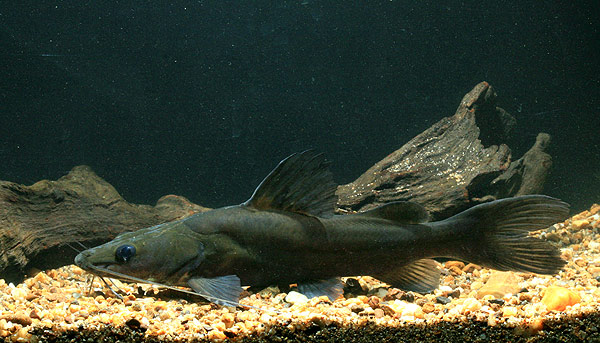
Hemibagrus filamentus
Fang & Chaux, 1949
Max length420mm SL17in SLTanknot recordedTempnot recordedpHnot recordedThis species appears to be unknown in the aquarium trade but is a valued food fish within its native range. Hemibagrus has been divided into a number of putative species groups which may or may not represent monophyletic assemblages, and following a major review by Ng and Kottelat (2013) H. filamentus is included in the H. nemurus group.
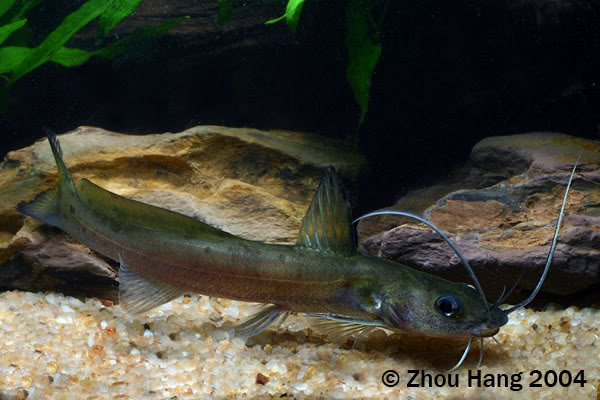
Hemibagrus macropterus
Bleeker, 1870
Max length408mm SL16in SLTanknot recordedTempnot recordedpHnot recordedThis species has been recorded from the Zhujiang (Pearl River), Changjiang (Yangtze River) and Qiantang Jiang in central and southern China. Type locality is 'Chang Jiang, China', referring to the Yangtze. It's been adversely affected by dam construction and pollution across certain parts of its range and may be locally extirpated in some cases.
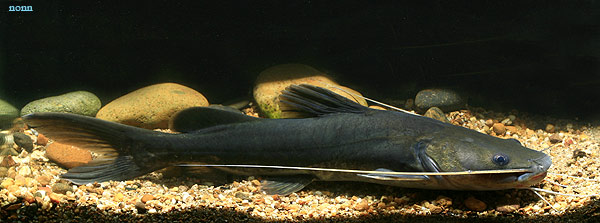
Hemibagrus microphthalmus
Day, 1877
Max length1500mm SL59in SLTanknot recordedTempnot recordedpHnot recordedThis species cannot be considered a suitable home aquarium subject given its eventual size plus the fact it can live for several decades. It can be told apart from most oth...
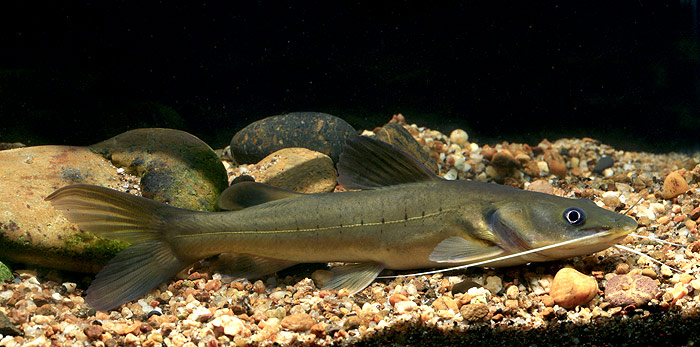
Hemibagrus peguensis
Boulenger, 1894
Max length286mm SL11in SLTanknot recordedTempnot recordedpHnot recordedMembers of this assemblage can be told apart from other congeners by possession of 44–46 vertebrae, an adipose-fin with a relatively short base (< 20 % SL), a colour pattern comprising either distinct black spots arranged in vertical columns or irregular black vertical lines running along the flanks, and normally a reddish or orangish caudal-fin in life.
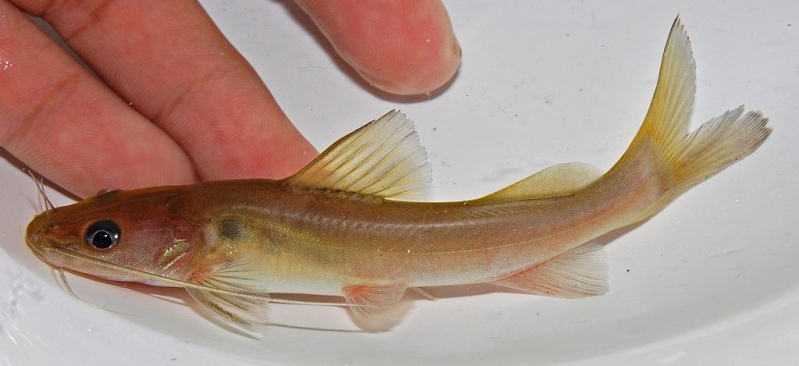
Hemibagrus planiceps
Valenciennes, 1840
Max length263mm SL10in SLTanknot recordedTempnot recordedpHnot recordedThis species is now considered endemic to Java but has been confused with the congeners H. gracilis (from eastern Peninsular Malaysia), H. velox (Sumatra) and H. bongan (Borneo) in the past, while the population formerly considered to inhabit northwestern Peninsular Malaysia has been described as H. divaricatus (Ng and Kottelat, 2013).
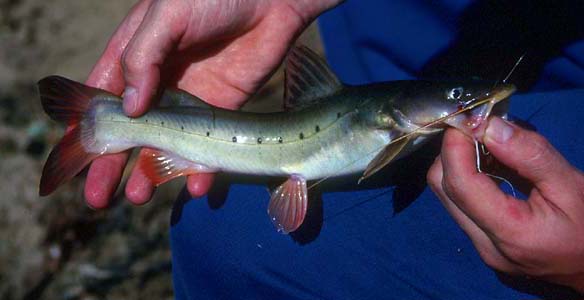
Hemibagrus punctatusPorthole Bagrid
Jerdon, 1849
Max length197mm SL8in SLTanknot recordedTemp20–27°C68–81°FpH6.0–7.0Confirmed localities include the Kabini, Bhadra and Moyar tributary systems where it was last collected in 1998, the 1980s and 1990-92, respectively. The IUCN currently list it as Critically Endangered (possibly extinct).