Search the catalogue
Type a name: scientific, common, or one a species used to go by. Or narrow the catalogue with the filters.
Filters
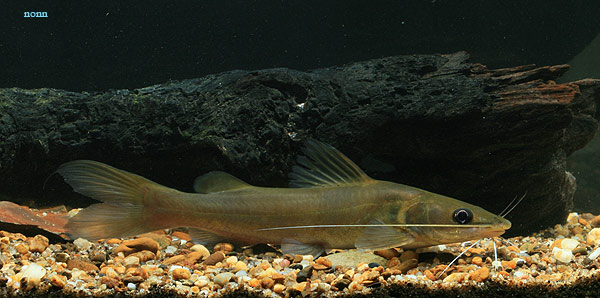
Hemibagrus spilopterus
Ng & Rainboth, 1999
Max length500mm SL20in SLTanknot recordedTemp20–27°C68–81°FpH6.0–8.0This species is relatively common in the aquarium trade but has been widely misidentified as the congener H. nemurus which is native to Java and may never have been exported for ornamental purposes. Hemibagrus has been divided into a number of putative species groups which may or may not rep...
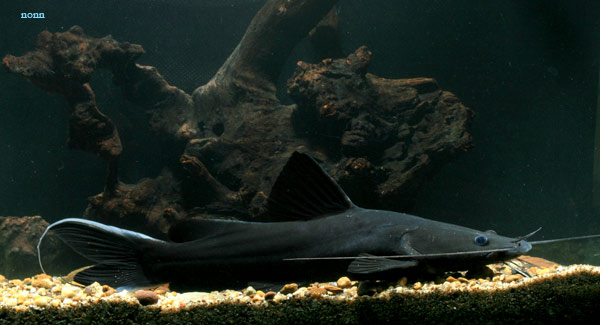
Hemibagrus wyckiiCrystal-eyed Catfish
Bleeker, 1858
Max length710mm SL28in SLTanknot recordedTemp20–27°C68–81°FpH6.0–8.0Aggressively territorial and incompatible with other fishes in all but the largest public installations and even then may attack its tankmates. It's also one of few freshwater fishes that appear unafraid of humans meaning care must be exercised when performing maintenance.
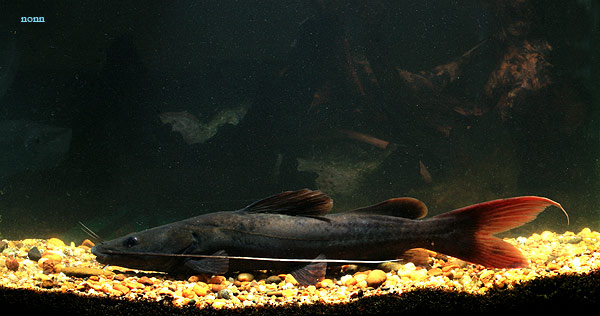
Hemibagrus wyckioidesAsian Red Tailed Catfish
Fang & Chaux, 1949
Max length1300mm SL51in SLTanknot recordedTemp19–29°C66–84°FpH6.0–8.0Juvenile specimens are sometimes available in the aquarium trade although their purchase is strongly discouraged, and this species probably shouldn't be considered a home aquarium subject at all given its eventual size plus the fact it can live for several decades. H. wyckioides can be told apart from mos...
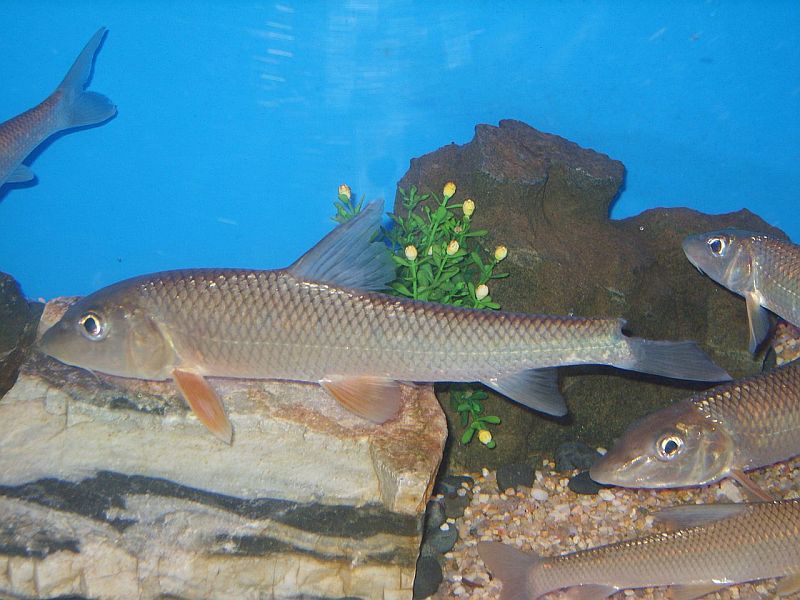
Hemibarbus labeoBarbel Steed
Pallas, 1776
Max length450mm SL18in SLTanknot recordedTempnot recordedpHnot recordedThis species can be distinguished from other members of the genus by the following combination of characters: absence of dark spots on body in adults; body elongate with slightly convex dorsal profile; head longer than body is deep; snout much longer than postorbital head length; lips well developed, lateral lobes of lower lip broad and thick with folds, median process small; barbel thickness shorter or equal to eye diameter; dorsal spine strong, ⅔ of HL; dorsal-fin origin closer to tip of snout than caudal-fin base base; 15+ gill rakers; 6½ branched anal-fin rays; posterior simple dorsal-fin rays ossified and spinous.
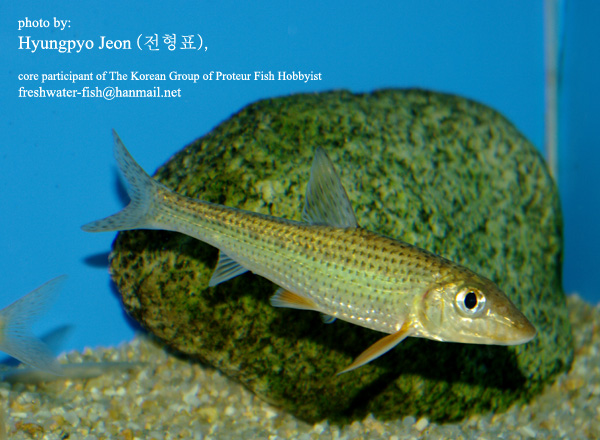
Hemibarbus longirostris
Regan, 1908
Max length250mm SL10in SLTanknot recordedTempnot recordedpHnot recordedA predominantly riverine fish preferring clear, well-oxygenated, running waters with substrates of sand, gravel, rock or mud, where adults tend to form schools just above the substrate in slower-moving sections.
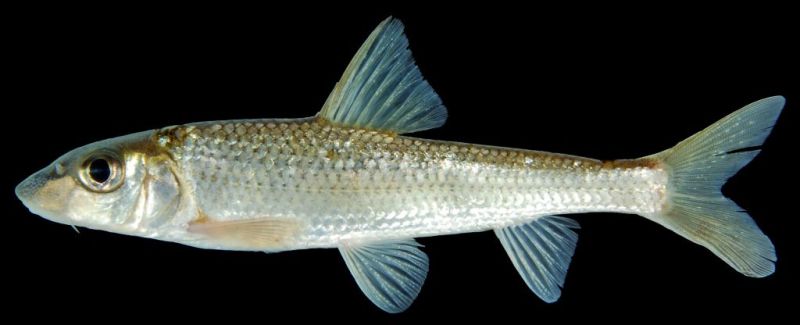
Hemibarbus maculatusSpotted Steed
Bleeker, 1871
Max length400mm SL16in SLTanknot recordedTempnot recordedpHnot recordedWidepread in eastern Asia between the Yangtze and Amur river basins, including China (mainland and islands of Taiwan and Hainan), Korea, Mongolia, Russia, and Japan. It probably been introduced to Vietnam and Laos, or records from these countries represent another species.
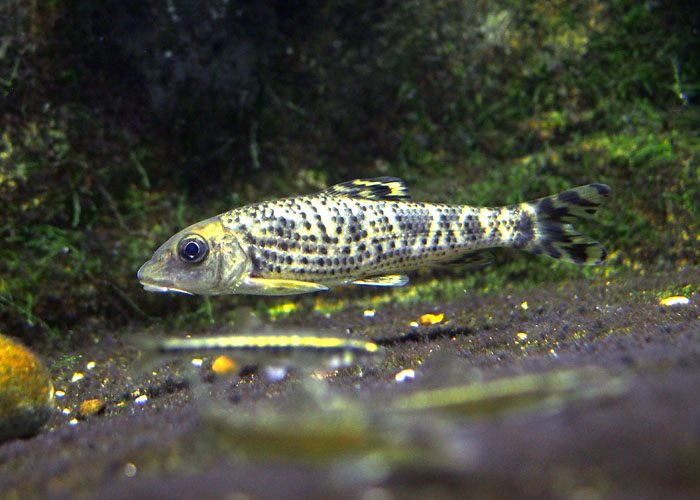
Hemibarbus mylodon
Berg, 1907
Max length350mm SL14in SLTanknot recordedTempnot recordedpHnot recordedEndemic to the Korean peninsula where it occurs throughout North Korea and South Korea. Type locality is 'Keumsan River, near Pusan, South Korea.'
Hemichromis bimaculatusJewel Cichlid
authority not recorded
Max length150mm SL6in SLTank120 × 30cm48 × 12inTemp22–28°C72–82°FpH6.0–7.8Not recommended for the beginner or for the general community tank, despite often being sold as such. The Jewel Cichlid is regularly seen in the trade. Recently, Hemichromis lifalili has become the more popular fish. These species can be easily distinguished as H. lifalili have only 2 black spots on the flanks whereas H. bimaculatus has 3, having an extra spot on the caudal peduncle....
Hemichromis elongatusFive Star General
authority not recorded
Max length150mm SL6in SLTanknot recordedTemp22–25°C72–77°FpH6.5–7.5A real bruiser of a cichlid, H. elongatus is not seen for sale very often, and with good reason. Pound for pound it must rank as one of the most aggressive cichlids available in the hobby. It is such an efficient predator that, in some of its native countries, it is used to control populations of Tilapia. As a result it's definitely not recommended for the inexperienced aquarist. The common name is derived from the row of 5 dark markings that run laterally along the flanks of the fish. I...
Hemichromis lifaliliBlood-Red Jewel Cichlid
authority not recorded
Max length100mm SL3.9in SLTank75 × 30cm30 × 12inTemp23–26°C73–79°FpH6.0–7.8Often confused with Hemichromis bimaculatus. These species can be easily distinguished as H. lifalili have only two black spots on the flanks whereas H. bimaculatus has three, having an extra spot on the caudal peduncle. It can also be told apart from the similar red form of H. guttatus by comparing the midlateral markings of the two. In lifalli the marking is round and is situated above the lateral line. In guttatus the marking is oval in shape and some of it extends below the lateral line. ...
Hemigrammus barrigonaeBarrigona Tetra
authority not recorded
Max length40mm SL1.6in SLTank60 × 38cm24 × 15inTemp22–26°C72–79°FpH5.5–7.0Not a common species in the hobby, although it does occasionally show up as a contaminant among imports of more popular species. Like all Hemigrammus, the taxonomic status of this species is currently Incertae Sedis, meaning uncertain. The genus is currently used as something of a catch-all for over 70 species of small characin. Most experts agree that a full revision is required, with the likely outcome that many species will be placed into new or different genera....
Hemigrammus belottiiDash-dot Tetra
authority not recorded
Max length40mm SL1.6in SLTank60 × 38cm24 × 15inTemp23–27°C73–81°FpH6.0–7.0Not a common fish in the trade, most of the specimens imported come in as contaminants among batches of more popular species. Like all Hemigrammus, the taxonomic status of this species is currently Incertae Sedis, meaning uncertain. The genus is currently used as something of a catch-all for over 70 species of small characin. Most experts agree that a full revision is required, with the likely outcome that many species will be placed into new or different genera....
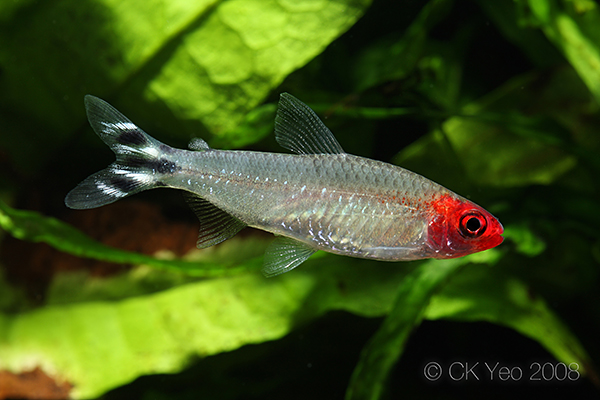
Hemigrammus bleheriFirehead Tetra
authority not recorded
Max length50mm SL2.0in SLTanknot recordedTemp23–26°C73–79°FpH5.5–7.0This is the species most commonly sold as 'rummy-nose tetra' in aquatic outlets. A selectively-bred "golden" variant has also been produced by commercial breeders and is available from time-to-time. The natural form is very similar to both the "true" rummy-nose, Hemigrammus rhodostomus and the 'false' rummy-nose, Petitella georgiae in appearance. The 3 species can distinguished by several factors. The first is by the extent to which the red colouration...
Hemigrammus boesemaniBoesman's Tetra
authority not recorded
Max length45mm SL1.8in SLTank60 × 38cm24 × 15inTemp23–26°C73–79°FpH5.5–7.0This species is very rare in the hobby, and should be snapped up if seen on sale. In the past it was considered a subspecies of H. micropterus. Supposedly, it's not a particularly common species in any of its natural waters. Like all Hemigrammus, the taxonomic status of this species is currently Incertae Sedis, meaning uncertain. The genus is currently used as something of a catch-all for over 70 species of small characin. Most experts agree that a full revision is required, with the lik...
Hemigrammus cupreusShiny Copper Tetra
authority not recorded
Max length35mm SL1.4in SLTank60 × 38cm24 × 15inTemp23–27°C73–81°FpH6.5–7.2Not a common species in the hobby, although it does occasionally show up as a contaminant among imports of more popular species. Like all Hemigrammus, the taxonomic status of this species is currently Incertae Sedis, meaning uncertain. The genus is currently used as something of a catch-all for over 70 species of small characin. Most experts agree that a full revision is required, with the likely outcome that many species will be placed into new or different genera....
Hemigrammus erythrozonusGlowlight Tetra
authority not recorded
Max length40mm SL1.6in SLTank60 × 38cm24 × 15inTemp24–28°C75–82°FpH5.5–7.5This species is ubiquitous in most dealers' tanks and is one of the best choices for the newcomer to fishkeeping, being both hardy and inexpensive. There is a selectively-bred albino form that has been produced for the trade and has become popular in recent years. Care for this is identical to the standard form. Like all Hemigrammus, the taxonomic status of this species is currently Incertae Sedis, meaning uncertain. The genus is currently used as something of a catch-all for over 70 spe...
Hemigrammus hyanuaryJanuary Tetra
authority not recorded
Max length40mm SL1.6in SLTank60 × 38cm24 × 15inTemp23–27°C73–81°FpH6.0–7.0Also known as the costello or green neon tetra, this species is seen much less often in the hobby than it used to be. It's occasionally confused with the common head and tail light tetra, H. ocellifer, as it resembles an elongated version of that species. Like all Hemigrammus, its taxonomic status is currently Incertae Sedis, meaning uncertain. The genus is currently used as something of a catch-all for over 70 species of small characin. Most experts agree that a full revision is require...
Hemigrammus levis
authority not recorded
Max length50mm SL2.0in SLTank60 × 38cm24 × 15inTemp24–28°C75–82°FpH5.5–7.0A rather rare fish in the UK hobby. It occasionally shows up as a contaminant among imports of more popular species. Like all Hemigrammus, the taxonomic status of this species is currently Incertae Sedis, meaning uncertain. The genus is currently used as something of a catch-all for over 70 species of small characin. Most experts agree that a full revision is required, with the likely outcome that many species will be placed into new or different genera....
Hemigrammus ocelliferHead-and-tail light Tetra
authority not recorded
Max length45mm SL1.8in SLTank60 × 38cm24 × 15inTemp24–28°C75–82°FpH5.5–7.5Also known as the beacon tetra, this species is ubiquitous in most dealers' tanks and is one of the best choices for the newcomer to fishkeeping. It's both hardy and inexpensive. It has been popular in the hobby for several decades. There is a selectively bred albino form that has become popular in recent years, for which care is identical to the standard fish. There is possibly also a subspecies, H. ocellifer falsus that lacks the red spot at the caudal peduncle (the gold-coloured tai...
Hemigrammus pulcherPretty Tetra
authority not recorded
Max length45mm SL1.8in SLTank60 × 38cm24 × 15inTemp23–27°C73–81°FpH5.5–7.0Also known as the garnet or black wedge tetra, H. pulcher is deservedly popular in the hobby. It's both hardy and inexpensive, and is a good choice for the beginner. There was previously a subspecies, H. pulcher haraldi. This has now been reclassified as a distinct species, H. haraldi. Like all Hemigrammus, the taxonomic status of this species is currently Incertae Sedis, meaning uncertain. The genus is currently used as something of a catch-all for over 70 species of small characin. Mo...