Search the catalogue
Type a name: scientific, common, or one a species used to go by. Or narrow the catalogue with the filters.
Filters
Horabagrus brachysomaSun Catfish
authority not recorded
Max length450mm SL18in SLTanknot recordedTemp23–25°C73–77°FpH6.0–7.5Also known as the bullseye, solar, eclipse or golden red-tailed catfish, this species is relatively common in the trade. Unfortunately, it's a victim of some rather misplaced marketing, as it's often sold as being suitable for the general community tank found in homes worldwide. The majority of specimens seen for sale measure only 2-3", which only serves to make the situation worse. Obviously, given its adult size it's totally unsuitable for this kind of setup, but makes a fi...
Horabagrus nigricollarisBlack Collared Catfish
authority not recorded
Max length300mm SL12in SLTank120 × 45cm48 × 18inTemp23–25°C73–77°FpH5.5–7.5There are only 2 species currently in the genus Horabagrus, with this one being the rarer in the hobby. H. brachysoma is the other, and it resembles H. nigricollaris quite closely. It is a much larger fish and is unsuitable for most home aquaria. Confusion can arise as both are usually sold as juveniles, at around 2-3" in length. They can be told apart by examining the black shoulder markings found on either side of the fish. In H. brachysoma this is no more than a vaguely circular dark blo...
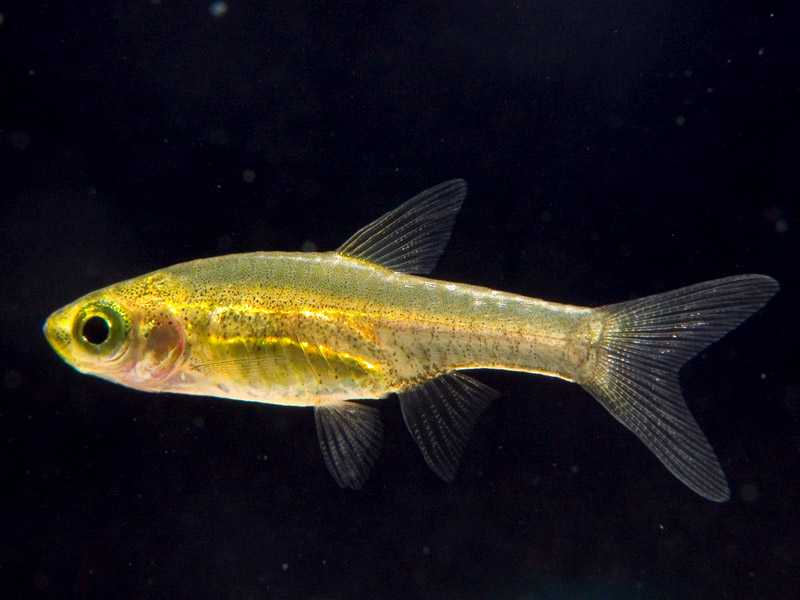
Horadandia atukorali
Deraniyagala, 1943
Max length30mm SL1.2in SLTank45 × 30cm18 × 12inTemp20–26°C68–79°FpH5.5–7.5The genus is monotypic and distinguished from other cyprinid taxa by a combination of a moderately compressed, elongated body with two rows of teeth on the lower pharyngeal (throat) bone and lacking barbles, visible lateral line and a symphyseal knob on the lower jaw (Talwar & Jhingran, 1991). Its small adult size evolved via a process known as miniaturisation characterised by sexually mature adults with a significantly reduced size of less than 20 mm SL. Among bony fishes cyprinids are one of the few groups in which this phenomenon occurs repeatedly...
Hyalobagrus flavusShadow Catfish
authority not recorded
Max length45mm SL1.8in SLTank45 × 30cm18 × 12inTemp21–26°C70–79°FpH5.5–7.0For many years this species has (and still is) imported as Pelteobagrus ornatus. It was assigned to the new genus Hyalobagrus, and discovered to be a distinct species, during a taxonomic revision of the Bagridae family in 1998. The other 2 species which were also thought to be P. ornatus are H. leiacanthus and H. ornatus. Apparently these two are imported rarely, if ever. Unlike the vast majority of catfish, H. flavus is a diurnal species, and spends much of its time swimming in shoals in m...
Hydrocynus goliathGiant Tigerfish
authority not recorded
Max length2100mm SL83in SLTanknot recordedTemp24–28°C75–82°FpH6.5–7.5A voracious piscivore this species is perfectly designed for its lifestyle. It is very streamlined and muscular and has one of the most amazing sets of teeth of any freshwater fish. These are dagger-shaped and interlock, meaning the fish can rip chunks out of its prey. The teeth are visible even when the animal's mouth is closed, which makes for a fearsome sight. It is one of the world's most infamous game fish and specimens weighing over 100 pounds have been recorded. We cannot st...
Hydrocynus vittatusAfrican Tiger Fish
authority not recorded
Max length1050mm SL41in SLTank300 × 90cm118 × 36inTemp24–28°C75–82°FpH6.5–8.0A voracious piscivore that hunts in large shoals in the wild, this species is perfectly designed for its lifestyle. It is very streamlined and muscular and has one of the most amazing sets of teeth of any freshwater fish. These are dagger-shaped and interlock, meaning the fish can rip chunks out of its prey. The teeth are visible even when the animal's mouth is closed, which makes for a fearsome sight. It is a popular game fish in its native range, with the largest specimen caught weighi...
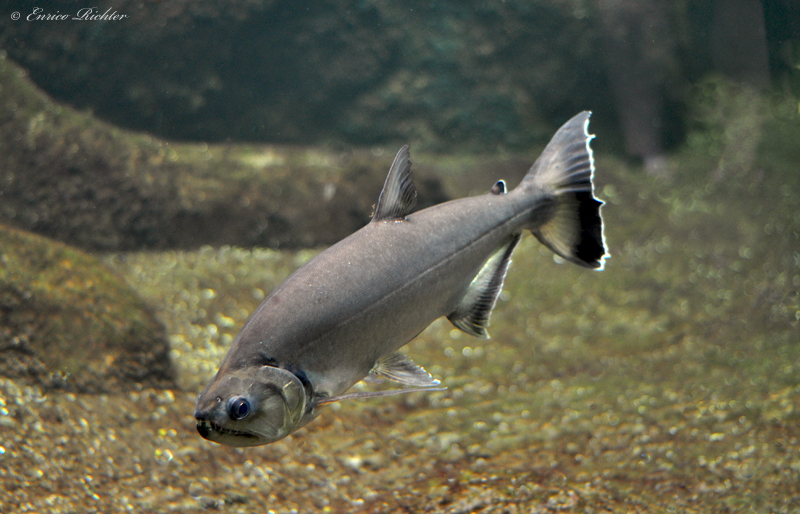
Hydrolycus armatusPayara
Jardine, 1841
Max length660mm SL26in SLTanknot recordedTemp24–28°C75–82°FpH6.0–8.0H. armatus should probably not be considered a home aquarium subject at all given its eventual size and migratory natural behaviour. Unfortunately, juveniles are seen for sale quite regularly, most often without adequate information regarding their long-term care, and it's common to see them being maintained in medium-sized aquaria with no possibility of achieving their potential.
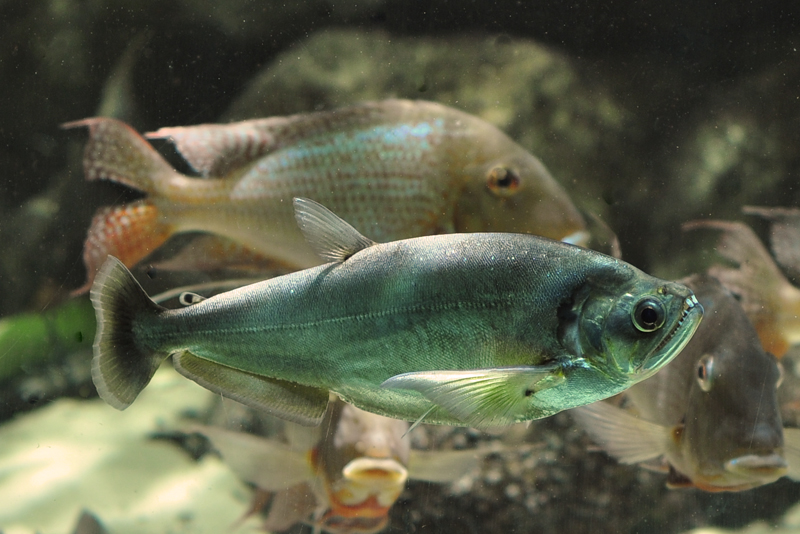
Hydrolycus scomberoidesVampire Tetra
Cuvier, 1819
Max length300mm SL12in SLTank210 × 75cm84 × 30inTemp24–28°C75–82°FpH6.0–8.0This species may be referred to using a variety of names including 'scomb', 'sabre tooth tetra', 'sabre tusk barracuda', 'dog tooth characin, 'vampire fish', 'Cachorra' or Pirandirá (the latter two names being used in Brazil where they're also applied to congeners). It's regularly confused with the payara, H. armatus, though that species grows considerably larger, is pop...
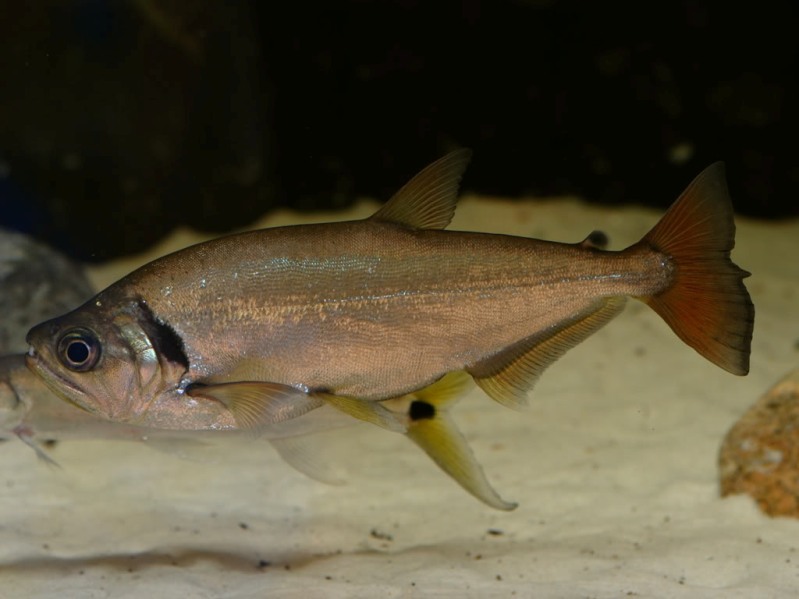
Hydrolycus tatauaia
Toledo-Piza, Menezes & Santos, 1999
Max length455mm SL18in SLTanknot recordedTemp24–28°C75–82°FpH6.0–8.0Vernacular names in Brazil include 'Cachorra' or 'Pirandirá', although these are also applied to congeners. It can be told apart from all congeners by the following combination of characters: head and body silvery with dark dorsal surface; an elongate dark blotch posterior to the opercle; dorsal, caudal and anal-fin rays reddish to orange proximally with some individual variation in intensity and tonality; adipose fin dark, with diffuse black pigmentation.
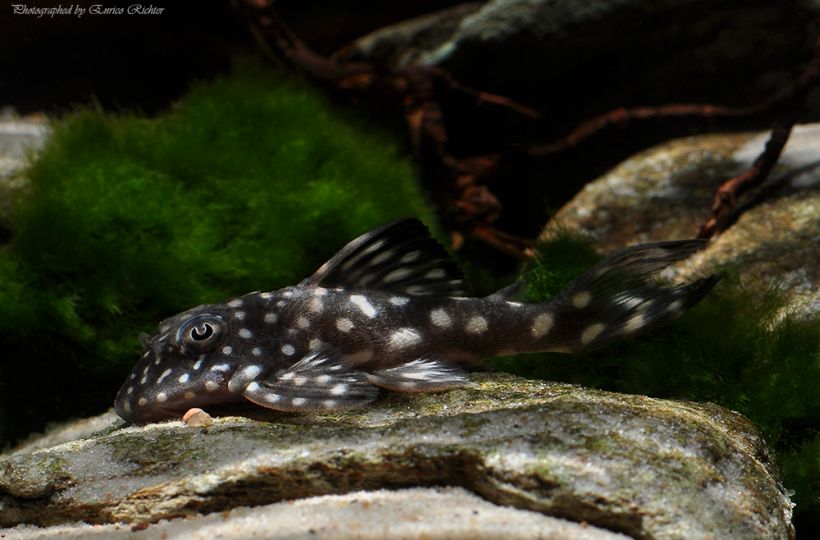
Hypancistrus inspectorL102
Armbruster, 2002
Max length160mm SL6in SLTank120 × 45cm48 × 18inTemp22–30°C72–86°FpH5.0–7.5H. inspector can be told apart from other described species in the genus by the following combination of characters: colour pattern comprising brown to black base with large whitish to yellow spots; adpressed dorsal-fin not reaching the adipose-fin spine; spots on head much smaller than on rest of body; spots in the upper caudal-fin lobe combining to form bands in adults; 24 plates in the mid-ventral series.
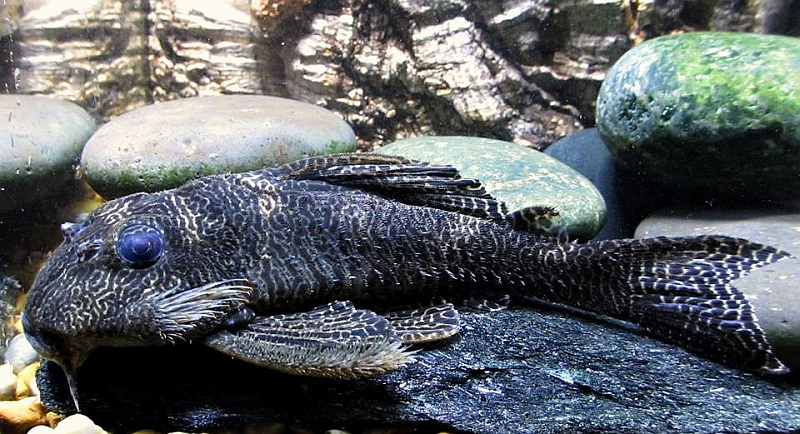
Hypancistrus sp.L066
authority not recorded
Max length140mm SL6in SLTank120 × 45cm48 × 18inTemp26–30°C79–86°FpH5.0–7.0Collected from the rio Xingu downstream and in the vicinity of Belo Monte, Pará state, northern Brazil. The majority of its natural habitat is likely to be severely degraded in the near future due to ongoing construction of the Belo Monte dam.
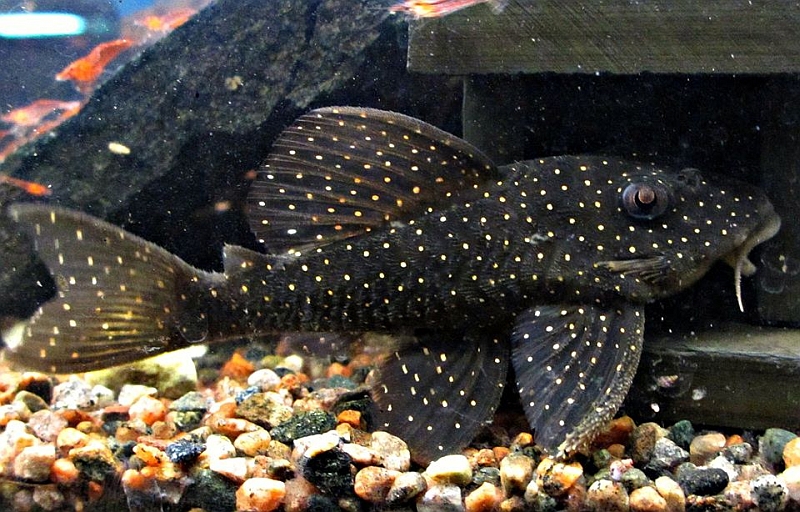
Hypancistrus sp.L004
authority not recorded
Max length100mm SL3.9in SLTank120 × 30cm48 × 12inTemp26–30°C79–86°FpH5.5–7.5The genus Hypancistrus is diagnosed from all other loricariids by a wide separation between the metapterygoid and lateral ethmoid, presence of a sharply angled adductor palatini crest of the hyomandibula, and no lateral wall in the metapterygoid channel. More useful for aquarists is the fact that in Hypancistrus the dentary teeth are about twice a...
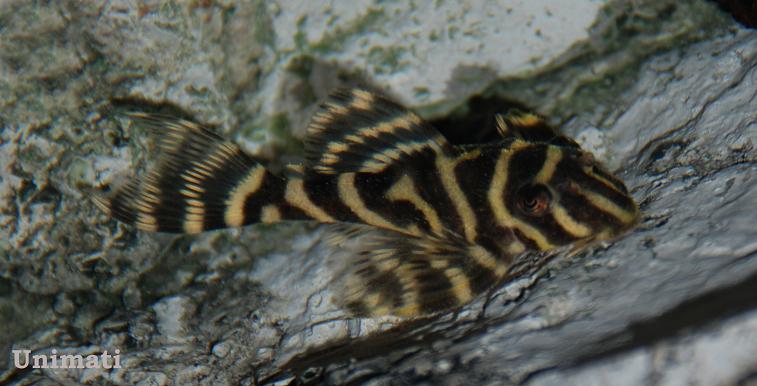
Hypancistrus sp.L333
authority not recorded
Max length150mm SL6in SLTank120 × 45cm48 × 18inTemp26–30°C79–86°FpH5.5–7.5This unidentified species possesses a highly variable colour pattern with the pale, randomly-arranged spots and blotches on the body ranging in colour from whitish to yellowish to rusty orange depending on the specimen. It's regularly confused with similar-looking relativ...
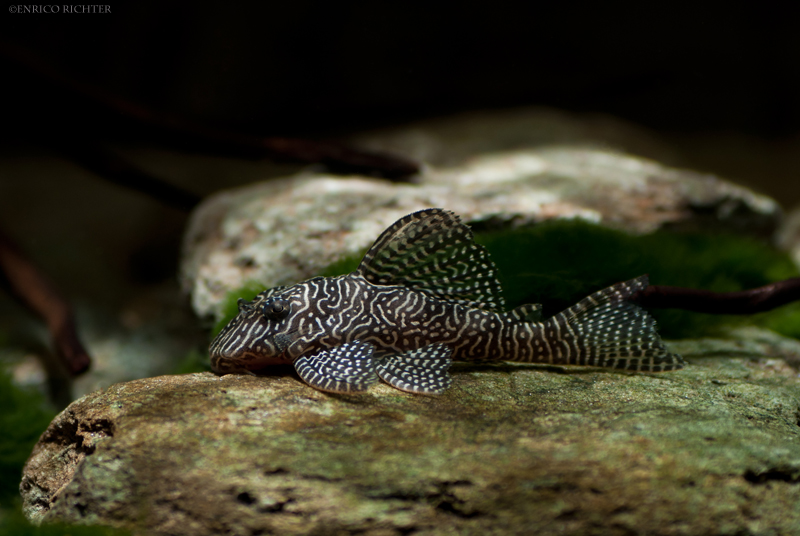
Hypancistrus sp.L260
authority not recorded
Max length90mm SL3.5in SLTank90 × 30cm36 × 12inTemp24–30°C75–86°FpH5.5–7.5A similar-looking, larger form from the rio Jarí, which enters the Amazon from the opposite bank a few hundred kilometres downstream from the Tapajós has been assigned the code L411. The two can be told apart relatively easily since in L260 the white vermiculations on the body are significantly finer than in L411, in which the black and white components of the colour pattern are of more-or-less equivalent width.
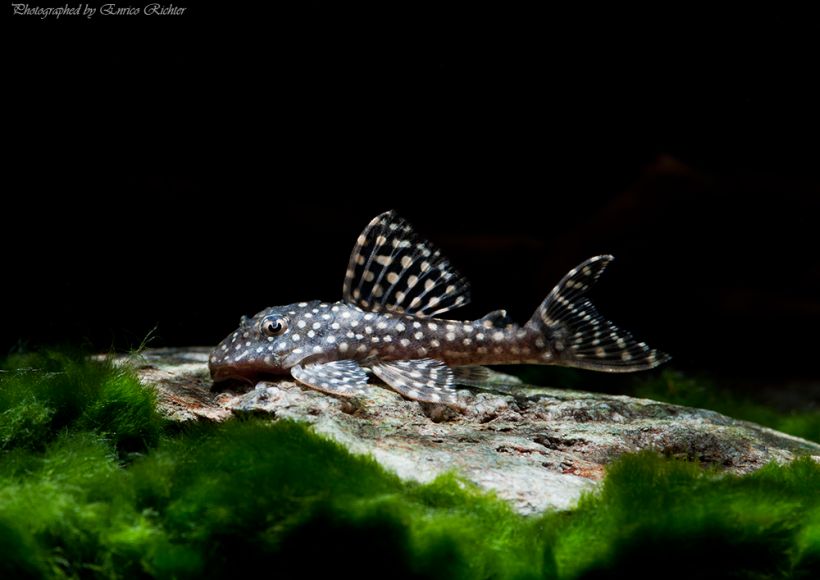
Hypancistrus sp.L136
authority not recorded
Max length90mm SL3.5in SLTank90 × 30cm36 × 12inTemp23–29°C73–84°FpH5.0–7.0L136 and its variants are collected in the rio Negro basin, Amazonas state, Brazil, and in particular the rio Demini, a northern tributary flowing into the central Negro in the municipality of Barcelos. Collection details for LDA05 and LDA06 are currently unclear but presumably in the vicinity. This unidentified 'species' is highly variable in terms of colour pattern, and it has been assigned a ser...
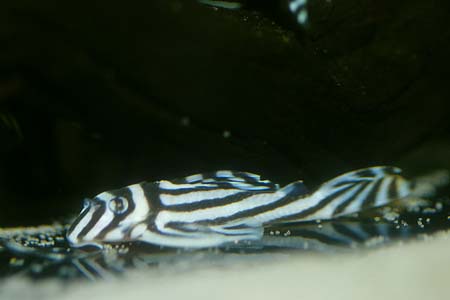
Hypancistrus zebraZebra Plec
Isbrücker and Nijssen, 1991
Max length80mm SL3.1in SLTank60 × 30cm24 × 12inTemp26–30°C79–86°FpH6.0–7.5One of the most enigmatic species in the hobby, this incredible little catfish must rank amongst the most stunning freshwater species known. In the late 1990s and the early part of this century you could buy one of these for as little as twenty pounds. However in 2004, the Brazilian government banned the exportation of the species amid apparent concerns over the exploitation of wild stocks. As yet, the conservation status of the fish has not been confirmed by any scientific proof with the only e...
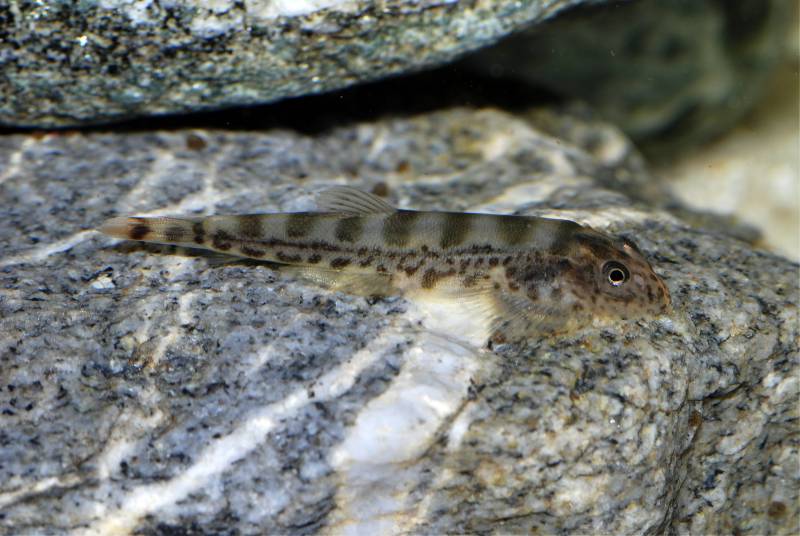
Hypergastromyzon humilis
Roberts, 1989
Max length35mm SL1.4in SLTank45 × 30cm18 × 12inTemp20–24°C68–75°FpH6.0–7.5The differences in pelvic-fin structure and gill openings led Roberts to redefine the genus when describing H. eubranchus, whereas Tan (2006) expressed doubts that the two are even congeneric but was unable to reach a definitive conclusion in the absence of fresh material. At any rate both species can be easily differentiated from Gastromyzon and Neogastromyzon spp. by observing the mo...
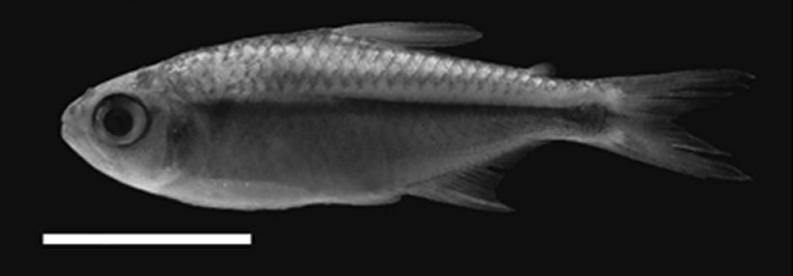
Hyphessobrycon acaciae
García-Alzate, Román-Valencia & Prada-Pedreros, 2010
Max length30mm SL1.2in SLTanknot recordedTempnot recordedpHnot recordedIt differs from H. paucilepis by possessing 30-31 scales in the lateral row (vs. 28-29), 3 scales between the lateral line and anal-fin (vs. 4), 10 predorsal scales (vs. 9), ii, 9 dorsal-fin rays (vs. iii, 8), 4 maxillary teeth (vs. 1), and the distance between the dorsal-fi...
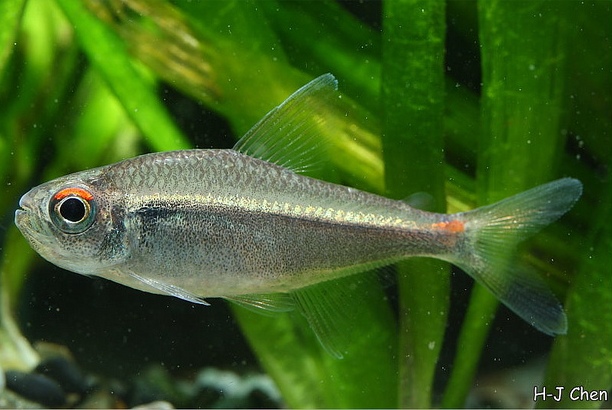
Hyphessobrycon agulha
Fowler, 1913
Max length42mm SL1.7in SLTank80 × 30cm31 × 12inTemp20–28°C68–82°FpH5.5–7.5This species is relatively rare in the aquarium hobby but is occasionally traded as 'red-tailed flag tetra'. It lends its name to the H. aghula group of closely-related species within the genus as proposed by Géry (1977, see below) of which members share the following characters which set them apart from other characids: lower half of the body dark, especially above the anal-fin; usually possessing a laterally-elongate humeral spot, more-or-less united wit...
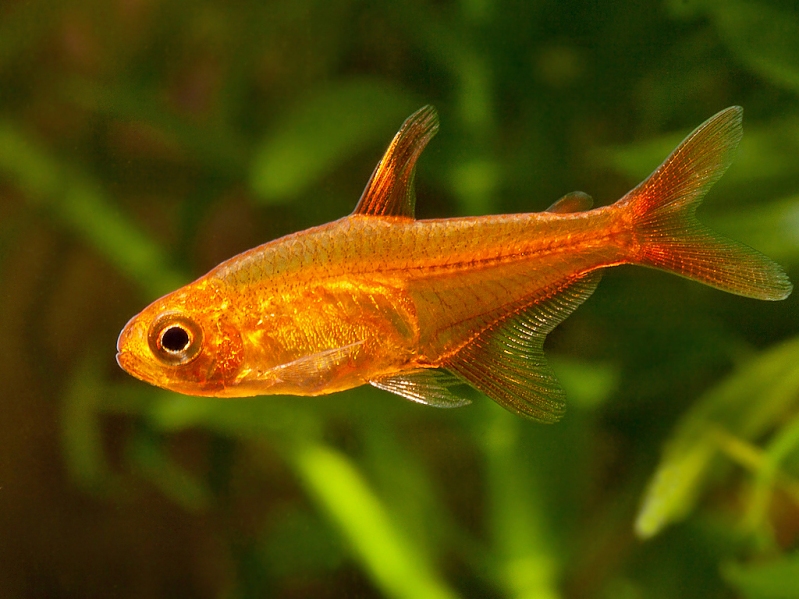
Hyphessobrycon amandaeEmber Tetra
Géry & Uj, 1987
Max length20mm SL0.8in SLTank45 × 30cm18 × 12inTemp20–28°C68–82°FpH5.0–7.0Type locality is 'Rio das Mortes, some 100 km before its confluence with the Braço Maior of the Rio Araguaia (the western border of the Isla do Bananal). State of Mato Grosso.' The das Mortes is a principal tributary of the Araguaia, itself the major affluent of the rio Tocantins within the lower Amazon basin in central and western Brazil, although the full range of H. amandae within the Araguaia system is unclear.