Search the catalogue
Type a name: scientific, common, or one a species used to go by. Or narrow the catalogue with the filters.
Filters
Hypselecara temporalisChocolate Cichlid
authority not recorded
Max length300mm SL12in SLTank120 × 45cm48 × 18inTemp25–30°C77–86°FpH5.0–7.0Test
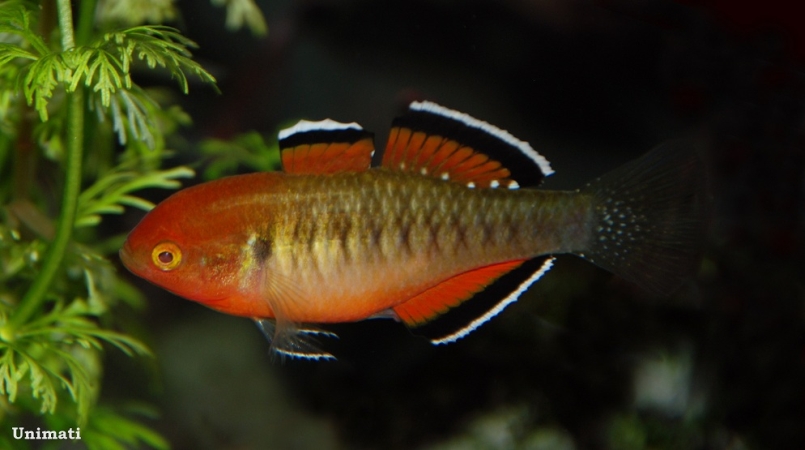
Hypseleotris compressaEmpire Gudgeon
Krefft, 1864
Max length120mm SL5in SLTank80 × 30cm31 × 12inTemp20–35°C68–95°FpH5.0–9.1Occurs in northern and eastern Australia and southern New Guinea. In the former its range extends from the Pilbara and Kimberley regions of Western Australia state around the northern and eastern coastlines of the continent as far as the Towamba river system in New South Wales state.
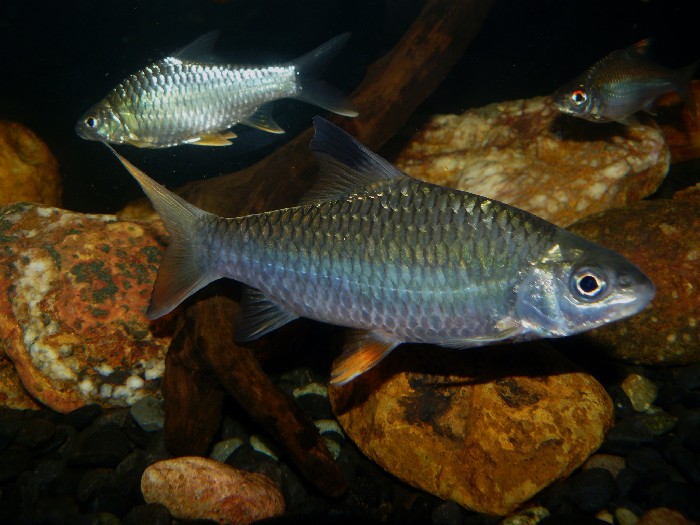
Hypselobarbus jerdoniJerdon's Carp
authority not recorded
Max length460mm SL18in SLTank240 × 120cm96 × 48inTemp20–26°C68–79°FpH6.5–7.5There are currently eleven species in the genus most of which have previously been included in Puntius, Barbus and the now defunct genus Gonoproktopterus. Of these the only ones we've seen in the trade are H. jerdoni and H. curmuca although it's possible that others have been exported in small numbers or as contaminants among shipments of other species. Even these two are very rarely encountered and little has been written about the group as a whole....
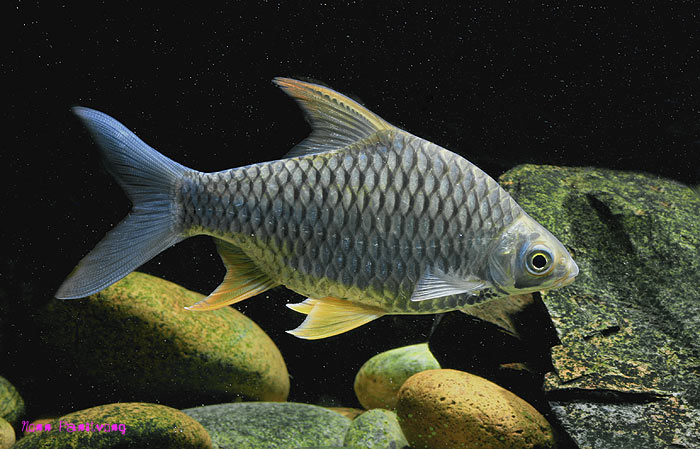
Hypsibarbus lagleri
Rainboth, 1996
Max length350mm SL14in SLTank240 × 60cm96 × 24inTemp20–26°C68–79°FpH6.0–8.0This species is migratory on a seasonal basis; during the dry season it can be found in larger river channels, whereas during drier months it moves into smaller tributaries and flooded forests. Apparently displays a preference for rocky habitats and is not known to adapt to reservoirs or other artificial impoundments.
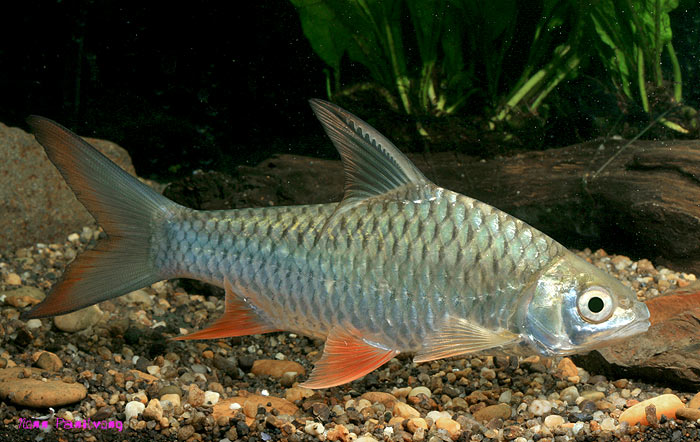
Hypsibarbus malcolmiGoldfin Tinfoil Barb
Smith, 1945
Max length500mm SL20in SLTanknot recordedTemp20–26°C68–79°FpH6.0–8.0H. malcolmi is distinguished from congeners by the following combination of characters: 12-17 (usually 14-15) rakers on first gill arch; usually 16 circumpeduncular scale rows; less than 30 lateral line scales; some branched lateral line canals, but branching not extensive, median portion of dorsal-fin dark.
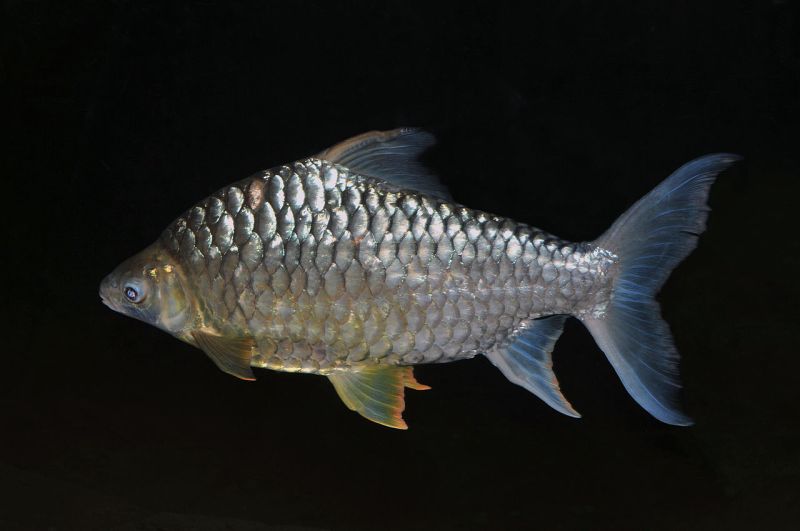
Hypsibarbus pierreiYellow Eyed Silver Barb
Sauvage, 1880
Max length300mm SL12in SLTanknot recordedTempnot recordedpHnot recordedKnown from the middle and lower Mekong basins in Laos, Thailand, Cambodia, and Vietnam, plus the Dong Nai drainage in central Vietnam. Type locality is 'Rapids of Dang-nai, Bien Hoa Province, Thailand', which corresponds to what is now the city of Biên Hòa in Đồng Nai province, southern Vietnam.
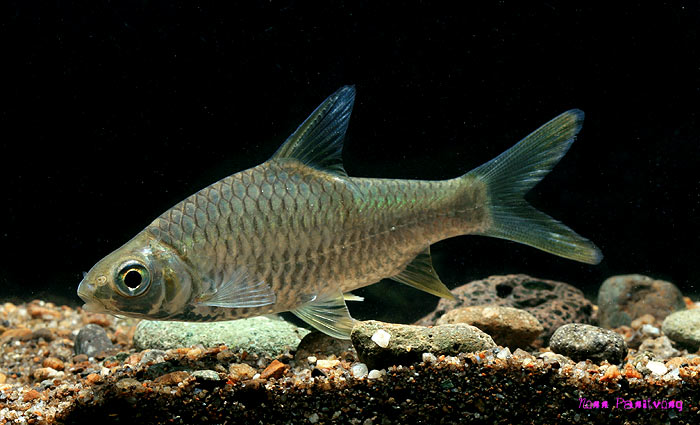
Hypsibarbus salweenensis
Rainboth, 1996
Max length300mm SL12in SLTanknot recordedTempnot recordedpHnot recordedEndemic to the Salween river system in Yunnan province, southern China, eastern Myanmar, and northwestern Thailand. Type locality is 'Salween River midway between Mae Sam Laep and Paleh, Mae Hong Son province, Thailand.'
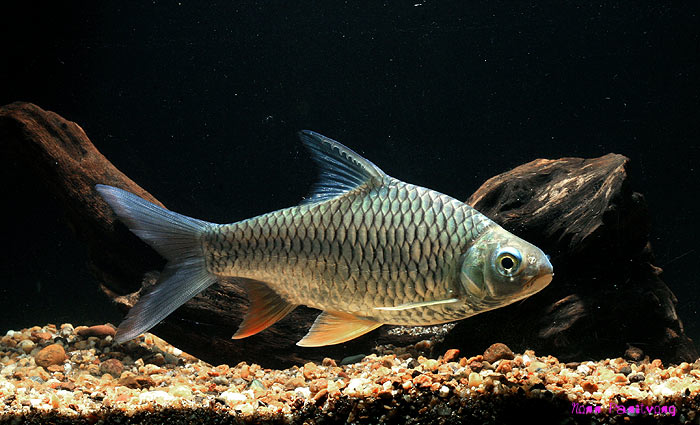
Hypsibarbus vernayi
Norman, 1925
Max length216mm SL9in SLTank240 × 60cm96 × 24inTemp20–26°C68–79°FpH6.0–8.0It is very similar to H. wetmorei but can be told apart by possessing yellow (vs. orange to red in H. wetmorei) pectoral, pelvic, and anal fins. It thus appears likely that yellow-finned fish marketed as H. wetmorei or 'lemon fin barb' in the ornamental trade are actually H. vernayi, with both species available on a regular basis.
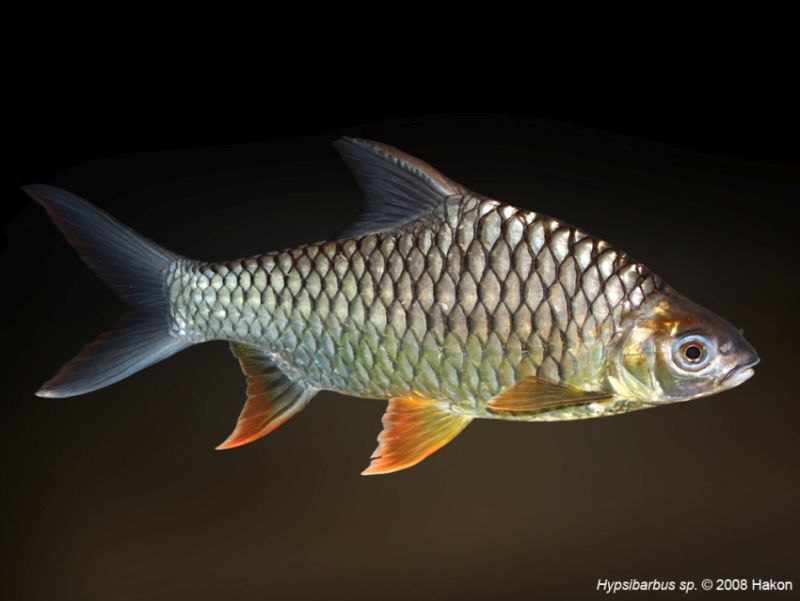
Hypsibarbus wetmorei
Smith, 1931
Max length250mm SL10in SLTank240 × 60cm96 × 24inTemp20–26°C68–79°FpH6.0–8.0H. wetmorei is distinguished from congeners by the following combination of characters: upper body reddish brown; robust body, not compressed; usually 4½ scale rows between lateral line and dorsal-fin origin; 8-12 rakers on first gill arch; 7-9 predorsal scales; 14 circumpeduncular scale rows; usually two scale rows separating vent and anal-fin; <29 lateral line scales; 9-14 serrations on the spinous dorsal-fin ray; distance between distal serrae on posterior margin of last unbranched dorsal-fin ray much greater than the width of their bases.
Hypsophrys nicaraguensisNicaragua Cichlid
authority not recorded
Max length250mm SL10in SLTank120 × 45cm48 × 18inTemp23–28°C73–82°FpH7.0–8.0Also known as the Spilotum or Moga, this is a popular and beautiful cichlid that exists in several different colour forms, depending on collection locality. It has also been hybridised with the convict cichlid (Archocentrus nigrofasciatus), although this is not to be encouraged. A study in 2004 found an apparent close genetic association between this species and Neetroplus nematopus, another cichlid found in the same area in nature. The 2 show remarkable similarities strategy, patterning and uni...
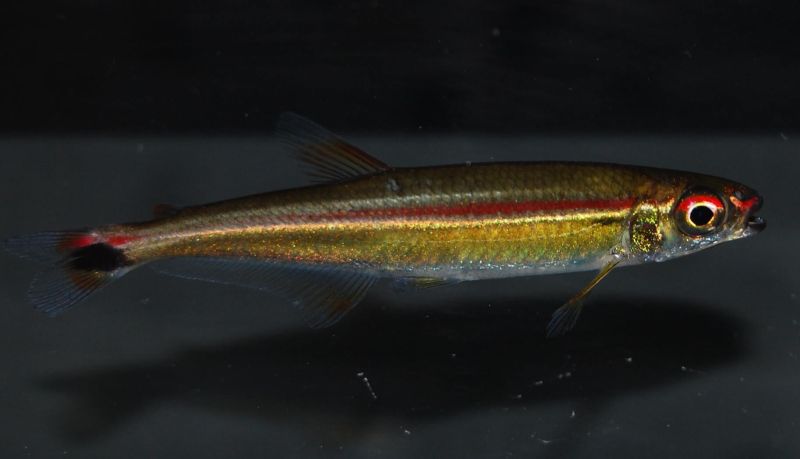
Iguanodectes adujai
Géry, 1970
Max length62mm SL2.4in SLTank90 × 30cm36 × 12inTemp20–26°C68–79°FpH5.0–7.0This species is known from the rio Negro within the Brazilan Amazon basin and upper Río Orinoco system in Venezuela. Type locality is 'Rio Adujá, Rio Itú, tributary of middle Rio Negro, Amazonia, Brazil'.
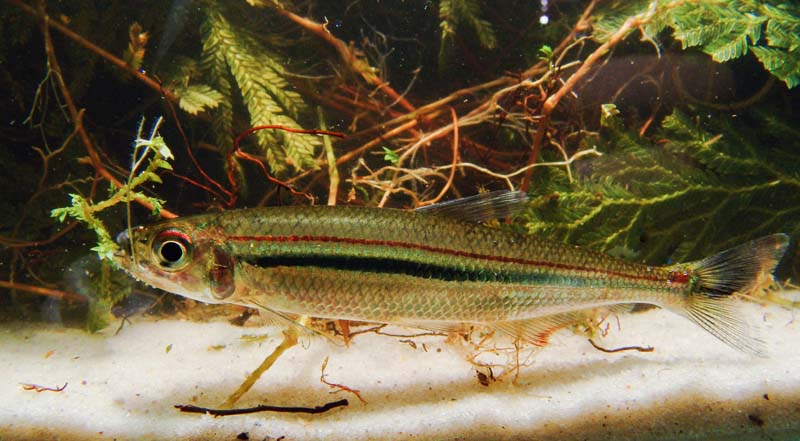
Iguanodectes geisleri
Géry, 1970
Max length55mm SL2.2in SLTank120 × 30cm48 × 12inTemp20–26°C68–79°FpH5.0–7.0I. geisleri is typically exported for the aquarium trade alongside the similar-looking congener I. adujai (Géry, 1970) but can be identified by presence (vs. absence in I. adujai) of a black lateral stripe on the body beneath the red stripe, and possession of 20-25 (vs. 28-34) anal-fin rays.
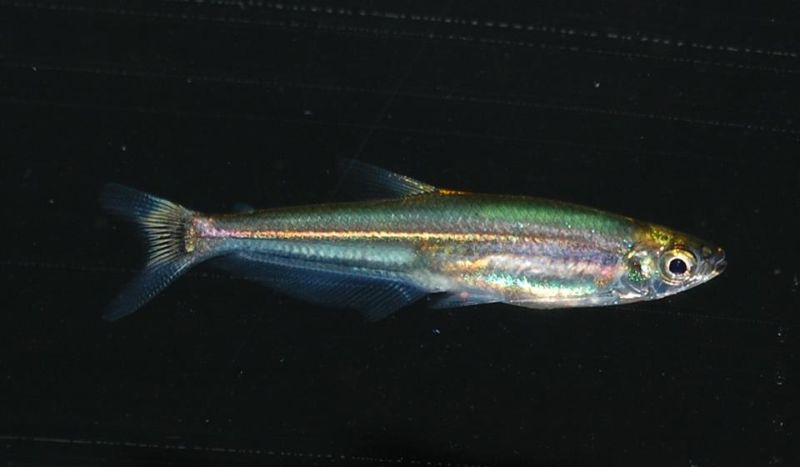
Iguanodectes spilurusGreen Line Lizard Tetra
Günther, 1864
Max length102mm SL4in SLTank120 × 45cm48 × 18inTemp20–28°C68–82°FpH5.0–7.5Widely-distributed throughout the Amazon, Orinoco, Essequibo, and Tocantins river systems in Brazil, Peru, Bolivia, Ecuador, Colombia, Venezuela, and Guyana. Type locality is 'Rio Cupai [= Rio Cupari], Rio Tapajós basin, Amazon River drainage, Pará State, Brazil'.
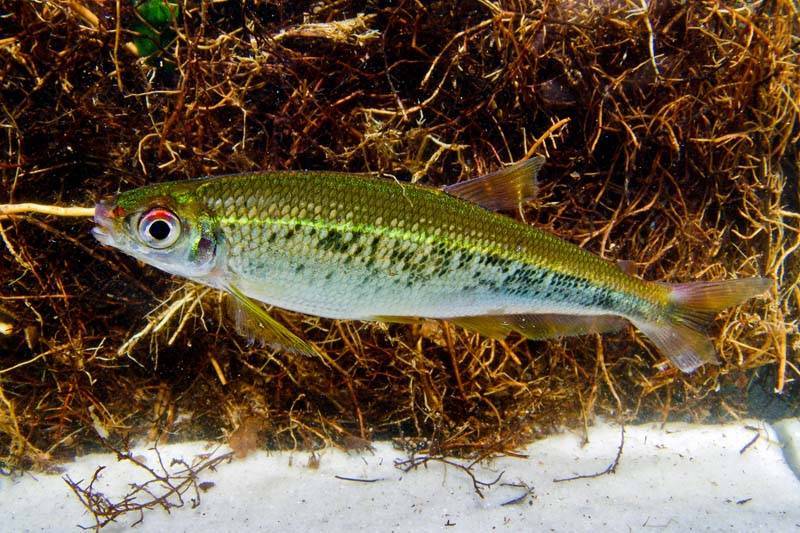
Iguanodectes variatus
Géry, 1993
Max length103mm SL4in SLTanknot recordedTempnot recordedpHnot recordedThis species has been recorded from the Guaporé, Madeira, Branco, Trombetas, and Urubu river systems within the Amazon river basin, Brazil. Type locality is 'Igarapé Jatuarana, 5 kilometers above Samuel, Rio Guaporé, Rondonia, Brazil'.
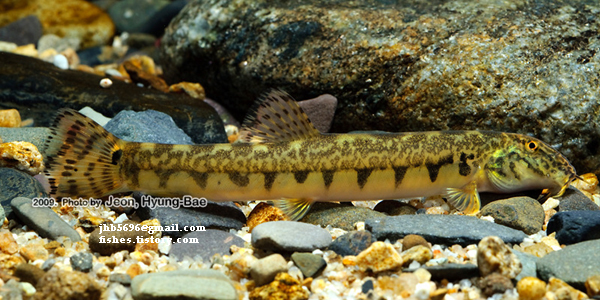
Iksookimia hugowolfeldi
Nalbant, 1993
Max length160mm SL6in SLTank100 × 30cm39 × 12inTemp20–24°C68–75°FpH7.0–8.0It appears that I. hugowolfeldi, I. longicorpus and I. yongdokensis form a biogeographic lineage distinct from I. koreensis and I. pumila, with the former group distributed to the south of the Taebaek and Noryeong moutnain ranges and the latter to the west. This is further evidenced by the fact that the lamina circularis in males of the southern gro...
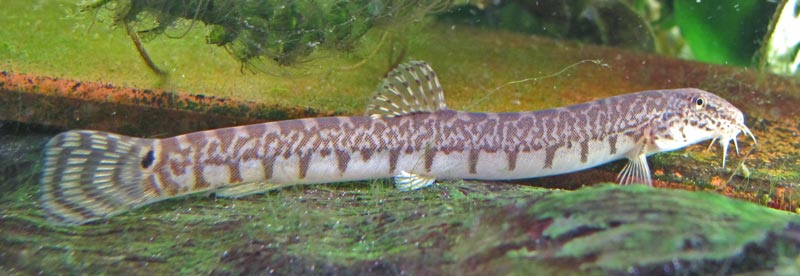
Iksookimia koreensis
Kim, 1975
Max length130mm SL5in SLTank100 × 30cm39 × 12inTemp20–24°C68–75°FpH7.0–8.0Among them it's most similar to I. pumila which was initially described as a subspecies but is now considered distinct. The two are most easily-separated by colour pattern; I. koreensis has 10 or...
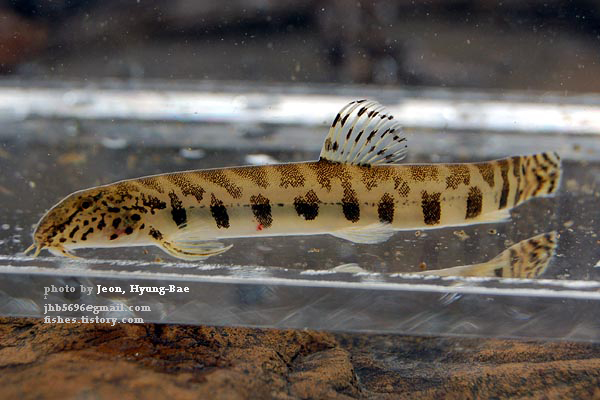
Iksookimia pumila
Kim & Lee, 1987
Max length80mm SL3.1in SLTank60 × 30cm24 × 12inTemp20–24°C68–75°FpH7.0–8.0All Iksookimia species are endemic to Korea, and I. pumila is known only from the Baek River drainage in south-western Korea where its presence has been undermined at some localities due to construction of a dam in the middle reaches of the river during the late 1990s. Type locality is 'Paikchon stream at Sangso-myon, Puan-gun, Chollabuk-do, South Korea'. The reservoir formed by the dam has also be...
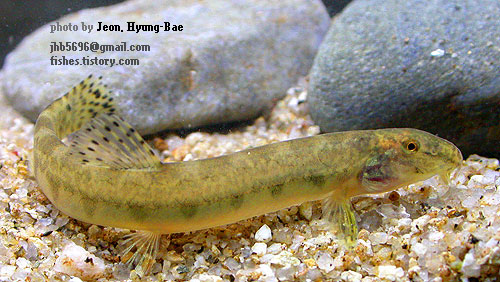
Iksookimia yongdokensis
Kim & Park, 1997
Max length160mm SL6in SLTank100 × 30cm39 × 12inTemp20–24°C68–75°FpH7.0–8.0Among them it's most similar to I. longicorpus and I. hugowolfeldi but can be distinguished by the following combination of characters: body patterning consisting of 9-13 dark vertical bars along the flanks plus a small dark spot at the base of the upper caudal-fin lobe; no black blotch or markings posterior to the operculum; reduced lamina circularis in males; interorbital width measures 14.7-17.8% o...
Ilyodon furcidensGoldbreast Goodeid
authority not recorded
Max length70mm SL2.8in SLTank75 × 30cm30 × 12inTemp18–24°C64–75°FpH7.0–8.0The species name 'furcidens' is derived from the interesting fork-shaped teeth of this fish. This species may develop a cervical hump as it matures. As with other goodeids, there is less of a size difference between the sexes than in many other livebearers. This is thought to be related to the relatively primitive structure of the andropodium, as the fish tend to choose mates that are of similar size so that the sex organs are synchronised. Goodeids are unique among livebearers in t...
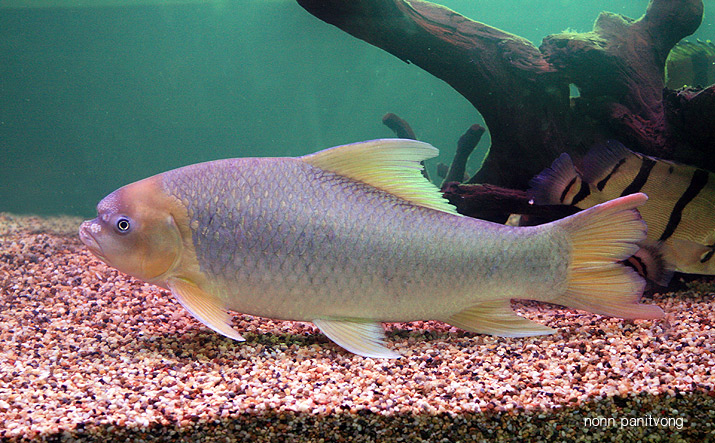
Incisilabeo behri
Fowler, 1937
Max length550mm SL22in SLTanknot recordedTemp20–26°C68–79°FpH6.0–8.0The monotypic genus Incisilabeo is separated from the closely-related taxon Bangana by presence of a unique and conspicuous transverse notch across the top of the head, comparable in position to the ethmoid furrow in Bangana species. This notch approaches the eye, and the top of the head bulges forward, with the nostrils located partially beneath this projection and immediately anterior to the eyes. Tubercles cover the upper portion of the rostral fold, lower part of the notch, and upper surface of the forehead projection...