Search the catalogue
Type a name: scientific, common, or one a species used to go by. Or narrow the catalogue with the filters.
Filters
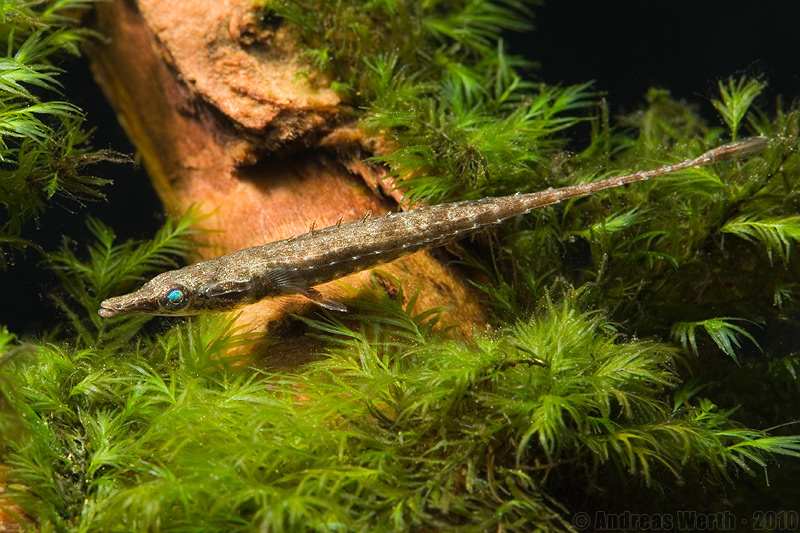
Indostomus crocodilus
Britz & Kottelat, 1999
Max length30mm SL1.2in SLTank40 × 20cm16 × 8inTemp22–27°C72–81°FpH5.0–7.0The type series was collected from a blackwater stream in Toh Daeng Peat swamp forest with the fish found in slow-moving or standing habitats among submerged shoreline roots and leaf litter. In the Tapi River floodplain it was collected from stagnant waters, one of which was an oxbow lake approximately 200 m long and 30 m across at its widest point, surrounded by 'freshwater scrub and swamp trees'. The substrate was composed of mud, woody structures including fallen twigs and branches, and decomposing plant material.
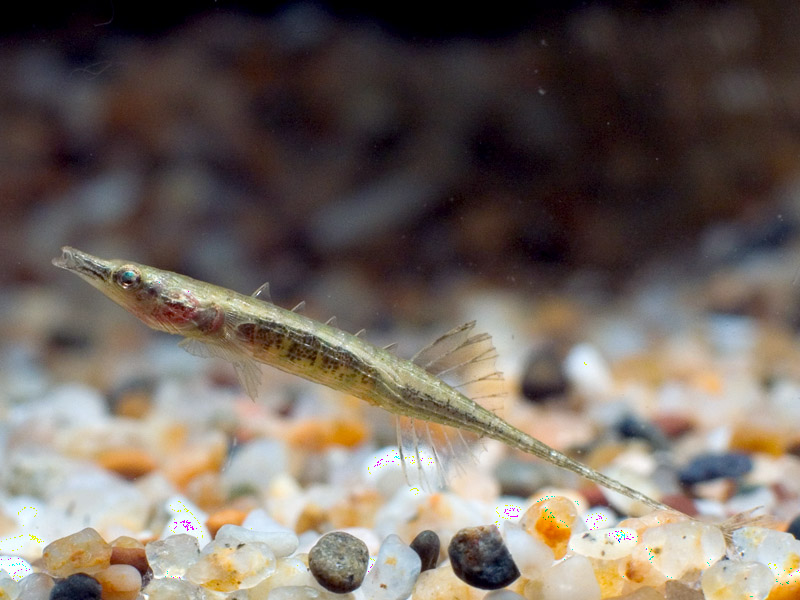
Indostomus paradoxusArmoured Stickleback
Prashad & Mukerji, 1929
Max length30mm SL1.2in SLTank40 × 20cm16 × 8inTemp22–27°C72–81°FpH6.5–7.5This species is rare in the aquarium hobby though its name is often misapplied to the closely-related I. crocodilus. It can be told apart from congeners by the following characters: dorsal and anal fins without dark markings, with a light brown bar in breeding males; ventral surface light brown; throat white, occasionally with a few brown spots; ridges of head bones weakly serrated or not serrated, depending on the bone. The family Indostomidae currently contains just a single genus with three species of which I. paradoxus is the type. It was raised alongside both family...
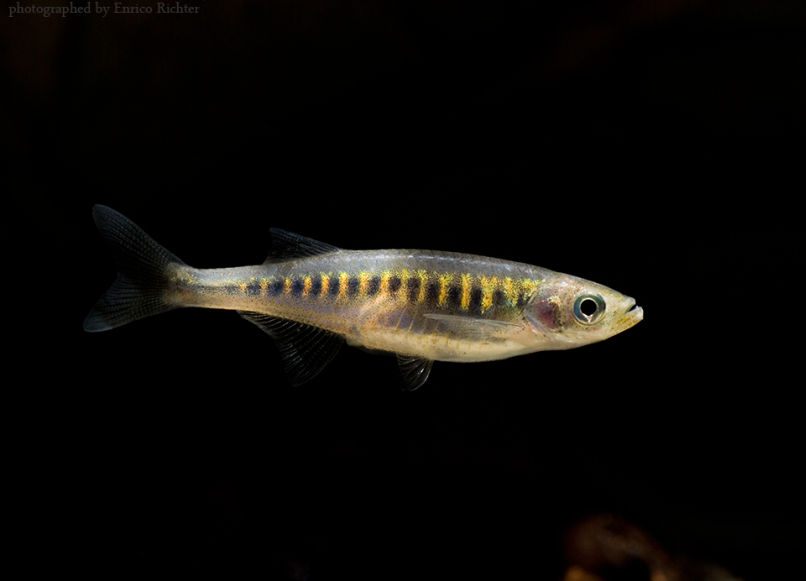
Inlecypris auropurpurea
Annandale, 1918
Max length80mm SL3.1in SLTank90 × 30cm36 × 12inTemp20–24°C68–75°FpH6.0–8.0Originally described as a member of Barilius (Annandale, 1918) but Howes (1980a) considered it more closely related to cheline cyprinids (Chela and Laubuca spp.) based on morphological characters and erected the genus Inlecypris for it (Howes, 1980b). Fang (2003) supported Howes' conclusions in her 2003 phylogenetic study of the genus Danio, hypothesising that Inlecypris and Chela together form a sister group to Devario.
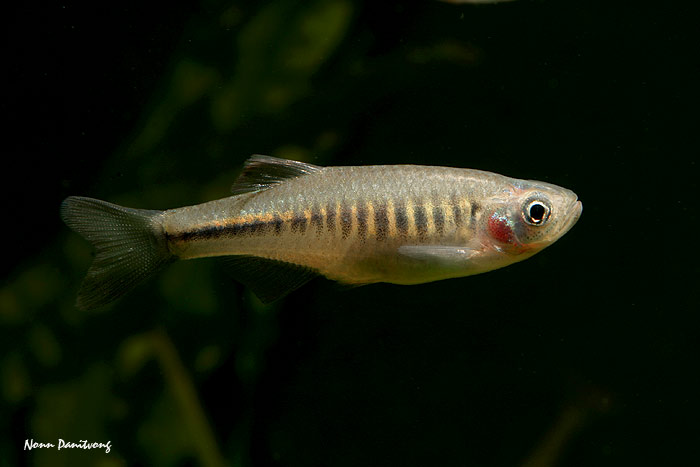
'Inlecypris' maetaengensisFire Bar 'Danio'
Fang, 1997
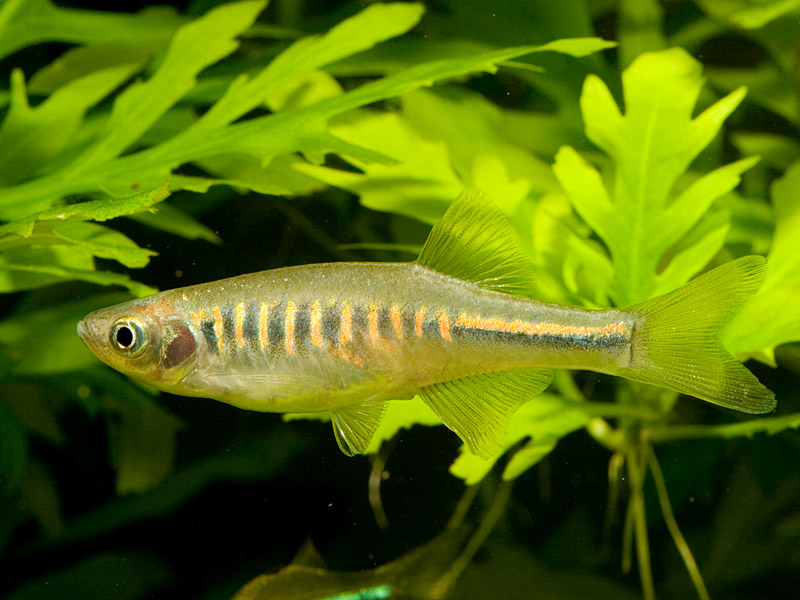
Max length50mm SL2.0in SLTank75 × 30cm30 × 12inTemp20–26°C68–79°FpH6.0–8.0A peaceful species suited to a well-chosen community aquarium. There are plenty of potential tankmates including many cyprinids, loaches, cichlids, catfishes and characins, although as always proper research is essential in order to avoid problems.
'Inlecypris' shanensis
Hora, 1928
Max length60mm SL2.4in SLTank80 × 30cm31 × 12inTemp18–26°C64–79°FpH6.0–8.0This species is sometimes referred to as 'Hora danio' or Salween danio'. It is distinguished from similar-looking species by a combination of characters as follows: lateral line complete or incomplete with 22-33 pored scales; absence of infraorbital process; 7 branched dorsal-fin rays; usually 10 or 11 branched anal-fin rays; barbels absent or rudimentary; flank markings comprising a series of narrow vertical bars on the anterior portion of each flank, fol...
Inpaichthys kerriPurple Emperor Tetra
authority not recorded
Max length35mm SL1.4in SLTank60 × 38cm24 × 15inTemp24–27°C75–81°FpH5.5–7.0This pretty little species can be seen for sale with various common names, including the 'blue emperor', 'regal' or 'royal' tetra. It's sometimes confused with the emperor tetra, Nematobrycon palmeri but can be easily distinguished as it possesses an adipose fin, whilst Nematobrycon species do not. The genus Inpaichthys is currently monotypic (contains only one species), and like other related genera such as Hyphessobrycon its taxonomic status is Incertae s...
Iodotropheus sprengeraeRusty Cichlid
authority not recorded
Max length100mm SL3.9in SLTank90 × 30cm36 × 12inTemp25–29°C77–84°FpH7.5–8.8This lovely dwarf mbuna makes a great choice for newcomers to Mbuna due to its temperament, subdued but unique colouration and the fact it can be kept in smaller tanks. Iodotropheus is the only genus of Mbuna which has a very limited distribution within Lake Malawi, with its three (possibly two; the validity of I. declivitas is disputed by some experts) members being restricted to the south eastern arm of the lake. I. sprengerae is sometimes confused with certain populations of the similar looki...
Iriatherina werneriThreadfin Rainbowfish
Meinken, 1974
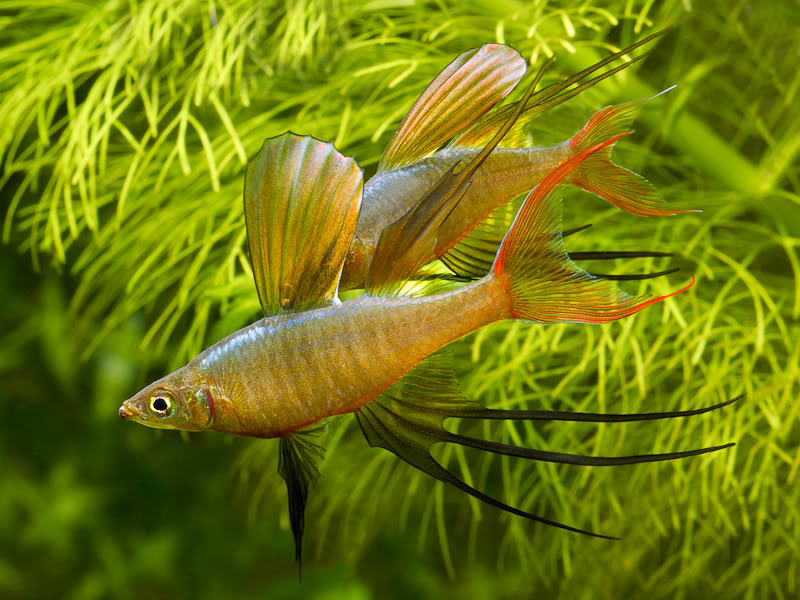
Max length40mm SL1.6in SLTank60 × 30cm24 × 12inTemp22–30°C72–86°FpH5.0–8.0There also exists a sister-group relationship between the Melanotaeniidae and Malagasy family Bedotiidae, which may seem surprising given their respective modern-day distributional patterns. The precise origin and subsequent dispersal of the two families has been the subject of debate, with some palentologists suggesting that Madagascar's freshwater fishes derived froma trans-oceanic dispersal during the Cenozoic Era, but the most compelling arguments currently indicate a freshwater radiation which occurred during the Mezozoic break-up of Gondwana.
Ivanacara adoketaZebra Acara
authority not recorded
Max length130mm SL5in SLTanknot recordedTemp22.2–28.9°C72–84°FpHnot recordedThis species was previously included in the genus Nannacara before being moved to the newly-erected taxon Ivanacara by Römer and Hahn (2006)....
Jinshaia sinensis
Sauvage & Dabry de Thiersant, 1874
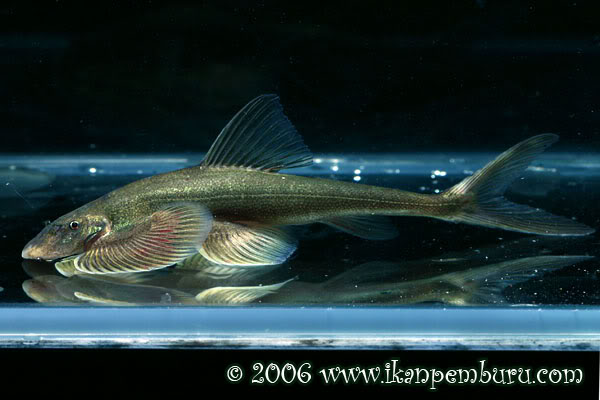
Max length75mm SL3.0in SLTank90 × 30cm36 × 12inTemp20–24°C68–75°FpH6.0–7.5This species may not yet have been seen in the aquarium trade outside its native country but has been maintained by a few private collectors. There are currently three species recognised in the genus, all endemic to the Yangtze river drainage, and they're separated from other balitorids by a combination of characters including: relatively long, deeply-forked caudal-fin; roun...
Jordanella floridaeFlorida Flagfish
Goode & Bean, 1879
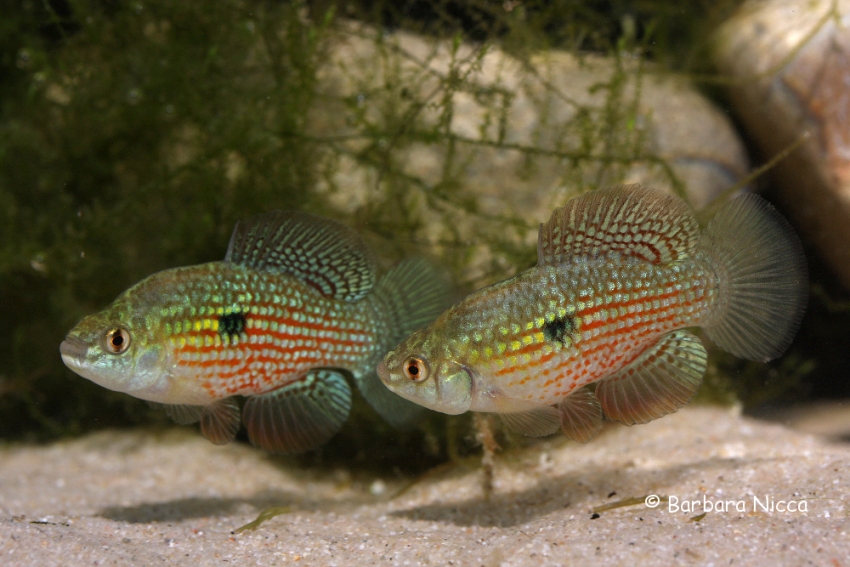
Max length55mm SL2.2in SLTank60 × 30cm24 × 12inTemp18–30°C64–86°FpH6.5–8.5Contrary to many reports, including a number of scientific papers, this species breeds in the same way as other cyprinodontids and does not dig pits or exhibit extended parental care. It's a fractional spawner with females depositing eggs on a more-or-less continuous basis when a warm temperature is maintained though ideally it should be permitted to breed on a seasonal basis in spring and late summer as it would in nature.
Julidochromis dickfeldiBrown Julie
authority not recorded
Max length80mm SL3.1in SLTank75 × 30cm30 × 12inTemp23–27°C73–81°FpH8.0–9.2Julidochromis are commonly known as "Julies" in the hobby. As with other Julies, large water changes should be avoided as this can cause mated pairs to turn on one another. There is some speculation as to whether this species has been placed in the correct genus. It has a different shape to other Julidochromis, having a pointed snout. It also exhibits different patterning, with blue edging to the dorsal and anal fins, and the horizontal stripes are very dark in colour. Furthermore i...
Julidochromis marlieriMarlier's Julie
authority not recorded
Max length150mm SL6in SLTanknot recordedTemp23–27°C73–81°FpH7.5–9.5Julidochromis are commonly known as "Julies" in the hobby. This particular species may also be seen for sale as the Chequered Julie. A truly characterful cichlid exhibiting quirky behaviour, it will swim hugging the rock surfaces no matter what the angle is. As with other Julies, large water changes should be avoided as this can cause mated pairs to turn on one another. Several geographical morphs are available. However, no two species or morphs of Julidochromis should be kept togethe...
Julidochromis ornatusGolden Julie
authority not recorded
Max length80mm SL3.1in SLTanknot recordedTemp23–27°C73–81°FpH7.5–9.0Julidochromis are commonly known as "Julies" in the hobby. This is one of the most common Julie species encountered in aquaria and may also be sold as the Yellow or Ornate Julie. The majority of specimens available are tank bred and do not exhibit as bright colouration as wild fish. As with other Julies, large water changes should be avoided as this can cause mated pairs to turn on one another. Several geographical morphs of this species are available, as is an aquarium sport albino...
Julidochromis reganiRegan's Julie
authority not recorded
Max length300mm SL12in SLTank120 × 30cm48 × 12inTemp23–27°C73–81°FpH7.5–9.0Julidochromis are commonly known as "Julies" in the hobby. Despite being the largest species of Julie this is actually the least aggressive member of the genus. As with other Julies, large water changes should be avoided as it can cause mated pairs to turn on one another. J.regani may also be seen for sale labelled as Striped Julie or Convict Julie. Several geographical morphs are available. Apparently, the yellower of these are found in shallower water with the darker forms inhabit...
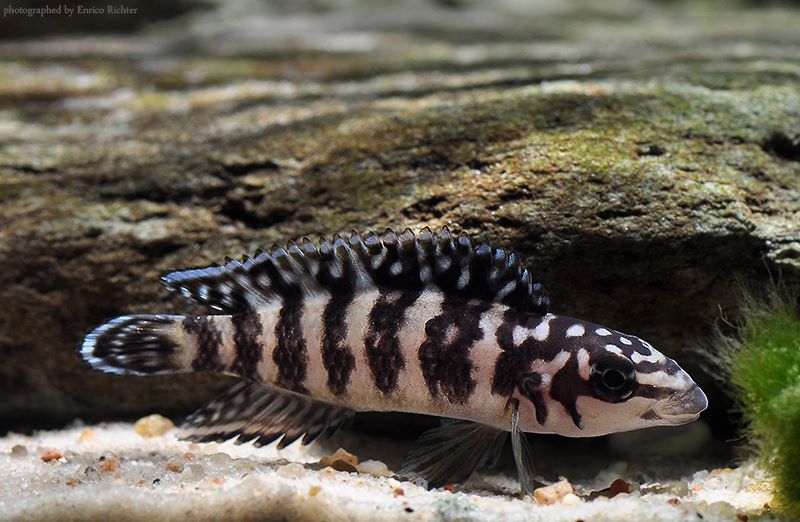
Julidochromis transcriptusMasked Julie
Matthes, 1959
Max length65mm SL2.6in SLTanknot recordedTempnot recordedpHnot recordedJulidochromis transcriptus
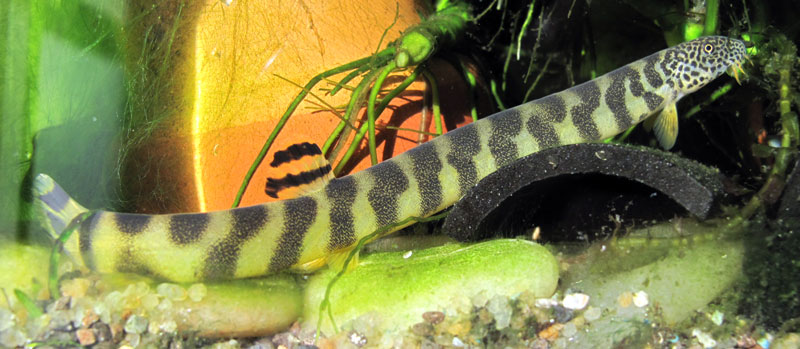
Kichulchoia multifasciata
Wakiya & Mori, 1929
Max length120mm SL5in SLTank90 × 30cm36 × 12inTemp20–24°C68–75°FpH6.0–7.5It's most easily told apart from K. brevifasciata, its only congener, by body patterning consisting of dark, vertical bars running along the dorso-ventral part of the body (vs. dark bars running alongside the midventral part of the body), lips with wrinkled surfaces (vs. smooth) and barbels short (vs. long).
Knodus borkiBlue Tetra
authority not recorded
Max length50mm SL2.0in SLTank75 × 38cm30 × 15inTemp22–26°C72–79°FpH5.5–7.0The colour of this species is often so intense that many who first see it for sale assume it to be artificially coloured. It is currently the only representative of the genus known.
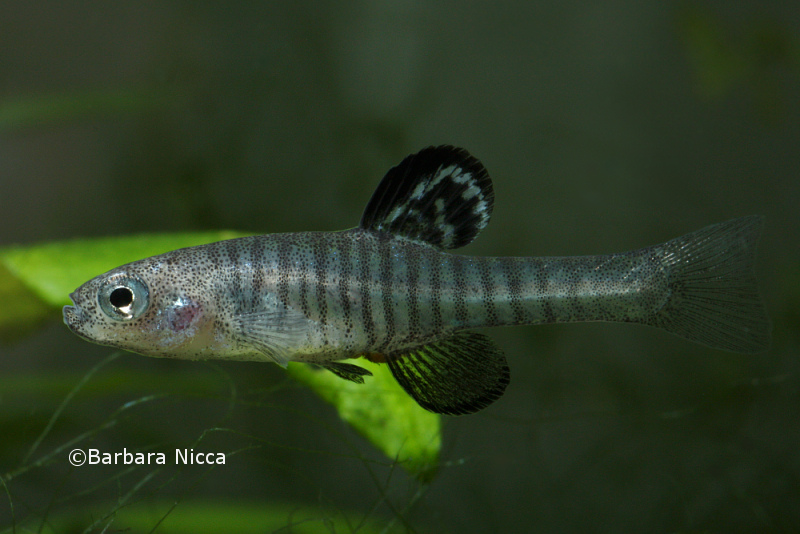
Kosswigichthys asquamatusHazar Toothcarp
Sözer, 1942
Max length40mm SL1.6in SLTank120 × 30cm48 × 12inTemp12–28°C54–82°FpHnot recordedThis little-known, relict species possesses some unique morphological and behavioural traits when compared with its congeners and the genus Kosswigichthys was erected for it in the original description. It has a much more elongate body profile than other Aphanius spp., almost total absence of scalation on the body and three rows of conical (as opposed to tricuspid in all other species) teeth which set it apart. Work by Franz and Villwock in the 1970s revealed it to be a member of Aphanius and showed ...
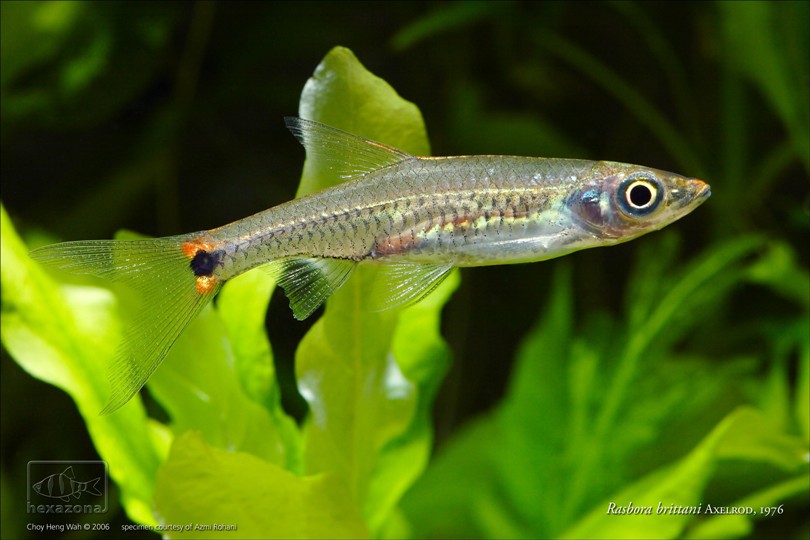
Kottelatia brittani
Axelrod, 1976
Max length60mm SL2.4in SLTank75 × 30cm30 × 12inTemp20–26°C68–79°FpH6.0–7.5This species was described from 'Johore River, Segamat, Malaysia', which corresponds to Segamat District within the the Johor River watershed, Johor state, southern Peninsular Malaysia, but the type specimens were obtained via a Singapore wholesaler so it's possible that a mistake was made as there exist no other records of the species in Peninsular Malaysia. It's also been recorded from the Kapuas drainage...