Results for “aquarium”
Type a name: scientific, common, or one a species used to go by. Or narrow the catalogue with the filters.
Filters
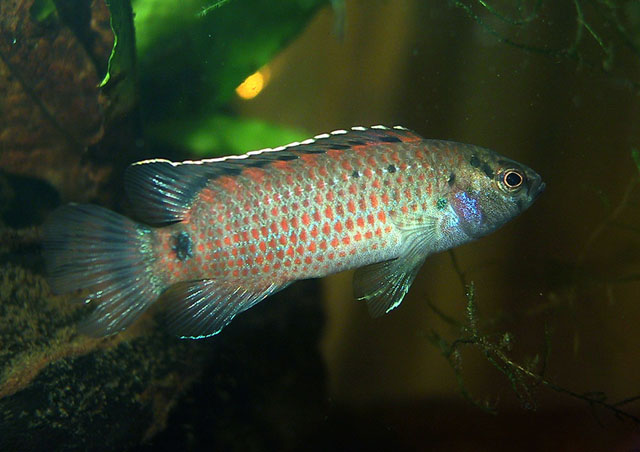
Badis khwae
Kullander & Britz, 2002
Max length60mm SL2.4in SLTank60 × 30cm24 × 12inTemp22–26°C72–79°FpH6.5–7.5Like most badids this species is poorly documented and has yet to find significant popularity in the aquarium hobby, though given its restricted natural distribution it is unlikely ever to be available in large numbers. Within the genus it is most easily confused with B. ruber and B. siamensis but both these species have rows of dark spot-like markings on the flanks which are lacking in B. khwae. The three also differ in the shape of the dark marking on the caudal peduncle; in B. ruber it is rel...
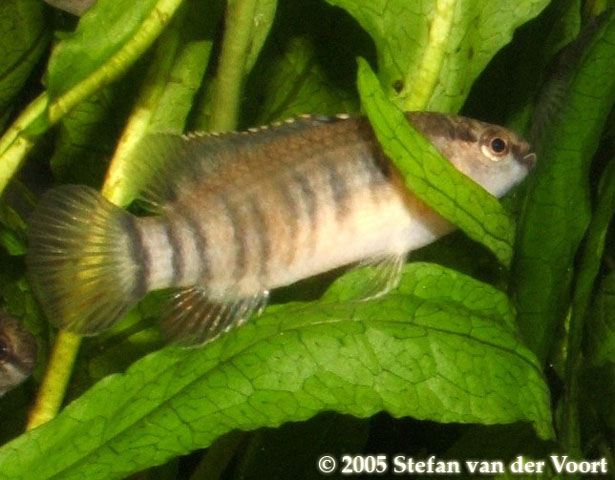
Badis kyar
Kullander & Britz, 2002
Max length60mm SL2.4in SLTank60 × 30cm24 × 12inTemp15–25°C59–77°FpH7.0–9.0Like most badids B. kyar is poorly documented in aquarium literature and has yet to find significant popularity in the hobby, though given its restricted natural distribution it is unlikely ever to be available in large numbers. The fish in our image is a specimen included in the only batch of this species known to have been exported to date. This species has a very slender body shape (which may be an adaptation to its habitat) and in this respect is similar to B. pyema. However B. kyar possesse...
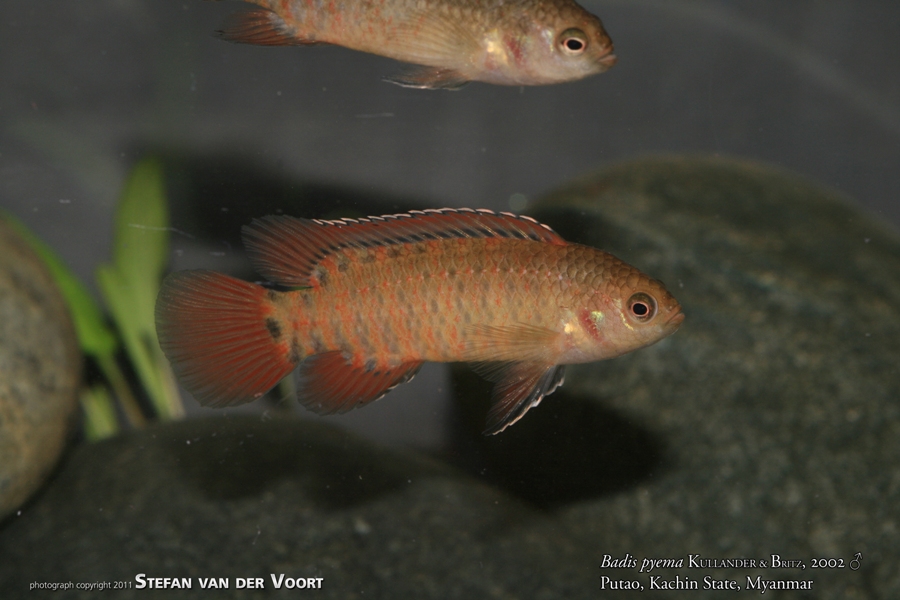
Badis pyema
Kullander & Britz, 2002
Max length45mm SL1.8in SLTank60 × 30cm24 × 12inTemp15–25°C59–77°FpH6.5–7.5Like most badids B. pyema is poorly documented in aquarium literature and has yet to find significant popularity in the hobby, though given its restricted natural distribution it is unlikely ever to be available in large numbers and has only been collected on three occasions to date. It has a very slender body shape, likely an adaptation to its habitat, and in this respect is similar to B. kyar. However B. kyar possesses relatively solid dark, uniform vertical bars on the flanks whereas in B. p...
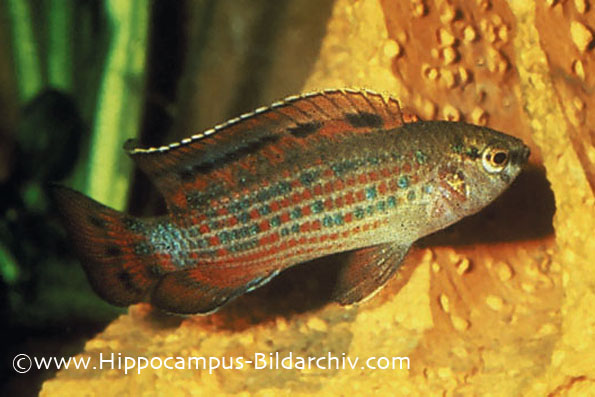
Badis ruberBurmese Badis
Schreitmüller, 1923
Max length50mm SL2.0in SLTank60 × 30cm24 × 12inTemp15–25°C59–77°FpH6.5–7.5B. ruber is among the better known Badis species in the aquarium hobby with trade names including 'Burmese badis' and 'red badis'. It was referred as Badis badis burmicanus for a number of years and will be seen labelled as such in older literature. Among congeners it is most easily confused with...
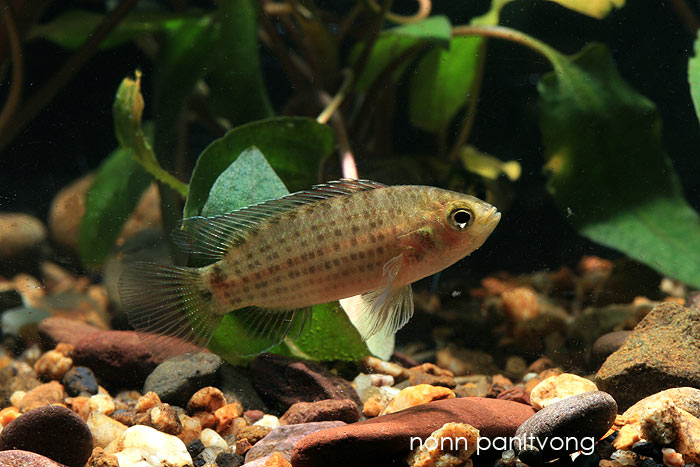
Badis siamensis
Klausewitz, 1957
Max length60mm SL2.4in SLTank60 × 30cm24 × 12inTemp22–26°C72–79°FpH6.5–7.5Like most badids this species is poorly documented and has yet to find significant popularity in the aquarium hobby; to date it has only been exported in very limited numbers. It was for a number of years known as Badis badis siamensis and will be seen labelled as such in older literature. Within the genus it is most easily confused with B. khwae and B. ruber but can be identified by the flank patterning which consists of rows of horizontally-arranged dark markings. In B. ruber these appear mor...
Badis sp. 'Buxar'
authority not recorded
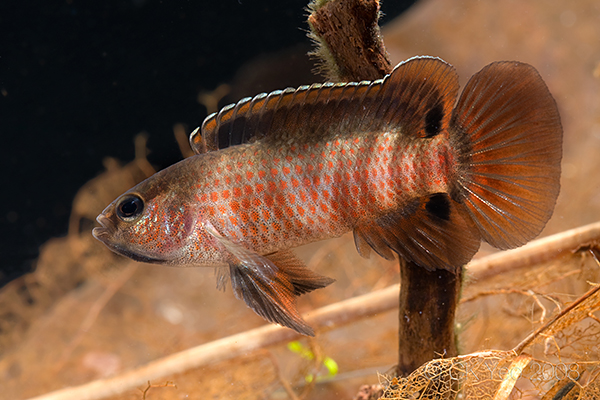
Max length50mm SL2.0in SLTank60 × 30cm24 × 12inTemp15–25°C59–77°FpH6.5–7.5This undescribed species has been available in the aquarium hobby since 2006. It may also be seen on sale with the name Badis sp. 'flame dot' in reference to the body scales which in males possess a bright red centre or B. sp. 'red' as it appeared in a 2007 German magazine article. It appears to belong to the B. corycaeus group of species (see below). Since the species Badis singenensis was...
Bagarius yarrelliGoonch
Sykes, 1839
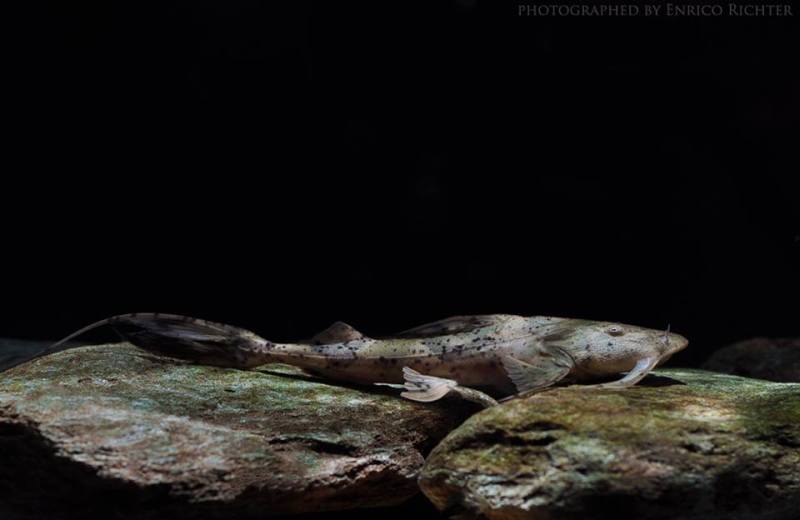
Max length2000mm SL79in SLTanknot recordedTemp16–23°C61–73°FpH6.0–7.5This species is clearly unsuitable for the home aquarium given its eventual size and natural behaviour, and we know of only a handful of private aquarists with the facilities required to house it long-term. The grouping currently contains four species but is in urgent need of review with a number of additional taxa thought to exist and B. yarrelli possibly representing a synonym of B. bagarius.
Barbodes aurotaeniatus
Tirant, 1885
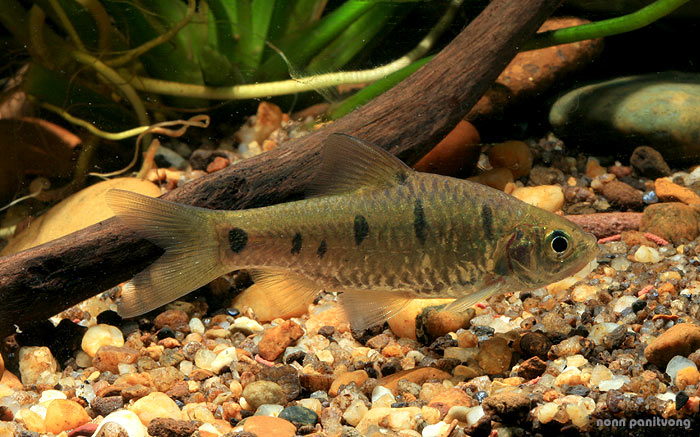
Max length65mm SL2.6in SLTank80 × 30cm31 × 12inTemp18–26°C64–79°FpH6.0–7.5B. aurotaeniatus is uncommon in the aquarium trade. Following Kottelat (1998) it has a single pair of maxillary barbels, a complete lateral line and colour pattern usually comprising four small, vertically-orientated black markings on the flanks (located above anterior lateral line origin, below dorsal-fin origin, below posterior end of dorsal-fin base and on caudal peduncle, respectively) and one on the dorsal surface, below dorsal-fin origin.
Barbodes banksi
Herre, 1940
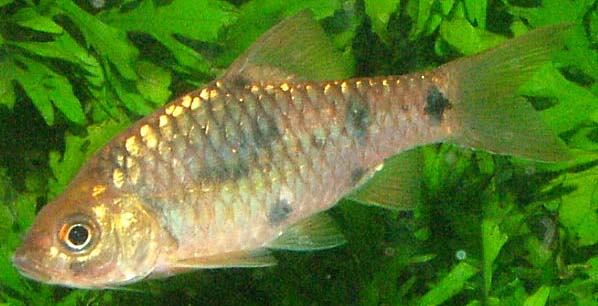
Max length110mm SL4in SLTank120 × 45cm48 × 18inTemp22–28°C72–82°FpH6.0–7.5This species is not often seen in the aquarium hobby but occasionally exported as bycatch among shipments of other fishes. It was described as a subspecies of the closely-related 'P.' binotatus but is currently considered distinct on a tentative basis as per Ng and Tan (1999) who stated it is 'likely' that the two represent extreme colour forms of a single, variably-patterned species.
Barbodes dunckeriClown Barb
Ahl, 1929
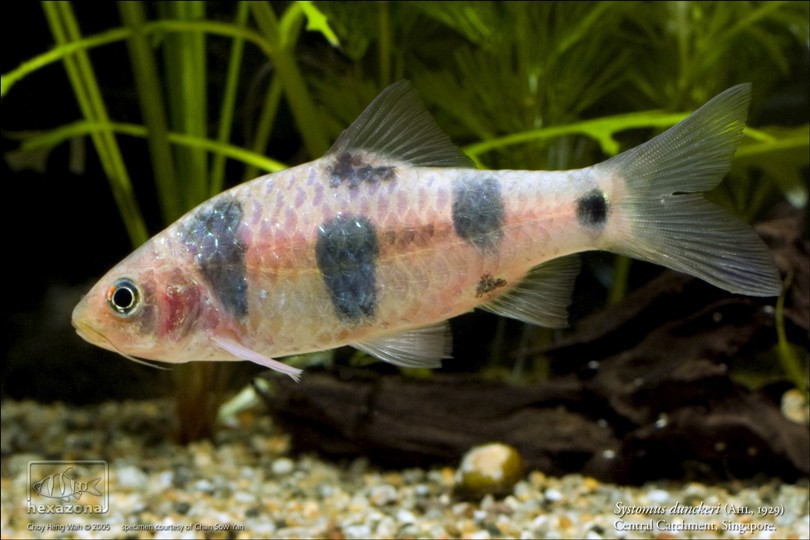
Max length120mm SL5in SLTank120 × 45cm48 × 18inTemp18–28°C64–82°FpH6.0–7.5Although sometimes referred to by the vernacular name 'big spot barb' this species is better known in the aquarium hobby as 'clown barb'. It has been widely misidentified as the congener B. everetti, a distinct and uncommonly-traded species from Borneo and thus appears under that name in the majority of available literature. The two are quite easy to tell apart, with B. everetti an overall les...
Barbodes everetti
Boulenger, 1894
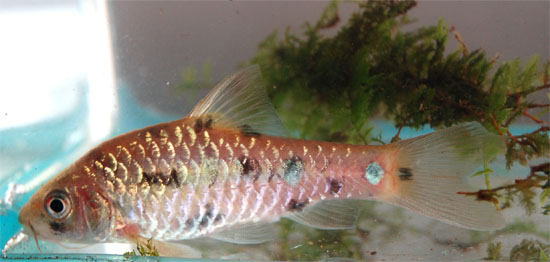
Max length120mm SL5in SLTank120 × 45cm48 × 18inTemp18–28°C64–82°FpH6.0–7.0This species is uncommon in the aquarium hobby, although the scientific name is widely misapplied to Barbodes dunckeri, a similar-looking species native to Peninsular Malaysia and Singapore commonly referred to as 'clown barb' and labelled as B. everetti in the majority of available literature. The two are quite easy to tell apart, with B. everetti an overall less...
Barbodes kuchingensisFalse Spanner Barb
Herre, 1940
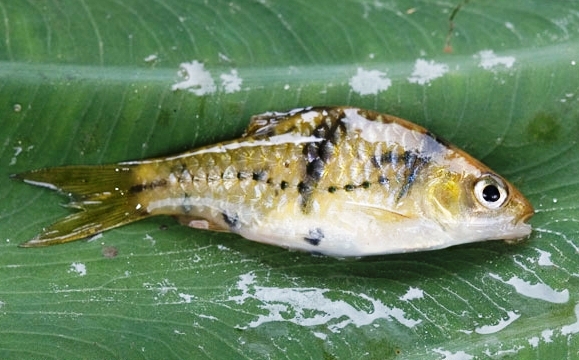
Max length120mm SL5in SLTank120 × 45cm48 × 18inTemp20–28°C68–82°FpH5.0–7.5This species is rarely-exported for the aquarium hobby but is available on occasion. The name 'P.' kuchingensis is frequently misapplied, however, with subadult forms of 'P.' everetti and some populations of the geographically-variable 'P.' lateristriga regularly traded as such, for example. Though closely-affiliated with and superficially very similar to...
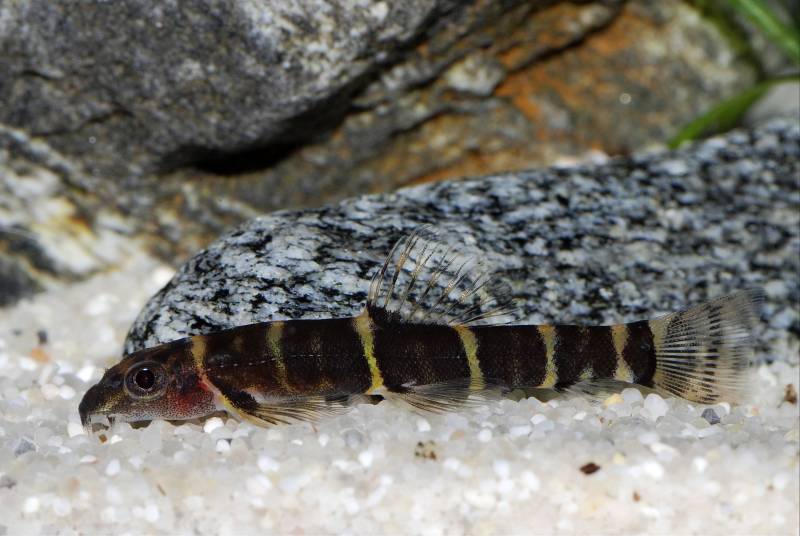
Barbucca diabolica
Roberts, 1989
Max length50mm SL2.0in SLTank60 × 30cm24 × 12inTemp20–25°C68–77°FpH5.5–7.5Barbucca spp. are uncommon in the aquarium trade but available periodically. There exist several undescribed species and it's possible that more than one has been exported, although to date only B. diabolica is officially recognised. Most of the fish we've seen possess red eyes (when viewed at certain angles), unique tuberculation and six dark body stripes as mentioned in Roberts' description although there are exceptio...
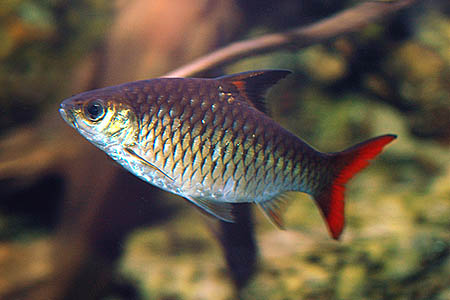
'Barbus' guiraliAfrican Blackfin Barb
Thominot, 1886
Max length155mm SL6in SLTank150 × 45cm60 × 18inTemp22–26°C72–79°FpH5.5–6.5A stylish-looking but rare barb in the hobby and unfortunately little information is available regarding its captive care. Forum member Andy Rushworth has kept a lone individal and told us it was a perfect aquarium inhabitant in terms of behaviour and maintenance. He also mentioned that the fish he had looked exactly like the specimen in our images but that he has seen at least one batch of what appeared to be a different species imported under the same na...
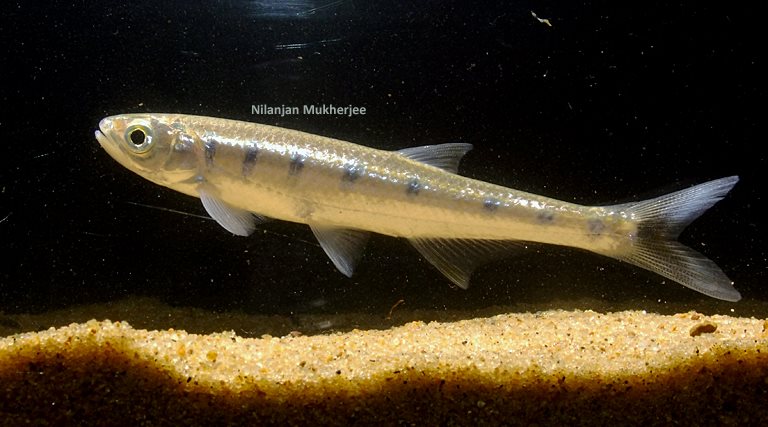
Barilius vagra
Hamilton, 1822
Max length125mm SL5in SLTank150 × 60cm60 × 24inTemp18–26°C64–79°FpH6.0–7.5Barilius spp. are near-exclusive surface-feeders preying mostly on flying insects in nature with some small fishes and benthic invertebrates probably taken as well but in the aquarium they're largely unfussy and will accept most foods.
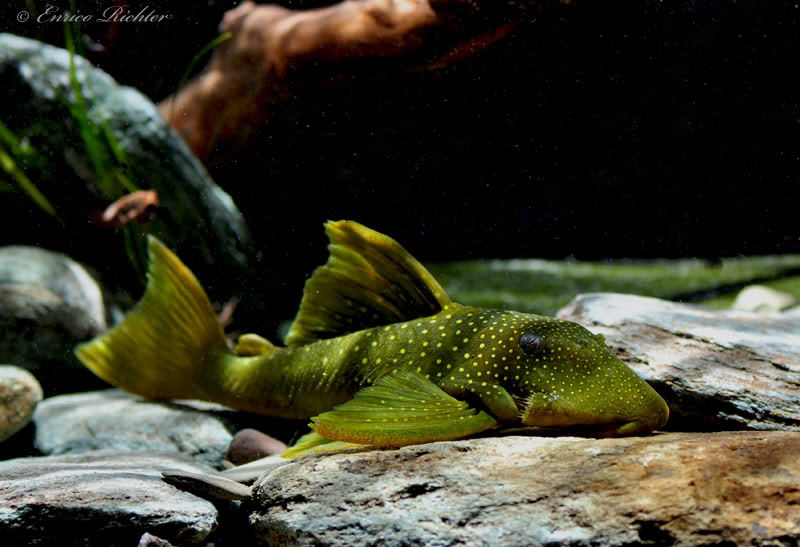
Baryancistrus demantoidesGreen Phantom Pleco
Werneke, Sabaj Pérez, Lujan & Armbruster, 2005
Max length151mm SL6in SLTank120 × 45cm48 × 18inTemp26–30°C79–86°FpH5.5–7.5This species is very similar to Hemiancistrus subviridis in appearance and the two occur sympatrically in nature, although B. demantoides is less common in the aquarium trade. Both have been marketed under the DATZ code L200 with B. demantoides sometimes referred to as 'L200 high-fin' or 'L200a', the former name in reference to its comparatively long dorsal-fin spine (average length in the type series 42.1 mm vs. 34.3 mm in H. subviridis).
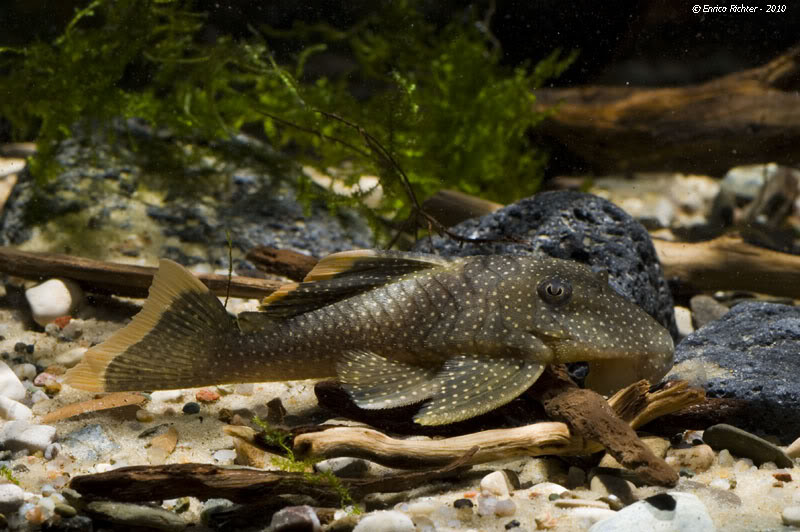
Baryancistrus sp. cf. xanthellusGold Nugget Pleco
authority not recorded
Max length180mm SL7in SLTank120 × 45cm48 × 18inTemp27–32°C81–90°FpH6.4–7.6It remains unconfirmed as to whether this fish represents a colour form of B. xanthellus or not since its DATZ code number of L081 is not referred to in the description paper whereas all other codes for 'gold nugget' plecos, i.e., L018, L085, L177 plus the 'Das Aquarium' code LDA060 are mentioned. In addition, one of the specimens in our images was apparently collected at São Félix do Xingu which is significantl...
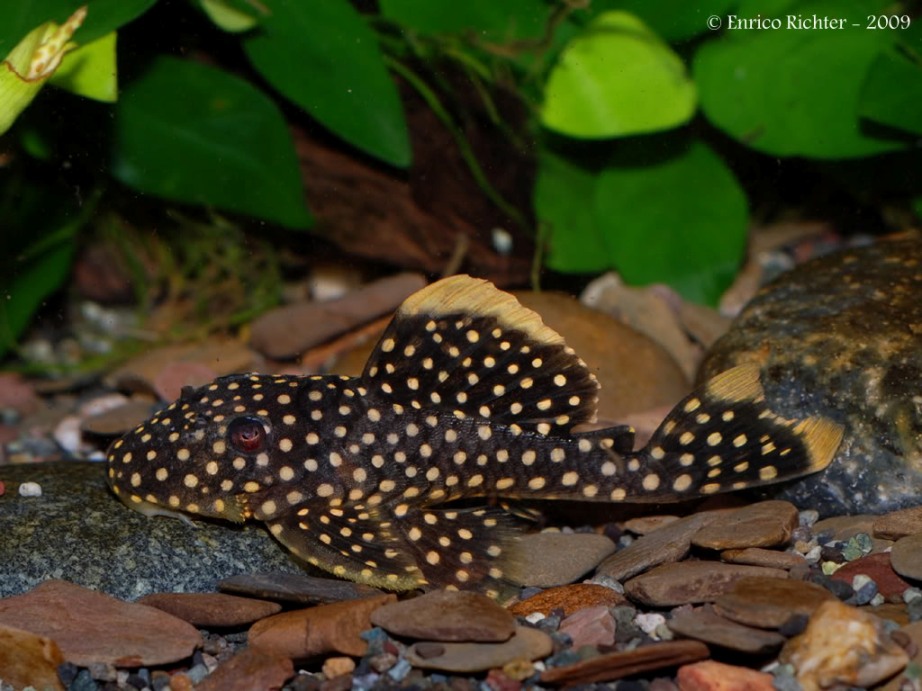
Baryancistrus xanthellusGold Nugget Pleco
Rapp Py-Daniel, Zuanon & Ribeiro de Oliveira, 2011
Max length224mm SL9in SLTank120 × 45cm48 × 18inTemp27–32°C81–90°FpH6.0–8.0Prior to description in 2011 this species was traded under the DATZ code numbers L018, L085, L077 and 'Das Aquarium' code LDA060, while a very similar-looking fish from the lower rio Xingu which has been assigned the code L081 may also represent a form of B. xanthellus but is not mentioned in the description paper. B. xanthellus can be distinguished from congeners by a combination of the following...
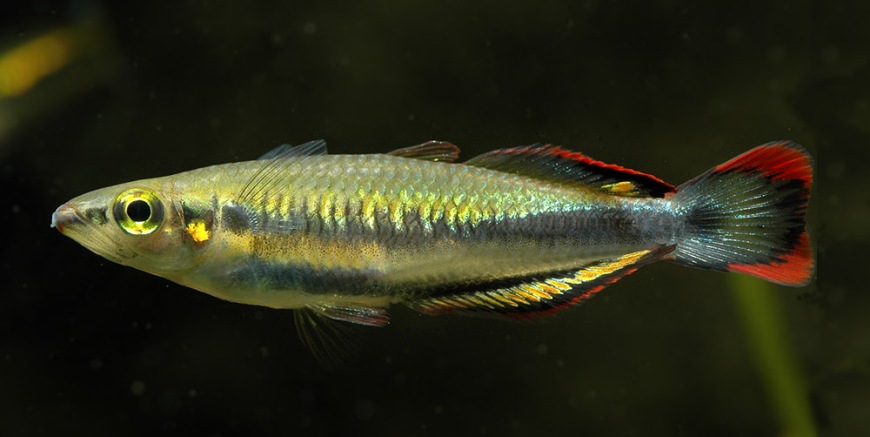
Bedotia madagascarensisMadagascan Rainbow Fish
Regan, 1903
Max length100mm SL3.9in SLTank120 × 30cm48 × 12inTemp23–32°C73–90°FpH4.5–7.5This species was first imported for the aquarium hobby during the 1950s and was for many years misidentified and traded as Bedotia geayi, a valid, but different-looking congener native to the Mananjary River system, south of the range of B. madagascarensis. In terms of external characters, the two are most easily told apart by differences in colour pattern, particularly that of the unpaired fins, and some morphometric counts.
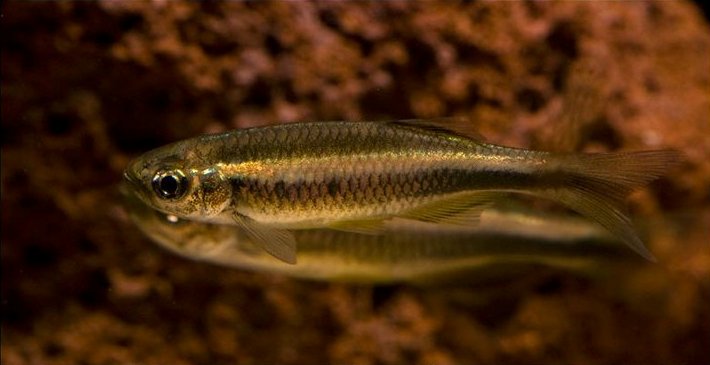
Betadevario ramachandrani
Pramod, Fang, Rema Devi, Liao, Indra, Jameela Beevi & Kullander, 2010
Max length61mm SL2.4in SLTank120 × 30cm48 × 12inTemp18–23°C64–73°FpH6.0–7.0As far as we know this species is yet to arrive to the international aquarium trade though it has been maintained by a handful of Indian aquarists. It's restricted geographical range and difficulty of collection mean it's unlikely to become available in numbers unless adopted by commercial breeders.