Results for “eyed-up”
Type a name: scientific, common, or one a species used to go by. Or narrow the catalogue with the filters.
Filters
Squaliforma villarsiBlue Fin Thresher Pleco
authority not recorded
Max length175mm SL7in SLTank120 × 30cm48 × 12inTemp21–23°C70–73°FpH6.0–7.2This species is sometimes referred to as Hypostomus villarsi, and is a rare find in the hobby. If you're lucky enough to see some for sale, check the fish have rounded bellies and that their eyes aren't sunken before you part with any cash, as these are classic signs of emaciation in newly imported Loricariids....
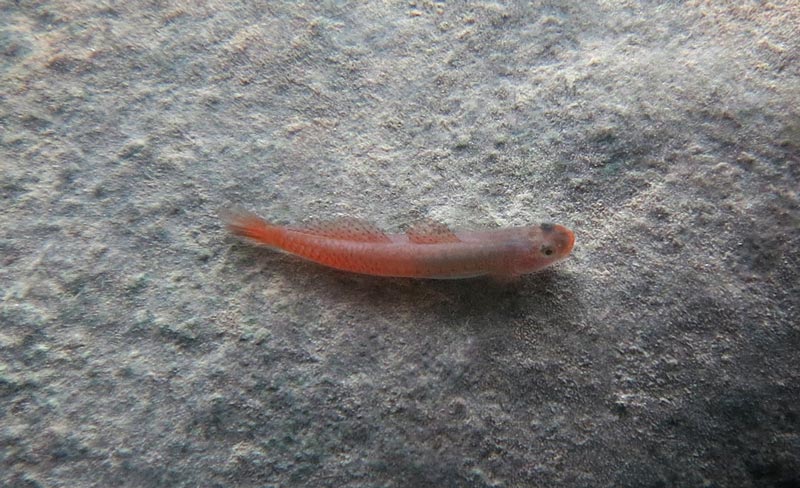
Stiphodon surrufus
Watson & Kottelat, 1995
Max length35mm SL1.4in SLTank60 × 30cm24 × 12inTemp22–28°C72–82°FpH6.5–7.5As with all members of the genus sexual dimorphism is pronounced. Males are brightly-coloured, with a reddish-orange stripe extending posteriorly from the pectoral-fin, with the posterior portion of the body entirely suffused with red. A darkish band extends from behind the eye to the edge of the opercle, and the basal third of the caudal-fin is reddish-orange.
Synodontis albertiHigh-fin Synodontis
authority not recorded
Max length200mm SL8in SLTank90 × 30cm36 × 12inTemp21–25.5°C70–78°FpH6.0–8.0S. alberti possesses an incredible set of barbels that are the longest of any Synodontis. It is also very hardy and adaptable and is therefore an ideal beginner's Syno. It has very large eyes exemplifying its nocturnal nature and also prefers cooler conditions to other members of the genus. This fish has a few common names including Bigeye Squeaker and Albert's Synodontis, though it is usually referred to as the High-fin Synodontis....
Synodontis contractaBig-nosed Upside-down Catfish
authority not recorded
Max length75mm SL3.0in SLTank60 × 30cm24 × 12inTemp22–27°C72–81°FpH6.2–7.2Often confused with the similar S.nigriventris, this species is imported infrequently. It is easily distinguished from nigriventris by its larger eyes and broad mouth and head. These features give rise to the common name "Big-nosed upside-down catfish". S. contracta spends the majority of its time swimming in an inverted position and this, along with its exaggerated facial features,make it a characterful and interesting addition to the community aquarium. It is also known as the Bug-e...
Synodontis nigriventrisUpside-down Catfish
authority not recorded
Max length100mm SL3.9in SLTanknot recordedTemp24–28°C75–82°FpH6.0–7.5One of the commonest Synos seen for sale, S. nigriventris is occasionally confused with S. contractus. However, on close inspection the species are easy to tell apart as S. nigriventris lacks the large head and mouth and larger eye of S. contractus. The scientific name nigriventris refers to the fact that the belly of this fish is darker than the dorsal area. This is a form of camouflage, making the fish harder to spot by predators above, such as predatory fish, birds etc. It is a basic re...
Taenioides cirratusBearded Worm Goby
authority not recorded
Max length300mm SL12in SLTanknot recordedTemp22–27°C72–81°FpH7.5–8.5Something for the true oddball enthusiast, this bizarre looking goby has been imported at least once over the last few years. It's a mud-burrowing species that digs networks of sloping tunnels in the substrate in nature. Apparently each series of burrows has several openings, one of which has a mound outside. According to Itani and Uchino (2003), this mound suggests that the fish "actively process sediment". Even more odd is its appearance (see picture). It has greatly reduced eye...
Telmatochromis vittatus
authority not recorded
Max length85mm SL3.3in SLTank75 × 30cm30 × 12inTemp23–27°C73–81°FpH8.0–9.5Similar in lifestyle to Julidochromis species, Telmatochromis vittatus is ideal for the smaller Tanganyikan community and is also a good choice for the beginner. It can be distinguished from the similar T. brichardi and T. bifrenatus primarily by its larger size, smaller eyes and more rounded nose. Like other Lamprologines, Telmatochromis have fang-like, caniform teeth, which they use for scraping microrganisms from rock surfaces. On adult specimens these are clearly visible....
Tetraodon lineatusFahaka Puffer
authority not recorded
Max length430mm SL17in SLTanknot recordedTemp24–26°C75–79°FpH6.5–7.5Puffer fish are so called as they have the ability to inflate their elastic stomachs with water or air. This is usually a response to some kind of threat, although in the aquarium many specimens appear to inflate themselves for no apparent reason. The fish becomes 2 or 3 times it's normal size, big enough to scare away many potential predators, or difficult to swallow. Puffers are also one of the few fish that can actually blink or close their eyes. Many parts of the body of puffers cont...
Trachelyichthys decaradiatus
authority not recorded
Max length80mm SL3.1in SLTank60 × 38cm24 × 15inTemp20–28°C68–82°FpH6.5–7.0Very similar to its congener T. exilis, it can be distinguished by looking at the position of the eye which is set much further forward in exilis. Also, the humeral process (long spine extending from the back of the gill plate), is broader and shorter in this species than exilis. Neither are seen very often in the hobby....
Trachelyichthys exilisPygmy Driftwood Catfish
authority not recorded
Max length80mm SL3.1in SLTank60 × 38cm24 × 15inTemp22–25°C72–77°FpH6.5–7.0Very similar to its congener T. decaradiatus, it can be distinguished by looking at the position of the eye, which is set much further back in decaradiatus. Also, the humeral process (long spine extending from the back of the gill plate), is longer and thinner in this species than decaradiatus. Neither are seen very often in the hobby, but are sometimes available at specialist outlets....
Vieja bifasciataRed-spotted Cichlid
authority not recorded
Max length300mm SL12in SLTanknot recordedTemp27–29°C81–84°FpH7.0–8.5Vieja bifasciata are often confused for vieja synspilum but can be told apart as bifasciata have two prominent horizontal lines running between their eyes (hence the name). They are a very colourful fish and respond to their owner's presence - usually looking for food! Bifasciata are not particularly demanding in terms of water parameters and easy to keep, especially if suitable tankmates can be found. It is sometimes the case that a pair of fish that will not live together in a tank on ...
Xenopterus naritusGolden Puffer
authority not recorded
Max length285mm SL11in SLTank120 × 45cm48 × 18inTemp24–28°C75–82°FpH6.5–7.5Puffer fish are so called as they have the ability to inflate their elastic stomachs with water or air. This is usually a response to some kind of threat though in the aquarium many specimens appear to inflate themselves for no apparent reason. The fish becomes 2 or 3 times its normal size, big enough to scare away many potential predators, or become difficult to swallow. Puffers are also one of the few fish that can actually blink or close their eyes. Many parts of the body of puffers contai...