Results for “sp.”
Type a name: scientific, common, or one a species used to go by. Or narrow the catalogue with the filters.
Filters
Corydoras septentrionalisNorthern Longnose Cory
authority not recorded
Max length60mm SL2.4in SLTank60 × 38cm24 × 15inTemp22–27°C72–81°FpH6.0–7.5There are 2 other species that superficially resemble C. septentrionalis. These are C. simulatus and C. amapaensis. Simulatus differs from septentrionalis by the absence of the third set of small, upper (rictal) barbels, situated behind the other two pairs in both septentrionalis and amapaensis. Amapaensis differs in that it has a clear caudal fin. This fin is noticeably barred in septentrionalis....
Corynopoma riiseiSwordtail Characin
authority not recorded
Max length65mm SL2.6in SLTank75 × 38cm30 × 15inTemp22–28°C72–82°FpH6.0–7.0This unusual tetra is not often seen on sale in the trade, but is never particularly expensive when available. It is currently the only member in the genus although the family Glandulocaudinae actually contains about 20 member genera. None are especially popular aquarium fish, although a couple of Mimagoniates species are occasionally seen in the hobby. Almost all members of the Glandulocaudinae are characterised by the presence of secretory caudal glands in male fish, the particular structur...
Crenicichla lugubrisAtabo Red Pike Cichlid
authority not recorded
Max length400mm SL16in SLTank180 × 60cm72 × 24inTemp27–29°C81–84°FpH5.5–6.5An attractive and colourful fish when small, this species quickly grows into a large aggressive adult, requiring a large tank.
Crenicichla tigrinaTiger Pike Cichlid
authority not recorded
Max length300mm SL12in SLTank180 × 60cm72 × 24inTemp23–26°C73–79°FpH6.0–7.0A strikingly marked species that is rarely seen in the hobby in the UK.
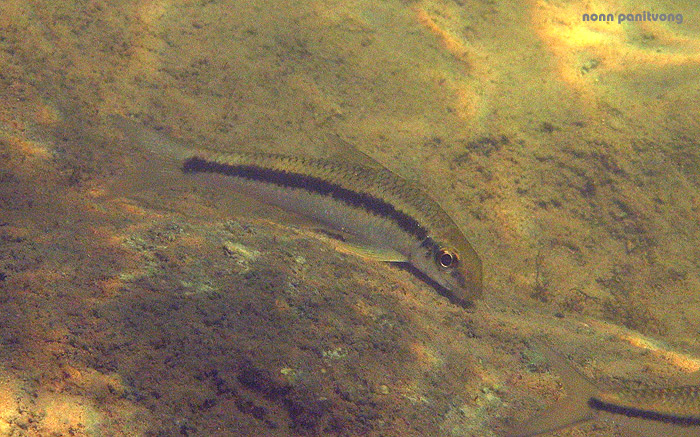
Crossocheilus burmanicus
Hora, 1936
Max length120mm SL5in SLTank150 × 45cm60 × 18inTemp20–26°C68–79°FpHnot recordedWe've been unable to obtain a diagnosis for this species to date but it can at least be distinguished from those congeners traded as 'Crossocheilus siamensis' (an invalid name synonymous with C. oblongus, which is itself of questionable identity), 'Siamese algae eater', or 'SAE' by the fact that the dark lateral stripe does not extend into the caudal-fin. Members of Crossocheilus are characterised by...
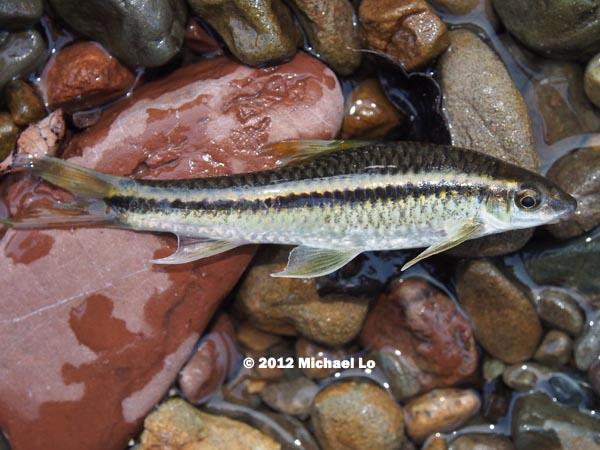
Crossocheilus cobitis
Bleeker, 1854
Max length52mm SL2.0in SLTank100 × 30cm39 × 12inTemp20–26°C68–79°FpHnot recordedGiven its wide natural range it seems logical that this species is or has been available in the aquarium trade, although its correct name may never have been applied. It is told apart from congeners by the following combination of characters: two pairs of barbels; a continuous midlateral stripe from the tip of the snout to the base of the caudal-fin, with a conspicuous small blotch at the posterior extremity, faintly marked on the caudal-fin; a faint mark between the anus and the anal-fin origin in juveniles; a narrow mouth.
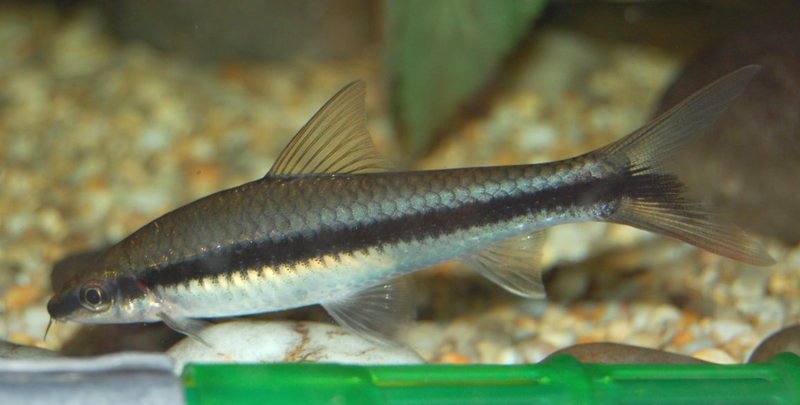
Crossocheilus nigriloba
Popta, 1904
Max length150mm SL6in SLTank150 × 45cm60 × 18inTemp20–26°C68–79°FpH6.0–7.5While separating some of the fish that may be found on sale as 'C. siamensis' is a tricky task, C. nigriloba is quite simple to identify. The dark lateral body stripe uniquely breaks up into a series of blotches when the fish are sparring, stressed or sleeping and the lower caudal fin lobe contains dark pigmentation suffused with red. The latter feature has given rise to the trade name of 'penguin flying fox'.
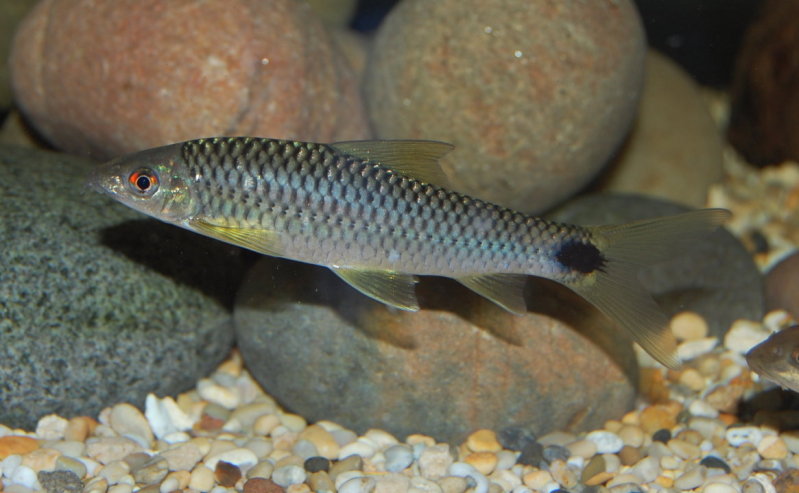
Crossocheilus reticulatus
Fowler, 1934
Max length170mm SL7in SLTank180 × 45cm72 × 18inTemp16–24°C61–75°FpH6.0–7.5While some laterally-striped members of the genus look very similar to one another the combination of silvery body, dark-edged scales and dark caudal peduncle blotch set C. reticulatus uniquely apart. The names Crossocheilus tchangi, Epalzeorhynchos coatesi and E. stigmaeus are all now considered synonyms of the species but were erected because the fish vary, most often in minor aspects of patt...
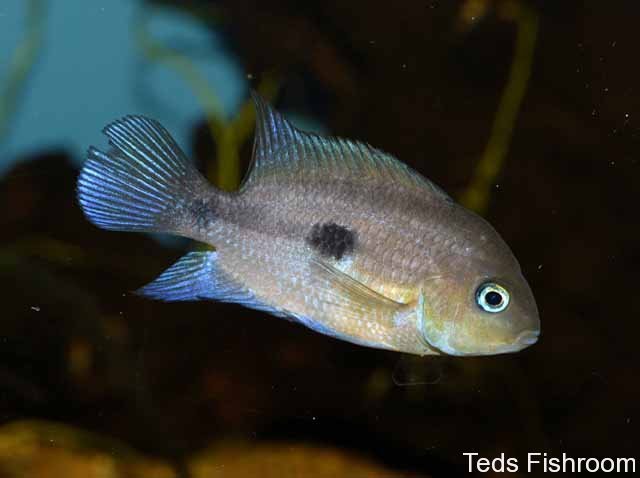
Cryptoheros myrnae
Loiselle, 1997
Max length♂ 100 · ♀ 80mm SL♂ 3.9 · ♀ 3.1in SLTank90 × 30cm36 × 12inTemp23–26°C73–79°FpH7.0–8.5In its natural waters, females have been observed caring for mixed broods containing both their own fry and those of another cichlid, Amphilophus bussingi. It is unknown if these are mixed by accident (as the two species have also been recorded tending broods in close proximity to one another) or if this represents an adaptive behaviour to increase numbers in a brood and therefore decrease the chance of predation.
Ctenopoma weeksiiMottled Bushfish
authority not recorded
Max length100mm SL3.9in SLTanknot recordedTemp24–28°C75–82°FpH6.2–7.2There are currently 20 species of Ctenopoma, most of which most are seldom seen in the aquatic trade. Originally the genus was significantly larger, but a number of original members were reclassified by Norris in 1995. Whilst describing what were apparently two new Ctenopoma, he discovered sufficient morphological anomalies in the fish to erect a new genus for them. The name Microctenopoma was chosen, although this does not relate to the size of the fish. Similar defining characteristics were al...
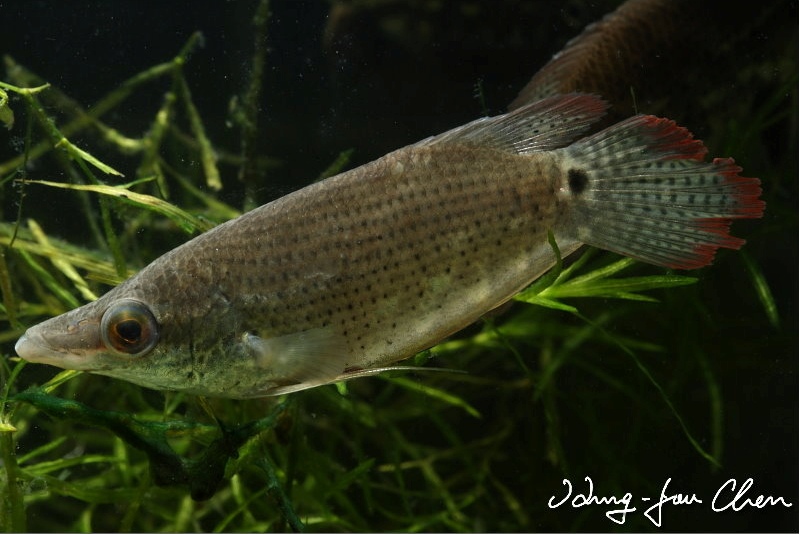
Ctenops nobilisFrail Gourami
McClelland, 1845
Max length100mm SL3.9in SLTank120 × 30cm48 × 12inTemp15–25°C59–77°FpH5.0–7.5This species is also referred to by the alternative vernacular name of 'noble gourami' and is currently the only recognised member of the genus Ctenops. It is usually regarded as being very difficult to keep whereas in reality it is quite adaptable once acclimatised but appears to react poorly to the export and shipping process meaning it is often seen on sale in poor condition and susceptible to or already infested with secondary health issues such as Oödinium, to which it appear...
Cyathopharynx furciferFeatherfin Cichlid
authority not recorded
Max length200mm SL8in SLTank180 × 45cm72 × 18inTemp24–27°C75–81°FpH8.0–9.0There are only two described species of Cyathopharynx, each with several colour forms. These should not be kept together in aquaria, as they can hybridise. They are among the most beautiful of all freshwater fish and are highly sought after in the hobby, although they are fairly delicate. The highest water quality is required for males to fully develop their stunning adult colouration, which happens when they are around 4" in length. This may take a good few months if you are buying young f...
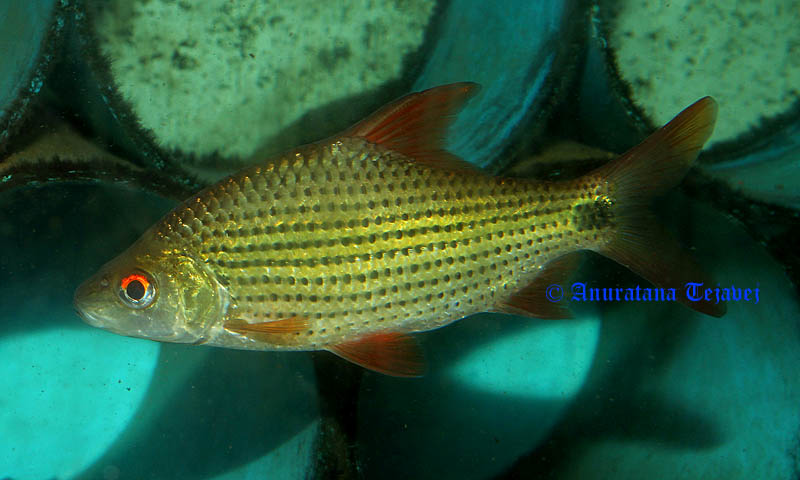
Cyclocheilichthys apogonBeardless Barb
Valenciennes, 1842
Max length180mm SL7in SLTank180 × 45cm72 × 18inTemp20–27°C68–81°FpH5.5–8.0In the aquarium trade this species may also be seen on sale as 'skinhead barb'. As with others in the genus little has been written regarding its captive care but it makes a peaceful and unusual addition to larger aquaria. The best way of obtaining it may be to keep an eye on shipments of wild fishes from Indochina and the Greater Sunda Islands as it's rarely imported in large numbers and most often arrives as bycatch.
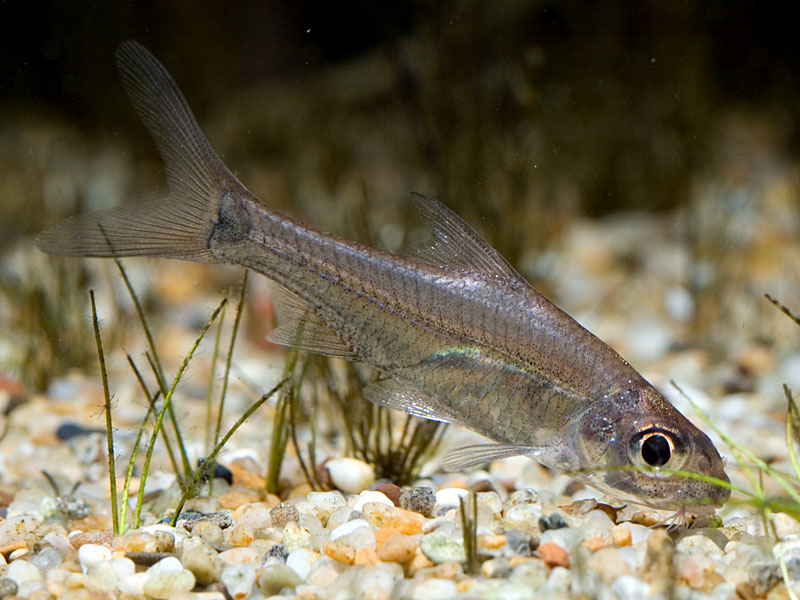
Cyclocheilichthys heteronema
Bleeker, 1854
Max length120mm SL5in SLTank120 × 45cm48 × 18inTemp21–26°C70–79°FpH6.0–7.5This species is currently understood to have a considerable natural range extending eastwards from Myanmar via Thailand, Laos, Cambodia as far as Vietnam and to the south through Peninsular Malaysia and into the Greater Sunda Islands of Borneo and Sumatra. It thus occurs in the Mekong, Mae Klong and Chao Phraya drainages as well as a host of other river basins, lakes and reservoirs including the Tonlé Sap river...
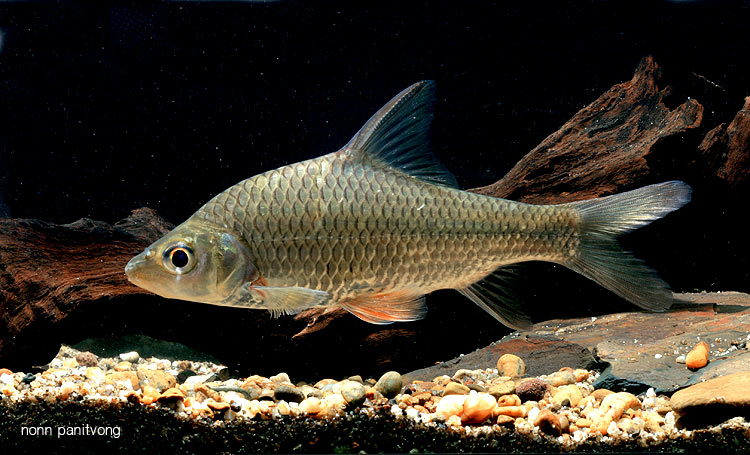
Cyclocheilichthys lagleri
Sontirat, 1985
Max length200mm SL8in SLTank180 × 60cm72 × 24inTemp20–26°C68–79°FpH6.0–8.0As with others in the genus little has been written regarding captive care of this species, but it makes a peaceful and unusual addition to larger aquaria. The best way of obtaining it may be to keep an eye on shipments of wild fishes from Indochina. It can be distinguished from congeners by possessing 20 circumpeduncular scales and lacking barbels entirely.
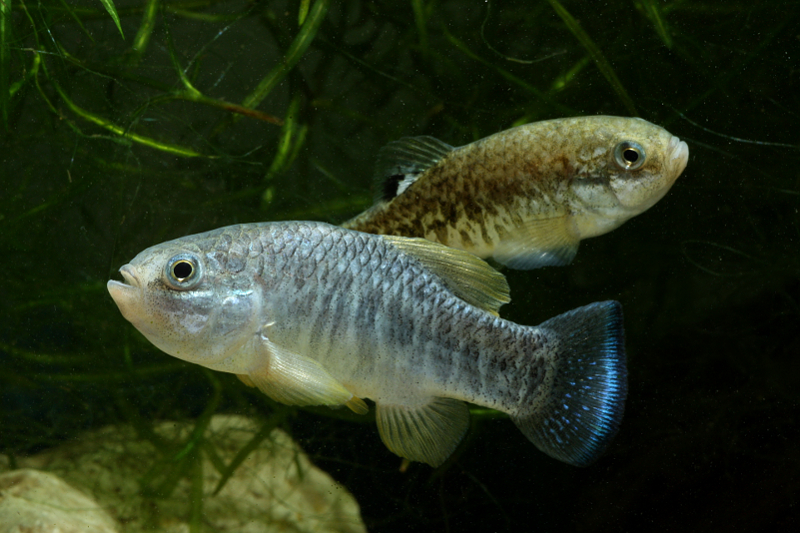
Cyprinodon julimesJulimes Pupfish
De la Maza-Benignos & Vela-Valladores, 2009
Max lengthnot recordedTank60 × 30cm24 × 12inTempnot recordedpHnot recordedEl Pandeño de los Pando has a surface area of around 287 m² with depth ranging from 40-80 cm but there is an abandoned artificial channel which has an area of approximately 437 m². Water temperature fluctuates between 38-48°C/100.4-118.4°F and the spring is considered one of the hottest environments inhabited by fish in the world.
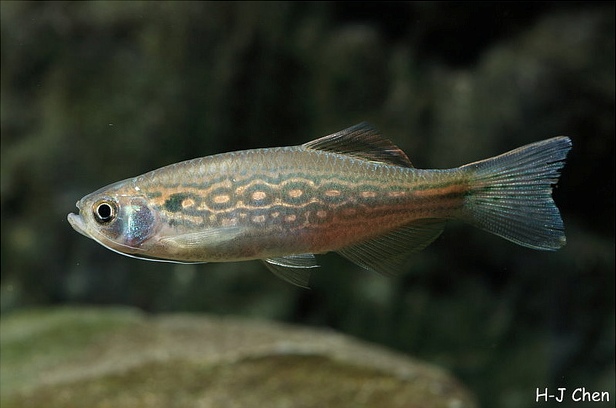
Danio dangilaMoustached Danio
Hamilton, 1822
Max length130mm SL5in SLTank120 × 45cm48 × 18inTemp16–24°C61–75°FpH6.5–7.5In the Barak River drainage, which flows through the north-east Indian states of Nagaland and Assam before bifurcating at the Bangladesh border, symaptric species include Barilius bakeri, B. barna, B. bendelisis, B. dogarsinghi, Laubuca laubuca, Esomus danricus, Devario aequipinnatus, D. annandalei, D. devario, Rasbora daniconius, R. rasbora,...
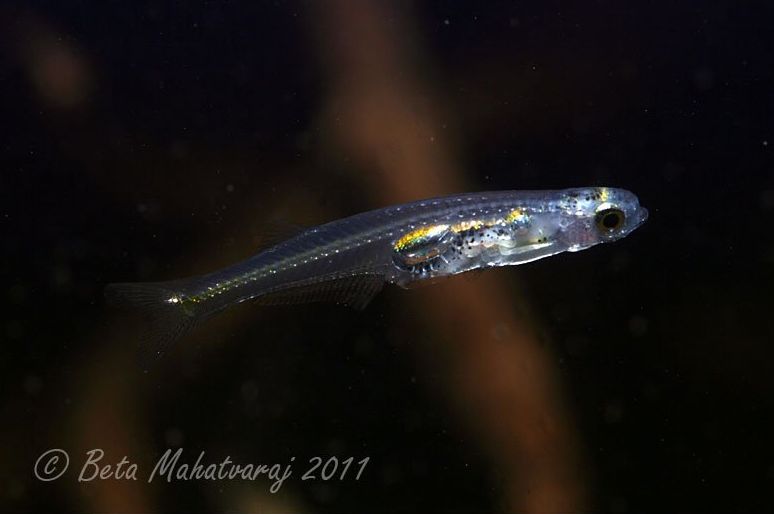
Danionella priapus
Britz, 2009
Max length16mm SL0.6in SLTank45 × 30cm18 × 12inTemp18–24°C64–75°FpH6.0–8.0As far as we know this species has not been bred in aquaria although Pete Liptrot and Paul Dixon of the Bolton Museum Aquarium, UK, have achieved great success with an unidentified congener. They first noticed fry from their group of 24 adults after moving the school to a dedicated set-up planted with mature Java moss and have since rewarded with regular batches of fry.
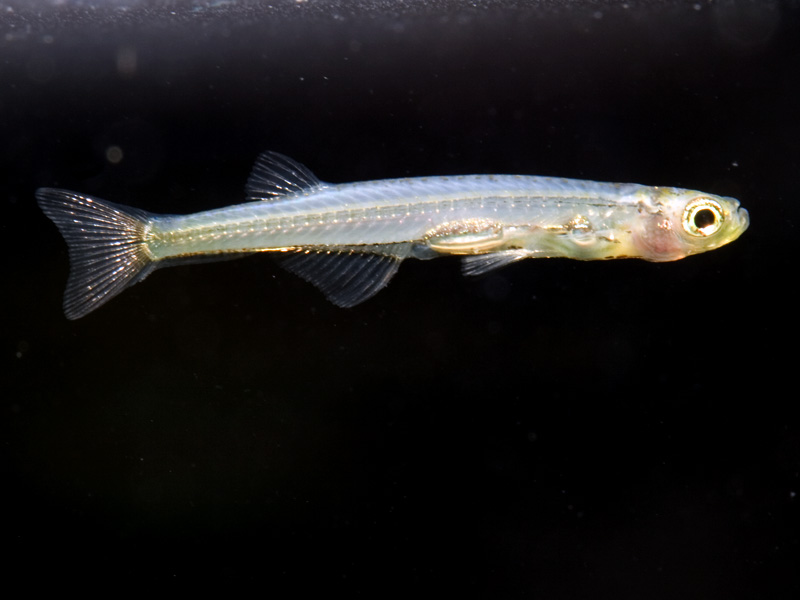
Danionella translucida
Roberts, 1986
Max length11mm SL0.4in SLTank45 × 30cm18 × 12inTemp18–24°C64–75°FpH6.0–8.0The anatomical structure of miniaturised cyprinids can vary greatly; there are two putative groups with some species possessing intermediate features to some degree. The first contains those fishes which though small are essentially proportionally dwarfed versions of their larger relatives. The other includes those in which anatomical development stops at a point where adult still resemble a larval form of their larger ancestor, as in...
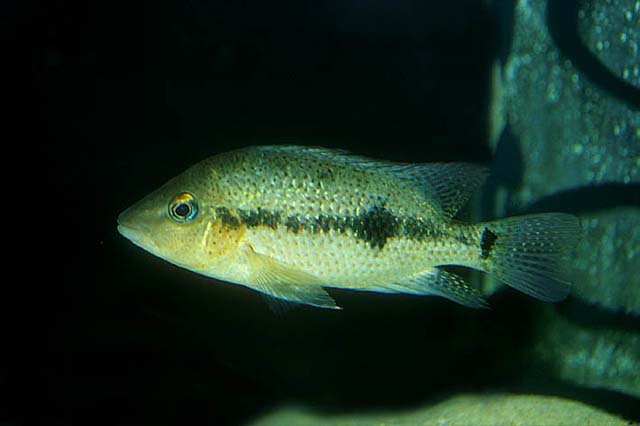
Darienheros calobrensisRedspot Cichild
Meek & Hildebrand, 1913
Max length250mm SL10in SLTank120 × 45cm48 × 18inTemp22–27°C72–81°FpH6.5–7.5A. calobrensis is not as common in the hobby as some other species in the genus (most notably A. citrinellus). It was considered a member of the genus Cichlasoma for some time, before being restored to its original position in Amphilophus. However it exhibits several characteristics that seem to set it apart from its congeners. As a result many experts believe it will probably be moved into a newly-erected genus at some point in the future. You may also see it listed as a member of Astatheros oc...