Cyprinodon julimes
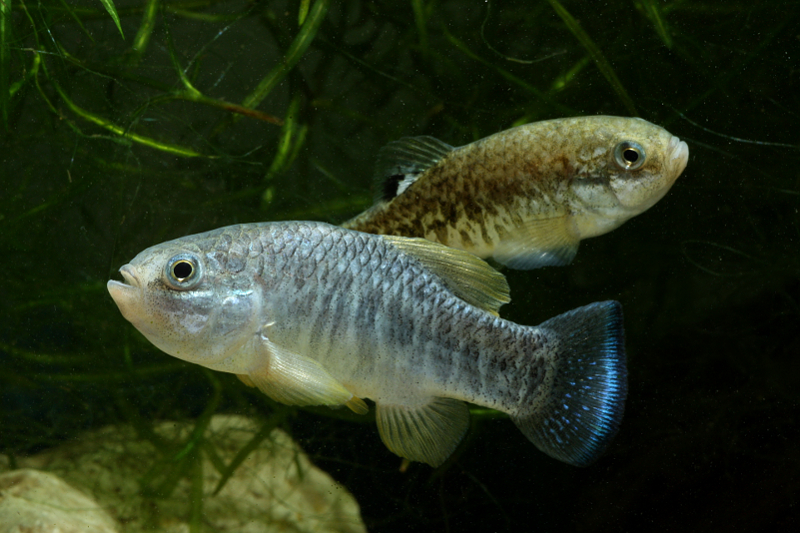
Julimes Pupfish
On this page9 sections
Quick facts
Difficulty3 of 6 measures
More bars, more demanding.
- Space
- modest tank
- Water
- unknown
- Temp
- unknown
- Temperament
- unknown
- Social
- shoal
- Compatibility
- not a community fish
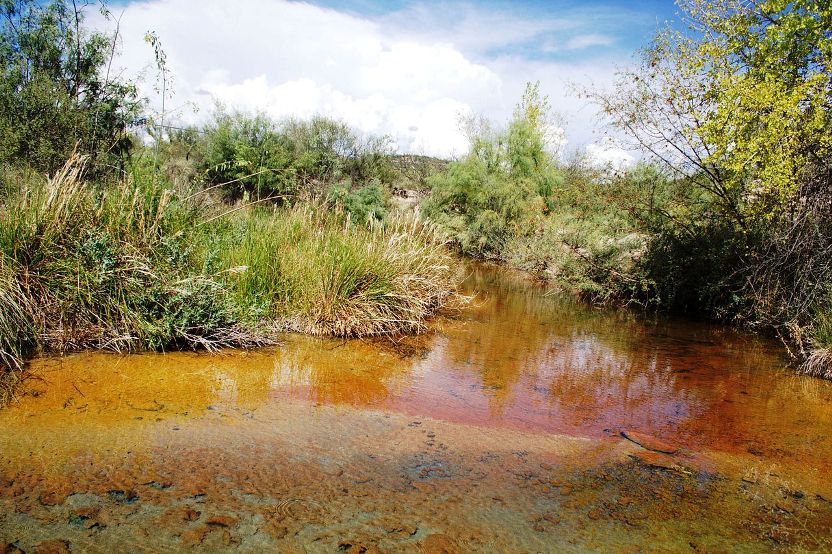
El Pandeño de los Pando has a surface area of around 287 m² with depth ranging from 40-80 cm but there is an abandoned artificial channel which has an area of approximately 437 m². Water temperature fluctuates between 38-48°C/100.4-118.4°F and the spring is considered one of the hottest environments inhabited by fish in the world.
Etymology
Cyprinodon: from the Ancient Greek κυπρῖνος (kuprinos), meaning 'carp', and ὀδούς (odous), meaning 'tooth'.
julimes: named for the municipality of Julimes in Chihuahua state, northern Mexico, to which this species is endemic.
Distribution
Habitat
El Pandeño de los Pando has a surface area of around 287 m² with depth ranging from 40 – 80 cm16 – 31 in but there is an abandoned artificial channel which has an area of approximately 437 m².
Water temperature fluctuates between 38 – 48 °C100 – 118 °F and the spring is considered one of the hottest environments inhabited by fish in the world.
Aquarium size
An aquarium with base dimensions of 60 ∗ 30 cm24 ∗ 12 in or equivalent is just about acceptable for a single pair but like most members of the family Cyprinodontidae this species does best when maintained as a group in a larger tank or container.
Maintenance
Need not be too complicated so long as there are plenty of broken lines-of-sight.
Provide plenty of cover in the form of aquatic plants, wool mops, etc., and if using filtration air-powered, sponge-type units are best as these will not harm eggs or fry.
Lighting is unimportant but can be used if you wish, and growth of filamentous algae should be encouraged if possible.
Diet
Wild specimens have been observed to feed on diatoms, cyanobacteria and small invertebrates.
Notes
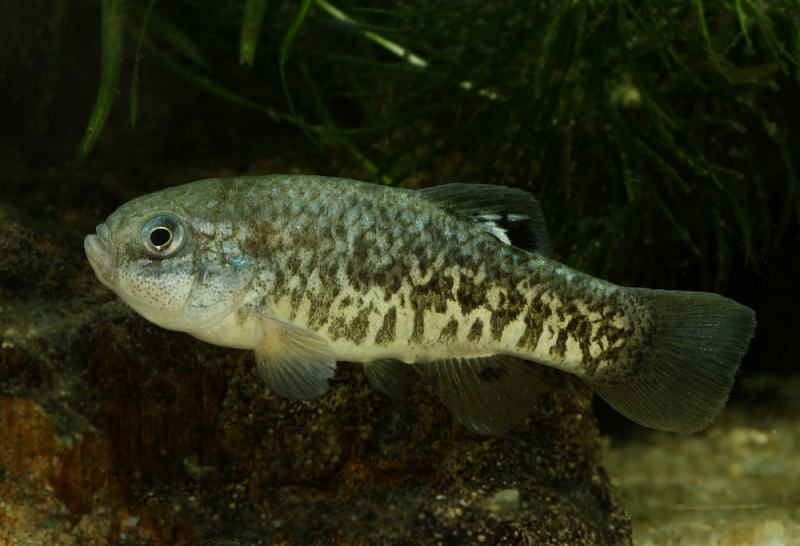
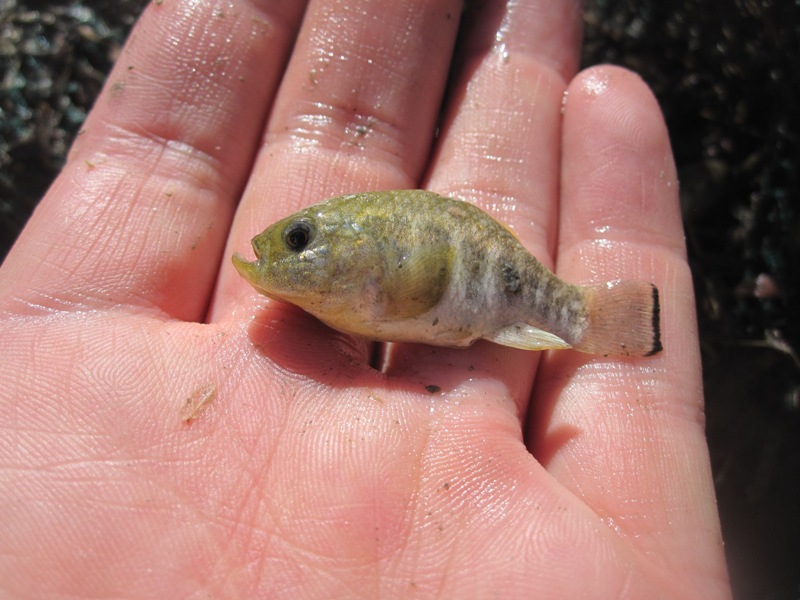
This species differs from its closest relatives C. eximius and C. pachycephalus in the following combination of characters, given as proportions of standard length: head large, 2.4 to 2.7 (2.6) times; dorsal-fin base length 4.7 to 6.1 (5.3); distance from dorsal-fin origin to posterior of anal-fin base 2.6 to 3.1 (2.8); caudal peduncle short, 4.5 to 6.5 (5.4); distance between anal-fin origin and pelvic-fin origin, 6.1 to 8 (6.9).
It also differs in the following, given as proportions of head length: mouth wide, 2.1 a 2.9 (2.4); eye big, 3.3 to 4.6 (3.8); short post orbital distance 2.1 a 2.5 (2.3).
References
- De la Maza-Benignos, M. and L. Vela-Valladores in: De la Maza Benignos, M. (ed.) (2009). Los Peces del Río Conchos. Chihuahua State, 185-187
Species images · 5
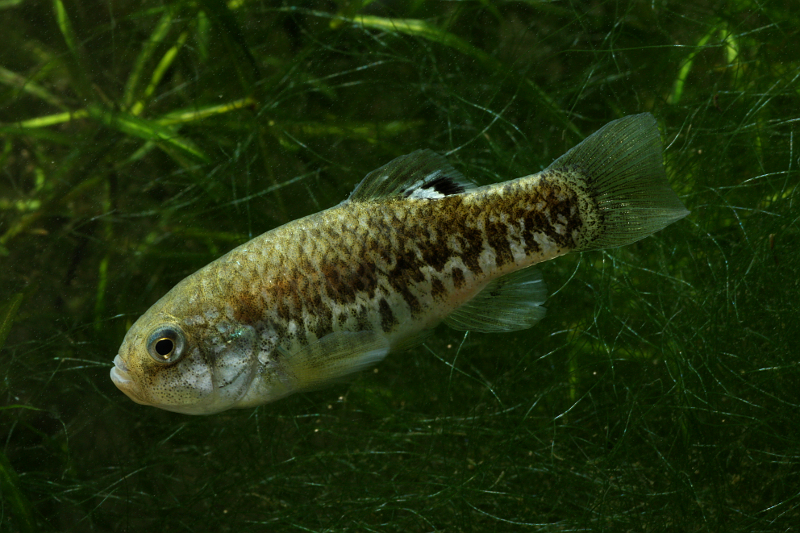
Used with the photographer’s permission. Not licensed for reuse.
Distribution
Profile completeness16 of 24
67% complete
Missing: water parameters, hardness, maximum size, temperament, water condition notes, behaviour and compatibility, sexual dimorphism, reproduction.