Results for “C number”
Type a name: scientific, common, or one a species used to go by. Or narrow the catalogue with the filters.
Filters
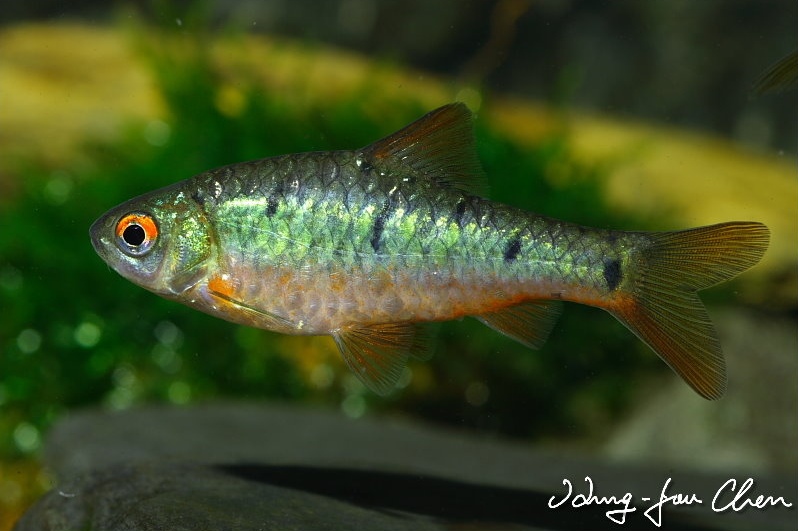
Barbodes semifasciolatusGolden Barb*
Günther, 1868
Max length75mm SL3.0in SLTank90 × 30cm36 × 12inTemp16–24°C61–75°FpH6.0–8.0This species is also known by the alternative names 'green' or 'Chinese' barb. The natural 'green' form is an infrequent find in the aquarium trade whereas the selectively-bred 'golden' variant is farmed in huge numbers and is among the most popular of freshwater aquarium fish. The latter was first produced in the 1960s and is now so ubiquitous that many hobbyists are initially unaware that it is not the natural form.
Lates calcariferBarramundi
authority not recorded
Max length2000mm SL79in SLTanknot recordedTemp15–28°C59–82°FpH7.0–8.5This species is included purely because there have been an alarming number of juvenile fish showing up recently in some aquatic stores and as a result, in hobbyists tanks. This fish is simply not suited to captive life in any respect. To know that it's one of the most sought after sport fish in Australia should tell you all you need to know about it. Although undeniably attractive when juvenile, please don't be tempted to buy if you see these for sale. Housing one for life is beyond th...
Rasbora paviana
authority not recorded
Max length90mm SL3.5in SLTank120 × 30cm48 × 12inTemp22–26°C72–79°FpHnot recordedIn much of the literature this species is pictured with the invalid name R. paviei, due to an issue with spelling which was corrected by Kottelat (2005), and the common name 'sidestripe rasbora' although the latter has yet to find popularity in the aquarium hobby. There are a number of similar-looking species including R. sumatrana, R. hobelmani and R. laticlavia and it can be problematic to separate members of this 'group'. If the collection locality of the fish is known ide...
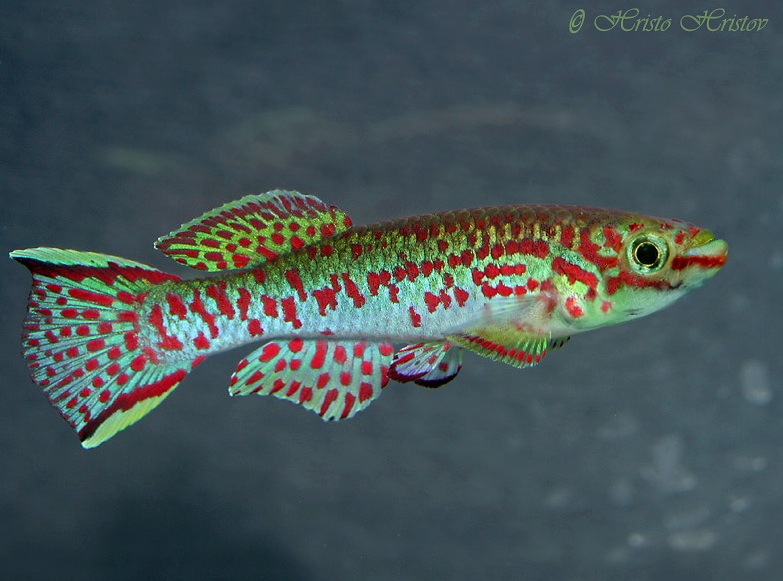
Fundulopanchax gardneriSteel-blue Killifish
Boulenger, 1911
Max length55mm SL2.2in SLTanknot recordedTemp20–26°C68–79°FpH6.0–7.5This species is also known as 'Gardner's Killi' and 'blue lyretail' and the commonly-available aquarium forms are perhaps among the best choices for those new to keeping killifishes being relatively hardy, colourful and easy to breed. A number of ornamental strains have also been line-bred by aquarists including 'gold' and 'albino'.
Corydoras seussi
authority not recorded
Max length70mm SL2.8in SLTank60 × 38cm24 × 15inTemp22–26°C72–79°FpH6.0–7.2Very similar in appearance to C. gossei, seussi can be distinguished by its less rounded snout. It may also be referred to by its C-number, C027.
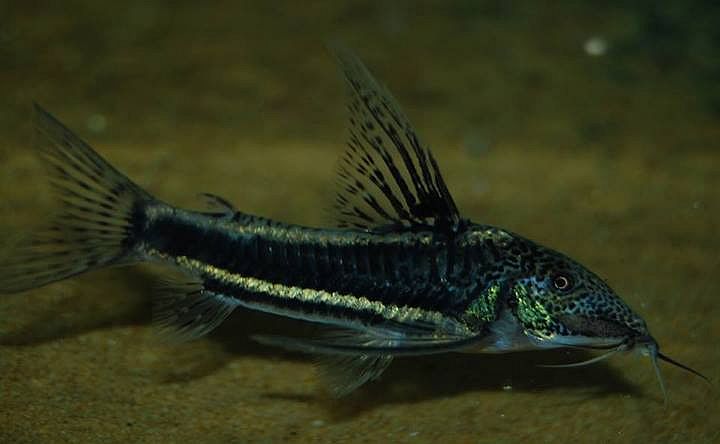
Scleromystax sp. C113
authority not recorded
Max length65mm SL2.6in SLTank120 × 30cm48 × 12inTemp16–24°C61–75°FpH5.0–7.5This fish is one of a number of apparently unidentified Scleromystax species known in the aquarium hobby. The genus Scleromystax is included in the family Callichthyidae, of which members are often referred to collectively as 'armoured' or 'mailed' catfishes group due to the presence of bony plates in place of scales on the body.
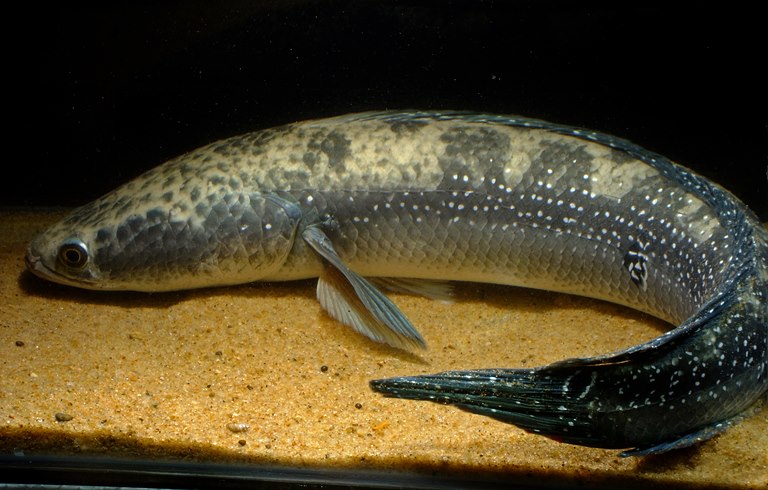
Channa maruliusBullseye Snakehead
Hamilton, 1822
Max length600mm SL24in SLTanknot recordedTemp15–28°C59–82°FpH6.0–8.0This species is also referred to as 'giant', 'great', 'cobra', or 'Indian' snakehead. Although currently-considered to be distributed throughout much of southern Asia it is widely-accepted to represent a complex of related species in need of additional research. A number of geographical variants exhibiting diffe...
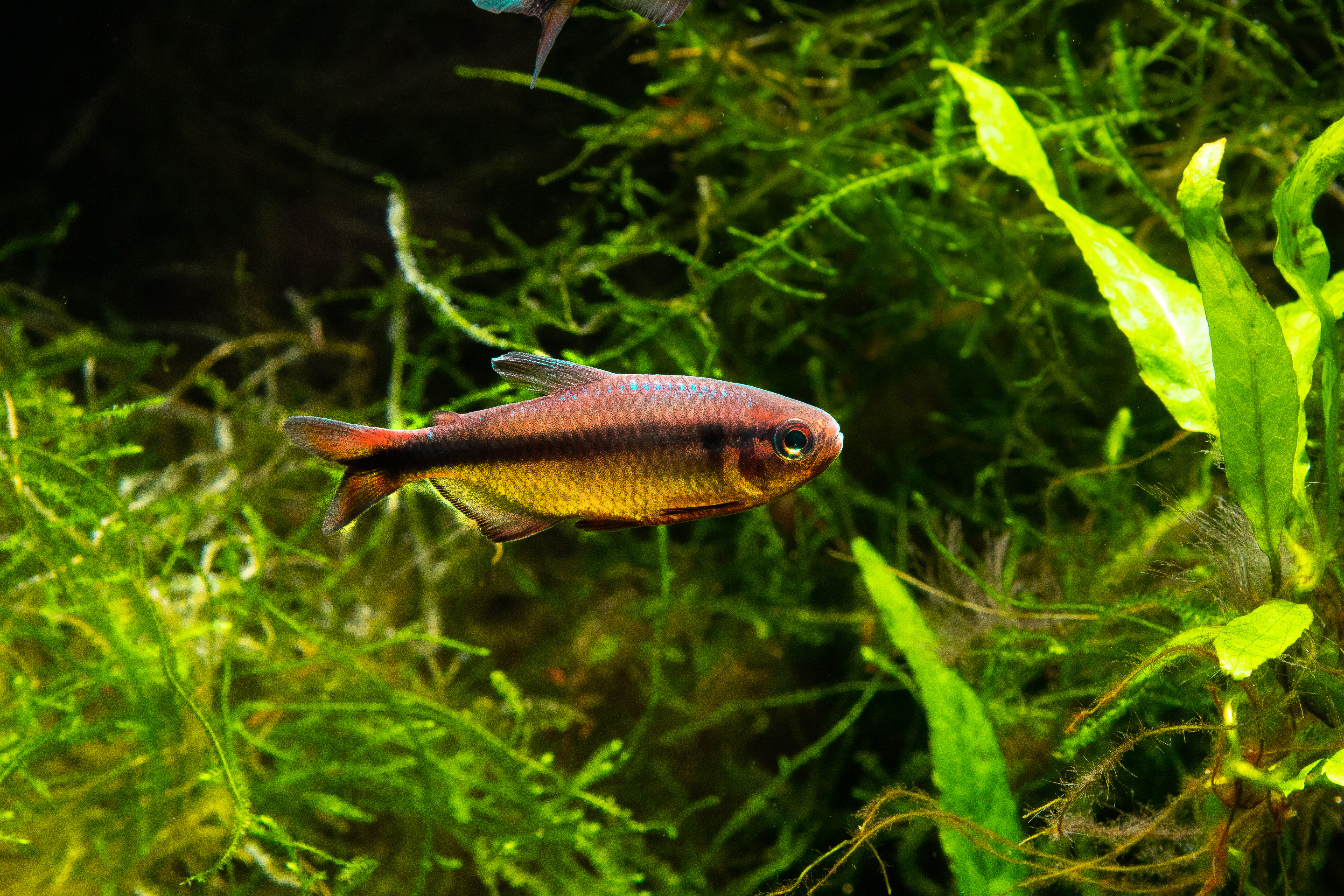
Hyphessobrycon melanostichosBlack Stripe Tetra
Carvalho & Bertaco, 2006
Max length25mm SL1.0in SLTank60 × 30cm24 × 12inTemp23–28°C73–82°FpH5.5–7.5Hyphessobrycon melanostichos shares a number of similarities with Hyphessobrycon sp. Blue Ribbon. The former can be differentiated from the latter by a lighter set, more streamlined body , smaller humeral spot and also red colouring, which is not present on the Blue Ribbon tetra. Care and maintenance of the two species is however, virtually the same.
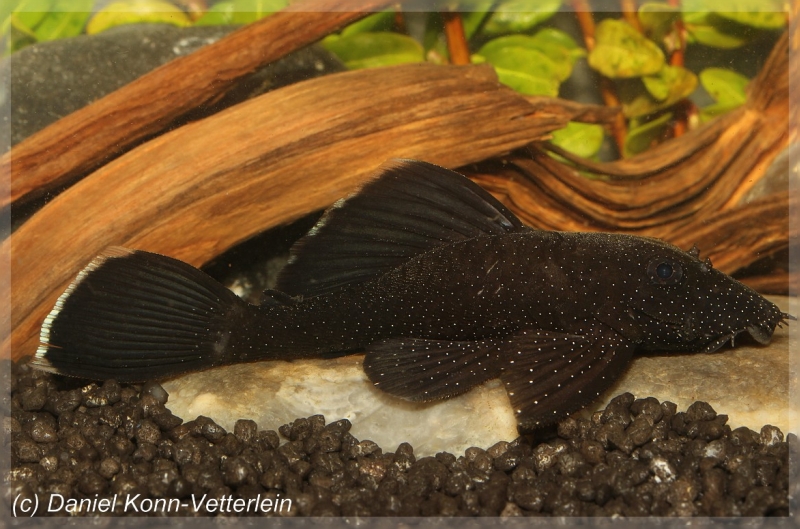
Ancistrus dolichopterusL183
Kner, 1854
Max length200mm SL8in SLTank120 × 45cm48 × 18inTemp26–30°C79–86°FpH5.0–7.0This species is not always identified correctly with its name used for the unidentified common bristlenose and other similar species, while the fish itself has been referred to as A. hoplogenys and assigned the L-number L183. Images and information describing it it in much of the available literature confirm this confusion.
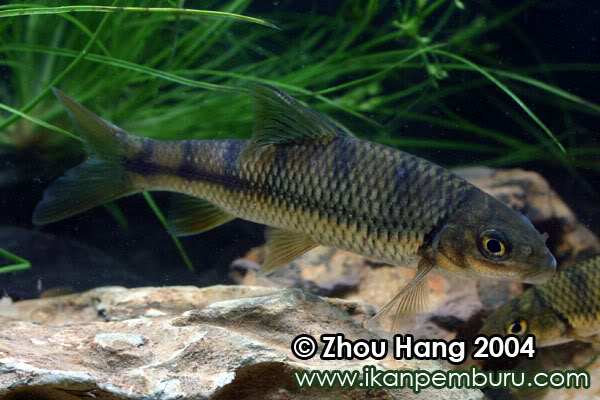
Acrossocheilus parallens
Nichols, 1931
Max length160mm SL6in SLTanknot recordedTempnot recordedpHnot recordedMembers of the genus are characterised by possessing a particular number of dark vertical bar on each flank, and A. parallens belongs to a group of species with five or six such bars, each of which is two scales in width. Congeners sharing this pattern include A. fasciatus, A. hemispinus (in juveniles only), A. jishouensis, A. kreyenbergii, A. paradoxus, A. spinifer, A. wenchowensis, and A. wuyiensis.
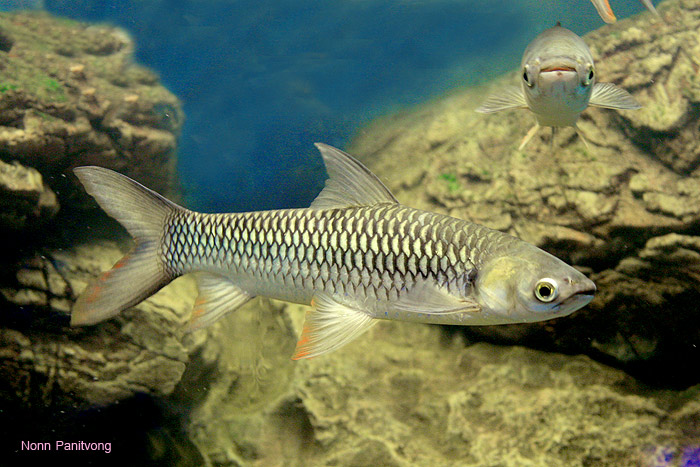
Leptobarbus rubripinnaRed-finned Cigar Shark
Fowler, 1937
Max length1000mm SL39in SLTanknot recordedTemp20–26°C68–79°FpH6.0–8.0This species was referred to as its congener Leptobarbus hoevenii for a number of decades and continues to be misidentified as such in the aquarium hobby, with both species traded under the same name. It is a popular sport fish in its native countries and is wholly unsuitable for private aquaria. Unfortunately it is...
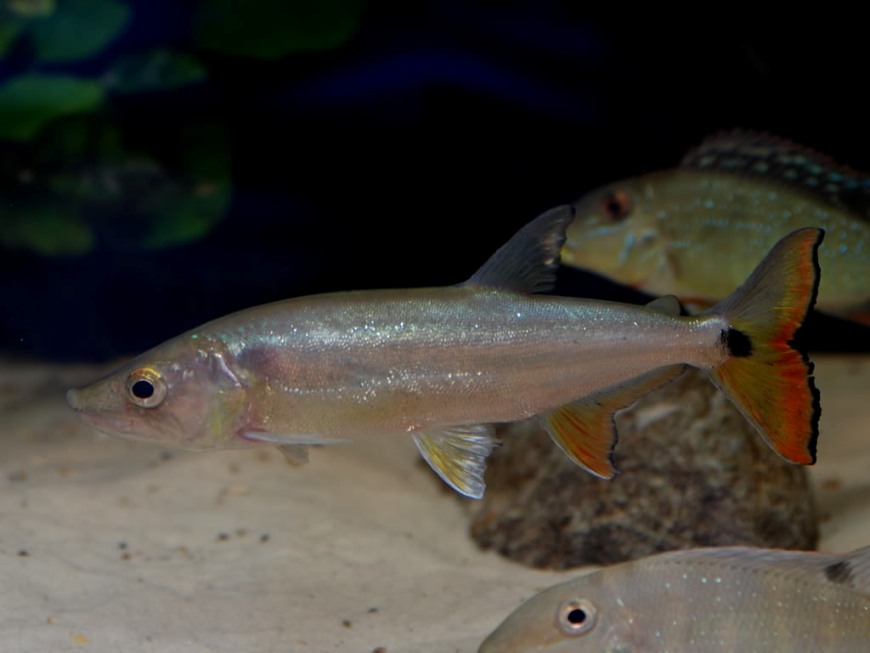
Acestrorhynchus altusRed Barracuda Tetra
Menezes, 1969
Max length233mm SL9in SLTank250 × 90cm98 × 36inTemp22–28°C72–82°FpH6.0–7.5This species is not normally aggressive towards conspecifics with juveniles in particular exhibiting a marked schooling instinct. Older individuals tend to be more solitary but still group together from time-to-time, and it's best maintained in numbers of four or more. One important point to note is that acestrorhynchids are can...
Osphronemus laticlaviusGiant Red Tail Gourami
authority not recorded
Max length500mm SL20in SLTank180 × 60cm72 × 24inTemp20–30°C68–86°FpH6.5–8.0Still relatively rare in the hobby, this fish was only described to science in the early 1990s. It's not yet being mass-produced in any great numbers, and demand is high, so it's quite pricey when it is available. It's a stunning fish when adult, developing bright red fin edges with filamentous extensions, and a body colour varying between blue-green and almost black. It makes a great pet as it can develop real personality and learn to recognise its owner....
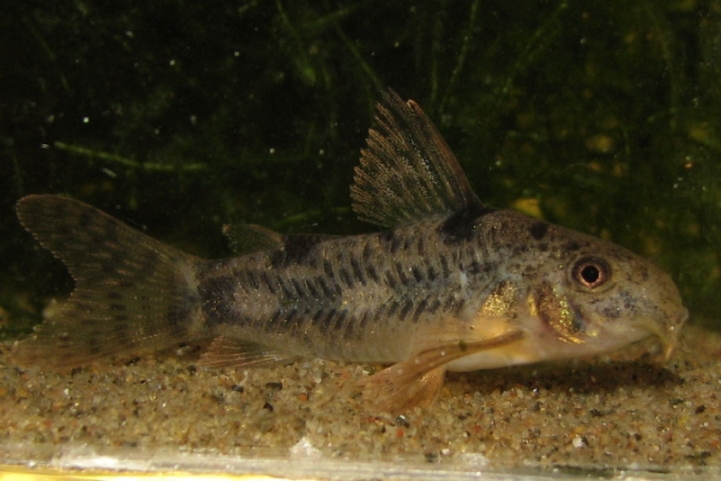
Corydoras carlae
Nijssen & Isbrücker, 1983
Max length45mm SL1.8in SLTanknot recordedTemp15–22°C59–72°FpH6.5–8.0This species is not available on a commercial basis but was collected and introduced to the aquarium hobby by Hans Georg-Evers in 2010. It's similar in appearance to a number of congeners including C. diphyes, C. erhardti, C. garbei, C. paleatus and C. steindachneri but can be told apart from most of them by possession of two large, indistinct, dark blotches in the middle of each flank.
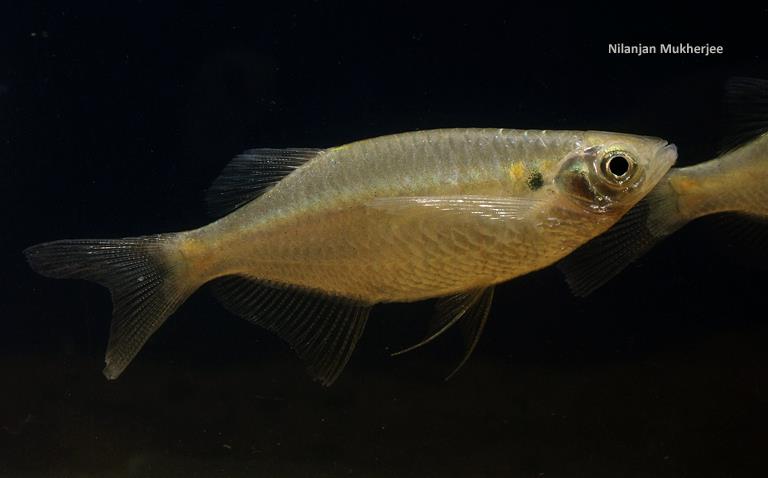
Chela cachiusNeon Hatchet Fish
Hamilton, 1822
Max length50mm SL2.0in SLTank90 × 30cm36 × 12inTemp18–24°C64–75°FpH6.0–8.0It is currently the only valid member of the genus but it is possible that additional taxa exist, particularly in Myanmar, while a number of former species are contained within the Laubuka assemblage, to which C. cachius is closely related. Phylogenetic studies suggest the existence of a monophyletic clade consisting of the genera Devario, Chela, Laubuca, Microdevario and Microrasbora plus the genus Betadevario.
Copadichromis azureus
authority not recorded
Max length160mm SL6in SLTank150 × 45cm60 × 18inTemp26–28°C79–82°FpH7.5–8.5Together with the recently erected genus Mchenga, Copadichromis species form an exclusive group of Malawian cichlids commonly referred to as "Utaka" (prounounced "ooh-taw-kuh"). They're specialised to a pelagic lifestyle, and can be found living in huge numbers throughout much of Lake Malawi. Some tend to remain in the proximity of underwater reefs or rocky shorelines, while others occur mainly in more featureless, sandy habitats. Here they face the oncoming current, us...
Copadichromis borleyi
authority not recorded
Max length200mm SL8in SLTank150 × 45cm60 × 18inTemp25–29°C77–84°FpH7.5–8.5Together with the recently erected genus Mchenga, Copadichromis species form an exclusive group of Malawian cichlids commonly referred to as "Utaka" (prounounced "ooh-taw-kuh"). They're specialised to a pelagic lifestyle, and can be found living in huge numbers throughout much of Lake Malawi. Some tend to remain in the proximity of underwater reefs or rocky shorelines, while others occur mainly in more featureless, sandy habitats. Here they face the oncoming current, usi...
Copadichromis chrysonotus
authority not recorded
Max length160mm SL6in SLTank150 × 45cm60 × 18inTemp25–29°C77–84°FpH7.5–8.5Together with the recently erected genus Mchenga, Copadichromis species form an exclusive group of Malawian cichlids commonly referred to as "Utaka" (prounounced "ooh-taw-kuh"). They're specialised to a pelagic lifestyle, and can be found living in huge numbers throughout much of Lake Malawi. Some tend to remain in the proximity of underwater reefs or rocky shorelines, while others occur mainly in more featureless, sandy habitats. Here they face the oncoming current, usi...
Copadichromis ilesi
authority not recorded
Max length175mm SL7in SLTank150 × 45cm60 × 18inTemp25–29°C77–84°FpH7.5–8.5Together with the recently erected genus Mchenga, Copadichromis species form an exclusive group of Malawian cichlids commonly referred to as "Utaka" (prounounced "ooh-taw-kuh"). They're specialised to a pelagic lifestyle, and can be found living in huge numbers throughout much of Lake Malawi. Some tend to remain in the proximity of underwater reefs or rocky shorelines, while others occur mainly in more featureless, sandy habitats. Here they face the oncoming current, usi...
Copadichromis virginalis
authority not recorded
Max length130mm SL5in SLTank150 × 45cm60 × 18inTemp25–29°C77–84°FpH7.5–8.5Together with the recently erected genus Mchenga, Copadichromis species form an exclusive group of Malawian cichlids commonly referred to as "Utaka" (prounounced "ooh-taw-kuh"). They're specialised to a pelagic lifestyle, and can be found living in huge numbers throughout much of Lake Malawi. Some tend to remain in the proximity of underwater reefs or rocky shorelines, while others occur mainly in more featureless, sandy habitats. Here they face the oncoming current, usi...