Results for “aquarium”
Type a name: scientific, common, or one a species used to go by. Or narrow the catalogue with the filters.
Filters
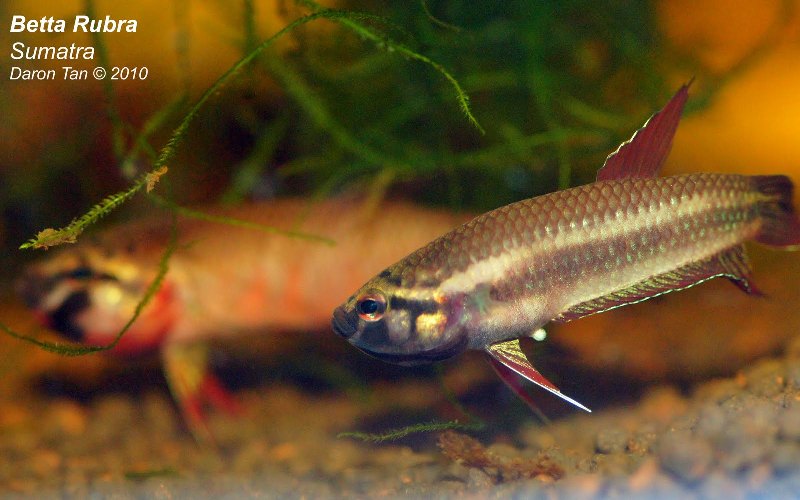
Betta dennisyongi
Tan, 2013
Max length36mm SL1.4in SLTank45 × 30cm18 × 12inTemp22–27°C72–81°FpH5.0–7.0This species is available in the aquarium hobby but is not traded in large numbers and may have been inadvertently hybridised with the similar-looking congener B. rubra prior to its description since they're typically exported mixed together. It's included in the B. rubra group of closely-related species within the genus, an assemblage erected by Schindler and van der Voort (2012) who...
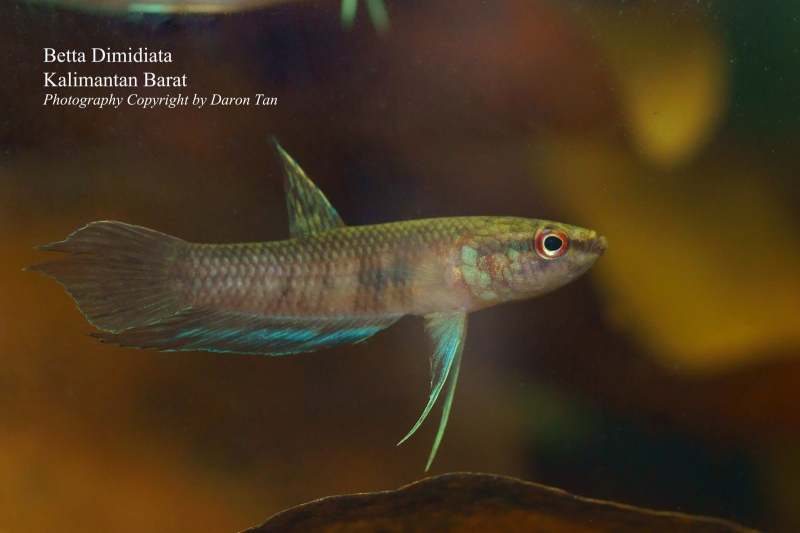
Betta dimidiata
Roberts, 1989
Max length40mm SL1.6in SLTank45 × 30cm18 × 12inTemp22–27°C72–81°FpH5.2–6.5This species is often confused with B. krataios in the aquarium trade, the latter having been known as B. sp. 'Kapuas' prior to description. The two can easily be told apart as the caudal-fin is rounded in B. krataios but spade-shaped and in adults, highly-extended in B. dimidiata. Together these two comprise the B. dimidiata group of closely-related species within the gen...
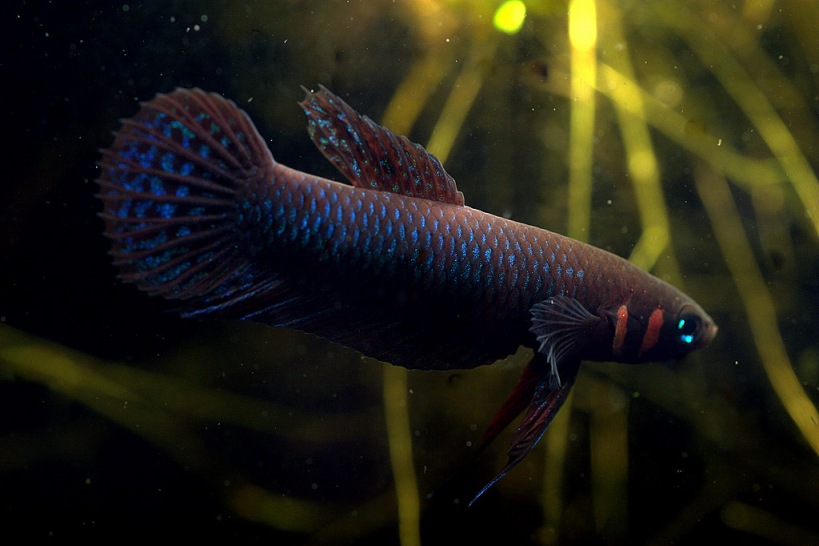
Betta hendra
Schindler & Linke, 2013
Max length45mm SL1.8in SLTank45 × 30cm18 × 12inTemp22–27°C72–81°FpH4.0–6.5This appears to be an undescribed species, and has only been available to the aquarium hobby in limited numbers to date. The rather long-winded trade name derives from the fact that it was initially marketed as two different species, i.e., B. sp. 'Sengalang' and B. sp. 'Palangka'. The spelling of the latter was later corrected but the fish may still be seen with either or both names attached. It looks very similar to fis...
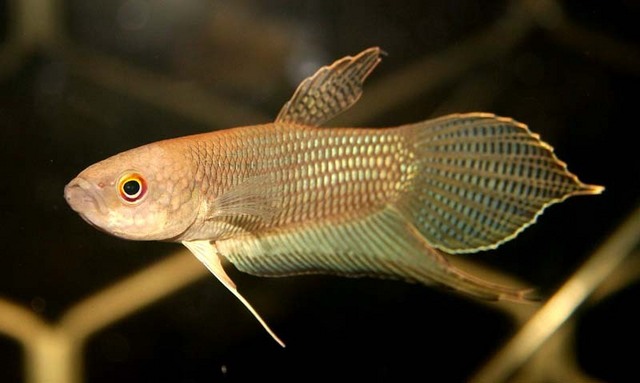
Betta ibanorum
Tan & Ng, 2004
Max length85mm SL3.3in SLTank80 × 30cm31 × 12inTemp24–28°C75–82°FpH4.0–7.0B. ibanorum is uncommon in the hobby and is apparently more frequently fished for food than the aquarium trade. It's included in the Betta akarensis group/complex of closely-related species within the genus, of which members share the following set of characters: possession of pre-orbital and post-orbital stripes (the post-orbital stripe is faint or interrupted in some species); chin bar present; caudal-fin lance...
Betta uberis
Tan & Ng, 2006
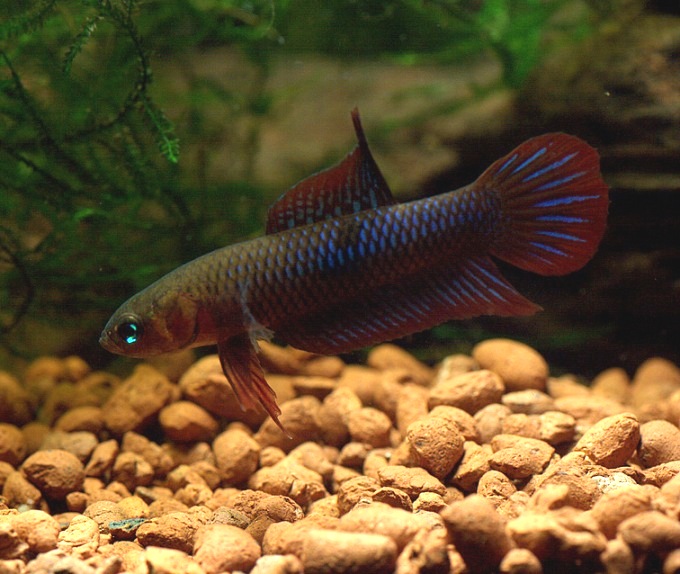
Max length36mm SL1.4in SLTank45 × 30cm18 × 12inTemp22–27°C72–81°FpH4.0–6.0The majority of records pertain to an area sandwiched between the lower Arut and Kumai rivers, south of the towns of Pangkalan Bun and Kumai in Kalimantan Tengah (Central Kalimantan) province, Borneo, Indonesia. Addditional collections have taken place in the Sampit river basin to the east, and several hundred kilometres further north in Sukadana district Kalimantan Barat (West Kalimantan) province. Type locality is 'Indonesia: Borneo: Kalimantan Tengah: Arut basin: Pankalanbun', with the specimens having been obtained from the aquarium trade.
Biotodoma wavriniOrinoco Eartheater
Gosse, 1963
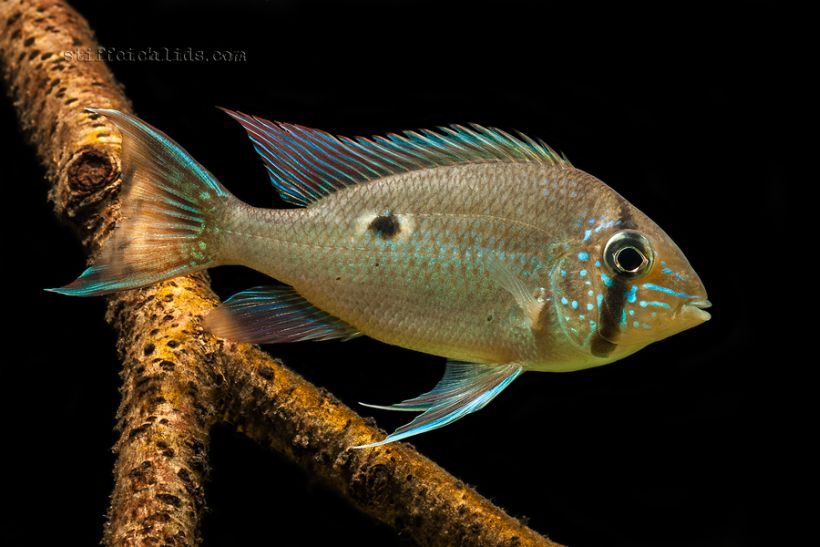
Max length100mm SL3.9in SLTank150 × 45cm60 × 18inTemp20–30°C68–86°FpH4.0–6.5Populations known in the aquarium trade include 'Cuao', 'Orinoco', 'San Antonio', and 'Sipapo Ventuari'. B. wavrini and its congener B. cupido can be separated by body shape and position of the dark blotch on the posterior portion of the flank. In B. cupido the body is relatively compact and the blotch located above the upper lateral line, whereas in B. wavrini the body is noticeably elongate and the blotch on or below the upper lateral line.
Biotoecus opercularis
Steindachner, 1875
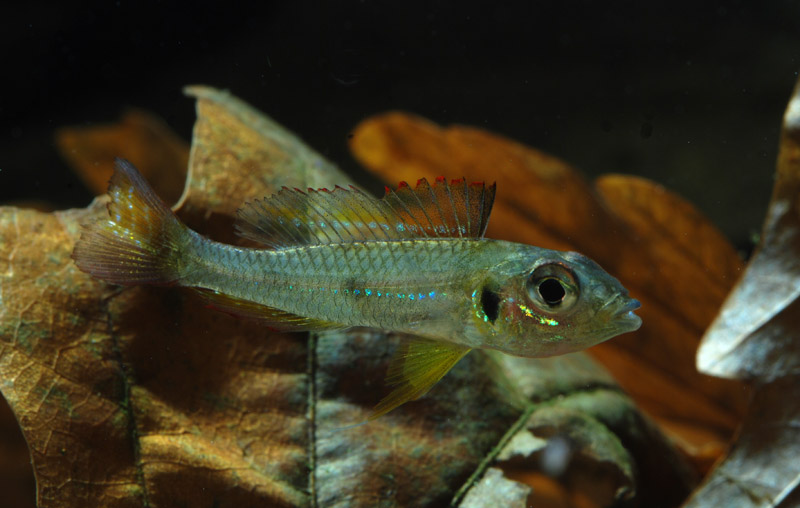
Max length40mm SL1.6in SLTank90 × 30cm36 × 12inTemp25–30°C77–86°FpH4.0–6.5At time of writing there exists no scientific evidence that the different populations of this species seen in the aquarium trade (see 'Distribution') represent anything other than a single, widely-distributed species although some exibit minor morphological differences including relative body depth, longer fin rays in the unpaired fins and yellow or orange colouration in the paired fins. There is apparently a form from the upper rio Negro which may turn out to be distinct but it's...
Botia almorhaeYo-Yo Loach
Gray, 1831
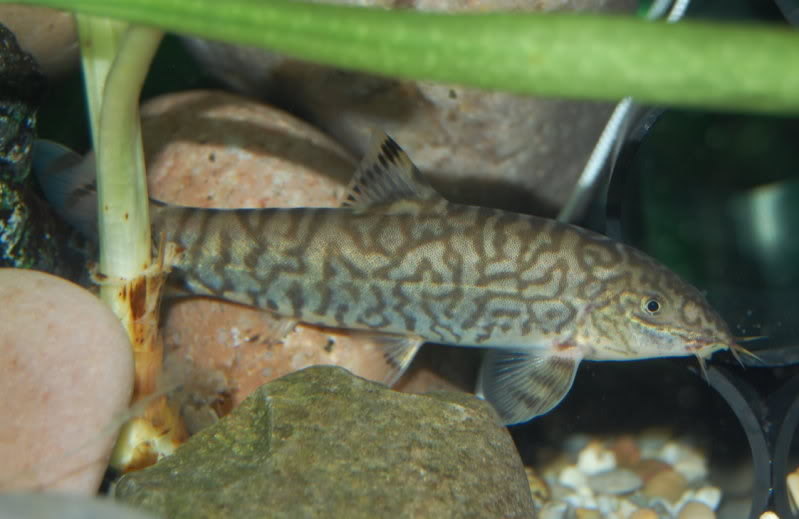
Max length160mm SL6in SLTank120 × 45cm48 × 18inTemp19–27.5°C66–82°FpH6.0–7.5The physical appearance of B. almorhae sensu stricto is something of a mystery. No pictures of live specimens appear in any scientific publications we've read and we've been unable to find a certified image of one anywhere meaning it's possibly never been seen in the aquarium trade. Instead the most commonly available members of the nominal species grouping seem to be B. lohachata, B. sp. 'Kosi' and B. sp. 'Teesta' (see individual notes below), plus the assorted hybrids that have appeared since the turn of the century (Grant, 2007).
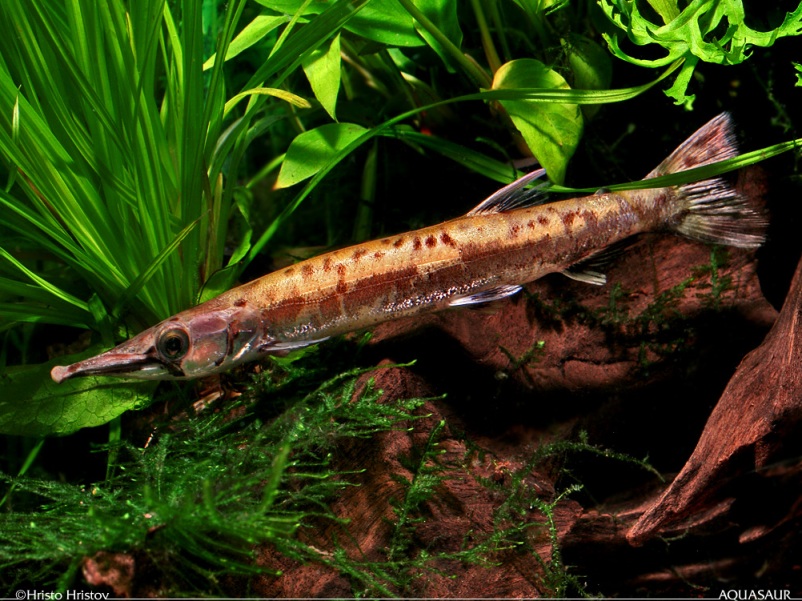
Boulengerella lucius
Cuvier, 1816
Max length420mm SL17in SLTanknot recordedTemp22–28°C72–82°FpH4.0–7.0This species is largely unsuitable for the home aquarium given its eventual size and natural behaviour, and we know of only a handful of private aquarists with the facilities required to house it long-term. Nonetheless juveniles and subadults are sometimes available in the trade although often misidentified as the congener B. maculata.
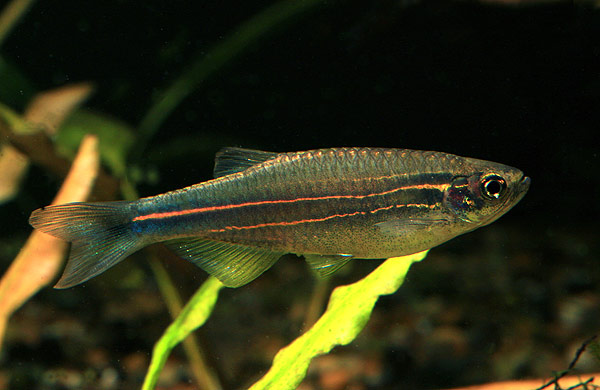
Brachydanio kerriBlue 'Danio'
Smith, 1931
Max length45mm SL1.8in SLTank80 × 30cm31 × 12inTemp18–26°C64–79°FpH6.5–7.5Can be hard to find in aquarium shops, and there has been some confusion surrounding its identity in the past. Base body colour is either powdery-blue or yellow-green (see 'Distribution') and this continues into the caudal-fin, while pinkish-yellow lateral stripes extend from opercle to caudal peduncle.
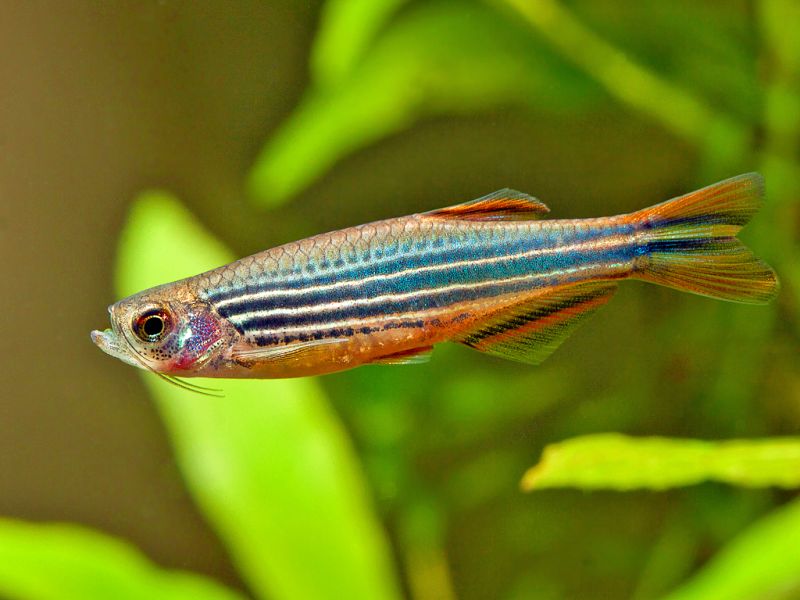
Brachydanio kyathitOrange-Finned 'Danio'
Fang, 1998
Max length45mm SL1.8in SLTank90 × 30cm36 × 12inTemp16–26°C61–79°FpH6.5–7.5At least two similar-looking fishes have been available in the aquarium trade; one, usually referred to as 'Danio sp redfin', resembles the striped form of B. kyathit but is a smaller fish and the red pigmentation in the fins is comparatively more intense. The other is also striped with red fins but grows larger; it's usually labelled as 'Danio sp. KP01' or 'Burmese zebra danio'. It remains unclear whether these are regional variants of B. kyathit or undescribed species.
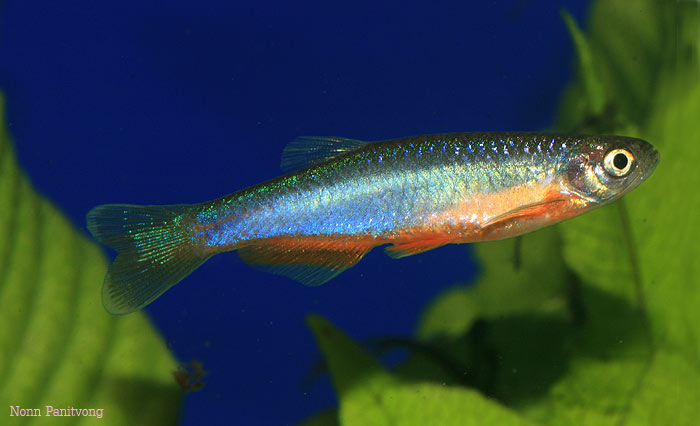
Brachydanio roseaRosy 'Danio'
Fang & Kottelat, 2000
Max length55mm SL2.2in SLTank90 × 30cm36 × 12inTemp18–25°C64–77°FpH6.0–7.5B. rosea is a relatively recent addition to the aquarium trade but has proved very popular since it's colourful, hardy and usually quite cheap making it ideal for beginners. It's sometimes sold as 'purple passion danio'. It's very similar to B. albolineata sensu stricto but differs in several characters, notably the relatively slimmer body, shorter rostral barbels and lack of...
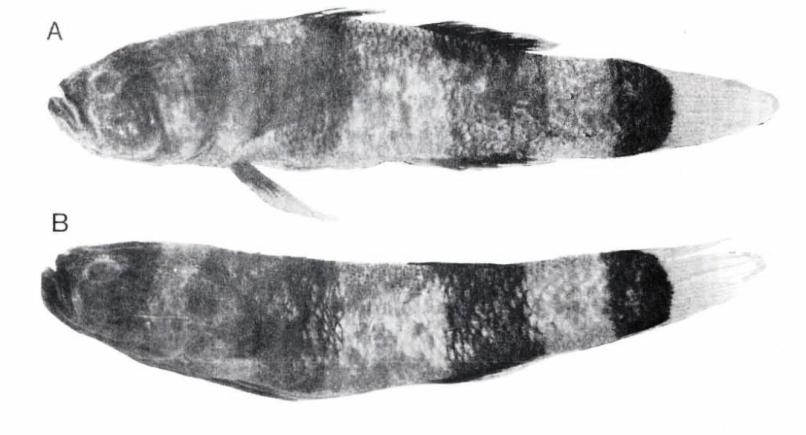
Brachygobius xanthozonus
Bleeker, 1849
Max length38mm SL1.5in SLTanknot recordedTempnot recordedpHnot recordedB. xanthozonus can be considered something of an enigma since its name has been widely misapplied in aquarium literature for decades, when in reality it's probably never been exported for the ornamental trade. The majority of fish seen labelled as such are either B. doriae or B. sabanus, themselves often misidentified.
Campylomormyrus tamanduaWorm-Jawed Mormyrid
authority not recorded
Max length400mm SL16in SLTank180 × 60cm72 × 24inTemp23–28°C73–82°FpH5.0–7.0C. tamandua is quite a rare fish in the hobby, but is imported occasionally. It's not a good beginner's fish as it requires pristine soft, acidic water conditions, will generally not feed on standard foods and attains a very respectable adult size. It's also sensitive to many aquarium medications. It can sometimes be found as a contaminant among imports of the much more common Elephant Fish, Gnathonemus petersii. Unlike this species, C. tamandua has both upper and lower jaws exten...
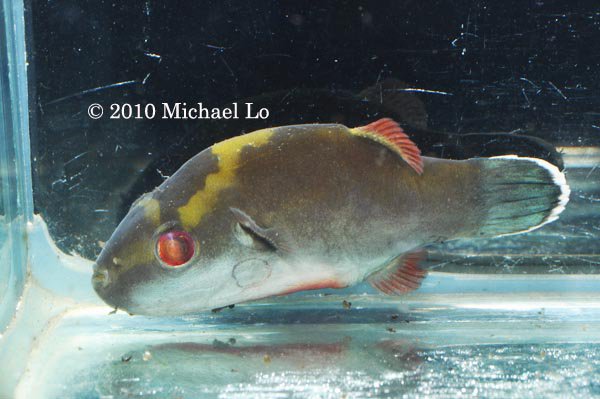
Carinotetraodon borneensis
Regan, 1903
Max length45mm SL1.8in SLTank60 × 30cm24 × 12inTemp20–28°C68–82°FpH6.0–7.5This species is relatively uncommon in the aquarium hobby but is available on occasion, sometimes mixed in among shipments of the congener C. salivator. These two can be told apart by the fact that C. salivator possesses a series of distinct dark bars on the head and body in both sexes, a colour pattern unique within the genus. It is also similar t...
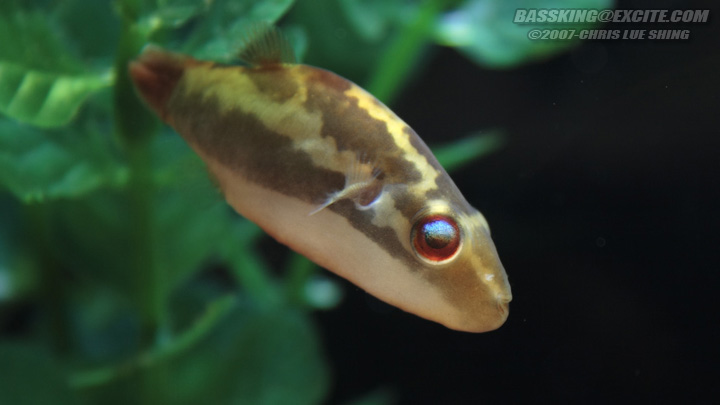
Carinotetraodon irrubescoRed-tailed Redeye Puffer
Tan, 1999
Max length45mm SL1.8in SLTank60 × 30cm24 × 12inTemp20–28°C68–82°FpH6.0–7.5This species is uncommon in the aquarium hobby. It is similar to the congeners C. borneensis and C. lorteti but can be told apart by males possessing a red (vs. bluish to greyish with black and white distal bands in C. lorteti) caudal-fin and lacking (vs. possessing) a black blotch at the base of the dorsal-fin.
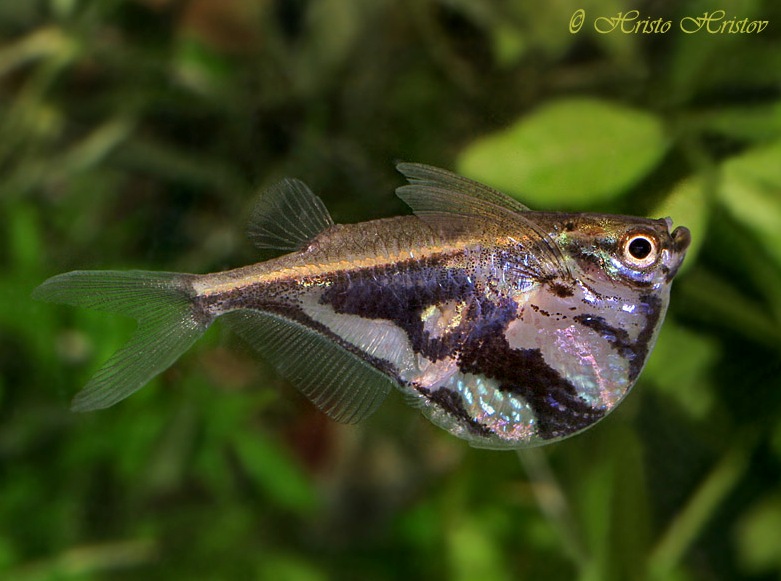
Carnegiella strigataMarbled Hatchetfish
Günther, 1864
Max length35mm SL1.4in SLTank75 × 30cm30 × 12inTemp20–28°C68–82°FpH4.0–7.0C. strigata is an enduringly popular species in the aquarium hobby but is not bred on a commercial basis with all fish offered for sale collected in the wild. It can be told apart from other members of the genus by its larger adult size and dark, marbled colour pattern appearing as a series of dark and light stripes running diagonally across the body below the lateral line. This colour pattern is variable and popul...
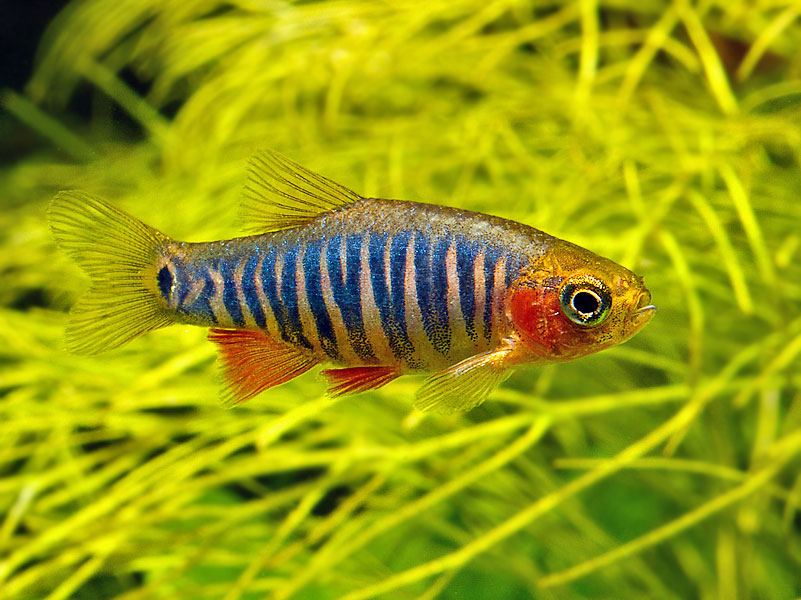
Celestichthys erythromicron
Annandale, 1918
Max length20mm SL0.8in SLTank60 × 30cm24 × 12inTemp20–24°C68–75°FpH7.0–8.0This species was formerly included in the genus Microrasbora although it's long-been considered a danionin by certain authors, e.g., Kottelat and Witte (1999) and was placed within the genus Danio for a period. In the aquarium trade it's marketed under various names including 'emerald dwarf danio', 'thick band purple zebra danio' and 'cross-banded dwarf rasbora'.
Chalceus macrolepidotusPink-tailed Chalceus
authority not recorded
Max length250mm SL10in SLTank120 × 45cm48 × 18inTemp23–28°C73–82°FpH6.0–7.5This species can look quite stunning when cared for properly. It can sometimes be a little delicate when initially imported, as it has very large scales which tend to fall off during transport. Once acclimatised, it usually proves fairly hardy. There are reports of aquarium specimens surviving for over fifteen years in well-maintained conditions....
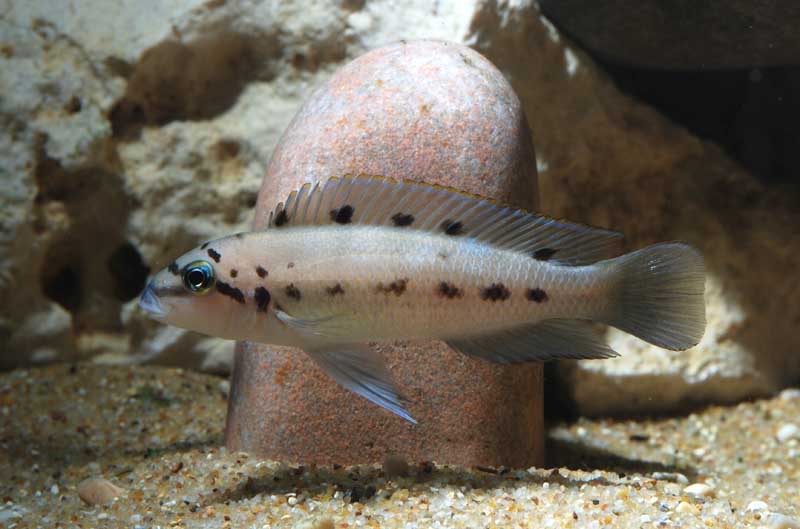
Chalinochromis sp. 'ndobhoi'
authority not recorded
Max length120mm SL5in SLTank120 × 45cm48 × 18inTemp24–28°C75–82°FpH8.0–9.0This undescribed species is also traded as C. sp. 'ndoboi' or 'ndobnoi', and despite its lack of official recognition it's the most commonly-encountered member of the genus in the aquarium trade at time of writing. It can be easily-distinguished from the congeners C. brichardi and C. popelini by its adult body patterning which comprises two or three series of irregular, dark, laterally-orientated blotches, the upper of which is often contained entirely within the dorsal ...