Results for “character”
Type a name: scientific, common, or one a species used to go by. Or narrow the catalogue with the filters.
Filters
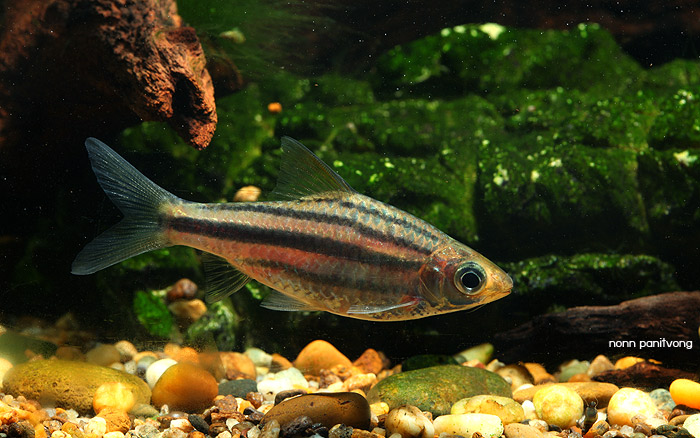
Desmopuntius johorensisStriped Barb
Duncker, 1904
Max length100mm SL3.9in SLTank120 × 45cm48 × 18inTemp20–25°C68–77°FpH5.0–7.0D. johorensis can be distinguished by the following combination of characters: 5-6 dark, lateral stripes on body in specimens larger than 40 mm; stripes immediately above and below the central stripe (stripes '+1' and '-1', respectively) located on scale rows +2 and -2, not touching dorsal and ventral midlines (except in some small specimens from Peninsular Malaysia); stripes broad, typically between 0.5-1 scale rows deep...
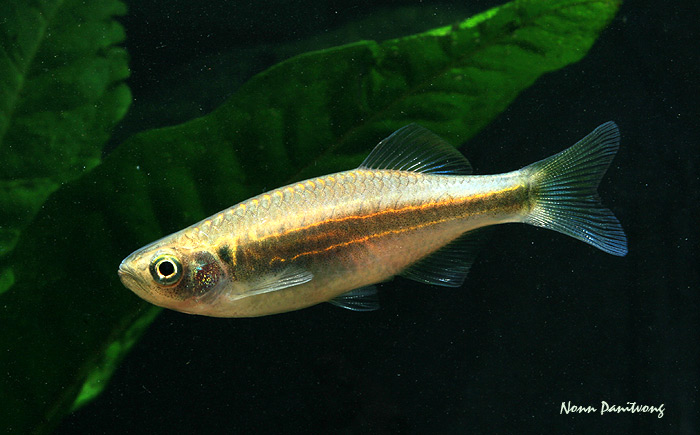
Devario acrostomus
Fang & Kottelat, 1999
Max length80mm SL3.1in SLTank120 × 45cm48 × 18inTemp23–26°C73–79°FpH6.0–7.0The type series was collected during the dry season from localities with varying gradient both within the Nam Leuk mainstream and smaller tributaries. In the tributaries the fish were found congregating in pools some of which were isolated on steep slopes. All habitats above Tad Leuk falls were characterised by clear to very clear water under forest cover while below the falls they were dominated by exposed basalt slabs with some underground water channels.
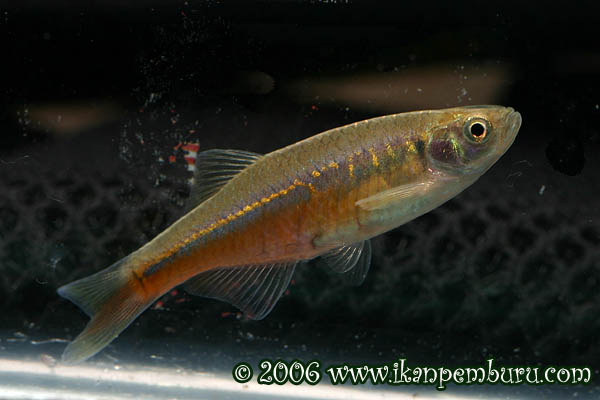
Devario chrysotaeniatus
Chu, 1981
Max length75mm SL3.0in SLTank120 × 30cm48 × 12inTemp23–26°C73–79°FpH6.0–7.0This species is poorly known and first appeared in the hobby during 2005 but has rarely been seen since, probably because its natural waters lie outside the range of most commercial collectors. It can be distinguished by a combination of characters including: lateral line complete; infraorbital process absent; two pairs of short barbels; 8-9 branched dorsal fin rays; 12-13 branched anal fin rays; P stripe originating above pelvic fin and extending to en...
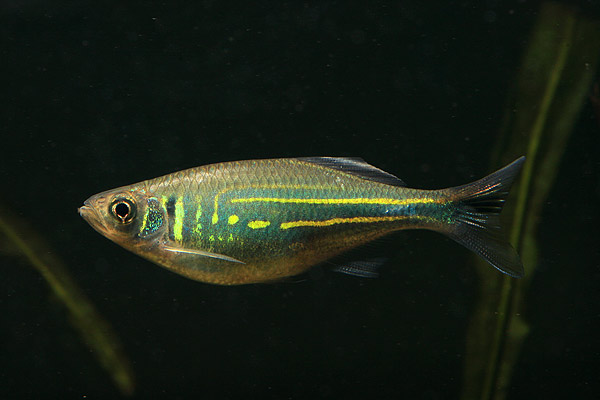
Devario malabaricusGiant 'Danio'
Jerdon, 1849
Max length80mm SL3.1in SLTank120 × 45cm48 × 18inTemp18–25°C64–77°FpH6.0–8.0This species is frequently confused with the congener D. aequipinnatus auct. but their identitities are in a state of confusion, particularly that of the latter. There are however a handful of characters which separate these two nominal species from one another. D. malabaricus possesses a moderately deep body, 35-38 scales in the lateral se...
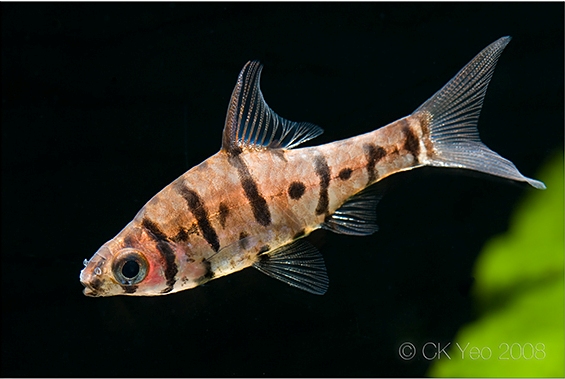
Eirmotus insignis
Tan & Kottelat, 2008
Max length36mm SL1.4in SLTank60 × 30cm24 × 12inTemp20–26°C68–79°FpH5.0–7.0Typically inhabits slow-moving, shallow, shady rainforest streams and swamps with dense submerged and marginal vegetation. The conditions are often rather turbid and the substrate composed of mud or fallen leaves, twigs and branches. Such environments characteristically contain soft, weakly acidic water and are often dimly-lit due to the rainforest canopy above. The fish are found sheltering among overhanging tree roots and aquatic vegetation.
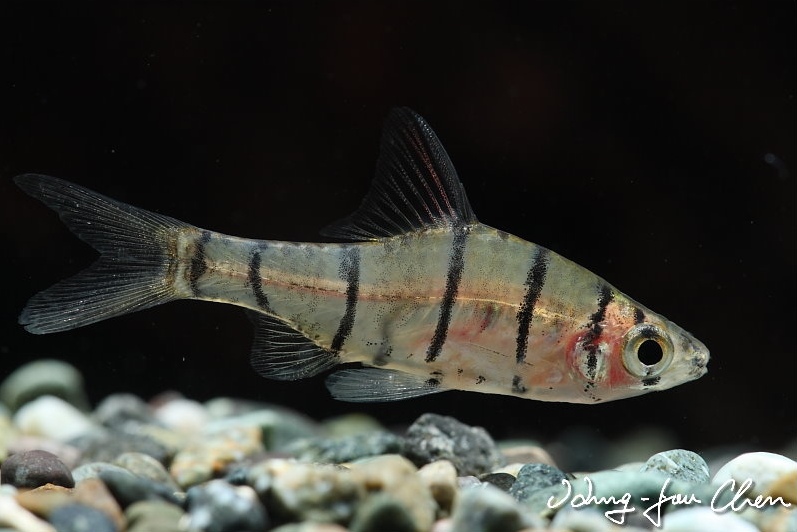
Eirmotus octozona
Schultz, 1959
Max length36mm SL1.4in SLTank60 × 30cm24 × 12inTemp22–26°C72–79°FpH5.0–7.0E. octozona can be told apart from congeners by the following combination of characters: bar 1 present; presence of a large and distinct black mark anterior to anus, visible in lateral and ventral views; simple dorsal-fin rays black, sometimes extending onto first branched ray; other rays hyaline or with diffused chromatophores on last dorsal-fin ray, adjacent to upper extremity of bar 6; 25-31 serrae on last simple dorsal-fin ray; uppermost ray of pectoral-fin with faint black margin; width of bar 5 equal to 1-1½ lat...
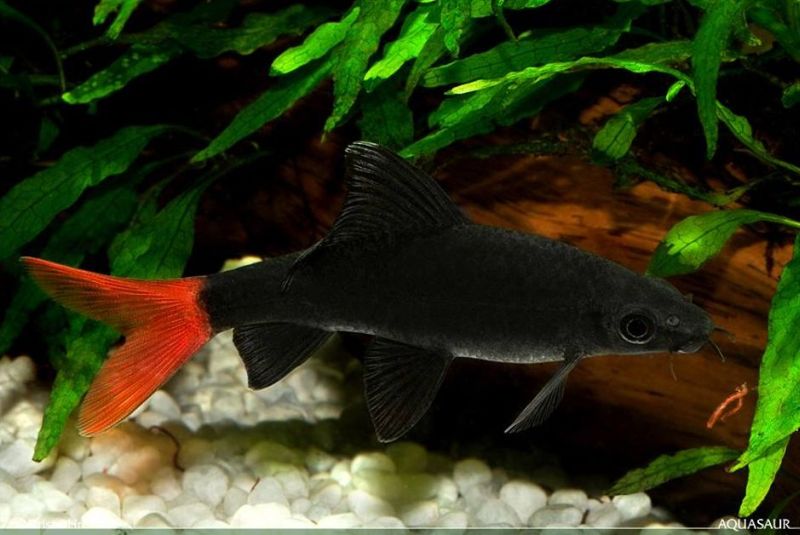
Epalzeorhynchos bicolorRed-Tailed Black Shark
Smith, 1931
Max length125mm SL5in SLTank120 × 45cm48 × 18inTemp20–26°C68–79°FpH6.0–8.0Most members of Epalzeorhynchos were formerly regarded as Labeo spp. and are thus referred to as such in older literature. According to Rainboth (1996) they're characterised by absence of a dorsal spine, possession of 10-13 branched dorsal fin rays, a thin membrane connecting the upper and lower lips and rigid, freely moveable rostral lobes. Epalzeorhynchos itself has undergone some quite recent changes with a handful of species hav...
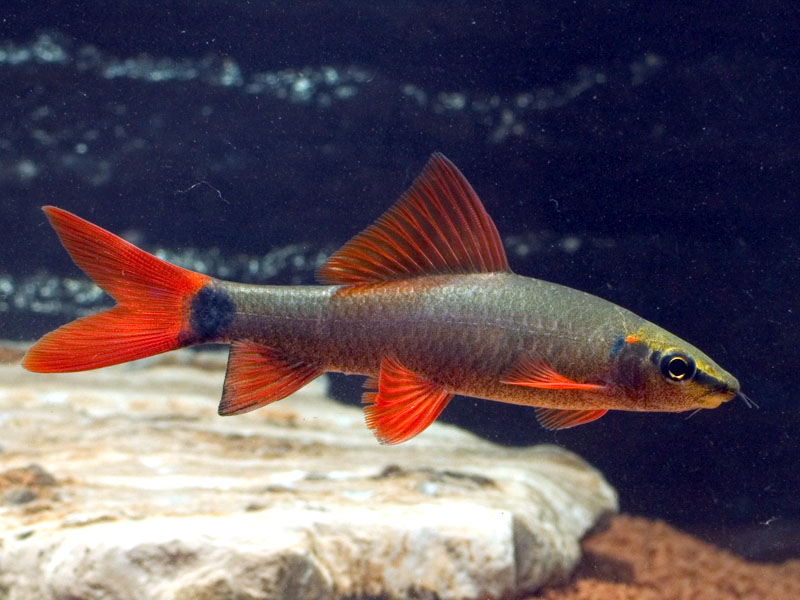
Epalzeorhynchos frenatumRainbow Shark
Fowler, 1934
Max length150mm SL6in SLTank120 × 45cm48 × 18inTemp20–26°C68–79°FpH6.5–8.0The ornamental albino variant is widely-available and has become extremely popular in the hobby and there is a commercially-produced anerythristic (lacking red pigment) mutation that has pale yellowish fins and has sometimes been misidentified as E. munense. Also worthy of note is that the specific name is sometimes misspelled 'frenatus'. Most members of Epalzeorhynchos were formerly regarded as Labeo spp. and are thus referred to as such in older literature. According to Rainboth (1996) they're characterised by absence of a dorsal spine...
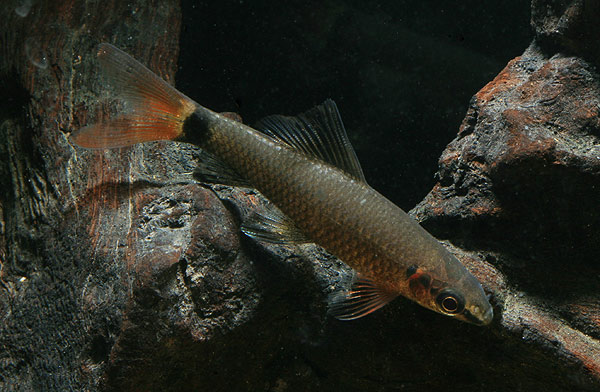
Epalzeorhynchos munense
Smith, 1934
Max length120mm SL5in SLTank120 × 45cm48 × 18inTemp20–26°C68–79°FpH6.5–7.5This species does not appear to be in the aquarium hobby at time of writing though it may have been in the past, when exports of wild Epalzeorhynchos spp. still took place. Most members of the genus were formerly regarded as Labeo spp. and are thus referred to as such in older literature. According to Rainboth (1996) they're characterised by absence of a dorsal spine, possession of 10-13 branched dorsal fin rays, a thin membrane...
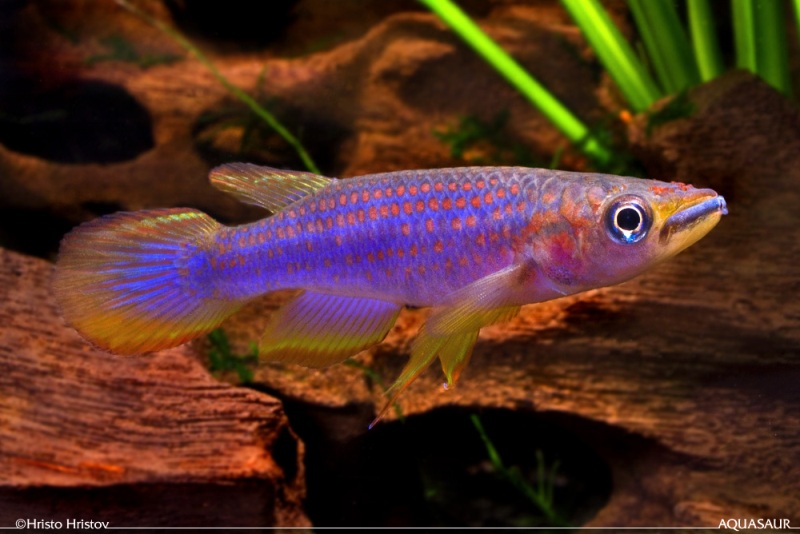
Epiplatys lamotteiRed-spotted Panchax
Daget, 1954
Max length60mm SL2.4in SLTank80 × 30cm31 × 12inTemp18–23°C64–73°FpH5.0–7.0Following the key of Romand (1992) this species can be told apart from congeners by the following combination of characters: adult size > 40 mm SL; large, dark, transverse bars and some reddish-brown pigmentation on flanks; longitudinal bands more-or-less defined; longitudinal bands composed of small red spots; caudal-fin subquadrangular caudal fin; 11-13 anal-fin rays; 16-17 dorsal-fin rays; 7-8 anal-fin rays located anterior to dorsal-fin origin.
Erethistes maesotensis
authority not recorded
Max length40mm SL1.6in SLTank45 × 30cm18 × 12inTemp20–24°C68–75°FpH6.0–7.0This species is now considered a member of the Hara genus by many experts, but as things stand it is still officially included in Erethistes. It is, in all likelihood, a Hara, as Erethistes is characterised by divergent denticles on the pectoral fins, whereas Hara possess outwardly pointing denticles. E. maesotensis has these outwardly pointing denticles. It's quite rare in the trade, but makes an interesting addition to an Asian stream community tank if you can get hold of some....
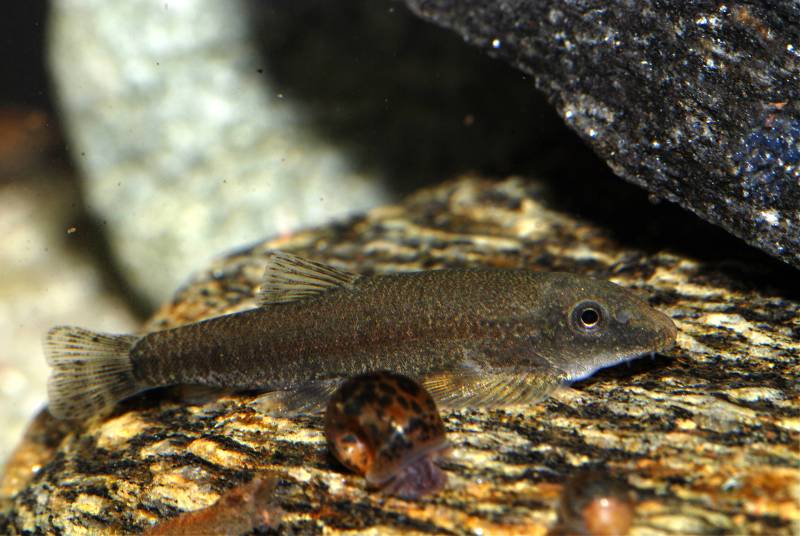
Erromyzon sp. 'ER01'
authority not recorded
Max length45mm SL1.8in SLTank60 × 30cm24 × 12inTemp18–24°C64–75°FpH6.5–8.0Erromyzon spp. are obligate dwellers of shallow, fast-flowing, highly-oxygenated headwaters/minor tributaries characterised by stretches of riffles and runs broken up by pools or cascades in some cases. Substrates are normally composed of smaller rocks, sand and gravel with jumbles of boulders, and while riparian/stream-side vegetation and patches of submerged leaf litter are common features aquatic plants aren't usually present.
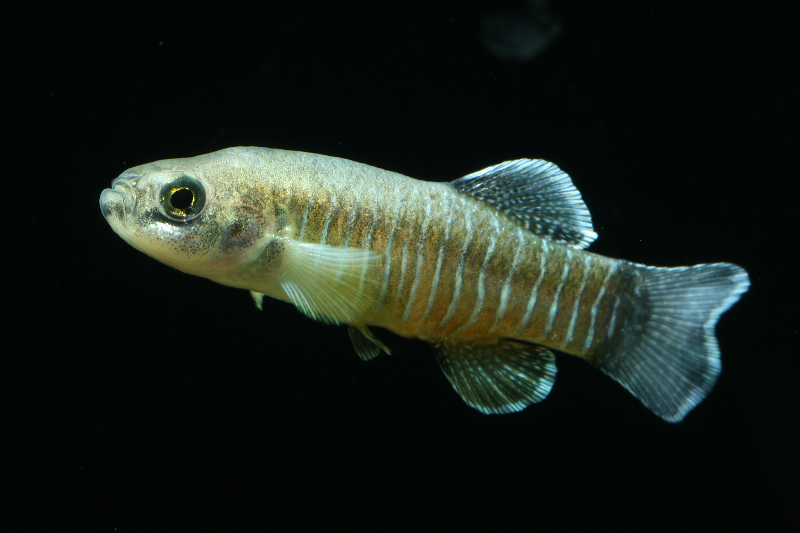
Esmaeilius arakensisArak Toothcarp
Teimori, Esmaeili, Gholami, Zarei, & Reichenbacher, 2012
Max length35mm SL1.4in SLTank120 × 30cm48 × 12inTemp8–32°C46–90°FpH7.0–8.5This species was available in the aquarium hobby for a number of years prior to publication of the official description and was generally referred to as A. sp. 'Namak' or A. sp. 'Namak River'. It can be distinguished from other members of the genus by the following combination of characters: 10–12 anal-fin rays; 28–32 lateral line scales, 10–13 caudal peduncle scales; 8–10 gill rakers; 12–19, commonly 1...
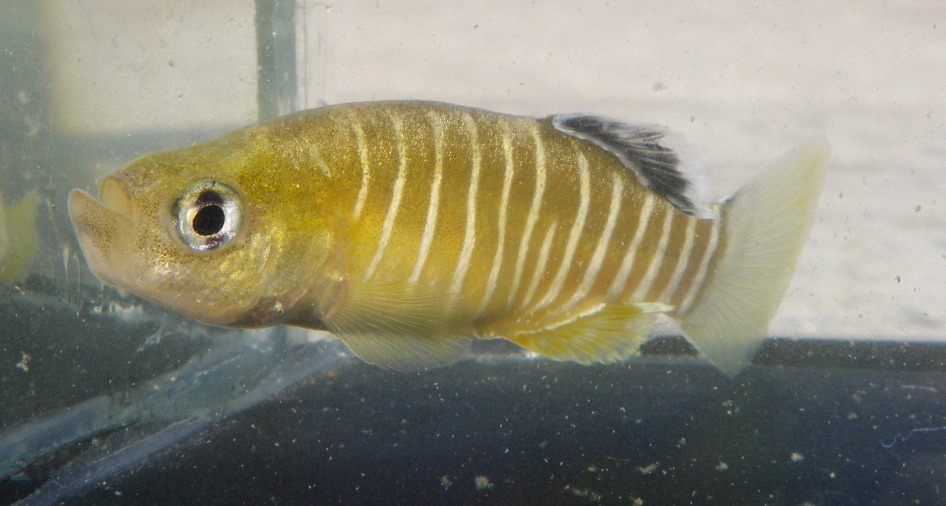
Esmaeilius vladykoviZagros Toothcarp
Coad, 1988
Max length60mm SL2.4in SLTank120 × 30cm48 × 12inTemp12–32°C54–90°FpH6.2–8.5The Iranian Plateau is home to a diverse group of Aphanius with four species already described and several awaiting description. These are among the most ancient in the genus having divereged away from a common ancestor around 20 - 24 million years ago. Among them this species is most closely related to A. sophiae from the Kor River system but can be distinguished by differences in patterning. Males of A. sophiae lack the characteristic darkcolouration seen in A. vladykovi and females possess a ...
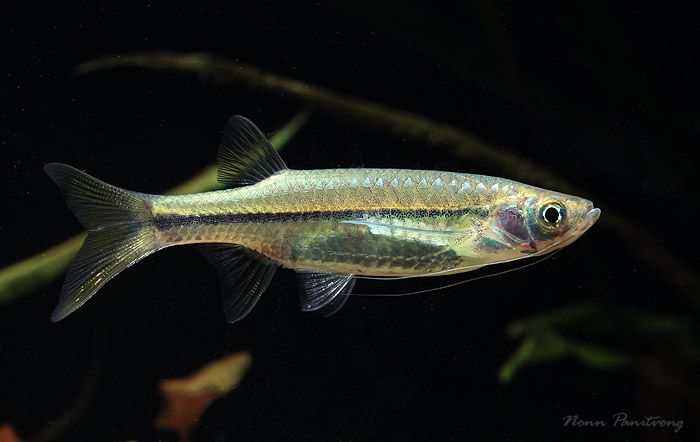
Esomus metallicusStriped Flying Barb
Ahl, 1923
Max length75mm SL3.0in SLTank120 × 30cm48 × 12inTemp20–26°C68–79°FpH6.0–7.0There currently exist a dozen described Esomus spp. alhough few are seen in the aquarium trade and none are especially popular. Most are commonplace in their native countries and also quite plainly-patterned so generally overlooked by collectors. Their most common use in some areas is actually as a feeder fish in the aquaculture of larger species. They're characterised by greatly-enlarged pectoral fins and two pairs of barbels, of which the maxillary pair are extremely long and usually reach the pectoral fins.
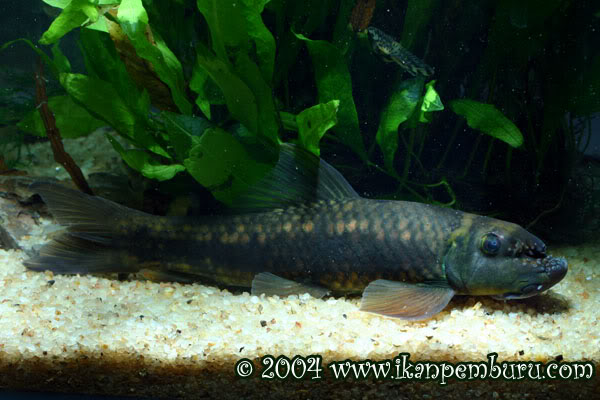
Garra bispinosa
Zhang, 2005
Max length130mm SL5in SLTanknot recordedTempnot recordedpHnot recordedG. bispinosa can be distinguished from all other congeners in Southeast Asia and China by the following combination of characters: a conspicuous, quadrate, anteriorly-directed proboscis orientated ventrally against the snout and anteriorly adorned with a single, large, uniscupid, acanthoid tubercle on the distal tip of each lobe; snout with a deep groove across its tip to form a transverse lobe; 34-35 lateral...
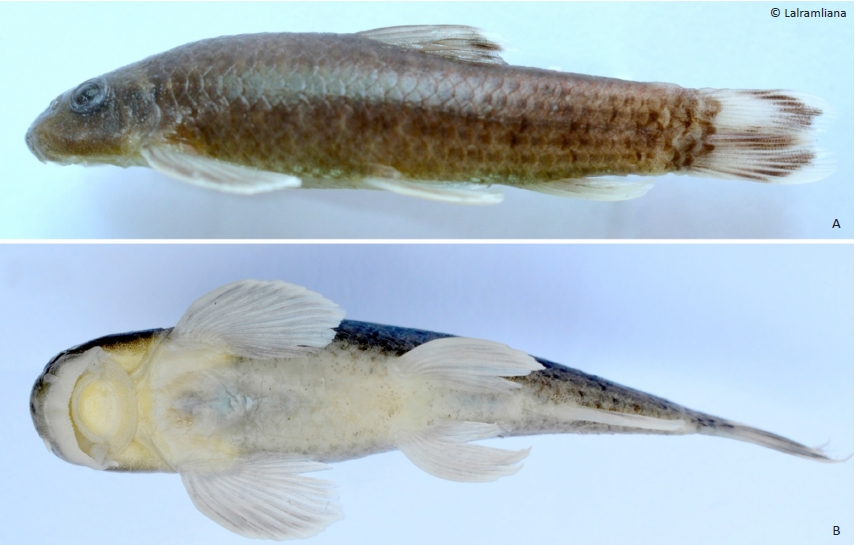
Garra dampaensis
Laironunga, Lainuntluanga & Lairamliana, 2013
Max length55mm SL2.2in SLTanknot recordedTempnot recordedpHnot recordedThis species can be told apart from Indian congeners by the following combination of characters: no transverse groove or proboscis on the snout; tip of dorsal fin falcate; long axillary scale present at the base of pelvic fin, reaching base of last pelvic fin ray; 27–29 lateral-line scales, 10–11 regularly arranged predorsal scales; W-shaped black band across middle of caudal fin; presence of scales on the abdomen.
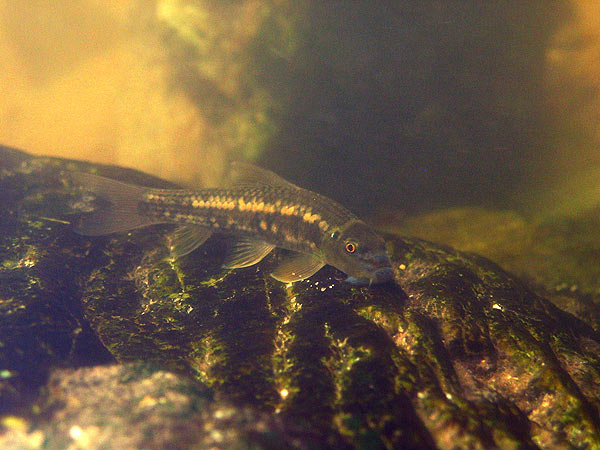
Garra fuliginosa
Fowler, 1934
Max length150mm SL6in SLTank150 × 45cm60 × 18inTemp20–27°C68–81°FpHnot recordedFollowing Rainboth (1996) distinguishing characters for G. fuliginosa include: presence of rostral and maxillary barbels; a well-developed, trilobed rostrum; possession of 10 gill rakers on the lower portion of the first gill arch; no mid-lateral body stripe; 32-34 lateral line scales; body dark with random lighter scales in places. Kottelat (2001) states that the species can be told apart from other Garra occurring in Laos by a combination of: snout with a secondary rostrum, proboscis about twice as wide...
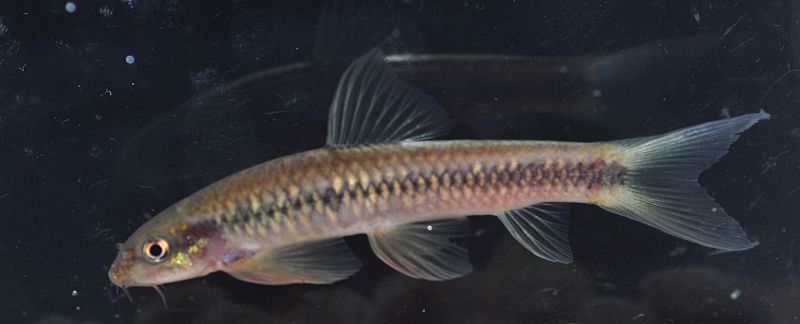
Garra hughiCardamom Garra
Silas, 1955
Max length155mm SL6in SLTanknot recordedTempnot recordedpHnot recordedG. hughi is occasionally available in the ornamental trade and may be labelled 'chocolate algae eater'. The original diagnosis of this species by Silas states that it can be identified by the following combination of characters: elongate body form; broad head...
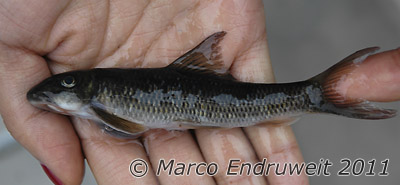
Garra imberba
Garman, 1912
Max length120mm SL5in SLTanknot recordedTempnot recordedpHnot recordedThis species can be distinguished from congeners inhabiting the Red River basin in Yunnan province, China, by the following combination of characters: no barbels; 46-52 lateral line scales; 16 circumpeduncular scales; pharyngeal teeth in 3 rows, 2.4.5-5.4.2; snout rounded, no secondary rostrum, no longitudinal...