Results for “sp.”
Type a name: scientific, common, or one a species used to go by. Or narrow the catalogue with the filters.
Filters
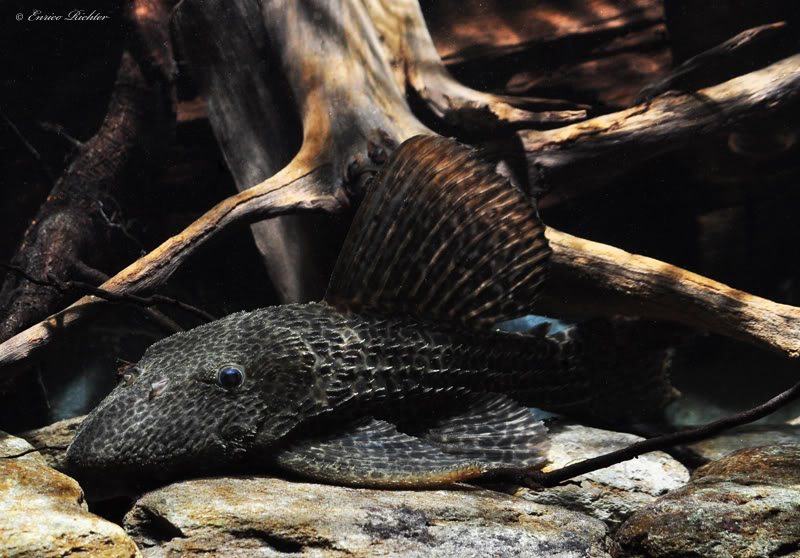
Megalancistrus sp.L234
authority not recorded
Max length600mm SL24in SLTanknot recordedTemp20–30°C68–86°FpH6.0–7.5L234 was previously applied to M. paranus, which has also has the L-number L113 assigned to it. However M. paranus is native to the Paraná, Paraguay and Uruguay drainages, whereas L234 is collected in the rio São Francisco so appears to represent an unidentified species. M. barrae and M. sp. 'LDA097' are also exported from the São Francisco system.
Melanotaenia splendida inornataCheckered Rainbowfish
authority not recorded
Max length150mm SL6in SLTank120 × 30cm48 × 12inTemp26–33°C79–91°FpH6.5–8.0There are currently 4 described subspecies of Melanotaenia splendida. The principle differences are generally in colour, pattern and fin counts, although even these vary depending on the locality of the fish. The different forms and subspecies should not be mixed in the aquarium, as they may hybridise. Adult specimens are rarely seen for sale, and it's the much drabber juvenile fish that are almost always offered in dealers tanks. However, exercise some patience (even on a good diet, full c...
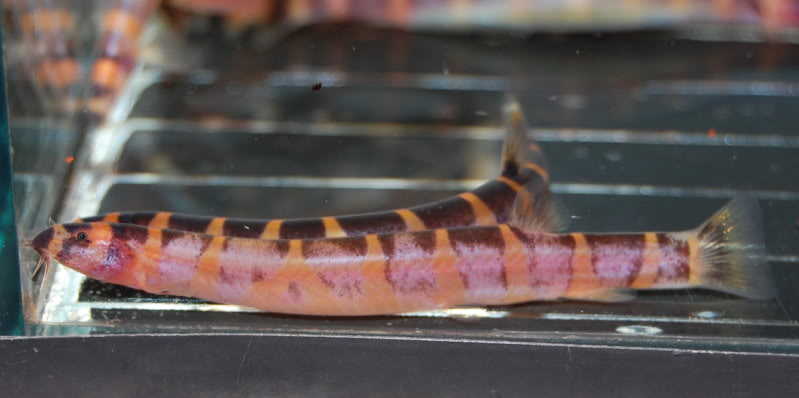
Pangio sp. 'PAN01'
authority not recorded
Max length100mm SL3.9in SLTank75 × 30cm30 × 12inTemp21–26°C70–79°FpH3.5–7.0The fish in our images above were imported together don't correspond to any of the described species of Pangio though they can be assigned to the P. kuhlii species group with a degree of certainty. Unfortunately the live appearance of P. kuhlii itself is a mystery to aquarists since it's currently considered endemic to Java and may have never been seen in the hobby.
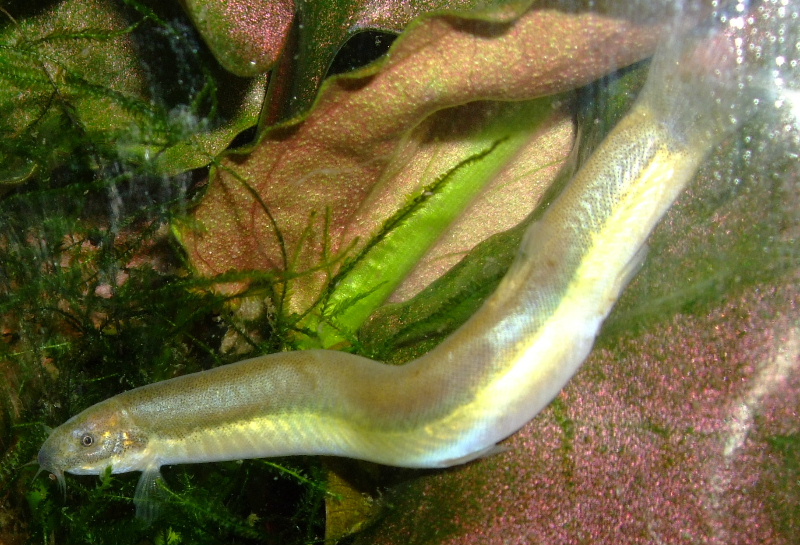
Pangio sp. 'PAN02'
authority not recorded
Max length50mm SL2.0in SLTank60 × 30cm24 × 12inTemp21–26°C70–79°FpH3.5–7.0The fish in our images don't correspond to any of the described members of the genus but can be assigned to the P. oblonga species group with a degree of certainty. It's apparently exported as a contaminant among shipments of a uniformly brown-coloured fish with unpublished genetic analyses suggesting the two might be variants of the same species (J. Bohlen, pers. comm.). Among congeners it may be related to P. alcoides Kottela...
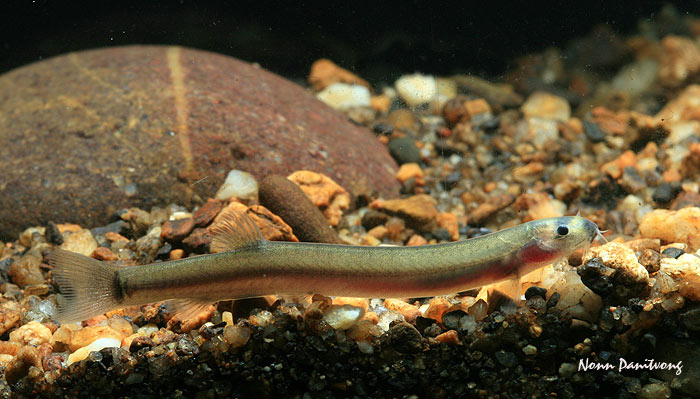
Pangio sp. 'PAN04'Panda Loach
authority not recorded
Max length80mm SL3.1in SLTank60 × 30cm24 × 12inTemp21–26°C70–79°FpH3.5–7.0This unidentified species has been traded since the mid-00s and appears to be a member of the P. khulii-oblonga species group as per Bohlen et al. (2011). There are two similar-looking forms; one has a darker body, dark pigmentation in the pectoral fins and barbels and a blue sheen on the head, while the...
Pimelodus maculatusSpotted Pim
authority not recorded
Matched on the common name Spotted Pim
Max length180mm SL7in SLTank120 × 60cm48 × 24inTemp20–24°C68–75°FpH6.4–7.4There are currently 32 genera and over 80 species included in the family Pimelodidae (including Pimelodus), making it the second largest and one of the most diverse amongst catfish. Most experts agree however, that a full systematic revision of the family is needed, as little information about the phylogenetic (evolutionary relatedness) relationships between the various genera exists. Taxonomy information at the species level is also basic at best. It's therefore likely that at least some o...
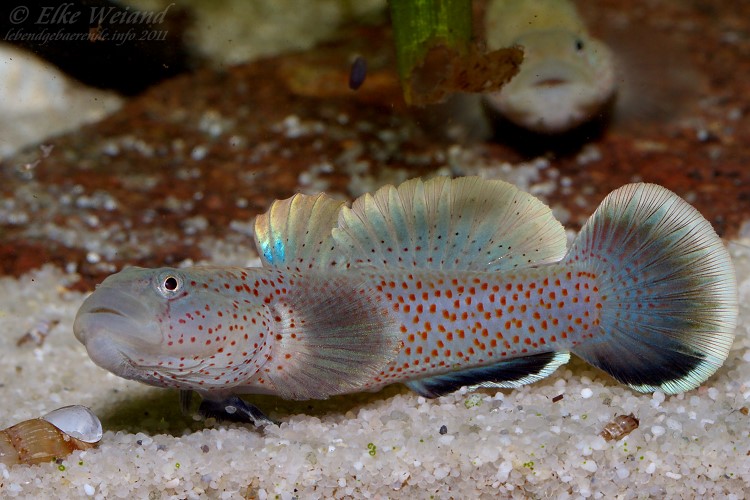
Rhinogobius rubromaculatusRed-spotted Goby
Lee & Chang, 1996
Matched on the common name Red-spotted Goby
Max length55mm SL2.2in SLTank60 × 30cm24 × 12inTemp18–24°C64–75°FpH6.0–8.0This species occurs in a couple of colour forms with fish from northern and central Taiwan possessing a greyish base body colour and those from the Linbian river, southern Taiwan having a dark marking in the anterior portion of the first dorsal fin and larger, more intense red spots on the body. The latter form is also smaller in size, lays smaller eggs, does not exhibit extreme sexual dimorphism and has been refe...
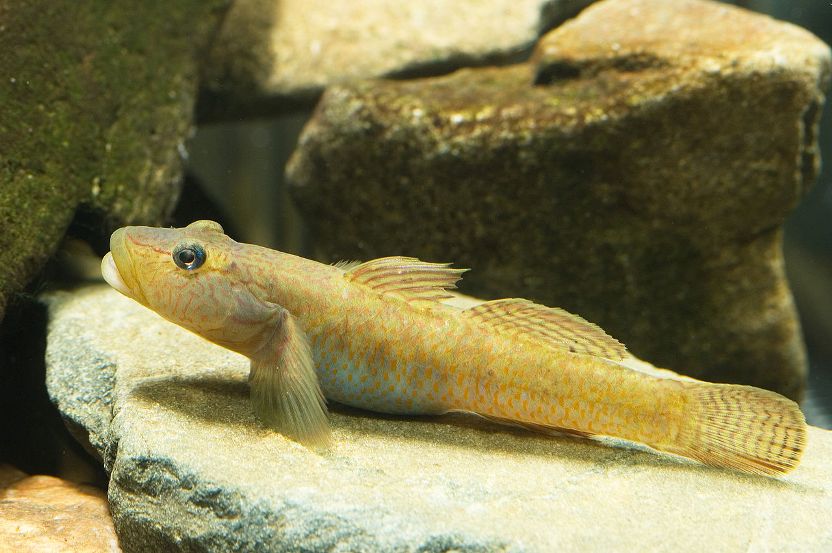
Rhinogobius sp. 'CB'
authority not recorded
Max lengthnot recordedTanknot recordedTempnot recordedpHnot recordedThere are a number of unidentified species within the grouping of which several are referred to using a two-letter code based on their respective colour pattern for ease of reference, with 'CB' shorthand for 'cross band', for example. R. sp. 'CB' is the commonest member of the grouping in Japan but has not yet entered the international aquarium trade as far as we know.
Scleropages leichardtiSpotted Australian Arowana
authority not recorded
Matched on the common name Spotted Australian Arowana
Max length900mm SL35in SLTank180 × 60cm72 × 24inTempnot recordedpH6.8–7.5Although S. leichardtii superficially resembles its Asian cousins, it is not considered as desirable an aquarium inhabitant, nor is it classed as being at risk in nature. It can be easily distinguished from the asian species by its much smaller scale size, greater lateral scale count (32-35 as opposed to 21-25 in the asian aros) and duller patterning. It differs from its Australian relative S. jardinii by its spotted scales, forward-pointing barbels, lack of sloping head and unpatterned gill cov...
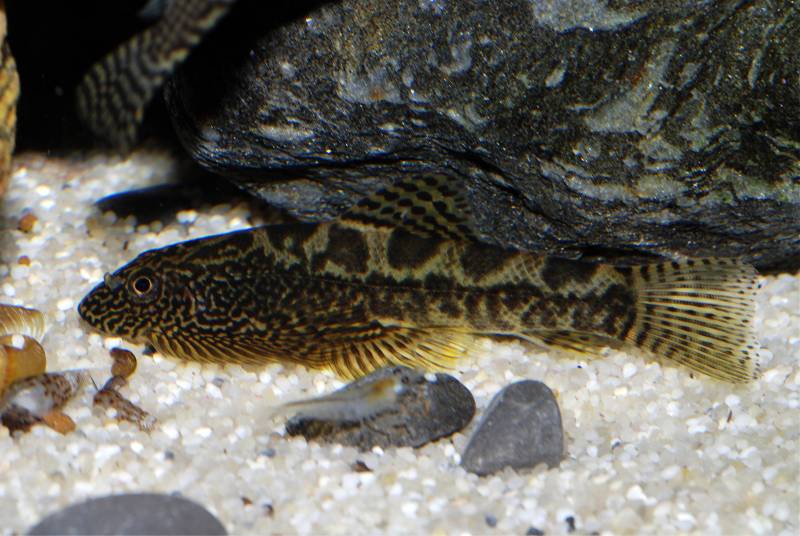
Sewellia sp. 'SEW03'
authority not recorded
Max length60mm SL2.4in SLTank75 × 30cm30 × 12inTemp20–24°C68–75°FpH6.0–7.5This fish first became available in early 2009 and was initially identified as S. breviventralis (Freyhof and Serov, 2000). However it cannot be that species because there is no discernible gap between pelvic and anal fins, which also discounts the possibility of it being S. elongata (Roberts, 1998). It therefore remains unidentified and is often imported in mixed batches with S. sp. 'SEW02', which it also resembles closely.
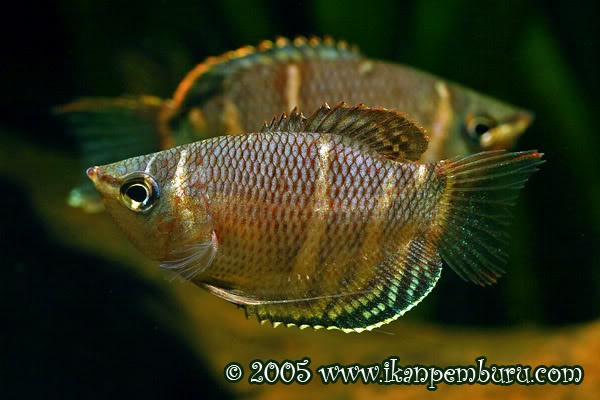
Sphaerichthys osphromenoidesChocolate Gourami
Canestrini, 1860
Max length50mm SL2.0in SLTank60 × 30cm24 × 12inTemp26–31°C79–88°FpH4.0–6.5The genus Sphaerichthys currently comprises four species with S. osphromenoides by far the best known in the hobby. It's easily distinguishable from the congeners S. vaillanti and S. acrostoma since both exhibit a notably more elongate head and body profile, reverse sexual dimorphism (i.e. females are the more colourful/strongly-patterened), and are paternal mouthbrooders.
Synodontis acanthomiasBlack-spotted Synodontis
authority not recorded
Matched on the common name Black-spotted Synodontis
Max length300mm SL12in SLTank120 × 60cm48 × 24inTemp22–24°C72–75°FpH6.5–8.0This is one of the species of Synodontis seen less frequently in the trade and it ranks alongside S. schall as one of the more aggressive members of the genus. It is very hardy however and makes a good tankmate for large aggressive cichlid species. One unique characteristic of S. acanthomias is that the humeral process (the bony extension just above the pectoral fins) is long and tapered with a curved end....
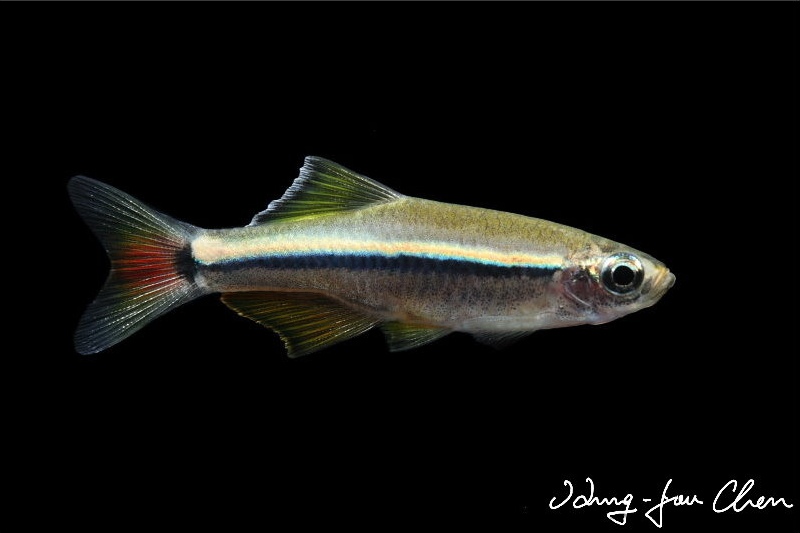
Tanichthys sp. 'Vietnam'
authority not recorded
Max length30mm SL1.2in SLTank45 × 30cm18 × 12inTemp18–25°C64–77°FpH6.0–7.5This fish was first collected in 2009 and limited numbers have been available in the aquarium trade. Though additional exports may be unlikely it's proven easy to breed in captivity and there's a fair chance it will become established in the hobby. It's sold under several names including T. sp. 'lemon' or 'yellow white cloud', and has also been misidentified as the congener T. thacbaensis, a valid species occurring much further north in Vietnam.
Trichopodus trichopterusThree-spot Gourami
authority not recorded
Matched on the common name Three-spot Gourami
Max length150mm SL6in SLTank90 × 30cm36 × 12inTemp24–30°C75–86°FpH5.5–8.5This species is available in many different colour forms and varieties, all of which have been selectively bred for the aquarium trade. These are seen much more often than the natural form, which is the blue-grey three spotted fish. They include gold, opaline, cosby, marbled and silver forms. T. trichopterus is one of the hardiest fish commonly available in the trade and can adapt to many different water conditions. However it is recommended to the beginner with reservations regarding it's ...
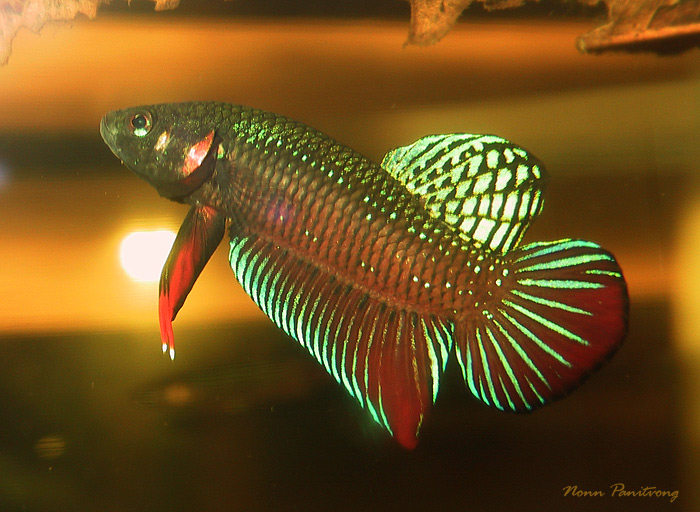
Betta splendensSiamese Fighting Fish
Regan, 1910
Matched on Betta splendens var. abbreviata, a name it was formerly known by
Max length70mm SL2.8in SLTank45 × 30cm18 × 12inTemp22–30°C72–86°FpH6.0–8.0This species' common name is derived from the tradition of keeping the fish in order to fight against each other in organised 'bouts' upon which participants and onlookers place wagers. It has been extensively line-bred for vigour, strength, and the ornamental trade, and hybridised with the congeners B. imbellis, B. smaragdina, and B. mahachaiensis.
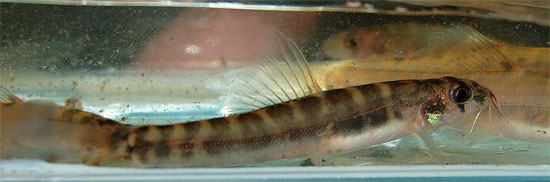
Nemacheilus spiniferus
Kottelat, 1984
Matched on Noemacheilus spiniferus, a name it was formerly known by
Max length55mm SL2.2in SLTank60 × 30cm24 × 12inTemp23–26°C73–79°FpH5.0–7.0It's a member of the N. selangoricus group of species within the genus, an assemblage first recognised by Hadiaty and Kottelat (2009) and characterised by possession of two rows of horizontally-arran...
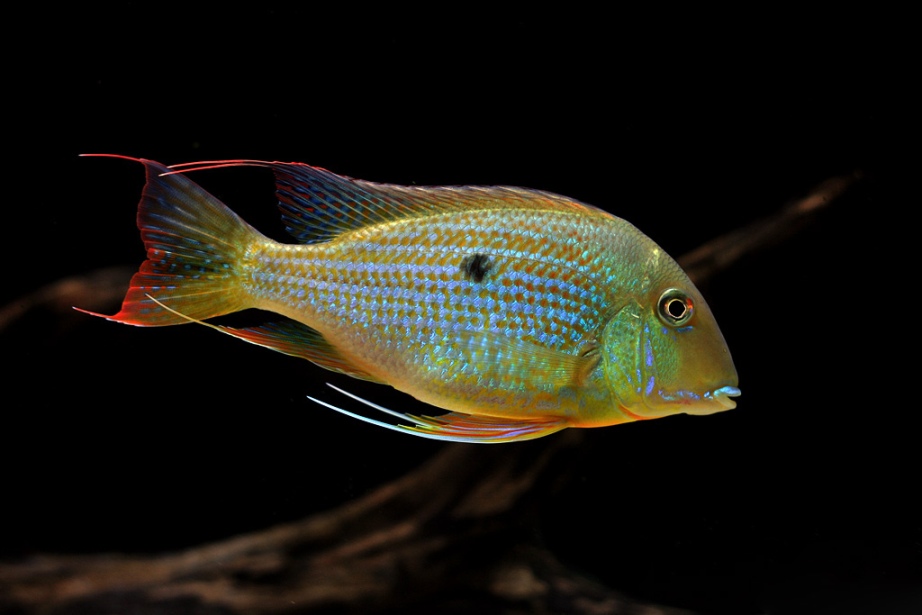
Geophagus neambi
Lucinda, Lucena & Assis, 2010
Max length200mm SL8in SLTank180 × 60cm72 × 24inTemp24–32°C75–90°FpH5.5–7.5This species was available in the hobby several years prior to being described, invariably traded as G. sp. aff. altifrons 'Tocantins', G. sp. 'Tocantins' or G. sp. 'rio Areoes'. The latter of these names refers to an Indian reserve named 'Areões' in the rio Das Mortes drainage, a tributary of the Araguaia which itself drains into the Tocantins, and the aquarium specimens in our images have been identified as G. neambi by Dr. Paulo Lucinda, co-describer of the species.
Mastacembelus armatusTyre-Track Eel
authority not recorded
Max length910mm SL36in SLTank120 × 60cm48 × 24inTemp24–28°C75–82°FpH6.0–7.0The tyre track eel is also referred to as the white-spotted spiny eel. A member of the spiny eel family, which range across tropical Asia and Africa, Mastacembelus armatus is one of the more common species available to the hobby, along with the peacock eel ((Macrognathus siamensis)and the fire eel (Mastacembelus erythrotaenia). These species are all from Asia but there are some members of the family from Africa that are occasionally seen for sale. These majority of these species are from the ...
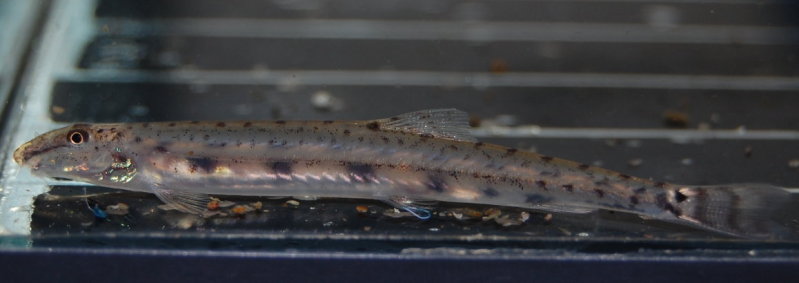
Acanthopsoides sp. 'A01'
authority not recorded
Max length65mm SL2.6in SLTank60 × 30cm24 × 12inTemp20–24°C68–75°FpH5.5–7.0Acanthopsoides spp. are most closely related to the horse-faced loaches of the genus Acantopsis with which they often co-occur in nature, and thus commonly referred to as 'dwarf horse-face loaches'.
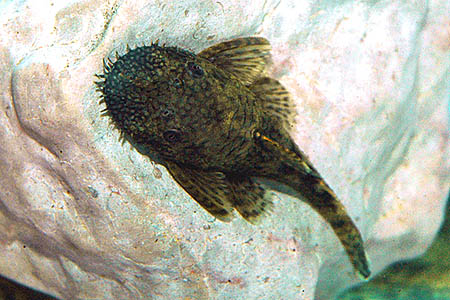
Ancistrus triradiatusHorned Bristlenose Pleco
Eigenmann, 1918
Max length120mm SL5in SLTanknot recordedTemp24–30°C75–86°FpH6.6–7.6Often confused with the common bristlenose, Ancistrus sp. (3) and some other members of the genus. This species is imported quite often, but unlike sp. (3) is almost always wild caught. So similar are some of these species that a definite id is sometimes impossible without knowing the collection locality of the fish. When buying Loricariids always check that the fish has a rounded belly and that its eyes aren't sunken, as these are classic signs of emaciation in newly imported specimens...