Results for “sp.”
Type a name: scientific, common, or one a species used to go by. Or narrow the catalogue with the filters.
Filters
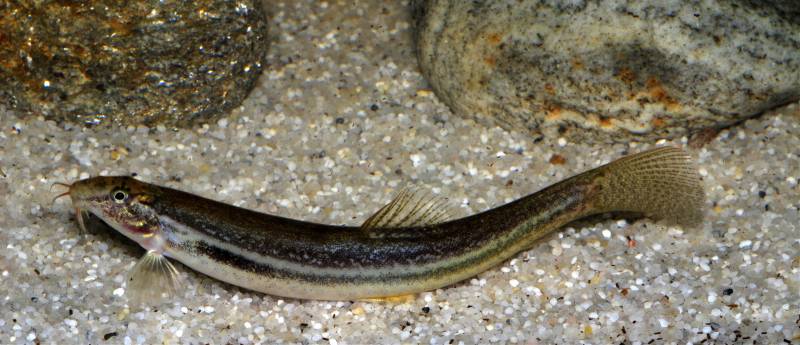
Lepidocephalichthys guntea
Hamilton, 1822
Max length150mm SL6in SLTank80 × 30cm31 × 12inTemp20–25°C68–77°FpH6.0–8.0This is one of the most frequently-traded members of the group and is an excellent choice for those new to keeping loaches. It's distinguishable from congeners by a combination of characters including: rounded/truncate caudal-fin; a scaleless patch on top of the head; relatively large adult size; flanks with spotted patterning in females and a solid...
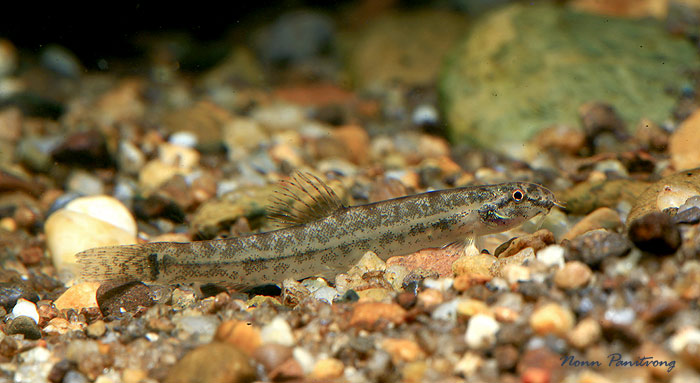
Lepidocephalichthys hasselti
Valenciennes, 1846
Max length60mm SL2.4in SLTank60 × 30cm24 × 12inTemp23–26°C73–79°FpH5.5–7.5At one locality close to Ban Na Hwai, Chiang Mai Province, Thailand L. hasselti was collected from a shallow (<0.5 m) pool in a swampy zone between forest and rice fields. The substrate was of mud, there was no aquatic vegetation and it was being used as drinking water by local animals, with the only effluent connected to a 'small creek'. Other species found there were Physoschistura pseudobrunneana, Rasbora hobelmani and Systomus cf. orphoides.
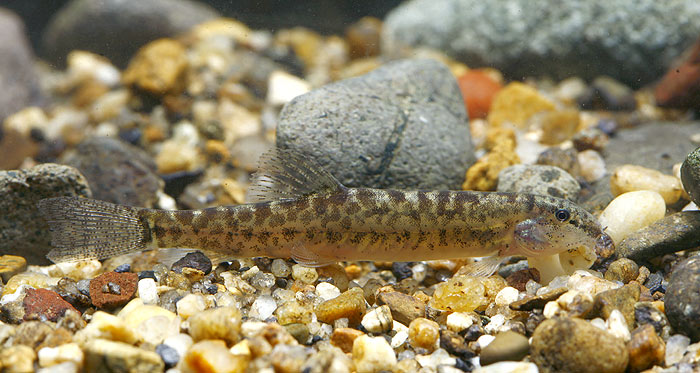
Lepidocephalichthys kranos
Havird & Page, 2010
Max length45mm SL1.8in SLTank60 × 30cm24 × 12inTemp23–26°C73–79°FpH5.5–7.5The family Cobitidae, often referred to as 'true' loaches, is widely-distributed across most of Eurasia with the Indian subcontinent, Southeast Asia and China representing particular centres of species diversity. Phylogenetic analyses by Tang et al. (2006), Šlechtová et al. (2007) and Šlechtová et a...
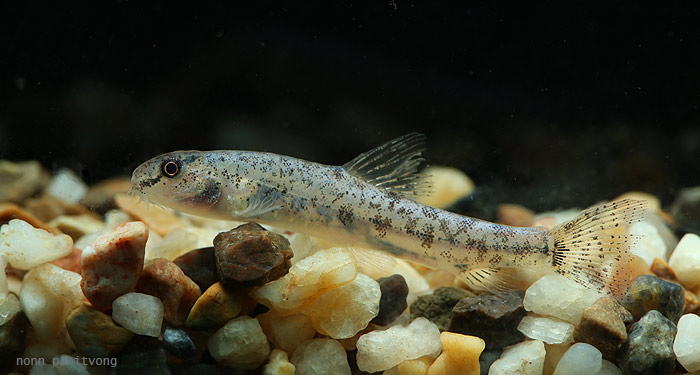
Lepidocephalichthys zeppelini
Havird & Tangjitjaroen, 2010
Max length26mm SL1.0in SLTank45 × 30cm18 × 12inTemp20–26°C68–79°FpH6.0–7.5The type locality consisted of remnant ephemeral pools in otherwise dry agricultural land, and many adults were collected from such habitats. Other species present included the congener L. hasselti plus members of Anabas, 'Puntius', Rasbora, Channa, and Hampala.
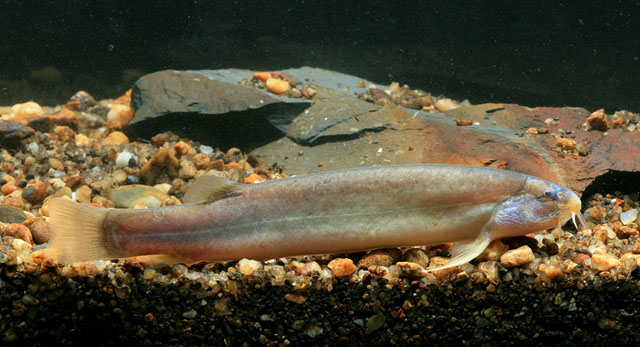
Lepidocephalus macrochir
Bleeker, 1854
Max length90mm SL3.5in SLTank75 × 30cm30 × 12inTemp22–26°C72–79°FpH5.5–7.5The distribution records for this species are somewhat confusing. It was described from the confluence of the Lamatang and Enim rivers, Palambang Province, Sumatra and has since been recorded from Thailand (Chao Phraya River), Peninsular Malaysia (Pahang River) plus the islands of Java (Solo River) and Borneo (Kapuas and Barito rivers).
Leporacanthicus joselimaiSultan Plec
authority not recorded
Max length150mm SL6in SLTank120 × 30cm48 × 12inTemp25–27°C77–81°FpH6.0–7.5Leporacanthicus species are commonly referred to as "vampire plecs". This is derived from the unique upper jaw dentition exhibited by members of this genus, unsurprisingly consisting of two large teeth or "fangs". The exact use for these is unknown, but they're probably utilised to grip prey items such as snails or other aquatic invertebrates in some way. Another feature shared by all Leporacanthicus is a small bony growth of unknown use on top of the head. This particul...
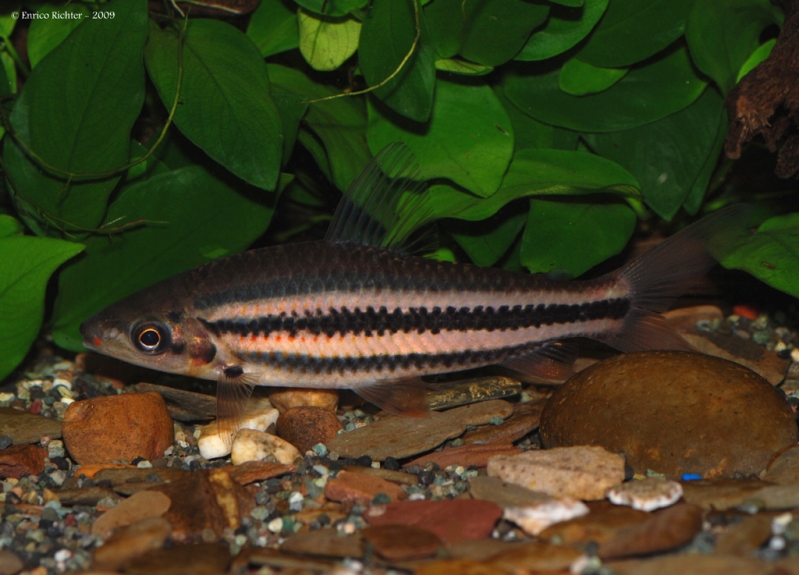
Leporinus arcusLipstick Leporinus
Eigenmann, 1912
Max length300mm SL12in SLTank210 × 60cm84 × 24inTemp20–28°C68–82°FpH6.0–7.5Type locality is 'Tukeit, Guyana', and this species is known from various river drainages of Venezuela, Guyana, Suriname and French Guiana including the Orinoco, Essequibo, and upper Courantyne (aka Corantijn) basins. Additional records exist from the upper Amazon basin in Guyana, these presumably corresponding to the Takutu river basin, itself part of the upper rio Branco.
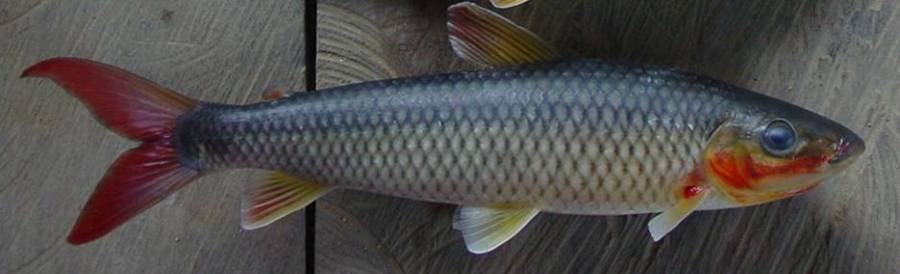
Leporinus brunneus
Myers, 1950
Max length256mm SL10in SLTank210 × 60cm84 × 24inTemp20–28°C68–82°FpH4.0–6.5Décor is relatively unimportant and maintenance simple provided sufficient space is available. A natural-style arr...
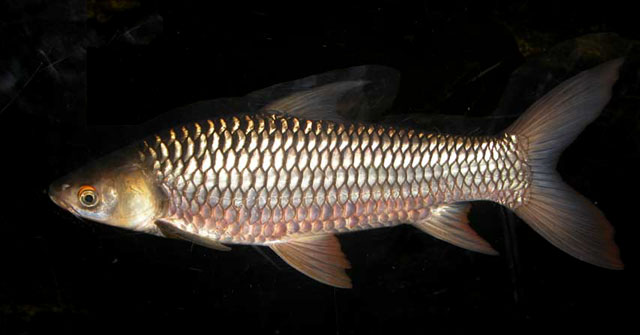
Leptobarbus hoeveniiMad Barb
Bleeker, 1851
Max length1000mm SL39in SLTanknot recordedTemp20–26°C68–79°FpH6.0–8.0Apparently native to Peninsular Malaysia plus the Greater Sunda Islands of Borneo, Sumatra, and Java. Reports of this species from the Mekong, Chao Phraya, and other rivers in Indochina refer to the congener L. rubripinna (see 'Notes'). Type locality is 'Indonesia: Borneo: Kalimantan Selatan: Banjarmasin'.
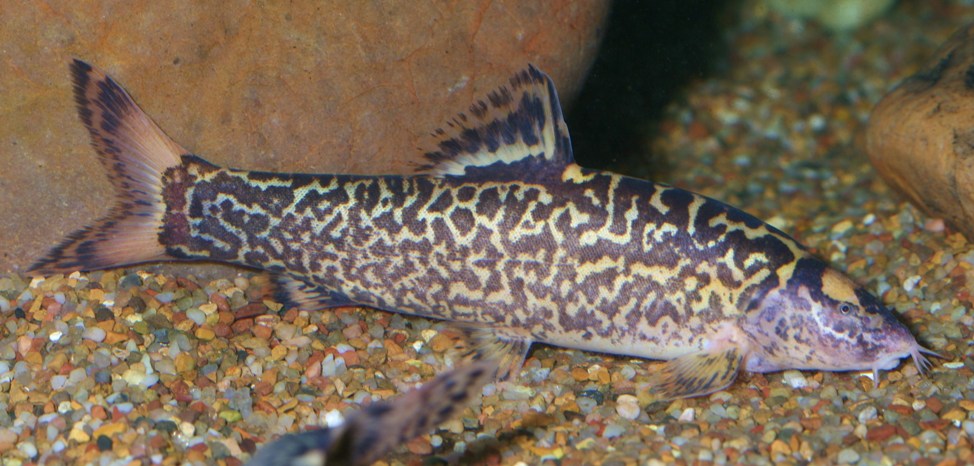
Leptobotia taeniops
Sauvage, 1878
Max length150mm SL6in SLTank120 × 45cm48 × 18inTemp15.5–21°C60–70°FpH6.5–7.5L. taeniops is almost unheard of in the aquarium trade although we know of one or two private collectors maintaining it. It was previously included in the related genus Parabotia. L. elongata is the type species of the genus but according to current thinking there exi...
Limia melanogasterBlack-bellied Limia
authority not recorded
Max length40mm SL1.6in SLTank60 × 30cm24 × 12inTemp22–28°C72–82°FpH7.5–8.5This species was originally classified in the genus Limia before this was made a sub-genus of Poecilia. Confusingly they have been reclassified once more into Limia, but are still referred to as members of Poecilia in much of the available literature. L. melanogaster is endemic to Jamaica. It is not often seen for sale in the hobby....
Limia nigrofasciataHump-backed Limia
authority not recorded
Max length63mm SL2.5in SLTank45 × 30cm18 × 12inTemp22–26°C72–79°FpH7.0–8.0The hump that develops along the spine of adult males is caused by deposition of fatty tissue.
Liosomadoras oncinusJaguar Catfish
authority not recorded
Max length250mm SL10in SLTank120 × 45cm48 × 18inTemp20–28°C68–82°FpH4.8–7.2Often confused with its congener, L. morrowi, the jaguar cat can be distinguished by its more attractive, brighter patterning and larger adult size. It's an ideal and good looking bottom dweller for the larger community. Previously considered a member of the Doradidae, due to the opercular spines, it has now been reclassified. It occurs over a wide range in nature, hence its apparent tolerance to wildly different water chemistry. In reality, its requirements are determined by collection loc...
Lophiobagrus cyclurusAfrican Bullhead
authority not recorded
Max length100mm SL3.9in SLTank75 × 30cm30 × 12inTemp23–26°C73–79°FpH7.5–9.0An interesting addition to the Tanganyikan community that is not often seen in the hobby. There is a rumour that this cat can secrete a poisonous mucous when stressed that can kill other fish in the aquarium but this has not yet been 100% confirmed. It may be wise to keep it in as large an aquarium as possible just in case. There are currently just 4 species of Lophiobagrus described. All are from Lake Tanganyika....
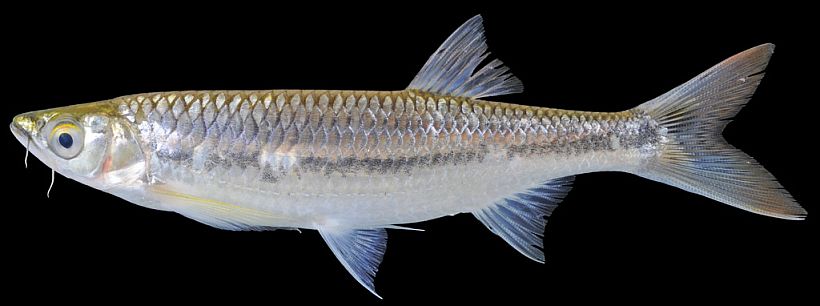
Luciosoma bleekeri
Steindachner, 1878
Max length210mm SL8in SLTank240 × 60cm96 × 24inTemp20–26°C68–79°FpH6.0–8.0L. bleekeri is most-easily distinguished from the congener L. setigerum, with which it is frequently confused, by absence (vs. presence) of a series of black spots on the lateral line scales.
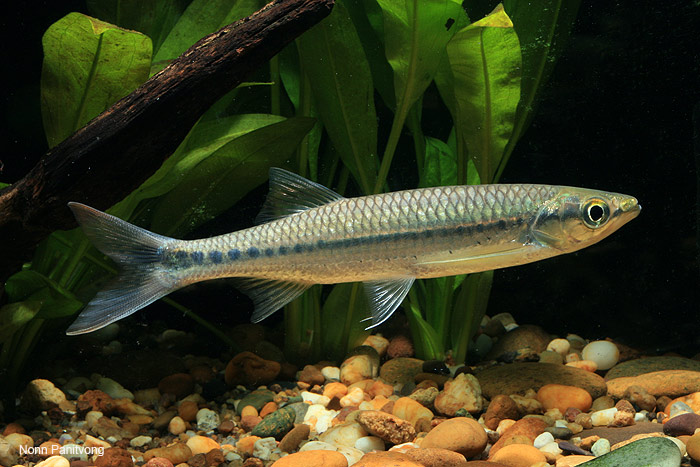
Luciosoma setigerumApollo Shark
Valenciennes, 1842
Max length220mm SL9in SLTank240 × 60cm96 × 24inTemp20–26°C68–79°FpH6.0–8.0There is a fish of unknown geographical origin which matches the majority of diagnostic features for L. setigerum with the exception that the dark lateral stripe is absent in the anterior portion of the body and is not composed of interconnected spots. It is relatively common in the aquarium trade and included here as L. cf. setigerum until a confirmed identity is established.
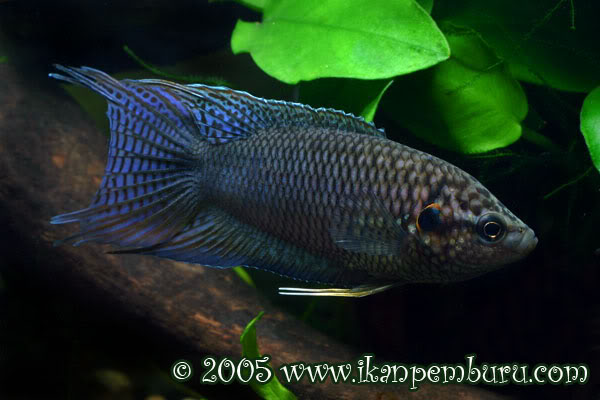
Macropodus hongkongensis
Freyhof & Herder, 2002
Max length70mm SL2.8in SLTank80 × 30cm31 × 12inTemp15–25°C59–77°FpH6.0–8.0In 1996 the species was known from five localities in Hong Kong, but at least one of these has been destroyed and it is now known only from Tai Po and Sai Kung districts. Additional populations have subsequently been discovered in Guangdong and Fujian provinces on the southern Chinese mainland. Type locality is 'China: Hong Kong: Tai Po: Sha Lo Tung'.
Maylandia callainosCobalt Blue Zebra
authority not recorded
Max length135mm SL5in SLTank120 × 30cm48 × 12inTemp24–28°C75–82°FpH7.6–8.8This species was formerly classified as Pseudotropheus callainos and Metriaclima callainos and is still named as one of these by many sources. It has also been seen for sale as Pseudotropheus zebra "pearly". The genus name Maylandia is now used to describe all former members of the 'zebra' group of Pseudotropheus. It exists in three main colour forms, namely "cobalt blue", "orange blotch" and "pearl zebra". It is very easily confused with similar...
Megalodoras uranoscopusGiant Raphael Catfish
authority not recorded
Max length700mm SL28in SLTank240 × 120cm96 × 48inTemp21.1–25°C70–77°FpHnot recordedThis species is also known by the vernacular name "ripsaw catfish" (U.S.) and was often referred to by the scientific name M. irwini, now considered a junior synonym of M. uranoscopus, in older literature. Within the family Doradidae the genus Megalodoras is considered most closely-related to Lithodoras, Centrodoras and Platydoras, respectively. Members of the family Doradidae can be distinguished from all other Siluriformes by possession of a unique infranuchal scute, a dermal bon...
Melanochromis auratusGolden Mbuna
authority not recorded
Max length110mm SL4in SLTank120 × 45cm48 × 18inTemp24–28°C75–82°FpH7.6–8.8Despite its ready availability, M. auratus is not recommended for the beginner due to its intolerant nature. Do not keep it with other Melanochromis species as they may hybridise. Male fish can revert to the golden colouration when stressed, and older females often darken with age until they superficially resemble males....