Results for “Maracyn-2”
Type a name: scientific, common, or one a species used to go by. Or narrow the catalogue with the filters.
Filters
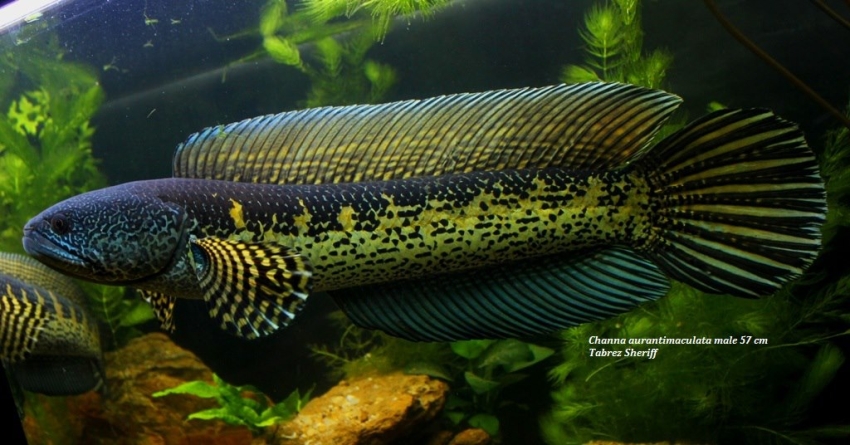
Channa aurantimaculataOrange-spotted Snakehead
Musikasinthorn, 2000
Max length400mm SL16in SLTank150 × 60cm60 × 24inTemp10–28°C50–82°FpH6.0–8.0This species is also traded as 'golden cobra snakehead' and is available in the aquarium trade on a regular basis. It can be distinguished from other Channa species by the following combination of characters: 51-54 lateral line scales; 45-47 dorsal-fin rays; 28-30 anal-fin rays; 8-12 cheek scales; 50-52 total verte...
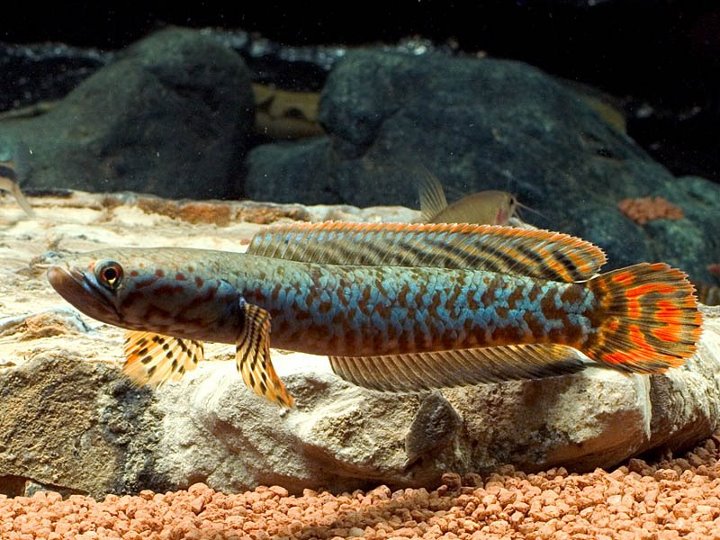
Channa bleheriRainbow snakehead
Vierke, 1991
Max length170mm SL7in SLTank120 × 30cm48 × 12inTemp14–28°C57–82°FpH6.0–8.0C. bleheri is a popular aquarium fish though it remains unclear whether collection for the ornamentaol trade is having a detrimental effect on wild populations (see 'Habitat'). It's one of several genus members to lack pelvic fins and can be further distinguished from other Channa species by the following combination of characters: sides of lower jaw with one large cycloid scale; lateral line complete with 46-50 scales; 14 pectoral-fin rays; 25 anal-fin rays; 4-11 irregular reddish orange markings on the caudal-fin
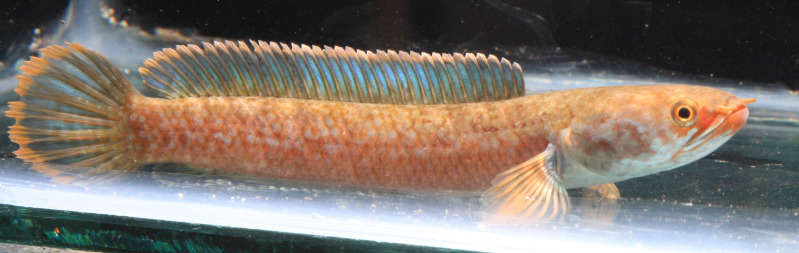
Channa burmanica
Chaudhuri, 1919
Max length200mm SL8in SLTank120 × 45cm48 × 18inTemp10–22°C50–72°FpH6.0–8.0It's one of several genus members to lack pelvic fins and following Chaudhuri (1919) also has 51 lateral line scales, 38 dorsal-fin rays, 28 anal-fin rays, 12 caudal-fin rays, 15 predorsal scales, pectoral-fins with alternating dark and light bands, and white-tipped dorsal...
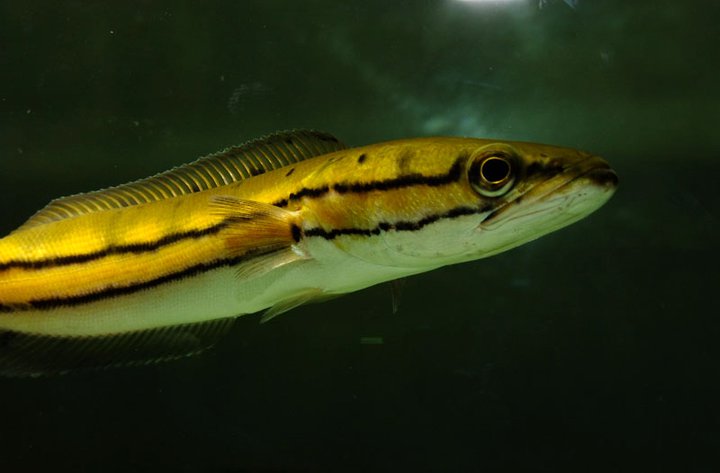
Channa diplogrammaMalabar Snakehead
Day, 1865
Max length480mm SL19in SLTanknot recordedTemp22–32°C72–90°FpH6.0–8.0This species was considered synonymous with the Indochinese congener C. micropeltes for over a century before being revalidated in 2011. Like in C. micropeltes colour pattern varies depending on the age of the fish. Juveniles possess two longitudinal black stripes on the head and body with the are...
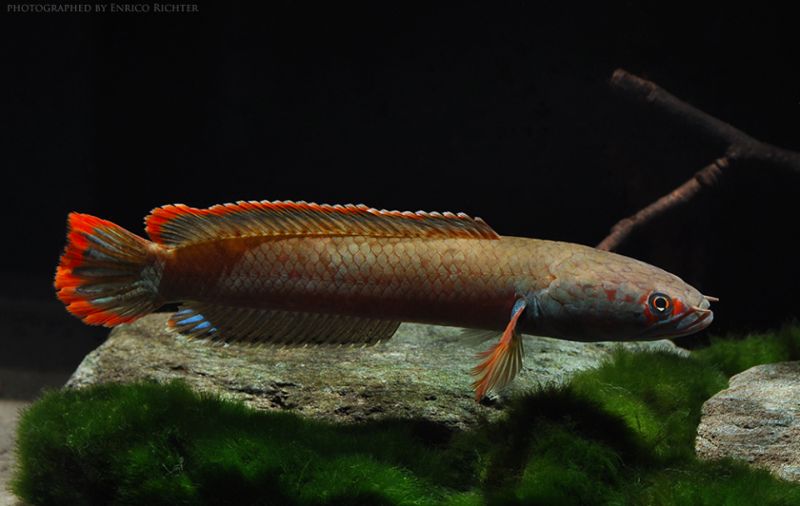
Channa sp. 'fire and ice'
authority not recorded
Max length150mm SL6in SLTank120 × 30cm48 × 12inTemp22–28°C72–82°FpH6.0–7.5This unidentified species first appeared in the aquarium trade during 2009. It's easily told apart from similar-looking congeners by the patches of vivid red pigmentation surrounding the eye and sides of the mouth plus the thick, reddish, marginal band in the caudal-fin.
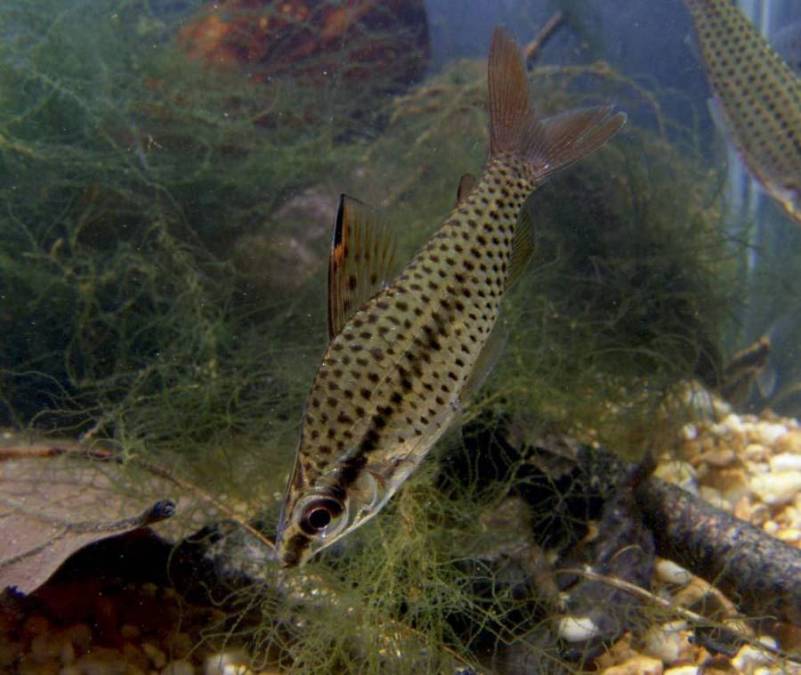
Chilodus punctatusSpotted Headstander
Müller & Troschel, 1844
Max length80mm SL3.1in SLTank90 × 30cm36 × 12inTemp20–28°C68–82°FpH5.0–7.5Omnivorous and will accept most foods offered, with the stomach contents of wild specimens varying on a seasonal basis but mostly comprising insects and insect larvae (orders Trichoptera, Hemiptera, Homoptera) plus some terrestrial fruits and even scales of other fishes (Sánchez et al., 2003). In the aquarium offer live Daphnia, Artemia, Moina, bloodowrm, etc., vegetable matter in the form of blanched spinach, lettuce, cucumber, fruit, algae wafers, etc., and good quality, sinking dried foods.
Chiloglanis polypogonAfrican Suckermouth Catfish
authority not recorded
Max length55mm SL2.2in SLTank45 × 30cm18 × 12inTemp22–26°C72–79°FpH6.5–7.0This fish belongs to a very distinctive genus of mochokid. There are almost 50 species of Chiloglanis described to science, but most are never imported and even the commoner species, such as this one, are seen only rarely. They are very difficult to identify down to species level, as many are very similar in looks. Some are strongly sexually dimorphic with the males having thickened or enlarged anal and caudal fins. Chiloglanis are also sometimes confused with the other 2 genera of African sucke...
Cichla monoculusTucanare Peacock Bass
authority not recorded
Max length800mm SL31in SLTanknot recordedTemp25–28°C77–82°FpH6.5–7.5Due to their large size, Peacock Bass are only really recommended for the experienced fishkeeper that can house them adequately. That said, they are a hardy and robust species that will adapt to a variety of conditions. Peacock Bass are becoming much more available in the hobby and are often seen for sale as cute 2" babies, often tempting people into buying a fish they will not be able to care for in the long term. Peacock Bass are also fished as a sport fish....
Cichla ocellarisPeacock Bass
authority not recorded
Max length750mm SL30in SLTanknot recordedTemp24–27°C75–81°FpH6.5–7.0Due to their large size, Peacock Bass are only really recommended for the experienced fishkeeper that can house them adequately. That said, they are a hardy and robust species that will adapt to a variety of conditions. Peacock Bass are becoming much more available in the hobby and are often seen for sale as cute 2" babies, often tempting people into buying a fish they will not be able to care for in the long term. Peacock Bass are also fished as a sport fish....
Cichla orinocensisOrinoco Peacock bass
authority not recorded
Max length600mm SL24in SLTanknot recordedTemp27–29°C81–84°FpH5.5–6.5Due to their large size, Peacock Bass are only really recommended for the experienced fishkeeper that can house them adequately. That said, they are a hardy and robust species that will adapt to a variety of conditions. Peacock Bass are becoming much more available in the hobby and are often seen for sale as cute 2" babies, often tempting people into buying a fish they will not be able to care for in the long term. Peacock Bass are also fished as a sport fish....
Cichla temensisSpeckled Pavon
authority not recorded
Max length990mm SL39in SLTanknot recordedTemp27–29°C81–84°FpH5.5–6.5One of the largest cichla species. Due to their large size, Peacock Bass are only really recommended for the experienced fishkeeper that can house them adequately. That said, they are a hardy and robust species that will adapt to a variety of conditions. Peacock Bass are becoming much more available in the hobby and are often seen for sale as cute 2" babies, often tempting people into buying a fish they will not be able to care for in the long term. Peacock Bass are also fished as...
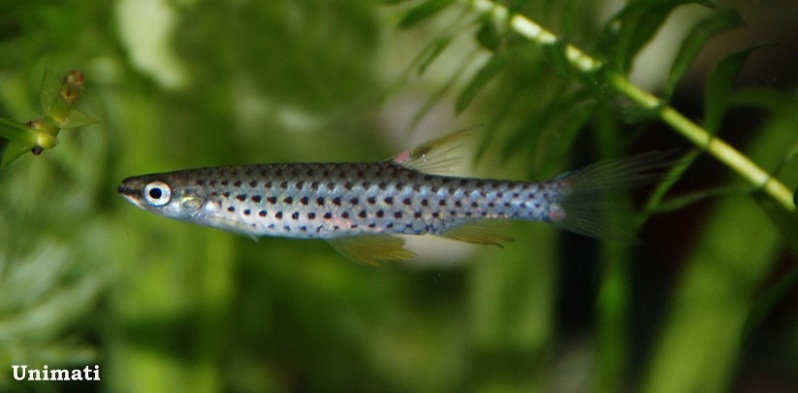
Copella callolepis
Regan, 1912
Max length42mm SL1.7in SLTank60 × 30cm24 × 12inTemp20–28°C68–82°FpH4.0–7.0This species is quite common in the aquarium trade although normally misidentified as the congeners C. nattereri or the very similar C. meinkeni. It was considered synonymous with C. nattereri for a number of years and was also referred to as C. cf. meinkeni by Zarske and Géry (2006) befo...
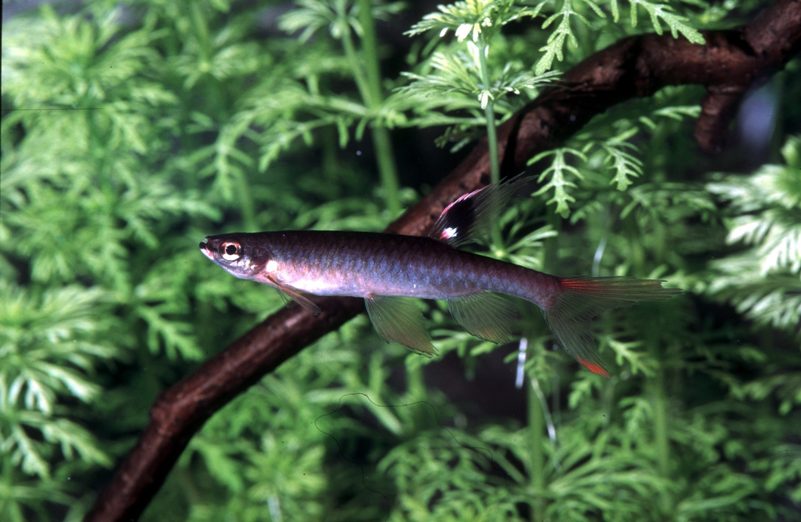
Copella carsevennensis
Regan, 1912
Max length40mm SL1.6in SLTank75 × 30cm30 × 12inTemp20–28°C68–82°FpH4.0–7.0C. carsevennensis has formerly been synonymised with C. arnoldi but was considered separate by Zarske (2011) using the following combination characters: absence (vs. presence) of a silvery-white to white patch in the centre of some of the flank scales in males, particularly in the lower half of the body; absence (vs. presence) of a horizontal dark body bar in nuptial males; absence (vs. presence) of thin black margins in the dorsal, ventral and anal fins; eggs deposited among submerged vegetation (vs. eg...
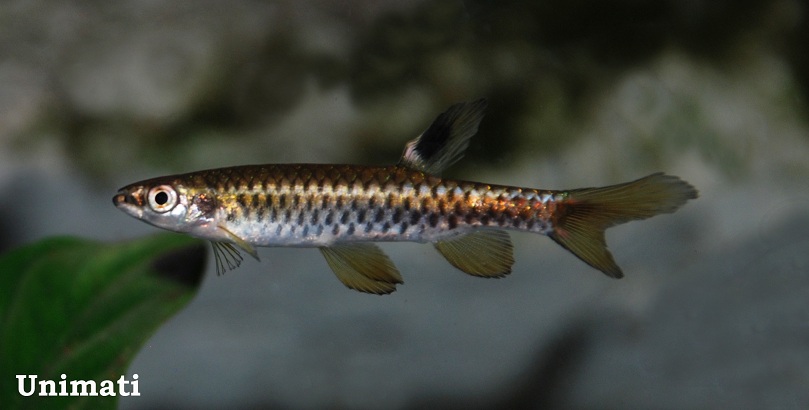
Copella eigenmanni
Regan, 1912
Max length45mm SL1.8in SLTank80 × 30cm31 × 12inTemp20–28°C68–82°FpH4.0–7.0This species does appear in the aquarium trade from time-to-time, often among shipments of other wild-caught fishes from the Orinoco basin. Populations from Colombia were formerly referred to as C. metae until Zarske (2011) synonymised the two when designating a lectoty...
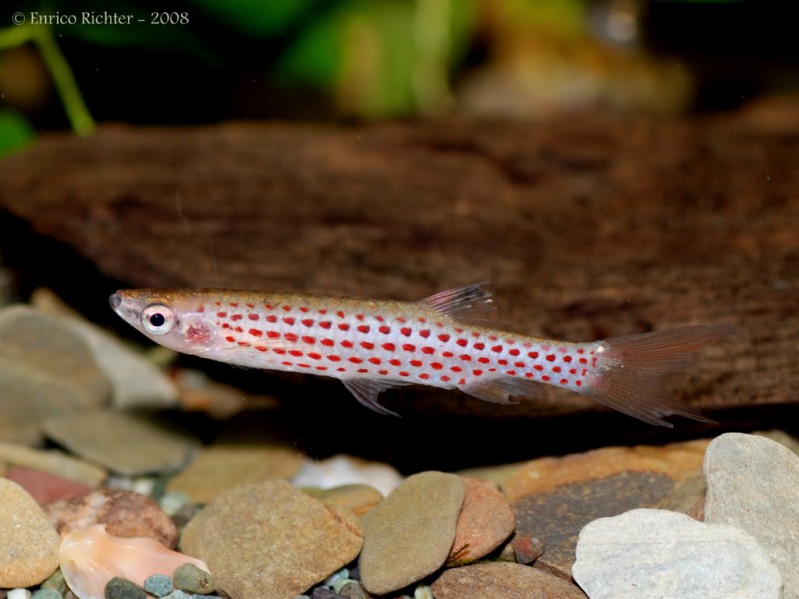
Copella meinkeniSpotted Splashing Tetra
Zarske & Géry, 2006
Max length45mm SL1.8in SLTank60 × 30cm24 × 12inTemp20–28°C68–82°FpH4.0–7.0This species has been widely referred to as the congener C. nattereri in aquarium literature both prior to and post-publication of its official description in 2006. The two can be told apart quite easily by the fact that C. nattereri possesses a dark lateral stripe while C. meinkeni does not. C. meinkeni can be distinguished from all congeners by the followi...
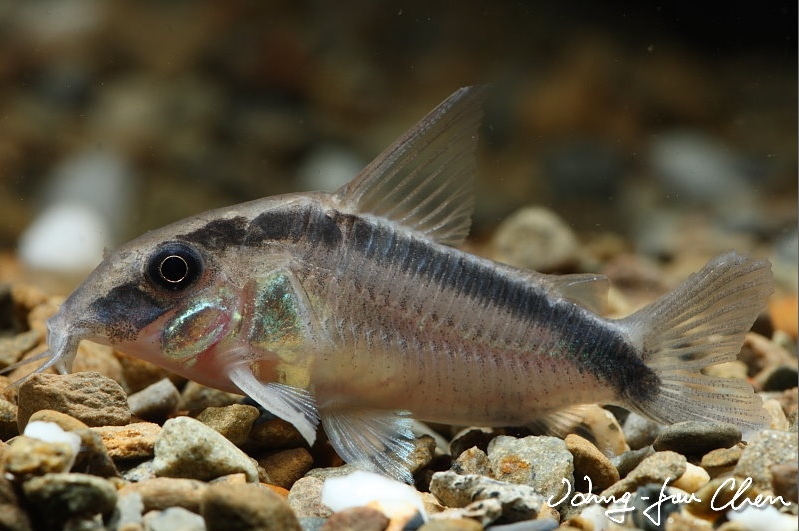
Corydoras arcuatusSkunk Cory; C020
Elwin, 1938
Max length55mm SL2.2in SLTanknot recordedTemp20–28°C68–82°FpH5.0–7.5This species is among the more popular Corydoras in the aquarium hobby and is widely available. It may also be referred to as 'arched cory'. There exist a number of similar-looking congeners, particularly C. urucu (Britto et al., 2009), described from the rio Urucu in Coari municipality, Amazonas state, Brazil, and C. narcissus from the rio Purus. The latter appears to have also been traded as C. sp. 'super arcuatus longnose' while a larg...
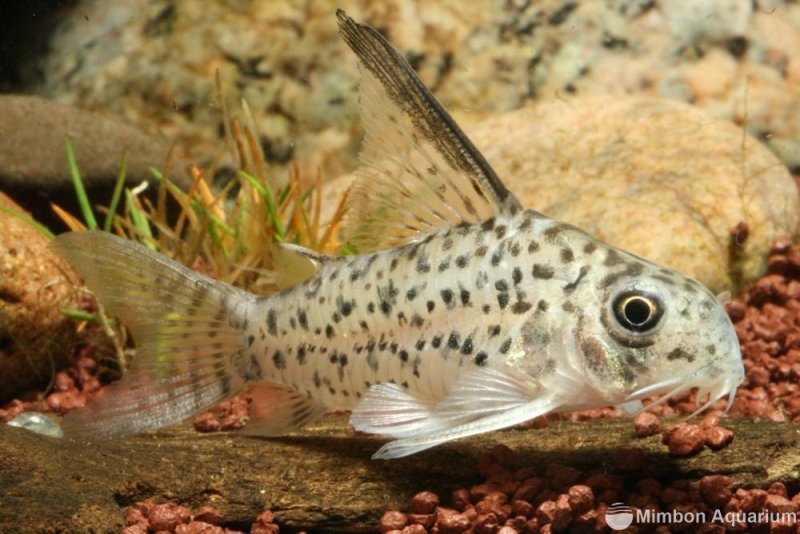
Corydoras armatus
Günther, 1868
Max length65mm SL2.6in SLTanknot recordedTemp22–26°C72–79°FpH6.0–7.5Fish collected in the upper rio Maderia basin in Brazil and Bolivia have been traded under the invented names C. sp. 'dorsalis' and C. sp. 'ogawae' in the past, although are officially-considered conspecific with C. armatus. This appears to warrant investigation since the Río Huallaga in Peru, type locality of C. armatus, and collection localities in the upper Madeira are separated by a straight-line distance of almost 2500 km.
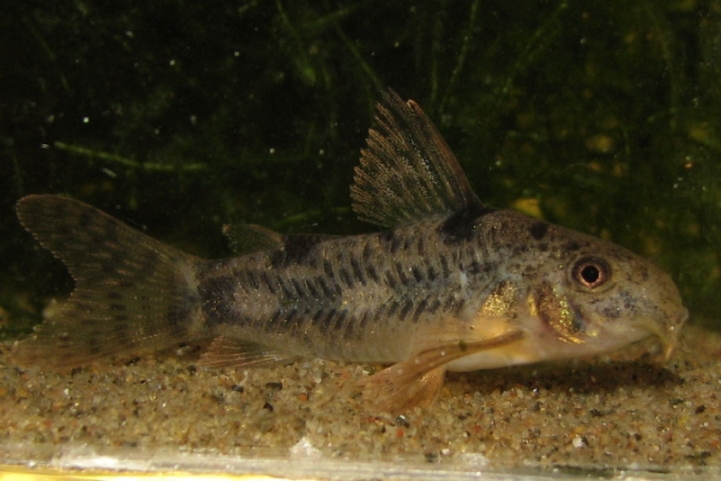
Corydoras carlae
Nijssen & Isbrücker, 1983
Max length45mm SL1.8in SLTanknot recordedTemp15–22°C59–72°FpH6.5–8.0This species is not available on a commercial basis but was collected and introduced to the aquarium hobby by Hans Georg-Evers in 2010. It's similar in appearance to a number of congeners including C. diphyes, C. erhardti, C. garbei, C. paleatus and C. steindachneri but can be told apart from most of them by possession of two large, indistinct, dark blotches in the middle of each flank.
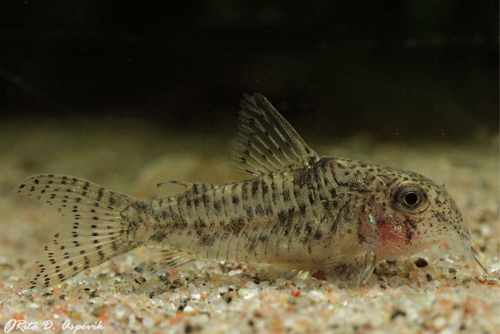
Corydoras cochuiBarredtail Cory
Myers & Weitzman, 1954
Max length35mm SL1.4in SLTanknot recordedTemp20–28°C68–82°FpH6.0–7.5This small species can be told apart from the similar-looking congener C. habrosus by possession of 4-5 (vs. 2-3) dark markings along the side of the body.
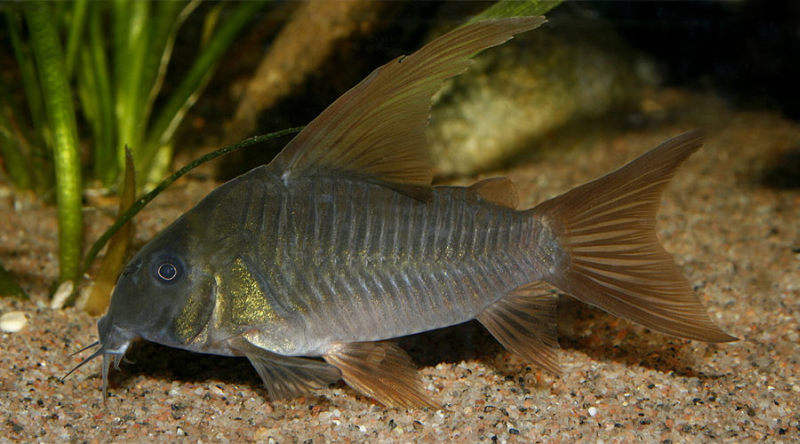
Corydoras concolorSlate Cory
Weitzman, 1961
Max length60mm SL2.4in SLTank80 × 30cm31 × 12inTemp20–26°C68–79°FpH5.5–7.0This species can be told apart from congeners by its uniformly greyish colour pattern, deep body (fitting 2.1-2.4 times in standard length), large eye (3.2-4.0 times in head length), having the pectoral fins completely surrounded by the coracoid, and relatively long dorsal-fin spine (1.1-1.2 times in head length).