Results for “fin”
Type a name: scientific, common, or one a species used to go by. Or narrow the catalogue with the filters.
Filters
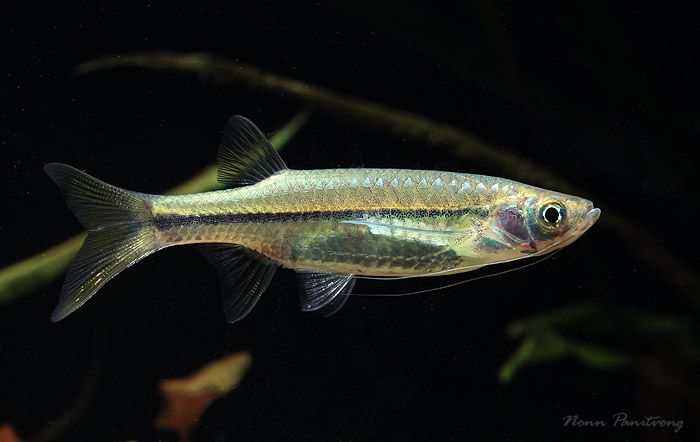
Esomus metallicusStriped Flying Barb
Ahl, 1923
Max length75mm SL3.0in SLTank120 × 30cm48 × 12inTemp20–26°C68–79°FpH6.0–7.0There currently exist a dozen described Esomus spp. alhough few are seen in the aquarium trade and none are especially popular. Most are commonplace in their native countries and also quite plainly-patterned so generally overlooked by collectors. Their most common use in some areas is actually as a feeder fish in the aquaculture of larger species. They're characterised by greatly-enlarged pectoral fins and two pairs of barbels, of which the maxillary pair are extremely long and usually reach the pectoral fins.
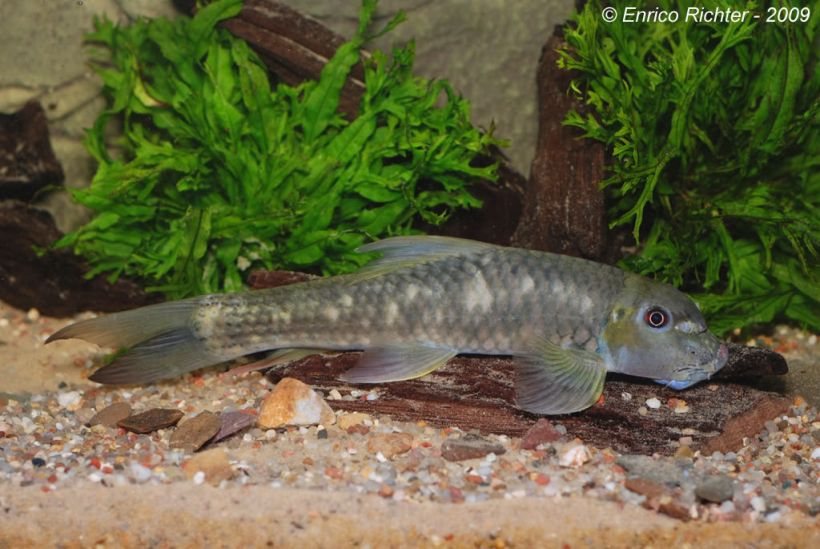
Garra salweenica
Hora & Mukerji, 1934
Max length175mm SL7in SLTanknot recordedTempnot recordedpHnot recordedG. salweenica can be distinguished from other congeners inhabiting the Salween watershed by the following combinatuion of characters: body brownish; presence of a trilobed proboscis on the snout; snout blunt; a series of black spots at the base of the central dorsal-fin rays; presence of longitudinal stripes on the posterior portion of the body; a dark marking at the tip of the upper (and lower in some specimens) caudal-fin lobe; body depth 22.4-25.3 % SL.
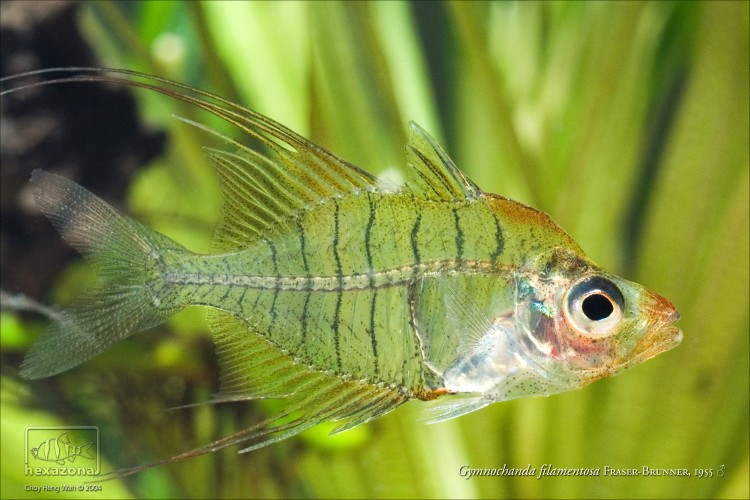
Gymnochanda filamentosa
Fraser-Brunner, 1955
Max length32mm SL1.3in SLTank60 × 30cm24 × 12inTemp20–28°C68–82°FpH4.0–6.0G. filamentosa has appeared in the ornamental trade but is evidently delicate and therefore recommended only to experienced aquarists. It can be told apart from congeners by the following combination of characters: possession of filamentous dorsal and anal-fin rays in males; body transparent to translucent yellowish-brown colour in life; absence of a highly-extended second anal-fin spine; absence of carmine-red pigmentation in the dorsal, anal an...
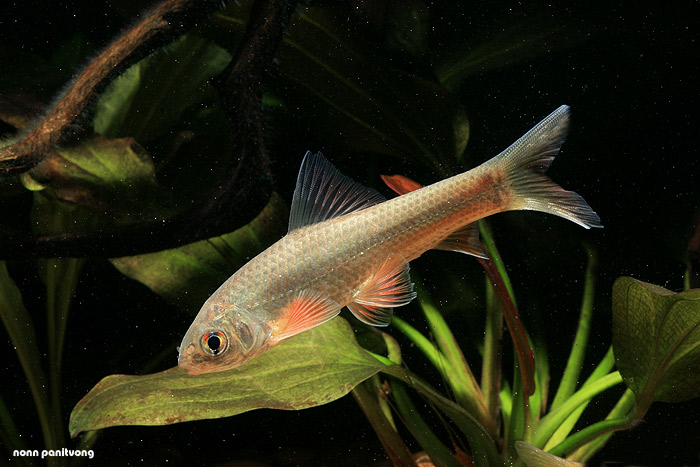
Gymnostomus ornatapinnis
Roberts, 1997
Max length100mm SL3.9in SLTanknot recordedTempnot recordedpHnot recordedG. ornatapinnis can be distinguished from congeners by the following combination of characters: head small; snout relatively short and blunt; caudal peduncle very deep; pectoral, pelvic, and anal fins usually reddish-orange or rose-tinted; pelvic and anal fins often with white tips; barbels completely absent.
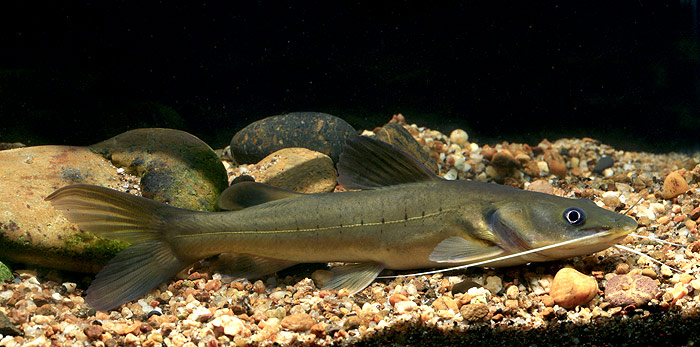
Hemibagrus peguensis
Boulenger, 1894
Max length286mm SL11in SLTanknot recordedTempnot recordedpHnot recordedMembers of this assemblage can be told apart from other congeners by possession of 44–46 vertebrae, an adipose-fin with a relatively short base (< 20 % SL), a colour pattern comprising either distinct black spots arranged in vertical columns or irregular black vertical lines running along the flanks, and normally a reddish or orangish caudal-fin in life.
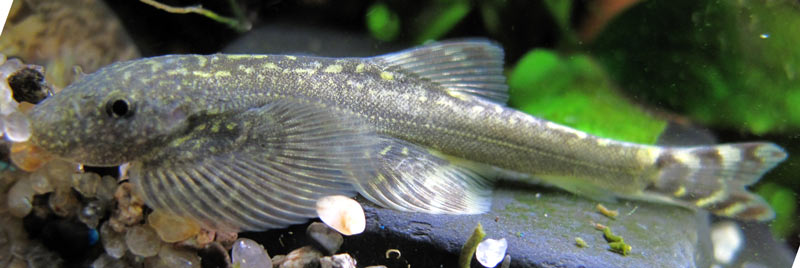
Hemimyzon formosanus
Boulenger, 1894
Max length100mm SL3.9in SLTank120 × 30cm48 × 12inTemp16–22°C61–72°FpH6.5–8.0Current knowledge suggests that H. formosanus is the most widely-distributed and following Chen and Fang (2009) it can be distinguished by the following suite of characters: 3+7 dorsal-fin rays; 10-12 pectoral-fin rays (modally 11) +9-11 (modally 10)...
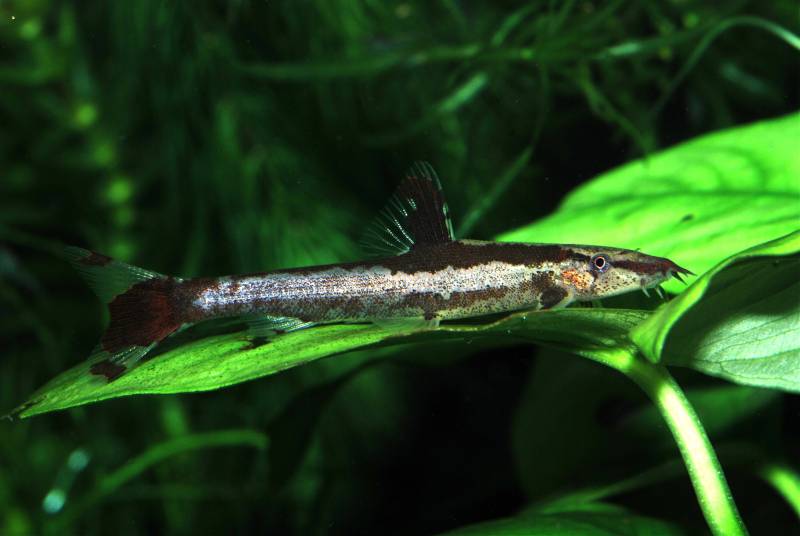
Homaloptera bilineata
Blyth, 1860
Max length100mm SL3.9in SLTank120 × 30cm48 × 12inTemp20–25.5°C68–78°FpH6.0–7.5This rarely-traded species is a member of the H. ocellata 'group' of closely-related congeners, an assemblage which currently comprises H. ocellata, H. bilineata, H. confuzona, H. orthogoniata, H. ogilviei and H. parclitella. Following Tan and Ng (2005) these share possession of a colour pattern with reddish tints and dark brown head markings, elongate head, slightly compressed body, 61-77 lateral line scales and dorsal-fin origin placed in advance of pelvic-fin origin.
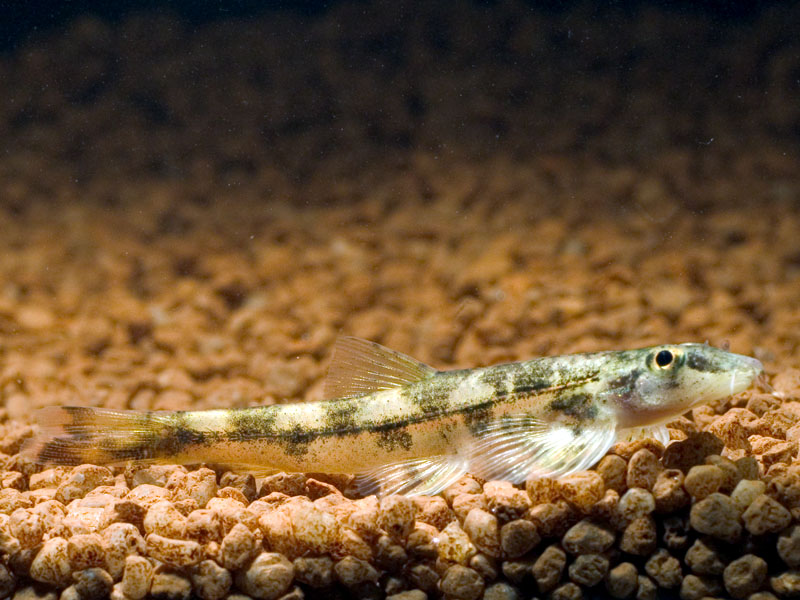
Homalopteroides nebulosus
Alfred, 1969
Max length36mm SL1.4in SLTank60 × 30cm24 × 12inTemp20–25.5°C68–78°FpH6.0–7.5The genus Homalopteroides was revalidated by Randall and Page (2012) and is told apart from the related Homaloptera by the following character combination: dorsal-fin origin above pelvic-fin; ≤ 60 lateral-line scales; ≤ 30 predorsal scales; oral morphology consisting of two thin and widely separated rostral barbels on each side of the mouth, thin crescent-shaped lips, the absence of any structure such as a mental pad or lobes between the lateral portions of the lower lip, and a chin that extends anterior to the lateral portions of the lower lip.
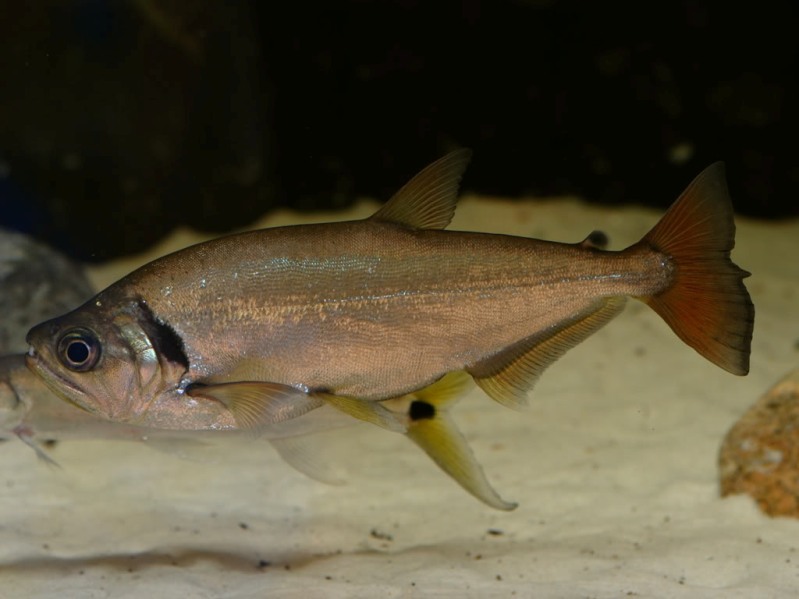
Hydrolycus tatauaia
Toledo-Piza, Menezes & Santos, 1999
Max length455mm SL18in SLTanknot recordedTemp24–28°C75–82°FpH6.0–8.0Vernacular names in Brazil include 'Cachorra' or 'Pirandirá', although these are also applied to congeners. It can be told apart from all congeners by the following combination of characters: head and body silvery with dark dorsal surface; an elongate dark blotch posterior to the opercle; dorsal, caudal and anal-fin rays reddish to orange proximally with some individual variation in intensity and tonality; adipose fin dark, with diffuse black pigmentation.
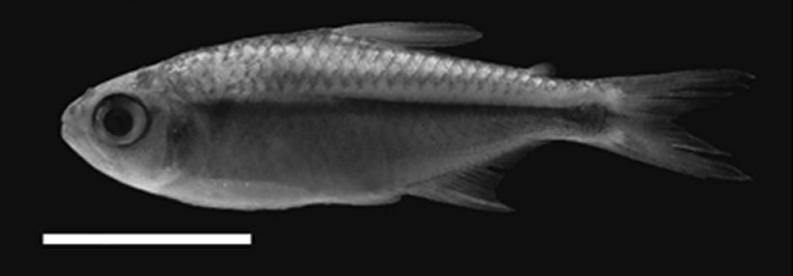
Hyphessobrycon acaciae
García-Alzate, Román-Valencia & Prada-Pedreros, 2010
Max length30mm SL1.2in SLTanknot recordedTempnot recordedpHnot recordedIt differs from H. paucilepis by possessing 30-31 scales in the lateral row (vs. 28-29), 3 scales between the lateral line and anal-fin (vs. 4), 10 predorsal scales (vs. 9), ii, 9 dorsal-fin rays (vs. iii, 8), 4 maxillary teeth (vs. 1), and the distance between the dorsal-fi...
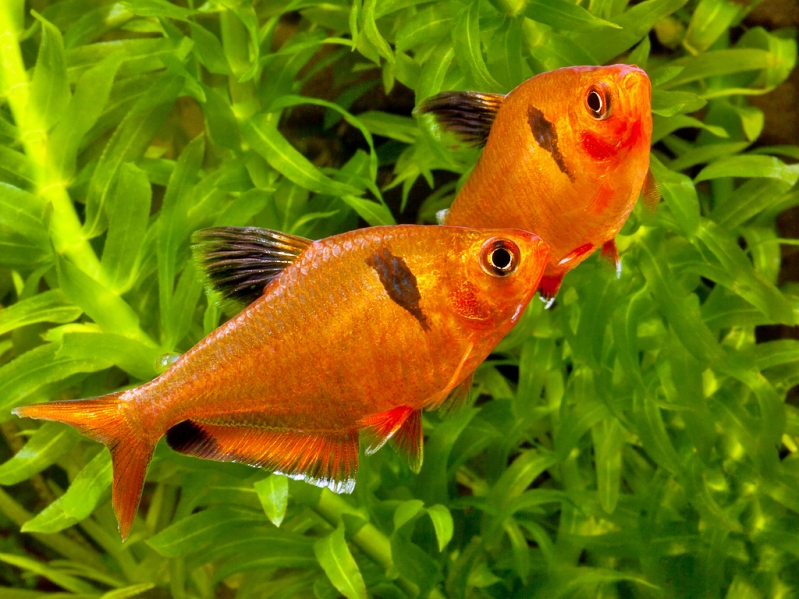
Hyphessobrycon equesSerpae Tetra
Steindachner, 1882
Max length40mm SL1.6in SLTank80 × 30cm31 × 12inTemp20–28°C68–82°FpH5.0–7.5This species is very common in the aquarium trade and is also referred to as 'jewel', 'red minor', 'blood', or 'callistus' tetra. A number of selectively-bred ornamental strains have been developed, including 'metallic', 'long-finned', 'balloon' and 'fairy-fin'. Characiformes is among the most diverse orders of freshwa...
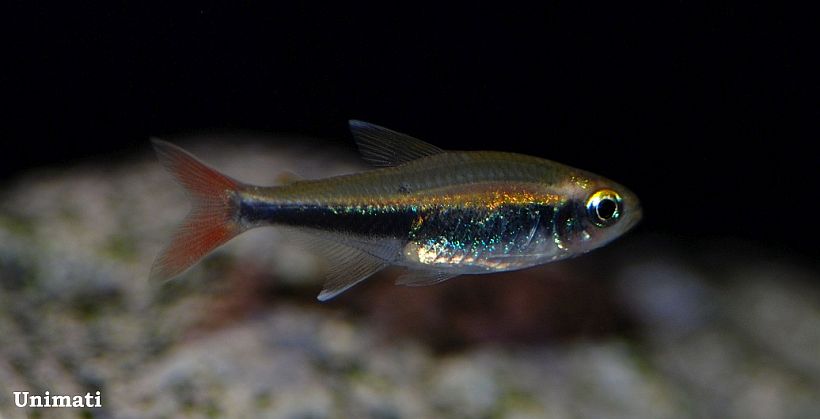
Hyphessobrycon loretoensisLoreto Tetra
Ladiges, 1938
Max length25mm SL1.0in SLTank60 × 30cm24 × 12inTemp22–28°C72–82°FpH5.0–7.0The most recent diagnosis appears to be that of Géry (1977), in which it was separated from other members of the group by the following combination of characters: dorsal-fin insertion at or slightly anterior to mid-body; caudal-fin brick red to orange-red; body depth fits less than 3.6 times in SL; head length fits 3.5-4.0 times in SL; caudal peduncle length u...
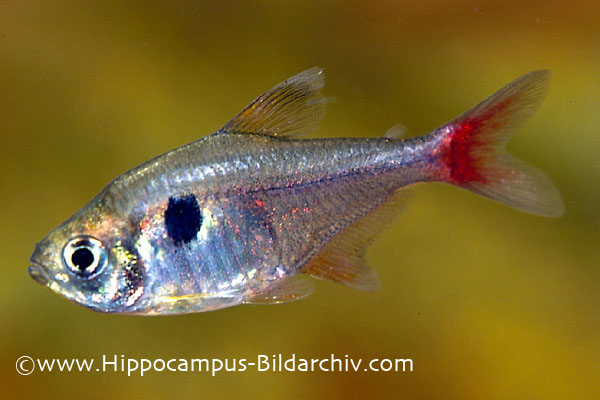
Hyphessobrycon roseusYellow Phantom Tetra
Géry, 1960
Max length20mm SL0.8in SLTank60 × 30cm24 × 12inTemp20–28°C68–82°FpH5.0–7.0This small species is a popular aquarium fish but there is some confusion surrounding its identity. Two colour forms have been traded, one of which also possesses tiny hooks on the fin rays. It can be distinguished from congeners by colour pattern; the body is rose-coloured, fins red with no black markings, and the ovoid humeral spot is prominent, measuring around half of the body depth.
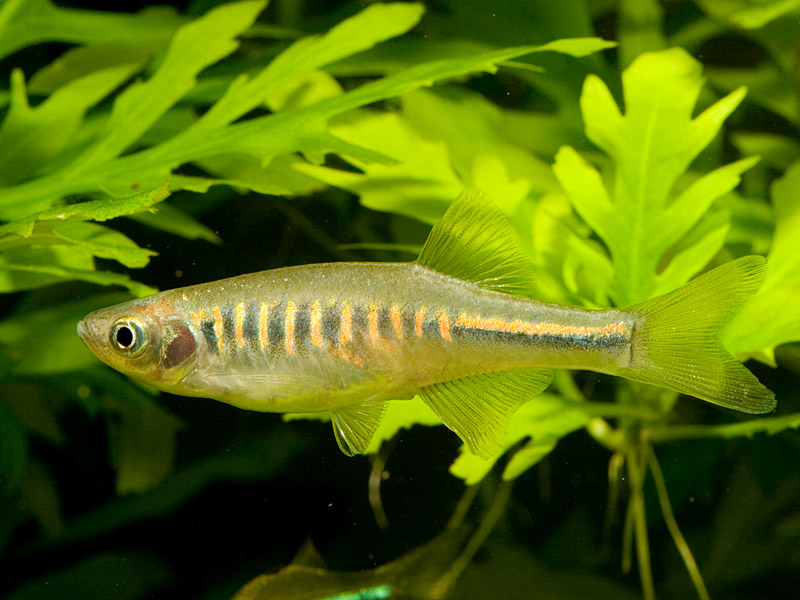
'Inlecypris' shanensis
Hora, 1928
Max length60mm SL2.4in SLTank80 × 30cm31 × 12inTemp18–26°C64–79°FpH6.0–8.0This species is sometimes referred to as 'Hora danio' or Salween danio'. It is distinguished from similar-looking species by a combination of characters as follows: lateral line complete or incomplete with 22-33 pored scales; absence of infraorbital process; 7 branched dorsal-fin rays; usually 10 or 11 branched anal-fin rays; barbels absent or rudimentary; flank markings comprising a series of narrow vertical bars on the anterior portion of each flank, fol...
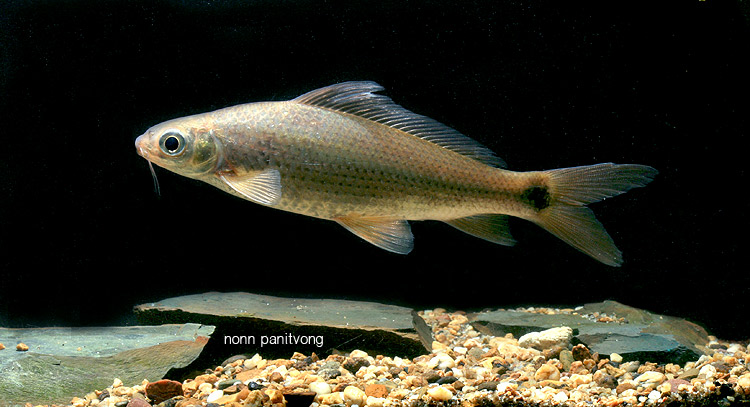
Labiobarbus siamensis
Sauvage, 1881
Max length200mm SL8in SLTanknot recordedTempnot recordedpHnot recordedL. siamensis can be distinguished from congeners by the following combination of characters: 39-42 scales in the lateral series; shoulder spot usually absent, but sometimes well-defined; body with longitudinal stripes formed by a spot on each scale; dorsal fin with dusky median stripe and no red coloration; caudal fin dusky, sometimes with reddish coloration, but no well-defined stripes; 20-23 circumpeduncular scales...
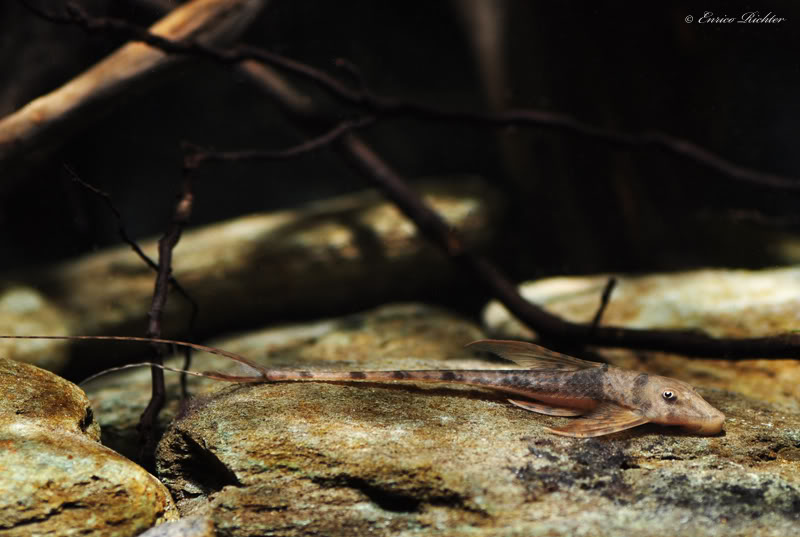
Lamontichthys filamentosusSturgeon Catfish
La Monte, 1935
Max length167mm SL7in SLTank120 × 45cm48 × 18inTemp22–30°C72–86°FpH5.5–7.5This species is relatively common in the aquarium hobby but is not easy to maintain and recommended only for experienced aquarists. It can be told apart from all congeners by specimens larger than 60 mm SL possessing an extended pectoral-fin spine forming an extremely long filament that may be more than four times the length of the first branched pectoral-fin ray (vs. not possessing such a filament in other species of Lamontichthys).
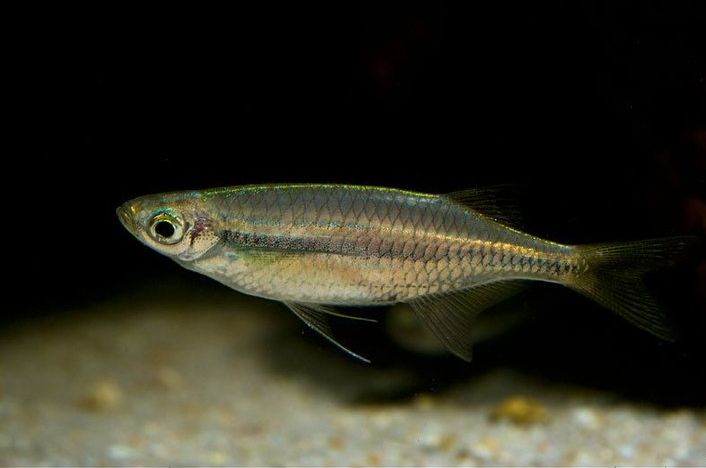
Laubuka fasciataMalabar Hatchet Chela
Silas, 1958
Max length50mm SL2.0in SLTank120 × 30cm48 × 12inTemp20–26°C68–79°FpH6.5–7.5It can be distinguished from other members of the genus by the following characters: dark longitudinal stripe on body, extending from eye to caudal peduncle; scattered tubercles present on lower jaw; 14½-16½ branched anal-fin rays; pelvic-fin long, reaching beyond anus.
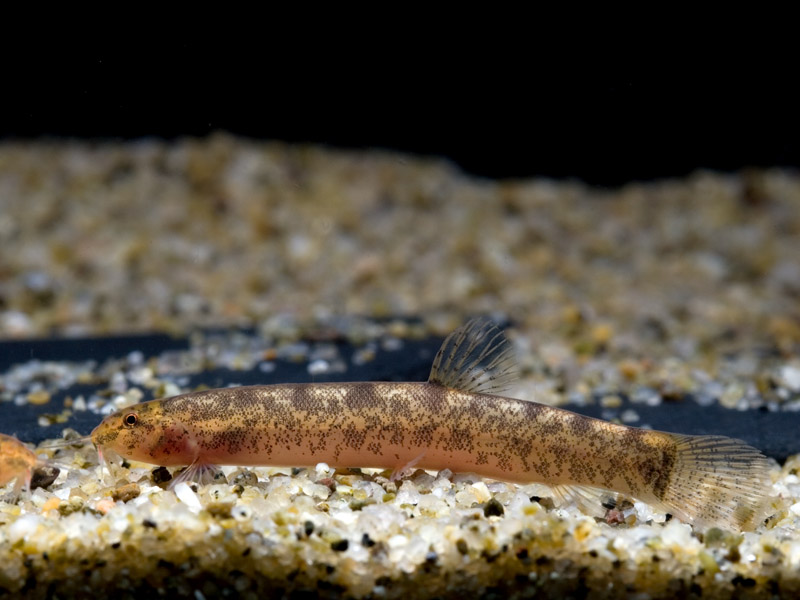
Lepidocephalichthys tomaculum
Kottelat & Lim, 1992
Max length39mm SL1.5in SLTank45 × 30cm18 × 12inTemp23–29°C73–84°FpH3.5–7.0This species is not traded often but may be available occasionally bycatch among shipments of other species. It can be told apart from congeners most easily by the following combination of characters: truncate caudal-fin; scaleless patch on top of head; caudal-fin with reticulated patterning, sometimes appearing as a series of thin vertical bars; body reddish brown with darker markings; 3-7 predorsal and 3-6 postdorsal thin, transverse dark bars running across the dorsal surface; relatively deep...
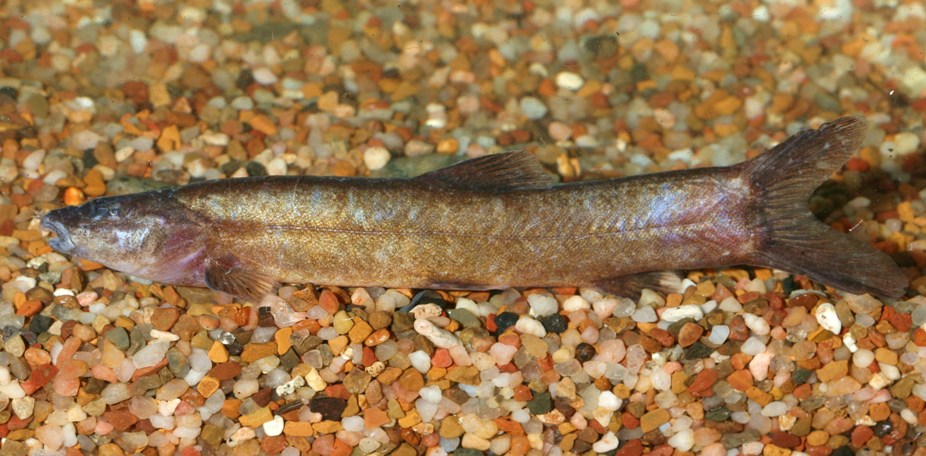
Leptobotia microphthalma
Fu & Ye, 1983
Max length150mm SL6in SLTank120 × 45cm48 × 18inTemp15.5–21°C60–70°FpH6.5–7.5Superficially similar to L. tientainensis but according to the formal description can be separated by a combination of characters including: more deeply-forked caudal-fin (shortest central rays fit 2.6-2.9 times in the outer rays vs. 1.7-2.5 times); significantly smaller eye (fits 26 times in head length vs. 10 times); caudal-fin with 1-2 dark bands at lateral edges v...
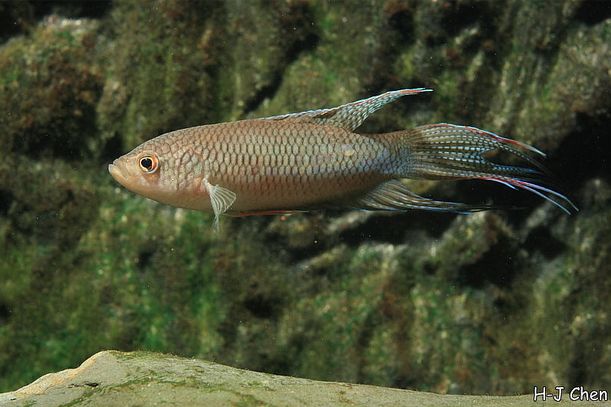
Macropodus erythropterus
Freyhof & Herder, 2002
Max length80mm SL3.1in SLTank80 × 30cm31 × 12inTemp20–30°C68–86°FpH6.0–8.0This species is frequently mistaken for the similar-looking congener M. spechti Schreitmüller 1936, which is easily-identified by the absence of reddish pigmentation in the dorsal, anal, and caudal fins. There has been some debate as to whether these two represent the same taxon, however, with Winstanley and Clements (2008) proposing that M. erythropterus be considered a synonym of M. spechti because they were unable to separate the two species by morphological characters, and specimens with red pigmentation on the unpaired fins were coll...