Results for “rare”
Type a name: scientific, common, or one a species used to go by. Or narrow the catalogue with the filters.
Filters
Serrasalmus elongatusPike Piranha
authority not recorded
Max length300mm SL12in SLTank120 × 60cm48 × 24inTemp24–28°C75–82°FpHnot recordedS. elongatus is known as "Caribe Pinche" in its native countries and is a rare find in the trade, tending to be quite expensive as a result. Individuals seem to vary in personality. While some are particularly fearless and will actively chase and attempt to bite hands or fingers placed in or up against the aquarium, others will always appear to be shy and nervous. The streamlined body form that gives rise to the species name is unique among serrasalmids, and has probably developed as a...
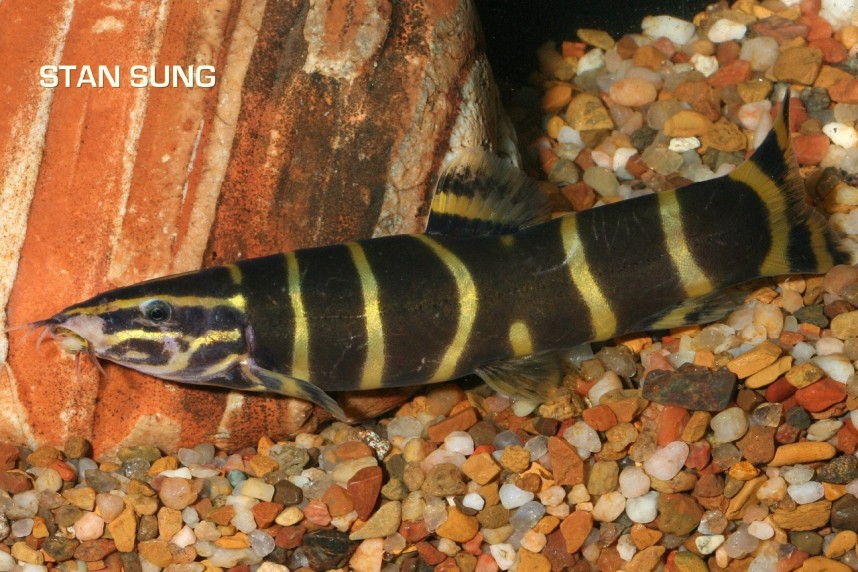
Sinibotia reevesae
Chang, 1944
Max length95mm SL3.7in SLTank120 × 30cm48 × 12inTemp20–25.5°C68–78°FpH6.5–8.0This species not often seen in the aquarium trade and is apparently rare in its natural waters, with the occasional individual imported as bycatch in shipments of S. pulchra or S. robusta, or by private collectors. Like others in the genus it has a highly flexible, sinuous body which makes it very interesting to observe. It's told apart from congeners by the following combination of chara...
Squaliforma villarsiBlue Fin Thresher Pleco
authority not recorded
Max length175mm SL7in SLTank120 × 30cm48 × 12inTemp21–23°C70–73°FpH6.0–7.2This species is sometimes referred to as Hypostomus villarsi, and is a rare find in the hobby. If you're lucky enough to see some for sale, check the fish have rounded bellies and that their eyes aren't sunken before you part with any cash, as these are classic signs of emaciation in newly imported Loricariids....
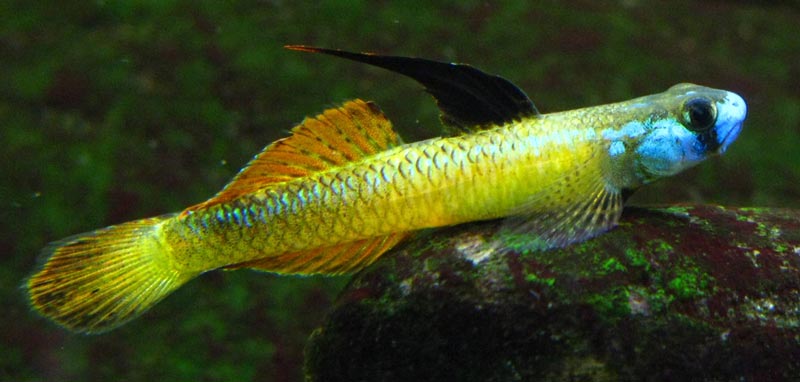
Stiphodon percnopterygionus
Watson & Chen, 1998
Max length35mm SL1.4in SLTank60 × 30cm24 × 12inTemp22–28°C72–82°FpH6.5–7.5This species is rare in the aquarium trade and normally expensive when available. It's one of the most easily-identifiable in the genus by the combination of usually 14 pectoral-fin rays, 10 segmented second dorsal-fin rays, relatively small adult size, unique colouration in males and the shape of the first dorsal-fin in males in which the fourth and fifth spines are...
Stomatepia pindu
authority not recorded
Max length90mm SL3.5in SLTank75 × 30cm30 × 12inTemp28–30°C82–86°FpH7.5–8.5Because of it's its tiny natural range, habitat destruction due to excess water removal (the nearby town of Kumba relies on the lake for it's water supply), deforestation, the introduction of non-native species and overfishing, it is considered to be critically endangered. All efforts at captive breeding are to be encouraged. However, it is correspondingly rare in the hobby. The area around Lake Barombi Mbo has been suggested to be designated a protected area, but as yet this has not o...
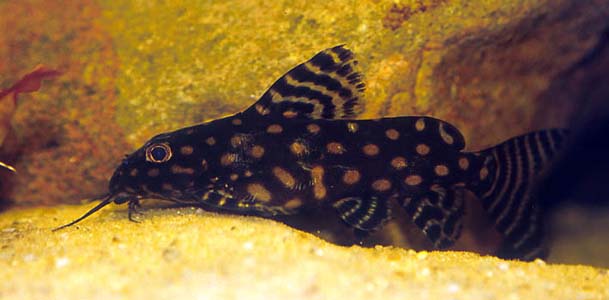
Synodontis angelicusPolka Dot Synodontis
Schilthuis, 1891
Max length250mm SL10in SLTank120 × 45cm48 × 18inTemp24–28°C75–82°FpH6.0–8.0A very nocturnal species that will be seen only infrequently during daylight hours. S. angelicus is very long-lived and can survive for over 20 years if maintained correctly. S. angelicus was much sought after when first imported and commanded a correspondingly large price. They are still relatively expensive, though prices have dropped considerably. It is quite a rare species in its native waters. The patterning and colour varies cosiderably, depending on type locality. Some specimens have w...
Synodontis dhonti
authority not recorded
Max length400mm SL16in SLTank120 × 45cm48 × 18inTemp24–28°C75–82°FpH7.5–8.5S. dhonti's natural deep water habitat and solitary lifestyle make collection for the hobby difficult and so it is rarely seen for sale. When juvenile it may be confused with other Tanganyikan Synos but it loses its spotted patterning as it matures....
Synodontis granulosa
authority not recorded
Max length270mm SL11in SLTank150 × 60cm60 × 24inTemp24–28°C75–82°FpH7.8–8.5One of the most stunning and sought after species of Synodontis and though the cost of ownership has dropped slightly, it still commands a high price. Its natural deep water habitat, limited range and solitary lifestyle make collection for the hobby difficult and so it is rarely seen for sale. It also appears that the areas of the lake in which it occurs are threatened with ecological disaster. In the aquarium S. granulosa is intelligent and can develop into a real character, with many speci...
Synodontis polliPoll's Synodontis
authority not recorded
Max length100mm SL3.9in SLTank90 × 30cm36 × 12inTemp24–28°C75–82°FpH7.5–8.5This species is superficially similar to S. petricola but the spots on its body are larger than in petricola and it has a longer head. It is rarely seen in the trade, though can occasionally be found mis-identified as S. angelicus, S. petricola or Synodontis sp.....
Tilapia guinasana
authority not recorded
Max length140mm SL6in SLTank120 × 30cm48 × 12inTemp19–25°C66–77°FpH7.0–7.8Rare in the hobby, this species is unfortunately considered critically endangered in the wild. The lake in which it is found is receiving less groundwater than it once was, due to extraction of water for agriculture. Even if this were not the case, the species is found over such an enclosed range that it would still be at extreme risk. All attempts at captive breeding are therefore to be encouraged, with care being taken to keep the different lines pure. Interestingly, as there are no natural...
Trachydoras steindachneri
authority not recorded
Max length86mm SL3.4in SLTank90 × 38cm36 × 15inTemp24–26°C75–79°FpH6.0–7.0A rare sepcies in the hobby that is seldom offered for sale.
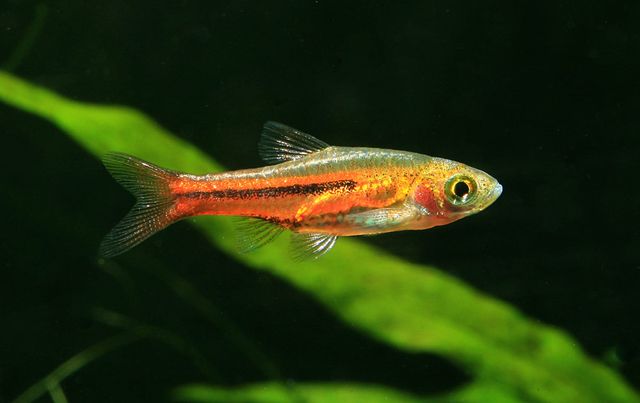
Trigonostigma somphongsi
Meinken, 1958
Max length30mm SL1.2in SLTank60 × 30cm24 × 12inTemp22–26°C72–79°FpH5.0–7.0T. somphongsi is exceptionally rare both in nature and the hobby and was considered potentially extinct for around a dozen years before a trio were imported to Germany as contaminants among a batch of Boraras urophthalmoides in 2006. Since then it has been successfully bred and distributed to various experts, mostly in Thailand and Germany, in the hope of establishing a sustainable captive population. The possibility of a...
Tyrannochromis macrostomaBig-Mouth Hap
authority not recorded
Max length350mm SL14in SLTank180 × 45cm72 × 18inTemp24–28°C75–82°FpH7.6–8.8T. macrostoma is an ambush predator in nature, lurking behind rocks and in crevices as it stalks its prey. It is rarely seen in the hobby and is usually quite expensive. Juveniles are easily confused with the similar T. nigriventer, but are easily distinguished when adult, as nigriventer does not develop the dark belly of macrostoma. Interestingly, this species exhibits reverse countershading, as also seen in the common Upside-down catfish, Synodontis nigriventris. This means that unlike the...
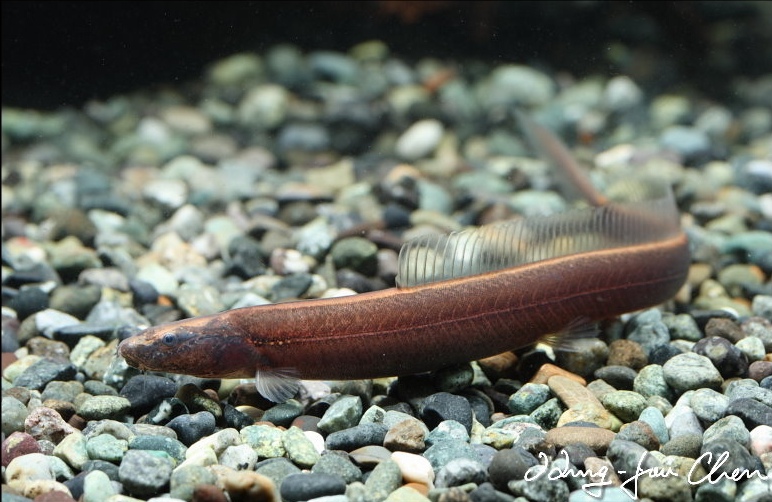
Vaillantella maassiFork-tailed Loach
Weber & de Beaufort, 1912
Max length125mm SL5in SLTank120 × 30cm48 × 12inTemp23–29°C73–84°FpH3.5–7.2This species is traded under various names including 'chocolate scissor-tailed loach', chocolate long-finned loach', 'red line cobra loach', 'spiny eel loach' and 'dragon loach'. It's apparently difficult to find in its natural habitats and thus time-consuming to collect, meaning it's rarely traded in numbers, sought after by enthusiasts and tends to carry a relatively high price tag when available. The genus currently contains just three...
Vieja zonataOaxaca Cichlid
authority not recorded
Max length250mm SL10in SLTanknot recordedTemp23–30°C73–86°FpH7.0–7.5A hardy and easy to keep cichlid, albeit a moderately aggressive one. Rarely available in aquatic stores, this fish is occasionally available through specialist cichlid dealers.
Xenotilapia simaBig-Eyed Xenotilapia
authority not recorded
Max length165mm SL6in SLTank120 × 38cm48 × 15inTemp23–27°C73–81°FpH8.0–9.5A rarely seen species in the hobby, X. sima is nevertheless a charming species for the peaceful Tanganyikan community. It feeds in a similar way to the well-known South American Geophagus species in that it will sift sand through its gills to extract invertebrates and morsels hidden in the substrate. It is quite a skittish fish and may react very nervously to rapid movements outside the tank or when lights are switched on and off....
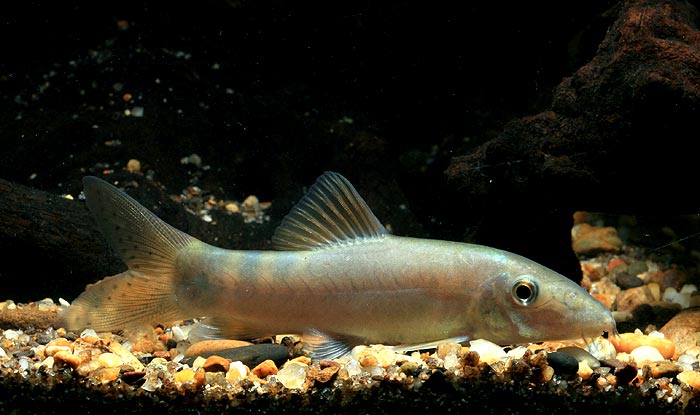
Yasuhikotakia caudipunctataSpeckle-tailed Loach
Taki & Doi, 1995
Max length100mm SL3.9in SLTank120 × 30cm48 × 12inTemp23–30°C73–86°FpH6.0–7.5This specie is relatively rare in the aquarium trade and much sought after by enthusiasts as a result. It looks relatively similar to Y. splendida but can be told apart from it, and indeed all other members of the genus, by the following combination of characters: possession of 8 branched dorsal-fin rays; 32-33 vertebrae; one or two small, brownish, vertically-orientated markings on the dorsal part of the body posterior to the dorsal fi...