Results for “ray”
Type a name: scientific, common, or one a species used to go by. Or narrow the catalogue with the filters.
Filters
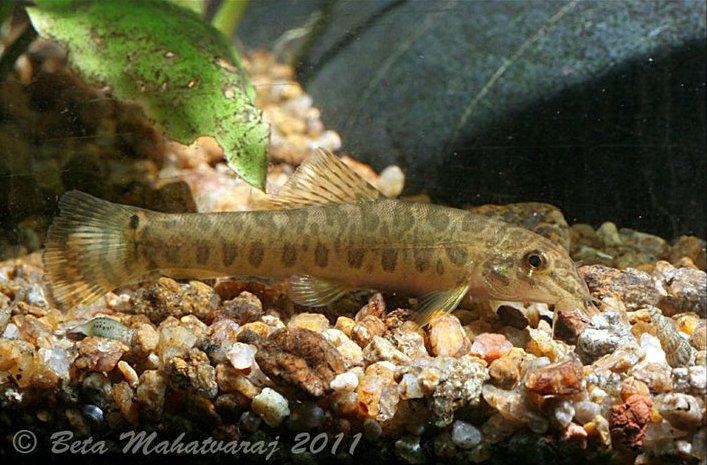
Paracanthocobitis mooreh
Sykes, 1839
Max length75mm SL3.0in SLTank75 × 30cm30 × 12inTemp20–26°C68–79°FpH6.0–7.5This species is still considered a member of the genus Nemacheilus by some sources, but it was reclassified and placed in Acanthocobitis by Grant (2008). Acanthocobitis sinuata, generally considered a junior synonym of A. mooreh (Kottelat, 2012b), also appears distinct and differs in geographical distribution plus number of dorsal-fin rays (2-3/9-10 in A. mooreh vs. 2/8-9 in A. sinuata) and some aspects of colour pattern.
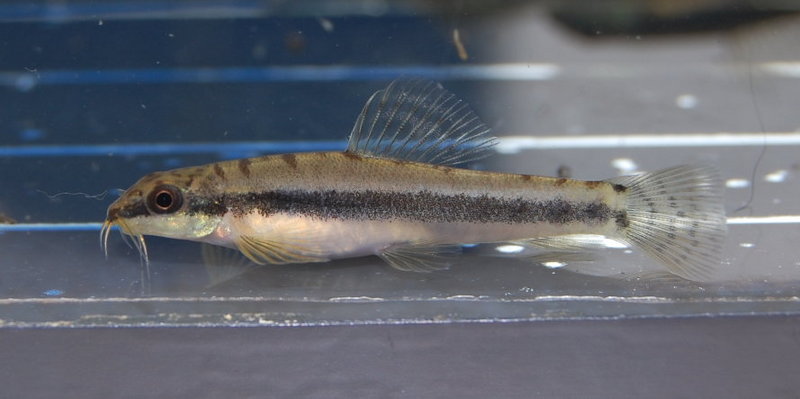
Paracanthocobitis zonalternans
Blyth, 1860
Max length78mm SL3.1in SLTank60 × 30cm24 × 12inTemp20–25°C68–77°FpH6.0–7.5According to Kottelat (1990) the chief distinguishing characters for the genus are: possession of 9-18½ branched dorsal-fin rays; colour pattern without black basal caudal bar, but with an ocellus at upper base of caudal-fin; upper lip with or without several rows of papillae; lower lip with a broad median interruption and a widened, papillated pad on each side.
Potamotrygon falkneriLarge Spot Stingray
authority not recorded
Max length470mm SL19in SLTank180 × 60cm72 × 24inTemp23.9–28.9°C75–84°FpH6.0–7.5P. falkneri is arguably among the most beautiful Potamotrygonids seen in the hobby. It's not imported with any great degree of regularity, and is usually expensive when available. There are currently three genera in the family Potamotrygonidae, all of which hail from South America. Paratrygon and Plesiotrygon are both monotypic genera (contain only a single described species) and are rarely seen in the hobby. The vast majority of imported rays belong to the biggest genus, Potamotrygon. T...
Potamotrygon henleiBlack Stingray
authority not recorded
Max length600mm SL24in SLTanknot recordedTemp23–28°C73–82°FpHnot recordedP. henlei is one of the more sought after ray species in the hobby due to its striking colours and impressive adult size. A fully grown one of these makes a stunning sight. Sadly exports from Brazil are now illegal under the IBAMA regulations, although captive bred fish are available occasionally. The price tends to be very expensive as a result. The species exists in various colour forms, with either white or yellow spots and a background colour varying between black and dark brown. The patt...
Potamotrygon orbignyiSmooth-back Stingray
authority not recorded
Max length375mm SL15in SLTanknot recordedTemp24–26°C75–79°FpH6.0–7.5P. orbignyi is one of the species often labelled as "teacup ray" in dealers' tanks. It can be tricky to identify when young, and we have seen it misidentified on numerous occasions. The species it resembles most closely is P. humerosa, although these can be distinguished by examining the skin of the fish. The texture of this is typically rough in P. humerosa and noticeably smooth in P. orbignyi. Provided you're sure what you're buying, it is one of the best species for t...
Potamotrygon scobinaMosaic Stingray
authority not recorded
Max length350mm SL14in SLTank180 × 75cm72 × 30inTemp24–26°C75–79°FpH6.0–7.5There are currently three genera in the family Potamotrygonidae, all of which hail from South America. Paratrygon and Plesiotrygon are both monotypic genera (contain only a single described species) and are rarely seen in the hobby. The vast majority of captive rays belong to the biggest genus, Potamotrygon. This contains 17 species at present, and its members are sometimes referred to as "big-eyed" stingrays for fairly obvious reasons. There are also a number of undescribed species th...
Potamotrygon sp. "itaituba"P14
authority not recorded
Max length400mm SL16in SLTank210 × 90cm84 × 36inTemp23–29°C73–84°FpH6.0–7.5This stunning fish is one of the more sought after rays in the hobby. Taxonomically it remains unclear whether it is a geographical variant of P. leopoldi or a distinct species. It has a smaller adult size and both pups (see section above) and adults exhibit different patterning than it's relative. In P. leopoldi the light spotted markings tend to be quite large, spaced out and do not extend to the edge of the disc. In P14 they are typically much smaller, more randomly distributed and prese...
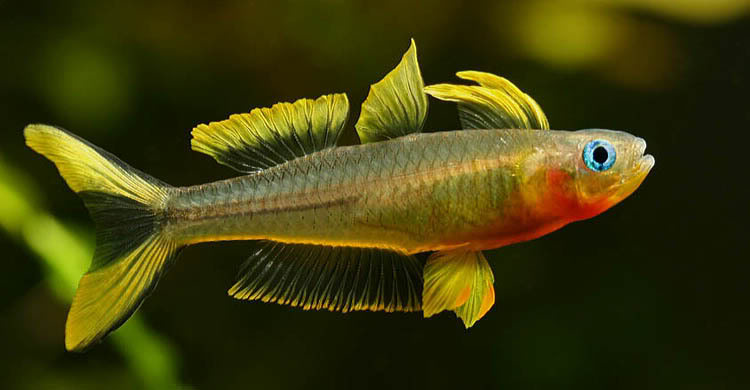
Pseudomugil furcatusForktail Blue-eye
Nichols, 1955
Max length60mm SL2.4in SLTank60 × 30cm24 × 12inTemp24–28°C75–82°FpH7.0–8.0This species is also traded as 'forktail rainbowfish' or 'yellow forktail', and it's also undergone several changes in scientific name since description. Pseudomugil furcatus is the original designation, but Allen (1980) created the genus Popondetta for it on the basis of morphological characters including number of anal-fin rays (16-20 in P. furcatus, 8-12 in other Pseudomugil spp.), absence of anterior...
Rasbora paucisqualis
authority not recorded
Max length40mm SL1.6in SLTank60 × 30cm24 × 12inTemp22.2–25.6°C72–78°FpHnot recordedRainboth's 'Fishes of the Cambodian Mekong' characterised members of Rasbora by possession of an unbranched, non-spiny firstray and seven soft dorsal rays, origin of thein the middle of the body, five branchedrays, a small mouth not extending below the eye and a lack of barbels. It's long been recognised as a polyphyletic lineage as noted by Kottelat (1999) amongst others, and in 2010 the results of a phylogenetic analysis by T. Y. Liao et al. suggested a number of changes in...
Rasbora rasboraGangetic Scissortail Rasbora
authority not recorded
Max length130mm SL5in SLTank120 × 45cm48 × 18inTemp20–25°C68–77°FpHnot recordedThis species is rarely seen in the trade and little has been written regarding its captive care. It's possible that several colour forms may exist depending on collection locality. Rainboth's 'Fishes of the Cambodian Mekong' characterised members of Rasbora by possession of an unbranched, non-spiny firstray and seven soft dorsal rays, origin of thein the middle of the body, five branchedrays, a small mouth not extending below the eye and a lack of barbels. It's long b...
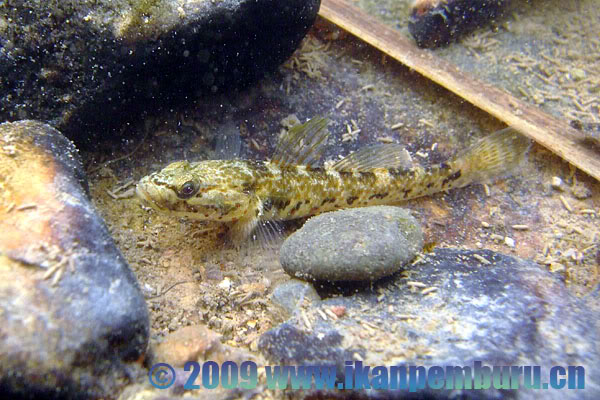
Rhinogobius lentiginis
Wu & Zheng, 1985
Max length32mm SL1.3in SLTank60 × 30cm24 × 12inTemp16–24°C61–75°FpH6.0–8.0It's unlikely that this species has been in the aquarium hobby given its natural range and the lack of commercial fishing for the ornamental trade in that area. Among congeners it's most similar to R. davidi but can be told apart by presence of 8 (vs. always 9 in R. davidi) soft dorsal-fin rays, 10 (vs. 11-12) transverse scale rows, and 6-7 (vs. 8-10) scales between the first dorsal-fin origin and upper pectoral-fin base.
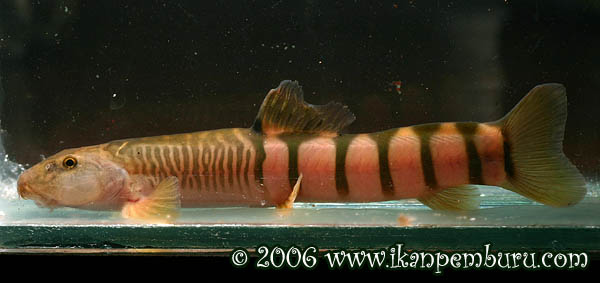
Schistura disparizona
Zhou & Kottelat, 2005
Max length96mm SL3.8in SLTank120 × 30cm48 × 12inTemp18–25°C64–77°FpH6.0–8.0Can be told apart from congeners by its colour pattern which consists of 8-11 closely-set, narrow dark bars in the anterior part of the body and 5 wider bars in the posterior part. It also possesses prominent dorsal and ventral adipose crests on the caudal peduncle and 9½ branched dorsal-fin rays.
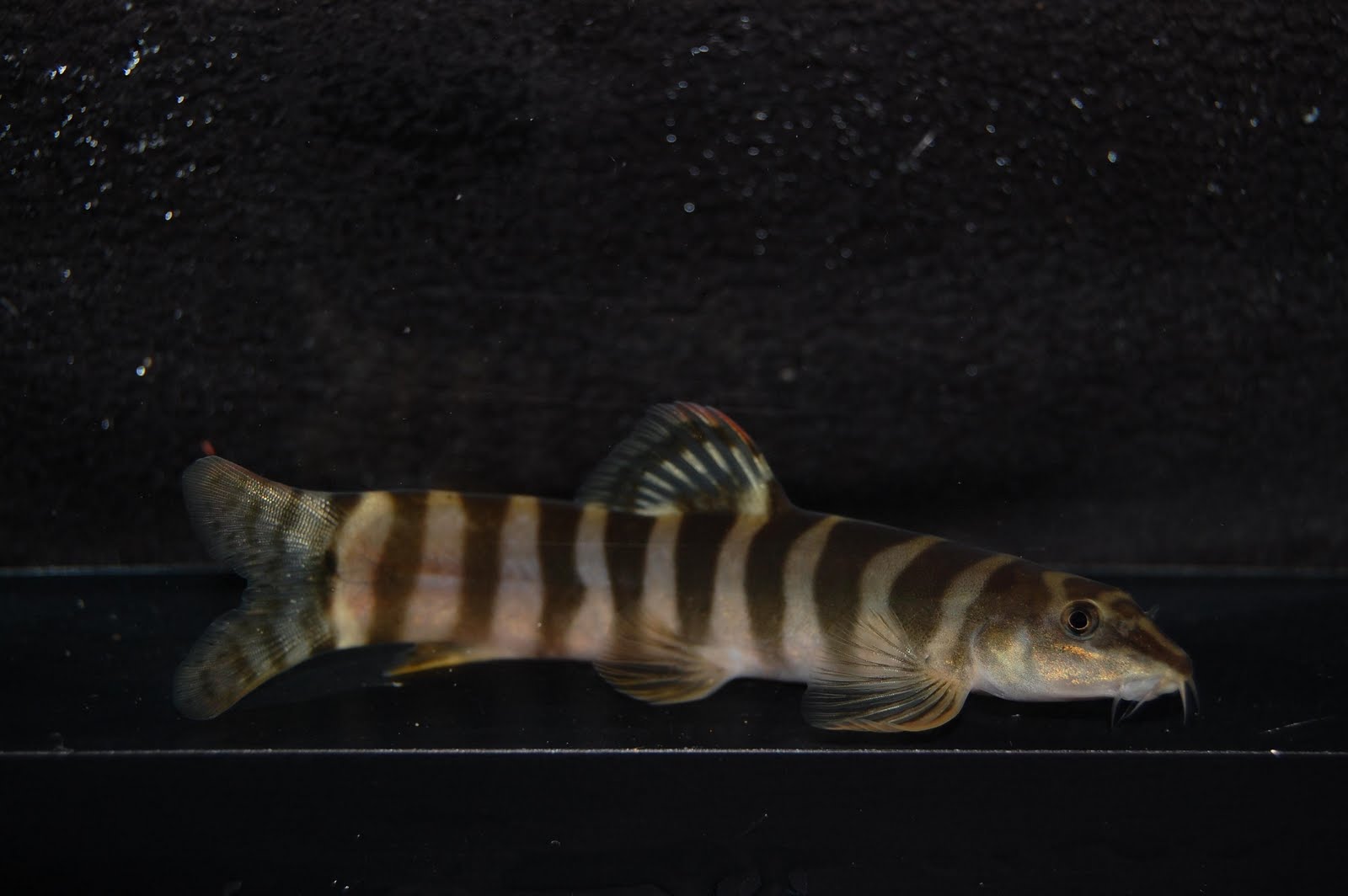
Schistura hypsiuraSuper Convict Loach
Bohlen, Ŝlechtová & Udomritthiruj, 2014
Max length73mm SL2.9in SLTank80 × 30cm31 × 12inTemp18–24°C64–75°FpH6.0–7.5It can be distinguished from congeners by the following combination of characters: caudal peduncle deep, ≥ the deepest part of the remainder of the body; no dorsal or ventral skin crests along the caudal peduncle; caudal-fin deeply forked, the outermost principal rays in the upper and lower lobes more than twice the length of the innermost: suborbital flap in males present; a well-developed suborbital groove in females; 6–8 very regular bars along the flank.
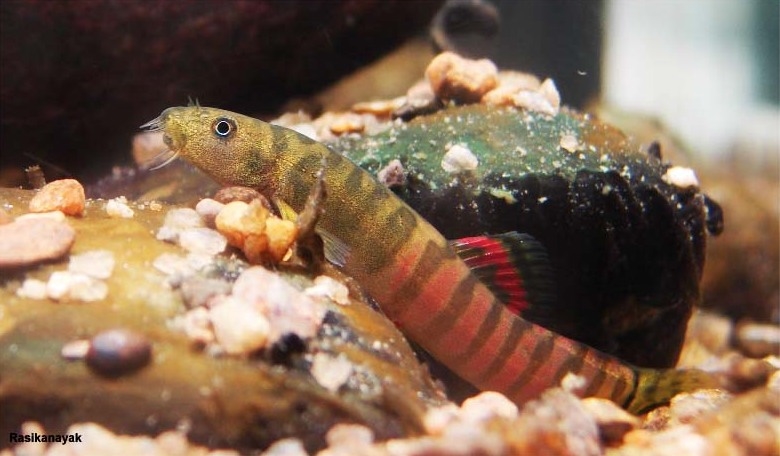
Schistura kodaguensis
Menon, 1987
Max length36mm SL1.4in SLTank60 × 30cm24 × 12inTemp20–25°C68–77°FpH6.0–7.5This species is not a well-known aquarium fish but is maintained by a number of Indian enthusiasts. It can be told apart from related species by the following combination of characters as per Sreekantha et al. (2006): pectoral-fin rays 10; absence of black spot at base of dorsal-fin; presence of rows of spots on caudal-fin; lateral line incomplete; caudal-fin slightly emarginate; 11-14 vertical bars on the body.
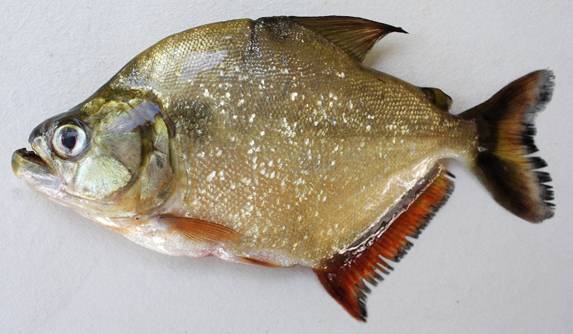
Serrasalmus brandtiiWhite Piranha
Lütken, 1875
Max length250mm SL10in SLTank150 × 60cm60 × 24inTemp20–26°C68–79°FpH5.0–8.0A number of sources state that S. brandtii can be identified by the relatively anterior position of the anal-fin origin beneath the first few dorsal-fin rays. However, images of specimens collected from the rio São Francisco, where it is the only member of the genus present, suggest that this is not always the case and this is also supported by the figure from Eigenmann (1915). No recent diagnosis of the species is available.
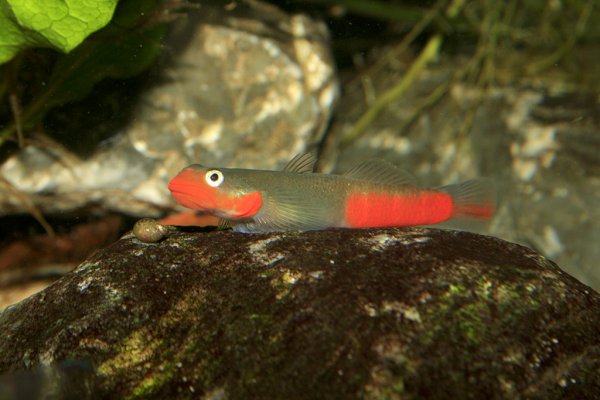
Sicyopus exallisquamulus
Watson & Kottelat, 2006
Max length52mm SL2.0in SLTank60 × 30cm24 × 12inTemp22–28°C72–82°FpH6.5–7.5Live colouration of this species was not included in the original description but the specimens in our images were identified by Dr. Ronald E. Watson, the principal author, as S. exallisquamulus. It's normally misidentified and traded as the Sri Lankan endemic species Sicyopus jonklaasi. It is diagnosable from congeners by the following combination of characters: 14-15 pectoral-fin rays; both genders exhibit small, widely-spaced scales...
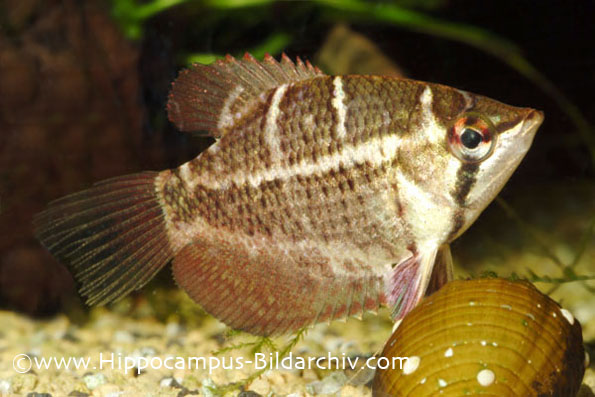
Sphaerichthys selatanensisCrossband Chocolate Gourami
Vierke, 1979
Max length45mm SL1.8in SLTank60 × 30cm24 × 12inTemp26–31°C79–88°FpH4.0–6.5This species is only occasionally seen in the hobby and sometimes sold as 'cherry chocolate gourami'. It was originally described as a subspecies of S. osphromenoides since the two are very similar-looking but has been considered a species in its own right since the late 1980s. The two differ in the number ofrays (7 in S. selatanensis vs. 9-10 in S. osphromenoides),rays (7 vs. 8),...
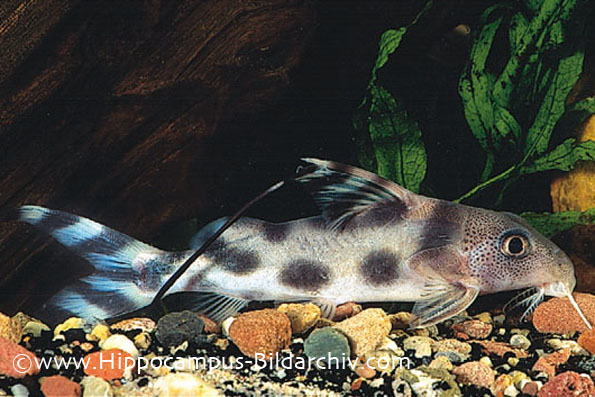
Synodontis decorusClown Synodontis
Boulenger, 1899
Max length300mm SL12in SLTank120 × 45cm48 × 18inTemp22–27°C72–81°FpH6.0–8.0Also known as both the Clown Squeaker and Decorated Synodontis, the first ray of theis greatly extended in this species. It is one of the more secretive, nocturnal Synos and if you wish to observe it regularly we recommend the addition of a 'moon' light or a red bulb timed to come on for a couple of hours after the main tank lights go off. If some food is added to the tank under these lighting conditions it should emerge to feed. This is one of only 3 members of the genus to exhibit...
Synodontis eupteraFeatherfin Synodontis
authority not recorded
Max length300mm SL12in SLTank120 × 30cm48 × 12inTemp22–27°C72–81°FpH6.0–7.5One of the most popular and commonly seen Synos in the hobby, S. eupterus is usually offered for sale as a small (1-3") juvenile with no information regarding its potential size. These young fish are often sold as Synodontis "Network" due to their attractive reticulated patterning. This patterning breaks up as the fish mature and adult specimens have a simple spotted colouration. The characteristic 'feathered' dorsal also develops with age, with the first few rays develo...
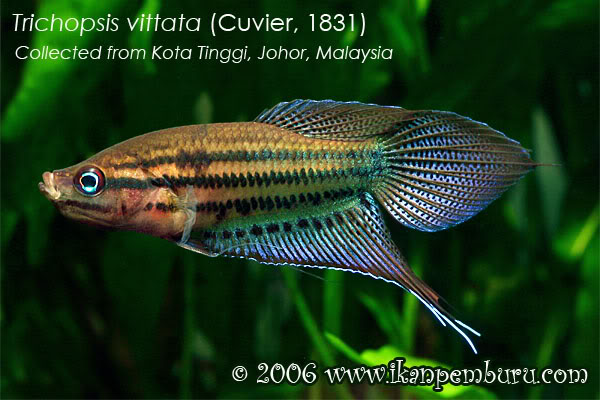
Trichopsis vittataCroaking gourami
Cuvier, in Cuvier & Valenciennes, 1831
Max length70mm SL2.8in SLTank60 × 30cm24 × 12inTemp22–28°C72–82°FpH5.0–7.5The common name is derived from the ability of genus members to produce audible sounds via a specialised pectoral mechanism which is unique within the family Osphronemidae. The structure comprises modified pectoral-fin tendons and muscles which are stretched and plucked by basal elevations of two fin rays in a similar way to guitar strings via rapid beating of the fins. The pectoral-fins beat alternately, each able to generate short or long bursts of sound. These sounds are produced by both sexes, predom...