Results for “spot”
Type a name: scientific, common, or one a species used to go by. Or narrow the catalogue with the filters.
Filters
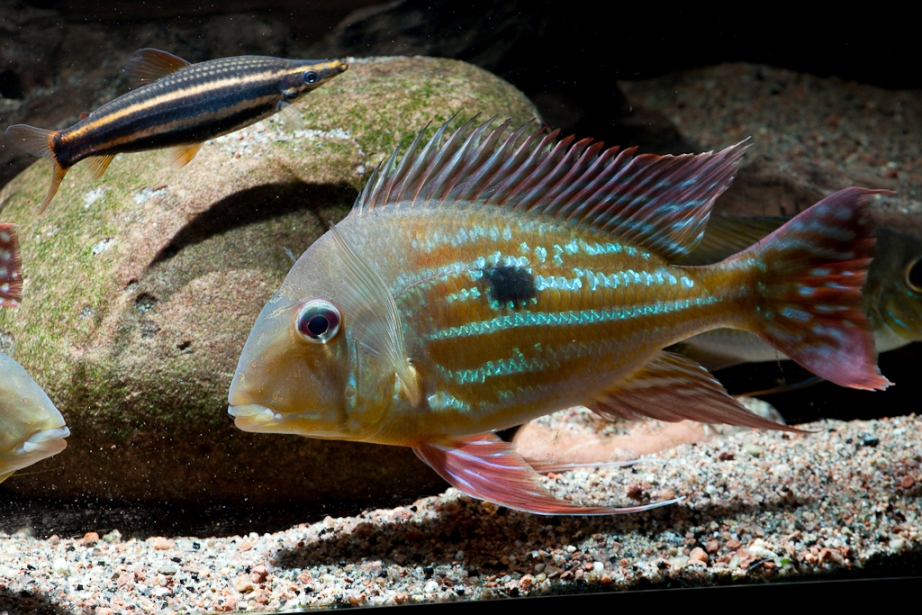
Geophagus winemilleri
López-Fernández & Taphorn, 2004
Max length200mm SL8in SLTank180 × 60cm72 × 24inTemp26–30°C79–86°FpH4.0–7.0This species is rare in the hobby although other species are sometimes sold under the name. It's a member of the nominal G. surinamensis 'group' of closely-related species within the genus and can be identified by a combination of characters including: possession of dark preopercular marking; four parallel, ventrally-inclined bars on each flank (normally visible only when the fish are stressed, spawning or preserved); dark lateral spot positioned within the second vertical bar; caudal fin red with variable pattern of large, iridescent blue to white spo...
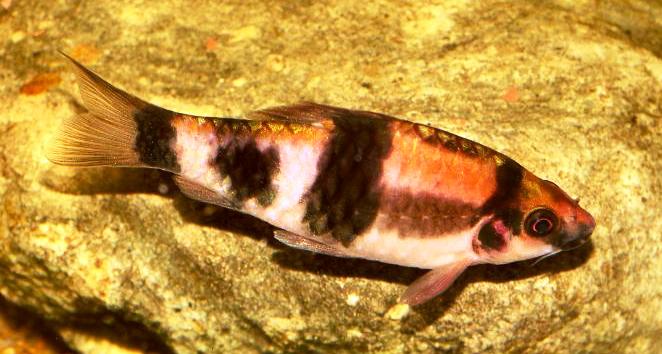
Haludaria fasciataMelon Barb
Jerdon, 1849
Max length70mm SL2.8in SLTank90 × 30cm36 × 12inTemp22–26°C72–79°FpH6.0–7.5This species is traded under various vernacular names including 'ember barb', 'banded barb' and 'black spot barb', and is perhaps among the more undervalued small cyprinids in the aquarium hobby being peaceful, relatively hardy, colourful, and of interesting behaviour. It exists in a number of colour for...
Hemiancistrus guahiborumL106
authority not recorded
Max length150mm SL6in SLTank120 × 30cm48 × 12inTemp22–26°C72–79°FpH6.0–7.5This species was only described to science in 2005, the species name being taken from the name of a local tribe. It's also known as the spotted orange seam plec, due to its patterning. It's found living alongside other Loricariid species in nature, including Peckoltia and other Hemiancistrus species. There's ongoing discussion as to whether this species and the currently undescribed L122 are one and the same, as these two were apparently both included in the scientific description...
Hemiancistrus sp.Blue Phantom Plec
authority not recorded
Max length180mm SL7in SLTank120 × 30cm48 × 12inTemp22–25°C72–77°FpH6.0–7.0This stunning species must surely rank among the most attractive Loricariids available in the hobby. There are several colour forms available, depending on collection locality. These vary in base colour and in the number, size and positioning of the spots on the body. The true identity of this fish is shrouded in confusion. It may or may not be Hemiancistrus subviridis, also known as the green phantom plec (L200), which it resembles very closely in morphology. The two are also found in diffe...
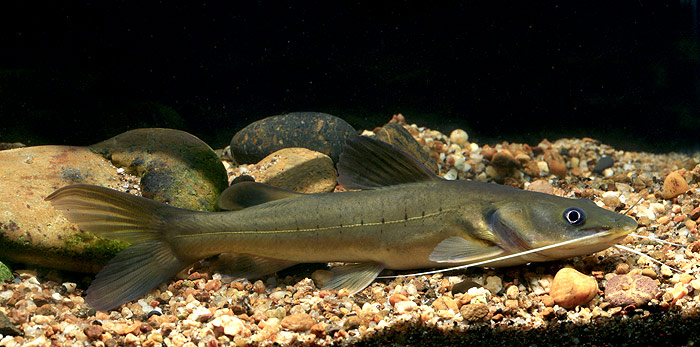
Hemibagrus peguensis
Boulenger, 1894
Max length286mm SL11in SLTanknot recordedTempnot recordedpHnot recordedMembers of this assemblage can be told apart from other congeners by possession of 44–46 vertebrae, an adipose-fin with a relatively short base (< 20 % SL), a colour pattern comprising either distinct black spots arranged in vertical columns or irregular black vertical lines running along the flanks, and normally a reddish or orangish caudal-fin in life.
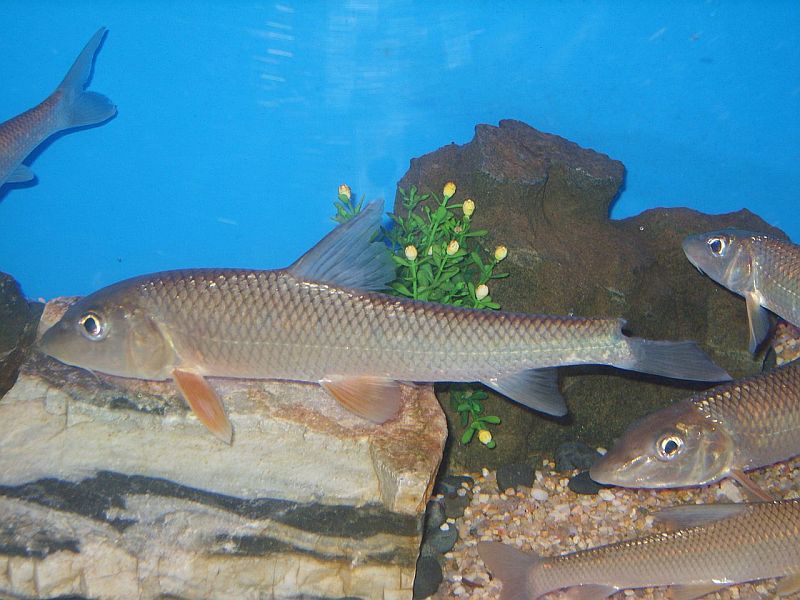
Hemibarbus labeoBarbel Steed
Pallas, 1776
Max length450mm SL18in SLTanknot recordedTempnot recordedpHnot recordedThis species can be distinguished from other members of the genus by the following combination of characters: absence of dark spots on body in adults; body elongate with slightly convex dorsal profile; head longer than body is deep; snout much longer than postorbital head length; lips well developed, lateral lobes of lower lip broad and thick with folds, median process small; barbel thickness shorter or equal to eye diameter; dorsal spine strong, ⅔ of HL; dorsal-fin origin closer to tip of snout than caudal-fin base base; 15+ gill rakers; 6½ branched anal-fin rays; posterior simple dorsal-fin rays ossified and spinous.
Hemigrammus ocelliferHead-and-tail light Tetra
authority not recorded
Max length45mm SL1.8in SLTank60 × 38cm24 × 15inTemp24–28°C75–82°FpH5.5–7.5Also known as the beacon tetra, this species is ubiquitous in most dealers' tanks and is one of the best choices for the newcomer to fishkeeping. It's both hardy and inexpensive. It has been popular in the hobby for several decades. There is a selectively bred albino form that has become popular in recent years, for which care is identical to the standard fish. There is possibly also a subspecies, H. ocellifer falsus that lacks the red spot at the caudal peduncle (the gold-coloured tai...
Herichthys cyanoguttatusTexas Cichlid
authority not recorded
Max length300mm SL12in SLTanknot recordedTempnot recordedpH6.0–7.5Like many cichlids, members of the genus Herichthys share something of a confused taxonomic past. Erected in 1854 with H. cyanoguttatus the type species, its members were moved into Cichlasoma by Regan in 1905. However following a reclassification of Cichlasoma by Kullander in 1983 it was once again deemed valid. In 1996 Kullander suggested Herichthys should only contain species "sharing a colour pattern of short vertical bars or black spots posteriorly from the middle of the side, and a un...
Herichthys pearsei
authority not recorded
Max length425mm SL17in SLTank240 × 60cm96 × 24inTemp24–30°C75–86°FpH7.2–8.5Like many cichlids, members of the genus Herichthys share something of a confused taxonomic past. Erected in 1854 with H. cyanoguttatus the type species, its members were moved into Cichlasoma by Regan in 1905. However following a review of Cichlasoma by Kullander in 1983 it was once again deemed valid. In 1996 Kullander suggested Herichthys should only contain species "sharing a colour pattern of short vertical bars or black spots posteriorly from the middle of the side, and a unique breed...
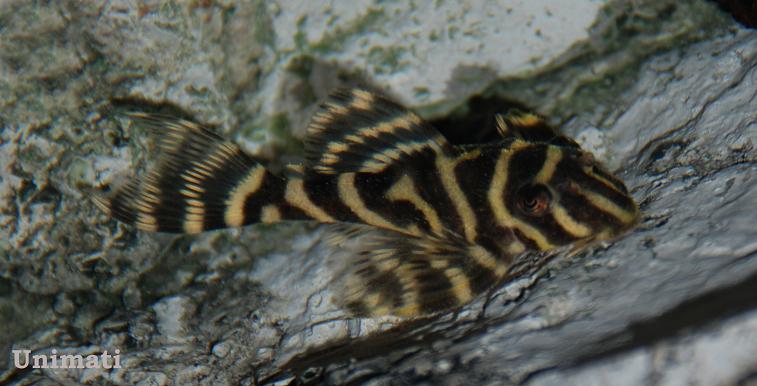
Hypancistrus sp.L333
authority not recorded
Max length150mm SL6in SLTank120 × 45cm48 × 18inTemp26–30°C79–86°FpH5.5–7.5This unidentified species possesses a highly variable colour pattern with the pale, randomly-arranged spots and blotches on the body ranging in colour from whitish to yellowish to rusty orange depending on the specimen. It's regularly confused with similar-looking relativ...
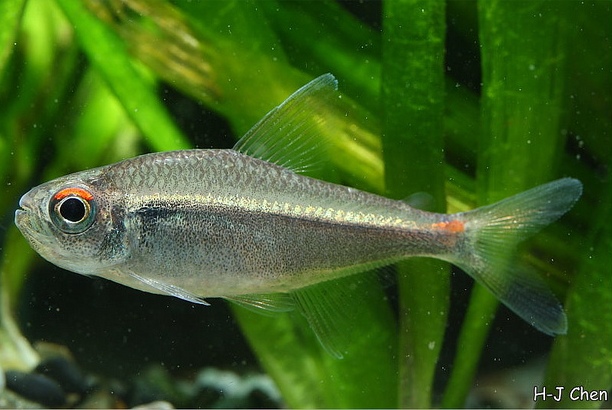
Hyphessobrycon agulha
Fowler, 1913
Max length42mm SL1.7in SLTank80 × 30cm31 × 12inTemp20–28°C68–82°FpH5.5–7.5This species is relatively rare in the aquarium hobby but is occasionally traded as 'red-tailed flag tetra'. It lends its name to the H. aghula group of closely-related species within the genus as proposed by Géry (1977, see below) of which members share the following characters which set them apart from other characids: lower half of the body dark, especially above the anal-fin; usually possessing a laterally-elongate humeral spot, more-or-less united wit...
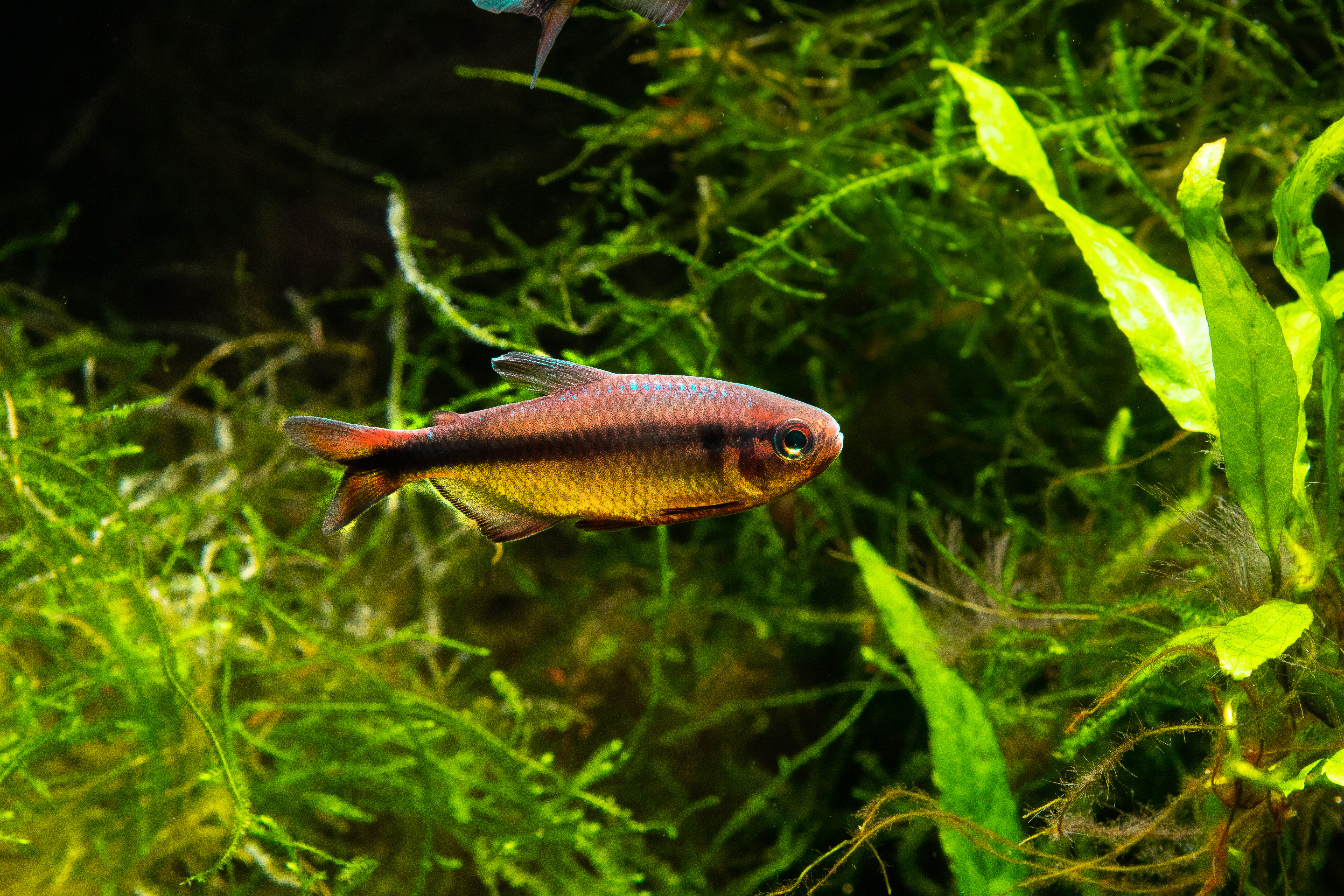
Hyphessobrycon melanostichosBlack Stripe Tetra
Carvalho & Bertaco, 2006
Max length25mm SL1.0in SLTank60 × 30cm24 × 12inTemp23–28°C73–82°FpH5.5–7.5Hyphessobrycon melanostichos shares a number of similarities with Hyphessobrycon sp. Blue Ribbon. The former can be differentiated from the latter by a lighter set, more streamlined body , smaller humeral spot and also red colouring, which is not present on the Blue Ribbon tetra. Care and maintenance of the two species is however, virtually the same.
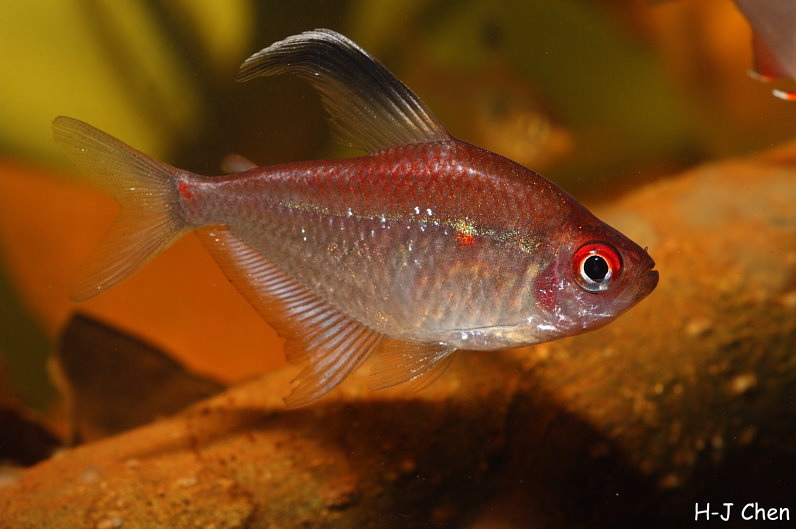
Hyphessobrycon pyrrhonotusFlame-back Bleeding Heart Tetra
Burgess, 1993
Max length45mm SL1.8in SLTank75 × 30cm30 × 12inTemp20–28°C68–82°FpH4.0–7.0This is the smallest of three similar-looking species most commonly-referred to as the 'bleeding heart' subgroup, the other two being H. erythrostigma and H. socolofi. All possess a reddish humeral spot which is not present in any other characid with other shared characters including possession of 6 -14 maxillary teeth, 7-9 scales above the lateral line, 5-7 scales below the lateral line and 26-33 anal fin rays.
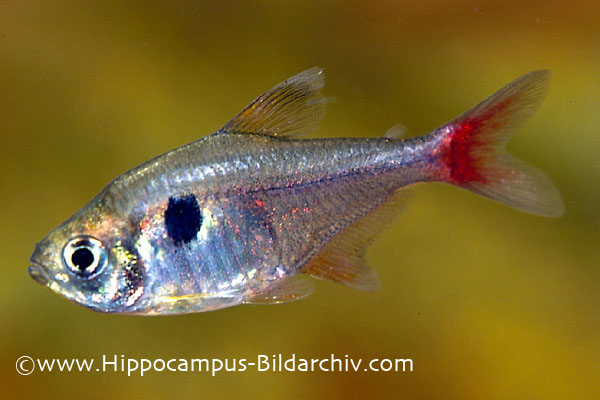
Hyphessobrycon roseusYellow Phantom Tetra
Géry, 1960
Max length20mm SL0.8in SLTank60 × 30cm24 × 12inTemp20–28°C68–82°FpH5.0–7.0This small species is a popular aquarium fish but there is some confusion surrounding its identity. Two colour forms have been traded, one of which also possesses tiny hooks on the fin rays. It can be distinguished from congeners by colour pattern; the body is rose-coloured, fins red with no black markings, and the ovoid humeral spot is prominent, measuring around half of the body depth.
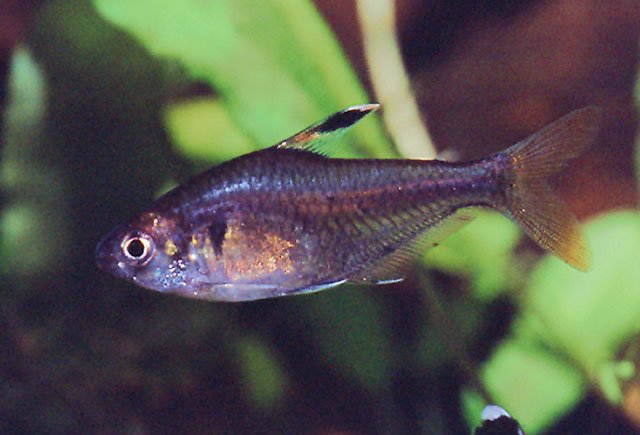
Hyphessobrycon simulatusFalse X-ray Tetra
Géry, 1960
Max length35mm SL1.4in SLTank80 × 30cm31 × 12inTemp20–28°C68–82°FpH5.0–7.0This species is uncommon in the aquarium trade although its name is sometimes applied to other species. It was originally described in the monotypic genus Pseudopristella, and can be distinguished from the vaguely similar Pristella maxillaris by possession of a relatively large (vs. relatively small) humeral spot and having black pigmentation in the anal-fin restricted to the first ray (vs. a prominent distal blotch).
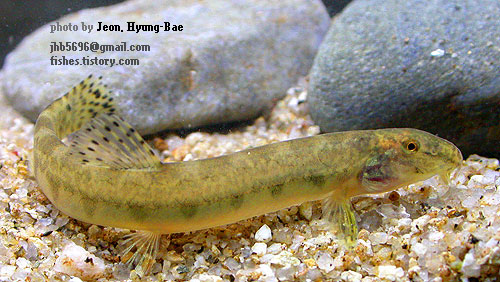
Iksookimia yongdokensis
Kim & Park, 1997
Max length160mm SL6in SLTank100 × 30cm39 × 12inTemp20–24°C68–75°FpH7.0–8.0Among them it's most similar to I. longicorpus and I. hugowolfeldi but can be distinguished by the following combination of characters: body patterning consisting of 9-13 dark vertical bars along the flanks plus a small dark spot at the base of the upper caudal-fin lobe; no black blotch or markings posterior to the operculum; reduced lamina circularis in males; interorbital width measures 14.7-17.8% o...
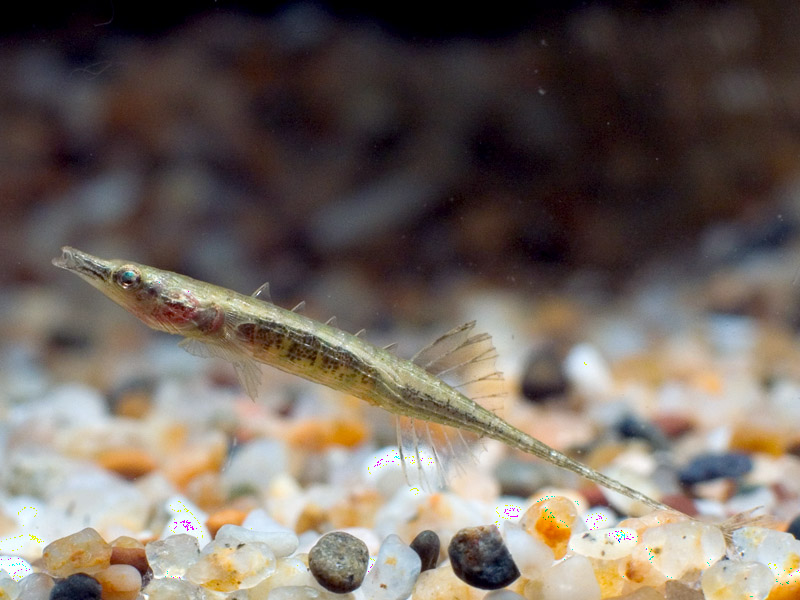
Indostomus paradoxusArmoured Stickleback
Prashad & Mukerji, 1929
Max length30mm SL1.2in SLTank40 × 20cm16 × 8inTemp22–27°C72–81°FpH6.5–7.5This species is rare in the aquarium hobby though its name is often misapplied to the closely-related I. crocodilus. It can be told apart from congeners by the following characters: dorsal and anal fins without dark markings, with a light brown bar in breeding males; ventral surface light brown; throat white, occasionally with a few brown spots; ridges of head bones weakly serrated or not serrated, depending on the bone. The family Indostomidae currently contains just a single genus with three species of which I. paradoxus is the type. It was raised alongside both family...
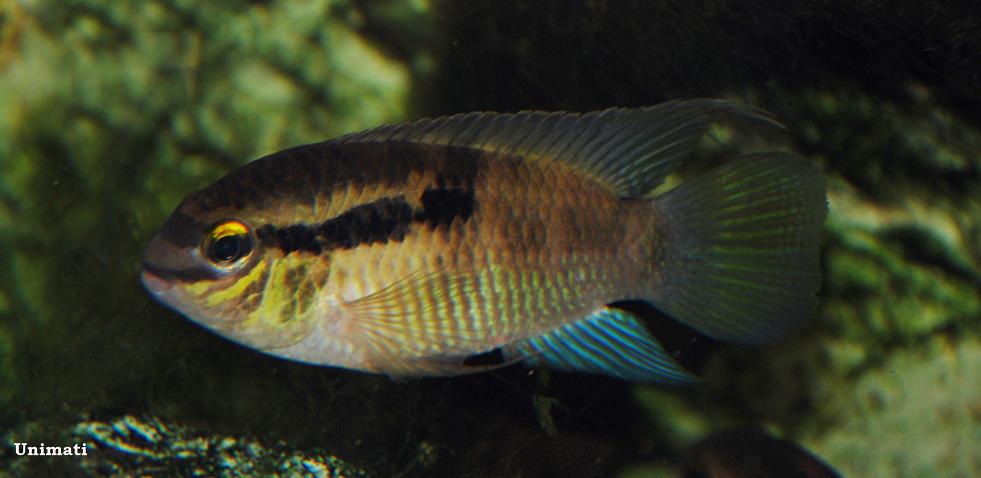
Laetacara thayeri
Steindachner, 1875
Max length65mm SL2.6in SLTanknot recordedTemp20–28°C68–82°FpH4.5–7.5This species is relatively rare in the aquarium trade. It can be differentiated from all congeners by a combination of possessing ctenoid (vs. cycloid) scales on the sides of the head plus lacking a dark spot at the caudal-fin base.
Lamprologus kungweensisOcellated Shell-dweller
authority not recorded
Max length80mm SL3.1in SLTank75 × 30cm30 × 12inTemp23–27°C73–81°FpH7.5–9.0L. kungweensis can be distinguished from similar species such as L. hecqui by the gold colour on the top of the eye. It also has a distinctive black spot towards the back of the dorsal fin. It is not often seen in the hobby....
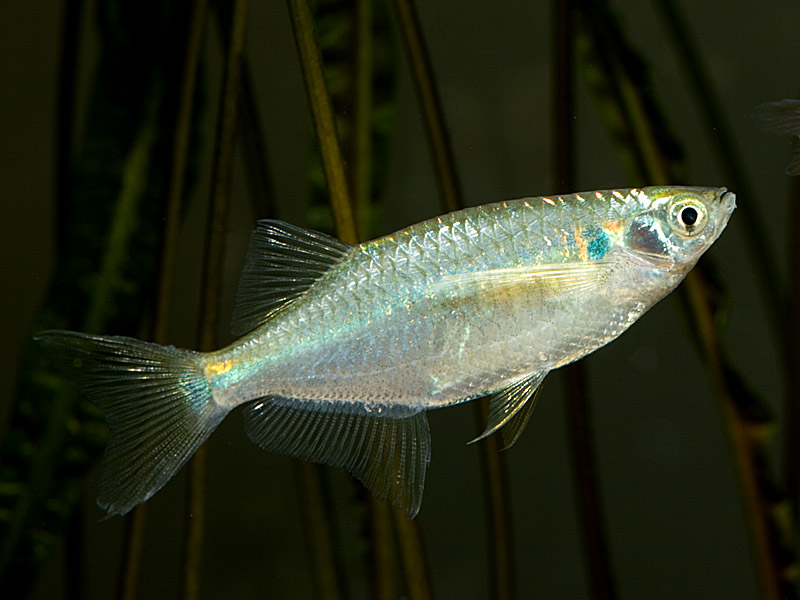
Laubuka caeruleostigmataFlying Minnow
Smith, 1931
Max length70mm SL2.8in SLTank120 × 30cm48 × 12inTemp20–26°C68–79°FpH6.0–8.0This species is also known as 'leaping barb' and was once quite common in the ornamental trade but is now seldom seen. It can be distinguished from other members of the genus by the following characters: bright blue spot on top of head; series of 4-5 short faint bars on anterior portion of body; 19-23½ branched anal-fin rays; body depth fits 2.1-2.9 times in SL.