Results for “acid”
Type a name: scientific, common, or one a species used to go by. Or narrow the catalogue with the filters.
Filters
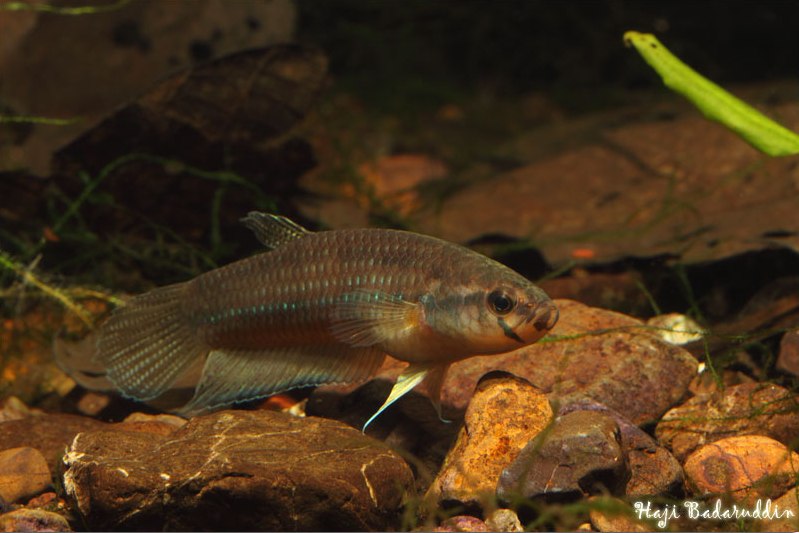
Betta antoni
Tan & Ng, 2006
Max length50mm SL2.0in SLTank60 × 30cm24 × 12inTemp22–27°C72–81°FpH5.5–7.0The genus Betta is the most speciose within the family Osphronemidae with almost 70 recognised members and looks set to grow further with new ones continuing to be described on a regular basis since the turn of the century. Member species have successfully adapted to inhabit a variety of ecological niches from stagnant ditches to flowing hill streams including some extreme environments such as highly acidic peat swamp forests.
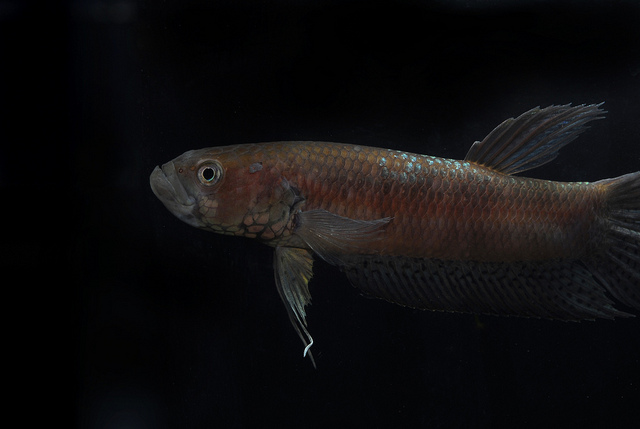
Betta gladiator
Tan & Ng, 2005
Max length90mm SL3.5in SLTank90 × 30cm36 × 12inTemp22–27°C72–81°FpH4.0–6.0Presumed endemic to the geographically-isolated Maliau basin, a roughly circular plateau enclosed by hills in Sabah state, Malaysia, Borneo. The Maliau River is part of the much larger Kinabantangan watershed, Malaysia's second longest river. The type series was collected from heath forest alongside 'Puntius' sealei and Hemibagrus cf. baramensis in acidic water with a pH of 4.2-4.8. Adult individuals were spaced around a metre apa...
Campylomormyrus tamanduaWorm-Jawed Mormyrid
authority not recorded
Max length400mm SL16in SLTank180 × 60cm72 × 24inTemp23–28°C73–82°FpH5.0–7.0C. tamandua is quite a rare fish in the hobby, but is imported occasionally. It's not a good beginner's fish as it requires pristine soft, acidic water conditions, will generally not feed on standard foods and attains a very respectable adult size. It's also sensitive to many aquarium medications. It can sometimes be found as a contaminant among imports of the much more common Elephant Fish, Gnathonemus petersii. Unlike this species, C. tamandua has both upper and lower jaws exten...
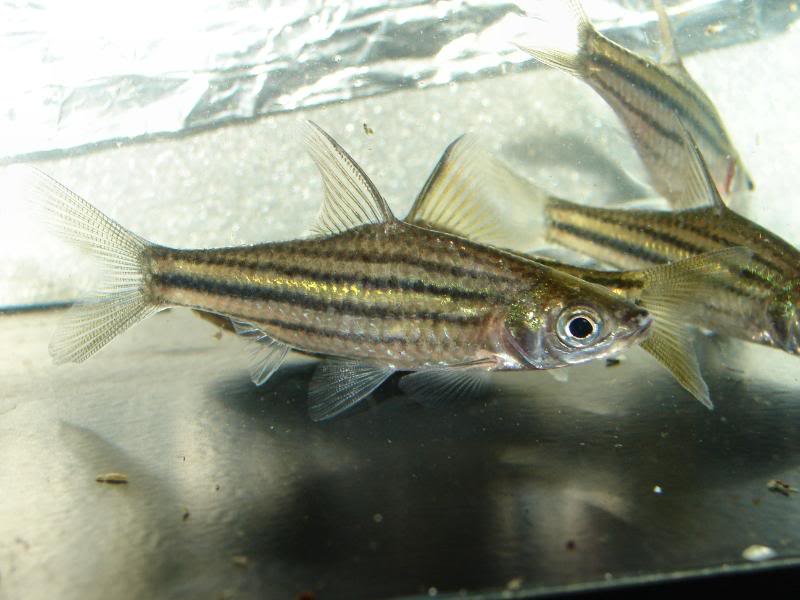
Desmopuntius gemellus
Kottelat, 1996
Max length100mm SL3.9in SLTank120 × 45cm48 × 18inTemp22–25°C72–77°FpH4.0–7.0The type series was purchased from a market in Jambi province, eastern Sumatra, Indonesia and this species is also known from neighbouring Riau province plus the island province of Bangka. On Sumatra it may be restricted to the Indragiri and Batang Hari river systems. Inhabits peat swamp forests and associated black water streams in which the water is typically stained brown with humic acids and other chemicals released by decaying organic material. The dissolved mineral content is generally negligible and the pH can be as...
Dicrossus maculatusSpadetailed Checkerboard Cichlid
authority not recorded
Max length53mm SL2.1in SLTank60 × 30cm24 × 12inTemp26–30°C79–86°FpH3.4–5.4Dicrossus Maculatus are not commonly available in the trade. Sometimes they are mistaken for the more common and popular Dicrossus Filamentosa. The Spadetailed Checkerboards are an absolutely fascinating species to keep. They are a challenge to breed, requiring such acidic and soft water, but when it does happen it is a very rewarding experience. Reports maintain that the pH and temperature of the water when conceived, eggs laid, eggs hatched and in the first month of the fry's life c...
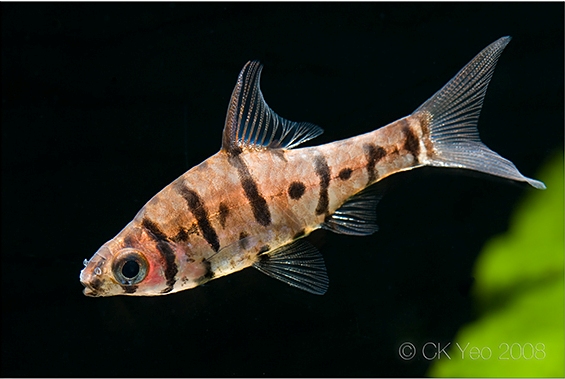
Eirmotus insignis
Tan & Kottelat, 2008
Max length36mm SL1.4in SLTank60 × 30cm24 × 12inTemp20–26°C68–79°FpH5.0–7.0Typically inhabits slow-moving, shallow, shady rainforest streams and swamps with dense submerged and marginal vegetation. The conditions are often rather turbid and the substrate composed of mud or fallen leaves, twigs and branches. Such environments characteristically contain soft, weakly acidic water and are often dimly-lit due to the rainforest canopy above. The fish are found sheltering among overhanging tree roots and aquatic vegetation.
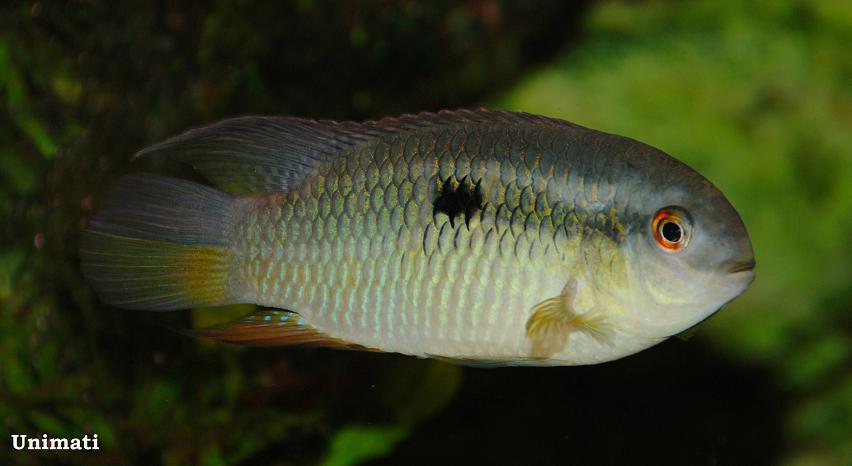
Laetacara fulvipinnis
Staeck & Schindler, 2007
Max length75mm SL3.0in SLTanknot recordedTemp20–28°C68–82°FpH4.0–7.0Has been collected from habitats containing clear, soft, acidic, tea-coloured blackwater, most typically among leaf litter or submerged vegetation in very shallow (10-50 cm depth) water along the margins of streams and other minor tributaries. At a village called El Niñal close to the mouth of the rio Pasimoni in the Casiquiare drainage pH was...
Loricaria simillimaMarbled Whiptail
authority not recorded
Max length180mm SL7in SLTanknot recordedTemp24–27°C75–81°FpH5.6–7.8The pictures here show the fish that is most commonly referred to as L. simillima, but there is a great deal of uncertainty surrounding its true identity. As suggested above, it seems unlikely that its natural distribution is so wide, and we are probably dealing with several species or subspecies. This argument is strengthened by the fact that several differently coloured fish are imported as this species, with darker specimens being collected from acidic blackwaters and lighter fish hailing fro...
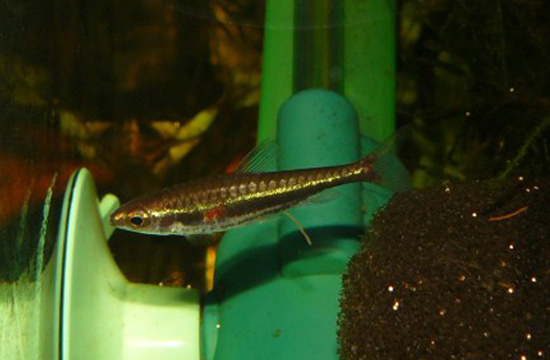
Nannostomus minimusLeast Pencilfish
Eigenmann, 1909
Max length23mm SL0.9in SLTank45 × 30cm18 × 12inTemp22–28°C72–82°FpH4.0–6.5Inhabits sluggish blackwater tributaries, small rivers and swampy areas, particularly in areas with dense growth of aquatic or overhanging riparian vegetation, submerged woody structures and leaf litter. The water is typically stained darkly with humic acids and other chemicals released by decaying organic material, the dissolved mineral content is generally negligible and pH can be as low as 4.0. N. minimus occurs sympat...
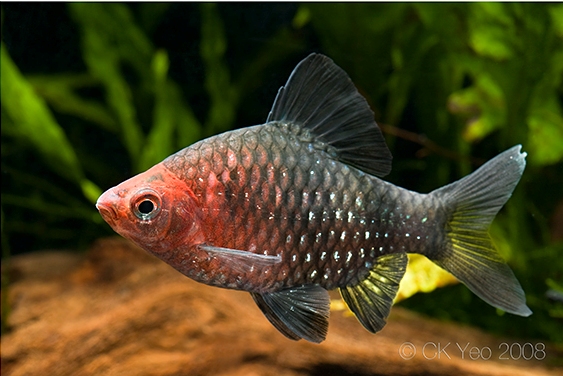
Pethia nigrofasciataBlack Ruby Barb
Günther, 1868
Max length55mm SL2.2in SLTank80 × 30cm31 × 12inTemp20–27°C68–81°FpH5.5–7.5Little sun is able to penetrate the forest floor so aquatic habitats are shaded and water temperature may be relatively cool, while conductivity and hardness are generally low and pH slightly acid. Macrophytes are uncommon though there may be dense, marginal vegetation, sometimes overhanging the full width of the stream, the roots of which may penetrate the banks underwater. Typical substrates are sandy but covered by a layer of leaf litter with fallen twigs and branches.
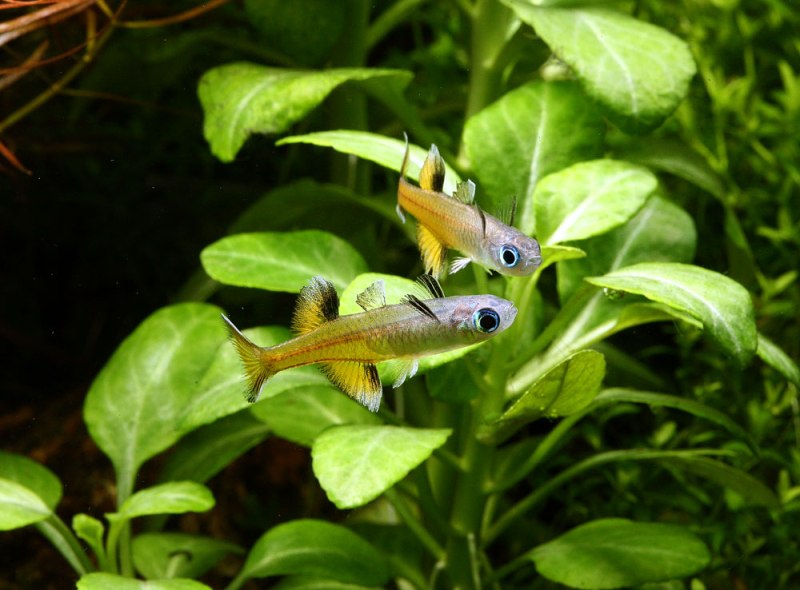
Pseudomugil signiferPacific Blue-eye
Kner, 1866
Max length70mm SL2.8in SLTank60 × 30cm24 × 12inTemp20–26°C68–79°FpH6.5–7.5Generally found within 15-20 km of the sea but habitat-type is extremely variable. It's been recorded in full marine conditions as well as pure freshwater environments, and commonly inhabits coastal mangrove creeks, swamps, and salt marshes. Freshwater habitats tend to comprise lowland swamps or forest streams with clear water but some populations inhabit acidic, tannin-stained, black waters. It's also abundant in the artificial canals typical of residential zones in the Gold Coast, southern Queensland.
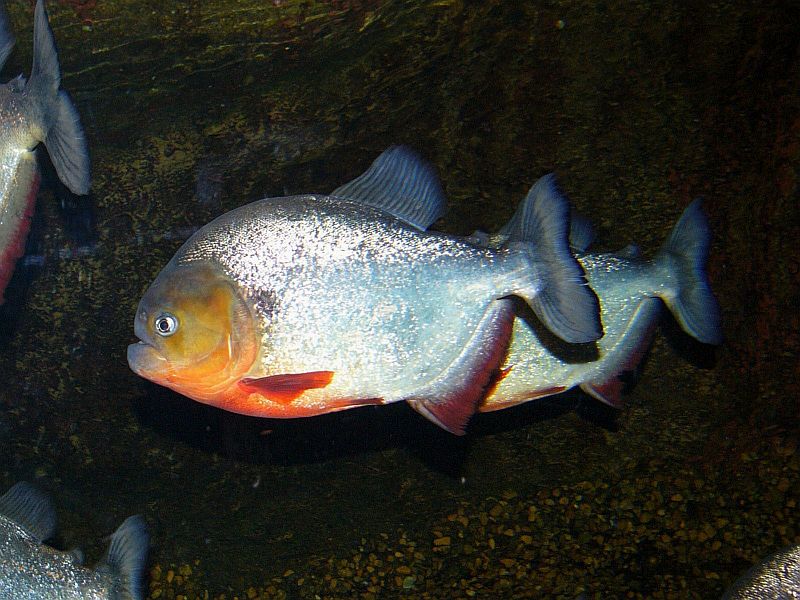
Pygocentrus caribaBlack Spot Piranha
Humboldt, 1821
Max length350mm SL14in SLTank240 × 90cm96 × 36inTemp20–28°C68–82°FpH4.0–7.0Has been recorded from major river channels, smaller tributaries, and floodplain lakes, many of which comprise acidic, mineral-poor blackwater environments with brownish, tannin-stained water, although it has been observed to inhabit clear waters as well. Many of its habitats lie within the Venezuelan and Colombian llanos, a vast, highly biodiverse system of tropical savannah grasslands, seasonally-flooded plains and forests covering an area measuring almost 600,000 square kilo...