Results for “barbel”
Type a name: scientific, common, or one a species used to go by. Or narrow the catalogue with the filters.
Filters
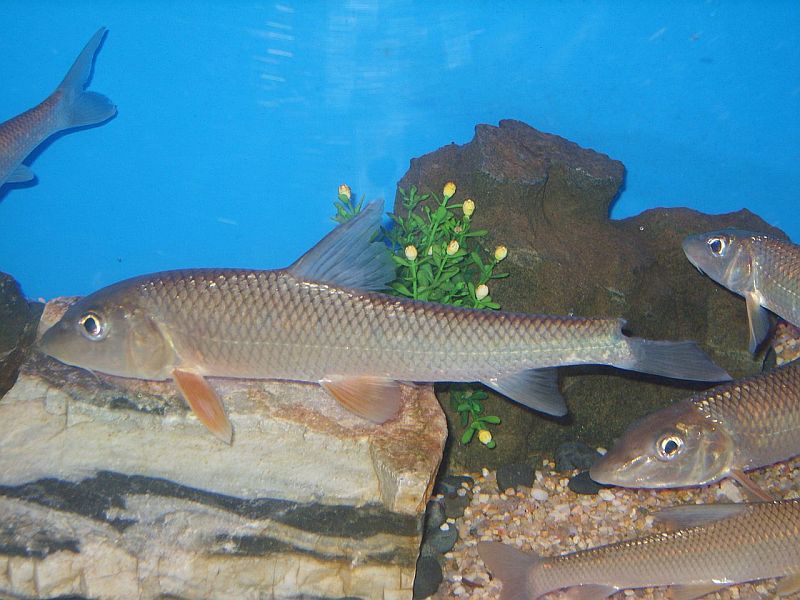
Hemibarbus labeoBarbel Steed
Pallas, 1776
Matched on the common name Barbel Steed
Max length450mm SL18in SLTanknot recordedTempnot recordedpHnot recordedThis species can be distinguished from other members of the genus by the following combination of characters: absence of dark spots on body in adults; body elongate with slightly convex dorsal profile; head longer than body is deep; snout much longer than postorbital head length; lips well developed, lateral lobes of lower lip broad and thick with folds, median process small; barbel thickness shorter or equal to eye diameter; dorsal spine strong, ⅔ of HL; dorsal-fin origin closer to tip of snout than caudal-fin base base; 15+ gill rakers; 6½ branched anal-fin rays; posterior simple dorsal-fin rays ossified and spinous.
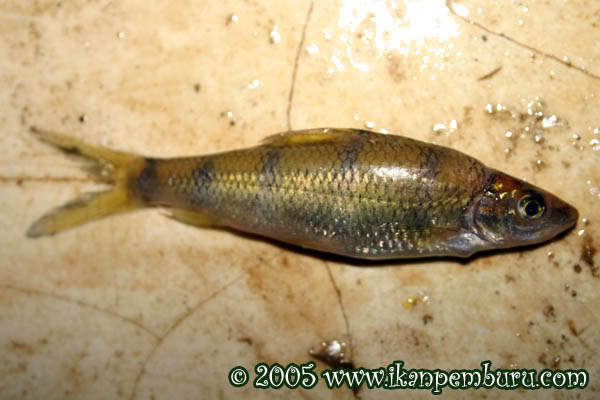
Acrossocheilus iridescens
Nichols & Pope, 1927
Max length300mm SL12in SLTanknot recordedTempnot recordedpHnot recordedA. iridescens and its closest relative A. longipinnis can be distinguished from all other barred species of Acrossocheilus by the following characters: wider (vs. narrower) black vertical bars on the flank in adults, each five to eight (vs. no more than four) scales in width; a horse-shoe shaped (vs. arched) mouth gape; rostral barbel located posteriorly (vs. anteriorly) to a horizontal line through the anteriormost margin of the lower jaw; two postlabial grooves extending anteromedially beyond (vs. away from) a horizontal line through the roots of the rostral barbels.
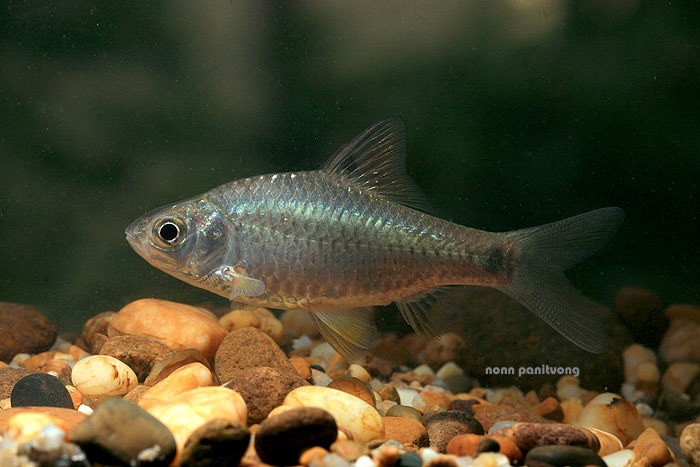
Puntius cholaSwamp Barb
Hamilton, 1822
Max length130mm SL5in SLTank120 × 45cm48 × 18inTemp18–26°C64–79°FpH5.5–8.0P. chola was retained in Puntius sensu stricto, of which members are defined by the following combination of characters: adult size usually less than 120 mm SL; maxillary barbels absent or present; rostral barbels absent; 3-4 unbranched and 8 branched dorsal-fin rays; 3 unbranched and 5 branched anal-fin rays; last unbranched dorsal-fin ray weak or strong and unserrated; lateral line complete with 22-28 pored body scales...
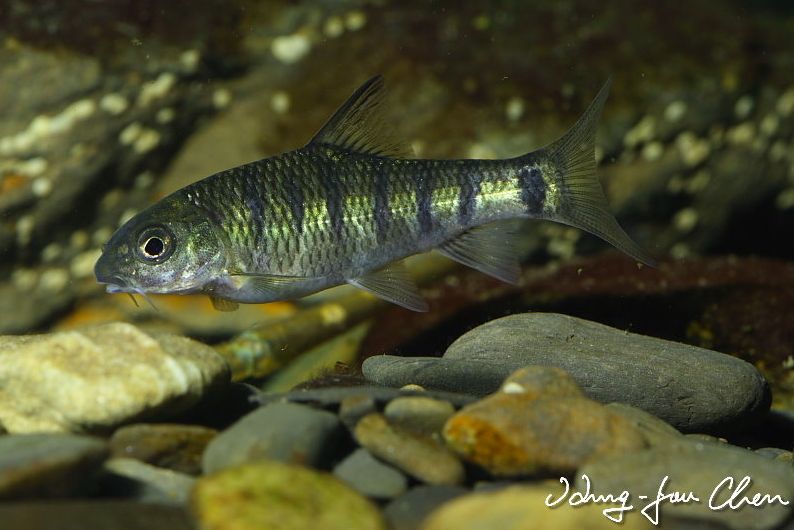
Acrossocheilus paradoxusTaiwan Banded Barb
Günther, 1868
Max length200mm SL8in SLTank180 × 45cm72 × 18inTemp15–25°C59–77°FpH6.0–8.0The genus Acrossocheilus is restricted to southern China, northern Vietnam and northern Laos. It can be distinguished from related genera by the following combination of characters: rostral fold present; lips fleshy and continuous around corners of mouth; lower lip with a median interruption; mouth inferior; horny sheath on lower jaw; two pairs of barbels; last simple ray of dorsal fin osseous with a serrated or smooth posterior margin.
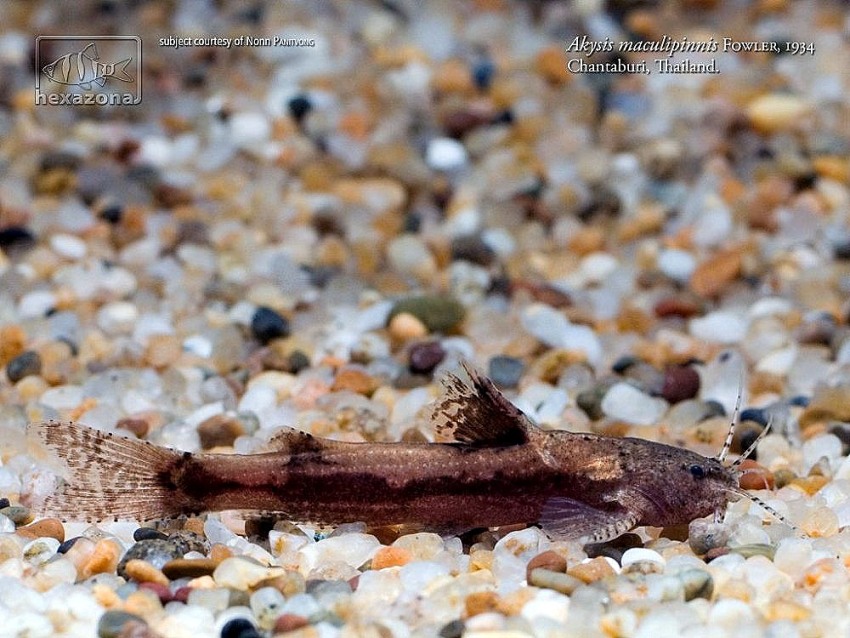
Akysis maculipinnisSpotfin Stream Catfish
Fowler, 1934
Max length35mm SL1.4in SLTank45 × 30cm18 × 12inTemp16.5–24°C62–75°FpH6.0–7.5This species has been exported for the aquarium hobby and ranks among the smaller members of the family. It can be differentiated from all other Akysis species by the following combination of characters: head length 22.0-28.6% of standard length (SL); caudal peduncle depth 8.8-10.7% of SL; anal-fin base length 15.2-19.1% of SL; eye diameter 12-16% of head length (HL); nasal barbel length 57 92% of HL; posession of 3-4 serrae on the posterior edge ofspine; body patterning mottled with indistinct ...
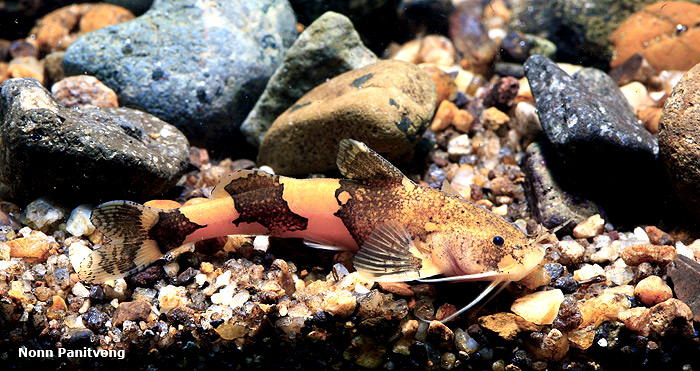
Akysis pulvinatusKra Stream Catfish
Ng, 2007
Max length30mm SL1.2in SLTank45 × 30cm18 × 12inTemp16.5–23.5°C62–74°FpH6.0–7.2This species has been exported for the aquarium hobby on an extremely limited basis. It can be differentiated from all other Akysis species by the following combination of characters: head length 27.6–29.8% of standard length (SL); head width 21.9–25.1% SL; caudal peduncle depth 9.4–10.3% SL; length ofbase 23.0–25.2% SL; nasal barbel len...
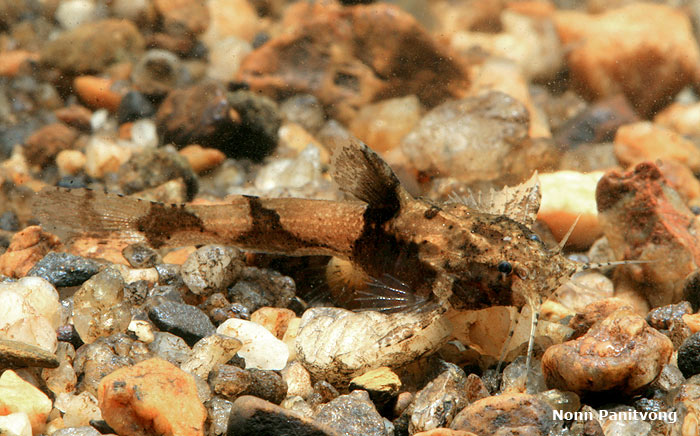
Akysis variusVariable Stream Catfish
Ng & Kottelat, 1998
Max length40mm SL1.6in SLTank45 × 30cm18 × 12inTemp16.5–24°C62–75°FpH6.0–7.5This species is among the smaller members of the family. It can be differentiated from all other Akysis species by the following combination of characters: caudal peduncle length 16.1-19.8% of standard length (SL); caudal peduncle depth 6.5-9.3% SL; length of adipose-fin base 25.6-29.5% SL; interorbital distance 42.0-46.0% of head length (HL), eye diameter 13.0-20.0% HL; length of nasal barbel 44.0-66.0% HL; lateral margins of the head appear straight when viewed from above; possession of 0-5 se...
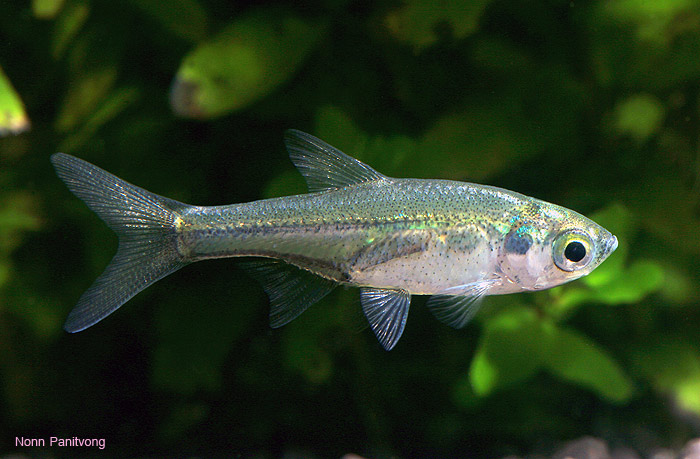
Amblypharyngodon chulabhornaePrincess Carplet
Vidthayanon & Kottelat, 1990
Max length40mm SL1.6in SLTank90 × 30cm36 × 12inTemp18–28°C64–82°FpH6.0–8.0The genus Amblypharyngodon currently contains five valid species, and A. chulabhornae can be distinguished from congeners by the following combination of characters: 42-50 (vs. 50-79) scales in the lateral row; lateral line incomplete with 6-7 (vs. 7-23) perforated scales; 4-5 scales on a transverse row between the lateral line and pelvic-fin base. All members of the genus lack barbels.
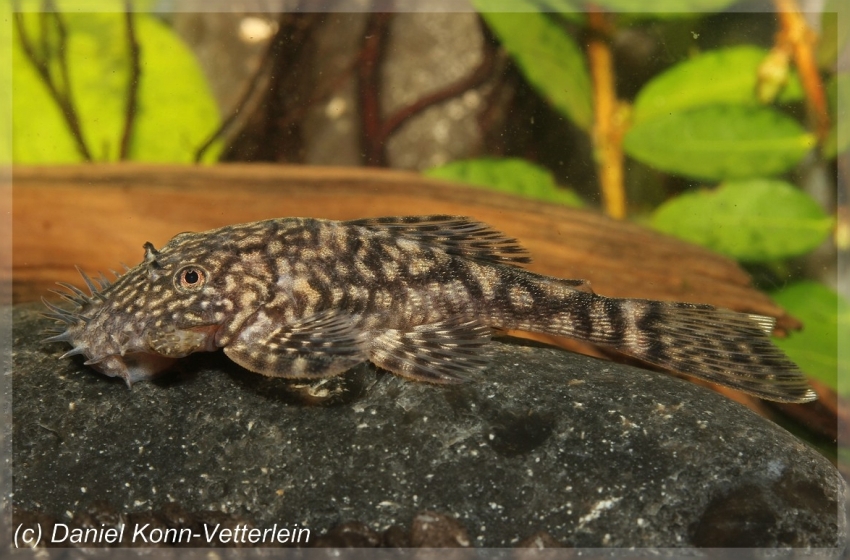
Ancistrus claroLDA 008
Knaack, 1999
Max length70mm SL2.8in SLTank60 × 30cm24 × 12inTemp23–28°C73–82°FpH6.0–7.5This species is sometimes confused with unidentified fishes such as A. sp. 'L352'. It can be told apart from closely-related congeners by possession of relatively long maxillary barbels which are free from the lower lip, and a colour pattern consisting of small spots on the head and vermiform lines on the body in males, and small spots all over the head and body in females.
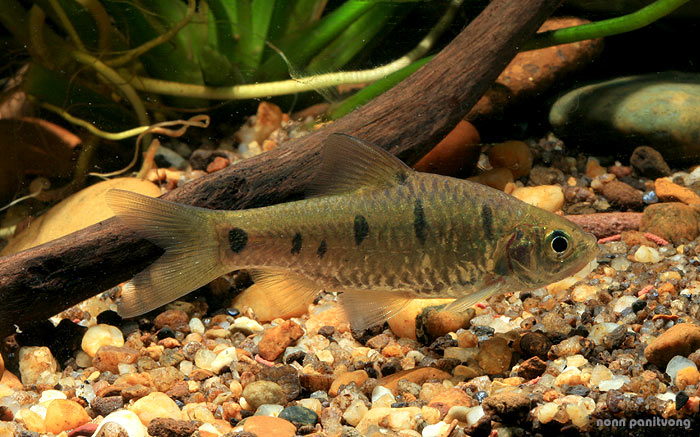
Barbodes aurotaeniatus
Tirant, 1885
Max length65mm SL2.6in SLTank80 × 30cm31 × 12inTemp18–26°C64–79°FpH6.0–7.5B. aurotaeniatus is uncommon in the aquarium trade. Following Kottelat (1998) it has a single pair of maxillary barbels, a complete lateral line and colour pattern usually comprising four small, vertically-orientated black markings on the flanks (located above anterior lateral line origin, below dorsal-fin origin, below posterior end of dorsal-fin base and on caudal peduncle, respectively) and one on the dorsal surface, below dorsal-fin origin.
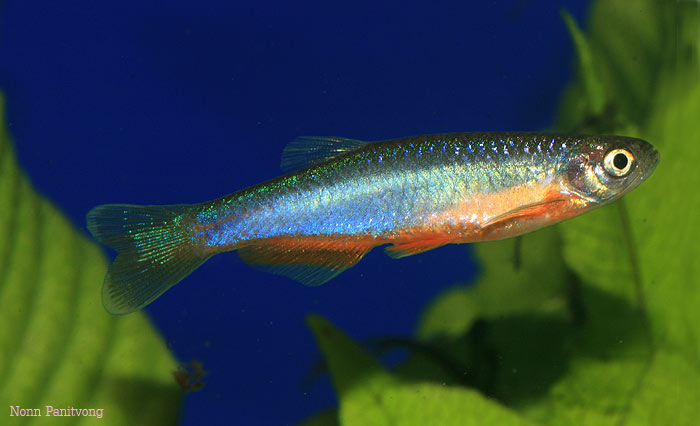
Brachydanio roseaRosy 'Danio'
Fang & Kottelat, 2000
Max length55mm SL2.2in SLTank90 × 30cm36 × 12inTemp18–25°C64–77°FpH6.0–7.5B. rosea is a relatively recent addition to the aquarium trade but has proved very popular since it's colourful, hardy and usually quite cheap making it ideal for beginners. It's sometimes sold as 'purple passion danio'. It's very similar to B. albolineata sensu stricto but differs in several characters, notably the relatively slimmer body, shorter rostral barbels and lack of...
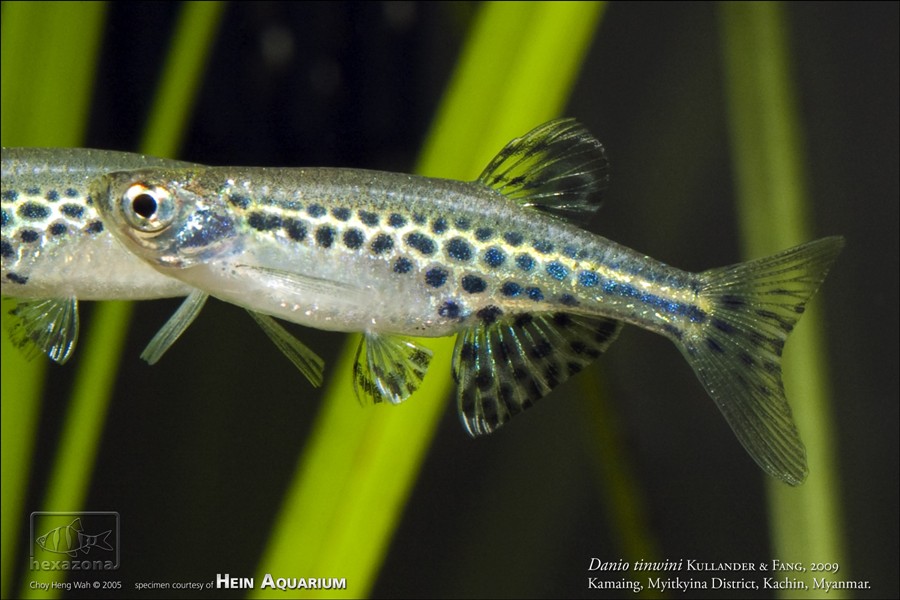
Brachydanio tinwiniGold Ring 'Danio'
Kullander & Fang, 2009
Max length30mm SL1.2in SLTank45 × 30cm18 × 12inTemp18–26°C64–79°FpH6.5–7.5Adult size is comparable to B. nigrofasciata, and in the description paper the authors hypothesise that the two are closely-related given they share other features such as similar barbel length (plus some additional merisitic counts), absent lateral line and spotted pelvic fins. The two are easy to tell apart, however, since in B. tinwini the P+1 stripe is composed of a series of spots (vs. solid), it possesses an indistinct P+2 str...
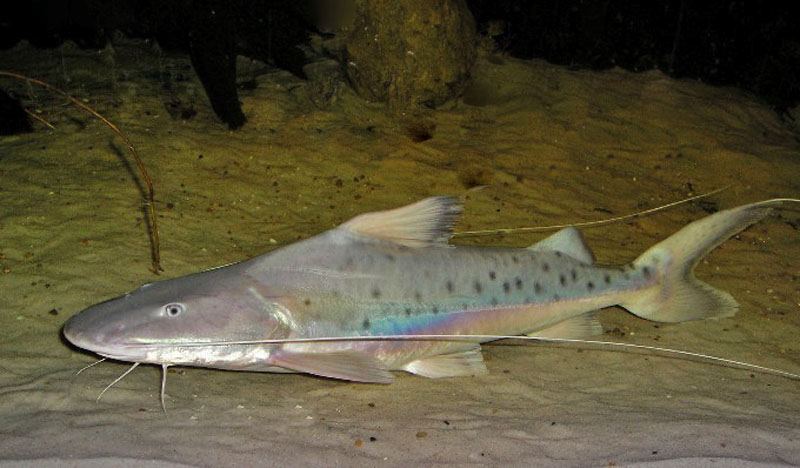
Brachyplatystoma capapretum
Lundberg & Akama, 2005
Max length880mm SL35in SLTanknot recordedTemp22–28°C72–82°FpH6.0–8.0This species can be told apart from the very similar-looking congener B. filamentosum by its smaller adult size (B. filamentosum can grow to almost 3 m in length), shorter maxillary barbels (never extending beyond base of adipose fin (vs. extending beyond base of adipose fin), moderately-forked with lobes of equal size (vs. deeply-forked caudal fin with upper lobe usually longer than the lower) and body col...
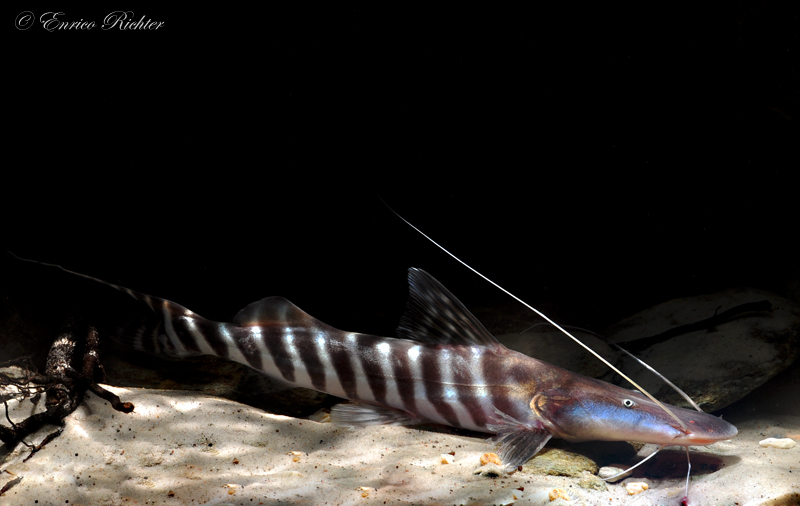
Brachyplatystoma tigrinumZebra Shovelnose
Britski, 1981
Max length500mm SL20in SLTank1000 × 400cm394 × 157inTemp22–32°C72–90°FpH6.0–7.6This species is sometimes confused with B. juruense, especially when juvenile, but can be told apart quite easily by it's more well-defined colour pattern, relatively slender body shape and longer barbels. It was described in the genus Meredontotus, but is currently included in Brachyplatystoma based on a pair of synapomorphies shared by memb...
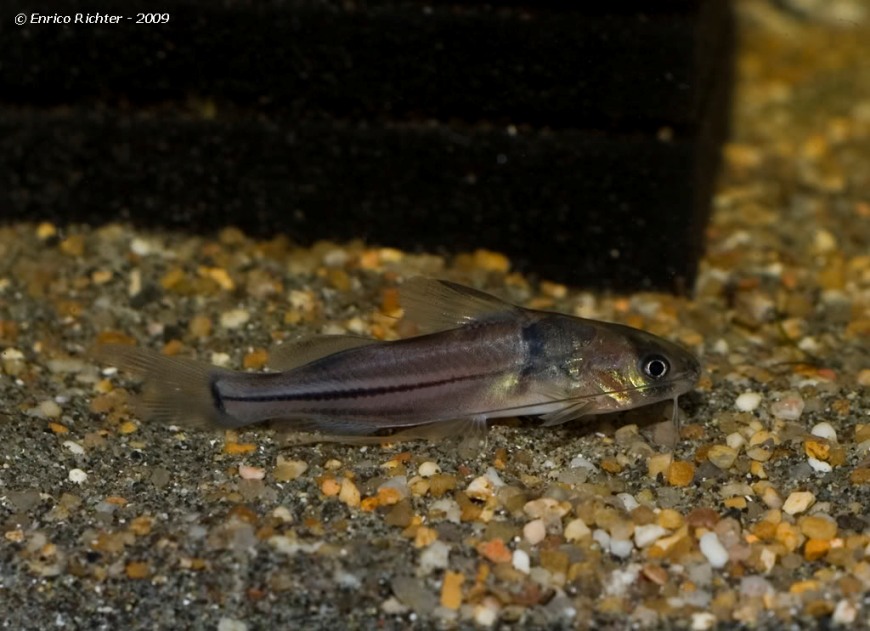
Brachyrhamdia meesi
Sands & Black, 1985
Max length61mm SL2.4in SLTank80 × 30cm31 × 12inTemp24–28°C75–82°FpH6.0–7.5Several Brachyrhamdia species have developed colour patterns that mimic syntopically-occurring Corydoras spp. throughout the life-cycle, and the remainder, including B. meesi, may mimic Otocinclus or smaller Corydoras spp. when juvenile. They're easily told apart from Corydoras by their significantly longer barbels and lack of scute-like plates on the body.
Chaca bankanensisChocolate Frogmouth Catfish
authority not recorded
Max length200mm SL8in SLTanknot recordedTemp22–26°C72–79°FpH6.0–8.0Chaca are unsuitable subjects for the general aquarist, but are relatively popular among lovers of oddball species. This species is very similar in appearance to the closely related C. chaca. However, it is somewhat darker and redder in colour than its relative, and lacks the hooklets that occur on the lips and body of chaca. It is a true master of disguise, and is also known as the angler catfish, due to it's ability to use its barbels as a kind of lure, using them to simulate the movement...
Chaca chacaFrogmouth Catfish
authority not recorded
Max length200mm SL8in SLTanknot recordedTemp22–25°C72–77°FpH6.0–8.0Chaca are unsuitable subjects for the general aquarist, but are quite popular among lovers of oddball species. This species is very similar in appearance to the closely related C. bankanensis. However, it's usually a bit lighter in colour than its relative and possesses small hooklets on the lower lip and body that are not present in bankanensis. It's a true master of disguise and is also known as the angler catfish, due to its ability to use its barbels as a kind of lure. These can be...
Corydoras septentrionalisNorthern Longnose Cory
authority not recorded
Max length60mm SL2.4in SLTank60 × 38cm24 × 15inTemp22–27°C72–81°FpH6.0–7.5There are 2 other species that superficially resemble C. septentrionalis. These are C. simulatus and C. amapaensis. Simulatus differs from septentrionalis by the absence of the third set of small, upper (rictal) barbels, situated behind the other two pairs in both septentrionalis and amapaensis. Amapaensis differs in that it has a clear caudal fin. This fin is noticeably barred in septentrionalis....
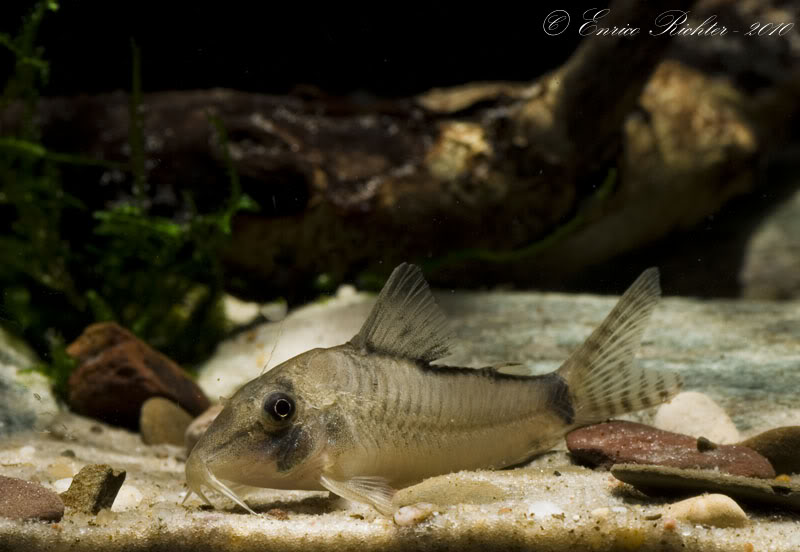
Corydoras simulatus
Weitzman & Nijssen, 1970
Max length70mm SL2.8in SLTanknot recordedTemp20–25°C68–77°FpH6.0–7.0This species can be identified from similar-looking congeners by possession of a pair of small rictal barbels. Its colour pattern can vary considerably depending on collection locality, with some forms having been misidentified as other species in the past. Those possessing a dark marking on the sides of the body are sometimes referred to as Corydoras sp. 'olga'.
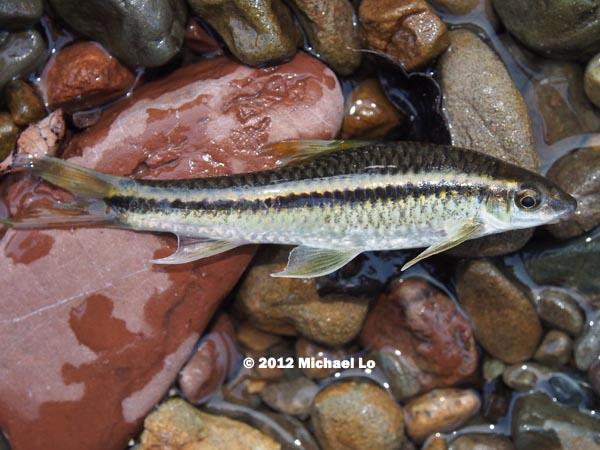
Crossocheilus cobitis
Bleeker, 1854
Max length52mm SL2.0in SLTank100 × 30cm39 × 12inTemp20–26°C68–79°FpHnot recordedGiven its wide natural range it seems logical that this species is or has been available in the aquarium trade, although its correct name may never have been applied. It is told apart from congeners by the following combination of characters: two pairs of barbels; a continuous midlateral stripe from the tip of the snout to the base of the caudal-fin, with a conspicuous small blotch at the posterior extremity, faintly marked on the caudal-fin; a faint mark between the anus and the anal-fin origin in juveniles; a narrow mouth.