Results for “brackish”
Type a name: scientific, common, or one a species used to go by. Or narrow the catalogue with the filters.
Filters
Thalassophryne amazonicaPrehistoric Monster Fish
authority not recorded
Max length150mm SL6in SLTank75 × 30cm30 × 12inTemp24–28°C75–82°FpHnot recordedThere are currently six described species in the genus Thalassophryne, of which T. amazonica is the only freshwater representative. The others (T. nattereri, T. maculosa, T. megalops, T. montevidensis and T. punctata) are all estuarine animals distributed along the western Atlantic coastlines of Central and South America and inhabit brackish-to-marine waters. They are members of the family Batrachoididae or toadfishes, of which most are exclusively marine species. All batrachoidids are ambush pr...
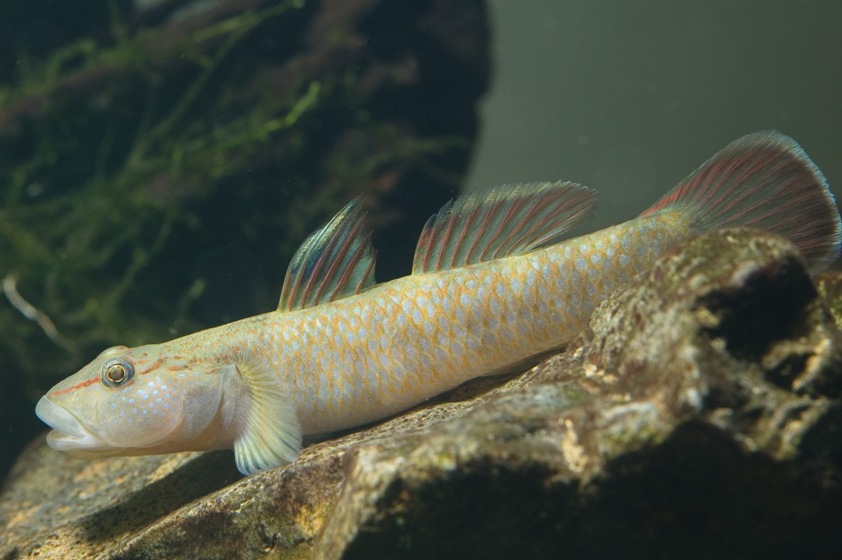
Rhinogobius sp. 'CO'
authority not recorded
Max lengthnot recordedTanknot recordedTempnot recordedpHnot recordedSome wild populations have evolved a complex amphidromous breeding strategy in which adults live and spawn in freshwater or brackish streams and the pelagic post-hatch larvae are washed downstream to the sea where the post-larval fry spend the first part of their life developing in estuarine nursery zones under brackish to full marine conditions. Once they reach a certain stage of development they begin to migrate upstream with some mov...
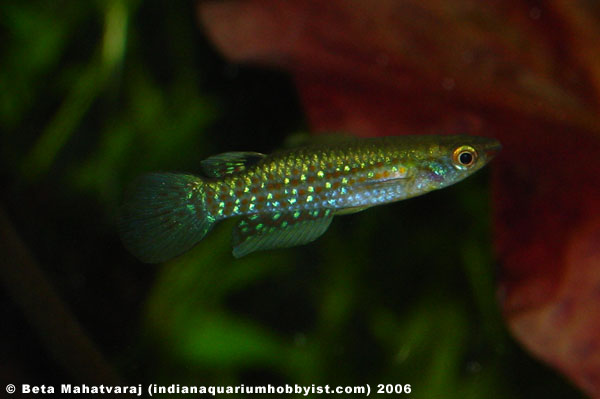
Aplocheilus blockiiGreen Panchax
Arnold, 1911
Max length45mm SL1.8in SLTank45 × 30cm18 × 12inTemp20–28°C68–82°FpH6.0–8.5This species is euryhaline and mostly inhabits lowland, often coastal, habitats containing still or slow-moving brackish or freshwater. It displays a preference for habitats with surface vegetation or overhanging cover and is commonly found in mangrove swamps and rice paddies.
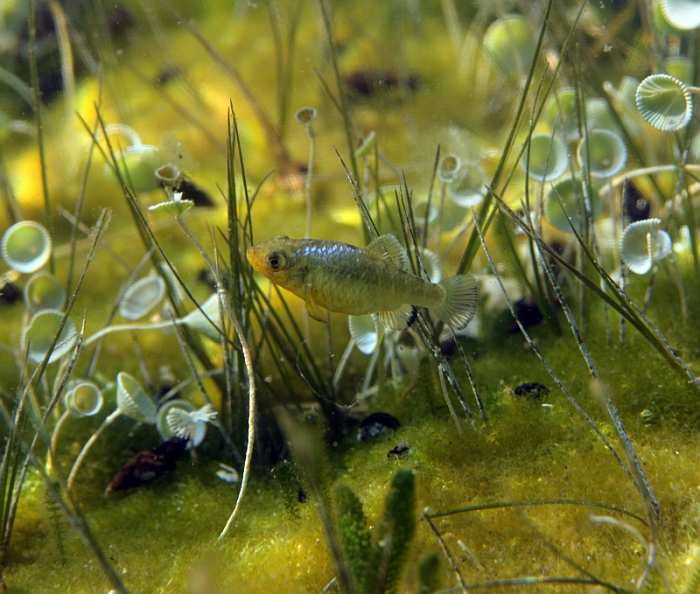
Cyprinodon variegatusSheepshead 'Minnow'
Lacepède, 1803
Max length50mm SL2.0in SLTank60 × 30cm24 × 12inTempnot recordedpHnot recordedTends to be most common in brackish to hypersaline environments such as coastal salt marshes, lagoons and estuaries. On San Salvador Island, Bahamas, it appears to be the parent of a species group occurring in sympatry and exploiting diverse but specific resources with some spectacular morphological adaptations.
Dormitator lebretonisClay Goby
authority not recorded
Max length120mm SL5in SLTanknot recordedTemp22–26°C72–79°FpH7.0–8.5Not often seen for sale, but if you can find it, it makes a peaceful addition to the brackish or hardwater community of medium-sized fish. It was previously considered a member of the now defunct genus Batanga. The fish in our picture is a young specimen. Adults develop a pleasing pattern of reds and blues and are most attractive....
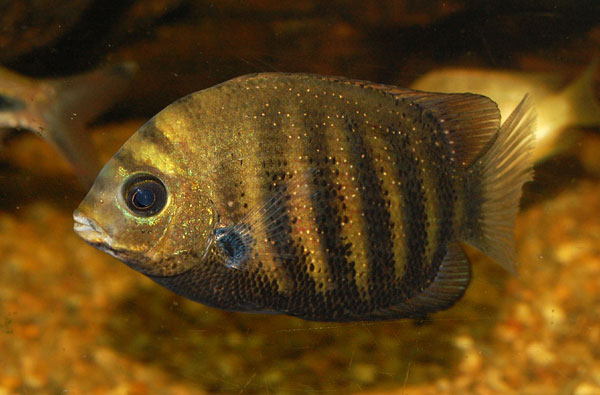
Etroplus suratensisGreen Chromide
Bloch, 1790
Max length350mm SL14in SLTanknot recordedTemp20–30°C68–86°FpH7.0–8.5This species is euryhaline and mostly inhabits brackish estuaries, coastal lagoons and the lower reaches of rivers. It also occurs in freshwater habitats, however, including a number of inland lakes in Sri Lanka although it appears to have been introduced intentionally.
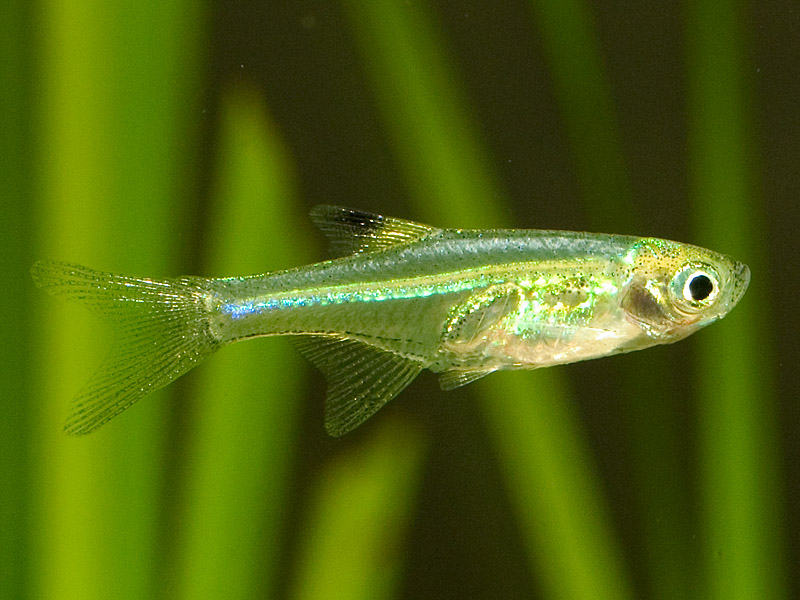
Microdevario nanus
Kottelat & Witte, 1999
Max length16mm SL0.6in SLTank45 × 30cm18 × 12inTemp20–27°C68–81°FpH6.0–7.5Towards the Andaman Sea the lower part of the delta gives way to brackish mangrove swamps. The climate is wet, with annual precipitati0n of 1500 - 2500 mm, up to 90% of which falls between mid May and mid November, and warm with average air temperatures of 22 - 37 °C over the course of the year. At one locality M. nanus was collected in less then 30cm of water from an oxbow lake among floating Pistia-like vegetation and gra...
Parambassis siamensis
authority not recorded
Max length60mm SL2.4in SLTank45 × 30cm18 × 12inTemp22–27°C72–81°FpH6.5–7.5This occasional import is sometimes offered for sale as P. ranga, the Indian glass fish. Unlike that species however, P. siamensis is an exclusively freshwater fish and should never be kept under brackish conditions. It can be distinguished from ranga by the lack of patterning behind the eye and it's generally more elongate body....
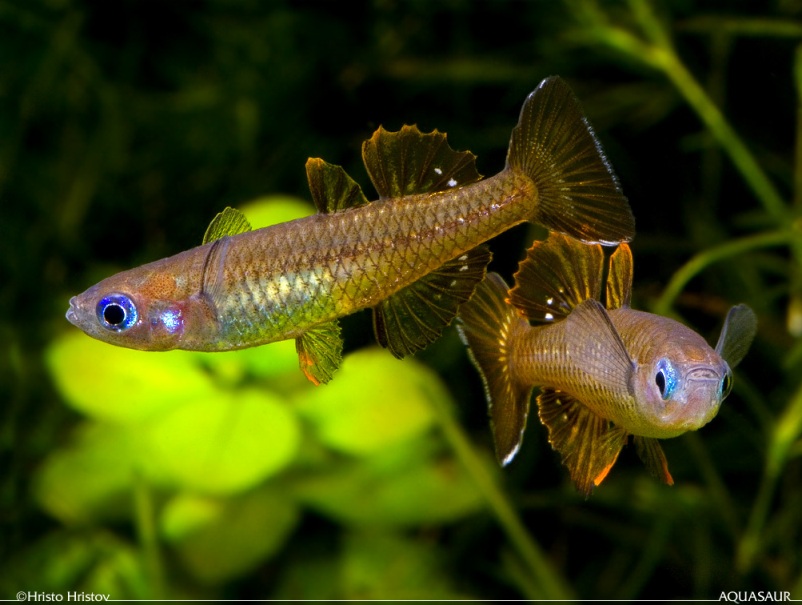
Pseudomugil tenellusDelicate Blue-eye
Taylor, 1964
Max length55mm SL2.2in SLTank75 × 30cm30 × 12inTemp25–32°C77–90°FpH5.5–7.5Euryhaline and mostly inhabits coastal floodplains where it's found in both fresh and brackish habitats, including tidal estuaries and salt marshes. It's particularly common in swamps, billabongs, and slow-moving streams where aquatic vegetation grows densely, but some populations have colonised upper sections of freshwater streams. Larger individuals may also move into main river channels. Tappin (2010) gives the following ranges of parameters based on those taken from various localities: temperature 27 - 38 °C, pH 5...
Stigmatogobius sadanundioKnight Goby
authority not recorded
Max length90mm SL3.5in SLTank75 × 30cm30 × 12inTemp20–26°C68–79°FpH7.0–8.5Until recently the genus Stigmatogobius contained 18 species, but most have now been reclassified, leaving just 7 species currently assigned to it. S. sadanundio is by far the most common of these in the hobby. It makes an attractive addition to the brackish or hardwater community with medium-sized tankmates....
Toxotes chatareusLargescale Archerfish
authority not recorded
Max length400mm SL16in SLTank120 × 60cm48 × 24inTemp25–30°C77–86°FpH7.0–8.0The Largescale Archerfish is one of a fascinating group of fish that have evolved this very distinctive feeding pattern. The family contains six species, of which toxotes jaculatrix is the most commonly available (sometimes sold incorrectly as t. jaculator). Toxotes chatareus is offered for sale in the UK although much less frequently. There are reports that juvenile archers can be kept in fresh water but it is recommended that a brackish setup is always used. Eaten as a food fish in many...
Toxotes jaculatrixBanded Archerfish
authority not recorded
Max length300mm SL12in SLTank120 × 60cm48 × 24inTemp25–30°C77–86°FpH7.0–8.0The Banded Archer fish is one of a fascinating group of fish that have evolved this very distinctive feeding pattern. The family contains six species, of which toxotes jaculatrix is the most commonly available (sometimes sold incorrectly as t. jaculator). Occasionally, the similarly marked toxotes chatareus is offered for sale in the UK although much less frequently. There are reports that juvenile archers can be kept in fresh water but it is recommended that a brackish setup is always used. ...
Vieja synspilaRedhead Cichlid
authority not recorded
Max length350mm SL14in SLTanknot recordedTemp24–30°C75–86°FpH7.0Widely and incorrectly referred to as vieja synspillum, this colourful fish is the most commonly available of the vieja species to the hobby. Although not as aggressive as some of its family, it is still a fish to treat carefully. It can be found in mildly brackish waters in its natural range but this is not recommended or required in captivity....