Results for “conspecific”
Type a name: scientific, common, or one a species used to go by. Or narrow the catalogue with the filters.
Filters
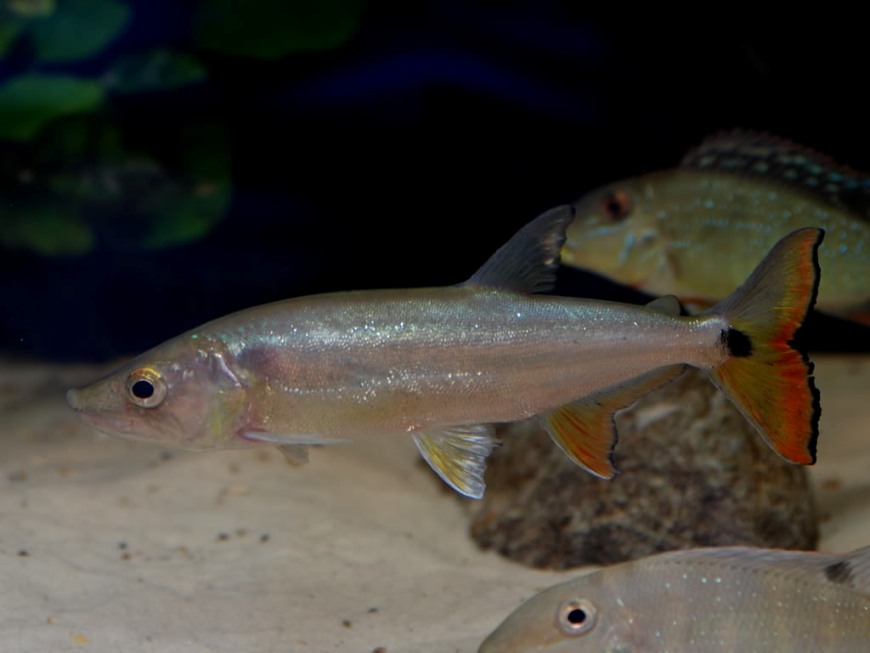
Acestrorhynchus altusRed Barracuda Tetra
Menezes, 1969
Max length233mm SL9in SLTank250 × 90cm98 × 36inTemp22–28°C72–82°FpH6.0–7.5This species is not normally aggressive towards conspecifics with juveniles in particular exhibiting a marked schooling instinct. Older individuals tend to be more solitary but still group together from time-to-time, and it's best maintained in numbers of four or more. One important point to note is that acestrorhynchids are can...
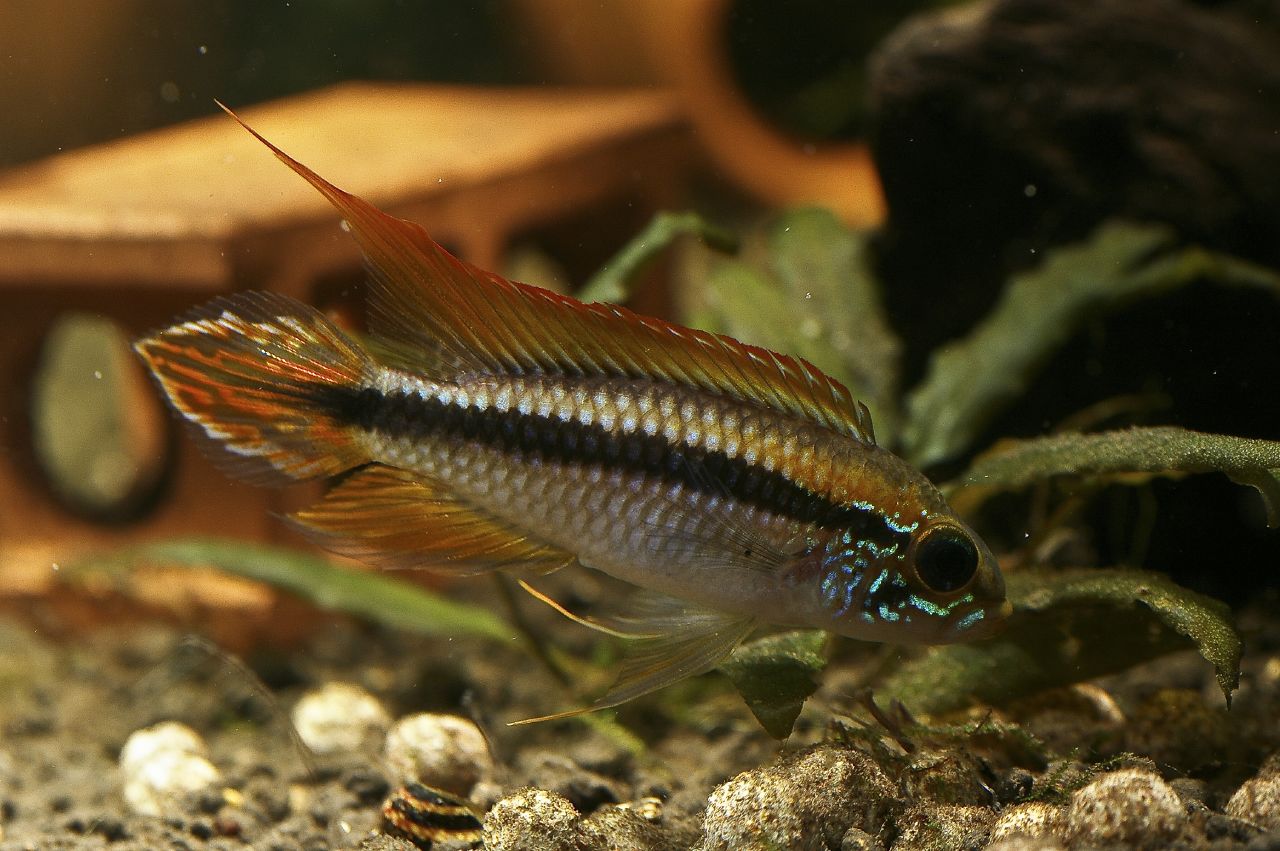
Apistogramma agassiziiAgassizi's Dwarf Cichlid
Steindachner, 1875
Max length♂ 75 · ♀ 50mm SL♂ 3.0 · ♀ 2.0in SLTank60 × 30cm24 × 12inTemp22–29°C72–84°FpH3.0–4.0Numerous ornamental forms of this species have been selectively-bred for the aquarium trade, some of which include. It has also been assigned the 'A' number A234 under the DATZ system with possibly conspecific, related forms similarly numbered A235, A236, A237, A238, A239, A240, A241 and A242 depending on locality. The genus Apistogramma is among the most speciose of South American cichlid genera with around 70 species valid at present but many more awaiting description. In addition ...
Apistogramma alacrinaRedspot Dwarf Cichlid
Kullander, 2004
Max length♂ 55 · ♀ 37mm SL♂ 2.2 · ♀ 1.5in SLTank45 × 30cm18 × 12inTemp23–29°C73–84°FpH4.0–7.0This species differs from all other described members of the genus by the presence of dark blotches at the dorsal and ventral base of the pectoral fins. Three very similar-looking fishes have been assigned the codes A106, A107 and A108 under the DATZ system and are also known in the aquarium hobby as A. sp. 'rotpunkt' (this form has been in the hobby for decades with its precise origin unclear), A. sp. 'rotpunkt Orteguazas' (the paratype form of A. alacrina) and A. sp. 'rotpunkt Guayas', respectively. It remains to be seen whether they're conspecific with A. alacrina or not since they exhibit some differences in colour pattern and morphology.
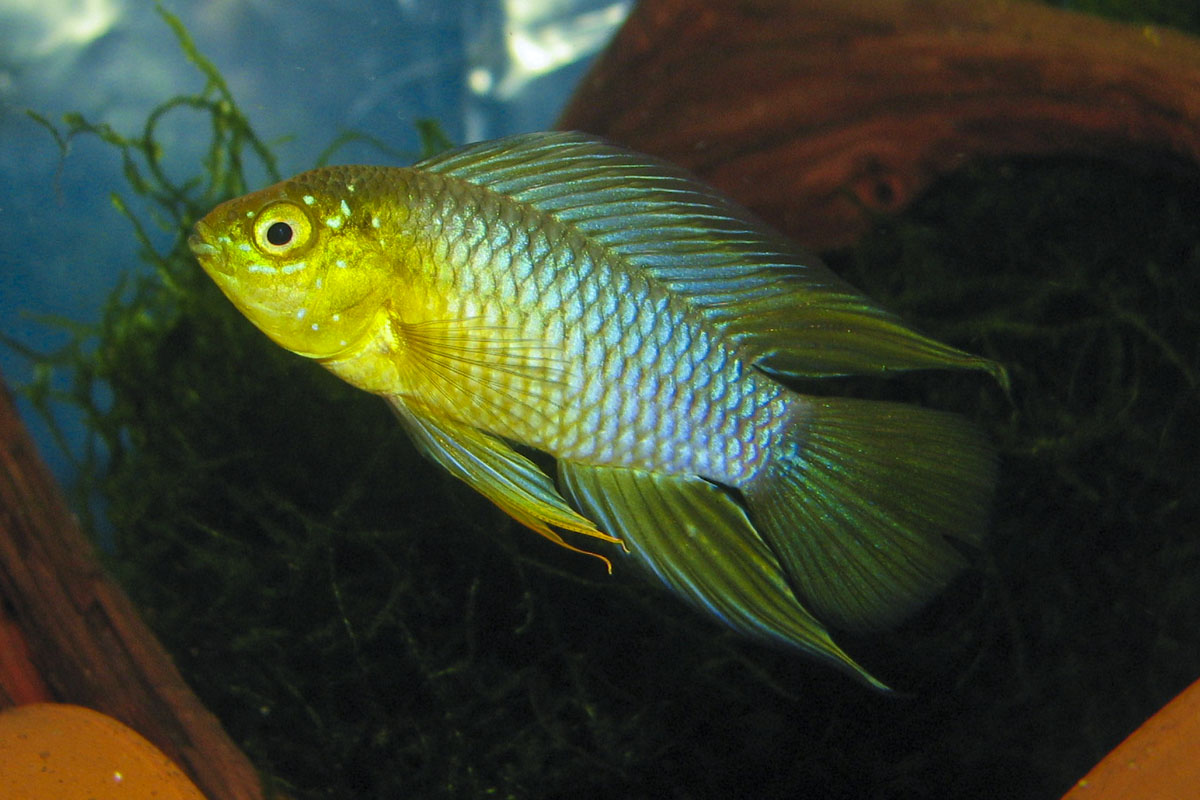
Apistogramma borelliiBorelli's Dwarf Cichlid
Regan, 1906
Max length♂ 65 · ♀ 50mm SL♂ 2.6 · ♀ 2.0in SLTank45 × 30cm18 × 12inTemp20–26°C68–79°FpH5.0–8.0Numerous ornamental forms of this species have been selectively-bred for the aquarium trade. It has also been assigned the 'A' number A234 under the DATZ system with possibly conspecific, related forms similarly numbered A103, A104, and A105 depending on locality.
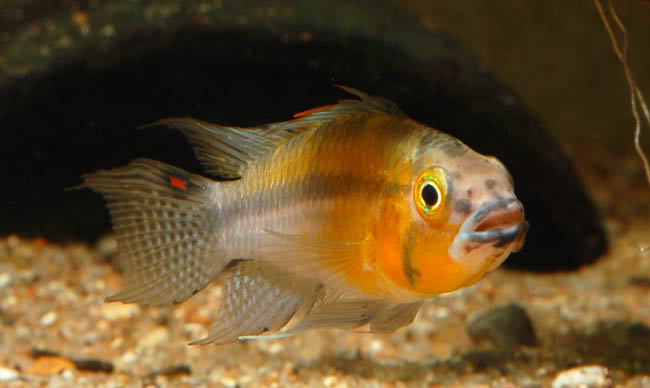
Apistogramma cacatuoidesCockatoo Cichlid
Hoedeman, 1951
Max length♂ 75 · ♀ 50mm SL♂ 3.0 · ♀ 2.0in SLTank60 × 30cm24 × 12inTemp22–29°C72–84°FpH5.0–6.0Numerous ornamental forms of this species have been selectively line-bred for the aquarium trade, vernacular names for which include "sunset", "sunburst", "double red", "triple red", "gold", "white gold", "orange flash" and "albino". It has also been assigned the 'A' number A200 under the DATZ system with possibly conspecific, related forms similarly numbered A201, A202 and A203 depending on locality. Th...
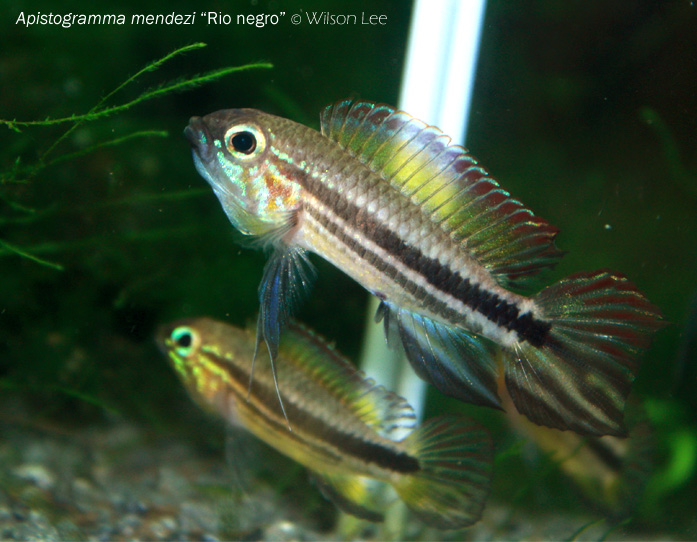
Apistogramma mendeziA220
Römer, 1994
Max lengthnot recordedTank45 × 30cm18 × 12inTemp23–29°C73–84°FpH4.0–6.0This species is assigned the codes A220, A221 and A222 under the DATZ 'A' number system with these referring to similar-looking, possibly conspecific, populations. These differ in some aspects of colour pattern, particularly the orientation of the caudal-fin markings which may be horizontal, vertical, or somewhere inbetween. One population displays an orange colouration on the belly and is som...
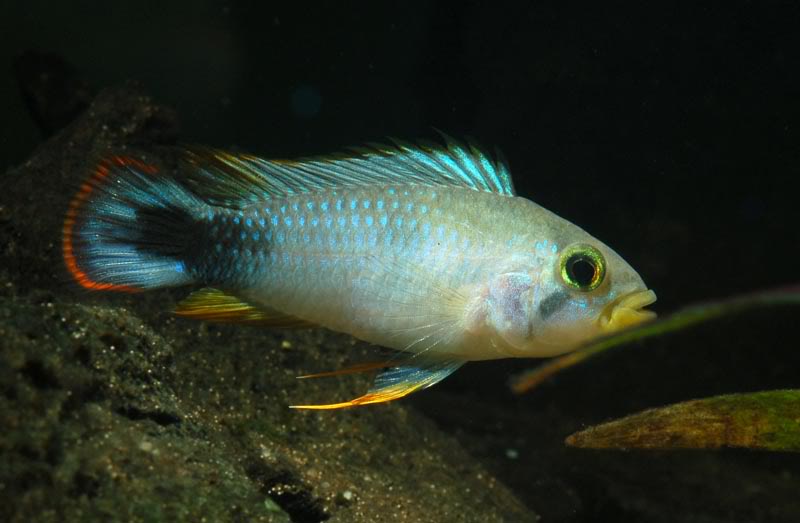
Apistogramma panduro
Römer, 1987
Max length♂ 75 · ♀ 55mm SL♂ 3.0 · ♀ 2.2in SLTank60 × 30cm24 × 12inTemp22–29°C72–84°FpH4.0–6.5This species is also known by the alternative vernacular names 'blue panda cichlid', 'blue sky dwarf cichlid and 'azure cichlid' as well as the confusing trade name A.sp. 'pandurini'. It has also been assigned the 'A' number A183 under the DATZ system with possibly conspecific, related forms similarly numbered A184 or A185 depending on locality. It can be distinguished from similar-looking species by the length of the lower jaw which characte...
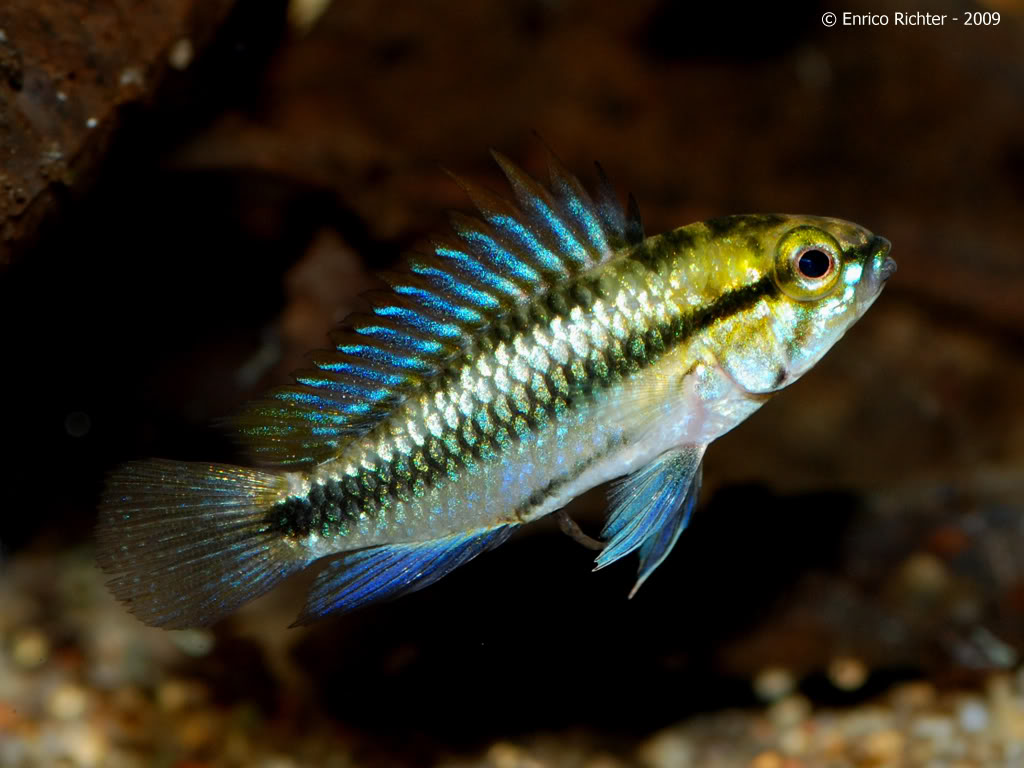
Apistogramma trifasciataThree-striped Apisto
Eigenmann & Kennedy, 1903
Max length♂ 55 · ♀ 40mm SL♂ 2.2 · ♀ 1.6in SLTank45 × 30cm18 × 12inTemp20–25°C68–77°FpH5.0–7.0This species is assigned the 'A' number A204 under the DATZ system with possibly conspecific, related forms coded A205 or A206 depending on collection locality and representing populations from Argentina and the rio Guaporé, respectively. The genus Apistogramma is among the most speciose of South American cichlid genera with around 70 species valid at present but many more awaiting description.
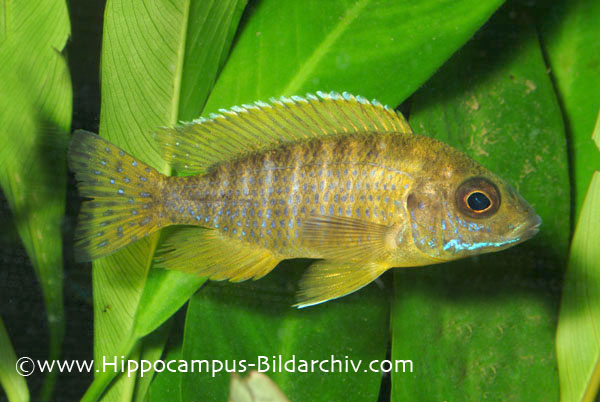
Aulonocara sp. 'stuartgranti maleri'Sunshine Peacock
authority not recorded
Max length120mm SL5in SLTank120 × 45cm48 × 18inTemp25–29°C77–84°FpH7.5–9.0It remains unclear whether this fish represents an as yet undescribed species or not but in either case the unofficial, vernacular name is confusing due to it being based on that of a described taxon. As a result it is often referred to as A. stuartgranti 'Maleri' or 'Maleri Islands', either through error or because some authors believe it to be conspecific with A. stuartgranti. The population from the Maleri Islands is traded as 'yellow regal peacock' (not to be confused with the 'new yellow regal peacock', i.e., A. baenschi) and the one from Chidunga Rocks as 'sunshine peacock' or 'orange peacock'.
Aulonocara sp. 'walteri'Blue-faced Peacock
authority not recorded
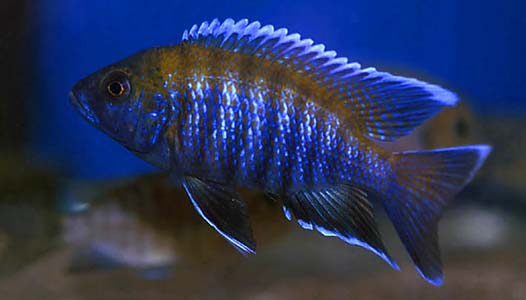
Max length130mm SL5in SLTank120 × 45cm48 × 18inTemp25–29°C77–84°FpH7.5–9.0This fish has been known in the aquarium hobby for a number of years but remains undescribed to science despite the confusing trade name which has resulted in it often being referred to incorrectly as 'Aulonocara walteri'. It's known only from Chizumulu Island and Likoma Island in Lake Malawi, both located off the eastern shoreline of the central part of the lake (Mozambique). There is a similar-looking, potentially conspecific, fish which can be found between the coastal settlements of Meponda (Mozambique) and Ntekete (Malawi) further south, and has been referred to A. sp. 'trematocranus masinje'.
'Barbus' jae
Boulenger, 1903
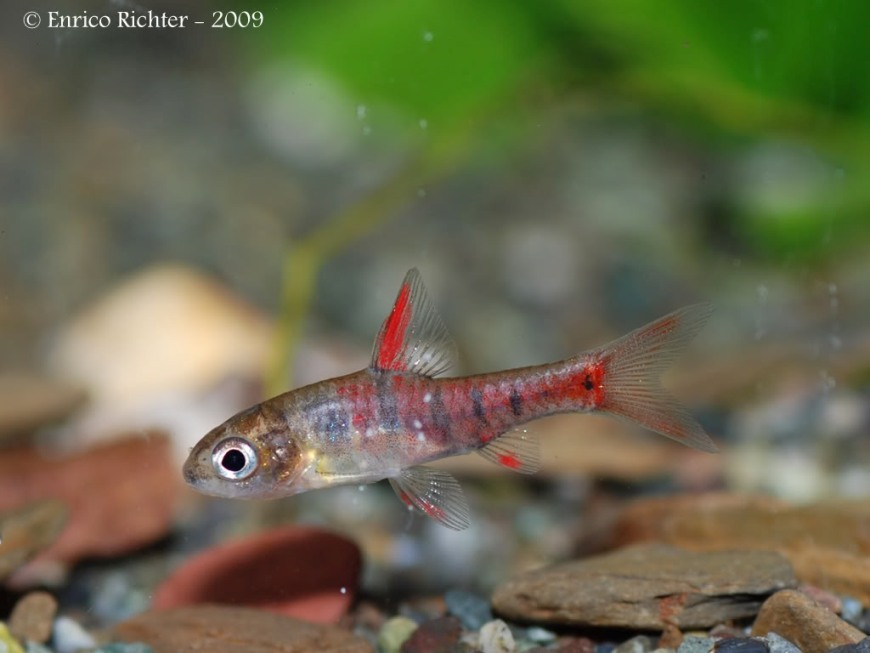
Max length40mm SL1.6in SLTank45 × 30cm18 × 12inTemp17–24°C63–75°FpH5.0–6.5Although gregarious by nature it is a shoaling rather than schooling species which develops a distinct pecking order between males. It should ideally be maintained in a group of 8 or more but the tank must be of a sufficient size which will allow weaker individuals some respite from dominant conspecifics and decorated in such a way that many broken lines of sight are provided. Conversely if kept singly, in a very small group or in cramped conditions it can become withdrawn and subdominant fish may be bullied incessantly.
Boraras naevus
Conway & Kottelat, 2011
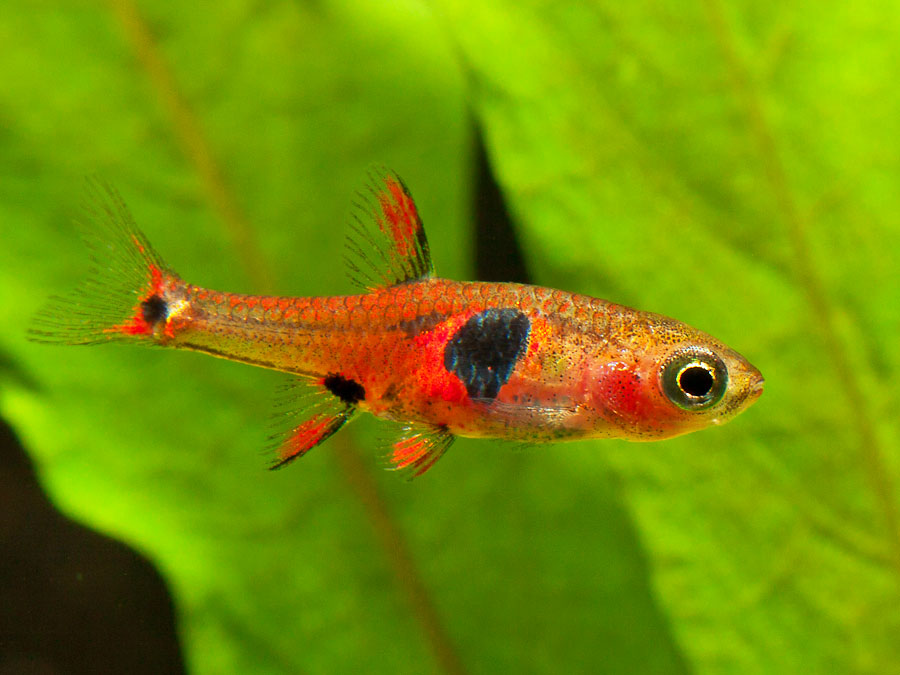
Max length20mm SL0.8in SLTank45 × 30cm18 × 12inTemp20–28°C68–82°FpH5.0–7.0Known only from southern (peninsular) Thailand with the type series originating from a swamp some 83 km north of Surat Thani city, Surat Thani province. It's been recorded at additional locations, all within the lower Tapi river drainage on the Gulf of Thailand slope of the Malay Peninsula. In the description Conway and Kottelat (2011) report the occurence of a similar-looking, possibly conspecific fish on the Andaman Sea side of the Peninsula, close to Trang province.
Corydoras acutusBlacktop Cory
Cope, 1872
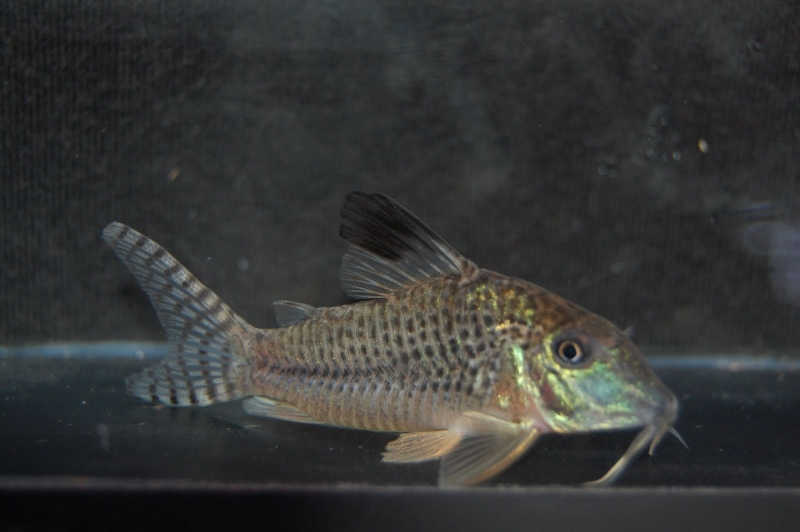
Max length70mm SL2.8in SLTanknot recordedTemp22–28°C72–82°FpH6.0–7.5This species can be confused with three similar-looking fishes of uncertain taxonomic status which have been assigned the C numbers C024, C077, and C109 in the aquarium hobby. C024 and C109 are unlikely to be conspecific in that they occur in Pará state, Brazil, several thousand kilometers outside the range of C. acutus, in the rio Guamá (Tocantins drainage), and lower rio Xingu, respectively.
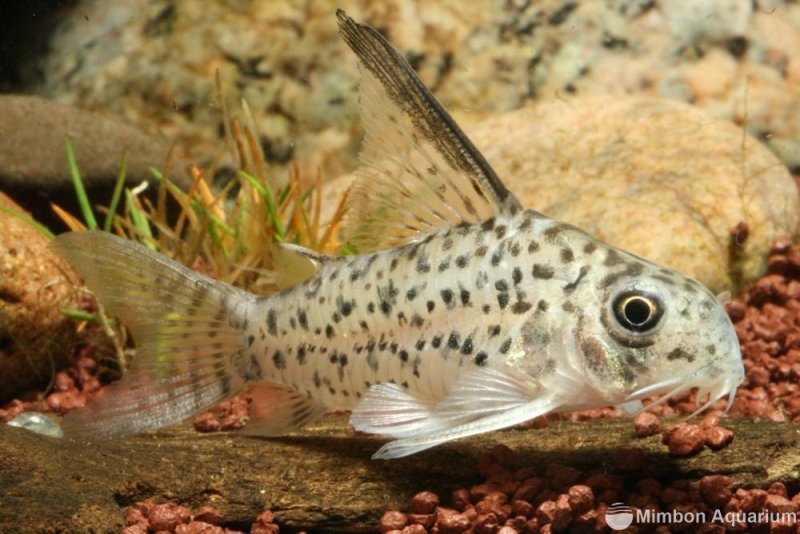
Corydoras armatus
Günther, 1868
Max length65mm SL2.6in SLTanknot recordedTemp22–26°C72–79°FpH6.0–7.5Fish collected in the upper rio Maderia basin in Brazil and Bolivia have been traded under the invented names C. sp. 'dorsalis' and C. sp. 'ogawae' in the past, although are officially-considered conspecific with C. armatus. This appears to warrant investigation since the Río Huallaga in Peru, type locality of C. armatus, and collection localities in the upper Madeira are separated by a straight-line distance of almost 2500 km.
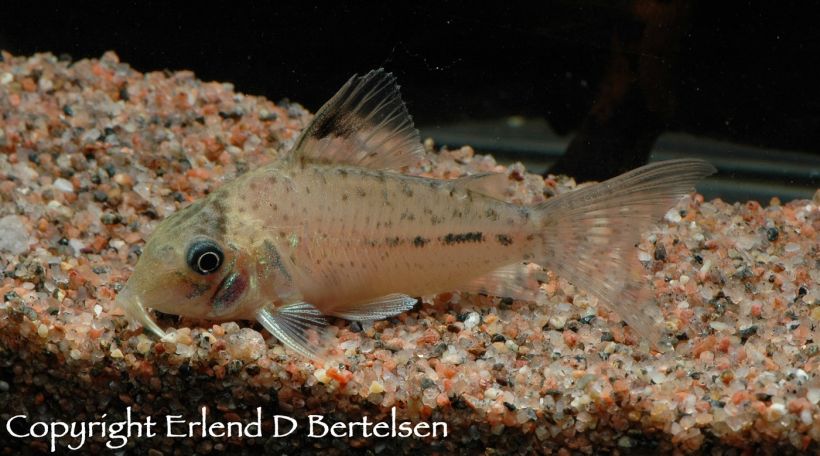
Corydoras lambertiC009
Nijssen & Isbrücker, 1986
Max length55mm SL2.2in SLTank80 × 30cm31 × 12inTemp20–26°C68–79°FpH6.0–8.0Unfortunately diagnostic characters cannot be provided since we have been unable to obtain the type description to date, and little else has been written about this species. There is also confusion regarding whether C. lamberti, the unidentified 'C009', and similar-looking fish collected close to Iquitos are conspecific or not. We include all together here until these issues are resolved.
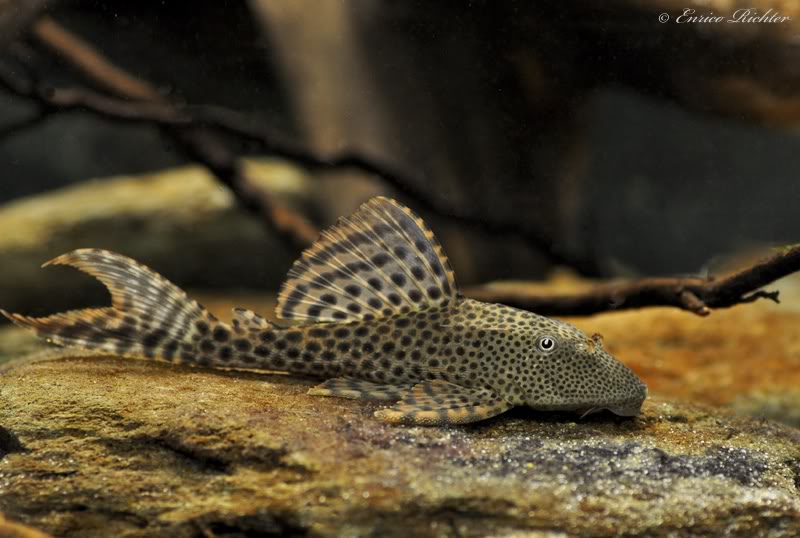
Hypostomus sp.L231
authority not recorded
Max length300mm SL12in SLTank180 × 60cm72 × 24inTemp22–28°C72–82°FpH6.0–7.5Supposedly exported from the upper Amazon region in Peru but precise details are lacking. It's unclear whether this unidentified species is conspecific with the similarly nameless congener L266 or not.
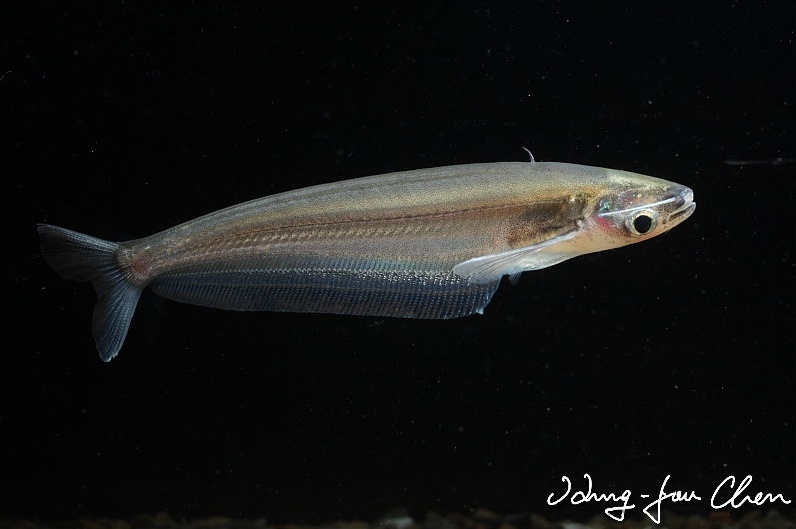
Kryptopterus cryptopterusBlue Sheatfish
Bleeker, 1851
Max length147mm SL6in SLTank120 × 45cm48 × 18inTemp20–27°C68–81°FpH6.0–7.5Known from the Malay Peninsula and Singapore plus Greater Sunda Islands of Sumatra, Borneo and Java in Indonesia with populati0ns from Thailand, Cambodia, Laos and Vietnam formerly considered as conspecific now referred to K. geminus (Ng, 2003). Type locality is given as 'Bandjarmassing' which corresponds to a town now more commonly referred to as 'Banjarmasin' in South Kalimantan (Kalimantan Selatan) province, Indonesia (Borneo).
Kryptopterus geminus
Ng, 2003
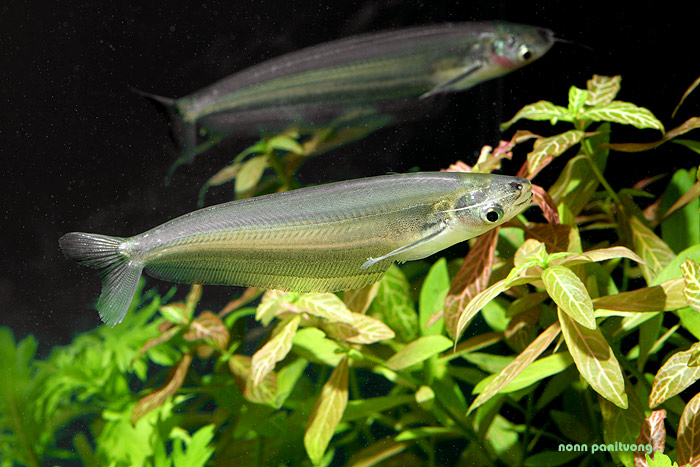
Max length171mm SL7in SLTank150 × 45cm60 × 18inTemp20–28°C68–82°FpH6.0–7.5This species is likely to be traded for aquaria but probably misidentified as the very similar-looking K. cyrptopterus with which wild populations were formerly considered conspecific. These two are closely-related and can be distinguished from congeners by the dorsal profile lacking a nuchal concavity (vs. possessing a nuchal concavity) and possessing short maxillary barbels (extending to the pectoral-fin base vs. ext...
Neolamprologus leleupiLemon Cichlid
authority not recorded
Max length100mm SL3.9in SLTanknot recordedTemp23–27°C73–81°FpH7.5–9.0One of the most popular Tanganyikan species in the hobby, N. leleupi is a stunning fish when in good condition. However, it is not as easy to maintain as its popularity suggests, due to its disagreeable attitude towards conspecifics and its sensitivity to deteriorating water conditions. It is a solitary species in nature, with male fish entering females' caves as they find them and spawning with receptive females. This explains the weak pair bond formed by spawning fish in aquaria and also ...
Parosphromenus bintan
Kottelat & Ng, 1998
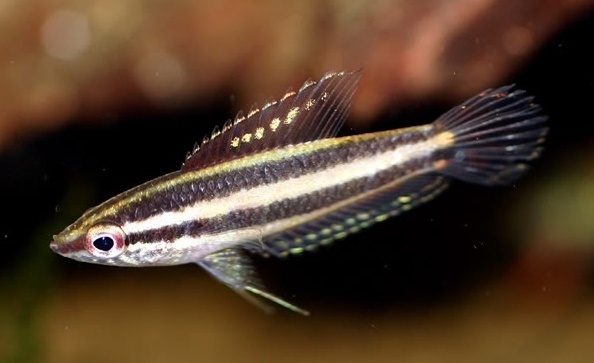
Max length26mm SL1.0in SLTank40 × 20cm16 × 8inTemp22–28°C72–82°FpH3.0–6.5This species is not generally available in the aquarium hobby on a commercial basis but is occasionally collected and distributed by private aquarists. It's name is sometimes misapplied to commercial shipments of other species, and there also exist a number of other fish with rounded caudal-fins that may or may not be conspecific, including P. sp. 'blue line' and P. sp. 'Selatan' from Sumatra.